
That gut-punch feeling when you open an unexpectedly high electric bill is something most Florida homeowners know all too well. So, what’s really going on? The short answer: your home is working overtime to fight the Florida heat, and your air conditioner is almost always the main culprit. But it's not the only one—inefficient appliances, leaky insulation, and sneaky "energy vampires" are also big players.
Decoding Your High Electricity Bill
Think of this guide as your action plan. We're going to help you diagnose the exact causes of that bill shock and show you how to get your energy spending back under control. We’ll break down each problem area with practical solutions, so you know exactly where your money is going and how to get it back.
First things first, let's understand why your bill is so high. Your utility doesn't just pull a number out of thin air. Your bill is a direct reflection of your home's energy consumption, measured in kilowatt-hours (kWh). A kWh is simply a unit of energy used over time. The more kWh your home burns through, the higher your bill climbs. For context, the U.S. Energy Information Administration found that the average American household used about 899 kWh per month in 2022. Here in Florida? That number can easily skyrocket, especially during the summer.
This visual gives you a great breakdown of where all that energy is really going.
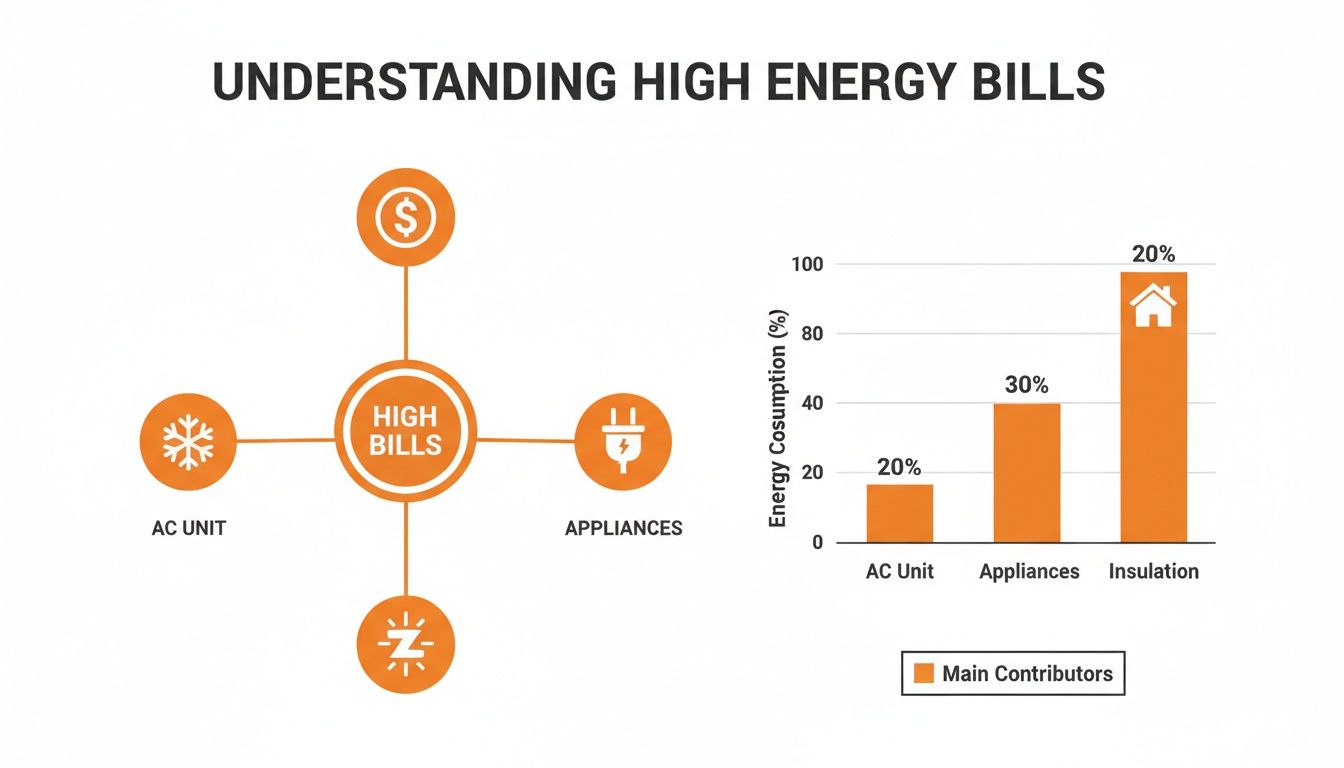
As you can see, your air conditioner, major appliances, and your home’s insulation are the big three. A problem in any one of these areas is enough to send your monthly bill through the roof.
To give you a quick overview, we've put together a table summarizing the most common offenders we see in Florida homes. This is your starting point for figuring out what’s driving up your costs.
Top 7 Culprits Behind Your High Electric Bill
| Primary Cause | Typical Impact on Monthly Bill | Quick Diagnostic Check |
|---|---|---|
| HVAC System | Can increase bill by 50% or more | Listen for constant running; check for weak airflow from vents. |
| Thermostat Settings | $50 – $180+ per year | Is the "fan on" setting running 24/7 instead of "auto"? |
| Insulation & Air Leaks | 15% – 25% of cooling costs | Feel for drafts around windows/doors; check attic insulation depth. |
| Old Appliances | $30 – $100+ per year | Is your refrigerator over 10 years old? Is it warm to the touch? |
| Water Heater | $20 – $60 per month | Check the temperature setting; it shouldn’t be higher than 120°F. |
| Pool Pump | Up to $100+ per month | Is it an older, single-speed pump running more than 8 hours a day? |
| Phantom Loads | $10 – $20 per month | Look for glowing lights on chargers/TVs when they are "off." |
This table covers the usual suspects, but in the sections ahead, we’re going to dive deep into each one. We’ll give you simple checks you can do yourself, actionable fixes you can implement right away, and clear advice on when it's time to call in the pros from Heatwave. Let's get started.
Your Air Conditioner: The Biggest Energy Drain in Your Home
Here in Florida, your air conditioner isn't just a nice-to-have appliance; it's a lifeline. But keeping your cool comes at a price, and that price often makes your HVAC system the undisputed king of your energy bill. An inefficient AC is a lot like trying to drive a car with a slow leak in one of the tires—it has to work constantly just to keep up, burning through fuel and wearing itself out in the process.
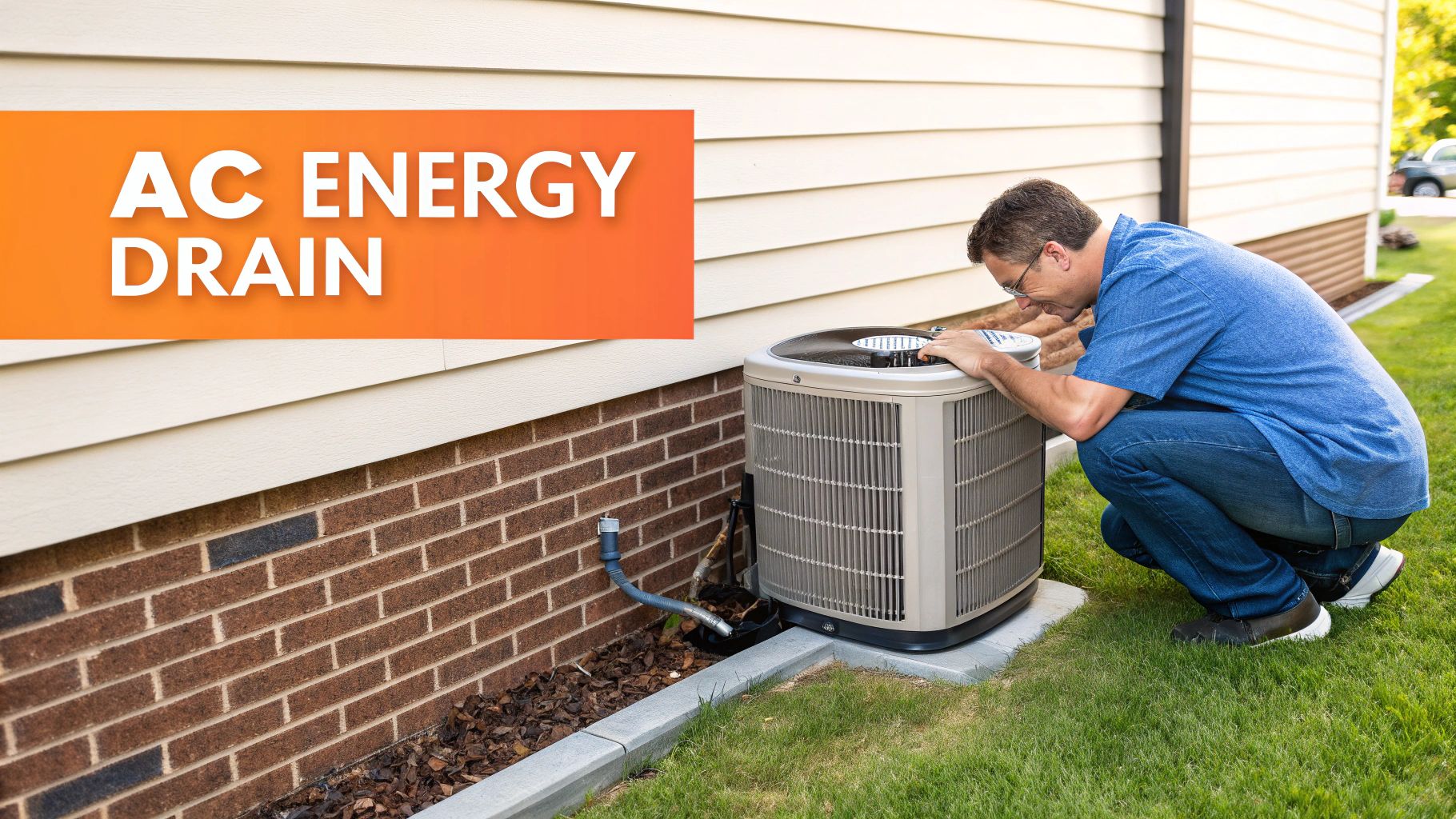
This constant struggle is a huge reason for shocking electricity bills. In fact, air conditioning alone can devour 40–60% of a home's total electricity use in hot climates like ours. When your system isn't running at peak performance, it guzzles down far more power just to deliver the same amount of cool air.
Let's break down the common culprits that turn your trusted AC into a power-hungry monster.
Clogged Air Filters Are Starving Your System
It's the simplest part of your AC, but the air filter is often the most overlooked—and one of the biggest energy wasters. Think of the filter as your AC's lungs. When it gets choked with dust, pet dander, and other gunk, your system simply can't "breathe."
This blockage forces the blower motor to work overtime just to pull air through, which sends your electricity use soaring. A seriously clogged filter can spike your AC's energy consumption by 5% to 15% while simultaneously weakening its cooling power.
DIY Diagnostic: Check your air filter every month. Just pull it out and hold it up to a light. If you can’t see the light shine through, it's time for a new one. This two-minute check is one of the easiest ways to keep your energy bills from creeping up.
Low Refrigerant Levels Cripple Cooling Power
Refrigerant is the lifeblood of your air conditioner. It’s the magic liquid that absorbs heat from inside your home and dumps it outside. When refrigerant levels drop, it's almost always because of a leak somewhere in the system.
With less refrigerant, your AC loses its ability to cool effectively. The system will run for what feels like forever, desperately trying to hit the temperature on your thermostat but never quite getting there. This non-stop operation is what really drives up your bill, as the compressor and fans run endlessly without giving you the comfort you're paying for.
When Your AC Runs in Short Bursts
Ever notice your AC kicking on and off every few minutes? That’s called short cycling, and it’s a major red flag for both your energy bill and your system's health. It can be triggered by a number of things, from an oversized unit to a faulty thermostat or even a refrigerant leak.
Every time your AC starts up, it draws a massive surge of electricity. When it cycles like this, those power spikes add up fast, inflating your bill. Even worse, the constant starting and stopping puts a ton of strain on the compressor—the most expensive part of your AC. If you're experiencing this, you can learn more about what causes an air conditioner that is short cycling and how to fix it in our detailed guide.
Diagnosing Deeper HVAC Issues
While changing an air filter is a simple DIY task, some problems need a professional's touch. Here are a few signs that something more serious is going on with your system:
- Weak Airflow: If the air trickling from your vents feels weak even with a clean filter, you might have a problem with the blower motor or blocked ductwork.
- Strange Noises: Any grinding, squealing, or clanking sounds usually point to failing mechanical parts, like a motor bearing or a worn-out fan belt.
- Ice on Coils: Spotting ice buildup on either the indoor or outdoor unit is a dead giveaway of trouble, often tied to low refrigerant or airflow issues.
If you notice any of these symptoms, it’s best to act fast. Ignoring them won’t just lead to sky-high bills; it could cause a complete system breakdown. For complex electrical faults or refrigerant leaks, a professional diagnosis from the experts at Heatwave is the safest bet for both your wallet and your peace of mind.
How Your Thermostat and Insulation Secretly Inflate Your Bill
Your air conditioner usually gets all the blame, but two silent partners are often the real culprits behind a shocking electric bill: your thermostat settings and your home's insulation. They work as a team, and if one is failing, it drags the other down with it, forcing your AC into a battle it can never win.

Think of it this way: your thermostat is the brain of your HVAC system, and insulation is your home's protective shield against the Florida heat. If the brain is giving the wrong commands or the shield is full of holes, your AC is stuck running constantly just to keep up.
The True Cost of Your Thermostat Settings
Setting your thermostat just a few degrees colder than you really need has a massive snowball effect on your energy use. Each degree makes your system run longer and harder, and those costs add up fast over a month.
Believe it or not, for every single degree you raise the thermostat during the summer, you can save up to 3% on your cooling costs. A great starting point is setting it to 78°F when you're home and letting it get a little warmer when you're out.
Another common mistake is leaving the fan on "On" instead of "Auto." The "On" setting means the fan runs 24/7, even when the AC isn't cooling. Not only does this waste electricity, but it can actually pull hot, humid air from your attic right back into your living space, making you feel sticky and forcing the AC to work even harder.
Pro Tip: A smart thermostat is a game-changer here. It learns your routine and lets you make adjustments from your phone, so you're only paying to cool your home when you actually need it. We dive deeper into how smart home technology improves HVAC efficiency in our detailed guide.
Your Home's Thermal Envelope: The Battle Against Air Leaks
Running the AC in a poorly insulated house is like trying to keep a cooler full of ice cold with the lid cracked open. You're just paying to cool the outdoors as all that refreshing, conditioned air escapes and the hot, humid Florida air seeps right back in. This protective barrier is what we call your home's thermal envelope.
Here's a startling fact: industry studies show that a staggering 89% of single-family homes are under-insulated. That means there's a very good chance your home is leaking expensive, cool air right now.
The first step to plugging these holes in your energy budget is finding them.
DIY Air Leak Detection
You don’t need a bunch of fancy equipment to find the most common leaks. Try these simple checks on a breezy day:
- The Paper Test: Close a window or exterior door on a single piece of paper. If you can slide the paper out easily without any drag, your seal is too loose.
- The Visual Inspection: Just look! Check for obvious cracks and gaps around window and door frames, and where any pipes or wires enter your house from the outside.
- The Feel Test: Carefully run your hand along the edges of your windows and doors. If you feel a draft, you’ve found a leak that needs a simple fix like caulk or weatherstripping.
These small gaps might seem harmless, but when you add them all up, it can be like leaving a window wide open all year long.
And don't forget the hidden leaks. Your ductwork itself can be a major source of energy loss, bleeding cool air into your attic or crawlspace. For a deeper dive, there are great resources on effectively sealing your home's ductwork.
Fixing these drafts with caulk, weatherstripping, or spray foam is a fantastic, low-cost weekend project that can slice about 15% off your yearly heating and cooling costs. But if you're finding widespread issues or suspect bigger problems in your attic, it's time to call a professional. The experts at Heatwave can perform a thorough energy assessment to pinpoint exactly where you’re losing money and recommend the right insulation or duct sealing solution.
The Hidden Energy Costs of Appliances and Water Heaters
While your air conditioner is the main event, a whole cast of supporting characters—your everyday appliances—can quietly add hundreds of dollars to your annual electricity bill. After the HVAC system, your water heater is often the single largest energy consumer in your home, followed closely by older refrigerators, dryers, and, for many Floridians, the pool pump.
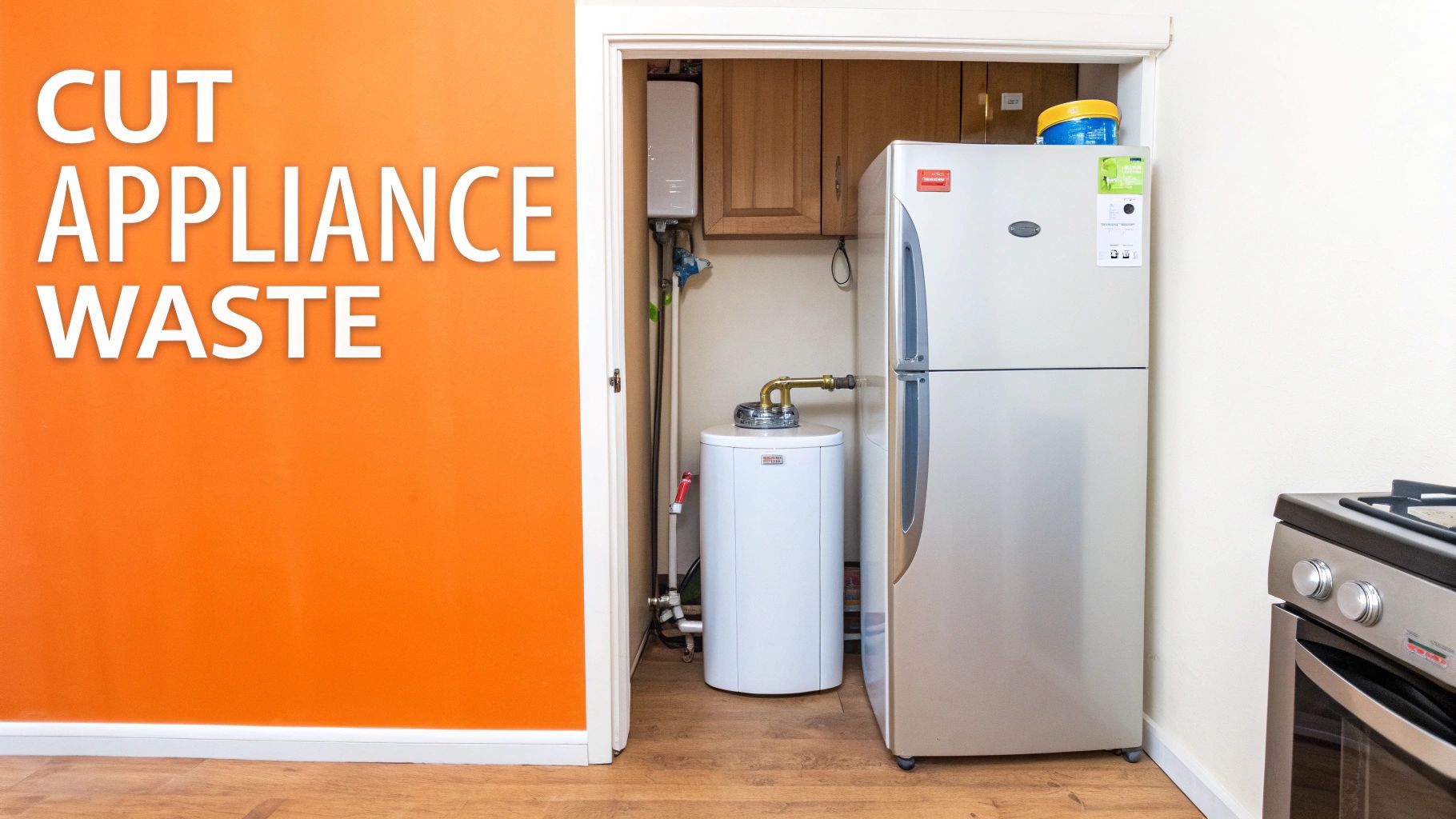
These devices work tirelessly in the background, and their combined energy draw can be a major reason for a surprisingly high bill. The good news? You have a lot of control over how much power they use. Let's look at the biggest offenders and the simple changes that can make a huge difference.
Taming Your Water Heater The Second Biggest Energy Hog
Heating water is an energy-intensive job, plain and simple. It accounts for around 12% of a typical home's energy use. If your water heater is set too high or it’s an older, inefficient model, it’s like leaving a burner on the stove all day—constantly wasting energy to keep a large tank of water scorching hot when you don't even need it.
Most manufacturers set the default temperature to a scalding 140°F, but for most households, 120°F is perfectly sufficient and a whole lot safer. Lowering the temperature by just 20 degrees can reduce your water heating costs by up to 10%. This one simple adjustment prevents "standby heat loss," which is just a fancy term for the unit constantly reheating water that's just sitting in the tank.
For even greater savings, modern tankless water heaters only heat water on demand, completely eliminating standby loss. They provide an endless supply of hot water while using significantly less energy. If your current unit is over a decade old, exploring the benefits of a new water heater installation can be a smart financial move.
The Florida Pool Pump Problem
For homeowners with a pool here in Florida, the pump can be an absolute monster on the electricity bill. An old, single-speed pump is one of the most inefficient pieces of equipment you can run. It operates at full blast all the time, whether it needs to or not, often consuming more energy than any other appliance besides the AC.
Running an outdated pump for eight hours a day can easily add $100 or more to your monthly bill. This is one of the most common—and most overlooked—causes of a shocking electricity bill in our state.
Here's how to slash those costs:
- Upgrade to a Variable-Speed Pump: This is the single best upgrade you can make, hands down. A variable-speed pump can be programmed to run at lower speeds for longer periods, which dramatically reduces energy use while still keeping your pool sparkling clean. The upgrade often pays for itself in just one or two seasons.
- Optimize Your Run Time: Even with an older pump, you may be running it longer than necessary. Chat with a pool professional to find the minimum effective run time for your specific pool size and setup.
When Old Appliances Cost More Than They Are Worth
That old refrigerator humming away in the garage or the decade-old dryer in the laundry room might seem fine, but they are likely costing you a fortune in wasted electricity. Appliance efficiency has improved dramatically over the last ten to fifteen years.
An older fridge, for example, can use 35% more energy than a new ENERGY STAR model. The same goes for dryers, dishwashers, and freezers. While the upfront cost of a replacement seems high, the long-term energy savings are often substantial enough to make the upgrade a financially sound decision.
To see just how much you could be saving, take a look at the difference between old and new models.
Appliance Energy Use Comparison Old vs New
| Appliance | Estimated Annual Cost (Old Model) | Estimated Annual Cost (New ENERGY STAR Model) | Potential Annual Savings |
|---|---|---|---|
| Refrigerator (pre-2000) | $150 | $60 | $90 |
| Clothes Dryer (10+ years old) | $130 | $90 | $40 |
| Dishwasher (pre-1994) | $80 | $45 | $35 |
| Freezer (Chest, 15+ years old) | $120 | $50 | $70 |
The numbers speak for themselves. The next time an old appliance finally gives out, make sure you look for that blue ENERGY STAR label. It's your ticket to a model designed to keep your electric bills low.
And while not as common in Florida, for homes with older heating systems, it's worth noting that to significantly reduce energy consumption, you can research how to find the best energy-efficient boilers.
Finding and Fixing Phantom Loads and Other Energy Vampires
You’ve done everything right—tuned up the AC, adjusted the thermostat, and checked your appliances—but your electric bill is still stubbornly high. So, what’s going on? There’s a good chance a silent culprit is draining your wallet without you even knowing it.
We're talking about phantom load, also known as "vampire power." It's the sneaky energy your electronics pull from the wall even when they're turned "off" but still plugged in.
Think of it like a slow, constant drip from a leaky faucet. A single drop doesn't seem like much, but over weeks and months, it adds up to a ton of wasted water. It's the same idea with your electricity, and those wasted watts add up to real money.
Unbelievably, these phantom loads can account for 5% to 10% of your total monthly energy use. A single phone charger doesn't draw much on its own, but when you have dozens of these little vampires lurking all over the house, their combined thirst for power starts to make a real dent in your budget.
Identifying the Worst Energy Vampires
Not all devices are created equal when it comes to phantom power. Some are much, much thirstier than others. The biggest offenders are usually the ones with a standby mode, a remote control sensor, or a little digital clock that’s always on.
Here are the most common energy vampires to watch out for in your home:
- Entertainment Systems: Your TV, cable box, and gaming consoles are notorious for this. They sit there 24/7, sipping power, just waiting for you to press a button on the remote.
- Chargers: Any charger—for your phone, laptop, or electric toothbrush—is pulling a trickle of electricity as long as it's plugged into the wall, even if no device is connected to it.
- Kitchen Appliances: That microwave, coffee maker, and even your new toaster are constantly using a little power to keep their digital clocks and settings ready to go.
- Smart Home Devices: All those voice-activated speakers and connected gadgets are always "listening," which means they're always using power.
Simple Fixes to Slay Vampire Power
Fortunately, kicking these energy vampires to the curb is one of the easiest and cheapest ways to lower your electric bill. The strategy is simple: if a device isn't in active use, cut its power completely.
Your best weapon in this fight is a smart power strip. These brilliant devices automatically cut power to your electronics when they go into standby mode. For example, when you turn your TV off, the strip senses the power drop and completely shuts off the electricity to your gaming console, soundbar, and streaming box. It eliminates phantom loads with zero effort from you.
This constant drain from our electronics is happening on a massive scale. Global electricity consumption has soared into the thousands of terawatt-hours, with North America alone using about 5,381 TWh each year. As demand goes up, so does the cost to generate that power—and those costs eventually show up on our bills.
For us here in hot climates like Tampa Bay and Sarasota, that means we’re paying more to stay cool while also contributing to an electrical grid under ever-increasing strain. When you unplug those energy vampires, you're not just saving money; you're doing your part. And while you're at it, make sure you're handling all those plugs and power strips safely by checking out our essential home electrical safety tips.
When Rate Changes or Meter Issues Are the Problem
Sometimes, the culprit behind a shocking electric bill isn’t inside your house at all. You’ve checked every appliance, sealed every draft, and yet the bill is still climbing. The real issue might be hiding in plain sight on your utility statement or with the meter outside.
Utility companies frequently adjust their rates, which can cause a sudden spike in your costs even if your habits haven't changed one bit. These adjustments can be seasonal or happen because of shifts in the energy market. The price you pay per kilowatt-hour (kWh) is the foundation of your entire bill, and when it goes up, everything else follows.
The underlying price per kWh has been on the rise in many parts of Florida. For a household using 1,200 kWh per month, a seemingly small 10% price hike—say, from $0.14 to $0.154 per kWh—quietly adds $17–$20 to your monthly bill. Over a year, that's more than $200 out of your pocket, with zero change in your energy use. Want to dig deeper? You can discover more insights about these electricity price statistics.
Demystifying Your Utility Bill
Your monthly statement can feel like it’s written in another language, but getting to know a few key terms empowers you to spot a problem fast. Keep an eye on these areas from one month to the next:
- Rate Structure: Are you on a flat-rate plan or a "Time-of-Use" (TOU) plan? TOU plans charge you more for electricity during peak hours (usually late afternoon). If you're running the AC, dryer, and oven then, your bill can skyrocket.
- Fuel Surcharges: These are variable costs utilities pass on to you based on what they pay for fuel (like natural gas) to generate power. A sudden jump here will inflate your total.
- Base Rate Changes: This is when the fundamental price per kWh is adjusted by the utility. It’s usually noted somewhere on your bill, but it can be easy to miss in the fine print.
Could It Be a Faulty Meter or Wiring?
While less common, a malfunctioning electric meter or a simple billing error is still a real possibility. An old or damaged meter can register more usage than you’re actually consuming. In even rarer cases, the problem could be a fault somewhere in your home's wiring.
Simple Meter Check (Use Caution): You can do a quick test to see if your meter is running when it shouldn't be. First, go to your home's main electrical panel and turn off every single circuit breaker. With all power to your house completely cut, safely check your electric meter. If the dial is still spinning or the digital display is counting up, there’s a problem.
If the meter stops, the issue is almost certainly within your home's system. But if it keeps running, the problem could be the meter itself or the wiring between the meter and the utility pole. In that case, your first call should be to your utility company.
If the utility company gives their equipment the all-clear, the issue may be a fault inside your home's wiring. This is a serious safety concern that demands immediate professional attention. A certified electrician can perform comprehensive electrical wiring inspections to find and fix the fault safely.
Answering Your Top Questions About High Electric Bills
Even after you know what drives up electricity costs, you probably still have a few questions about your own home. We get it. Let’s tackle some of the most common concerns we hear from Florida homeowners, with clear, practical answers to help you get those bills under control.
How Much Can I Realistically Save by Upgrading My Old Air Conditioner?
This is the big one, and for good reason. Swapping out an AC unit that’s 10-15 years old for a new high-efficiency model is a serious investment, but the payoff here in Florida is just as serious. A modern unit can be 20% to 50% more efficient, which can easily translate into $200 to $500 per year in savings on cooling alone.
Of course, the exact amount depends on your home’s size, how well it’s insulated, and your family's habits. A professional can give you a personalized savings projection based on your specific situation, giving you a much clearer picture of your potential return.
Is a Smart Thermostat Really Worth the Cost?
Absolutely. While the upfront cost is more than a basic thermostat, smart models often pay for themselves surprisingly fast. They learn your schedule, let you adjust the temperature from your phone, and give you detailed energy reports—all of which can trim your heating and cooling costs by 10-15% annually.
For the average Florida home, this could mean saving over $100 per year. It’s one of the easiest, most convenient energy upgrades you can make, delivering consistent savings month after month.
My Bill Is High but My AC Seems to Work Fine—What Should I Check First?
If your AC is keeping you cool but your bill is making you sweat, it’s time to play detective. Before you assume the worst, start with the simple, common culprits that are often the source of quiet inefficiency.
Here’s a quick checklist of where to start your investigation:
- Check Your Air Filter: A dirty, clogged filter is the #1 cause of high energy use. It forces your system to work way harder to pull in air, driving up costs without you noticing any cooling problems.
- Verify Thermostat Settings: Make sure your fan is set to "Auto," not "On." Leaving it in the "On" position makes the fan run 24/7, which wastes a ton of energy and can even pull humid outdoor air inside.
- Hunt for Phantom Loads: Do a quick walk-through and unplug electronics and chargers that aren't being used. These "vampire" devices constantly draw a small amount of power.
- Lower Water Heater Temperature: Take a look at your water heater’s thermostat. Setting it to 120°F is plenty hot for most families and can save a surprising amount of money.
If these simple checks don’t point to the problem, it might be time for a professional HVAC tune-up to uncover any less obvious issues.
If you’ve gone down the checklist and are still stumped by high bills, the problem may require an expert diagnosis. For professional HVAC, plumbing, or electrical service in the Tampa Bay and Southwest Florida area, trust the certified technicians at Heatwave Air Conditioning, Plumbing, & Electric to find and fix the issue. Schedule your service call or get a free estimate today.