
You notice it first during an ordinary morning. You wash your hands, set down the toothbrush, and the sink holds water a little longer than it should. Later that week, the shower starts pooling around your feet. By the weekend, the kitchen sink is making that heavy, glugging sound nobody wants to hear.
That's how a lot of drain problems start in Tampa Bay homes. Not with a dramatic backup. Just a drain that gets slower, noisier, and more stubborn every few days.
Around here, the usual culprits are familiar. Hair, soap scum, cooking grease, hard water mineral buildup, and plain old grime all stack up over time. In older homes, the problem gets worse because years of residue have already narrowed the pipe. In coastal areas and homes with a lot of foot traffic, even sand can end up where it shouldn't. The result is the same. Water can't move the way it's supposed to.
A lot of homeowners make the same mistake at this stage. They either ignore it until it turns into a mess, or they dump a harsh chemical into the drain and hope for the best. A better approach is slower and smarter. Start with the signs, figure out where the clog probably sits, then use the least aggressive method that has a real chance of working.
That Annoying Slow Drain And What It Means For Your Home
A slow drain feels small until it starts interrupting your day. You shave over a sink that won't clear. You stand in shower water that keeps creeping up around your ankles. You run the dishwasher, then notice the kitchen sink burping back at you.
That's not just annoying. It usually means material has been building for a while.
In Tampa Bay, I see the same pattern over and over in homes near the coast, in older neighborhoods, and in houses with busy family kitchens. Bathroom drains collect hair and soap. Kitchen lines catch grease and food residue. Add hard water scale to either one, and the inside of the pipe gets tighter every month.
Why Tampa Bay homes deal with this so often
Our area has a few local habits and conditions that don't help:
- Hard water residue: Mineral scale gives grease and soap scum something rough to stick to.
- Older plumbing lines: Older homes often have drains that already have years of buildup inside them.
- Sand and grit: It gets tracked in after beach trips, yard work, and rainy days, then washes into tubs and showers.
- Heavy use: Big households put more soap, hair, and food waste through drains every day.
This isn't a niche problem. The global plumbing drain cleaning service market is valued at USD 5,845.9 million in 2025 and is projected to reach USD 10,370.8 million by 2035, a 77.4% increase, according to Future Market Insights' plumbing drain cleaning service market projection. That doesn't mean every clog is an emergency. It does mean clogged drains are common enough that homeowners should take them seriously early.
Practical rule: Slow drainage is your warning stage. Backups are what happen after that warning gets ignored.
Most of the time, you can start with a DIY-first approach. That saves money, avoids unnecessary damage, and helps you tell the difference between a basic fixture clog and a deeper problem. If you want a quick visual cue that other homeowners rely on before making the call, even a simple customer review snapshot reminds you this is one of the most common reasons people reach out for plumbing help.

What a slow drain is really telling you
A slow drain usually means one of three things:
- A local clog is forming in the trap or branch line.
- Buildup is coating the pipe walls and reducing flow.
- A deeper blockage is starting farther down the line.
The good news is that a lot of these start small enough to address before they become a cleanup job.
How To Diagnose Your Clogged Drain Like A Pro
Before you grab a plunger, stop and observe. A few simple checks can tell you whether you're dealing with a minor clog under one fixture or something deeper in the system.

Start with one question
Is it just one drain, or several?
If only one bathroom sink is slow, the blockage is often local to that fixture. If the shower, toilet, and sink are all acting up together, that points to a bigger issue farther down the line. That's the first split in your decision tree.
Use this quick check:
- One fixture only: Think hair, soap scum, food debris, or a trap blockage.
- Two nearby fixtures: Think branch line issue.
- Multiple fixtures in different rooms: Think main drain or vent problem.
- Toilet gurgles when sink drains: Pay attention. That can signal a drainage or venting issue that DIY methods may not solve well.
Don't assume the clog is right at the opening
A lot of people remove the stopper, poke around the visible drain, and think they've reached the problem. Usually they haven't.
Many homeowners waste time on ineffective repair attempts because they target the wrong area. Video analysis confirms that the actual clog is typically located 12 to 24 inches downstream from the drain opening, often within the P-trap or the start of the main line, not in the visible portion of the drain, as shown in this drain clog video analysis.
That's why shallow poking and random plunging often don't do much. You're working above the obstruction, not on it.
If water lingers after every use, the pipe is already restricted. Waiting won't make the clog easier to remove.
A simple home diagnosis routine
Run through these steps in order:
- Fill and drain the sink or tub once. Watch how fast the water leaves.
- Listen for sounds. Gurgling or bubbling matters.
- Check nearby fixtures. Flush the toilet or run another faucet and see if anything changes.
- Look under the sink. A leak at the trap changes how aggressive you should be.
- Smell the area. A foul odor suggests buildup, stagnant waste, or a deeper issue.
What each sign usually means
| Sign | Most likely issue | Best next move |
|---|---|---|
| Slow drain in one sink | Localized clog | Try safe DIY methods |
| Water backs up in tub during sink use | Shared branch line restriction | Escalate carefully |
| Gurgling toilet | Drain or vent issue | Avoid guessing |
| Bad odor from drain | Organic buildup or trapped waste | Clean and inspect |
| Recurring slow drain | Residue deeper in line | Consider snaking or pro help |
The key is not to overreact, but also not to guess blindly. Good clogged drain repair starts with the right target.
Simple And Safe DIY Clogged Drain Repair Methods
If the problem looks isolated to one fixture and there's no sign of a whole-house drainage issue, start with the gentlest methods first. That's usually the smartest way to handle clogged drain repair at home.
What to try first
The best DIY methods are simple, cheap, and low risk to your pipes.
| Method | Best For | Pros | Cons |
|---|---|---|---|
| Hot water flush | Light grease or soap residue | Easy, fast, no special tools | Won't clear solid clogs |
| Plunger | Sinks, tubs, toilets with partial blockage | Good first response, inexpensive | Needs proper seal and technique |
| Baking soda and vinegar | Mild organic buildup and odor | Low-risk and easy to try | Often too weak for dense clogs |
| P-trap cleaning | Under-sink sink clogs | Removes gunk directly | Messy, limited to accessible drains |
| Manual hair removal tool | Bathroom sink and tub hair clogs | Very effective near the trap | Unpleasant, limited reach |
Hot water works best in kitchens
For a kitchen sink that's draining slowly, hot water can help soften grease and move light residue along. Use caution with very old or questionable piping, and don't use boiling water on a porcelain toilet.
A practical method is simple:
- Clear standing water first: You want the hot water reaching the restriction.
- Pour in stages: A steady pour works better than a splash.
- Repeat if flow improves: If the drain starts moving faster, you may be dissolving soft buildup.
This works best on grease and soap films, not on hair mats or solid debris.
The plunger is more useful than most people think
A sink plunger works only if you build a seal. On a bathroom sink, cover the overflow opening with a wet rag first. On a double kitchen sink, seal the unused side. Then plunge with short, controlled strokes.
Toilet plunging is different. Use a flange plunger, not a flat sink plunger, and make sure the rubber cup stays below the water line before you push.
Shop-floor advice: Most bad plunging comes from a bad seal, not weak effort.
Baking soda and vinegar has a place
This method won't magically cut through a severe obstruction, but it can help loosen soft organic buildup and reduce odor in a mildly sluggish drain.
Try it when:
- The drain is slow, not fully blocked
- You want to avoid harsh chemicals
- You're dealing with bathroom residue more than grease
Give it time to work before flushing with hot water. If nothing changes, move on.
Cleaning the P-trap can solve a lot
Under a bathroom or kitchen sink, the curved pipe section often holds debris. Put a bucket underneath, loosen the slip nuts, and inspect the trap. You might find hair sludge, grease, or food buildup packed inside.
A quick trap cleaning can solve the problem immediately if the blockage is local. It also tells you something useful. If the trap is mostly clear, the clog is probably deeper.
For seasonal upkeep and prevention habits, a simple spring plumbing checklist visual can help homeowners remember the basics that keep drains moving.

What not to do during DIY repair
Avoid these common mistakes:
- Don't mix products: Combining cleaners can create dangerous fumes or reactions.
- Don't keep forcing water into a backed-up fixture: That turns a small problem into overflow.
- Don't jam rigid tools into the drain opening: You can damage stoppers, traps, or pipe joints.
- Don't repeat the same failed method all day: If there's no progress, change tactics.
If the drain improves, great. If it doesn't, the next tool is usually a snake.
Using A Drain Snake For More Stubborn Clogs
When hot water, plunging, and trap cleaning don't get the job done, a drain snake, also called an auger, is usually the next step. For many homeowners, utilizing a drain snake shifts clogged drain repair from simple to hands-on.

A hand snake is a good fit for bathroom sinks, tubs, and some kitchen drains. A toilet needs a toilet auger, not a general cable, because porcelain scratches easily and the bend is tighter.
Pick the right snake for the fixture
Use the wrong tool and you can make a mess fast.
- Bathroom sink or tub: A small hand auger or drum auger usually works well.
- Kitchen sink: A stronger hand snake can help, especially if grease has trapped food debris.
- Toilet: Use a toilet auger with a protective sleeve.
- Main line suspicion: Stop there. That's not a good DIY snake job for most homeowners.
Wear gloves. Eye protection is smart too. Anything you pull back out of a drain can splash.
How to snake a sink or tub drain
The goal isn't brute force. It's controlled contact with the blockage.
- Remove the stopper or access point. In tubs, that may mean going through the overflow plate. In sinks, you may remove the pop-up assembly.
- Feed the cable slowly. Let it follow the pipe. If it catches immediately, don't crank hard.
- Rotate as you advance. Steady turning helps the head move through bends and bite into the clog.
- When resistance increases, work it gently. You may be hooking hair, punching through sludge, or meeting a bend.
- Pull back carefully. A lot of clogs come out in ugly clumps. Have paper towels and a trash bag ready.
- Flush and test. Run water long enough to see whether flow is restored.
The biggest mistake is forcing the cable when it stops moving. That can kink the cable, damage the trap, or push the clog tighter.
Feed the snake with patience. If the cable starts fighting you, the pipe is telling you something.
Toilets need a different approach
A toilet auger has a shaped tube that protects the bowl and guides the cable through the trapway. Set the curved end into the bowl opening, crank slowly, and keep the cable under control.
If the auger meets resistance and then suddenly frees up, test with one cautious flush first. Don't go straight to a full flush if the bowl is still high.
A short visual demo helps if you've never used one before:
When a snake works and when it doesn't
A snake is good at grabbing hair, breaking up soft obstructions, and opening a path through a localized clog. It is less effective when the primary problem is pipe wall buildup, heavy grease lining, or a deeper blockage in the line.
That's one reason professional drain unclogging follows a three-phase process of inspection, clearing, and testing. When plumbers use hydro-jetting for severe blockages, 1,500 to 4,000 PSI water streams scour pipe walls, and that method can achieve near 100% success on hardened grease and mineral deposits, according to Z PLUMBERZ's explanation of professional drain clearing methods. That's professional territory, not a DIY upgrade.
Signs you should stop snaking
Put the tool down if:
- The cable won't advance past a point
- You keep pulling back a clean cable with no debris
- Water backs up in other fixtures while you work
- You suspect a main line issue
- The drain clears, then clogs again almost immediately
That usually means the clog is deeper, heavier, or caused by something the snake can't fully remove.
A Word Of Caution On Chemical Drain Cleaners
Chemical drain cleaners look easy because the bottle promises speed. Pour, wait, flush, done. In real homes, it's rarely that clean.
These products usually work by creating a harsh reaction that generates heat and attacks the blockage. Sometimes they soften organic matter. Sometimes they sit on top of standing water and do very little except create a more dangerous drain to work on later.
Why I tell homeowners to be careful
The risk isn't just to the clog. It's to the pipe, the fixture, and the person using the product.
Older metal drains can react badly to repeated chemical exposure. Plastic piping can also be stressed by heat and caustic ingredients. If the cleaner doesn't move through the blockage, it may sit in one area longer than intended.
Then there's the safety side:
- Splash risk: Skin and eyes lose that fight every time.
- Fume risk: Poor ventilation makes the experience worse.
- Mixing risk: Combining products is dangerous.
- Service risk: If a plumber has to open a trap or snake a line full of chemical residue, the job becomes more hazardous for everyone.
A drain cleaner that doesn't clear the line leaves you with the same clog and a more dangerous pipe.
Why they disappoint so often
Most stubborn clogs aren't a simple lump sitting right under the opening. They're a mix of hair, grease, sludge, mineral scale, and residue stuck to the pipe walls. A chemical may burn a channel through part of that mess, but it often doesn't remove the material fully.
That's why homeowners sometimes think the problem is fixed, only to have the drain slow down again a few days later.
Better options for routine maintenance
If you're trying to keep drains fresh between cleanings, gentler approaches make more sense.
Consider these first:
- Mechanical cleaning: Remove hair, clean the stopper, and rinse the trap when accessible.
- Hot water flushes: Helpful for light kitchen residue.
- Enzyme-based cleaners: These are generally a better fit for maintenance than emergency unclogging. They work slowly, but they're much easier on the plumbing system than caustic liquids.
- Drain screens: Cheap, simple, and one of the best ways to stop hair and food scraps before they enter the line.
Chemical cleaners tempt people because they save effort up front. But when they fail, they often leave behind a worse version of the same problem. If a drain is blocked, a physical solution usually beats a chemical one.
When To Call Heatwave For Professional Drain Repair
There's a clear point where DIY clogged drain repair stops being practical. Homeowners usually know it when they see it. The sink backs up again after you just cleared it. The toilet gurgles when the tub drains. A bad smell hangs around no matter what you clean.
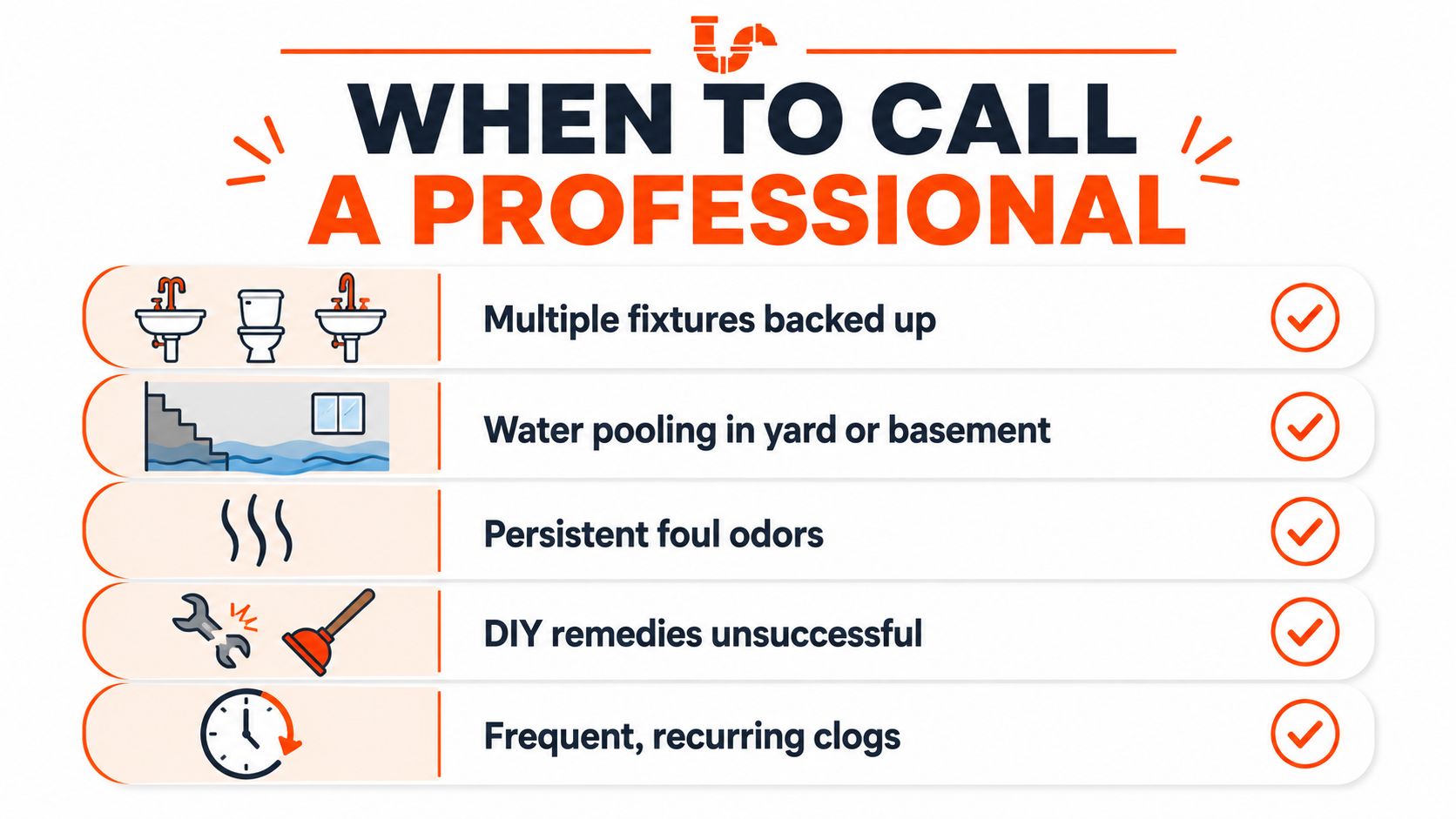
The five signs that should change your plan
Call for professional help when you notice any of these:
- Multiple fixtures backed up: That usually points beyond a simple local clog.
- Water pooling in the yard or lowest area of the home: That can signal a larger drainage problem.
- Persistent foul odors: Sewer smells aren't a DIY guessing game.
- DIY methods failed: If plunging, trap cleaning, and snaking didn't hold, there's a reason.
- Recurring clogs: A repeat clog usually means buildup or damage remains in the line.
Why professional equipment matters
A licensed plumber can inspect the line first, confirm where the blockage is, and choose the right method. That may mean a camera inspection, a professional cable machine, or hydro-jetting if the pipe condition allows it.
For homeowners, the value is simple. Instead of poking at symptoms, you get a diagnosis and a targeted fix.
In the U.S., professional drain cleaning for a clogged drain typically costs between $147 and $352, with a national average of $246 in 2025, based on HomeAdvisor's clogged drain repair cost guide. Main sewer line clogs can range from $100 to $800, depending on location and severity, and video inspection can add approximately $900 if a hidden blockage or pipe issue needs diagnosis in the same source. That's exactly why early action usually costs less than waiting for a full backup.
If sewage is involved, treat it as cleanup too
Once wastewater backs into living space, the issue is no longer only plumbing. It's sanitation and property damage. In that kind of situation, homeowners may also need specialized restoration help. A useful reference is Restore Heroes sewage cleanup experts, which explains what proper sewage backup cleanup involves after the water stops.
If you want to see the kind of public-facing home service credibility that matters when choosing who enters your house, even a local Tampa Bay interview feature image gives homeowners one more confidence check before booking service.

The smartest time to call is before the clog becomes damage.
If your sink, shower, toilet, or main line keeps giving you trouble, Heatwave Air Conditioning, Plumbing, & Electric can help homeowners across Tampa Bay and Southwest Florida get to the cause fast. Whether you're dealing with hard water buildup in an older home, a kitchen line that keeps slowing down, or a backup that's gone past DIY territory, their team can inspect the problem and recommend the right fix without guesswork.