
Your AC quits on a brutal Florida afternoon, the house gets sticky fast, and the technician says your system is “low on refrigerant” or “uses an older refrigerant type.” That’s usually the moment homeowners realize they’ve been handed a repair decision before anyone has explained the vocabulary.
Refrigerant is the chemical that lets your air conditioner move heat out of your home. If the compressor is the heart of the system, refrigerant is the working fluid that makes cooling happen at all. When the refrigerant type in your system becomes expensive, outdated, or hard to service, that affects repair options, replacement timing, and your budget.
For Florida homeowners, this topic matters more than it might in milder climates. Your AC runs hard, long, and often. A refrigerant issue here isn’t some minor technical footnote. It can turn into a comfort problem, a compliance question, and a real money decision in one service call.
Your AC Needs a 'Recharge' What Does That Even Mean
When someone says your AC needs a recharge, they usually mean the system is low on refrigerant and needs the correct amount restored. What many homeowners don’t realize is this: air conditioners don’t normally “use up” refrigerant like a car uses gas. If levels are low, there’s often a leak somewhere in the sealed system.
That distinction matters. A simple top-off without finding the cause can leave you paying for the same problem twice. If your unit is blowing warm air, running constantly, or struggling to cool in the afternoon, refrigerant may be part of the problem, but it’s not the only possible cause. A dirty coil, airflow restriction, electrical issue, or failing component can create similar symptoms. For a broader troubleshooting guide, read why your AC may not be blowing cold air.
Here’s the plain-English version of what refrigerant does:
- It absorbs indoor heat: Inside the evaporator coil, refrigerant pulls heat from the air in your home.
- It carries that heat outside: The compressor and condenser move that heat outdoors.
- It repeats the cycle: The refrigerant changes pressure and state inside a closed loop so your home feels cooler and drier.
Practical rule: If someone recommends a recharge, ask what refrigerant your system uses, whether a leak test is being done, and whether the repair makes financial sense for that specific unit.
The phrase ac refrigerants types sounds technical, but the underlying homeowner question is simpler. What’s in your system, can it still be serviced properly, and is it smart to keep investing in it?
A Brief History of Keeping Cool
Air conditioning didn’t start as a comfort upgrade for suburban homes. It started as industrial equipment, and the chemicals used early on were serious hazards.
According to this short history of air conditioning refrigerant, early electro-mechanical air conditioning systems, invented in 1902, relied on highly toxic and flammable chemicals like ammonia and sulfur dioxide. The major breakthrough came in 1928 with the synthesis of non-toxic, non-flammable chlorofluorocarbon refrigerants, a safety advance that helped make home air conditioning practical for average households.
That history matters because refrigerant changes have never been random. The industry keeps moving for two reasons. Safety and environmental impact.
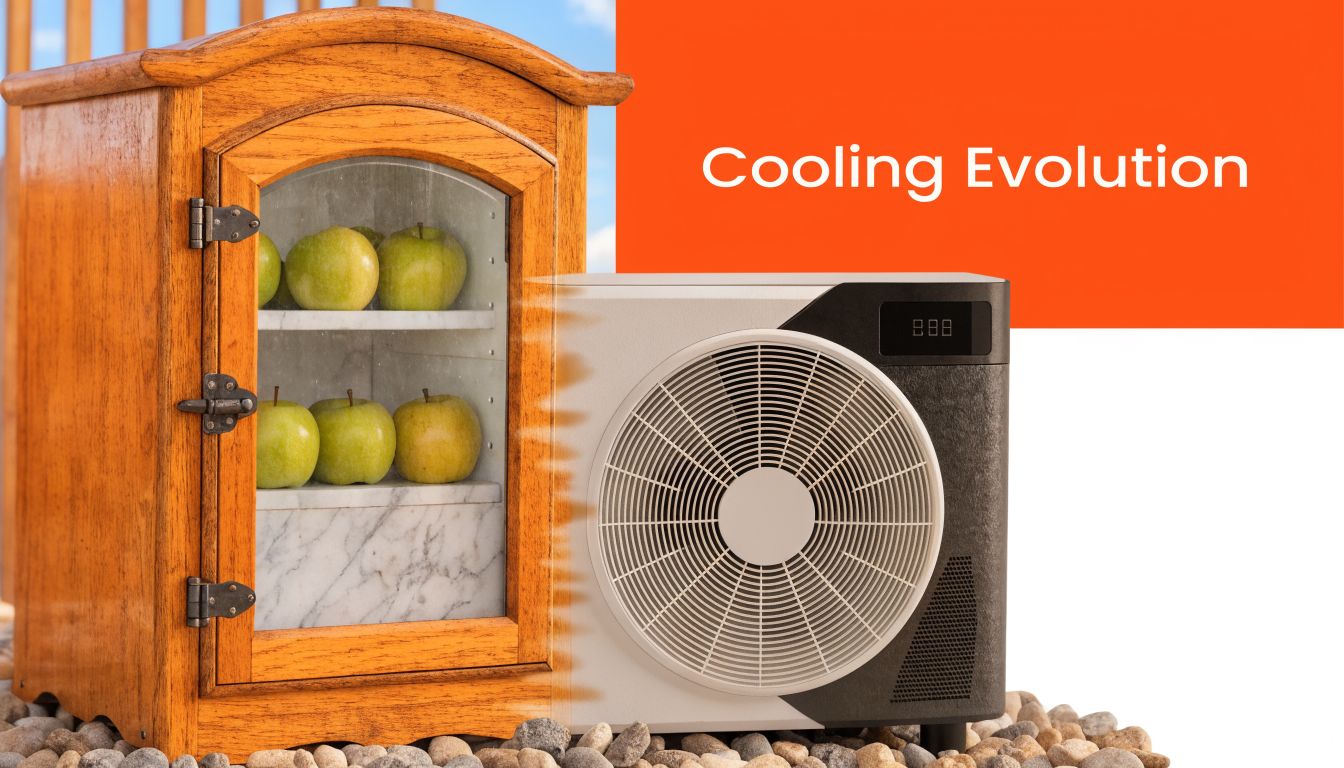
From dangerous chemicals to household comfort
The first systems were effective, but they weren’t something most families would want inside or near the home. Once safer refrigerants were developed, manufacturers could design equipment that worked for residential settings, not just factories and commercial buildings.
That shift changed daily life in hot regions. Homes became more livable through long summers, indoor humidity became easier to manage, and air conditioning moved from luxury to expectation.
If you enjoy home comfort history, the quest to keep cool gives useful background on how people tried to beat the heat long before modern HVAC became standard.
Why refrigerants keep changing
A refrigerant can be safe for people in one sense and still create environmental problems in another. That’s what drove later changes.
The older generation solved the flammability and toxicity problem for many applications. Then scientists learned that some of those chemicals damaged the ozone layer. Later, the focus shifted again toward lowering global warming impact.
Refrigerant history is a series of trade-offs. One generation improved safety. The next had to improve environmental performance. The current generation is trying to balance both.
That’s why homeowners in Florida hear new terms every few years. The names change because the standards change, and the standards change because the science and regulations do.
The Three Generations of Refrigerants in Florida Homes
A Florida homeowner usually asks the same practical question once refrigerant comes up. “If my AC has a leak, am I looking at a reasonable repair, or am I about to get pushed into a full replacement?” The answer starts with knowing which refrigerant generation your system uses.
For day-to-day decision-making, ac refrigerants types fall into three groups for most homes: R-22, R-410A, and the newer A2L refrigerants such as R-454B and R-32. That matters because refrigerant type affects service cost, equipment compatibility, repair options, and how much sense it makes to keep investing in an older system.

R-22 in older systems
If your system is older, it may use R-22, the refrigerant many homeowners still call Freon. In the trade, R-22 usually signals a unit that may still cool the house but is getting harder to justify when a serious refrigerant repair shows up.
R-22 was once the standard in residential air conditioning, then the industry moved away from it after researchers and regulators tied it to ozone depletion, as explained in this historical overview of refrigerant transitions.
That history matters because it affects your wallet now. An R-22 system can still run for years if it is tight, well-maintained, and otherwise healthy. But if it develops a leak, needs a compressor, or has coil problems, you are putting money into both an aging refrigerant and an aging piece of equipment.
What R-22 ownership usually means
- Higher risk on big repairs: A small fix may still make sense. A major sealed-system repair often does not.
- Tighter service options: Older refrigerants and older equipment platforms usually mean fewer straightforward, low-cost solutions.
- More pressure to plan ahead: In Florida, waiting until the unit fails in peak summer usually leads to rushed and expensive decisions.
I’ve seen plenty of R-22 systems that kept limping along because they still produced some cool air. That can buy time. It can also turn into repeat service calls, rising repair bills, and one breakdown too many during a July heat spell.
R-410A in most current homes
If your AC is not especially old, it likely uses R-410A. For years, this was the standard refrigerant in residential systems replacing older R-22 equipment.
For homeowners, R-410A has been the familiar middle generation. Contractors know it well, equipment was built around it, and service has generally been straightforward on a properly installed system. If you have an R-410A unit that cools well, holds charge, and is in decent shape overall, there is no reason to treat it like a problem just because newer refrigerants are entering the market.
The practical question is age and condition. A five-year-old R-410A system with a routine repair is a different conversation from a twelve-year-old one with a leaking evaporator coil and poor humidity control.
What to know if your home has R-410A
| System situation | What it means in practice |
|---|---|
| Your R-410A unit runs well | Keep maintaining it and address problems early. |
| It has a small repair need | Repair is often reasonable if the rest of the system is sound. |
| It has major sealed-system damage | Compare repair cost against age, warranty status, efficiency, and replacement timing. |
| You’re shopping for a new unit | Ask what refrigerant it uses, what parts are specific to that platform, and how that affects future service. |
Homeowners in Florida also need to look past refrigerant alone. Humidity removal, duct condition, sizing, and installation quality often matter more to comfort than the refrigerant name on the data plate. If you are weighing a replacement, this guide on how to choose the right HVAC system for your home can help you ask better questions before you sign a proposal.
The newer A2L generation
New residential equipment is shifting toward A2L refrigerants, including R-454B and R-32. Homeowners usually notice the unfamiliar names first. The next thing they hear is that these refrigerants have different safety classifications, which can sound alarming until it is explained properly.
Here is what matters in plain language. These systems are designed and listed for those refrigerants from the start. The refrigerant, controls, coil, compressor, and safety features are engineered to work together as one package. That is why a new A2L system is not something to fear, and it is also why an older system cannot be “converted” because someone wants a cheaper shortcut.
What changed with this generation
Newer refrigerants are part of the industry shift toward lower global warming impact. For the homeowner, the bigger issue is not memorizing the chemistry. The bigger issue is understanding that newer equipment may come with different components, labels, installation requirements, and service procedures.
That affects buying decisions in a real way. If your current system is near the end of its life, replacement quotes may now involve equipment that uses A2L refrigerants. That does not automatically raise or lower quality. It means you want a contractor who installs that equipment correctly, explains the refrigerant clearly, and sizes the system for Florida heat and humidity instead of selling on brand name alone.
A newer refrigerant is not a universal upgrade. It is part of a system that has to be matched, installed, and serviced correctly.
What homeowners should expect
- Different refrigerant names on new equipment
- No direct swapping between generations
- More importance placed on matched equipment and correct installation
- A stronger need to compare repair-versus-replace costs before a breakdown forces the issue
For a Florida homeowner, that is the takeaway from these three generations. R-22 often raises the cost and risk of major repair decisions. R-410A is still common and still serviceable in many homes. A2L refrigerants are what you are more likely to see in new equipment going in today. The smart move is not chasing whichever refrigerant sounds newest. The smart move is choosing the option that fits your home, your budget, and how long you plan to keep the system.
Decoding Government Regulations and Phaseouts
When homeowners hear phaseout, they often think it means their current AC just became illegal. That’s usually not what it means in practice.
A refrigerant phaseout or phasedown affects what can be produced, imported, sold in new equipment, or used in certain ways going forward. For you, the actual effect is more gradual. Service may get harder. Availability may tighten. Certain repairs may become less appealing financially. But your existing system doesn’t usually become contraband overnight.
What the word phaseout means at home
Think of it as a supply and equipment transition, not a police raid on your condenser. If your current unit still runs and can be serviced legally with the proper refrigerant and procedures, that’s the issue that matters. The pressure comes later, when a big repair lands and the older platform no longer makes sense.
This is why misinformation causes so many bad decisions. Some homeowners get pushed into replacement too early because they’re told an older refrigerant means immediate shutdown. Others wait too long because they assume “still running” means “still worth major investment.”
The practical effects you’ll feel
- Fewer easy fixes on older equipment: Once a refrigerant generation falls out of favor, every major repair deserves closer scrutiny.
- More importance on planning: If your system is aging, phaseouts are a budgeting signal, not just a chemistry lesson.
- Less flexibility with new installs: Newer systems are built around newer refrigerants and corresponding components.
If you want to understand the larger industry direction behind these changes, innovations reshaping HVAC for Florida residents provides useful context.
Don’t let anyone reduce this to a scare tactic. Regulations matter because they change future service realities, not because they make a working system instantly unusable.
For Florida homeowners, the smart response is calm planning. Know what refrigerant your system uses. Know its general age and condition. And when a big repair comes up, make the decision with a clear view of the next few years, not just the next few days.
Your Big Decision Repair Retrofit or Replace
A Florida homeowner usually calls us at this point after the AC stops keeping up, the house feels sticky, and a repair estimate suddenly includes words like leak, compressor, or coil. That is when refrigerant type stops being background information and starts affecting real money.
The key question is simple. Does this repair buy you dependable cooling, or does it pour cash into a system that is already nearing the end?

When repair makes sense
Repair is often the right call when the unit uses a current, serviceable refrigerant, the problem is contained, and the rest of the system is in good shape. A newer R-410A system with one repairable leak or a failed component can still have plenty of useful life left.
I look at the full picture before recommending repair. Age matters. Coil condition matters. Past service history matters. In Florida, runtime matters a lot because systems here work hard for most of the year. If the equipment has been reliable and the fix gives you a strong chance of several more seasons, repair can be money well spent.
When replacement is the smarter move
Replacement starts to make more sense when you have an older system, a large refrigerant leak, compressor damage, or several worn parts showing up at the same time. That is common with older R-22 equipment. Even if one repair is possible, the next failure may not be far behind.
For homeowners, this is usually a financial decision before it is a technical one. Spending heavily on aging equipment can leave you with another repair bill in a few months and no real improvement in comfort or efficiency. If that money can be redirected into a new system with better reliability, better humidity control, and easier future service, replacement is often the safer long-term move.
Why retrofit myths get expensive fast
A lot of homeowners ask whether an older system can be converted to a newer refrigerant and kept going. Clear language matters here. Refrigerants are not interchangeable, and the system was designed around a specific refrigerant, pressure range, oil type, and metering setup.
That is why a technician cannot safely treat R-22 and R-410A like substitute options. Newer refrigerants often run under different operating conditions, and the equipment has to match. Trying to mix refrigerants or force the wrong refrigerant into the wrong system can damage the compressor, create unreliable operation, and leave you with a bigger bill than the original repair.
If someone offers to “just top it off” with a different refrigerant, slow the conversation down and ask what refrigerant the unit was designed to use.
A practical way to decide
Use this filter when you review the estimate:
- Newer system, isolated issue: Repair is usually the first option if the rest of the unit is sound.
- Older R-22 system, major sealed-system repair: Replacement is often the better financial choice.
- Recommendation to mix refrigerants: Decline it.
- Recommendation to convert the system without explaining component compatibility: Ask more questions before approving anything.
- High cooling bills and uneven comfort: Consider the house as a whole, including airflow and improving home insulation, before spending heavily on old equipment.
If replacement is on the table, it helps to compare the repair estimate against the cost and benefits of a full air conditioning installation service. That gives you a clearer view of what you are buying, not just what you are fixing.
What to Expect for AC Refrigerant Service Costs
The hardest part of refrigerant pricing for homeowners is that there usually isn’t one line item. You’re paying for diagnosis, leak location, repair labor, system condition assessment, and then the refrigerant service itself if the repair is worth doing.
That’s why broad “recharge price” questions often lead to frustration. A responsible technician should first determine why refrigerant is low. If a system has a leak, topping it off without solving the leak can turn today’s bill into the first of several.
What drives the cost
A few practical factors shape what you’ll pay:
- Refrigerant type: Older, phased-out refrigerants tend to create tougher financial choices than serviceable current-generation systems.
- Leak location: An accessible connection is a different job than a coil issue or hard-to-reach sealed-system problem.
- System condition: If the unit has other wear issues, refrigerant work may not be the only expense on the table.
- Amount of labor involved: Testing, confirming, repairing, evacuating, and recharging all affect the estimate.
Why older refrigerants change the math
With older refrigerant platforms, the service decision often stops being “Can this be repaired?” and becomes “Should this be repaired?” That’s especially true when the leak is significant or the system has other age-related problems.
A good estimate should separate diagnosis from correction and explain what happens if the repair holds versus if the unit develops another major issue. That kind of clarity helps you compare short-term spending to replacement planning instead of reacting under pressure.
There’s also a home-performance angle homeowners overlook. If your house leaks air or gains heat too easily, your AC works harder and longer, which magnifies every efficiency and comfort problem. This guide on improving home insulation is useful if you want to reduce strain on the cooling side before or after HVAC work.
A better way to read the estimate
| Estimate item | What you should ask |
|---|---|
| Leak search or diagnostic charge | What problem are you confirming before refrigerant is added? |
| Repair recommendation | Is this expected to solve the cause, or just restore cooling temporarily? |
| Recharge or adjustment | Is the system being charged with the exact refrigerant it was designed for? |
| Replacement recommendation | What makes replacement smarter than repair on this specific unit? |
The cheapest invoice isn’t always the lowest-cost decision. In refrigerant work, the lowest long-term cost usually comes from diagnosing correctly the first time and avoiding repairs that don’t fit the age or design of the equipment.
Why Refrigerant Handling Is Not a DIY Job
Refrigerant work looks simple online because the dangerous parts are easy to hide on camera. In real life, you’re dealing with pressurized chemicals, specialized gauges, recovery equipment, and legal handling requirements.

A homeowner can change filters, clear debris around the outdoor unit, and pay attention to symptoms. Refrigerant charging, leak repair, and sealed-system service belong to certified professionals.
Signs that point to a refrigerant problem
- Warm supply air: The AC runs, but it doesn’t cool properly.
- Ice on indoor components: Frozen evaporator areas can point to a refrigerant issue, airflow issue, or both.
- Hissing or bubbling sounds: Those can indicate a leak in the refrigerant circuit.
- Long run times with poor comfort: The system may be struggling to move heat as designed.
Safety and system survival go together here. A bad DIY refrigerant job can injure the person doing it and damage the equipment they were trying to save.
Routine maintenance catches a lot of these issues before they turn into emergency calls. If you want to reduce the odds of surprise refrigerant trouble, read more about the benefits of HVAC maintenance.
Frequently Asked Questions About AC Refrigerants
Can my old AC just be topped off with a new refrigerant
No. Refrigerants are not universally interchangeable. The system has to use the refrigerant it was engineered for.
Is R-410A banned in my current home system
A current R-410A system can still remain in service. The important issue is proper maintenance and making smart repair decisions if major problems show up.
Is R-454B replacing R-410A
Yes, it’s one of the newer lower-GWP options being used in newer residential equipment. As noted earlier in the article, it represents the next step in the current refrigerant transition.
Is propane refrigerant an option for my house
Homeowners ask this more often now because they hear about ultra-low GWP alternatives. According to the EPA’s guidance on acceptable refrigerants and their impacts, ultra-low GWP refrigerants like R-290 (propane) offer excellent efficiency but are currently banned for use in residential split-system ACs in the US due to flammability concerns, even though they’re used in other applications and regions. The same EPA guidance notes that newer A2L refrigerants like R-454B are a compromise, offering lower GWP than R-410A while meeting stricter US safety standards for in-home use.
Does low refrigerant always mean I need a whole new unit
Not always. Low refrigerant means the system needs proper diagnosis. Sometimes the right answer is a repair. Sometimes the leak, age, and overall condition make replacement the smarter move.
What should I ask before approving refrigerant work
Ask these three questions:
- What refrigerant does my system use
- Where is the leak or failure
- Does this repair make sense for the age and condition of the unit
If your AC is struggling and you want a clear answer instead of jargon, Heatwave Air Conditioning, Plumbing, & Electric can help you understand what refrigerant your system uses, what your repair options really are, and whether it makes more sense to fix the problem or plan for replacement. For homeowners in Tampa Bay and Southwest Florida, that kind of straight diagnosis can save a lot of stress when the heat is on.