
To get the humidity down in your house, you really want to focus on three key strategies: improving ventilation, running your air conditioner the right way, and using a dehumidifier for those extra-damp spots. Nailing these three things is the foundation for getting rid of that sticky, damp feeling so common in Florida homes, which helps stop mold in its tracks and just makes life more comfortable.
Why Florida Homes Trap So Much Humidity
Living in Florida is fantastic, but it comes with a constant battle against an invisible enemy: humidity. Whether you're near the coast in Sarasota or further inland in Tampa, our subtropical climate is always trying to push moisture into our homes. And our houses are surprisingly good at trapping it, which makes the air feel warmer than it is and opens the door to a bunch of other problems.
The main offender, no surprise, is the humid air that sneaks in every time you open a door or window. But we also generate a ton of moisture right inside our own homes. Everyday activities are huge contributors:
- Showering and Bathing: A long, hot shower can pump a serious amount of steam into the air.
- Cooking: Boiling a pot of pasta or letting a soup simmer on the stove? You're adding gallons of water vapor into your kitchen.
- Laundry: Washing clothes and especially drying them indoors can send humidity levels through the roof.
- Just Breathing: Yep, even breathing releases moisture. A family of four can add several pints of water to the air every single day.
The Consequences of Unchecked Humidity
When your indoor humidity consistently creeps above the ideal 45-55% range, it's more than just uncomfortable. High moisture creates the perfect breeding ground for mold and mildew, which can cause real damage to your house and create serious health risks. It's a widespread issue—nearly 47% of U.S. homes report problems with mold, and excess dampness is almost always the root cause.
This dampness doesn't just affect your health; it hits your home's structure and your wallet, too. Wood floors can warp, paint starts to peel, and that musty smell can get into everything. Plus, because humid air feels warmer, your air conditioner has to work overtime to keep you cool, which means higher energy bills.
Understanding where this moisture comes from is the first step. For a deeper look at creating a healthier home, you can learn more about improving your indoor air quality with our specialized guide.
Key Takeaway: High indoor humidity isn't just uncomfortable—it's a direct threat to your home's structural integrity and your family's health, promoting mold growth and making your HVAC system less efficient.
Quick Guide to Humidity Culprits and Solutions
To make things a bit simpler, I've put together a quick table that breaks down the common sources of humidity and how to tackle them. Think of it as your cheat sheet for a drier, more comfortable home.
| Humidity Source | Short-Term Fix | Long-Term Solution |
|---|---|---|
| Outdoor Air Infiltration | Keep windows/doors closed | Seal air leaks, improve insulation |
| Cooking & Showers | Use exhaust fans | Install high-CFM ventilation fans |
| Laundry | Dry clothes outside or vent dryer | Ensure proper dryer venting |
| Plumbing Leaks | Temporary patch/turn off water | Professional plumbing repair |
This table helps you quickly identify the problem area and see both a quick fix you can do right now and a more permanent solution to consider for the future. Tackling both can make a huge difference in your home's overall comfort.
Immediate Fixes for Lowering Indoor Humidity
When your Florida home starts to feel like a swamp, you need relief now, not weeks from now. Thankfully, tackling high indoor humidity doesn’t always mean a massive overhaul or expensive equipment. You can use several immediate, practical strategies to significantly cut that sticky, damp feeling in just a few hours.
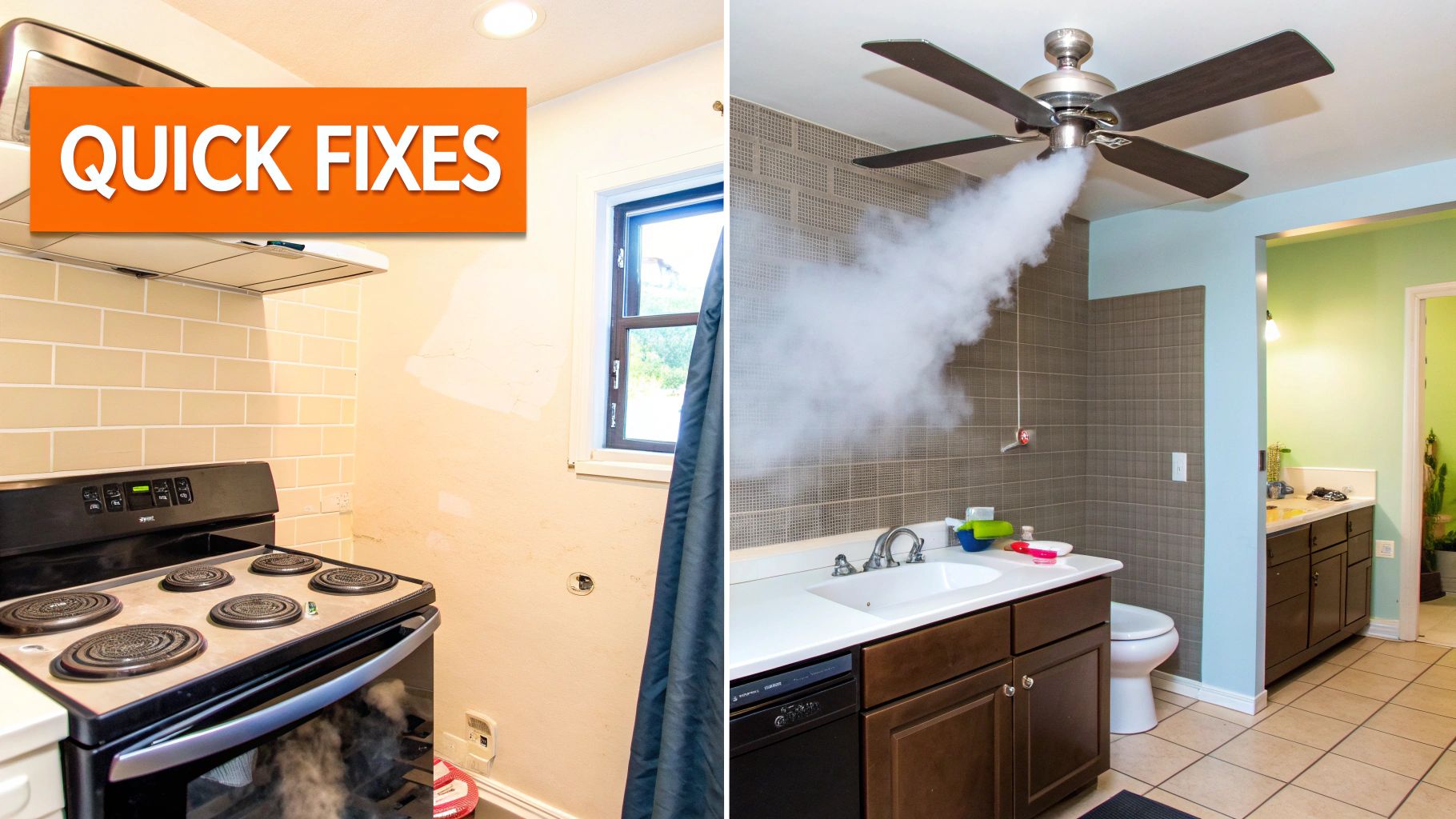
These quick wins are all about two things: getting moisture out at the source and improving air circulation so it can’t settle. By making a few simple tweaks to your daily routine, you can gain the upper hand in the constant battle against our state's notorious humidity.
Master Your Exhaust Fans
Your bathroom and kitchen exhaust fans are your first line of defense. Their whole job is to vent that moisture-heavy air directly outside before it can spread through your home, but most people just don't use them effectively.
The secret is all about timing and duration. Don't just flip the fan on while you shower—leave it running for at least 15-20 minutes after you turn the water off. This pulls all the leftover steam out of the room so it doesn't cling to your walls, mirrors, and towels. The same idea applies to cooking. Turn on the range hood fan the moment you start boiling water and keep it going for a few minutes after you're done.
Everyday activities like showering and cooking can easily push indoor humidity above 60%, creating a breeding ground for allergens that affect 20 million Americans annually. In the U.S., residential cooling already eats up a staggering 19% of home electricity, and poor moisture control only makes that number worse here in Florida. Using those fans correctly can slash humidity by 30-50% in those high-moisture areas, giving your AC a much-needed break. You can dig into the numbers on home energy use in this report from the U.S. Energy Information Administration.
Harness the Power of Air Circulation
Stagnant air is humid air. Plain and simple. When air doesn't move, moisture just hangs around, making rooms feel stuffy and creating the perfect environment for mold. This is where your fans—both ceiling and portable—become essential.
Running your ceiling fans, even on a low setting, creates a steady airflow that helps moisture evaporate from surfaces and keeps the air from feeling so heavy. This circulation also helps your air conditioner do its job more efficiently. By moving the cooler, conditioned air around, fans help you feel comfortable at a slightly higher thermostat setting, which translates directly to energy savings.
Pro Tip: Make sure your ceiling fans are spinning counter-clockwise during the summer. This motion pushes cool air down, creating a wind-chill effect that makes you feel cooler without actually changing the room's temperature.
Adopt Simple, Humidity-Busting Habits
You’d be surprised how much of an impact small changes in your daily routine can have on your home's humidity. These adjustments are free, easy to start today, and work together to cut down on the amount of moisture you’re putting into the air in the first place.
Here are a few habits to pick up right away:
- Take Cooler, Shorter Showers: Hot water creates a ton more steam than cool water. Just dropping the temperature by a few degrees makes a real difference.
- Cover Your Pots and Pans: When you're cooking, simply putting a lid on that boiling pot of pasta traps a huge amount of steam, keeping it out of your kitchen air.
- Space Out Your Houseplants: Plants naturally release moisture through transpiration. If you have a jungle clumped together, you're creating a little humidity hotspot. Give them some breathing room.
- Wipe Down Wet Surfaces: After you shower, grab a squeegee and clear the water off the walls and glass door. Same goes for spills on countertops or floors—wipe them up right away.
Putting these quick fixes into practice will bring immediate relief and start building a more comfortable indoor environment. Of course, none of this works as well if your AC isn't in good shape. It might be a good time to check out our guide on the top 5 AC maintenance tips to make sure your system is ready to fight the good fight.
Optimizing Your AC for Dehumidification
Your air conditioner does more than just cool your home; it's your single most powerful weapon against humidity. Here’s how it works: the system pulls in that warm, sticky air and passes it over a frigid component called an evaporator coil. This forces moisture in the air to condense—think of the droplets on a cold glass of sweet tea—and get drained away, leaving drier, cooler air to be sent back into your home.
Living anywhere in Tampa Bay or Southwest Florida, from Sarasota down to Fort Myers, you know your AC is putting in serious overtime. Down here in the South Census Region, a staggering 93% of households rely on air conditioning. That heavy usage means our AC units are responsible for about 27% of our total home energy use, which is way above the national average. You can see more data on this in this report on what uses the most energy in a home.
When your system is running right, it tackles both heat and humidity perfectly. When it’s not, you feel it.
The Crucial Role of Regular AC Maintenance
If you want your air conditioner to actually pull moisture out of the air, consistent professional maintenance isn't optional. It's essential. Over time, the evaporator coil gets caked with dust, pet dander, and other gunk, which acts like an insulating blanket. This grime physically stops the coil from getting cold enough to condense humidity effectively.
The same thing happens with your air filter. A clogged filter chokes off the airflow, making your system struggle just to breathe. This drastically reduces its ability to pull humid air through the unit in the first place. It’s a simple fix with a massive payoff: change your filter every 30-90 days. Do it more often if you have pets.
A professional tune-up handles the stuff you can't:
- Cleaning the Evaporator and Condenser Coils: This is the most direct way to restore your AC's dehumidifying power.
- Checking Refrigerant Levels: If the refrigerant is low or off-balance, the coils won't hit the right temperature needed for condensation.
- Clearing the Condensate Drain Line: A clogged drain means all that water your AC collected has nowhere to go. It backs up, causing water damage and, ironically, even higher indoor humidity.
These steps ensure your AC is actively drying your home, not just blowing cool air around. If your system is struggling, it's a good idea to review these common AC problems and their solutions to see if a maintenance issue is the real culprit.
Why an Oversized AC Is Your Enemy
You'd think a bigger, more powerful AC would be better for a hot Florida home, right? Wrong. When it comes to humidity, an oversized system is a huge problem. It cools the house down way too fast in a process called short-cycling.
The AC blasts cold air, satisfies the thermostat in just a few minutes, and shuts off. The catch? It didn't run long enough to pull a meaningful amount of moisture from the air. This leaves you with a room that feels cool but still uncomfortably clammy and damp. It's that classic "cold and wet" feeling.
A properly sized air conditioner needs to run for longer, more consistent cycles. That extended runtime is what gives the system enough time to condense and drain away all that airborne moisture, leaving your home feeling both cool and comfortably dry.
Smart Thermostat Settings for Humidity Control
How you use your thermostat also makes a big difference. Many modern thermostats come with features specifically for managing humidity. Look for a "dry" or dehumidification mode, which tells the system to run longer, lower-capacity cooling cycles to maximize moisture removal.
But the single biggest mistake people make is setting the fan to “ON” instead of “AUTO.” When the fan is set to "ON," it runs nonstop, even when the AC isn’t cooling. As that fan blows air over the wet evaporator coil, it picks all that moisture right back up and pumps it straight back into your rooms. It completely undoes all the hard work your AC just did.
Always, always keep your fan set to "AUTO." This ensures the fan only runs when the system is actively cooling and dehumidifying, giving the condensed water time to actually drain away.
Choosing the Right Dehumidifier for Your Home
Your air conditioner is your first line of defense against Florida humidity, but it’s not always the perfect tool for the job. During those muggy spring and fall "shoulder seasons," the temperature might not be hot enough to run the AC constantly. This is where a dedicated dehumidifier becomes your secret weapon, pulling that sticky moisture out of the air without over-cooling your house.
Picking the right dehumidifier can make a huge difference in your home's comfort and your monthly energy bills. The choice really boils down to two main options: portable units and whole-house systems. Each is designed for very different situations and spaces.
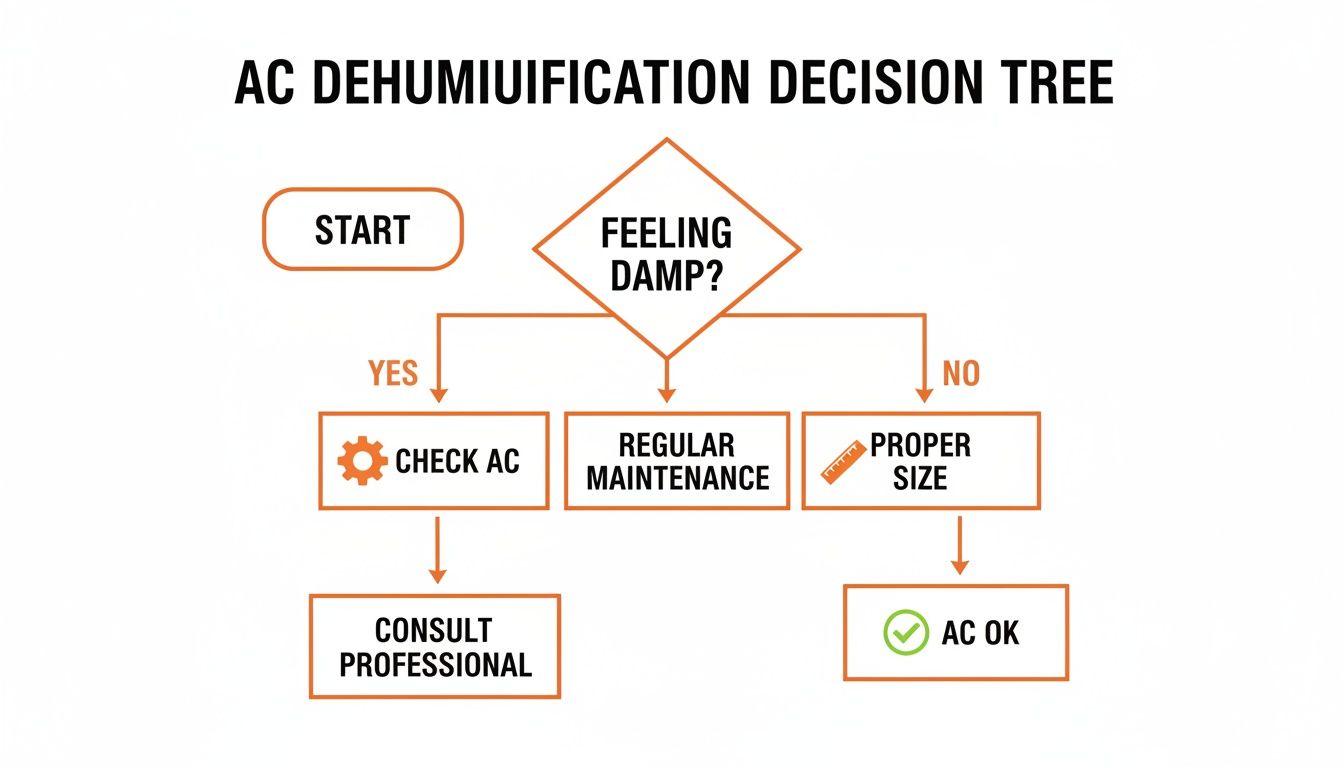
This decision tree is a great way to visualize when a dehumidifier is the logical next step. If you've already made sure your AC is properly maintained and sized but your home still feels damp, it’s a clear sign you need some backup.
Portable Dehumidifiers: The Flexible Solution
Portable dehumidifiers are exactly what they sound like—standalone appliances you can plug into any standard outlet. They are fantastic for tackling specific problem areas like a musty laundry room, a damp basement, or a bathroom that just can't seem to dry out. Their biggest advantage is flexibility; you can move them wherever they're needed most.
When you're shopping for a portable unit, the key spec to look at is its capacity, which is measured in how many pints of water it can pull from the air every 24 hours.
- Small (20-30 pints): Perfect for single rooms like bedrooms or bathrooms.
- Medium (40-50 pints): Great for larger spaces like living rooms or basements up to 1,500 square feet.
- Large (60-70 pints): Built for seriously damp areas or open-concept spaces over 2,000 square feet.
The main thing to remember with portable units is the maintenance. You have to empty the water collection bucket, and in a humid Florida home, that can be a daily chore. Most models let you attach a hose for continuous draining, but you’ll need to place it near a floor drain for that to work.
Whole-House Dehumidifiers: The Ultimate Set-It-and-Forget-It System
For homeowners in places like Cape Coral or Port Charlotte who are tired of fighting a constant humidity battle, a whole-house dehumidifier is the gold standard. These systems aren't just plug-and-play; they are professionally installed directly into your existing HVAC ductwork. They work hand-in-hand with your air conditioner to automatically monitor and control humidity levels across your entire home.
A whole-house system draws in air from every room, strips out the excess moisture, and then circulates dry, comfortable air back through your vents. You just set your preferred humidity level on a central humidistat, and the system does all the work. It’s consistent, quiet, and you’ll never have to empty a bucket again.
For muggy Southwest Florida, where homes battle relentless humidity, a whole-house dehumidifier is a powerhouse solution for maintaining ideal 40-50% indoor levels, especially when the AC isn't running full-time.
It's a smart move financially, too. In humid southern regions, HVAC systems already account for 27% of home energy use. A standalone dehumidifier, removing 50-70 pints of moisture daily, can cut AC runtime by 20-30% and trim your electricity usage. That's a big deal when you realize central ACs in average homes consume over 2,000 kWh a year. You can dig into more stats on U.S. home energy consumption from the Energy Information Administration.
Making the Right Choice for Your Home
So, which one is for you? Deciding between a portable and a whole-house unit really comes down to your specific needs, your home's layout, and your budget. To make it a little easier, here's a quick side-by-side comparison.
Portable vs Whole-House Dehumidifiers
| Feature | Portable Dehumidifier | Whole-House Dehumidifier |
|---|---|---|
| Coverage | Single room or specific area | Entire home |
| Installation | Plug-and-play | Professional HVAC installation |
| Maintenance | Frequent bucket emptying | Annual professional service |
| Upfront Cost | $150 – $400 | $1,500 – $3,000+ |
| Operation | Manual on/off; can be noisy | Automatic and quiet |
If you’re just dealing with one or two problem spots, a portable unit is a practical and budget-friendly choice. But if that damp, sticky feeling is everywhere in your home, a whole-house system is a far more efficient and convenient long-term solution.
You can explore a variety of humidifier and dehumidifier options to see what might work best for your home's unique needs.
Long-Term Solutions for a Permanently Dry Home
While short-term tricks provide immediate relief, winning the war against Florida's humidity demands a long-term strategy. To really get the humidity in your house under control for good, you have to shift from just managing the symptoms to fixing the root causes.
This means we need to look at the structural and system-level improvements that stop moisture from creeping in and building up in the first place. These permanent solutions are all about tightening up your home’s "envelope"—the physical barrier between your cool, conditioned space and the soupy air outside.
Sealing the Cracks in Your Armor
Every tiny gap and crack in your home's exterior is an open door for humid air. Think of your house like a leaky boat; you can bail water all day long (by running the AC constantly), but you'll never truly be dry until you plug the holes.
These air leaks pop up in pretty predictable places. The first step is to grab a flashlight and do a thorough inspection of these common culprits:
- Windows and Doors: Check the weatherstripping and caulk around the frames. If it looks cracked, brittle, or sections are missing, you’ve found a major air leak.
- Utility Penetrations: Look closely where pipes, vents, and electrical wiring punch through your walls to the outside. These spots are notorious for being poorly sealed.
- Sill Plates and Rim Joists: This is where the wooden frame of your house sits on top of the foundation—a prime location for gaps to form over time.
Sealing these leaks with the right caulk, fresh weatherstripping, or spray foam is one of the most cost-effective moves you can make. A tightly sealed home puts you back in control of your indoor environment.
Homeowner Tip: On a breezy day, hold your hand near windows, doors, and electrical outlets. If you feel a draft, you've found an air leak that needs attention. Sealing it will directly help you reduce humidity in the house.
To really tackle the problem, it helps to understand core building science concepts. For instance, understanding R-value insulation is key, as proper insulation dramatically impacts how well your home resists moisture and heat.
Mastering Exterior Water Management
Moisture doesn’t just float in through the air; it can also seep up from the ground. Poor drainage around your foundation is a silent but powerful source of humidity, especially during Florida's rainy season.
When rainwater pools up against your foundation, it creates pressure that can literally force moisture right through solid concrete. The goal is simple: get every drop of water moving away from your home.
Start with your gutters and downspouts. Make sure they’re clear of leaves and debris. Crucially, they should be angled to discharge water at least five to ten feet away from your foundation.
Next, take a look at the grading, or the slope of the soil, around your house. The ground should gently slope downward and away from your foundation on all sides. If you see puddles forming near the house after a storm, you might need to add some soil to build up the grade or even consider installing a French drain for heavier water flow.
Hunting for Hidden Plumbing Leaks
Not every humidity source is obvious. A slow, quiet drip from a pipe hidden under a sink or behind drywall can pump gallons of moisture into your home's air over weeks and months. These sneaky leaks often go unnoticed until you find the tell-tale signs of mold or water damage.
Get into the habit of regularly inspecting your home's plumbing. Check under every sink, look behind the toilets, and inspect the area around your water heater. You're looking for any sign of moisture, water stains, or even just a musty smell.
A sudden, unexplained spike in your water bill is another massive red flag that you’ve got a hidden leak somewhere.
Even a tiny drip is a constant source of humidity. Fixing these leaks not only helps dry out your home but also saves you from the nightmare of costly water damage and mold remediation down the road. In fact, 47% of U.S. homes have reported mold issues, and hidden leaks are a primary culprit.
Tackling these bigger fixes takes more effort, but the payoff is a home that is permanently drier and more comfortable. And since a drier home is easier and cheaper to cool, you'll see the benefits on your energy bill, too. If you're thinking about a major upgrade, be sure to check out our guide on how to choose the right HVAC system for your home.
Answering Your Top Questions About Home Humidity
Even after you've started tackling the humidity problem, a few specific questions always seem to pop up. Getting clear, straightforward answers is the key to fine-tuning your approach and finally winning the battle against that sticky, damp feeling we all know too well here in Florida.
Let's dive into some of the most common questions we hear from homeowners just like you.
What Is the Ideal Humidity Level for a House in Florida?
In our climate, you want to aim for an indoor relative humidity between 45% and 55%. This isn't just a number—it's the sweet spot for both your comfort and your home's health.
If your home’s humidity drops below 45%, the air gets too dry, which can lead to irritated sinuses and dry, itchy skin. But once you start creeping above 55-60%, you’re rolling out the welcome mat for mold, mildew, and dust mites. That's a recipe for allergy and asthma flare-ups.
Here's a pro tip: keeping your home in that ideal humidity range often makes the air feel cooler. This means you can nudge your thermostat up a degree or two, saving a surprising amount on your monthly energy bills without feeling any less comfortable.
A simple digital hygrometer is a cheap and effective tool to keep an eye on your home's levels.
Does Running the AC Fan Continuously Help with Humidity?
This is probably one of the biggest—and most damaging—misconceptions out there. Forcing your AC fan to run 24/7 by switching it to the “ON” setting will actually make your house more humid.
Think about it this way: when your AC's cooling cycle stops, the fan keeps blowing air over the cold, wet evaporator coils inside your air handler. All that moisture your AC just worked so hard to pull out of the air gets re-evaporated and blown right back into your rooms. You’re literally undoing all the work.
For best results, always leave your thermostat fan set to “AUTO.” It’s a simple change that ensures the fan only runs when the cooling system is active, giving the collected moisture a chance to drain away properly.
Can High Humidity Damage My Home and Furniture?
Absolutely. Over time, persistent high humidity is incredibly destructive. It can cause wood to warp, swell, and even rot, which affects everything from your hardwood floors and window frames to the structural beams holding everything together.
It doesn't stop there. That moisture can ruin expensive furniture, wreck musical instruments like pianos and guitars, and damage sensitive electronics. You might also notice paint starting to peel, wallpaper bubbling up, or a constant film of condensation on your windows.
Worst of all, that constant dampness creates the perfect breeding ground for mold inside your walls and attic, which can lead to thousands in remediation costs and serious health problems. Managing your home's humidity isn't just about comfort; it's a critical part of home maintenance in Florida.
When Should I Call a Professional About My Home's Humidity?
While you can solve a lot of humidity issues on your own, some signs tell you it's time to bring in an expert. If you have a musty smell that just won't go away, see visible mold growth, or have constant condensation on your windows despite your best efforts, it's time to make the call.
Other red flags include water stains suddenly appearing on ceilings or walls, a sharp and unexplained spike in your energy bills, or an AC that runs constantly but never seems to cool or dehumidify your home. These symptoms often point to bigger problems like an improperly sized HVAC system, leaky air ducts, or a hidden plumbing leak that only a professional can diagnose and fix correctly.
If you're dealing with any of these stubborn humidity problems in Tampa Bay or Southwest Florida, don't let them get worse. The expert technicians at Heatwave Air Conditioning, Plumbing, & Electric can find the root cause and deliver a real, lasting solution. Contact us today for a professional consultation and get back to feeling comfortable and dry in your own home.