
Welcome to your essential guide to mastering home plumbing in Tampa Bay and Southwest Florida. Owning a home in our unique climate, with its high humidity, hard water, and hurricane season, presents specific challenges to your plumbing system. A small drip or a slow drain might seem like a minor annoyance, but these can quickly escalate into costly emergencies that disrupt your life and damage your property. This comprehensive resource is designed to prevent those exact scenarios from unfolding.
This guide isn't just about fixing problems, it's about proactively preventing them. We have compiled a detailed list of actionable plumbing tips for homeowners, moving beyond generic advice to provide specific, practical strategies tailored for our region. You will learn the critical steps for preventative maintenance, how to handle simple DIY fixes confidently, and exactly what to do in an emergency to minimize damage before professional help arrives.
From understanding the impact of our local hard water to preparing your system for hurricane season, these insights will empower you to protect your investment. By implementing these practices, you can save significant money on your water bills and future repair costs, all while maintaining a healthy, efficient home. Let's dive into the essential knowledge every Florida homeowner needs to keep their plumbing system in peak condition, year-round, and avoid the stress of unexpected plumbing failures.
1. Regular Drain Cleaning and Maintenance
Proactive drain maintenance is one of the most effective and wallet-friendly plumbing tips for homeowners. Instead of waiting for a stubborn clog to form, regular cleaning involves simple, preventative actions that keep your pipes clear and water flowing smoothly. This approach helps you avoid the stress and expense of emergency repairs, especially critical in Florida where humidity and heavy rains can exacerbate minor issues.
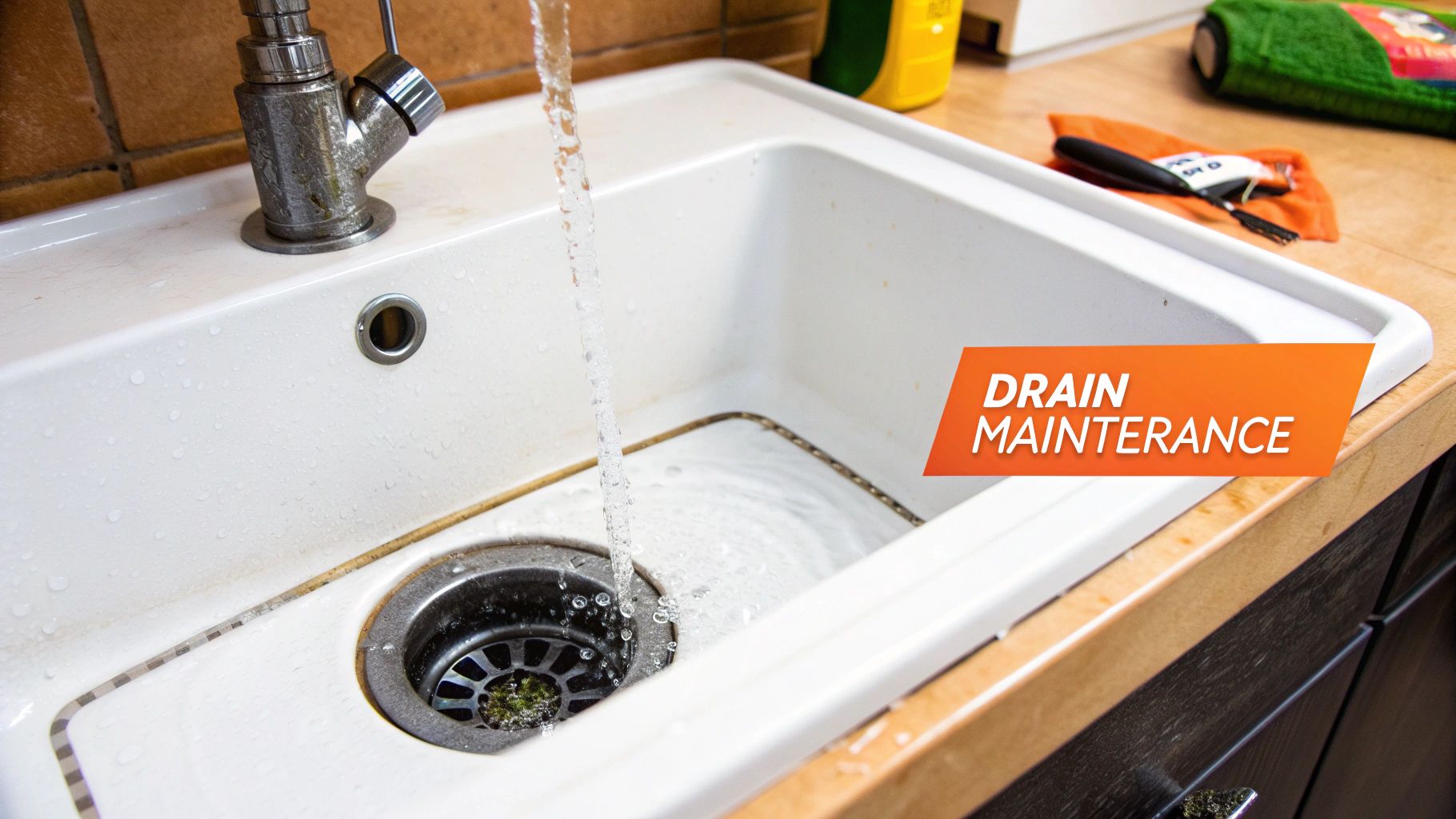
For instance, a Tampa Bay family that flushes their kitchen drain weekly with boiling water can prevent the grease and food particle buildup that attracts pests and causes backups during the rainy season. Similarly, a Southwest Florida resident with a septic system can extend its life and prevent costly damage by ensuring only appropriate materials go down the drain.
How to Implement Regular Drain Care
Integrating these habits into your routine is simple and requires minimal effort for maximum impact.
- Install Drain Strainers: Place mesh or silicone strainers in all kitchen sinks, bathroom sinks, and shower drains. These are inexpensive and incredibly effective at catching hair, soap scum, and food scraps before they enter your pipes.
- Weekly Hot Water Flush: Once a week, pour a pot of boiling water directly down each drain. This simple action helps dissolve accumulating grease and organic matter, washing it away before it can solidify into a blockage.
- Mind What Goes Down: Be vigilant about what you put in your drains. Avoid grease, coffee grounds, eggshells, and fibrous food scraps in the kitchen. In the bathroom, never flush anything other than toilet paper and human waste.
- Use Enzyme-Based Cleaners: If you notice a slow drain, opt for an enzyme-based cleaner over harsh chemical alternatives. These products use natural bacteria to eat away at organic waste without damaging your pipes or harming the environment.
By adopting these practices, you can significantly reduce the likelihood of major plumbing headaches. A consistently slow drain, however, might signal a deeper issue. Understanding the difference between a simple clog and a major obstruction can help you know when it's time to call a professional; you can learn more about the signs of a sewer line blockage to be better prepared.
2. Know Your Water Shut-Off Location
Among all the plumbing tips for homeowners, knowing the location of your main water shut-off valve is arguably the most crucial. In an emergency like a burst pipe or major leak, quickly cutting off the water supply to your home can prevent catastrophic flooding and thousands of dollars in water damage. This single piece of knowledge empowers you to take immediate control during a crisis, minimizing damage while you wait for professional help to arrive.
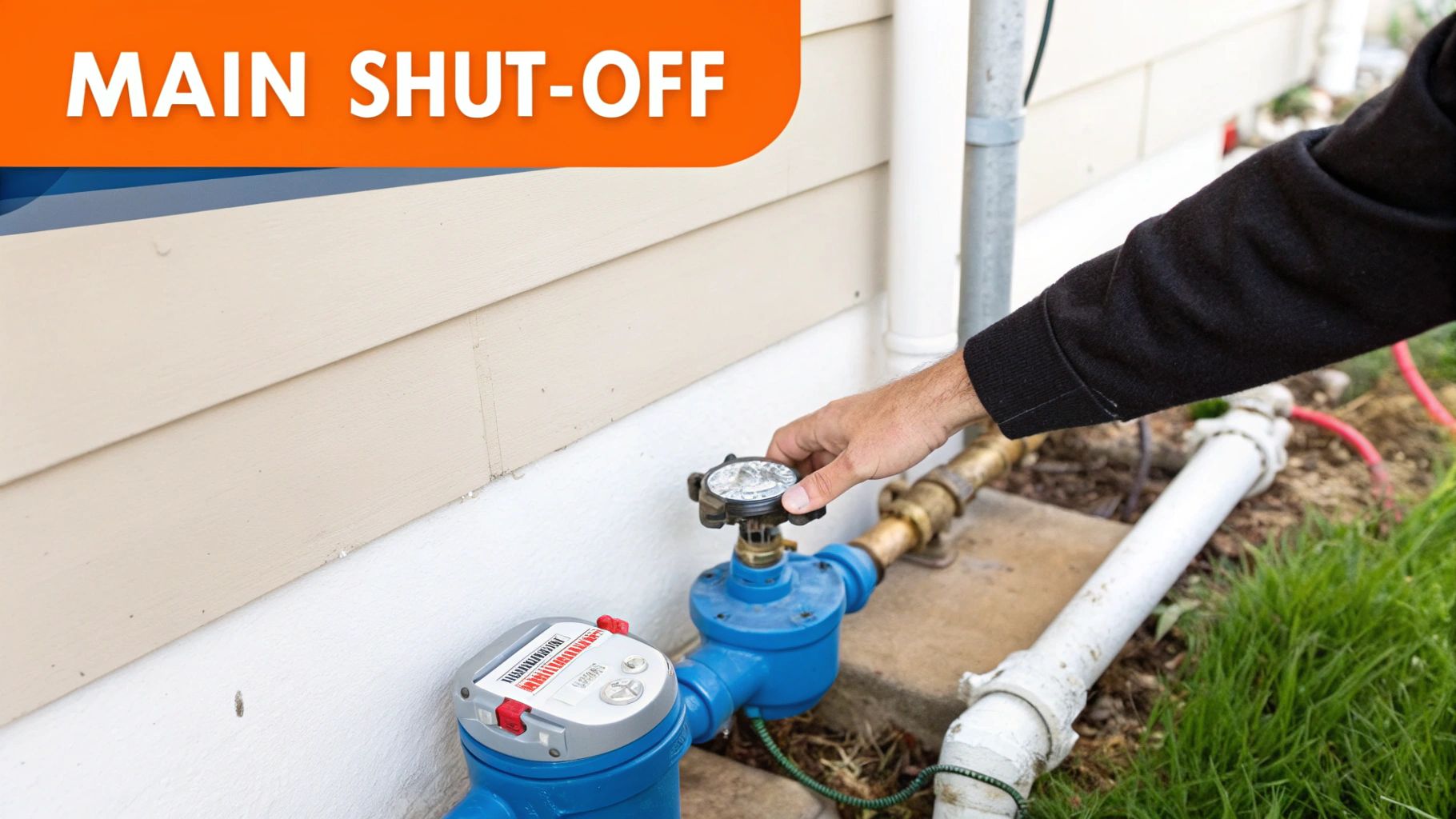
For instance, a Cape Coral homeowner who knows their shut-off location can instantly stop water flow before a summer storm turns a minor leak into a major problem. Similarly, a Fort Myers resident who can close the valve within minutes of discovering a burst pipe from high humidity stress significantly protects their property and possessions. This proactive knowledge is your first line of defense in any water-related emergency.
How to Prepare Your Water Shut-Off Valve
Taking these preparatory steps before you face a plumbing disaster will ensure you're ready to act swiftly and effectively.
- Locate the Valve: Find your main shut-off valve now, not during an emergency. It's often located on an exterior wall, in a basement or crawl space, or in an underground box near the street with your water meter.
- Label It Clearly: Once found, mark the valve with a bright, waterproof tag. This ensures anyone in your household can find it quickly. Taking a photo to share with family members is also a smart move.
- Test It Annually: Gently turn the valve handle or knob once a year to make sure it isn't stuck or corroded. Open and close it a couple of times to keep it operational.
- Keep Tools Nearby: Some valves require a special wrench (a curb key) to operate. If yours does, keep the tool in a designated, accessible spot near the valve.
- Know When to Call for Help: If the valve is difficult to turn, doesn't close completely, or appears corroded, don't force it. This could cause more damage. It's time to call a professional to service or replace it, ensuring it will work when you need it most.
3. Fix Leaky Faucets Promptly
A dripping faucet might seem like a minor annoyance, but it's a significant source of water waste and can lead to a surprisingly high water bill. Promptly fixing leaks is one of the most impactful plumbing tips for homeowners, as it conserves water and saves money. Most leaky faucets are caused by simple, inexpensive parts like worn washers or O-rings that are relatively easy for a homeowner to replace.
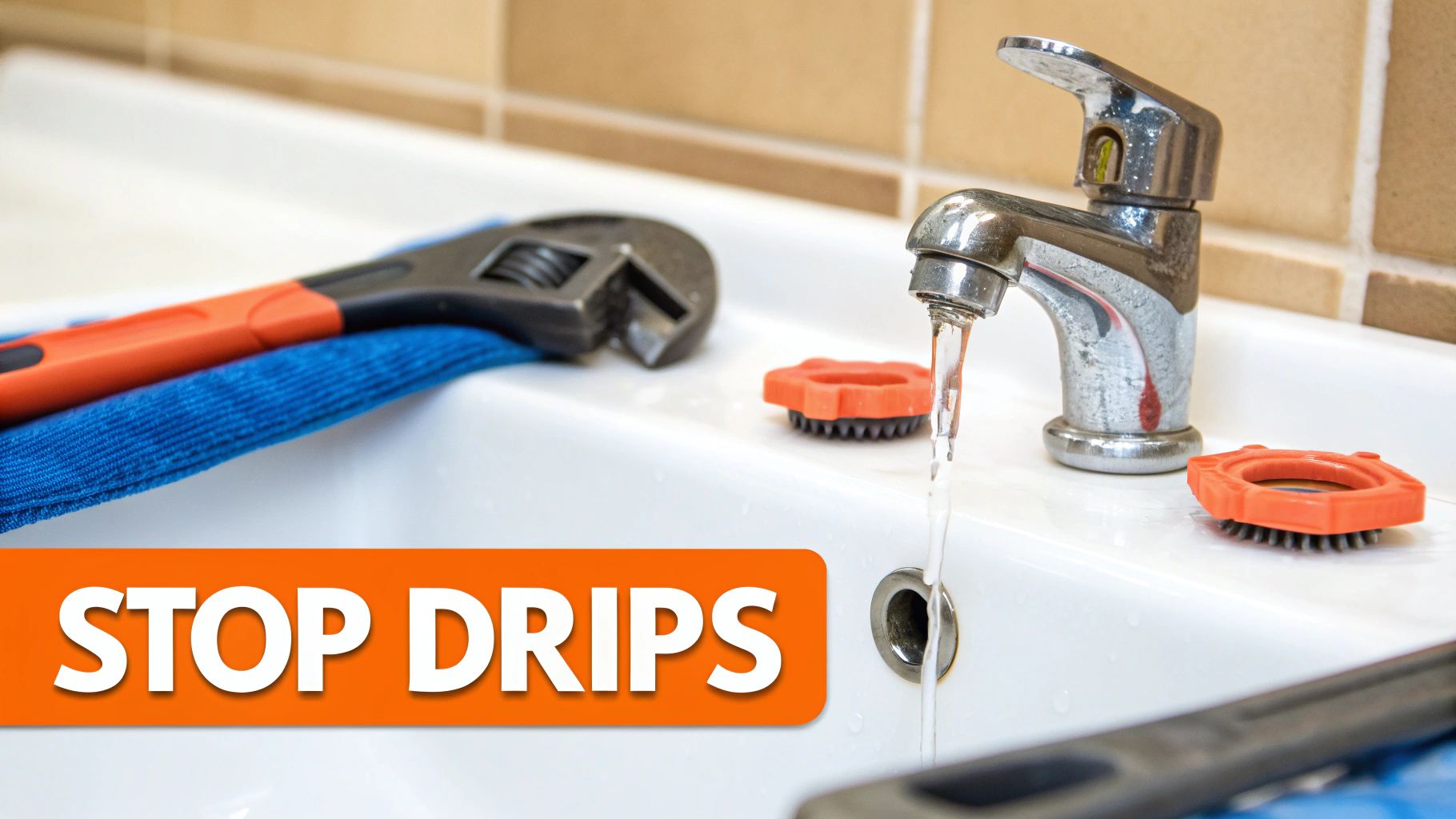
For example, homeowners in Tampa Bay have reported saving over $200 annually just by repairing a single dripping faucet. In Port Charlotte, families often discover hidden leaks by carefully monitoring their water bills for unexplained spikes, a practice that encourages water conservation, especially during Southwest Florida's dry seasons.
How to Address a Leaky Faucet
Taking action as soon as you notice a drip can prevent water damage and keep your utility costs down. Here’s a practical approach to tackling faucet leaks.
- Don't Ignore Small Drips: Even a slow drip can waste thousands of gallons of water per year. Treat every leak as an urgent repair.
- Shut Off the Water Supply: Before starting any work, always turn off the water supply to the faucet using the shutoff valve located under the sink.
- Identify Your Faucet: Determine the brand and model of your faucet before you buy replacement parts. This ensures you get the correct washer, O-ring, or cartridge for the job.
- Use Online Tutorials: A quick search for your specific faucet model will often yield helpful step-by-step video guides for the repair.
- Monitor Your Water Bill: Keep track of your monthly water usage. A sudden, unexplained increase can be a clear sign of a hidden leak somewhere in your home.
By being proactive about faucet repairs, you contribute to conservation efforts and protect your budget. If a leak persists after a DIY attempt or seems too complex, it could indicate a more serious issue. You can get professional help with our residential leak detection services to pinpoint the source accurately.
4. Install Water Pressure Regulators
High water pressure might feel luxurious in the shower, but it can silently wreak havoc on your entire plumbing system. Installing a water pressure regulator is one of the most impactful plumbing tips for homeowners, as it protects pipes, fixtures, and appliances from excessive force. These devices are set to maintain a safe, consistent pressure, typically between 40-60 PSI (pounds per square inch), preventing premature wear, leaks, and catastrophic failures.
For instance, Sarasota homeowners can prevent the expensive, premature failure of their water heater by ensuring the pressure entering it is regulated. In Cape Coral, where mineral content in the water is often high, controlled pressure reduces the strain on pipes and fixtures already stressed by hard water deposits. This preventative measure is a small investment that can save you thousands in future repairs.
How to Implement Water Pressure Regulation
Protecting your home from high pressure is a straightforward process that begins with a simple test.
- Test Your Water Pressure: Before anything else, have your home's water pressure tested by a professional. You can also purchase an inexpensive pressure gauge at a hardware store. Any reading consistently above 80 PSI is a clear sign that you need a regulator.
- Professional Installation: While some DIY-savvy homeowners might tackle this, professional installation is recommended to ensure it's done correctly and set to the optimal pressure for your home's system.
- Quarterly Checks: Once installed, check the gauge on your regulator quarterly to ensure it's operating within the safe range. Fluctuations could indicate the device needs adjustment or replacement.
- Combine with Other Protections: For comprehensive protection, especially in Southwest Florida, consider pairing a water pressure regulator with a whole-home sediment filter. This combination tackles both pressure and particulate matter, extending the life of your entire plumbing system.
By managing your home's water pressure, you are taking a crucial step to safeguard your plumbing infrastructure. If you notice symptoms like banging pipes, dripping faucets, or appliances that fail sooner than expected, high water pressure could be the culprit, and it's time to call a professional for an evaluation.
5. Insulate Exposed Pipes
Insulating exposed pipes is a simple yet highly effective plumbing tip for homeowners, particularly in Florida. While we don't face harsh winters, this preventative measure is crucial for reducing energy costs and protecting your plumbing system from unexpected cold snaps, condensation, and humidity-related issues common across the state. It involves fitting inexpensive foam sleeves around pipes in unheated or exposed areas.
For example, a Sarasota homeowner who insulates hot water pipes in a humid crawl space not only prevents heat loss, saving money on water heating, but also stops condensation from dripping and causing moisture damage. Likewise, a family in Port Charlotte can easily prevent a burst pipe during a rare but possible freeze event by ensuring all exterior pipes and faucets are properly insulated.
How to Properly Insulate Your Pipes
This DIY-friendly task provides significant benefits for a minimal investment of time and money.
- Target Vulnerable Areas: Focus your efforts on pipes located in unconditioned spaces like garages, attics, and crawl spaces. These are the most susceptible to temperature fluctuations.
- Insulate Both Hot and Cold: Wrap both hot and cold water lines. Insulating hot water pipes reduces heat loss, so your water heater works less. Insulating cold water pipes prevents them from sweating and causing condensation damage, especially in Florida's humid climate.
- Use Proper Materials: Pre-slit foam pipe insulation is the easiest and most common option. Simply cut it to length, wrap it around the pipe, and secure it with duct tape or zip ties at the seams.
- Don't Forget Outdoor Faucets: During a cold snap, outdoor hose bibs are extremely vulnerable. Use insulated faucet covers to protect them from freezing temperatures.
- Seal Air Gaps: As you insulate, use caulk or spray foam to seal any gaps where pipes enter your home through exterior walls. This prevents cold air from infiltrating and reaching your plumbing.
By taking these steps, you enhance your home's energy efficiency and safeguard your plumbing from potential damage. If you're unsure which areas of your home are most at risk or need a comprehensive plumbing inspection, a professional can identify vulnerable spots and ensure your system is fully protected.
6. Use Drain Screens and Strainers
Installing drain screens and strainers is one of the simplest yet most powerful plumbing tips for homeowners. These inexpensive devices act as the first line of defense, physically blocking hair, soap scum, food particles, and other debris from ever entering your plumbing system. This single preventative measure is a game-changer for reducing clogs and maintaining optimal water flow, protecting your pipes from the cumulative buildup that leads to major blockages.
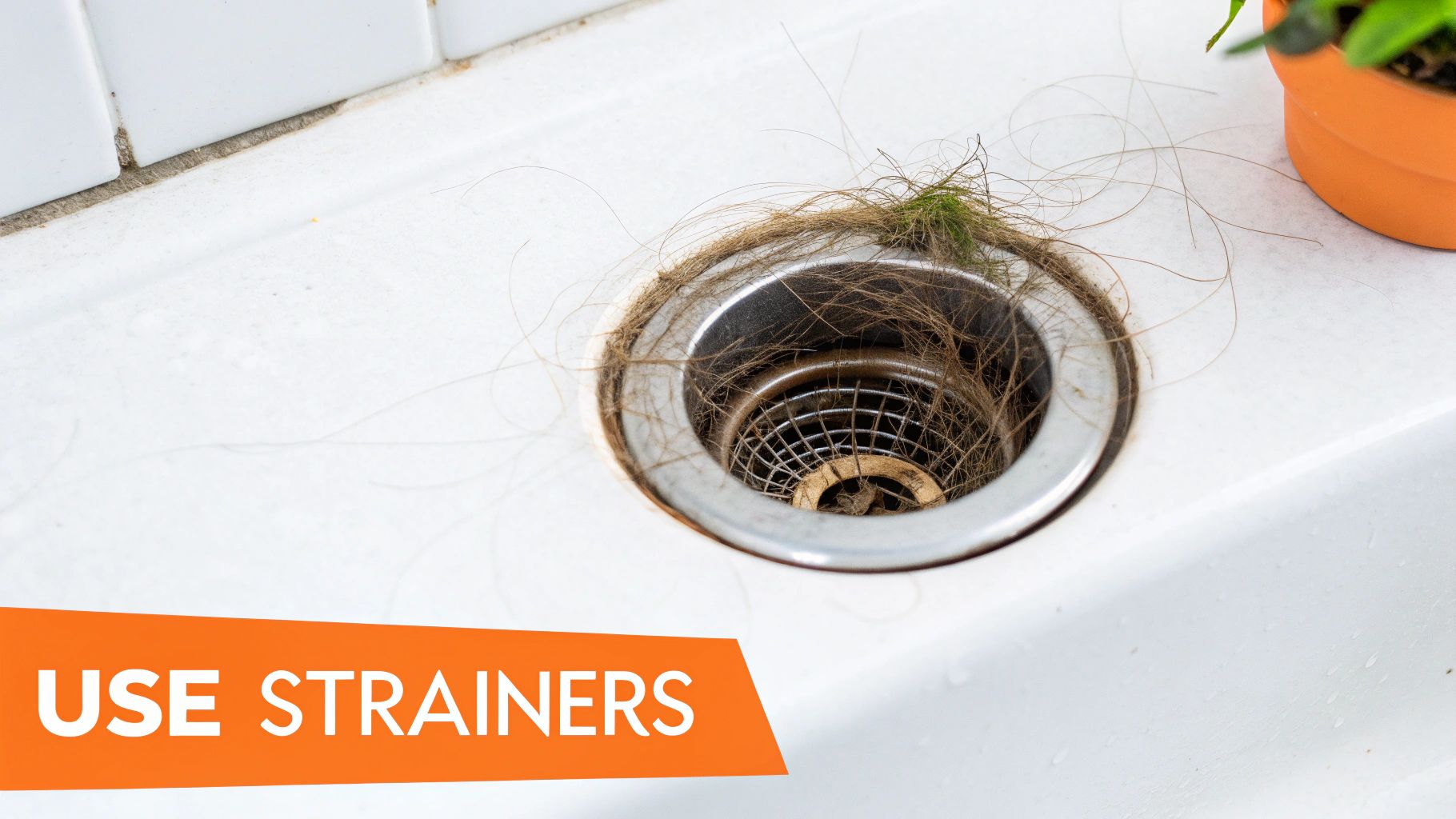
This proactive habit pays huge dividends. For example, a Cape Coral family can dramatically cut down on stubborn bathroom clogs caused by hair and soap by simply using dedicated hair catchers in their showers. Likewise, Fort Myers homeowners can prevent backups in kitchens, where humidity can worsen the decomposition of food waste, by placing a mesh screen over their garbage disposal drain to catch larger particles.
How to Implement Drain Screens and Strainers
Making this a standard practice in your home is easy and requires a very small investment for a significant return in plumbing health.
- Install Everywhere: Place a properly sized screen or strainer in every single drain in your home, including all kitchen sinks, bathroom sinks, showers, and tubs.
- Clean Regularly: Make cleaning the strainers a routine household chore. A quick wipe or rinse daily or every few days prevents buildup on the screen itself, which can slow drainage.
- Choose the Right Type: Use fine mesh screens for kitchen sinks to catch small food particles and dedicated "hair catcher" style strainers for bathroom drains, which are specifically designed to trap long strands.
- Be Diligent with Disposal: Even with a screen, be mindful of what goes down the kitchen sink. You can learn about the risks of putting grease down the drain to better protect your pipes.
- Replace When Needed: Over time, strainers can become damaged, corroded, or warped. Replace them as soon as they no longer fit snugly or effectively catch debris.
By making drain screens a non-negotiable part of your home's plumbing defense, you significantly reduce the risk of slow drains and emergency clogs, saving you time, money, and frustration.
7. Monitor Your Water Bill for Leaks
Your monthly water bill is more than just an expense; it’s a powerful diagnostic tool for your home's plumbing health. A sudden, unexplained spike in your bill often serves as the first warning sign of a hidden leak. By regularly monitoring your water consumption, you can catch these issues early, preventing costly water damage and saving hundreds, if not thousands, of dollars on wasted water.
For example, many Tampa Bay homeowners have discovered elusive underground pipe leaks solely through bill monitoring, long before any soggy spots appeared in their yards. Similarly, a Sarasota family might notice their bill has doubled and identify a silent toilet leak that was wasting over 10,000 gallons per month, an issue that would have otherwise gone unnoticed.
How to Implement Water Bill Monitoring
Turning your utility statement into a leak detection system is straightforward and one of the most effective plumbing tips for homeowners.
- Establish a Baseline: Review your bills from the past 12 months to understand your household's typical water usage patterns. Note any seasonal variations, like higher usage during dry spells for lawn irrigation.
- Monthly Review: Don't just pay the bill; analyze it. Compare the current month's usage to the same month last year. If you see a spike of 15-20% or more without a clear reason (like having house guests), it's time to investigate.
- Check Your Water Meter: If you suspect a leak, turn off all water-using appliances and faucets in your home. Then, check your water meter. If the dial is still moving, you have an active leak somewhere in your system.
- Ask About Utility Alerts: Many local utility companies in Southwest Florida offer services that alert you to unusually high water consumption, sometimes even providing free leak detection kits or assistance.
Vigilant monitoring allows you to address leaks before they escalate into major disasters. If your investigation points to a hidden leak, understanding the next steps is crucial; you can learn about common plumbing problems and their solutions to better prepare for a professional diagnosis.
8. Maintain Your Water Heater
Your water heater is an unsung hero of your home, and consistent maintenance is one of the most impactful plumbing tips for homeowners to ensure it operates efficiently. Instead of waiting for a cold shower or a catastrophic leak, proactive care involves routine checks and cleanings to extend its lifespan, which is typically 8-12 years. This approach is crucial in Southwest Florida, where hard water can accelerate sediment buildup and reduce efficiency.
Consider a Fort Myers family that schedules annual flushing; they can extend their unit's life from 8 to 11 years, avoiding a costly emergency replacement during the summer heat. Likewise, a Cape Coral household that insulates their water heater and pipes can see their energy bills drop by $15-30 each month, a significant saving over time.
How to Implement Water Heater Maintenance
Integrating these tasks into your home maintenance schedule can prevent premature failure and keep your energy costs in check.
- Annual Tank Flushing: Hard water in Florida leaves behind mineral deposits (sediment) that settle at the bottom of your tank. This layer forces the heater to work harder, wastes energy, and can cause damage. Have a professional flush the tank annually to remove this buildup.
- Check the Anode Rod: The anode rod is a "sacrificial" component that corrodes to protect the tank's inner lining from rust. Inspect it every 2-3 years and replace it if it's heavily corroded or less than half an inch thick.
- Test the Pressure Relief Valve: The T&P (temperature and pressure) relief valve is a critical safety feature. Test it annually by lifting the lever and letting some water out. If it doesn't release water or leaks afterward, it needs replacement.
- Insulate Your Unit and Pipes: Wrap older water heaters in an insulating blanket and cover the first few feet of hot and cold water pipes with foam pipe sleeves. This simple step reduces standby heat loss, saving energy and money.
By adopting these habits, you ensure a reliable supply of hot water and protect your investment. For optimal performance and safety, regular professional water heater service is recommended to catch potential issues early. You can learn how to extend the life of your water heater with more detailed strategies.
9. Protect Against Water Hammer
Water hammer is the jarring, loud banging noise you hear in your pipes when a valve shuts off abruptly, and it's more than just an annoyance. This hydraulic shock wave reverberates through your plumbing, putting immense stress on pipes, joints, and fixtures. Over time, this repeated force can lead to loosened connections, leaks, and even burst pipes, making it a critical issue to address in any home.
This phenomenon is especially common in modern homes equipped with quick-closing solenoid valves found in appliances like washing machines and dishwashers. For example, a Sarasota family might notice a startling bang every time their new high-efficiency washer finishes a fill cycle, a clear sign of water hammer that needs attention. Addressing it protects the integrity of both their new appliance and their home’s entire plumbing system.
How to Mitigate Water Hammer
Protecting your plumbing from hydraulic shock is a straightforward process that involves absorbing the pressure surge before it can cause damage.
- Listen for the Signs: Pay close attention to your pipes when appliances with automatic valves, like washing machines, dishwashers, or ice makers, are running. A distinct banging or thudding sound when the water stops is the classic symptom of water hammer.
- Install Water Hammer Arresters: These small devices contain a pocket of air or gas that absorbs the shock wave created by the sudden stop in water flow. They are relatively inexpensive and can be installed easily near the problem fixtures.
- Check Water Pressure: High water pressure can significantly worsen water hammer. If you hear banging pipes, it's a good idea to have your home's water pressure tested. Anything above 80 PSI is too high and can damage your plumbing and appliances.
- Close Manual Valves Slowly: When using faucets or hose bibs, get into the habit of turning them off slowly and deliberately rather than snapping them shut. This simple change in behavior can reduce the severity of the pressure surge.
By proactively installing arresters and monitoring your water pressure, you can neutralize this common but potentially destructive plumbing issue. If the banging continues after taking these steps, it may indicate a more complex problem that requires a professional diagnosis to prevent costly damage down the road.
10. Know Your Plumbing Layout and Materials
Understanding the blueprint of your home's plumbing system is a powerful, yet often overlooked, plumbing tip for homeowners. Knowing your pipe materials, their layout, and key access points empowers you to make informed decisions about maintenance, anticipate future needs, and communicate effectively with professionals. Different materials like copper, PVC, PEX, and older galvanized steel have distinct lifespans, vulnerabilities, and repair requirements.
For example, a Cape Coral homeowner who identifies aging galvanized pipes (common in homes built before the 1960s) can proactively budget for a repiping project before corrosion causes catastrophic leaks. In contrast, a family in a newer Fort Myers development with PEX plumbing will know their system is flexible and freeze-resistant but requires specific tools and fittings for repairs.
How to Map Your Plumbing System
Becoming familiar with your home's plumbing infrastructure is easier than it sounds and provides invaluable knowledge for any homeowner.
- Identify Your Pipe Materials: Visually inspect exposed pipes under sinks, in the basement, or in utility closets. Copper is reddish-brown, PVC is white plastic, PEX is flexible and often colored red or blue, and galvanized steel is a dull gray metal.
- Locate Key Shut-offs and Access Points: Find and label your main water shut-off valve, individual fixture valves (under sinks and toilets), and your home's water meter. Understanding your home's infrastructure is crucial; a practical guide on how to find your sewer line cleanout is an excellent next step.
- Take Photos for Reference: Once you've identified materials and locations, take clear photos. Having a visual reference on your phone can be incredibly helpful when describing an issue to a plumber.
- Research Material Lifespans: Research the typical lifespan and common issues associated with your specific pipe materials. This allows you to plan for replacements long before an emergency forces your hand.
By creating this simple "map" of your plumbing, you move from being a reactive homeowner to a proactive manager of one of your home’s most critical systems.
Top 10 Home Plumbing Tips Comparison
| Item | Implementation Complexity | Resource Requirements | Expected Outcomes | Ideal Use Cases | Key Advantages |
|---|---|---|---|---|---|
| Regular Drain Cleaning and Maintenance | Low | Basic tools, hot water, strainers, enzyme cleaners | Fewer clogs, improved flow, longer pipe life | Routine home maintenance (kitchen, bath, laundry) | Cost-effective, DIY-friendly, prevents buildup |
| Know Your Water Shut-Off Location | Very low | Time to locate, label, valve wrench (optional) | Rapid shutdown in emergencies, reduced water damage | Burst pipes or visible leaks | Immediate mitigation, no cost to learn |
| Fix Leaky Faucets Promptly | Low–Medium | Replacement washers/cartridges, basic tools or pro service | Reduced water waste, lower bills, less mold risk | Dripping faucets or slow leaks | Inexpensive repairs, strong water savings |
| Install Water Pressure Regulators | Medium | Regulator unit, professional installation, gauge testing | Stable pressure, protected fixtures and appliances | High incoming pressure or pressure spikes | Extends fixture life, prevents bursts/noise |
| Insulate Exposed Pipes | Low | Foam/rubber/fiberglass insulation, minimal tools | Reduced heat loss, less condensation, freeze protection | Unheated spaces, crawlspaces, garages | Low cost, energy savings, simple DIY |
| Use Drain Screens and Strainers | Very low | Inexpensive strainers (plastic/steel/silicone) | Fewer hair/food clogs, less septic load | Sinks, showers, tubs, disposal openings | Very cheap, chemical-free, easy to maintain |
| Monitor Your Water Bill for Leaks | Very low | Monthly bills or digital usage tools | Early leak detection, prevent hidden damage | Hidden leaks, unexplained usage spikes | Free/low-cost early warning system |
| Maintain Your Water Heater | Medium | Professional flushing, inspection tools, occasional parts | Longer heater life, improved efficiency, fewer failures | Older heaters, mineral-rich water areas | Cost-effective vs replacement, consistent performance |
| Protect Against Water Hammer | Low–Medium | Arresters or air chambers, professional placement | Eliminates banging, reduces pipe stress and damage | Homes with quick-closing valves or loud pipes | Inexpensive protection, reduces noise and wear |
| Know Your Plumbing Layout and Materials | Low–Medium | Visual inspection, photos, possible professional survey | Better repair planning, informed replacements, budgeting | Older homes, renovations, pre-purchase checks | Improves decision-making, prevents inappropriate fixes |
Partner with the Pros for Total Peace of Mind
Navigating the world of home plumbing can feel like a significant undertaking, but as we've explored, a proactive and informed approach can transform potential disasters into manageable tasks. The collection of plumbing tips for homeowners shared throughout this guide serves as a comprehensive roadmap. It’s designed to empower you, the homeowner, with the knowledge to protect one of your most valuable assets, your home, especially here in the unique climate of Tampa Bay and Southwest Florida.
By now, you understand the critical importance of locating and operating your main water shut-off valve, the long-term financial drain of a seemingly minor leaky faucet, and the protective power of insulating your pipes. You've learned how simple habits, like using drain screens and conducting regular water heater maintenance, can prevent costly emergencies down the line. Monitoring your water bill is no longer just a budgetary task; it's a detective tool for uncovering hidden leaks that could wreak havoc on your property.
From Proactive Maintenance to Professional Partnership
These ten pillars of plumbing wisdom, from routine drain care to understanding your home's unique plumbing layout, form a powerful defensive strategy. They are not merely suggestions but actionable steps that build a foundation of stability and efficiency. Implementing these practices consistently will not only save you money on utility bills and repair costs but will also grant you invaluable peace of mind. You'll be better prepared for seasonal challenges like hurricane season and better equipped to handle the everyday demands placed on your system by Florida's hard water.
However, one of the most crucial plumbing tips for homeowners is recognizing the limits of DIY. While fixing a dripping faucet or clearing a minor clog can be a satisfying and cost-effective endeavor, certain situations demand professional expertise. The true wisdom lies in knowing when to put down the wrench and pick up the phone.
Key Takeaway: Empowerment in homeownership comes from a blend of diligent self-maintenance and the wisdom to know when to rely on a professional. Attempting complex repairs without the proper tools, training, and understanding of local building codes can quickly turn a small problem into a catastrophic and expensive failure.
When to Call in the Experts
Your diligence in applying these tips will catch many issues early, but when a problem persists or escalates, professional intervention is your best course of action. Consider calling a licensed plumber for:
- Persistent or Recurring Clogs: If plunging or snaking doesn't solve the issue, it could signal a deeper problem within your main sewer line.
- Suspected Hidden Leaks: When your water bill spikes unexpectedly or you notice signs of water damage without an obvious source, you need expert leak detection services.
- Water Heater Malfunctions: Issues with temperature, pressure relief valves, or strange noises from your water heater require a certified technician for safe and effective repair.
- Major Installations or Replacements: Installing new fixtures, pipes, or appliances should always be handled by a professional to ensure it meets safety standards and local codes.
- Low Water Pressure Issues: Diagnosing the root cause of low pressure throughout your home often requires specialized diagnostic equipment.
Embracing these plumbing tips for homeowners is your first and most effective line of defense. By taking control of what you can manage and building a relationship with a trusted local expert for the things you can't, you create a comprehensive support system for your home's plumbing. This balanced approach ensures your system runs smoothly, efficiently, and reliably for years to come, allowing you to enjoy your Florida home without the constant worry of an unexpected plumbing emergency.
Don't wait for a small drip to become a major flood. For expert diagnostics, reliable repairs, and comprehensive maintenance that aligns with all the best plumbing tips for homeowners, trust the certified professionals at Heatwave Air Conditioning, Plumbing, & Electric. Contact us today to schedule your annual inspection or get a free estimate, and partner with a team dedicated to your home's health and your peace of mind.