
You notice it when the house feels off first. The thermostat says it's cooling, you hear equipment somewhere, but the air at the vents is weak or missing, or the outdoor unit is sitting there without the fan moving. That's the moment most homeowners start searching for answers fast.
An AC fan not working problem is frustrating because “the fan” can mean two different parts of the system. One is the indoor blower fan inside the air handler or furnace. The other is the outdoor condenser fan on the unit outside. If you don't separate those two right away, it's easy to chase the wrong problem, replace the wrong part, or describe the issue vaguely when you call for service.
Why Is My AC Fan Not Working
When an AC seems to be on but your home keeps getting warmer, the first job is figuring out which fan has stopped doing its job.
The indoor blower fan pushes conditioned air through your ductwork and out of the vents. If that fan isn't running, you may hear the system call for cooling, but little or no air comes out inside. The outdoor condenser fan has a different job. It helps the system release heat outside. If that fan quits, cooling usually drops off quickly, and the outdoor unit may hum, buzz, or overheat.
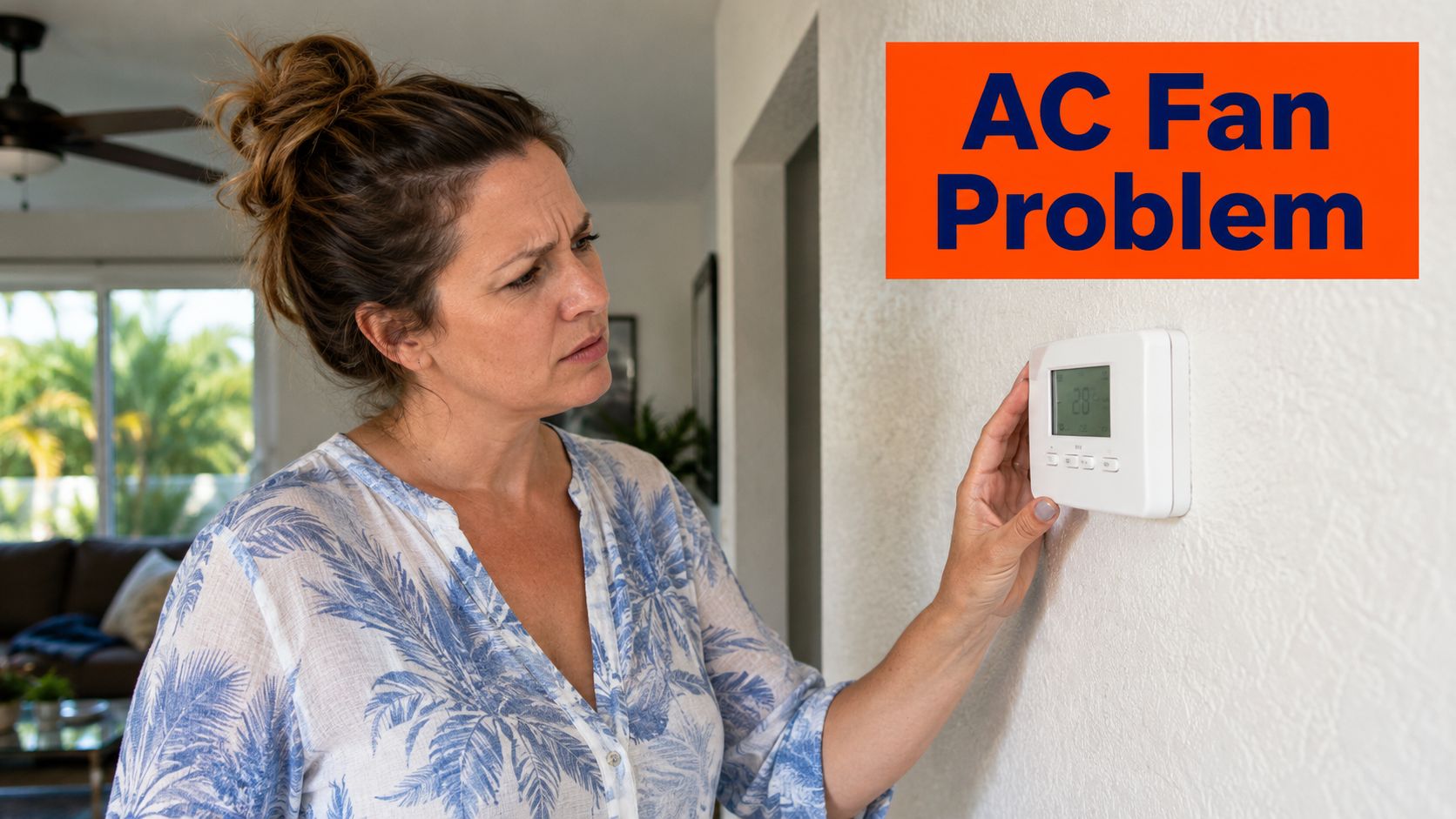
Start by identifying the symptom
Use this quick split:
- No air from vents indoors usually points toward the indoor blower, thermostat control, airflow restriction, or an air handler power issue.
- Air indoors starts cool, then fades, while the outside unit sounds wrong or the top fan isn't spinning, usually points toward the outdoor condenser fan.
- Fan works in one mode but not another often narrows the diagnosis even further, especially on the indoor side.
One reason this problem is so common is that fan-related failures often build slowly. AC fan failure is one of the most common reasons technicians are called for AC repair during summer months in hot climates, with electrical issues being a primary culprit; specifically, loose wiring, damaged connections, or a failing capacitor often prevent the fan motor from receiving the necessary power to start or continue running properly.
Practical rule: If you don't know whether the indoor blower or outdoor fan has failed, don't keep letting the system run while you “see if it fixes itself.” A fan problem can turn a moderate repair into a more serious one.
What homeowners can safely do first
Before touching anything mechanical, check the obvious clues:
- Stand by a supply vent and feel for airflow.
- Look at the outdoor unit and see whether the fan on top is spinning.
- Listen to the sounds. Humming without movement tells a different story than complete silence.
- Check whether the thermostat is calling for cooling.
If you want a quick visual on what the indoor and outdoor parts of your system look like in a real home comfort setup, this HVAC system visual reference helps orient where these components sit.
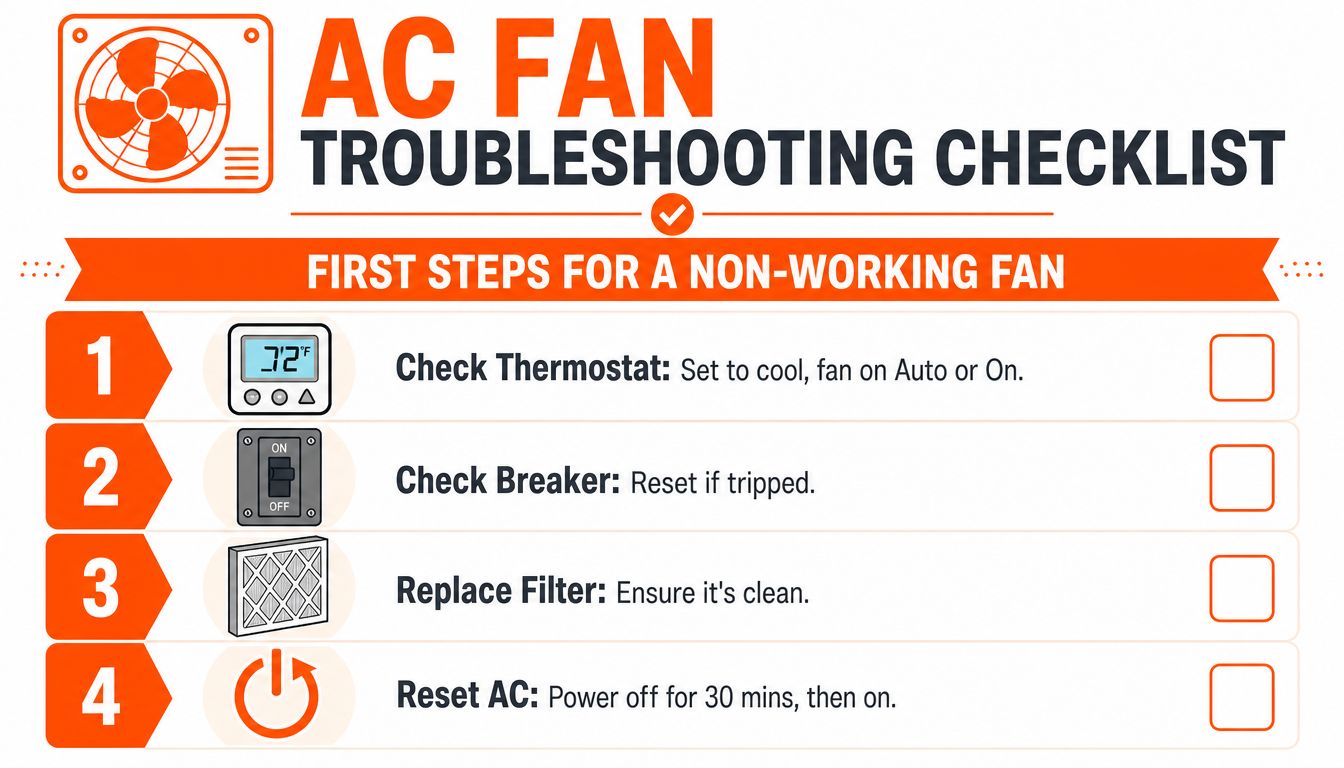
First Steps for a Non-Working Fan
You set the thermostat lower, hear the system click, and then nothing happens. Before assuming the fan motor is bad, start with the few checks that separate a simple control issue from a real equipment problem.
Check power before anything else
A central AC system usually has two sides to verify. The indoor air handler or furnace powers the blower, and the outdoor condenser powers the fan outside. One can lose power while the other still works, which is why this first check matters.
Start with the safe basics:
- Breaker panel: Check the breaker for the indoor unit and the breaker for the outdoor unit. If one is tripped, reset it once.
- Indoor service switch: Many air handlers have a nearby switch that looks like a regular light switch. Make sure it is on.
- Outdoor disconnect: The condenser usually has a disconnect box mounted nearby. If it is off or pulled out, the outdoor fan will not run.
If a breaker trips again right away, stop. Repeated tripping points to an electrical fault, not a simple reset issue.
Verify thermostat settings, especially smart thermostat behavior
A lot of fan complaints start at the thermostat.
Set the thermostat to Cool and lower the setting below room temperature. Then check the fan setting. Auto means the indoor blower runs only during an active heating or cooling call. On tells the blower to run continuously. That one setting helps you tell whether the indoor blower can run at all, even before you start separating an indoor fan problem from an outdoor one.
Smart thermostats add another layer. Modern users frequently encounter issues where Wi-Fi thermostats such as Ecobee and Nest automatically switch the fan to “Auto” or disable cooling based on geofencing or energy-saving schedules, a rising cause of “false” AC fan failures.
Check the app, not just the wall display. A schedule, vacation mode, occupancy setting, or geofencing rule can leave you with a system that looks broken when it is only following programming.
If you want a quick visual while tracing what controls the indoor and outdoor equipment, this home comfort systems screenshot can help you orient the setup.

Here's a quick video overview before moving deeper into diagnosis:
Look at the air filter
A dirty filter will not always shut a fan off by itself, but it can restrict airflow enough to make the indoor blower overheat, cycle oddly, or seem weak.
Pull the filter out and inspect it in good light. If it is packed with dust or pet hair, replace it before blaming the blower motor. This is especially important if the system sounds normal but airflow at the vents is poor.
Try a simple system reset
If the thermostat is set correctly, power is on, and the filter is clean, shut the system off completely for about 30 minutes. Then restore power and call for cooling again.
That reset sometimes clears a temporary lockout after overheating or a minor control glitch. If the indoor blower runs but the outdoor fan does not, or if the fan works in heat but not in cool mode, note that pattern before calling for service. It gives the technician a better starting point and often shortens diagnosis.
Troubleshooting an Indoor Blower Fan Problem
If the outdoor unit seems to run but there's little or no air coming from your vents, focus on the indoor blower side.
That distinction matters. Homeowners often say “my AC fan isn't working” when the underlying issue is only the blower inside. The outdoor unit may still start, the thermostat may still show cooling, and yet the house won't feel comfortable because the air isn't being moved through the ductwork.
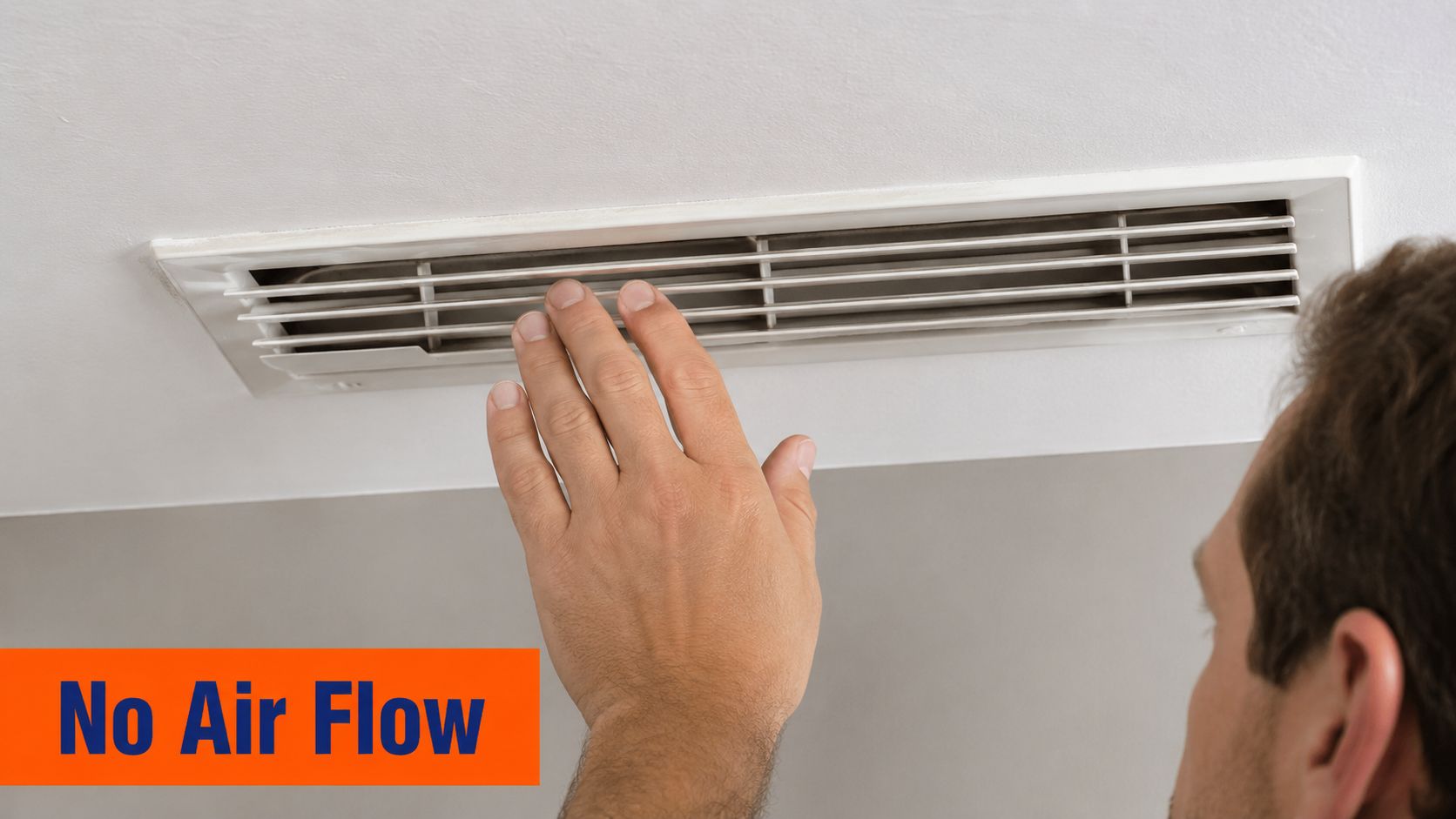
What the indoor symptoms usually look like
Indoor blower problems often show up in one of these ways:
- No airflow at the vents even though the thermostat is set to cool.
- A hum from the air handler with no air movement.
- Intermittent airflow, where the blower starts and stops unpredictably.
- Heat mode works, but cool mode doesn't.
That last symptom is one of the most useful clues in the whole article.
When heat works but cool doesn't
If the blower runs in heat mode but not in cooling mode, don't jump straight to “bad blower motor.” That pattern often points elsewhere.
Here's why that matters in plain terms. A motor that can run normally in one mode has already proven it can spin. That shifts suspicion toward the controls that tell it when to run, not the motor alone.
If the blower works in heat but not in cool, describe that exact symptom when you call for service. It helps narrow the diagnosis fast.
What you can safely observe
You don't need to open electrical compartments to gather useful information. Stand near the air handler and pay attention to:
Sound
A steady hum with no airflow can mean the motor is trying but not starting properly, or the control side isn't completing the sequence correctly.Timing
Does the thermostat click and nothing happens? Does the blower start late? Does it stop after a short run?Mode behavior
Test fan-only, heat, and cool separately if your system allows it.
A helpful visual reference for indoor service components is this air handler parts graphic.
Indoor blower clues and what they suggest
| Symptom | More likely issue | What to do |
|---|---|---|
| No air from vents at all | Indoor blower not running, power issue, or control issue | Check thermostat, breaker, and filter |
| Blower works in heat only | Relay, board, or thermostat wiring issue | Call for diagnosis |
| Weak airflow with dirty filter | Restricted airflow stressing blower | Replace filter and retest |
| Humming from air handler | Motor or electrical control problem | Turn system off and schedule service |
What usually does not work is guessing based on one symptom and ordering parts online. Indoor blower issues overlap too much. A relay issue can look like a motor issue. A dirty filter can mimic a weak motor. A thermostat command problem can look like both.
Diagnosing the Outdoor Condenser Fan
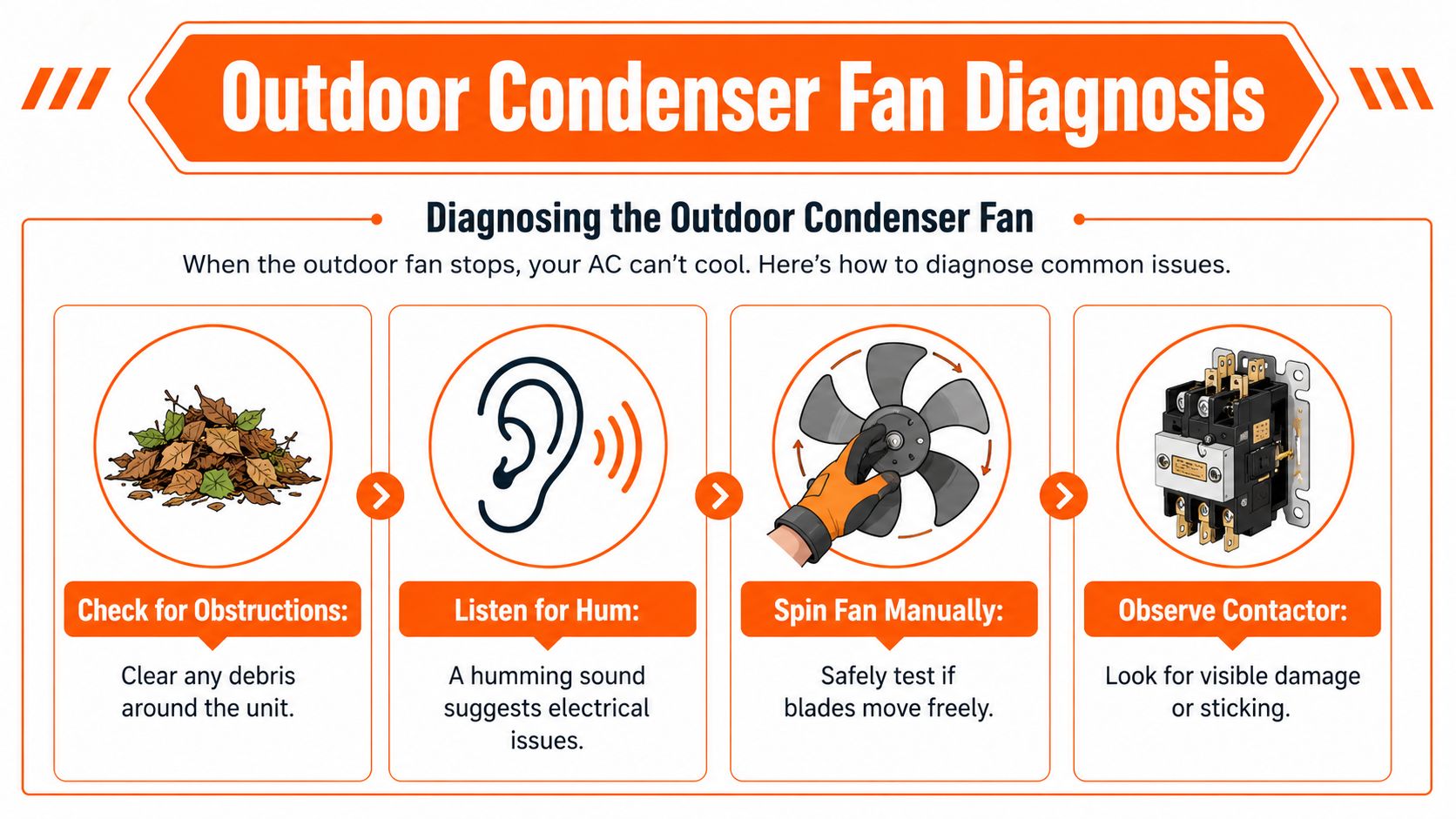
You set the thermostat to cool, the outdoor unit starts making noise, but the top fan never spins. That usually means the system is trying to run and failing at the condenser. If the indoor blower still runs and you feel warm air from the vents, that split matters. It points you outside, not back to the air handler.
The outdoor side has its own failure patterns. It can also be affected by a control issue upstream, especially if a smart thermostat schedule, app override, or mode conflict is sending mixed commands. I check that first because a bad schedule can mimic an equipment problem.
Start with the symptom pattern
Before touching anything, notice what the system is doing as a whole.
If the indoor blower works in heat but the outdoor fan does not run in cool mode, the issue is often on the cooling side of the controls or in the condenser itself. If the thermostat says cooling is on, the indoor unit runs, and the outdoor cabinet hums without the fan turning, I start thinking about the capacitor, contactor, motor, or a seized blade. If nothing outside starts at all, that can be a disconnect, breaker, thermostat command, or control wiring problem.
That pattern saves time.
Shut off power before any close inspection
Turn the thermostat off. Then shut off the breaker and the outdoor disconnect. Use all three steps, not just one.
After power is off, inspect the condenser from the outside only. Look for obvious trouble such as leaves packed into the top grille, bent fan blades, burned wiring visible through the service panel gaps, or a fan that appears to wobble or stop short.
What homeowners can safely check
A safe homeowner check is limited to what you can see and clear without opening the electrical compartment.
Check for:
- Leaves, grass, or cottonwood buildup around the fan guard and coil
- A blade that is visibly bent or rubbing
- Buzzing or humming before shutdown
- A fan that tries to start, then stops
- Thermostat or app settings that may be cancelling a cooling call
Smart thermostats cause more confusion than people expect. I've seen systems scheduled for heat in the morning, cool in the afternoon, and fan-auto all day, with geofencing or utility demand-response settings interrupting the call. If the fan works sometimes and the timing seems random, review the schedule before assuming the motor is bad.
What the blade movement can tell you
With power fully off, you can gently nudge the fan blade with a non-conductive stick. Never use your hand.
If the blade is stiff or will not move, the motor may be seized or something may be jammed in the fan assembly. If the blade turns freely but the unit only hums during operation, that often points to a failed start component or weak capacitor. Homeowners should stop there. Testing or replacing those parts belongs to a technician because the charge stored in the capacitor can still injure you after shutdown.
A good contractor should explain that distinction clearly. These recent customer service experiences with AC fan diagnosis reflect the kind of symptom-based troubleshooting you want, rather than guessing and swapping parts.

Outdoor fan symptoms at a glance
| Outdoor symptom | More likely issue | Best next step |
|---|---|---|
| Unit hums but fan does not spin | Capacitor, contactor, or motor start failure | Shut it down and schedule service |
| Fan blade is blocked by debris | Mechanical obstruction | Clear debris with power off and retest |
| Blade is hard to turn with power off | Seized motor or physical obstruction | Leave system off |
| Indoor blower runs but outdoor unit stays inactive in cool mode | Thermostat command, disconnect, breaker, or control issue | Check settings and power, then call if needed |
| Works in heat but not cool | Cooling-side control problem or condenser issue | Professional diagnosis |
Keep the system off if the outdoor fan will not run. Letting the condenser keep trying to start can overheat the compressor and turn a fan repair into a much more expensive call.
DIY Fixes Versus Calling a Professional
You can solve some AC fan problems yourself. You can also turn a simple service call into a dangerous one if you cross into electrical diagnosis without the right tools and training.
The safest dividing line is practical. Homeowners can handle checks related to thermostat settings, airflow, basic power resets, and visible debris. Once the job involves testing live voltage, opening equipment compartments, or replacing internal parts, it belongs to an HVAC technician.
That matters even more if you are sorting out whether the problem is the indoor blower or the outdoor condenser fan. A dirty filter or a smart thermostat schedule conflict can stop normal cooling without any failed part at all. A fan that runs in heat mode but not in cool mode points in a different direction and usually needs system-level diagnosis, not trial-and-error part swapping.
What homeowners can safely do
A careful homeowner can usually do these checks without getting into unsafe territory:
- Replace a dirty air filter
- Confirm the thermostat is set to COOL and the fan setting is correct
- Review smart thermostat schedules, app automations, and geofencing
- Reset a tripped breaker one time
- Clear leaves, grass, and debris from around the outdoor unit
- Shut the system off, wait a few minutes, and restart it
Those steps are low-risk and often useful because they rule out common control and airflow issues first. They also help narrow down the symptom. For example, if the indoor blower works but the outdoor fan never starts, that is a different service call than a system with no airflow inside at all.
What should not be DIY
These jobs should stay with a licensed HVAC professional:
- Capacitor replacement
- Blower motor replacement
- Condenser fan motor replacement
- Contactor or relay diagnosis
- Thermostat wire troubleshooting inside the equipment
- Electrical testing of internal components
Safety is the first reason. Accuracy is the second.
I see homeowners get tripped up here all the time. The fan motor looks like the obvious failure, so they replace it, but the actual cause is a weak capacitor, a failed control signal, or a wiring issue that only shows up under load. That is how a one-part guess turns into extra cost and a longer outage.
Paying for a correct diagnosis first is usually cheaper than replacing the wrong part and still having the same no-cooling problem.
AC Fan Troubleshooting DIY vs Professional Repair
| Symptom | Potential Cause | Recommended Action |
|---|---|---|
| Thermostat looks normal but system won't cool | Wrong mode, schedule conflict, geofencing | DIY thermostat check |
| Weak or no airflow with dirty filter | Restricted airflow | DIY filter replacement |
| Breaker tripped once | Temporary power interruption | DIY single reset |
| Breaker keeps tripping | Electrical fault | Professional diagnosis |
| Outdoor unit hums, fan won't spin | Capacitor or motor issue | Professional repair |
| Blower works in heat but not cool | Relay, control board, thermostat command, or wiring issue | Professional diagnosis |
| Burning smell or scorched wiring | Electrical hazard | Shut down and call immediately |
If you are choosing a contractor, look for clear symptom-based explanations instead of quick guesses. These recent customer service reviews for AC fan diagnosis show the kind of communication homeowners should expect.
For a broader maintenance mindset that helps reduce repeat fan failures, this overview of implementing preventive maintenance programs is a useful reference.
Preventing Future AC Fan Failures
Most fan failures don't come out of nowhere. The system usually gives smaller warnings first. Airflow drops a bit. Startup sounds change. A thermostat schedule gets altered. The filter stays in too long. Then the first very hot day arrives, and the problem turns into a no-cooling call.
The cheapest fan repair is the one you never need.
Maintenance habits that actually help
A few habits do more than homeowners think:
- Change filters on schedule so the blower isn't forced to work against unnecessary restriction.
- Keep the outdoor unit clear so the condenser fan can move air freely.
- Pay attention to new sounds like humming, buzzing, or delayed startup.
- Review smart thermostat schedules after app updates, travel, or power interruptions.
Professional maintenance matters because many fan-related problems are electrical or mechanical issues that develop gradually. A technician can catch a weak component, a loose connection, or abnormal fan behavior before it becomes a shutdown.
Why preventive maintenance works
Homeowners often think of maintenance as “cleaning,” but it's more than that. It's a structured process of checking operation before failure. If you want a broader framework for how that mindset works beyond HVAC, this guide on implementing preventive maintenance programs is a useful reference.
A general home systems image like this seasonal comfort reference also reflects the bigger point. Reliable comfort comes from catching small issues early, not waiting for a total stop.
If your AC fan isn't working now, start with the safe checks. If the problem involves internal electrical parts, mode-specific blower behavior, or a condenser fan that won't start, don't guess. Shut the system down and have it diagnosed correctly.
If your system still isn't moving air or the outdoor fan won't run, Heatwave Air Conditioning, Plumbing, & Electric can help with professional AC diagnosis and repair across Tampa Bay and Southwest Florida. Their team handles indoor blower problems, outdoor condenser fan issues, electrical troubleshooting, and full system service so you can get your home comfortable again without the trial-and-error.