
It's August in Tampa Bay. The house never quite cools down in the afternoon, the air feels sticky, and your AC has been running so long that the outdoor unit sounds like it hasn't had a break in weeks. That's when a weak maintenance routine gets exposed.
A generic AC maintenance schedule might be good enough in a mild climate. It usually isn't enough here. Florida systems run harder, stay wet longer, and deal with more airborne debris, algae growth, salt exposure in some areas, and power-related stress than a lot of national advice accounts for.
Why Florida ACs Need a Different Maintenance Schedule
In the Southeast, AC systems can run 2,500+ hours annually, which is nearly double the average load in cooler climates. A 2024 ACCA study found that 45% of premature compressor failures in the Southeast occurred in units that only received annual service. That's the clearest reason a one-size-fits-all maintenance plan falls short for Tampa Bay homes.
That matters because compressors don't usually fail out of nowhere. They get pushed there. Restricted airflow, dirty coils, weak electrical components, and drainage problems all add stress over time. In Florida, that stress builds faster because cooling season is long and humidity stays high.
If you've ever seen an outdoor unit coated with lint, oak debris, or grass clippings by early summer, you already know local conditions don't respect a simple calendar reminder. Homeowners in this region need an AC maintenance schedule based on runtime and climate, not just “once a year because that's what the national article said.”
Practical rule: If your AC runs for long stretches most of the year, maintenance should follow usage, not just dates on the calendar.
A lot of homeowners don't think about maintenance until the first really oppressive stretch of weather. By then, the system is already under maximum strain. That's why local service planning should start before the hottest stretch arrives, and it should continue through the year with homeowner check-ins between professional visits.
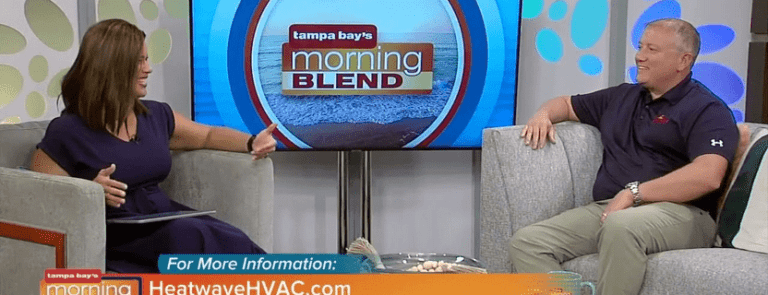
For a local visual reminder of how relentless Florida heat can be, this Tampa Bay heat segment image captures the kind of conditions that expose neglected systems fast.
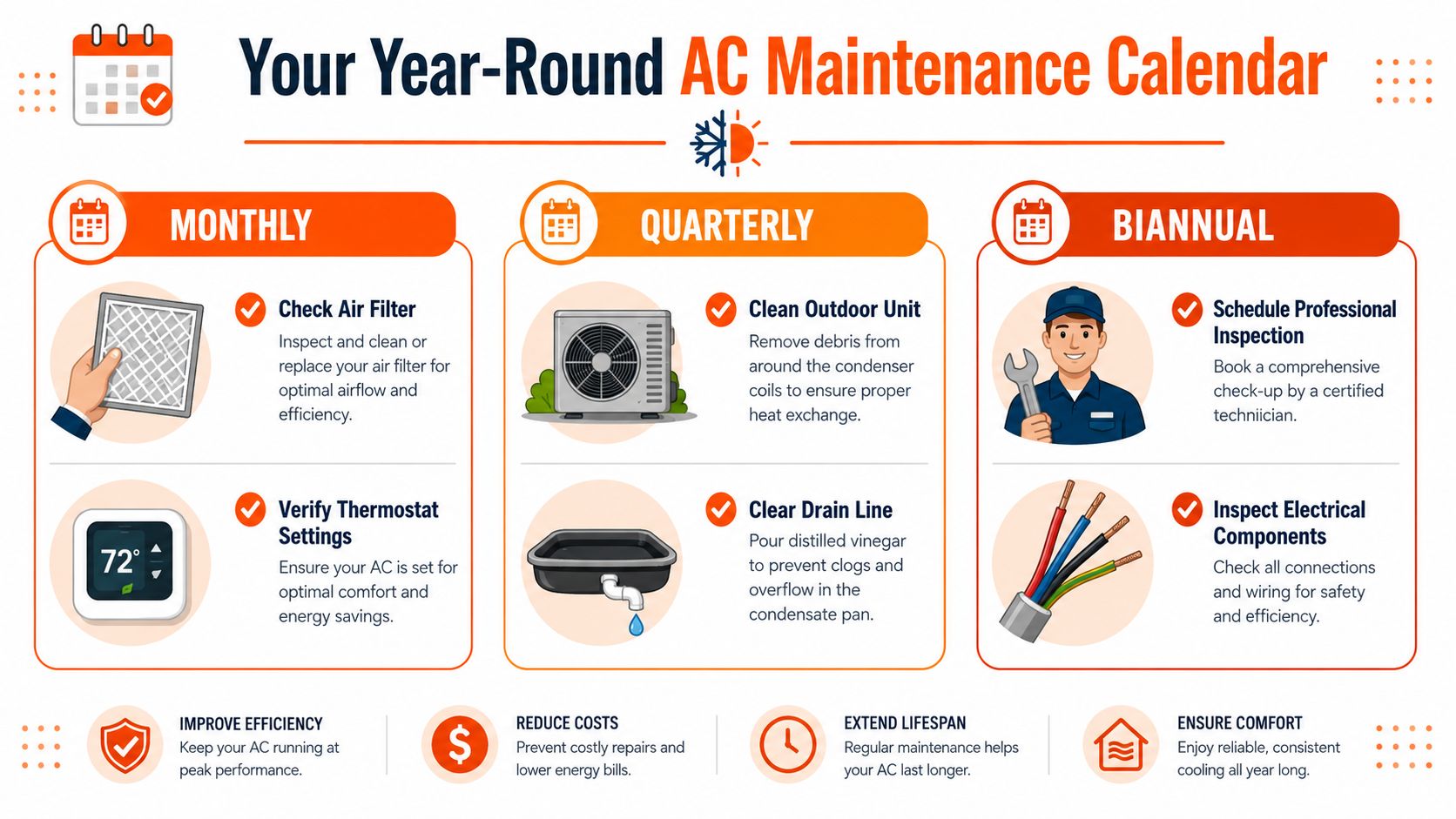
Your Year-Round Tampa Bay AC Maintenance Calendar
A workable AC maintenance schedule in Florida needs three layers. Homeowners should do quick recurring checks, a few deeper housekeeping tasks during the year, and professional tune-ups before the heavy-use periods. That's what keeps small issues from turning into a no-cooling call on the worst day of the month.
The payoff is real. Regular HVAC maintenance can extend the life of air conditioners by 40%, according to the U.S. Department of Energy air conditioner maintenance guidance. In Florida, where systems stay busy for long stretches, that extra life matters a lot more than it does in places with a short cooling season.
Monthly checks
These are the jobs that prevent the most common airflow and comfort problems.
- Check the air filter: Pull it out, look for dust loading, and replace or clean it if it's dirty. A filter that looks “not too bad” can still choke airflow enough to hurt comfort and strain the blower.
- Confirm thermostat operation: Make sure the thermostat is reading sensibly, cooling mode is set correctly, and the schedule hasn't been changed by accident.
- Look at the indoor drain area: If you see standing water, rust stains, or slime near the air handler, don't ignore it.
- Listen during startup: A new buzz, hard start, or delayed fan operation is worth attention even if the house is still cooling.
Carrier advises scheduling professional HVAC maintenance in spring and inspecting filters every 2 to 3 months in standard conditions through its AC maintenance recommendations. In many Tampa Bay homes, especially with pets, renovation dust, or heavy AC use, the filter deserves a look more often than that.
Quarterly house-side maintenance
These tasks help with drainage, outdoor heat rejection, and general system cleanliness.
- Clear debris around the condenser. Keep leaves, mulch, and trimmings away from the outdoor cabinet so the unit can move air properly.
- Flush the condensate drain carefully. In Florida, algae and sludge buildup are common. A slow drain can become a ceiling stain or an emergency shutdown.
- Check visible insulation on the refrigerant line. If it's deteriorated, the system loses efficiency and the line gets exposed to more heat and moisture.
The Department of Energy specifically recommends clearing drain channels periodically because clogs can cause shutdowns or water damage, and that advice matters even more in humid homes where condensate production stays high.
A Florida AC doesn't just need to run. It needs to breathe, drain, and reject heat cleanly.
For another seasonal home-maintenance reference, this spring home systems visual is a useful reminder that cooling equipment isn't the only system under pressure when weather changes.

Biannual professional service
For Tampa Bay and Southwest Florida homes, this is the part people skip when they shouldn't.
Schedule professional service:
- Before heavy cooling season
- Again after months of sustained operation, or before your heating system needs attention
A once-a-year visit is the minimum baseline. In this climate, many homes do better with two professional checkups because the system doesn't get much downtime. That second visit often catches wear that didn't exist in spring.
What doesn't work is waiting for the AC to stop cooling before calling. That's not a maintenance schedule. That's running to failure.
Essential DIY Tasks You Can Do This Weekend
Most homeowners don't need gauges, meters, or refrigerant tools to make a real difference. A few simple tasks done consistently will prevent a lot of common Florida AC headaches.
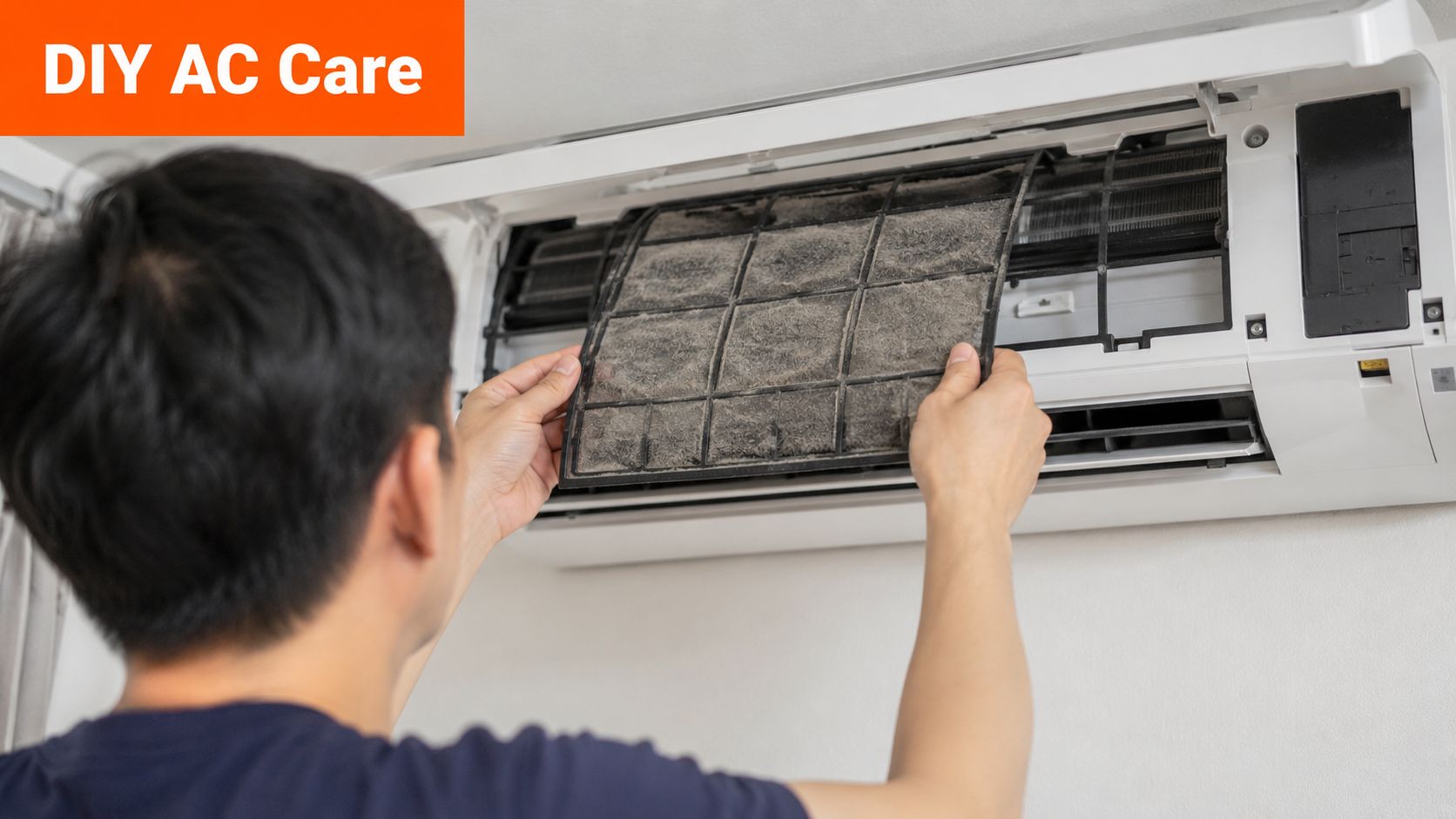
Replace or clean the air filter
This is the highest-value DIY task in almost every house.
Start by turning the system off at the thermostat. Remove the old filter and check the arrow on the frame so the new one points in the direction of airflow. Slide the replacement in fully, make sure it fits snugly, and close the cabinet or grille properly.
If the filter is bent, undersized, or loosely installed, air will bypass it. That means dirt ends up where you don't want it, including the blower and indoor coil.
Clear the condensate drain
Florida AC systems pull a lot of moisture out of the air. When the drain line starts to clog, the first sign might be water near the air handler, a float switch trip, or a house that suddenly won't cool because the system shut itself down to prevent overflow.
A simple homeowner routine usually looks like this:
- Locate the drain access point: It's often a small PVC tee near the indoor unit.
- Turn the system off first: Don't work around a running air handler.
- Use a careful flush method: Many homeowners use distilled vinegar or a wet/dry vac at the outside drain termination.
- Watch for repeat clogs: If the line keeps backing up, there may be buildup deeper in the trap or line that needs professional clearing.
If you're also dealing with musty smells, visible growth around vents, or concerns about moisture-related contamination, this Florida homeowners mold guide is worth reviewing so you know when a drainage issue has become an indoor air quality issue.
Check thermostat basics
A thermostat problem can look like an AC problem.
Run through these basics:
- Set mode correctly: Cool mode, not auto heat/cool confusion.
- Check the programmed schedule: A bad schedule can make homeowners think the system is short cycling or underperforming.
- Replace batteries if applicable: Some thermostats act erratically when battery power drops.
- Compare room feel to displayed temperature: If the reading seems off, the stat may be affected by sunlight, drafts, or placement issues.
Here's a simple visual walkthrough that helps homeowners understand basic AC upkeep before they move into pro-only work:
Don't open sealed electrical compartments. Don't try to “top off” refrigerant. Don't wash coils aggressively with a garden hose if you can't access them safely or don't know what's behind the panel. DIY maintenance works best when it stays in the lane of airflow, drainage, cleanliness, and simple controls.
What a Professional Heatwave Tune-Up Includes
Homeowners can handle filters, drain awareness, thermostat checks, and keeping the outdoor unit area clear. A real tune-up goes much further. It involves diagnostics that require training, instruments, and a process.

A technician-grade maintenance sequence typically starts with lockout and safety steps, then moves through electrical inspection, refrigerant-side checks, coil cleaning, drain-trap cleaning, and final operational testing. That final test under load matters because some faults don't show up until the system is fully running.
What the tech is actually checking
The most valuable parts of a professional visit aren't always visible to the homeowner.
- Electrical condition: Loose terminals, weak capacitors, contactor wear, and heat-stressed wiring can all cause unreliable starts and shutdowns.
- Refrigerant-side performance: Low charge, leakage at service ports or Schrader cores, and abnormal pressures need proper testing.
- Coil condition: Dirty indoor or outdoor coils reduce heat transfer and force the system to work harder.
- Drain function: A line that drains slowly today can become a no-cooling call tomorrow.
- Operating behavior: A good tech verifies cooling operation after reassembly so hidden problems show themselves before the job ends.
A detailed walkthrough of this process appears in this technician maintenance sequence video, which also highlights common misses such as skipped terminal checks, dirty outdoor coils, and refrigerant leaks that can be overlooked if the inspection is rushed.
Why professional service catches what DIY misses
Some failures don't announce themselves early. The system may still cool, but it's doing it with more strain, more electrical stress, or less airflow than it should. That's why many experts recommend professional service at least once per year, and often twice yearly for full HVAC systems in climates with long cooling demand, as noted in the earlier section.
If a technician doesn't test, clean, inspect, and verify operation at the end, that wasn't much of a tune-up.
For a simple seasonal reminder that heating equipment also deserves inspection when weather shifts, this cold-season home service image fits the same principle. Preventive service works best before demand spikes.

Red Flags Your AC Needs Immediate Attention
Sometimes the maintenance schedule is fine and the system still starts waving a flag. In Florida, waiting those issues out is where minor repairs turn into major ones.
If the air coming from the vents is weak, don't assume it's “just humidity.” It could be a dirty coil, a blower issue, a duct restriction, or an early electrical problem affecting fan performance. If the unit starts and stops too often, that's another sign not to ignore.

Signs that should move you from maintenance to service call
- New noises: Grinding, squealing, buzzing, or clanking usually means a part is wearing, loose, or struggling.
- Water where it shouldn't be: Around the air handler, near a closet unit, or under the drain line termination.
- Warm supply air or uneven cooling: Especially when the thermostat is clearly calling for cooling.
- High indoor humidity: The house feels clammy even though the AC appears to be running.
- Frequent breaker trips or hard starts: These are not “normal Florida power moments.”
NIST data shows that electrical component degradation such as capacitors and fans accounts for 30% of non-coil-related failures, and in areas with frequent power surges like Florida, electrical component life can drop by 20%. These parts often degrade imperceptibly, which is why some systems fail with very little warning.
The silent problems homeowners miss
A capacitor can weaken long before the unit stops starting reliably. A contactor can pit and wear before it sticks. A refrigerant leak can stay small enough that you only notice longer run times and weaker comfort.
If your outdoor coil is dirty and you're trying to decide whether a cleaning is simple or already overdue, this practical guide on tips for reducing AC coil cleaning costs can help you understand the scope before the condition gets worse.
For homeowners who pay close attention to service quality, this customer review graphic is a reminder that the right response to red flags isn't guesswork. It's getting qualified eyes on the system quickly.

Your Printable AC Maintenance Checklist
Most homeowners don't need a complicated spreadsheet. They need a checklist they'll use. Put this on the fridge, save it on your phone, or keep it in the same folder as your filter size and service records.
If you want a second format to compare against your own routine, this Can Do Duct Cleaning maintenance template is a helpful companion resource.
Florida AC Maintenance Checklist
| Frequency | Task | Done (✔) |
|---|---|---|
| Monthly | Check air filter and replace or clean if dirty | |
| Monthly | Verify thermostat mode, schedule, and temperature reading | |
| Monthly | Listen for unusual startup or running noises | |
| Monthly | Inspect around indoor unit for water or drain warning signs | |
| Quarterly | Clear debris around outdoor condenser | |
| Quarterly | Flush or check condensate drain line carefully | |
| Quarterly | Inspect visible refrigerant line insulation for damage | |
| Biannual | Schedule professional cooling-system inspection before heavy-use season | |
| Biannual | Schedule a second professional inspection after extended cooling-season strain | |
| As needed | Call for service if airflow drops, humidity rises, or the system short cycles |
Keep a dated photo of each completed filter change and write the filter size down once so you're not guessing at the store. Small habits make the AC maintenance schedule easier to keep.
For homeowners who like to save visual reminders with their home documents, this maintenance checklist icon works well as a quick bookmark.

If your AC has been running nonstop in Tampa Bay heat, now's the right time to get ahead of the next breakdown. Heatwave Air Conditioning, Plumbing, & Electric helps homeowners across Tampa Bay and Southwest Florida with professional HVAC service, repairs, and system care built for Florida conditions.