
Ever find yourself wondering what’s really going on behind the scenes when you crank down the thermostat? It’s not just one magic box. A central AC system is actually a team of sophisticated parts all working together to keep you cool. The main central AC system components you’ll find are the outdoor condenser unit, the indoor air handler or furnace, and the ductwork that ties it all together.
Understanding Your AC System's Anatomy
A great way to think about your central air conditioning system is to compare it to your body's circulatory system. Your heart pumps blood to keep your body at the right temperature, right? Well, your AC's compressor does something similar by pumping a special fluid called refrigerant. This refrigerant is the lifeblood of the system, grabbing heat from inside your house and dumping it outside.
This continuous cycle is what transforms your home into a cool oasis, especially during a sweltering Florida summer. The whole process depends on several key players working in perfect harmony. If one part starts to fail, the entire system can suffer, leading to weak cooling, sky-high energy bills, or a total breakdown. Getting to know how they all connect is the first step toward keeping your system healthy and efficient.
The Three Core Areas of Your AC
At a high level, the system is broken down into three main areas that have to collaborate to cool your home.
This diagram shows how the main central AC system components are grouped.
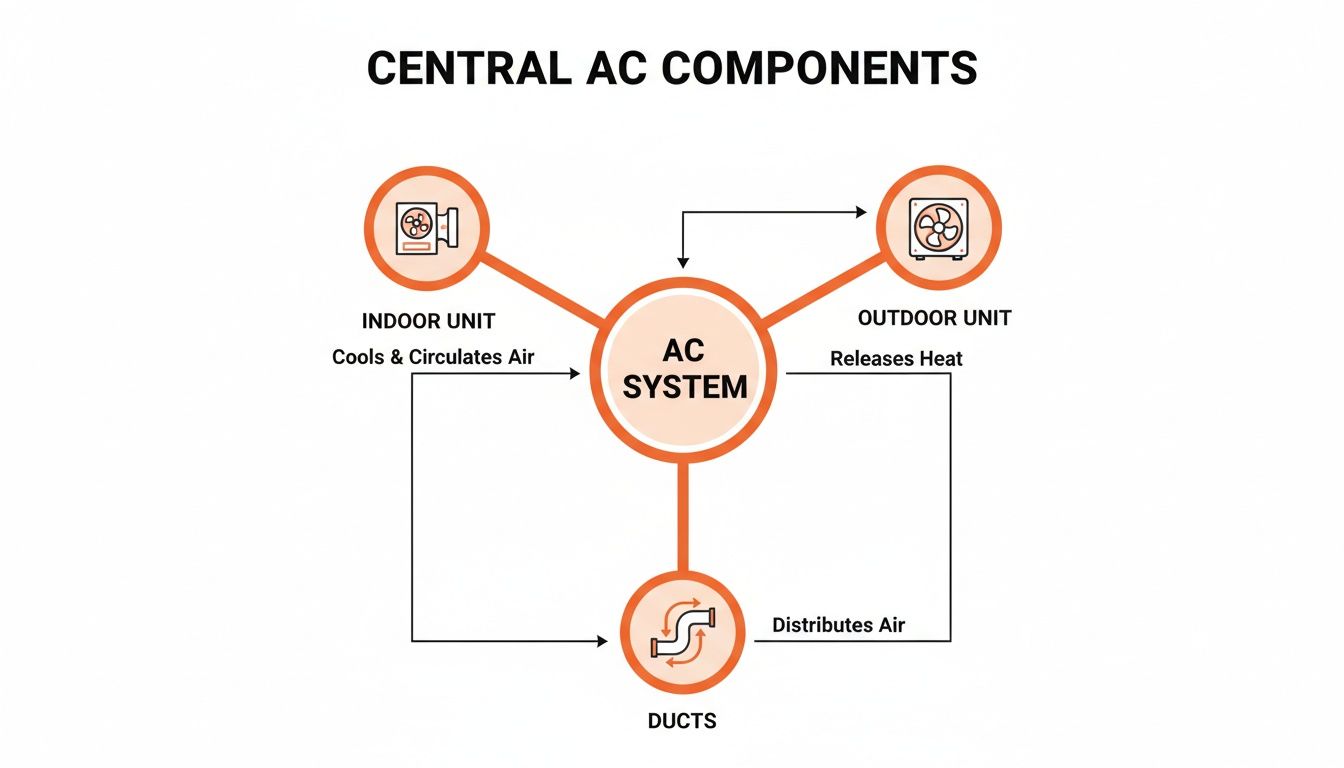
As you can see, your AC isn't just one machine but a whole network of indoor, outdoor, and delivery components that have to work in sync.
Central air became a household staple back in the mid-20th century, and by the 1960s, it was standard in most new homes in hot climates like ours in Florida. Today, central AC is in 87% of U.S. households—that’s nearly 100 million homes. Here in the southern states, that number jumps to 93%, covering pretty much every home in Tampa Bay, Sarasota, and Fort Myers.
Each of these core areas contains specific parts with unique jobs. Throughout this guide, we'll break down each component one by one, explaining its function, common problems to watch out for, and a few maintenance tips. For a deeper look into our comprehensive services for these systems, check out our guide to Heatwave's air conditioning solutions.
The Outdoor Unit: Your System's Hardworking Heart
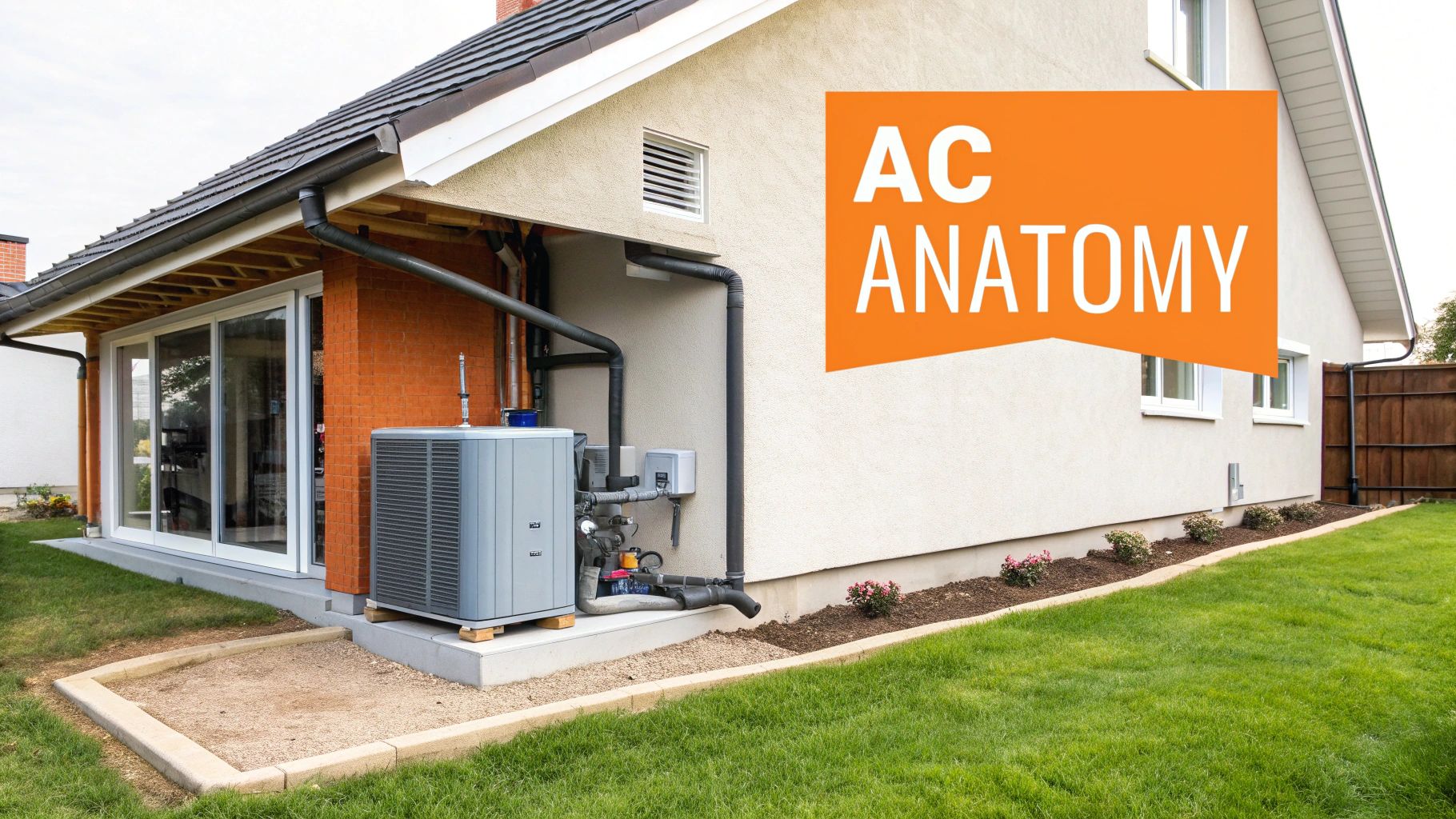
Let’s step outside for a minute and talk about that big metal box making all the noise. That’s your condenser unit, and it's the absolute powerhouse of your AC system. This is where all the heat pulled from inside your home gets unceremoniously dumped into the Florida air.
Think of it as the heat-exhaust port for your house. Inside this unit, a trio of critical parts—the compressor, the condenser coil, and a big fan—have to work in perfect harmony. If any one of them decides to take a day off, your entire cooling system grinds to a halt.
The Compressor: The Pumping Heart
If the outdoor unit is the powerhouse, the compressor is its beating heart. Its one and only job is to take the low-pressure refrigerant gas (now full of heat from your house) and put it under extreme pressure. This process squeezes the refrigerant molecules together, causing them to get incredibly hot.
Once that refrigerant is superheated and highly pressurized, it’s ready for the next stage. Without a working compressor, the refrigerant goes nowhere, and the heat-exchange cycle can’t even begin. It's often the single most expensive component, which makes keeping it healthy a top priority.
The Condenser Coil and Fan: The Heat Release Team
After leaving the compressor, the superhot refrigerant gas flows into the condenser coil. You'll see this as a series of looping tubes, usually made of copper, with countless thin aluminum fins designed to maximize surface area.
As the hot gas snakes through these tubes, the large fan on top of the unit pulls outside air across the coil's fins. This blast of air yanks the heat right out of the refrigerant, causing it to cool down and condense back into a liquid. The fan then pushes that captured heat out into the atmosphere.
Key Takeaway: The outdoor unit’s main job is simple: get rid of heat. The compressor makes the refrigerant hot, and the coil and fan work as a team to transfer that heat into the outside air.
Common Problems with the Outdoor Unit
Being exposed to sun, rain, and everything else Florida can throw at it, the outdoor unit is bound to have some issues. Catching the warning signs early can save you from a total system meltdown on the hottest day of the year.
- Loud Buzzing or Grinding: This is the sound of a struggling compressor. If you hear it, the heart of your system is under serious stress and needs attention fast.
- Fan Not Spinning: If that fan isn't turning, heat isn’t being removed. This could be a dead motor, a bad capacitor, or something as simple as a branch blocking the blades.
- Ice on the Unit: Ice usually shows up on the indoor coil, but seeing it outside can signal a refrigerant leak or a major airflow problem.
For tricky problems like a failing compressor, you absolutely need a professional. Our technicians are experts at diagnosing these complex issues. You can learn more about our process by reading our guide on how to repair an AC compressor in Sarasota, FL.
On your end, a little preventative care goes a long way. Simply keeping the unit clear of leaves, grass clippings, and debris will help ensure it can always breathe easily.
The Indoor Unit: Where The Cooling Magic Happens
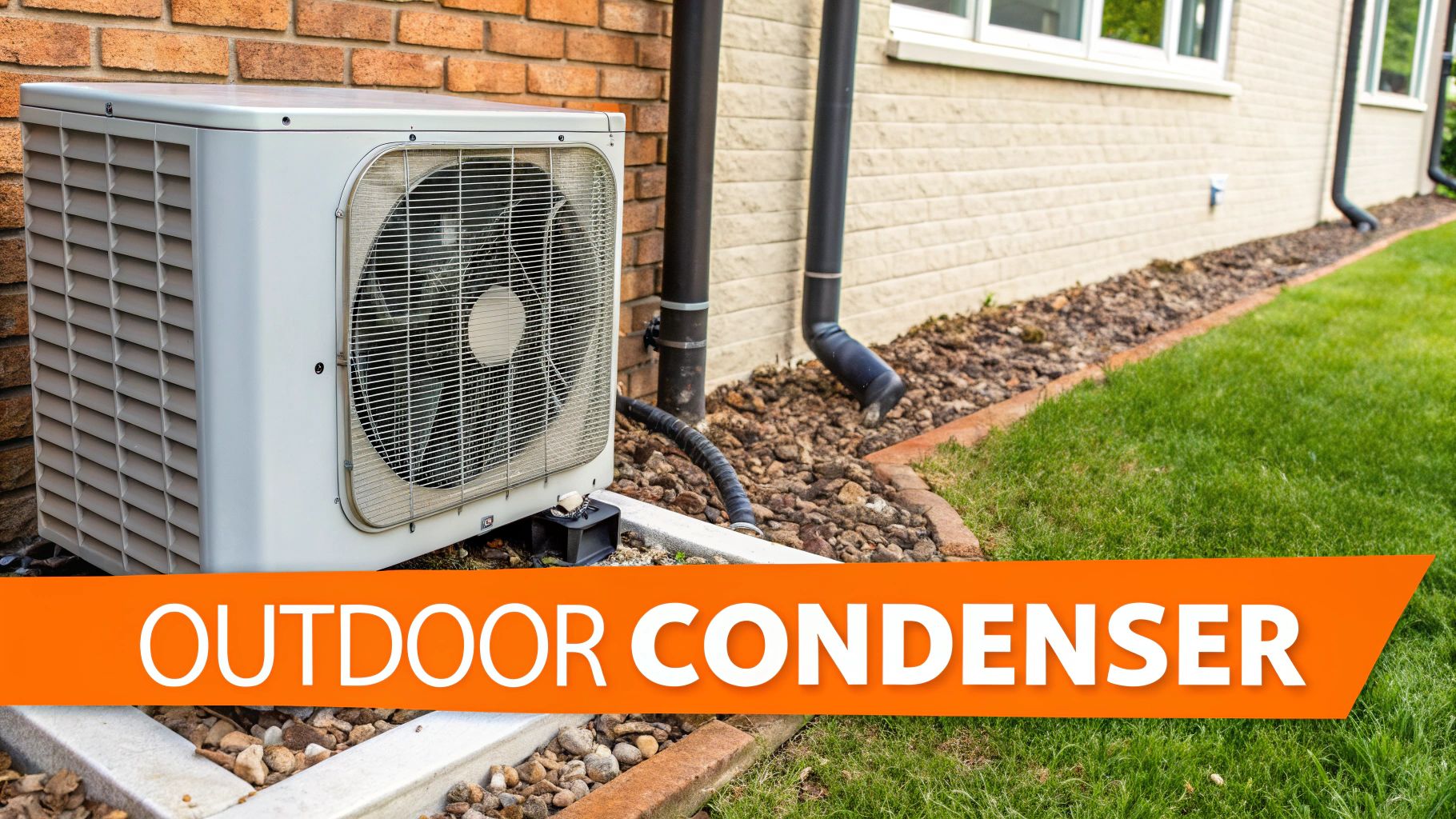
While the outdoor unit is busy dumping heat outside, the real magic of cooling happens inside your home. The refrigerant, now a cool liquid, travels back indoors to what we call the air handler (or furnace, in a combined system). This is the command center for your home's comfort, where warm, sticky air gets transformed into the cool, dry relief you crave on a hot Florida day.
Inside this unit, two star players work in perfect harmony: the evaporator coil and the blower motor. Let’s pull back the curtain and see how they get the job done.
The Evaporator Coil: Your Home's Heat Sponge
Think of the evaporator coil as a super-chilled, metallic sponge designed to soak up heat. As the liquid refrigerant flows into it, it passes through a tiny device called an expansion valve. This valve causes a sudden pressure drop, making the refrigerant rapidly expand and become intensely cold—often plummeting to around 40 degrees Fahrenheit.
At the same time, your system’s blower is pulling warm, humid air from your living spaces and pushing it across this frigid coil. This is where two critical things happen:
- Heat gets absorbed: The warmth from your indoor air is instantly sucked into the cold refrigerant flowing through the coil.
- Humidity is removed: As the warm air hits the cold coil, moisture condenses on its surface—just like a glass of iced tea sweating on a summer afternoon. This water drips into a pan and is safely channeled away by the condensate drain.
This one-two punch of cooling and dehumidifying is what makes your home feel truly comfortable, not just cold. It’s a lifesaver here in Sarasota and Cape Coral.
The Blower Motor: The Lungs of Your Home
Once the air is cool and dry, it needs a way to get back to your rooms. That’s the job of the blower motor. This powerful fan is the workhorse responsible for circulating all that conditioned air through your ductwork and out of your vents.
A strong, consistent blower motor ensures every room gets an even supply of cool air. If the motor starts to weaken, you'll feel the effects—weak airflow from the vents and frustrating hot spots in certain rooms, even when the AC runs nonstop. Upgrading to a modern, high-efficiency air handler can make a world of difference in performance and energy bills. You can learn more about these options by checking out our information on Heatwave's Signature Series Air Handlers.
Key Insight: A dirty air filter is the number one enemy of your indoor unit. It forces the blower motor to work harder and can block airflow over the evaporator coil, causing it to freeze into a solid block of ice.
Warning Signs From Your Indoor Unit
Your indoor unit will usually give you a heads-up when something’s wrong. Learning to spot these clues can help you catch a small problem before it turns into a total system failure.
- Frozen Evaporator Coil: Seeing ice on the indoor coil is a major red flag. It usually means airflow is blocked or your refrigerant level is low.
- Weak Airflow from Vents: This often points directly to a clogged filter, a struggling blower motor, or even blocked ducts.
- Musty Odors: If you smell something damp or mildewy, it could be mold growing on a dirty, wet evaporator coil.
- Water Leaks: A puddle of water around your air handler is a classic sign of a clogged condensate drain.
These issues need to be addressed quickly to avoid bigger, more expensive damage. While changing your air filter is an easy DIY fix, problems like a frozen coil or a failing motor are definitely jobs for a professional.
The Unsung Heroes: Connectors and Controls of Your AC System
While the big indoor and outdoor units seem to do all the work, a few supporting players are just as critical for keeping your home cool. These are the parts that connect everything, give the commands, and handle the byproducts—like all that Florida humidity.
They’re often tucked away in walls or utility closets, but without them, even the most powerful AC system is just a big metal box.
Refrigerant Lines: The System's Circulatory Network
Think of refrigerant lines as the veins and arteries of your air conditioner. These two copper tubes are the superhighways that move refrigerant between the indoor and outdoor units, which is the key to the whole cooling cycle. One line, the larger insulated one, carries cool gas, while the smaller one moves hot liquid.
A leak in these lines is a major problem. It bleeds the system of its vital refrigerant, leading to weak cooling, frozen coils, and eventually, a fried compressor. You might hear a hissing sound or spot an oily patch near the lines—a sure sign you need a pro right away.
The Thermostat: Your AC's Brain
The thermostat is the command center for your entire cooling system. This little device on your wall constantly senses the room's temperature and tells the AC when to kick on or shut off to keep you comfortable. It's a simple job, but its accuracy is everything for both comfort and your energy bill.
Of course, modern smart thermostats do a lot more, like learning your schedule and letting you control things from your phone. To get a better handle on all the features, you can learn more about air conditioning controller functionality. When a thermostat goes bad, it can cause the AC to turn on and off constantly (short cycling) or refuse to start at all. Sometimes, what feels like a massive system failure is really just a faulty thermostat or a simple wiring problem. We break down some of those common electrical gremlins in our guide to AC wiring issues.
The Condensate Drain: Getting Florida's Humidity Out
As your evaporator coil pulls all that sticky moisture from the air, the water has to go somewhere. It drips into a collection pan and then flows out of your home through the condensate drain line, which is usually just a simple PVC pipe. In a place like Southwest Florida, this humble pipe can drain several gallons of water a day.
Crucial Maintenance Tip: A clogged condensate drain is one of the most common—and totally preventable—causes of water damage from an AC unit. Algae and gunk can build up and create a blockage, causing the pan to overflow and spill water into your ceilings, walls, or floors. Pouring a cup of distilled vinegar down the line every few months is a simple trick to keep it clear and flowing.
Keeping Your System Healthy: A Proactive Approach
Okay, now that we've walked through all the moving parts of your central AC, let's talk about protecting them. A little proactive care is the best way to guarantee a long, efficient life for your system, keep your energy bills down, and—most importantly—avoid a meltdown during a sweltering Florida heatwave.
Trust me, a few simple steps can make a world of difference. Many of the most important maintenance tasks are things any homeowner can tackle, and they directly protect the components we just discussed from their most common points of failure.
Your DIY Maintenance Checklist
You don’t have to be an HVAC pro to keep your system running smoothly. Focusing on a few high-impact tasks will prevent unnecessary strain on critical parts like the blower motor and compressor, potentially saving you thousands in early replacement costs.
Here are the non-negotiables:
- Change Your Air Filter Religiously: A dirty, clogged filter is like trying to breathe through a straw. It suffocates your system, forcing the blower motor to work overtime and potentially causing the evaporator coil to freeze into a solid block of ice. Swap it out every 30-90 days.
- Keep the Outdoor Unit Clear: Your condenser needs room to breathe. Make sure there’s at least two feet of clear space all the way around the unit. Keep it free of leaves, grass clippings, and overgrown shrubs that block airflow and make the fan and compressor sweat.
- Clean the Condensate Drain Line: To head off a messy and damaging clog, just pour a cup of distilled white vinegar down the drain line every couple of months. It's a simple flush that kills any gunk or algae trying to build a home in there.
For a deeper dive, check out our guide on the top 5 AC maintenance tips every homeowner should have in their back pocket.
Why You Still Need a Professional Tune-Up
While those DIY tasks are vital, they don't replace the expert eye of a certified technician. Think of an annual professional tune-up as a comprehensive physical for your AC, catching the critical issues you can't see or safely get to.
A professional tune-up is the single best investment you can make to prevent a catastrophic failure. Studies show that regular maintenance can reduce the risk of costly breakdowns by as much as 95%.
When a Heatwave technician shows up for a tune-up, we’re not just kicking the tires. We will:
- Check Refrigerant Levels: Low refrigerant is a sure sign of a leak and puts immense strain on your compressor.
- Inspect Electrical Connections: We'll tighten and test all the wiring to prevent dangerous electrical failures before they happen.
- Clean the Coils: We professionally clean both the indoor evaporator and outdoor condenser coils to ensure they can transfer heat as efficiently as possible.
- Test System Controls: We make sure the thermostat and all the safety controls are working exactly as they should be.
The easiest way to make sure your system gets this comprehensive care is to set up an annual HVAC maintenance plan. It’s the ultimate set-it-and-forget-it solution to guarantee your system is always ready for the heat. When it's time for that tune-up, give Heatwave a call to get it on the schedule.
Making the Call Between Repair and Replacement
Deciding whether to fix a failing AC or invest in a new one can feel like a huge, stressful decision. It’s a classic head-versus-heart debate. But a few key factors can cut through the noise and make the choice much clearer. Knowing when your system is waving the white flag is the best way to avoid a total breakdown in the middle of a brutal Florida summer.
Ultimately, it all boils down to three things: your system's age, how much you're spending on repairs, and its overall efficiency.
The biggest factor is usually age. A central air conditioner is built to last about 10-15 years. If your system is getting close to that decade mark or has already passed it, sinking more money into repairs is often throwing good money after bad. Major component failures become much more likely, and you’re just delaying the inevitable.
Evaluating the Key Decision Factors
Think about how often you've had to call for service. If your AC technician is on your speed dial and you're scheduling repairs every season, those costs are adding up fast. It's easy to lose track, but a running tally can be a real eye-opener.
A good rule of thumb we use in the field is the $5,000 rule. Just multiply the cost of the repair you're facing by your AC unit's age in years. If that number is more than $5,000, replacement is almost always the smarter financial move.
One of the biggest game-changers for older systems is the type of refrigerant it uses. Any unit made before 2010 likely runs on R-22 refrigerant. That stuff has been phased out by the EPA, making it incredibly expensive and hard to find. A simple refrigerant leak can suddenly turn into a massive expense, making a full replacement a much more practical choice.
And let's not forget about efficiency. Modern high-SEER (Seasonal Energy Efficiency Ratio) units are worlds apart from the systems of 10 or 15 years ago. Upgrading can slash your monthly energy bills, often by enough to help the new system pay for itself over its lifespan.
When you’re staring down this decision, don't go it alone. Call Heatwave for a professional assessment. We’ll lay out all the options, help you weigh the costs and benefits, and give you the straightforward advice you need to make the right call for your home.
Common Questions We Hear About AC Components
Even after you get a handle on the main central AC system components, it's totally normal to have a few more questions. Let's walk through some of the ones we hear most often from homeowners to clear things up and help you feel more confident about your system.
How Long Do AC Components Typically Last?
Most central air conditioners will give you a good 10-15 years of service. But that doesn't mean every single part will last that long.
Think of it like the tires on your car—they won't last as long as the engine. A capacitor, for example, might only make it 5-10 years. On the other hand, a well-cared-for compressor could easily last the full 15 years, maybe even longer. Longevity really comes down to consistent professional maintenance and where you live. Here in Florida, the constant heat and humidity definitely put our AC systems through their paces.
What Is the Most Expensive Component to Replace?
Hands down, the compressor is the priciest single component to replace. It's the powerhouse of your whole system, and swapping one out is a big, labor-intensive job.
Frankly, if the compressor gives out on a system that's over 10 years old, it almost always makes more financial sense to replace the entire outdoor condenser unit. The evaporator coil is another big-ticket item, especially if it springs a leak that's tough to get to and repair.
Can I Mix and Match Indoor and Outdoor Units?
Technically, you can, but it's a really bad idea. We strongly advise against it. AC systems are engineered as a "matched set," meaning the indoor and outdoor units are built to work together in perfect harmony for the best efficiency and performance.
When you mismatch components, you're setting yourself up for headaches. You'll likely see lower efficiency, cause premature wear and tear on both units, and you could even void your manufacturer's warranty. For the best results, always replace both units at the same time.
Key Takeaway: Always bring in a certified HVAC professional before making big decisions about replacing components. An expert can look at your specific situation and give you guidance that balances cost, efficiency, and the long-term health of your system.
Understanding what makes your AC tick is the first step to keeping it running smoothly for years to come. When you need expert service or advice on any of your central AC system components, trust the experienced team at Heatwave Air Conditioning, Plumbing, & Electric. Schedule your service call today!