
When you live in Florida, choosing between a heat pump and a furnace isn't just an HVAC decision—it's a choice that directly impacts your comfort and your wallet year-round. The core difference between a heat pump and a furnace is pretty straightforward: a heat pump moves heat from one place to another for both cooling and heating, while a furnace creates new heat by burning fuel or using electric coils.
Given our mild winters, this single distinction is why the heat pump is almost always the more efficient and practical choice for most homes in the Tampa Bay area.
Choosing Your Ideal Florida HVAC System
Picking the right HVAC system is about more than just brand names. It's about finding the perfect match for your home's unique layout, your family's needs, and, most importantly, our local climate. While both systems will keep you warm on a chilly Florida night, they get there in very different ways, which affects everything from your monthly bills to your overall comfort.
A furnace delivers powerful, intense heat, no question. But a heat pump offers a smart, all-in-one solution that’s practically built for the kind of weather we experience day in and day out.
Quick Comparison: Heat Pump vs. Furnace
To make things simple, here’s a quick breakdown of how these two systems stack up. This table cuts through the noise and shows you the key differences at a glance.
| Feature | Heat Pump | Furnace |
|---|---|---|
| Primary Function | Moves heat; provides heating & cooling | Creates heat; provides heating only |
| Energy Efficiency | Extremely high (up to 400%) | High (up to 98%) |
| Best Climate | Mild to hot climates | Cold to freezing climates |
| Operating Principle | Heat transfer (refrigerant cycle) | Combustion or electric resistance |
| Year-Round Use | Yes, handles both seasons | No, requires a separate AC unit |
It’s pretty clear from this comparison why so many of your neighbors are making the switch to modern heat pump technology. To really get into the weeds, take a look at our ultimate guide on how to choose the right HVAC system for your home for even more detail.
A furnace in Florida is often like a snowplow in Miami—powerful, but rarely the right tool for the job. A heat pump, however, is designed perfectly for our year-round comfort needs.
Efficiency and Long-Term Value
Energy efficiency is where the heat pump really shines, and it’s not even close. Heat pumps can achieve mind-boggling efficiency ratings of 300-400%. What that means is for every single unit of electricity they consume, they can produce three to four units of heating or cooling energy.
On the other hand, even the most advanced, high-efficiency gas furnaces top out at around 98% efficiency. This incredible performance difference is why the global heat pump market is booming and expected to hit $297.63 billion by 2035.
For you, a Florida resident, this translates into real savings—potentially cutting your heating costs by 40-60%. That makes a heat pump a smart, future-proof investment for your home, and at Heatwave, we can help you find the perfect system.
Understanding How Each System Operates
To really understand the difference between a heat pump and a furnace, you need to look past the thermostat and see how each machine actually works. They both keep you warm, but how they do it is completely different—and that difference directly impacts your comfort and your monthly energy bills.
A furnace is a heat creator. Think of it as a purpose-built heating machine. It burns a fuel source, usually natural gas, or uses electric resistance coils to generate powerful, intense heat. A blower motor then pushes that warm air through your home’s ductwork.
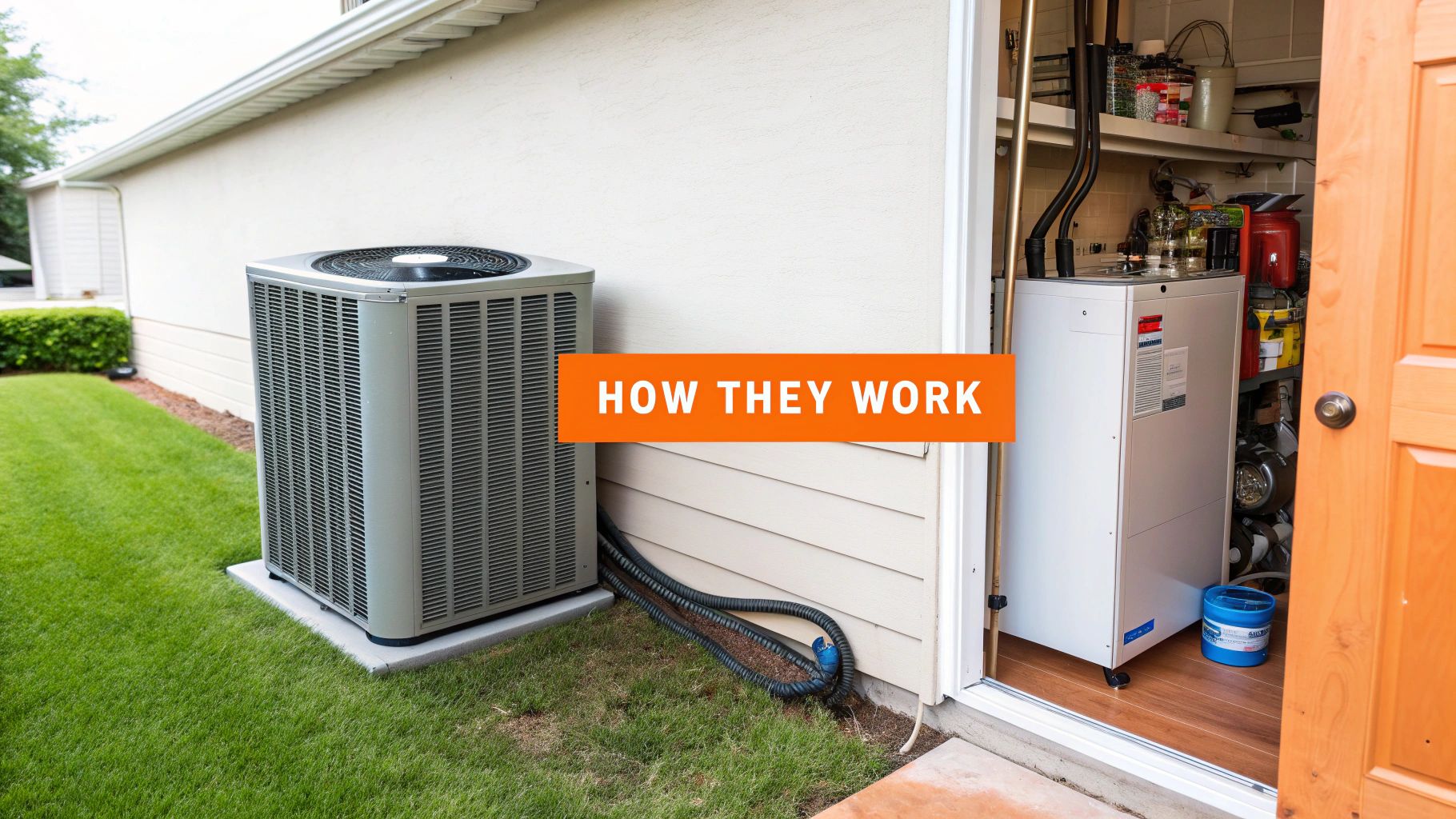
This method is direct and effective. The heat is often very dry and comes in strong bursts that can raise a room's temperature quickly. But a furnace only does one thing: heat. When summer comes around, you’ll need a separate air conditioning unit to cool your home.
The Heat Pump: A Smart Heat Mover
A heat pump operates on a much smarter principle. Instead of creating heat from scratch, it simply moves existing heat from one place to another. This is the secret to its incredible efficiency.
During a mild Tampa Bay winter, it pulls warmth from the outdoor air—yes, even when it feels cool outside—and transfers it into your home. It’s like an air conditioner running in reverse.
The core principle is heat transfer, not heat generation. A heat pump can provide three to four units of heat for every single unit of electricity it consumes, making it exceptionally efficient in climates like Florida's.
This process delivers a gentle, steady stream of warm air, which keeps your home at a consistent temperature without the dry, powerful blasts you get from a furnace. For our humid climate, that consistent warmth and superior dehumidification is a huge win for comfort.
Dual-Functionality: The All-in-One Advantage
The real game-changer for Florida homeowners is that a heat pump does two jobs. In the summer, the system just reverses its process. It pulls heat and humidity from inside your home and moves it outside, working exactly like a high-efficiency air conditioner.
This two-in-one capability is why heat pumps are such a practical and popular choice for our area.
Here’s a quick breakdown of how they stack up:
Heating Method:
- Furnace: Creates heat by burning fuel (gas) or through electric resistance.
- Heat Pump: Moves existing heat from the outside air into your home.
Cooling Method:
- Furnace: Can't cool. It requires a completely separate AC system.
- Heat Pump: Reverses its cycle to move indoor heat outside, providing powerful cooling and dehumidification.
Air Quality:
- Furnace: Can produce very dry air because of the intense heat it generates.
- Heat Pump: Delivers a more balanced, less dry warmth, which often feels more comfortable.
When you look at it this way, it’s clear why a furnace—built for harsh northern winters—is often overkill for Florida. A heat pump, on the other hand, is perfectly suited to handle both our heavy cooling needs and our mild winters with a single, efficient system. This simplifies your HVAC setup and adds up to significant savings over time.
Analyzing The Financial Impact For Your Home
When you're trying to understand the difference between a heat pump and a furnace, the financial side of things is a huge piece of the puzzle. The sticker price is what everyone sees first, but it's just the beginning of the story. To make a smart investment for your Tampa Bay home, you need to look at the full picture: the upfront installation, what it'll cost to run each month, and the total cost over the system's entire life.
Think of it this way: you're not just buying a machine. You're buying years of comfort and predictable energy bills. That's why we need to break down the numbers.
Upfront Installation Costs
At first glance, a furnace often looks like the cheaper option. A high-efficiency gas furnace installation typically runs between $3,800 and $7,600, which can be appealing if you're focused on the immediate expense.
On the other hand, installing a high-efficiency heat pump usually costs between $5,500 and $10,500. That higher number can give homeowners pause, but it's critical to remember what you're getting. A heat pump is an all-in-one system that delivers incredibly efficient heating and powerful air conditioning. You're really buying two systems in one.
Of course, these are just ballpark figures. The final price tag depends on a few key things:
- Home Size and Layout: Bigger homes need more powerful (and more expensive) equipment to keep them comfortable.
- Ductwork Condition: If your existing ductwork is leaky or needs to be reconfigured, that will add to the installation cost.
- SEER2 Rating: Heat pumps with higher efficiency ratings (SEER2) cost more upfront but pay you back with bigger long-term savings.
- Brand and Model: Just like cars, different HVAC brands come with different features and price points.
Here at Heatwave, we give you a free, no-nonsense estimate so you know exactly what each option will cost for your specific home.
Monthly Operating Expenses The Real Savings
This is where the financial story takes a sharp turn in favor of heat pumps, especially here in Florida. A furnace has to burn fuel to create heat, and that's an expensive process. A heat pump, however, just moves existing heat from one place to another—a much, much more efficient method.
On average, a modern heat pump can slash your heating energy use by 50% compared to a gas furnace. For a typical Tampa Bay family, that can easily add up to hundreds of dollars in savings every single year.
Because a heat pump is a single unit for both heating and cooling, it operates at peak efficiency year-round. This dual functionality means you’re always using the most cost-effective method to keep your home comfortable, no matter the season.
Looking beyond just the system itself, a holistic view of your home's energy efficient features to save on utility bills provides a more complete picture of your potential savings.
Lifetime Cost of Ownership
To really see the financial winner, you have to look at the total cost over a typical 15-year lifespan. This means adding up the initial purchase, all the energy bills, and the routine maintenance. When you put it all together, the heat pump almost always comes out on top in our climate.
Here's a look at how the total costs can stack up over 15 years in a home like yours.
Lifetime Cost Projection Heat Pump vs Gas Furnace in Florida
| Cost Factor | High-Efficiency Heat Pump | High-Efficiency Gas Furnace |
|---|---|---|
| Avg. Installation Cost | $8,000 | $5,700 (plus a separate AC unit) |
| Est. 15-Year Energy Cost | $18,500 (Heating & Cooling) | $26,000 (Heating & Cooling) |
| Est. 15-Year Maintenance | $3,000 | $3,500 (for furnace & AC) |
| Total 15-Year Cost | $29,500 | $35,200 |
As you can see, choosing a heat pump could save you over $5,700 in the long run. The key to hitting those savings is consistent upkeep; you can learn more about the benefits of regular HVAC maintenance to protect that investment.
Maximizing Incentives and Rebates
Don't forget about tax credits and rebates! Federal and local utility programs can take a serious bite out of the upfront cost of a high-efficiency heat pump. The Inflation Reduction Act, for instance, offers major credits to homeowners who upgrade to qualifying energy-efficient systems.
These incentives are there to make the smarter, greener choice more accessible. Our team at Heatwave keeps up with all the available programs, and we'll help you find and apply for every single credit and rebate you qualify for. We want to maximize your return on investment right from day one.
Matching System Performance to the Florida Climate
When you're choosing between a heat pump and a furnace, your location isn't just a minor detail—it's everything. The climate here in Tampa Bay dictates which system will run efficiently, keep your family comfortable, and save you from a sky-high energy bill. Luckily, our weather patterns make the decision pretty straightforward.
We all know the drill: long, hot, humid summers demand a powerhouse cooling system. Our winters, on the other hand, are incredibly mild, with just a handful of days that call for serious heat. This is exactly where the core differences between a heat pump and a furnace come into sharp focus.
Why Heat Pumps Excel in Florida
Think of a heat pump as a high-efficiency air conditioner that can also run in reverse to provide heat. Its secret is that it transfers heat instead of creating it from scratch. This process is incredibly efficient when outdoor temperatures are above freezing—which is the case for us almost all year long.
During our sweltering summers, a modern heat pump works as a top-tier AC, pulling heat and, most importantly, humidity out of your home. That dehumidifying power is a huge win in Florida, making your home feel cooler and more comfortable even at higher thermostat settings.
Then, on a chilly January morning, the system just reverses. It finds warmth in the outside air and moves it inside, giving you gentle, consistent heat without the high cost of burning fuel or using electric resistance strips.
A furnace in Florida is like a snowplow in Miami—powerful but rarely the right tool for the job. It's an oversized solution for a problem we seldom have, leading to wasted energy and higher costs.
The Furnace Mismatch for Mild Winters
A furnace is built to generate intense heat, making it the perfect choice for places with brutal, sub-zero winters. It creates that heat by burning fuel, which is a powerful but much less efficient process.
Here in Florida, a furnace almost never gets to run the way it was designed to. It sits dormant most of the year, and when it finally kicks on, it often "short-cycles"—blasting out dry, intense heat for a few minutes before shutting right back off. This is not only inefficient, but it also makes your home less comfortable by creating hot and cold spots and stripping moisture from the air.
When you're weighing the financial side, you have to look at furnace installation and replacement costs and accept the reality that you'd be paying for a powerful machine you'll barely use.
The Best of Both Worlds: A Dual-Fuel System
So, what about those few really cold nights when the temperature dips into the 30s? While today's heat pumps are better in cold weather than ever, some homeowners want total peace of mind. This is where a dual-fuel system, also called a hybrid system, comes in as the perfect compromise.
A dual-fuel setup pairs an electric heat pump with a backup gas furnace, all managed by a smart thermostat. It gives you optimized performance all year round:
- Most of the Year: The super-efficient heat pump handles all your cooling and the vast majority of your heating.
- Rare Cold Snaps: If the temperature drops below a set point (usually around 35-40°F), the system automatically switches over to the gas furnace for powerful, cost-effective heat.
This smart approach guarantees you’re always using the most efficient energy source for the weather outside. You get the incredible year-round savings of a heat pump without ever worrying about staying warm on the coldest nights of the year. With over 20 years of experience, the team at Heatwave has mastered the installation of these advanced hybrid systems, bringing the best of modern, efficient technology to Florida homes.
It’s not just about the numbers on your utility bill—the difference between a heat pump and a furnace impacts your daily quality of life in ways you can actually feel. The type of comfort each system delivers is completely distinct.
A furnace blasts out powerful, intense heat that can warm up a room fast. But this often comes at a cost: dry, stuffy air that can irritate your sinuses and dry out your skin. It's that classic "on-again, off-again" cycle that many of us are used to.
A heat pump, on the other hand, delivers a gentler, more consistent warmth. It circulates air more continuously, maintaining a steady temperature throughout your home without those drastic temperature swings. This process also helps keep humidity levels more balanced, creating a healthier and genuinely more comfortable indoor environment. For a deeper dive, you can learn more about achieving ideal indoor air quality in our comprehensive guide.
Prioritizing Home Safety
When the safety of your family is on the line, the choice becomes even clearer. Furnaces, especially those running on natural gas or oil, create heat through combustion. This process, by its very nature, carries the risk of dangerous carbon monoxide (CO) leaks if the system isn't perfectly maintained or ventilated.
Heat pumps completely eliminate this risk. As all-electric systems, they don’t burn any fuel to create heat. They simply move warmth using a refrigerant cycle, which means there is zero risk of carbon monoxide exposure or gas leaks inside your home. This fundamental difference in how they operate makes a heat pump an inherently safer choice for protecting your loved ones.
By choosing an all-electric heat pump, you are removing a source of potential fossil fuel combustion from your home. This single decision provides peace of mind and creates a safer living space for your family.
Embracing Environmental Responsibility
Your choice of HVAC system also leaves a significant mark on the environment. A gas furnace burns fossil fuels, directly releasing carbon dioxide and other greenhouse gases into the atmosphere. This adds to your home's carbon footprint every time it kicks on.
Heat pumps represent a major step toward more sustainable living. Since they don’t burn fuel, they produce no direct emissions. Their incredible efficiency also means they use far less electricity than older electric resistance heaters, which helps reduce the strain on the power grid.
The environmental impact here is massive. Gas furnaces contribute to the 400 million metric tons of CO2 that U.S. homes emit every year. In stark contrast, a single heat pump can slash a household's emissions by 3-5 tons annually. This kind of efficiency is driving huge demand, with the global market expected to hit $162.64 billion by 2030. Discover more insights about the booming heat pump market on marketsandmarkets.com. By upgrading, you're not just lowering your bills; you're investing in a greener future and potentially boosting your property's value.
Making the Right Choice with Expert Guidance
Trying to decide between a heat pump and a furnace can feel a little overwhelming, but for most homeowners in the Tampa Bay area, the decision usually points in one clear direction. Once you weigh the efficiency, the lifetime costs, and our unique climate, the evidence is pretty hard to ignore.
A high-efficiency heat pump is almost always the smarter investment for year-round comfort and serious long-term savings in our part of Florida.
The choice really boils down to what matters most to you. Are you focused on slashing your energy bills, ensuring your family's safety, and reducing your home's carbon footprint? Or are you just looking for a heating solution without really thinking about what our climate demands? For most people, the all-in-one heating and cooling of a heat pump is the only logical answer.
Your Decision-Making Framework
To make it simple, just think about these three key factors:
- Your Budget: A furnace might look a bit cheaper on paper at first, but a heat pump delivers a much lower total cost of ownership over its lifespan. Plus, federal tax credits and local rebates—which we help you navigate—can slash that upfront cost dramatically.
- Your Comfort Priorities: If you love having consistent temperatures, powerful dehumidification during our humid summers, and quiet operation, you can't beat a heat pump.
- Your Home’s Future: Installing a modern, all-electric heat pump is a forward-thinking upgrade. It boosts your property value and gets rid of the risks that come with burning fossil fuels right in your home.
This infographic does a great job of breaking down the actual heating experience, showing the difference between the gentle, safe warmth from a heat pump and the intense, combustion-based heat a furnace produces.
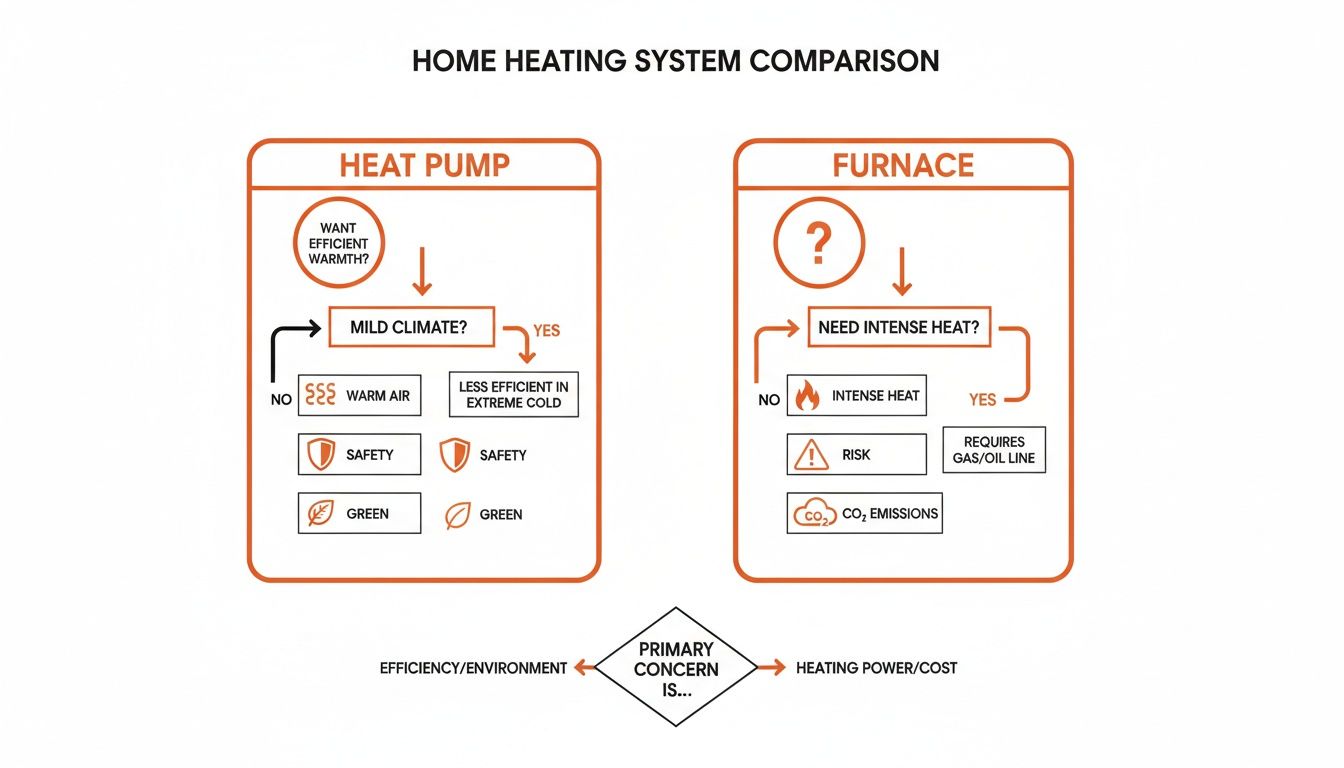
As you can see, a heat pump offers a safer, greener solution that’s perfectly suited for Florida living. For those who still want that extra peace of mind during those rare, deep cold snaps, a hybrid system is a fantastic choice. You can learn more about how a dual-fuel system works to see if it’s the right fit for you.
For the vast majority of homeowners in Tampa Bay, a high-efficiency heat pump or a dual-fuel hybrid system delivers the best combination of performance, safety, and long-term financial benefit.
At Heatwave Air Conditioning, Plumbing, & Electric, we don’t just sell boxes of equipment; we provide solutions that are custom-fit for your home and family. With nearly 20 years of local experience, our certified technicians know exactly what it takes to stay comfortable in our climate. We offer free, no-obligation estimates and flexible financing to make your upgrade as smooth and affordable as possible.
Ready to invest in smarter, more efficient home comfort? Schedule your free consultation with a Heatwave expert today, and let us design the perfect system for your home.
Common Questions We Hear About Heat Pumps and Furnaces
When you're deciding between a heat pump and a furnace, a few questions always come up. It makes sense—you want to feel confident that you’re making the right investment for your home's comfort, especially when it comes to performance, longevity, and the installation itself. Let’s clear up some of the most common concerns.
Many Tampa Bay residents ask us if a modern heat pump is really powerful enough for a rare Florida cold snap. The answer is a definite yes. Today's heat pumps are incredibly efficient and have no problem keeping a home warm even when temperatures dip into the 40s or high 30s.
For those few days a year when it gets even colder, most heat pumps come equipped with a supplemental electric resistance heating strip. This auxiliary heat source kicks in automatically to give you an extra boost, ensuring your home stays perfectly comfortable without you having to do a thing. Another great option is a dual-fuel system, which pairs a heat pump with a backup furnace for ultimate peace of mind.
Comparing System Lifespan and Value
Another big question is about the long-term value of each system. With proper care, both systems are built to last, but their lifespans do differ. The absolute key to getting the most out of either one is consistent, professional maintenance.
- Heat Pump Lifespan: A well-maintained heat pump will typically give you 10 to 15 years of service. Since it pulls double duty for both heating and cooling, it naturally logs more operational hours than a furnace.
- Furnace Lifespan: A furnace, which only runs during our cooler months, can last quite a bit longer, often 15 to 20 years or even more. You can dive deeper into the life expectancy of a gas furnace in our detailed article.
While a furnace might last longer on paper, a heat pump's superior year-round efficiency and lower running costs often deliver greater overall financial value during its service life here in our climate.
Making the Switch to a Heat Pump
Finally, homeowners often wonder how complicated it is to switch from a furnace to a heat pump. The good news is that for homes with existing ductwork, the transition is usually very straightforward.
Our certified technicians handle the entire process, from safely removing the old furnace and AC unit to installing the new indoor air handler and outdoor heat pump. We make sure every connection is seamless and that the new system is perfectly calibrated for your home's unique layout. With Heatwave's expert team, the conversion is a smooth, hassle-free upgrade to a more efficient and reliable comfort system.
Ready to explore a modern, high-efficiency comfort solution for your home? The experts at Heatwave Air Conditioning, Plumbing, & Electric are here to help. Schedule your free, no-obligation consultation today!