
When you boil it down, the ductless mini split vs central air debate comes down to one key difference. Ductless systems give you zoned, high-efficiency cooling without needing any ductwork. On the other hand, central air delivers uniform, whole-home cooling through a network of ducts.
So, what’s right for you? It really hinges on what you value more: personalized comfort and lower energy bills, or consistent, nearly invisible temperature control across your entire home.
Choosing the Right AC for Florida's Climate

For anyone living between Sarasota and Cape Coral, picking an air conditioning system is a huge investment in your comfort. Florida's relentless heat and suffocating humidity demand a solution that's both powerful and efficient. This guide is here to cut through the technical jargon and give you a straightforward comparison to help you choose the best fit for your home and family.
Both ductless mini-splits and central air conditioners are fantastic cooling technologies, but they work in fundamentally different ways. Grasping these differences is the first step to making a decision you'll be happy with for years. This is especially true here in Florida, where we deal with unique challenges like older homes with uneven cooling, sticky sunrooms, and the constant battle to keep energy bills down.
Quick Comparison Ductless Mini Split vs Central Air
To get us started, let's take a quick look at how these two systems stack up. This table gives you a high-level summary of the key differences you'll want to keep in mind.
| Feature | Ductless Mini Split | Central Air Conditioning |
|---|---|---|
| Best For | Homes without ductwork, room additions, or zoned cooling needs. | Homes with existing ductwork requiring uniform cooling. |
| Efficiency | Generally higher due to no energy loss from ductwork. | Efficiency can be reduced by up to 30% due to leaky ducts. |
| Installation | Less invasive; requires only a small hole in the wall. | Complex and costly if ductwork needs to be installed or replaced. |
| Zoning | Excellent; each indoor unit has its own thermostat. | Limited; typically cools the entire house to one temperature. |
| Upfront Cost | Can be higher per ton of cooling capacity. | Often lower if ductwork is already in place. |
| Aesthetics | Visible indoor units mounted on walls or ceilings. | Discreet; only small vents are visible in each room. |
This table makes the main trade-offs pretty clear. If you're looking to dive deeper before making a final call, our ultimate guide on how to choose the right HVAC system for your home is a fantastic resource.
How Each Cooling System Actually Works
To really settle the ductless mini-split vs central air debate, you need to get a feel for how each machine turns a blistering Florida day into a cool, comfortable afternoon. They both get you to the same place—a cool home—but their methods couldn't be more different. That difference is what shapes everything from your FPL bill to how your living room looks.
Think of a ductless mini-split as a precision strike. It has two main components: an outdoor condenser unit and at least one indoor air-handling unit. A thin conduit containing refrigerant and electrical lines connects them, slipping through a small, three-inch hole in an exterior wall. That direct link is the secret to its efficiency.
Each indoor unit grabs the warm, humid air right out of the room it’s in. It passes that air over super-chilled evaporator coils, then sends the newly cooled, drier air back into your space. Because this happens independently in each zone, you get exact temperature control right where you want it.
The Central Air Approach
Central air, on the other hand, is the powerhouse approach. It relies on a single, large outdoor unit to cool the refrigerant. That refrigerant is then pumped to a big indoor evaporator coil, usually tucked away in a central spot like a closet, attic, or garage. A powerful air handler or furnace fan then blasts air across that chilled coil.
From there, a whole network of ducts—basically highways for air—carries that cool air all over your house, delivering it through vents in the floors, walls, or ceiling. It's built for uniform, whole-home cooling, keeping one steady temperature across every connected room. This is exactly why it's so critical to have properly sealed and insulated ductwork.
A key difference lies in the delivery method. Central air pushes cooled air through a vast network of ducts, while a mini-split delivers it directly into the room. This distinction is the primary driver of their differing energy efficiency profiles.
The market is definitely catching on to these differences, especially in a demanding climate like Tampa Bay. While central air is still common, single-zone mini-splits are projected to snag a massive 58.7% market share by 2025. What’s driving this shift? Efficiency. Poorly installed ductwork can slash a central system's performance by up to 30%. You can learn more about these market shifts and the efficiency of different cooling systems by exploring the full research on ductless technology.
At the end of the day, understanding the mechanics reveals the core trade-off. Ductless systems give you targeted, efficient cooling by cutting out the middleman (the ducts), while central air offers a powerful, out-of-sight solution for consistent temperature control. For a deeper dive into traditional systems, you might be interested in our guide on central air conditioning solutions. Each approach has its place, and it all comes down to your home’s layout and your family’s comfort priorities.
Comparing Costs, Efficiency, and Humidity Control
Choosing between a ductless mini-split and central air is about more than just how cool air moves through your home. It’s a decision that hits your wallet, your energy bills, and your day-to-day comfort, especially in Florida’s tough climate. This is where we get into the nitty-gritty—the critical factors that really define what it's like to live with either system. We'll break down upfront costs versus long-term value, see how they stack up on efficiency, and most importantly, find out which one truly wins the war against our relentless humidity.
Looking at the big picture, both systems are popular, but you can see a clear shift in what homeowners are starting to prioritize.
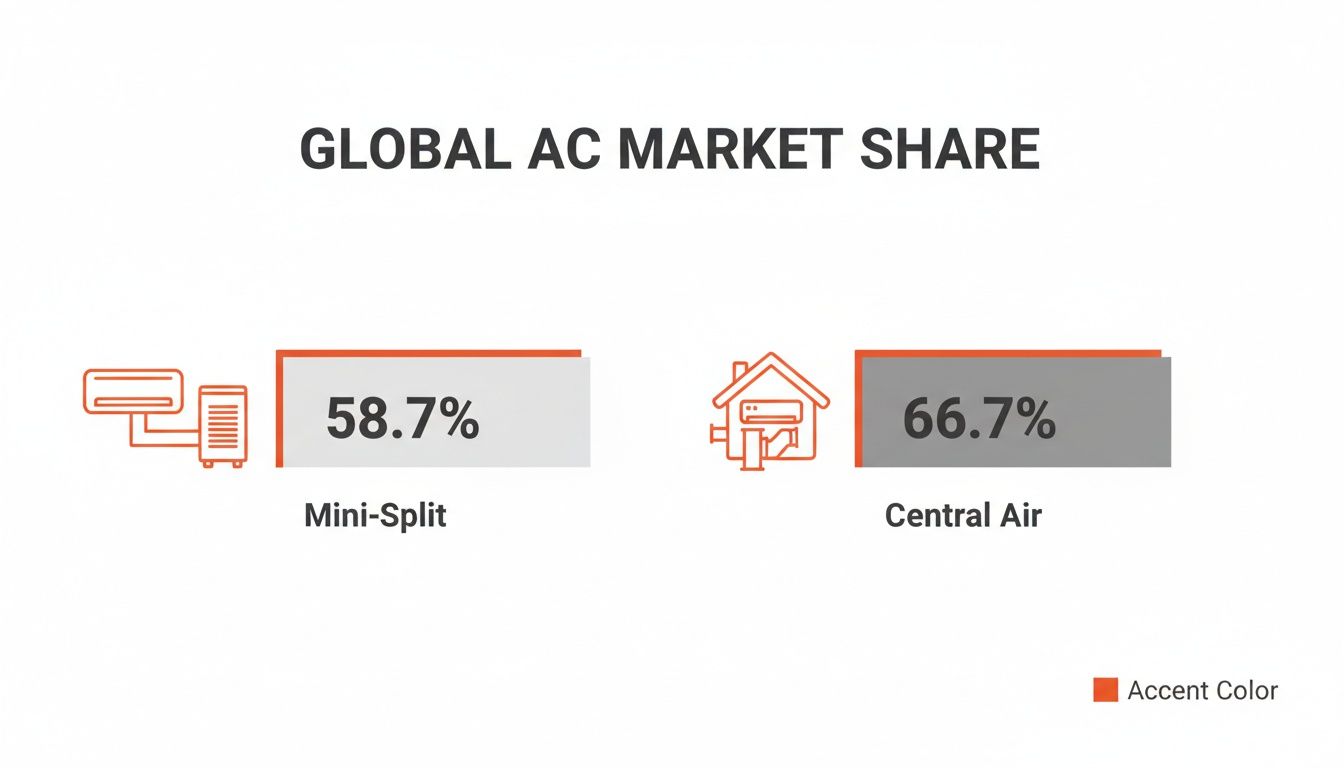
While central air remains a staple in 66.7% of homes, the projected market share for ductless mini-splits is hot on its heels at 58.7%. This tells us something important: while central AC is the long-standing champ, the rapid growth of mini-splits shows a major move toward efficiency and customized, room-by-room comfort.
Unpacking Upfront and Long-Term Costs
The initial price tag is often the first thing people look at. A central air system can look cheaper on paper, especially if your house already has ductwork in good shape. In that case, you’re mainly paying for the new outdoor condenser and indoor air handler.
But if your home doesn't have ducts—which is common in older Florida homes or new additions—the cost to install central air can skyrocket. Running ductwork is an invasive, messy job that can easily add thousands to the final bill.
Ductless mini-splits, on the other hand, offer a more flexible cost. The price tag scales with the number of indoor units (or zones) you need. A single-zone system for a Florida room might be surprisingly affordable, whereas a multi-zone setup for the whole house will have a higher upfront cost than a simple central air replacement.
The Efficiency Showdown: SEER Ratings and Duct Loss
When it comes to energy efficiency, the ductless mini-split vs. central air debate gets really interesting, particularly in a state where the AC runs almost all year. The game-changer here is the lack of ducts.
Central air systems push cooled air through a massive network of ducts. Over time, these ducts can develop leaks, cracks, or just have poor insulation. This means a huge chunk of the air you’re paying to cool—sometimes up to 30%—never even makes it to the room. It just escapes into your attic, crawlspace, or walls.
Ductless mini-splits avoid this problem entirely. The cool air comes directly from the indoor unit into the room, so practically no energy gets wasted along the way. This direct delivery leads to much higher efficiency and lower monthly bills. While both systems are rated by SEER (Seasonal Energy Efficiency Ratio), a high-SEER central air unit can perform like a much less efficient one if the ductwork is leaky. And remember, maximizing savings isn't just about the AC; consider broader energy efficient home upgrades to improve your home's entire thermal envelope.
Conquering Florida Humidity: A Clear Winner
In Florida, controlling humidity is just as important as controlling the temperature. Sticky, humid air feels hotter than it is and creates a breeding ground for mold and mildew. This is where ductless systems really shine.
Central air conditioners are designed to cool the whole house at once with powerful, long cycles. This means they don't run as frequently. Since dehumidification happens as a side effect of the cooling process, these shorter, less frequent cycles often don't run long enough to pull enough moisture out of the air.
Mini-splits operate differently. They run for longer periods at lower speeds to hold a precise temperature in a specific zone. This extended runtime allows them to constantly pull moisture from the air, giving you far better dehumidification and a much more comfortable indoor feel.
- Ductless Mini-Splits: Excel at humidity control because their long, low-power cycles are constantly removing moisture.
- Central Air: Can leave your home feeling sticky if the system is oversized or cycles on and off too quickly.
If you’re sensitive to that damp, heavy feeling in the air, this difference is a big deal. For even more powerful moisture control, you can always check out our guide on dedicated dehumidifiers that work with any AC system. But if you want superior humidity removal straight from your cooling system, the ductless approach is typically the more effective choice.
To make things even clearer, here’s how the two systems compare on the key points that matter most to Florida homeowners.
Feature-by-Feature System Breakdown
| Comparison Point | Ductless Mini Split | Central Air Conditioning | Florida Climate Consideration |
|---|---|---|---|
| Upfront Cost | Higher for multi-zone systems; lower for single rooms. $3,000–$15,000+ | Lower if existing ductwork is usable. $5,000–$12,000+ | New ductwork installation for central air significantly increases costs. |
| Operating Cost | Very low due to high efficiency and no duct losses. | Moderate to high, with energy waste from potential duct leaks (up to 30%). | Lower monthly bills with a mini-split are a huge plus with near year-round AC use. |
| Energy Efficiency | Extremely high (SEER ratings often 20-40+). Direct cooling is highly efficient. | Good (SEER ratings typically 14-22), but efficiency drops with leaky ducts. | High SEER ratings on mini-splits deliver maximum savings during long, hot summers. |
| Humidity Control | Excellent. Long, low-speed cycles constantly remove moisture from the air. | Fair to good. Can struggle if oversized or cycling too quickly. | Superior dehumidification from mini-splits makes the indoor air feel much cooler and less sticky. |
| Zoning & Comfort | Superior. Each room has its own thermostat for personalized comfort. | Limited. Cools the entire house to one temperature. Zoning is complex and expensive. | Perfect for cooling specific areas, like a hot upstairs bedroom or a sunroom, without wasting energy. |
| Installation | Minimally invasive; requires only a small hole in the wall. | Highly invasive if new ductwork is needed. Faster if replacing an existing unit. | Less disruption and faster installation make mini-splits appealing for existing homes. |
Practical Scenarios for Zoned Cooling
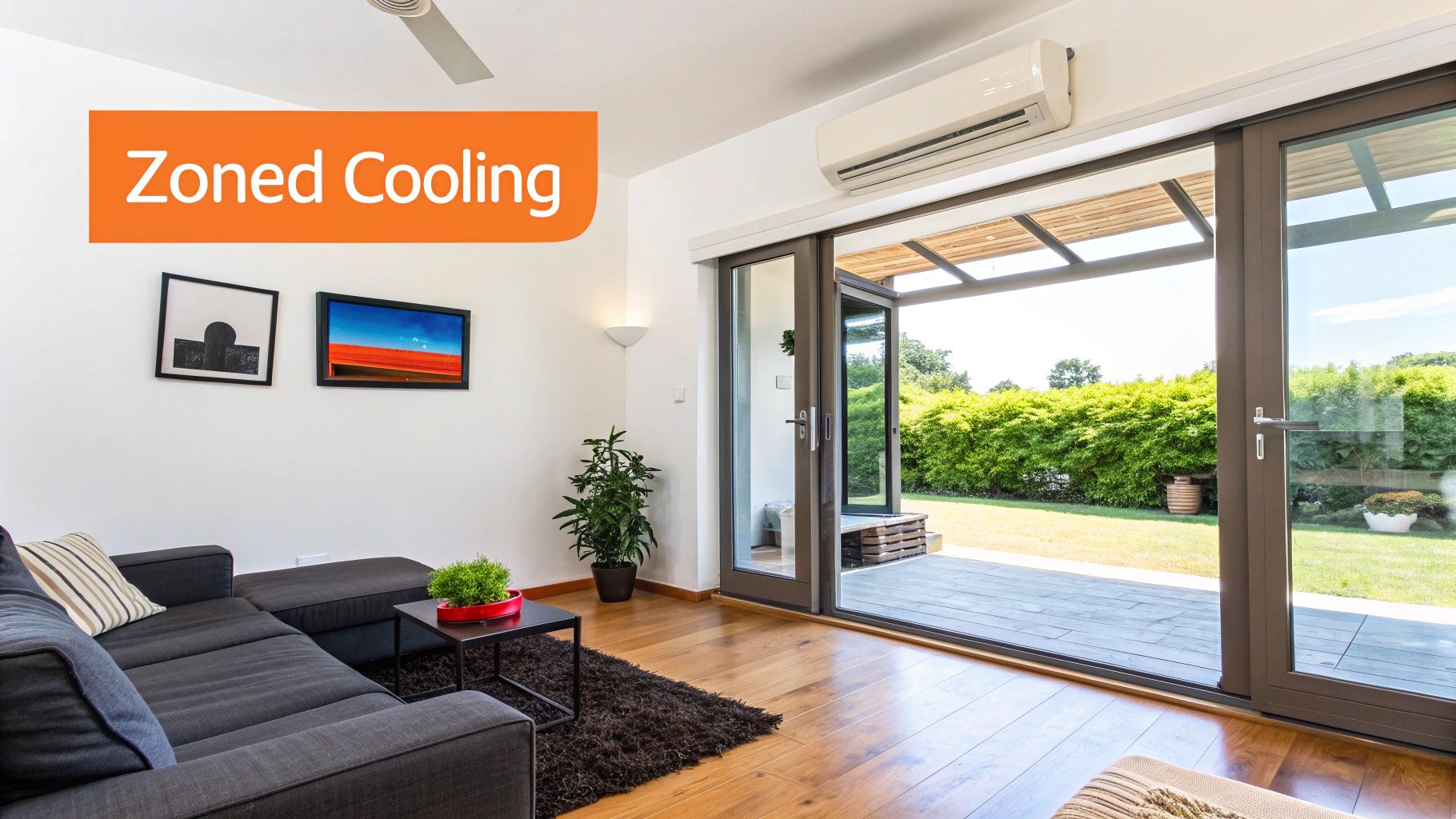
The idea of "zoning" might sound a bit technical, but it’s really simple: you control the temperature in different parts of your house independently. This is where the ductless mini-split vs central air debate gets practical for Florida homeowners.
Central air is built to deliver one temperature everywhere. It cools your whole house at once, even if nobody’s using half the rooms. A ductless system, on the other hand, is designed to treat different spaces as their own unique comfort zones.
Let's look at a few common situations here in Florida where this difference is an absolute game-changer. These scenarios show how targeted cooling can finally fix those nagging comfort problems and even save you some money.
The Family with Different Comfort Preferences
Here’s a classic household argument: one person is freezing in the living room while another is burning up in the home office. With central air, your only move is to find a compromise that leaves everyone a little unhappy. You can try closing vents, but that often just strains your system and creates bigger issues down the line.
A multi-zone ductless system ends this battle for good. Each indoor unit has its own thermostat and remote. You can set the master bedroom to a crisp 68°F for sleeping and keep the rarely used guest room at a more economical 74°F.
- Central Air Approach: One thermostat for the entire home means a constant compromise.
- Ductless Approach: Individual controls for each zone deliver personalized comfort exactly where you need it.
This level of control puts an end to the thermostat wars and makes sure everyone can actually enjoy their space at their own ideal temperature.
Cooling New Additions and Converted Spaces
Florida homes are always evolving. Maybe you’ve converted the garage into a workshop, added a sunroom, or finished the attic for more storage. Tying these new areas into your existing central air ductwork is a huge undertaking. It's messy, expensive, and can throw off the airflow balance for the rest of your house.
This is where a ductless mini-split is the perfect solution. A single-zone unit can be installed quickly to cool just that one new space, without touching your existing system.
Opting for a ductless unit in a new addition means you skip the high cost and hassle of extending ductwork. Better yet, you get a dedicated, high-efficiency cooling solution that won’t mess with the performance of your main HVAC system.
This isn’t just more practical; it’s far more energy-efficient than trying to make a central system cool an area it wasn't designed for. It’s the go-to fix for home additions, she-sheds, and any room that needs its own climate control. If your current setup already struggles with inconsistent temperatures, you might want to read our guide on how to fix uneven cooling problems.
Preserving Historic or Architecturally Unique Homes
Think about all the beautiful older homes in places like Sarasota and Fort Myers. Many were built long before central AC was even a thing. These properties just don't have the space in the walls or ceilings for bulky ductwork. Installing a traditional central air system would mean tearing into historic plaster and compromising the home’s unique character.
Ductless mini-splits offer a way to modernize without destroying the past. The system only needs a tiny, three-inch hole to connect the indoor and outdoor units, leaving the home’s structure and charm intact. This makes them the clear choice for historic renovations where preserving architectural integrity is the top priority.
Evaluating Long-Term Maintenance and Reliability
An HVAC system is a big investment in your Florida home, so you want to make sure it performs well for years to come. When you’re weighing a ductless mini split vs central air, understanding the real-world maintenance needs, lifespan, and reliability is crucial for making a smart choice.
Both systems are solid performers when you take care of them, but how you care for them—and what can go wrong—is a different story. Regular maintenance isn't optional for either system, not with the workout our Florida climate gives them. The main difference really comes down to where you focus your efforts.
Routine Upkeep for Each System
With a ductless mini-split, the most common task is on you: cleaning the reusable filters inside each air handler. You’ll want to do this about once a month to keep dust from clogging things up and ensure the air flows freely and efficiently. Once a year, you'll need a pro to come out, deep clean the coils, and check the refrigerant levels.
Central air shifts the focus. Your job is to swap out the single, central air filter every 1-3 months. The bigger lift comes from the ductwork. Every few years, you need a professional to inspect the ducts for leaks, mold, or blockages that can tank your system’s efficiency and ruin your air quality.
The core maintenance trade-off is simple: ductless systems demand more frequent, simple filter cleaning by you across multiple units. Central air relies on less frequent but more complex professional duct inspections to keep it running right.
Skipping these tasks is a recipe for expensive repairs and a shorter system lifespan. You can learn more about why proactive care is so important in our guide on the benefits of regular HVAC maintenance.
Lifespan and Common Repair Issues
On average, both systems will give you a similar run if you keep up with maintenance.
- Central Air Conditioners: You can expect them to last 15-20 years. When things go wrong, it's often the compressor, refrigerant leaks, or issues caused by neglected ductwork.
- Ductless Mini-Splits: These systems also have a lifespan of about 15-20 years. Common repairs might involve the fan motors in the indoor units or glitches with the electronic control boards.
The explosive growth of ductless systems is a great sign of their reliability and strong manufacturer support. The mini-split AC market blew past USD 7.4 billion in 2024, and the entire ductless HVAC market is on track to hit USD 145 billion by 2026.
This surge, especially in places like Tampa Bay where nearly everyone has AC, means parts and skilled technicians will be easy to find for a long time. It’s a good indicator that you’re investing in a technology that’s here to stay.
So, What’s the Final Verdict?
Deciding between a ductless mini-split vs central air really boils down to your home’s layout, your family’s needs, and your priorities. There’s no single right answer for every Florida home—only the best fit for your specific situation. Let’s frame the choice around a few common scenarios to make the path forward crystal clear.
Here’s a simple way to think about it: central air is like broadcast radio, playing the same station throughout the entire house. A ductless system is more like giving everyone their own set of headphones, so each person can control the volume and tune in to exactly what they want.
Guidance for Homes with Existing Ductwork
If your home already has a network of well-maintained, properly sealed ducts, sticking with a high-efficiency central air conditioner is often the most direct and budget-friendly option. It gives you that invisible, whole-home cooling that keeps a consistent temperature from the living room to the bedrooms.
Choose central air if:
- You have existing ductwork that’s in good shape.
- Your main goal is a uniform temperature across the entire house.
- Aesthetics are important, and you prefer an unobtrusive system with only vents showing.
In this situation, upgrading to a modern, energy-efficient central unit is a practical move. You get a familiar, reliable solution with better performance and lower energy bills, all without the hassle of a complete system overhaul.
Recommendations for Flexible and Efficient Cooling
On the flip side, if you're wrestling with specific comfort issues, want room-by-room control, or are building an addition without ducts, a mini-split system offers flexibility that central air just can't match. This is where it truly shines.
The real power of a ductless mini-split is its ability to be a problem-solver. It’s the perfect fix for a sweltering upstairs bedroom, a new sunroom addition, or even a historic home where running new ductwork isn’t an option.
Choose a ductless mini-split if:
- Your home has no ductwork, or the ducts you have are old, leaky, and inefficient.
- You need to cool specific areas, like a recently converted garage, a new home office, or an addition.
- Family members have different ideas about the “perfect” temperature.
- Your absolute top priority is maximizing energy efficiency and cutting down those monthly FPL bills.
Ultimately, the best choice in the ductless mini-split vs central air debate is the one that lines up with your home’s existing setup and your lifestyle. By looking at these clear-cut scenarios, you can confidently pick the system that will deliver comfort and value for years to come.
Frequently Asked Questions
When you're weighing a ductless mini-split vs. central air, a lot of questions come up. We hear them all the time from Florida homeowners just like you. Getting clear, honest answers is the best way to feel good about your decision, so let's tackle the most common ones.
Can a Ductless Mini-Split Really Cool an Entire Florida Home?
Absolutely. A multi-zone ductless mini-split system is more than capable of cooling a whole house. It works with a single outdoor condenser that connects to multiple indoor air handlers, which are placed in key areas throughout your home.
This creates different temperature “zones,” giving you total control over the climate in each room. It's often way more efficient than central air because you're only cooling the rooms you're actually using—a huge plus during our long, hot Florida summers.
Are Ductless Systems Quieter Than Central Air?
In most cases, yes. The noisy parts of a ductless system—the compressor and fan—are all in the outdoor unit. The indoor air handlers are designed to be incredibly quiet, often running softer than a whisper or the low hum from your fridge.
Central air, on the other hand, can be more noticeable. You’ll hear the big outdoor unit kick on and off, plus the sound of air moving through the ductwork and coming out of the vents. If you're a light sleeper or work from home, the quiet operation of a mini-split is a major win.
The whisper-quiet performance of ductless indoor units is a huge differentiator. While the sound of central air often becomes background noise, the near-silent operation of a mini-split can make your living space feel much more peaceful.
Which System Is Better for Someone with Allergies in Florida?
That's a great question, and the answer really depends on your specific needs and how you maintain the system. Both have their strengths when it comes to air quality.
Ductless Mini-Splits have advanced, multi-stage filters right inside each indoor unit. Since there's no ductwork, you completely avoid circulating the dust, pollen, and other gunk that builds up in ducts over time.
Central Air Systems can be upgraded with some seriously powerful whole-home air purifiers and high-MERV filters. These systems are designed to capture much smaller particles than standard mini-split filters, giving you a robust solution for purifying the air in the entire house at once.
No matter which you choose, consistent maintenance is key. You have to stay on top of cleaning the filters in a mini-split or changing the filter and getting your ducts inspected with a central system to keep your indoor air quality high.
Can I Get Rebates for High-Efficiency Systems in Florida?
Yes, there are often incentives available for homeowners who choose to install high-efficiency HVAC systems. These can include federal tax credits and rebates from local utility companies for systems that have a high SEER (Seasonal Energy Efficiency Ratio) rating.
These programs are usually available for both qualifying ductless mini-splits and central air conditioners. The catch is that these offers change pretty frequently. Your best bet is to talk to a local HVAC professional who knows the latest programs available right here in our area.
Ready to figure out the perfect cooling solution for your Florida home? Whether you need the zoned comfort of a mini-split or the powerful cooling of a central system, the experts at Heatwave Air Conditioning, Plumbing, & Electric can give you a free, no-obligation estimate. Schedule your consultation today!