
A 200-amp panel replacement in the Tampa Bay area usually lands between $2,500 and $4,500. Nationally, the average cost to replace an electrical panel is $1,342, with most homeowners spending $500 to $2,500, but those numbers often stop being useful once Florida permitting, labor, utility coordination, or service changes enter the picture.
If you're reading this, there's a good chance something changed at your house. Maybe the lights dip when the air handler kicks on. Maybe you're adding an EV charger, replacing an old AC system, or finally dealing with a panel that's been buzzing, tripping, or giving you that uneasy feeling every time you open the door.
That's when homeowners run into the same problem. One person says a panel swap is a simple job. Another quote comes in thousands higher. Then somebody throws around the words “service upgrade,” and suddenly the project sounds a lot bigger than expected.
In Florida, especially around Tampa Bay, Sarasota, Fort Myers, Cape Coral, and Port Charlotte, electrical breaker panel cost isn't just about the box on the wall. It's about amperage, code, access, utility rules, panel location, and whether your house needs a true capacity upgrade or just a safe replacement.
Why Is My Breaker Panel Suddenly a Hot Topic
A breaker panel stays invisible until the house asks more from it than it can safely give.
That happens all the time in Florida homes. A new HVAC system goes in. Someone adds a pool circuit, a garage freezer, a workshop, or an EV charger. In older houses, the panel may have been “good enough” years ago, but modern loads expose every weak point fast.
The panel is the traffic cop for your home's power. When it's undersized, outdated, or failing, you get nuisance trips, overloaded circuits, and hard decisions about what you can run at the same time. In a lot of homes, the first clue isn't dramatic. It's just inconvenience that keeps stacking up.
What usually triggers the conversation
- Frequent breaker trips: Especially when the AC, microwave, dryer, or water heater run together.
- Home upgrades: Remodels, new appliances, garage additions, hot tubs, and EV charging often force a hard look at available capacity.
- Older equipment: Panels in aging homes may not meet current expectations for safety or load handling.
- Insurance or sale concerns: Buyers, inspectors, and insurers tend to pay close attention to electrical equipment that looks outdated or has a poor history.
Practical rule: If your panel only becomes a topic every time you add something new, the issue usually isn't the new equipment. It's that the panel was already near its limit.
A lot of homeowners come into this expecting one flat price. That's not how it works. In this region, the difference between a straightforward replacement and a more involved job can be significant, and the quote only makes sense once you know what is being replaced.
If you want a quick visual example of how local service companies present credibility and homeowner trust signals, even something as simple as customer review proof tells you why details matter. With panel work, the details are the job.

Florida Electrical Panel Cost Breakdowns
National averages for panel replacement often set the wrong expectation. In Tampa Bay and Southwest Florida, the number on the quote usually reflects local labor, permit requirements, utility coordination, and the age of the home far more than a nationwide average ever will.
That is why two homeowners can both say, “I need a new panel,” and get very different prices. One may need a clean panel swap in an accessible garage. The other may need a service change, grounding corrections, meter work, and repairs to bring an older Florida home up to code. Those are not the same job.
Estimated Electrical Panel Costs in Tampa Bay and SW Florida 2026
| Service Type | Typical Cost Range |
|---|---|
| Basic 100-amp panel replacement | $800 to $2,500 |
| Standard 100-amp breaker panel replacement | $1,200 to $2,500 |
| 200-amp panel replacement or upgrade | $2,500 to $4,500 |
| 400-amp upgrade | Starts at $4,500 and can exceed that depending on complexity |
| Federal Pacific or Zinsco panel replacement | $1,500 to $4,000 |
| Added meter box | $100 to $650 |
| Panel relocation add-on | $1,000 to $2,700 |
| Permits and drywall repair add-on | $150 to $300 |
Those overlapping ranges are normal. A 100-amp panel replacement breakdown from MT Ruhl lists a standard 100-amp electrical breaker panel replacement at $1,200 to $2,500 and places a 200-amp panel upgrade at $2,500 to $4,500. In the field, I see the same pattern. The base panel may fit the lower end, but the house conditions decide where the final number lands.
A quick way to read these ranges is to separate a true replacement from a larger upgrade. If you want a simple visual on the kind of equipment homeowners are usually talking about, this breaker panel example image helps set the stage. The trap is assuming every job involving that box costs about the same.

Where the money usually goes
Homeowners usually focus on the panel can and breaker set. Fair enough, but the hardware is only part of the bill.
- Panel and breakers: The brand, breaker count, AFCI or GFCI requirements, and whether existing breakers can stay all affect material cost.
- Labor: The time goes into shutting down safely, labeling circuits, moving them cleanly, checking terminations, correcting obvious defects, and getting the work ready for inspection.
- Related equipment: Meter bases, grounding electrodes, bonding corrections, service entrance parts, and disconnects can add up fast.
- Wall and finish repair: If the old panel size does not match the new one, some patching and trim work may be needed.
Older Florida houses are where quotes spread apart. Corrosion, sun-damaged exterior gear, short conductors, crowded walls, and outdated grounding are common. A low price often assumes none of that shows up.
The practical takeaway is simple. Compare quotes based on scope, not just total price. If one contractor is pricing a panel swap and another is pricing panel work plus service corrections, the cheaper number may only look better on paper.
Key Factors Driving Your Final Panel Cost
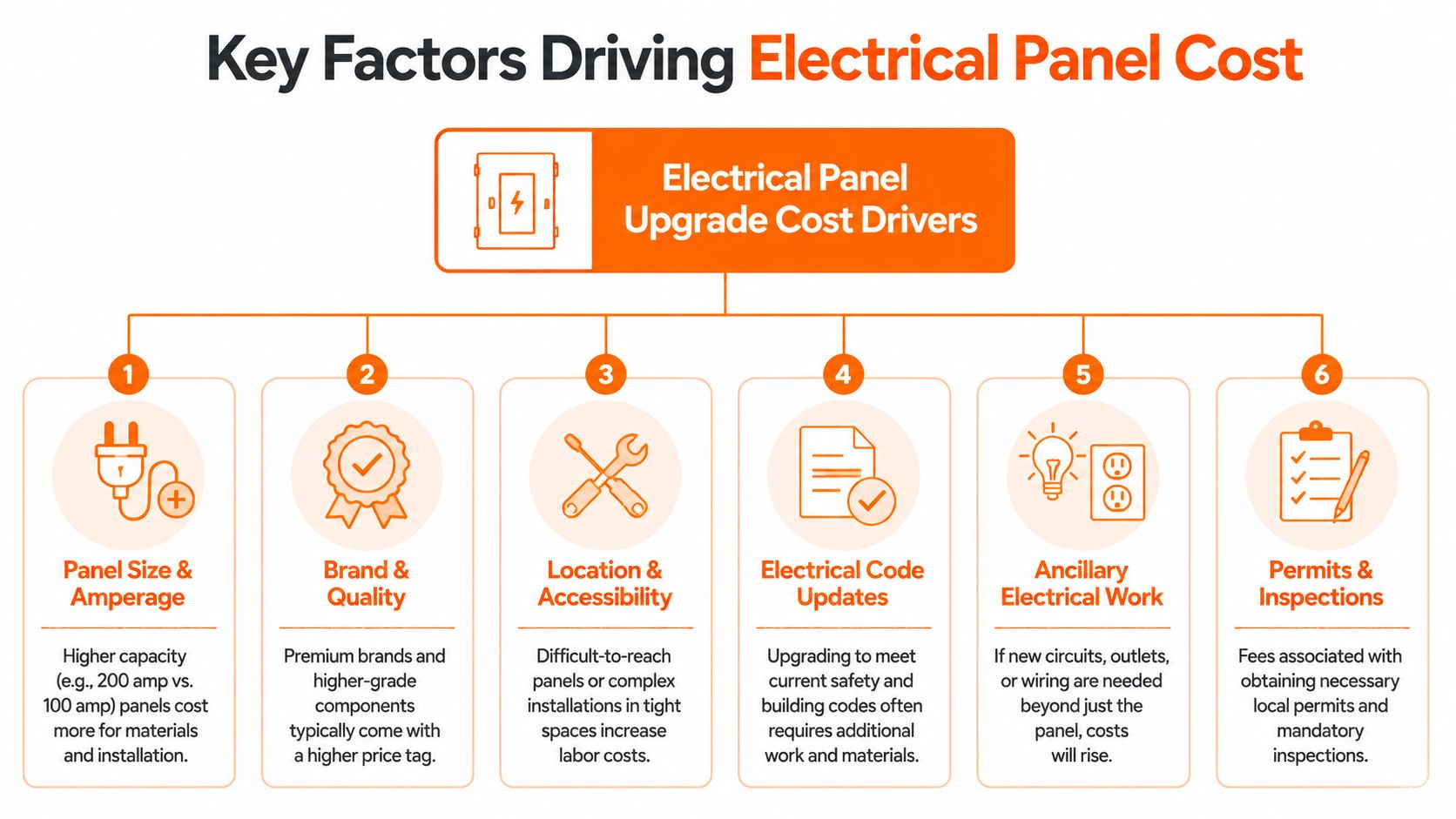
Two homes in Tampa Bay can both ask for a "panel upgrade" and land thousands of dollars apart. The panel itself is only part of the price. The condition of the service, the location, and the amount of correction work around that panel usually decide where the final number lands.
Amperage changes the scope
Capacity is the biggest factor in your final cost. A straight 100-amp panel replacement is usually a contained job. Moving a house to 200 amps can pull in larger equipment, different feeders, meter work, and utility coordination depending on what is already there.
Older homes with 60-amp service are where quotes get less predictable. Once an electrician opens things up, it is common to find undersized conductors, aging terminations, or other items that need to be corrected before the new equipment can pass inspection. Caudill's electrical panel upgrade cost guide gives a useful general overview of how older service sizes can push costs up.
Hazardous or obsolete panels raise urgency
Federal Pacific and Zinsco panels change the conversation. On those jobs, the price often includes more than swapping the box. I regularly see loose connections, overheated stabs, incompatible breakers, and other defects that have to be addressed while the system is apart.
That kind of job costs more because the risk is higher and the cleanup work is rarely optional.
Access and location can add real labor
A panel on an open garage wall is faster to replace than one buried in a finished room, squeezed into a closet area, or blocked by shelving, piping, or framing. If the panel has to move to meet current clearance or placement rules, labor goes up quickly.
This electrical service panel example image shows the kind of setup homeowners focus on. What matters in the field is the space around it, the condition of the wall, and whether the conductors have enough length to land cleanly in the new gear.
Short wires are a common cost add. So is stucco repair on exterior walls. In coastal Florida, corrosion can turn a simple plan into a longer day.
Material choices and correction work change the quote
Two electricians can price the same address and still scope it differently. One may carry basic equipment and price only the panel replacement. Another may include new breakers where needed, grounding and bonding corrections, proper labeling, surge protection, and cleanup of visible code issues.
That is why line-item detail matters more than a low total.
Common cost drivers include:
- Panel brand and breaker type: Availability, warranty support, and specialty breakers affect material cost.
- Grounding and bonding repairs: Older Florida homes often need this work brought up to current standards.
- Meter or feeder changes: These can expand the job well beyond the box itself.
- Permit and inspection requirements: Legal work includes the paperwork, inspection prep, and time to address corrections if the inspector flags anything.
The cheapest quote is often the narrowest quote. In Florida, that can look fine on paper and still leave you paying for added work once the panel is open and the inspector sees the full condition of the service.
The Hidden Cost The Service Upgrade vs Panel Swap
Many homeowners often get blindsided.
A panel swap means replacing the breaker box itself. A service upgrade means increasing the home's electrical capacity, and that can involve the utility, meter work, service conductors, and sometimes infrastructure outside the house. Those are not the same project.
Why the wording matters
People usually call both jobs “a panel upgrade.” That sounds harmless until the quote changes by thousands.
According to Carini Home's explanation of panel replacement versus service upgrade, homeowners often confuse a panel replacement at $2,500 to $4,500 with a full service upgrade at $5,000 to $25,000. That same source notes that utility coordination can create delays of months, and in places like Tampa Bay, underground wiring can double or triple the cost beyond the original quote.
Jobs that often trigger the trap
A straight panel replacement is more likely when the existing capacity still works for the home and the concern is age, damage, or safety. A service upgrade becomes more likely when the house is adding major electrical demand.
Common triggers include:
- EV charging
- Heat pump or major HVAC changes
- Tankless electric water heaters
- Large additions or remodels
- Pool equipment or workshop loads
Here's the practical problem. A homeowner asks for a new panel because they want more room for breakers. The electrician does the load calculation and sees the house needs more than panel space. It needs more service capacity. That's when the utility enters the picture, and your “panel job” stops being just a panel job.
If your goal is “I need more power,” don't budget for a box swap. Budget for the possibility that the utility has to be involved.
In Tampa Bay and Southwest Florida, underground service can complicate everything. The electrical work inside the house might be the easy part. The hard part is what has to happen before the new service can legally and safely feed that panel.
Why DIY Electrical Work Is a Dangerous Gamble
Panel work is one of the clearest lines in home repair. Homeowners can handle many things around the house. This is not one of them.

The danger isn't just getting shocked, though that risk is very real. The bigger issue is that panel work combines lethal exposure, code requirements, utility coordination, and inspection standards in one project. A mistake may not show up immediately. It can sit there until a breaker fails to trip correctly, a lug overheats, or a major appliance gets damaged.
What goes wrong with DIY panel work
- Live service hazards: Parts of the system may remain dangerous even when branch breakers are off.
- Improper breaker sizing: That can allow wiring to overheat instead of tripping safely.
- Bad terminations: Loose or incorrect connections create heat, nuisance failures, and fire risk.
- Failed inspection: If the work requires a permit, bad workmanship becomes a legal and scheduling problem too.
- Insurance complications: Unpermitted or unlicensed work can create serious headaches after an electrical incident.
This video gives a useful real-world look at the kind of electrical safety issues homeowners underestimate.
Why hiring a licensed contractor protects more than the panel
Professional labor isn't just about convenience. It protects the home, the permit process, and your paper trail if anything ever gets questioned later. If you want to understand the business side of why legitimate contractors carry protections homeowners should care about, this guide to electrical contractor insurance is worth a look.
Even visual trust cues matter when you're vetting who should touch your service equipment. A contractor's company credibility snapshot won't replace a license check, but it does remind you that serious companies operate like serious companies.
A breaker panel isn't a place to learn by trial and error. Electrical systems rarely forgive the first mistake.
Navigating Permits and Inspections in Southwest Florida
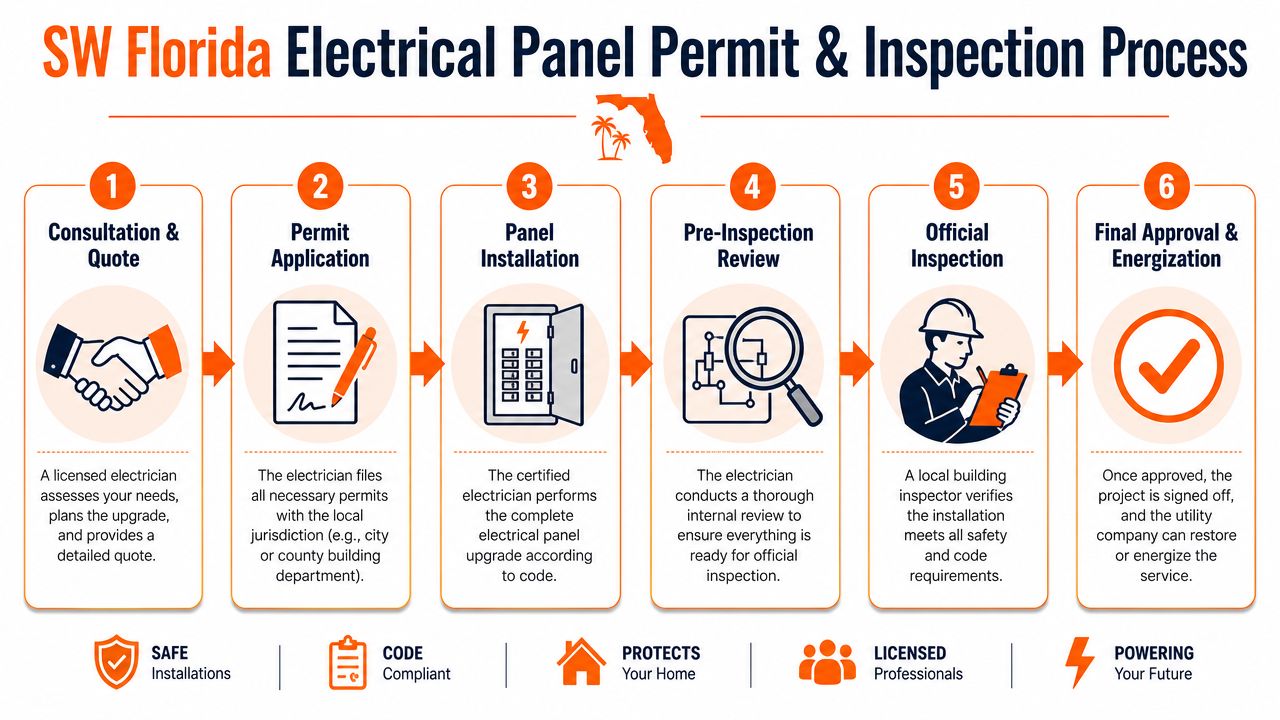
The permit process frustrates people until they understand what it's doing. For panel work, the permit isn't red tape for the sake of red tape. It's the official record that the service equipment was installed, checked, and approved under current rules.
What the local process usually looks like
In most Southwest Florida municipalities, the sequence is straightforward even if the timing varies:
- Assessment and quote based on the existing panel, service size, location, and visible code issues.
- Permit application filed with the city or county.
- Installation day when the old equipment comes out and the new gear goes in.
- Inspection review by the local authority having jurisdiction.
- Utility coordination if the job included service-related work.
- Final approval once everything checks out.
What inspectors typically care about
Inspectors aren't there to admire neat handwriting on the panel schedule. They're looking for safety and compliance.
They typically focus on things like:
- Proper grounding and bonding
- Correct breaker sizing
- Secure mounting and appropriate clearances
- Suitable conductor terminations
- A code-compliant overall installation
In Tampa Bay and Southwest Florida, pricing gets distorted when homeowners compare local quotes to generic national content. Suburban Enterprises' discussion of regional quote swings notes that in high-demand markets like Tampa Bay and Southwest Florida, homeowner quotes can hit $8,500 to $17,000 for jobs that cost far less elsewhere, driven by labor shortages, strict code enforcement, and utility-specific fees.
That doesn't mean every quote should be that high. It does mean local conditions matter more than national headline averages.
What helps the process go smoother
A few practical habits make the job easier:
- Clear access early: Don't leave storage, shelving, or landscaping in the way of the panel area.
- Ask who pulls the permit: The answer should be the licensed contractor doing the work.
- Confirm utility involvement up front: If the service changes, scheduling gets more complicated.
- Keep records: Save the permit, final inspection record, and invoice for future sale or insurance questions.
If you want a reminder that every home system has its own permit and prep quirks, this home service article visual makes the broader point. The contractor who handles paperwork well usually handles projects well too.

Financing Your Upgrade and Getting Started
A panel replacement rarely shows up at a convenient time. Most homeowners aren't planning for it the way they plan for countertops or flooring. The job usually appears after repeated breaker trips, a failed inspection note, or a bigger home project that exposes an electrical limit.
That's why it helps to treat electrical breaker panel cost as a safety investment first and a budget problem second. The wrong panel, the wrong capacity, or the wrong scope can cost more later than handling it correctly now.
How to approach the decision
Start with a proper diagnosis, not a guess. Ask whether you need a simple replacement, a hazardous panel replacement, or a true service upgrade. Those are different jobs with different pricing and timelines.
If you want a broader homeowner primer on permit-related project planning, this resource on what projects need permits is useful context before you start collecting quotes.

What to ask before approving the quote
- Is this a panel swap or a service upgrade?
- Does the quote include permit handling and inspection coordination?
- Will meter work, relocation, or utility coordination be extra?
- Are code corrections included or excluded?
- What happens if the inspector requires additional changes?
A local contractor should be able to answer those questions plainly. If the answers feel slippery, keep looking.
For homeowners who want to see a local service company presence before making that call, a simple community-facing company screenshot can be one more small trust signal while you vet your options.

If your home is showing signs of panel trouble, or you're planning an EV charger, new HVAC equipment, or a remodel, the next step is getting a real assessment from a licensed local team. Heatwave Air Conditioning, Plumbing, & Electric provides free estimates and financing options for homeowners in Tampa Bay and Southwest Florida, so you can find out whether you need a straightforward panel replacement or a larger service upgrade without guessing.