
The problem usually starts small. A lamp flickers once. A breaker trips when nothing new was plugged in. Then you catch a sharp burning smell near the kitchen outlet, or part of the house goes dark while the neighbors still have power. At that point, most homeowners in Tampa Bay aren't wondering about electrical theory. They want to know one thing. Is this dangerous right now?
That's what emergency electrical service is for. Not a vague promise of 24/7 help, but a way to make fast, safe decisions when your wiring, panel, outlets, or service equipment may be failing. In a real emergency, the right move is to stop guessing, cut risk where you safely can, and get the right professional involved.
This guide is written for that first stressful window. If you're standing in a dark hallway, smelling hot plastic, hearing a panel buzz, or trying to decide whether to call the utility, an electrician, or 911, use the steps below.
When the Lights Go Out and It Is Not the Utility Company
A common call goes like this. The air conditioner is running, dinner is on the stove, and half the house suddenly loses power. One bedroom still has lights. The kitchen doesn't. The breaker looks normal at first glance, but there's a faint burnt smell near an outlet or panel. The homeowner checks outside and sees the streetlights are still on. That usually means the problem is inside the home, not on the utility side.
That's where panic can make people do the wrong thing. They reset the same breaker over and over. They plug something into another outlet to “test it.” They ignore a buzzing sound because the lights came back for a minute. Those are the moments when a manageable fault can turn into smoke damage, scorched wiring, or worse.
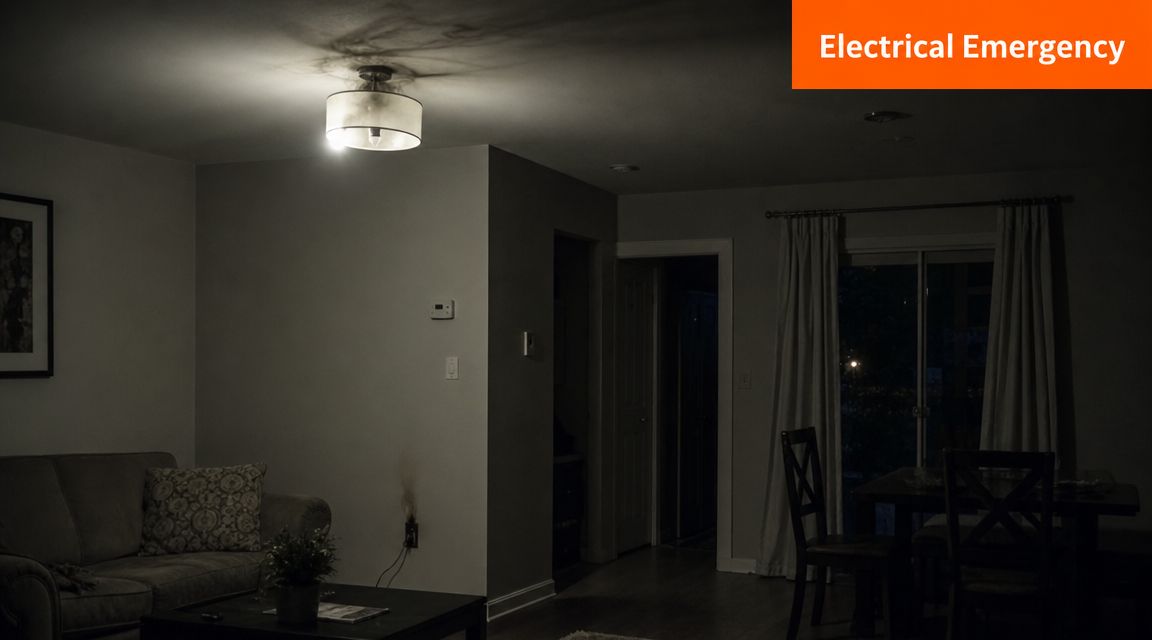
Electrical problems deserve respect. The U.S. Fire Administration reports residential building electrical malfunction fires caused an estimated 23,700 fires in 2023, resulting in 305 deaths, 800 injuries, and $1.5 billion in dollar loss. A warm outlet or repeated trip may look minor on the surface, but it can be the visible symptom of heat building where you can't see it.
What emergency electrical service actually means
Emergency electrical service is the rapid diagnosis and stabilization of an active hazard or major loss of function. In plain terms, it's the kind of call you make when there may be arcing, overheating, service failure, water-related electrical risk, or a fault that can't wait until morning.
A proper response starts with triage. What failed. What still has power. Whether there is smoke, water, sparks, or heat. Whether the issue is isolated to one receptacle or affects multiple circuits. That information changes the response.
Practical rule: If the problem involves heat, smell, smoke, sound, or visible damage, treat it as a safety issue first and a repair issue second.
For homeowners who want a quick visual while they assess what's happening, this Heatwave service snapshot helps frame the kind of urgent home-service situation where immediate action matters.

How to Identify a True Electrical Emergency
Not every electrical problem is an emergency. A dead bulb isn't. A single breaker that trips once after overloading a circuit often isn't either. The dangerous calls usually have one thing in common. They show signs of active fault energy.
The most important red flags are straightforward. Sparks at outlets, buzzing sounds, repeated breaker trips, or a burning odor are key triggers for an emergency call. Those symptoms can point to arcing, a high-resistance connection, overload, or insulation breakdown. None of those improve with time.
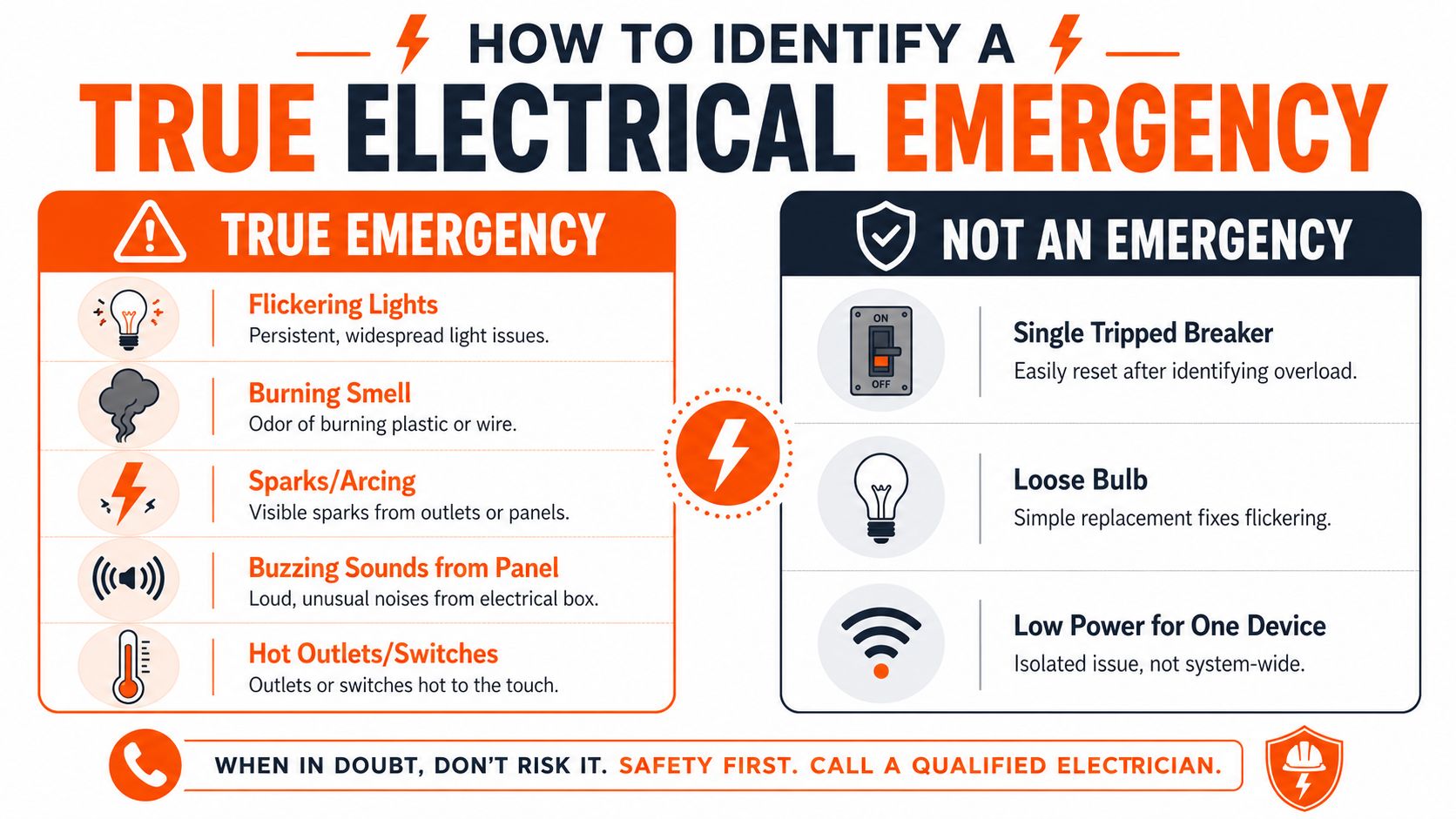
Emergency triage chart
| Symptom | Urgency Level | Immediate Action |
|---|---|---|
| Burning smell from outlet, switch, or panel | Emergency | Turn off the affected breaker or main only if safe. Keep people away. Call for emergency electrical service. |
| Visible sparks or arcing | Emergency | Do not touch the device. Shut power off if you can do it safely. |
| Buzzing or sizzling from panel or wall | Emergency | Stop using the circuit. De-energize if safe. |
| Repeated breaker trips on the same circuit | Urgent, often emergency if recurring quickly or with heat/smell | Leave the breaker off and have it checked. |
| Smoke or discoloration around outlet or panel | Emergency | Evacuate the area. Call 911 if fire is present. |
| Part of the house loses power while nearby homes still have power | Urgent to emergency | Suspect a house-side issue. Call for service. |
| One loose bulb flickers in one lamp | Usually not emergency | Turn it off, replace the bulb, monitor. |
| One outlet stopped working with no heat, smell, or noise | Usually not emergency | Avoid using it and schedule repair. |
Signs that should move you from watchful to urgent
Some homeowners wait too long because the system is still “sort of working.” That's risky. A circuit can continue to energize even while a connection is failing and heating up.
Use this rule of thumb:
- Call now if you notice smell, smoke, visible sparking, crackling, or heat.
- Call now if a breaker won't stay set and you haven't changed the load.
- Call now if the panel is making noise.
- Schedule soon for isolated nuisance issues with no heat, odor, or visible damage.
What does not work
Homeowners often try three things that make the situation worse:
- Repeated resets: Flipping the same breaker back on several times can keep feeding a fault.
- Extension-cord workarounds: Moving appliances to random outlets can shift the load without solving the defect.
- Touch testing: If a switch plate or outlet looks damaged, don't put your hand on it to “see if it's hot.”
If your electrical system is giving you multiple warning signs at once, believe it. Wiring rarely sends a polite second notice.
What to Do Immediately While You Wait for Help
Once you've decided it's an emergency, your job changes. Limit your troubleshooting. Don't start removing devices. Focus on making the area safer and giving the electrician useful information.
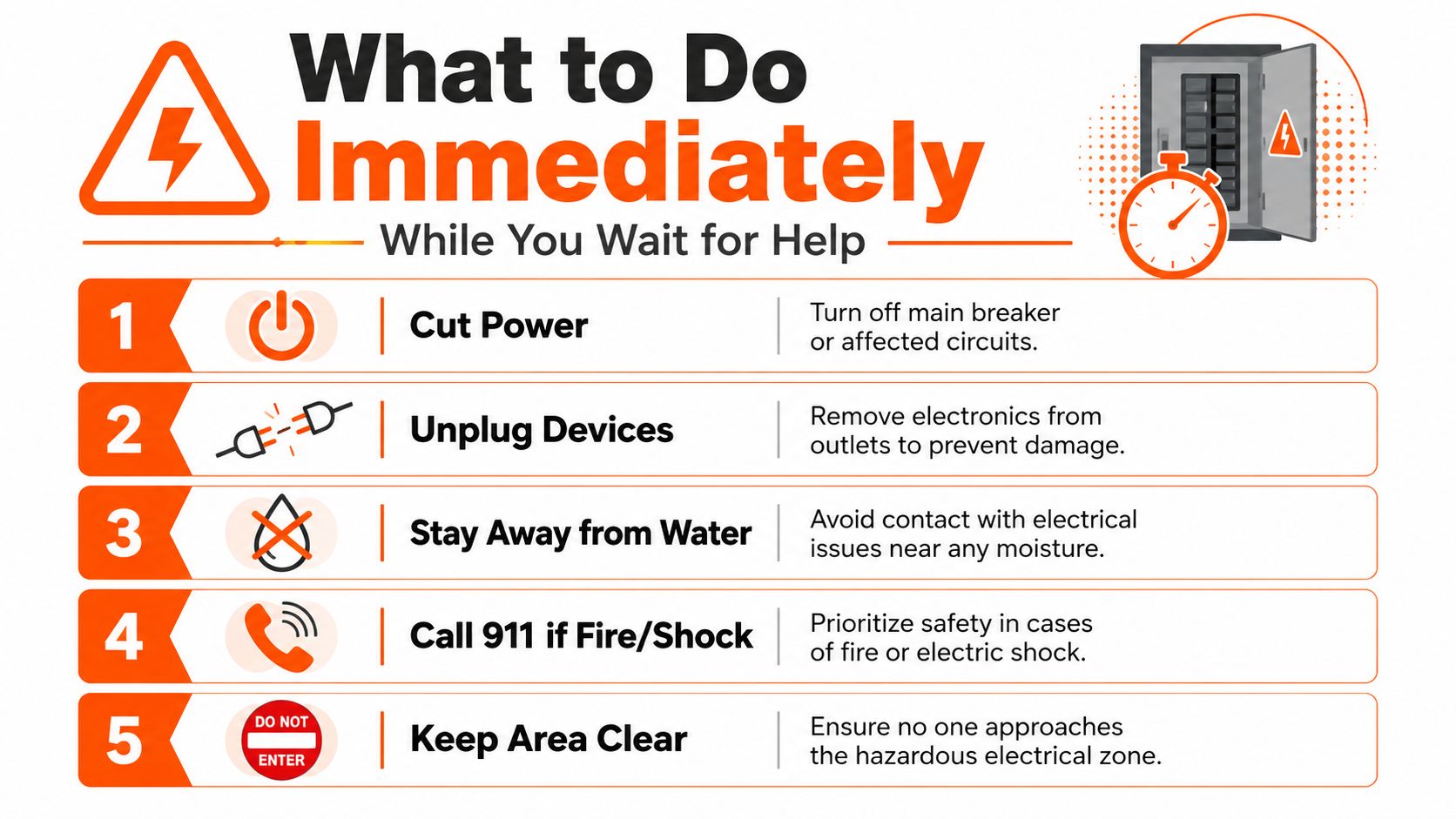
Your first 10 minutes
Cut power if it is safe
Turn off the affected breaker if you know which circuit is involved. If the source isn't clear and the hazard is active, shut off the main breaker if you can reach it safely. If the panel area is wet, damaged, smoking, or otherwise unsafe, do not approach it.
Clear the area
Keep children, pets, and anyone barefoot away from the affected room, outlet, panel, appliance, or flooded area. Give the problem space room.
Unplug only if safe and accessible
If a device is plugged into a normal-looking outlet and there is no heat or arcing at that point, unplugging it can help reduce load. If the outlet is hot, discolored, buzzing, or sparking, leave it alone.
Call 911 when the issue involves fire or injury
Fire, smoke spreading in walls, or electric shock symptoms move this beyond a standard service call.
Before you keep reading, this short video gives a useful safety overview homeowners can follow in a high-stress moment:
What to document for the electrician
Expert guidance emphasizes turning off power at the breaker only if it is safe, avoiding water-damaged electrical equipment, and documenting the issue. It also notes the relevance of severe weather, including 27 separate billion-dollar weather disasters in the U.S. in 2024. In Florida, that matters. Storms, lightning, surge events, and water intrusion can all change the diagnosis.
Take quick notes or photos from a safe distance:
- What you noticed first: Smell, flicker, noise, outage, spark
- What area is affected: Kitchen, garage, one bedroom, half the house
- What happened right before it started: Storm, appliance use, breaker trip
- What changed after power was shut off: Noise stopped, smell remained, smoke cleared
If you're trying to sort out whether recurring trips point to overload or a deeper fault, this guide on common causes of tripping breakers is a useful reference. Just don't let internet diagnosis replace a safety call when heat, odor, or visible damage is involved.
A simple visual checklist can also help you organize what to report. This home-service safety image from Heatwave is a reminder that the first response should always reduce risk, not increase it.

The Professional Response What Our Electricians Do
A good emergency call feels calm on your end because the electrician is following a disciplined process. That process matters more than speed alone. Fast without triage is just rushed.
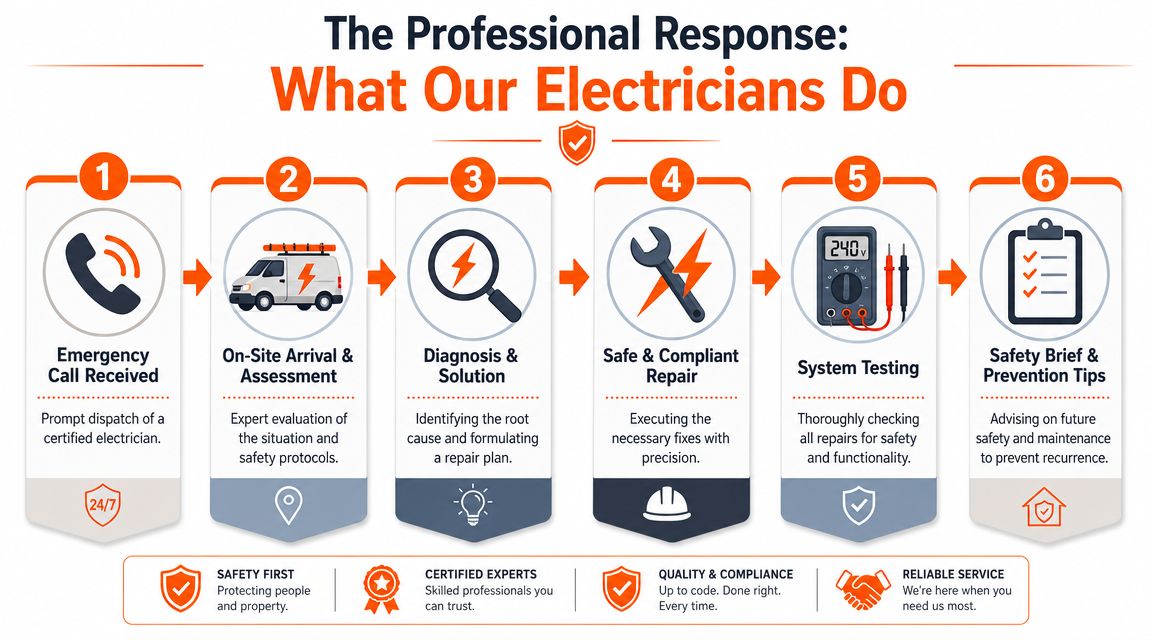
The call intake
The first job happens before anyone gets in a truck. The dispatcher or on-call coordinator should ask where the issue is, what it smells or sounds like, whether there's smoke or water, whether the whole home is affected, and whether the utility may be involved. That's not small talk. It determines what equipment, parts, and level of urgency the electrician brings to the site.
There's a business reason many companies maintain after-hours response capacity. Industry data shows that 58% of calls to electrical contractors occur outside standard 9-to-5 hours, and a single missed emergency call can cost a business $500 to $800 or more in lost revenue. For the homeowner, the practical takeaway is simpler. Emergency electrical service is built around after-hours triage because that's when many hazardous calls happen.
What happens on arrival
On site, the first step is not repair. It's scene safety.
A competent electrician will usually do some version of the following:
- Confirm the hazard area: Outlet, panel, meter base area, service mast, appliance, or water-damaged zone
- Verify de-energization: Use a meter or tester rather than assumptions
- Inspect for heat and damage paths: Burn marks, melted insulation, loose terminations, carbon tracking, damaged breakers
- Separate immediate hazard from root cause: A burnt receptacle may be the symptom, not the only problem
If the issue is isolated, the electrician may make the area safe first and then explain whether the repair can be completed immediately or whether a larger correction is needed. If the issue involves service equipment, meter components, or utility-side conductors, the utility may need to be involved before the full repair is complete.
A professional emergency response doesn't start by promising the fastest fix. It starts by making sure the fault is contained and the diagnosis is correct.
Temporary stabilization versus full repair
Homeowners sometimes misunderstand the nature of emergency electrical service. Not every emergency visit ends with a complete permanent repair that night. Sometimes the right move is to stabilize, isolate, and restore only safe portions of the system.
Examples include:
- isolating a failed branch circuit and leaving it off
- replacing a visibly failed device that created immediate hazard
- identifying a damaged panel condition that requires follow-up replacement
- separating a utility-side problem from a house-side problem
That approach is often better than forcing a patch that gets power back but leaves unresolved defects in place.
For homeowners comparing providers, one practical option in this market is Heatwave Air Conditioning, Plumbing, & Electric, which offers emergency electrical scheduling in Tampa Bay and Southwest Florida. The key standard to look for in any company is not branding. It's whether they explain the hazard clearly, isolate unsafe equipment, and distinguish temporary safety steps from permanent correction.
What you should expect before the electrician leaves
Before closing the call, the electrician should tell you:
- what failed
- what was made safe
- what circuits or devices must remain off
- whether any follow-up repair or replacement is needed
- whether the utility or another party must be contacted
If that explanation is vague, push for more clarity. In emergency work, uncertainty is normal at the start. It shouldn't still be normal at the end.
Pricing for Emergency Electrical Service in Florida
Emergency service costs more than a daytime appointment. That's normal. The difference is whether the company explains the pricing before work begins.
In Florida, an emergency electrical invoice usually has a few moving parts. There may be an after-hours dispatch charge, a diagnostic charge, labor billed at an emergency rate, and materials if something is replaced that night. If the electrician only stabilizes the hazard and returns later for a larger repair, you may also see separate pricing for the follow-up work.
What fair pricing looks like
Fair pricing is clear pricing. You should know what you're paying for before authorizing the repair.
Look for these basics:
- A defined emergency or after-hours charge so you know the cost of immediate response
- A clear explanation of diagnostic work because finding an electrical fault often takes testing, not guesswork
- Separate pricing for temporary safe-making and permanent repairs when those are different jobs
- Written approval before larger corrective work such as panel replacement, service equipment repair, or major rewiring
What should raise concern
The red flags are usually easy to spot once you know them.
- No explanation of charges before work starts
- Pressure to approve major upgrades before the failure is diagnosed
- One lump-sum number with no breakdown at all
- Promises that everything can be permanently fixed immediately without inspecting the full system
A homeowner in a stressful situation is vulnerable to sticker shock and rushed decisions. A trustworthy electrician knows that and slows the conversation down. If the repair is urgent, the safety explanation should be even clearer, not less clear.
The right question isn't “Why is emergency service more expensive?” The right question is “Can this company explain exactly what I'm paying for and why this repair is necessary tonight?”
If a larger correction is needed, ask whether the emergency visit fee applies only to immediate stabilization or whether any part of it carries into the scheduled repair. That's a reasonable question, and a professional company should answer it directly.
How to Choose the Right Emergency Electrician
When people are stressed, they often pick the first number that answers. That's understandable, but it can lead to poor workmanship or bad advice. The better approach is to screen quickly for a few essentials.
Many homeowners want guidance before they hire. That makes sense. Homeowners often search for symptom-based help, not just a phone number, and providers that offer a triage framework build trust. That matters because electrical malfunctions are linked to over 50,000 home fires annually in the U.S.
A fast vetting checklist
Compare any emergency electrician against these points:
Licensing and insurance
Ask directly. In an emergency, you still want a properly credentialed contractor working on your panel, service equipment, or branch circuits.
Real after-hours availability
Some companies advertise emergency work but only take messages overnight. Ask whether a dispatcher or technician is actively available.
Symptom-based questioning
A serious provider asks what you smell, hear, and see. A casual one just says “we'll send someone.”
Willingness to tell you when to call the utility or 911
If the company treats every issue as a billable electrician visit, that's not a good sign. Good triage includes telling you when the problem may be outside the house or beyond a normal service call.
What reliable communication sounds like
A strong emergency electrician won't oversell certainty. They'll say things like:
- leave that breaker off
- don't touch that outlet
- if the panel area is wet, stay away from it
- if the neighbors have power and you don't, we need to determine whether this is service equipment or utility-side
- if there's fire or active smoke, call 911 first
That kind of language is specific, calm, and useful.
For homeowners who want one more signal before booking, this Google review image from Heatwave reflects the kind of public feedback people often check during a fast decision. Reviews aren't everything, but they can show whether a company communicates well under pressure.

What risky providers tend to do
Be cautious if a company:
- avoids direct answers about licensing
- can't explain the immediate safety steps
- pressures you into unrelated upgrades
- dismisses burning smells or repeated breaker trips as routine
- gives a phone estimate for a complex electrical fault without seeing the equipment
In emergency electrical service, competence shows up in the questions they ask before they ever touch a screwdriver.
Your Emergency Electrical Questions Answered
How do I know if it's the utility company or my house
Start outside, from a safe distance. If nearby homes and streetlights are out too, the utility is the likely source. If your neighbors still have power and only your home is dark, or only part of your home is dark, the fault may be on your side.
If the issue involves the service drop, meter area, or anything that appears utility-owned, don't touch it. Call the utility first.
Should I reset the breaker one more time
Not if it has already tripped more than once, or if there is heat, odor, noise, or visible damage. One trip from an obvious overload can be a routine issue. A breaker that won't hold is telling you there's a problem to diagnose, not a switch to keep testing.
Is a generator problem an electrical emergency
Sometimes. If backup power equipment fails during an outage without smoke, heat, or damage, it may be urgent but not hazardous. If the transfer equipment, panel, or connected wiring shows burning smell, buzzing, or visible damage, treat it as an electrical emergency and keep the system isolated until it's checked.
What if there has been fire or smoke damage
Once the fire department says the scene is safe, an electrician should inspect the electrical system before re-energizing damaged areas. If you're dealing with the insurance side after a fire, it also helps to understand how to secure your fire damage payout so documentation, photos, and repair records support your claim.
Can I stay in the house while waiting
Usually yes, if the hazard is isolated, power is shut off safely, and there is no smoke, fire, or shock risk. If there is active smoke, spreading heat, or uncertainty about whether wiring inside walls is burning, get everyone out and call 911.
What information should I have ready when I call
Keep it simple:
- the exact symptom
- when it started
- what part of the home is affected
- whether you smell burning or hear buzzing
- whether there was a storm, flood, or lightning event
- whether any breakers were turned off
That short list often cuts down confusion and speeds up the right response.
If you need emergency electrical service in Tampa Bay or Southwest Florida, Heatwave Air Conditioning, Plumbing, & Electric handles HVAC, plumbing, and electrical work, including after-hours electrical repair scheduling. If you're dealing with a burning smell, repeated breaker trips, partial power loss, storm-related electrical damage, or another urgent issue, call for help, keep the area safe, and leave the fault isolation and repair to a licensed professional.