
Florida homeowners usually start looking up home ac installation cost at the worst possible time. The house is hot. The air feels sticky. The old system is blowing warm air, making a grinding noise, or not turning on at all. Everyone in the house is miserable, and every quote you get seems to say something different.
That’s exactly why this topic needs straight answers.
In Florida, you’re not just buying a metal box that makes cold air. You’re buying humidity control, storm-season reliability, salt-air durability in coastal areas, and a system that can handle long cooling seasons without running itself into an early grave. National pricing guides miss that. They talk about AC like every house lives in the same climate. It doesn’t.
A cheap install in Florida can turn into a very expensive mistake. Wrong size. Bad airflow. Old ducts. Weak electrical. Corroded outdoor equipment. No real humidity control. You save money on day one and pay for it every month after that.
That Awful Moment Your AC Quits in the Florida Heat
It usually happens in the late afternoon. The sun has been hammering the roof all day. The thermostat says one number, but the house feels worse. The vents are blowing, but the air isn’t cool. Or nothing is blowing at all.
You step outside and hear the outdoor unit buzzing, rattling, or doing absolutely nothing. The cabinet is rusty. The pad is sinking. The insulation on the line set looks cooked. Inside, the air feels damp, not just warm. That damp Florida heat gets into everything.

That moment feels like a crisis because in Florida it is one. This isn’t a mild-climate problem where you can open a window and wait a few days. Heat, humidity, and indoor air quality get ugly fast. Bedrooms stay muggy. Floors feel clammy. Kids and older adults get uncomfortable fast. Pets feel it too.
Most homeowners make one of two mistakes right here. They either chase the lowest quote because they want the pain over with, or they approve a replacement without asking what caused the old system to fail in the first place. Both are bad moves.
A new system can absolutely solve the problem. It can also lock in the same airflow, humidity, and electrical issues that wrecked the old one if nobody checks the whole setup.
Don’t treat AC replacement like an appliance swap. In Florida, the equipment, ductwork, drainage, electrical, and humidity performance all matter together.
If you want to avoid landing in this situation again, it helps to understand the failure patterns that show up every summer in this climate. This practical guide on avoiding AC breakdowns in Florida summers covers the habits that keep small issues from becoming emergency replacements.
The Real Cost of Home AC Installation in Florida for 2026
The short answer is this. Florida AC installation usually costs more than the national average, and that shouldn’t surprise you.
According to Rolando’s HVAC Tampa AC installation cost guide, in 2026, most Tampa homeowners pay between $5,500 and $9,000 for a new central AC installation, compared with a national average of $3,500 to $7,500. That same source notes these Florida jobs commonly involve 3 to 5 ton systems for homes in the 1,500 to 2,500 square foot range, and labor alone often runs $1,500 to $3,000.
What that baseline usually includes
A standard central AC installation quote usually covers the core equipment and the basic labor to put it in service. In plain English, that often means:
- Outdoor condenser and indoor components needed for a matched cooling system
- Basic installation labor for removal and replacement
- Standard materials tied to the install
- Startup and testing so the system is operating correctly
- Basic controls or thermostat work, depending on the contractor and the package
That doesn’t mean every quote includes the same scope. It never does. One contractor may include line set work. Another may treat it as an add-on. One may include permit handling. Another may not. One may inspect duct leakage seriously. Another may glance into the attic and move on.
Why Florida pricing runs higher
Florida is harder on AC systems than many other parts of the country. The system runs longer. The humidity load is heavier. Coastal areas deal with salt exposure. Storms create more pressure on mounting, electrical connections, and outdoor equipment protection.
Those conditions change what a “normal” install should look like. You can’t compare a Florida quote to a generic national average and assume the higher number means you’re being ripped off. Sometimes it means the contractor is pricing the job correctly.
Practical rule: If a quote looks dramatically cheaper than the local range, ask what was left out.
What homeowners in Tampa Bay and Southwest Florida should expect
If you live in Tampa, Sarasota, Port Charlotte, Cape Coral, or Fort Myers, use that $5,500 to $9,000 range as a starting point for a straightforward central AC install in a typical home. Then assume the price can move upward when the house needs more than a simple equipment swap.
That’s the part too many homeowners miss. The base number is just the launch point. Once the installer finds airflow problems, electrical issues, corrosion concerns, or access complications, the project changes.
A good way to sanity-check local quotes is to compare the proposed scope of work against a specialist service page for air conditioning installation in Florida homes. Not because every home needs the same package, but because you should know what a proper installation process ought to include.
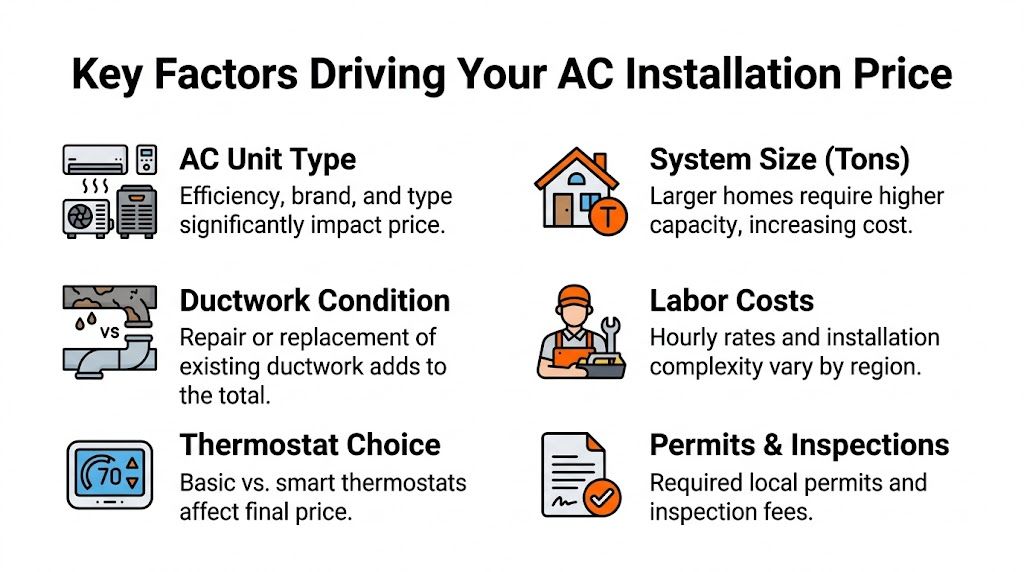
Key Factors That Drive Your AC Installation Price
A fair AC quote should show you exactly what is driving the number. If it does not, you are not looking at a real proposal. You are looking at a sales sheet.
System size and proper load calculation
System size has to match the house. In Florida, that means matching both heat gain and moisture load.
An oversized unit creates short run times, weaker humidity removal, and that cold, sticky feeling homeowners hate. An undersized unit runs too long, struggles in peak summer heat, and wears itself out. The contractor should be doing a real load calculation, not swapping in the same tonnage because “that’s what was there before.”
This matters even more in Southwest Florida. High outdoor humidity, long cooling seasons, and sun exposure can change what the house needs. If the quote does not mention sizing method, ask. If the answer is vague, move on.
SEER2 and operating cost
SEER2 measures AC efficiency. Higher-rated equipment costs more up front and usually lowers electric use over time.
That does not mean every homeowner should buy the highest number on the sheet. In Florida, the smarter move is usually to balance efficiency with humidity performance, warranty strength, and repair cost. A cheap low-efficiency unit can cost you more every month. A premium high-efficiency unit can also be a bad buy if the installer skips airflow, drainage, or duct corrections.
My advice is simple. If you plan to stay in the house, buy for total ownership cost, not sticker price.
Labor complexity
Installation labor changes fast when the house is hard to work on or the job needs corrective work.
A simple changeout in an accessible garage closet is one price. A job with a cramped attic, poor drain routing, corroded line connections, code upgrades, or a platform rebuild is another. Florida adds its own headaches. Salt air beats up outdoor components near the coast. High attic temperatures slow the work. Hurricane exposure can require stronger mounting, pad work, tie-downs, or other protection details that national price guides barely mention.
This is one reason the cheapest quote is often cheap for the wrong reason. It leaves out work the house needs.
Electrical condition
The new system needs a safe electrical path from panel to equipment. If the breaker, disconnect, whip, wiring, or grounding is outdated, damaged, or undersized, the install price goes up because the job just got bigger.
Older Florida homes are where surprises show up. I see tired breakers, sun-damaged disconnects, weak connections, and panels that should have been replaced years ago. If your house has an older panel, check common Zinsco panel issues before tying a new AC system into it.
Do not let anyone brush this off. A new condenser on bad electrical is not a value. It is a future callback.
Equipment type and Florida comfort features
Equipment choice changes both price and comfort. Single-stage systems cost less. Variable-speed systems cost more, but they usually control humidity better and hold steadier temperatures in Florida homes.
That difference matters here. A national buying guide may focus on cooling capacity and efficiency ratings. Florida homeowners also need to pay attention to latent performance, blower control, drain setup, corrosion resistance, and whether the system can keep the house dry during long, humid shoulder seasons. In coastal areas, equipment with better protective coatings is often worth the extra money because salt air shortens the life of unprotected components.
You should also look closely at add-ons that are not really optional in this climate. A proper float switch, clean condensate design, surge protection, and features that improve moisture removal can save you from water damage, mold problems, and comfort complaints later. If you want a clearer breakdown of system options before you approve a proposal, read our guide to choosing the right HVAC system for your home.
One final rule. Ask every contractor what the quote includes for humidity control, corrosion protection, and storm readiness. If they cannot answer clearly, keep shopping.
The Multi-Thousand Dollar Question Is Your Ductwork Ready
A lot of installers focus your attention on the outdoor unit because that’s the visible part. That’s a mistake. The duct system decides whether the new equipment will perform like it should or waste your money.

According to All Temp Solutions on AC replacement cost and ductwork, ductwork replacement or major repairs can add $1,250 to over $10,000 to a home AC installation. That same source says this is common in 40% to 50% of older Florida homes, and leaky ducts can cause up to 30% energy loss.
That last number is the one homeowners need to pay attention to. You can buy a high-efficiency unit, pay for a proper install, and still end up with disappointing comfort if the ducts are leaking into the attic or fighting airflow problems.
What bad ducts actually do in a Florida house
Old or damaged ducts don’t just waste cooling. They create comfort problems people wrongly blame on the new system.
You’ll see issues like:
- Persistent humidity even when the AC seems to run fine
- Uneven room temperatures from one side of the house to the other
- Weak airflow at certain vents
- Long run times that push up electric bills
- Shorter equipment life because the system is working against bad airflow
Florida attics are rough environments. Heat, moisture, age, and previous patchwork repairs take a toll. In older homes, crushed flex ducts, disconnected runs, mold exposure, poor insulation, and undersized returns are common.
If the duct system is failing, the new AC won’t save you. It will just expose the problem faster.
When cleaning helps and when it doesn’t
Homeowners sometimes hope duct cleaning will solve everything. Sometimes it helps. Sometimes it doesn’t.
If the issue is dust buildup, debris, or surface contamination, cleaning may be part of the answer. If the ducts are torn, wet, rusted, undersized, or badly designed, cleaning won’t fix the underlying problem. That’s why it helps to understand typical residential air duct cleaning cost separately from repair or replacement work. They’re not the same service.
For homes with old duct systems, a proper inspection is not optional. If you skip it, you’re gambling with a major part of the project. If you want a baseline on maintenance and indoor air quality needs, it also helps to review what professional duct cleaning service covers and where its limits are.
Example AC Installation Scenarios in Southwest Florida
At 4 p.m. in August, the house is 86 degrees, the air feels wet, and the old system finally gives up. That is when Florida homeowners find out whether they need a simple replacement or a much bigger project.
In Southwest Florida, I see three installation scenarios again and again. The price gap between them is real, and it usually comes down to humidity control, salt-air exposure, storm protection, and the condition of the duct system already in the house.
The straight swap
This is the best-case job. The existing ductwork is in good shape, the electrical is adequate, the pad and drain are usable, and the new system fits the home without extra corrective work.
A straight swap is usually the lowest-cost path, but Florida still adds a few catches. Near the coast, I want to see equipment and materials that can hold up better against salt air. In high-wind areas, mounting and tie-down details matter. If the installer skips those details to make the quote look cheap, you pay for it later.
The comfort-focused upgrade
This is the homeowner whose old AC technically cooled the house, but the house still felt sticky by evening, the back bedrooms stayed off, or the system blasted cold air and shut off too fast.
That job needs more than a box swap. It often includes better thermostat control, airflow corrections, drainage improvements, and equipment choices that remove moisture better in a climate where humidity is half the battle. In Florida, I would spend more for the system that keeps the house dry than for one that only wins on sticker price.
The older-home overhaul
Here, budgets jump fast.
Older homes in Southwest Florida often come with patched ducts, weak returns, aging electrical components, rust near the air handler, poor attic insulation around the duct runs, or installation shortcuts from two owners ago. Once the old system comes out, those problems stop hiding.
This is also the scenario where hurricane-related upgrades and corrosion resistance matter most. If the home is close to the water, cheap equipment can age hard and fast. If the condensate setup is sloppy, high humidity can turn a replacement into a moisture problem.
Here is the practical breakdown.
| Scenario | Typical Work Performed | Estimated Cost Range |
|---|---|---|
| Straight swap | Replace central AC system in a home with usable existing ductwork and no major add-ons | $5,500 to $9,000 |
| Efficiency and comfort upgrade | Replace system, improve humidity control, and make smaller airflow or control upgrades that improve comfort | Higher than a basic straight swap |
| Full system overhaul | Replace AC system and correct major ductwork or related installation issues, often in an older home | $10,000+ |
Why load calculations still matter
I do not size a Florida AC by reading the old nameplate and matching it. That is how homeowners end up with a system that cools fast, leaves the house damp, and cycles itself to death.
A proper load calculation protects you from paying for the wrong problem. The old unit may have been oversized from day one. The house may have different windows now. An addition, enclosure, roof change, or duct modification may have changed how the home handles heat and moisture. In Southwest Florida, sizing is about sensible heat, latent load, and runtime. You need enough cooling power, but you also need long enough cycles to pull water out of the air.
My advice is simple. If a contractor skips the load calculation and jumps straight to “same tonnage as before,” keep shopping.
If you want to see what a local installation process should include, review Heatwave’s Fort Myers air conditioning installation service.
How to Lower Your New AC Installation Cost
You lower cost by making smart decisions before you sign, not by stripping the job down until the install is weak.
Start with efficiency incentives
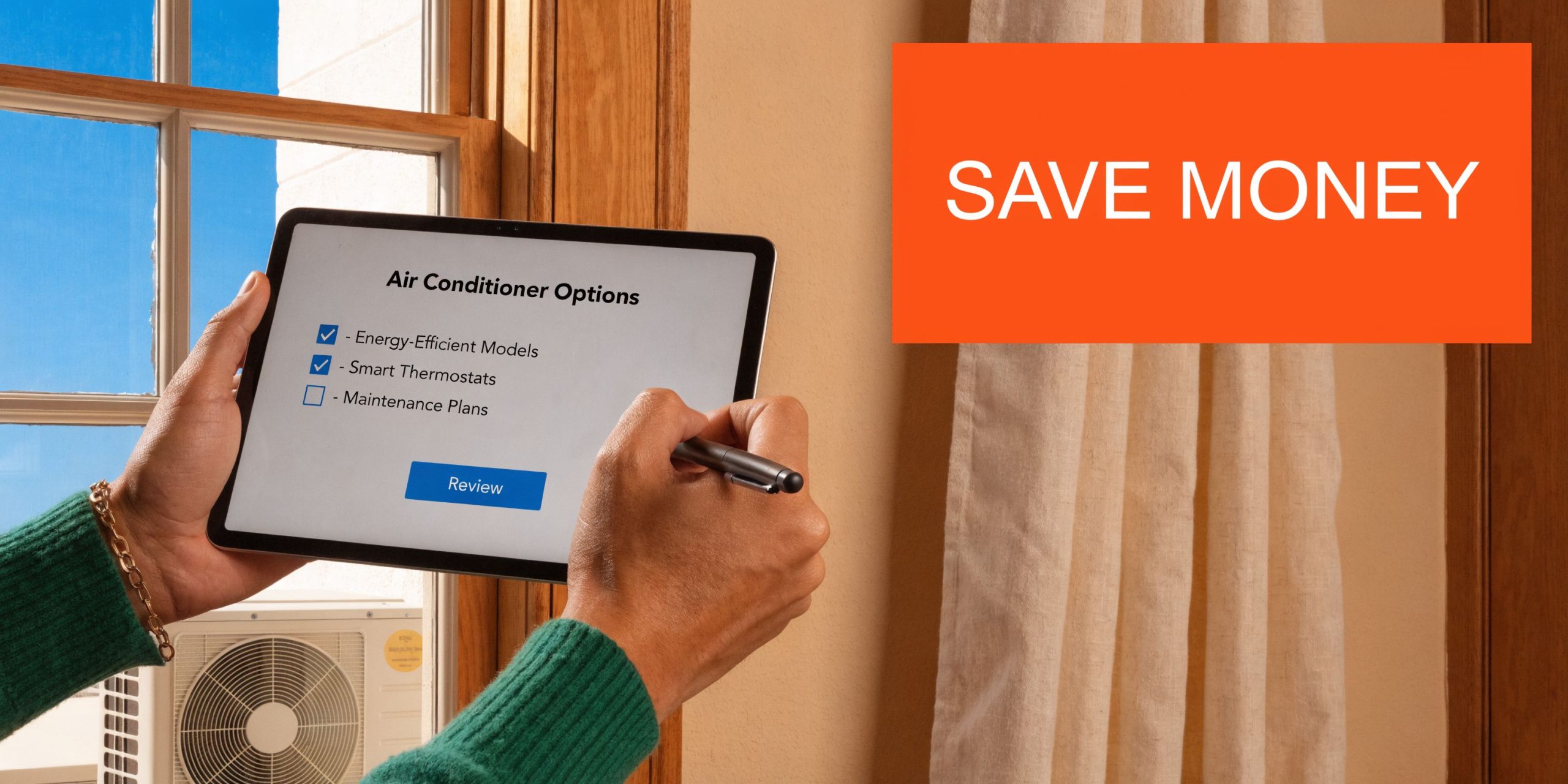
Verified Florida cost data notes that higher-efficiency systems can qualify for rebates. That matters because a better unit may cost more upfront but reduce your long-term operating cost in a climate where AC runs much of the year.
The smart move is simple. Before choosing equipment, ask the contractor to identify any currently available utility, manufacturer, or tax-related incentives tied to that exact system. Don’t assume the contractor will volunteer them. Ask directly.
Use financing as a tool, not a crutch
There’s nothing wrong with financing a new AC. In many Florida homes, it’s the practical way to avoid settling for the cheapest equipment package when the house needs a better solution.
The key is using financing to protect quality. If financing lets you afford the properly sized system, the needed duct corrections, and the right efficiency level, it’s helping. If it pushes you into add-ons you don’t need, it’s not.
Don’t pay for the wrong tonnage
A lot of wasted money starts with the wrong size unit. Bigger equipment often sounds safer to homeowners, but in Florida that can backfire hard because comfort depends heavily on humidity control.
Ask for the load calculation. If the contractor won’t do one, keep shopping.
This video does a good job explaining the kind of thinking homeowners should bring to efficiency and system choices before they buy.
Compare scope, not just price
Two quotes can have similar equipment and wildly different value. One may include a real inspection of duct condition, electrical needs, drainage, and controls. The other may basically be a box swap.
Use this checklist when comparing proposals:
- Ask what is included. Get clarity on permits, thermostat, drain work, electrical corrections, line set evaluation, and startup testing.
- Ask what was inspected. A serious contractor should be able to explain what they looked at beyond the old condenser.
- Ask what could still change. Hidden cost risk should be identified before installation day, not discovered halfway through.
- Ask why this system was chosen. If the answer is just “that’s what is commonly used,” that’s not good enough.
Spend where Florida houses need it
If your home struggles with sticky air, uneven cooling, or coastal exposure, spend money on the items that solve those problems first. That usually means proper sizing, airflow, durability, and moisture control. Fancy extras come later.
Cheap installs look affordable because they postpone the true bill.
Get Your Free and Accurate AC Installation Estimate
A new AC system is a big purchase, but in Florida it’s also basic home protection. It protects comfort, air quality, and your ability to live normally through long stretches of heat and humidity.
The smartest homeowners don’t chase the lowest number. They chase the most complete answer. They want to know whether the system is sized correctly, whether the ducts can support it, whether the electrical side is ready, and whether the equipment fits a Florida house instead of a generic national average.
That’s the difference between a quote and an estimate you can trust.
If you’re replacing an AC in Tampa Bay, Sarasota, Port Charlotte, Cape Coral, Fort Myers, or nearby areas, insist on an estimate that accounts for the full job. Ask hard questions. Make the contractor explain the equipment choice. Make them explain the airflow plan. Make them explain what can raise the price later.
You want accuracy, not optimism. You want transparency, not a low teaser number that grows after the work starts.
Frequently Asked Questions About AC Installation
How long does a typical AC installation take
A straightforward replacement can often be completed in a single day. More complex jobs take longer, especially when the crew finds duct problems, electrical issues, difficult access, drainage corrections, or code-related work that needs to be handled properly.
If a contractor promises a fast install before inspecting the house carefully, be cautious. Speed is good. Blind speed isn’t.
Can I install a new AC unit myself
No, and it’s a bad idea.
AC installation involves refrigerant handling, electrical work, airflow design, drainage, equipment matching, and code compliance. Get any of that wrong and you can damage the equipment, create a safety problem, or end up with a system that cools poorly and controls humidity even worse.
What brands should homeowners consider
A good contractor should be able to service and install major brands and explain why one system fits your home better than another. The brand matters, but the design and installation matter more.
A well-installed system from a reputable manufacturer will usually outperform a premium unit installed badly.
Should I replace my ductwork at the same time
Only if the duct system needs it. But you absolutely need the ducts inspected before approving the job.
If the ducts are leaking, undersized, damaged, or contaminated, replacing the equipment without addressing the delivery system is usually a bad investment.
Heatwave Air Conditioning, Plumbing, & Electric has nearly 20 years of experience serving homeowners across Tampa Bay and Southwest Florida. If you want a straight answer on your home ac installation cost, schedule a free estimate with the certified team at Heatwave Air Conditioning, Plumbing, & Electric. They install and service all major brands, provide accurate quotes without surprise add-ons, and offer financing options to help you get the right system for your home.