
TL;DR: In the Tampa Bay area, minor AC repairs can start around $150, major repairs like compressor problems can exceed $2,500, and full system replacement usually falls around $5,850 to $11,000 for Florida homes, based on local pricing data from Ackenny. If you're trying to budget for home ac service cost in Southwest Florida, routine maintenance is usually the cheapest money you'll spend, and emergency breakdowns are where bills get ugly.
Your AC usually doesn't quit on a mild day. It quits when it's sticky outside, the house is warming up fast, and every HVAC company in town is already booked.
That's why homeowners in Tampa Bay, Sarasota, Port Charlotte, Cape Coral, and Fort Myers get blindsided by AC bills. They search online, see vague national averages, then get a quote that doesn't look anything like what they expected. Florida isn't a normal AC market. Our systems run harder, longer, and in heavier humidity than systems in a lot of other states.
If you want a straight answer on home ac service cost, start local. The right number depends on whether you're paying for maintenance, a basic repair, a major component failure, or a full replacement. It also depends on timing, access, and how long a technician has to spend diagnosing the issue instead of just swapping a simple part.
A Breakdown of Typical AC Service Costs in Florida
Your AC goes down on a 92-degree afternoon in July, the house starts holding humidity, and you need a number fast. The first thing homeowners usually want is a price range they can use before they call.
For Southwest Florida homes, national averages only get you so far. Systems in Tampa Bay, Sarasota, Port Charlotte, Cape Coral, Fort Myers, and nearby areas run long hours, deal with salt air in many neighborhoods, and fight humidity for most of the year. That pushes wear faster than a generic pricing guide suggests, especially on capacitors, motors, drain systems, and coils.
Average local price ranges
| Service Type | Average Cost Range | Common Examples |
|---|---|---|
| Preventive maintenance | $139 to $259 per service | Bi-annual tune-up, refrigerant pressure check, electrical testing, coil cleaning, drain line flushing |
| Minor repairs | $150 to $400 | Thermostat replacement, coil cleaning, capacitor replacement, contactor issues, clogged drain line clearing |
| Moderate repairs | $400 to $900 | Blower motor issues, fan motor replacements, refrigerant diagnostics |
| Major repairs | $900 to $2,500 or more | Compressor replacement, major refrigerant leaks, electrical board replacement |
| Full system replacement | $5,850 to $11,000 or more in Florida | Complete central AC replacement depending on home size and system choice |
Professional bi-annual AC maintenance in Fort Myers and Southwest Florida runs $139 to $259 per service, and those visits typically include a 25-point inspection with refrigerant pressure measurements, electrical component testing, coil cleaning, and drain line flushing, according to Home Pros Air.
That price matters because it shows what real maintenance should include. If an "inspection" is priced unusually low, the important question is why. A proper tune-up takes time, meter readings, coil and drain work, and a full operating check before the technician leaves.
What you usually pay for during a service call
A lot of confusion starts with the word "service." Homeowners use it for several different jobs, and those jobs are billed differently.
Sometimes it means planned maintenance. Sometimes it means a diagnostic visit because the unit stopped cooling. Sometimes it means same-day emergency repair in the middle of a heat wave. Those are three different calls with three different cost structures.
Here is the practical split:
- Maintenance visit: Scheduled cleaning, testing, and inspection.
- Repair visit: Diagnosis, labor, and parts.
- Emergency visit: Repair work with after-hours or urgent scheduling charges.
- Replacement quote: Equipment, installation labor, and possible permit or code-related upgrades.
In the Tampa area, standard HVAC labor often falls within a typical hourly range for trade work, and after-hours service usually costs more. The exact total depends on diagnosis time, part availability, and whether the system is easy to access.
Why minor repairs do not always stay minor
A capacitor failure can be a simple fix. In Florida, it can also be the first sign of bigger stress inside the system.
I see this a lot in older Southwest Florida homes. The homeowner calls for a no-cool issue, expecting a small parts bill. Then the technician finds a weak blower motor, a dirty evaporator coil, a backed-up drain line, or signs the condenser has been running hot for weeks. Humidity makes that worse because the system is not only cooling the house. It is also pulling moisture out of the air, and that extra workload shows up in repair frequency.
That is one reason local pricing feels different from national averages. The climate here creates more borderline problems that turn into full repairs if they sit too long.
Practical rule: If your AC is still cooling but acting odd, call before it quits completely. Intermittent problems usually cost less than breakdowns that happen after more parts have been stressed.
The bill also needs to be judged against the result. A cheap repair on a neglected system is not always cheap if the unit fails again two months later.
If you want to compare common issues before scheduling a call, this page on AC repair services for Florida homes gives a useful overview.
What counts as a reasonable price
A reasonable AC bill matches the work performed, the time spent diagnosing the fault, and the condition of the system. It is not automatically the lowest quote.
If a technician checks refrigerant pressures, tests electrical components, cleans the outdoor coil, clears the drain, verifies amperage, and confirms proper cooling after the repair, that invoice should reflect real labor. If the company only swaps a part and leaves without confirming operation under load, the lower number may not save money.
Good diagnosis protects your wallet. In Florida, especially during long cooling seasons, catching the actual cause early is often what keeps a moderate repair from becoming a major one.
What Factors Change Your Final AC Repair Bill
A July no-cool call in Tampa Bay rarely gets priced the same as that same repair in February. The symptom may look identical from the hallway thermostat, but the final invoice changes based on access, system condition, urgency, and how much Florida heat has already stressed the equipment.

Timing affects cost, especially in Southwest Florida
Peak season changes the whole service market. Once long stretches of heat and humidity hit, more systems fail at once, schedules tighten, and homeowners who waited on a small issue often end up paying for a faster response.
Industry guidance from AAA Heating & Cooling notes that maintenance can cost more during high-demand months than during milder shoulder seasons. That matches what happens locally. In Southwest Florida, the expensive part is often not the repair itself. It is the timing.
For non-urgent work, spring and fall usually give you more scheduling options and less pressure to approve a rushed repair.
Access and diagnosis often matter more than the part
Homeowners understandably ask about the part first. The bigger variable is usually the work required to confirm the failure and reach it.
A capacitor in an easy-to-access condenser is one kind of job. A drain issue tied to a clogged line, float switch problem, and attic air handler with water around the platform is another. Both may start with “the AC stopped cooling,” but one takes much more diagnosis and cleanup before the system can be tested safely.
That is why two homes with the same complaint can end up with different labor charges.
Florida conditions push systems harder
This region is rough on air conditioning. Long run times, salt exposure near the coast, high attic temperatures, and heavy humidity all add wear in ways generic national guides tend to gloss over.
I see this most with electrical components, blower issues, drain backups, and corrosion around outdoor equipment. A repair that would stay isolated in a drier climate can spread here. A weak capacitor can strain a motor. Poor drainage can trip safeties and hide other airflow problems. Corrosion can turn a simple service visit into extra labor because screws, panels, and connectors do not come apart cleanly.
If you want a clearer picture of what tends to fail in this climate, this guide to common AC problems and solutions in Florida homes is a useful starting point.
Age and equipment type change the repair path
Older systems usually cost more to repair because the job is less predictable. Parts may be slower to source. Wiring can be brittle. Rust can turn basic disassembly into careful, time-consuming work.
Equipment layout matters too. A standard split system with clear access is faster to service than an air handler buried in a tight attic or a condenser boxed in by poor clearance. The harder it is to reach the failed component, the more labor ends up on the bill.
Heat pumps, variable-speed systems, and communicating equipment can also take longer to diagnose than older single-stage units. The extra control boards and sensors improve comfort, but they add complexity when something goes wrong.
Urgency adds real cost
After-hours service, weekend calls, and same-day dispatch usually cost more. That is normal in this trade. You are paying for priority response and for a technician to break into an already full schedule.
As noted earlier, local emergency pricing often runs higher than standard daytime service. In Tampa Bay and Southwest Florida, that premium shows up most during heat waves, when the market is crowded and every company is triaging no-cool calls.
The practical takeaway is simple. If the system is acting strange but still running, do not wait for a full shutdown unless you have to.
The quote reflects more than one thing
A repair bill usually includes several cost drivers at once:
- Diagnostic time to confirm the actual fault
- Labor time based on access, complexity, and testing
- Parts and materials based on model and availability
- System condition if neglected maintenance caused related damage
- Urgency charges for nights, weekends, or peak-demand scheduling
Homeowners who understand service estimates and compare quotes usually make better decisions because they look past the headline number and ask what the company is doing for that price.
Low quotes can be fine. Low-detail quotes are where trouble starts.
Reading Your AC Service Quote Like a Pro
A quote looks a lot different at 5:30 p.m. in August when the house is 84 degrees and the system just quit. That is when vague wording gets expensive.
A solid AC quote should tell you three things clearly. What failed, what the company plans to do about it, and what each part of the bill covers. If any one of those is muddy, stop and ask questions before you sign.

What a small repair quote should show
Say the thermostat is calling, indoor power is present, and the outdoor unit still will not start. In a lot of Florida homes, that ends up being a failed electrical component or control issue, not a full system problem.
As mentioned earlier, smaller repairs in the Tampa Bay and Southwest Florida market often land on the lower end of the service-cost range, while labor depends on access, testing time, and the system itself. A useful quote usually spells out items like:
- Diagnostic charge
- Labor for removal and installation
- Replacement part
- Electrical and performance testing after repair
That level of detail matters in Florida. A system may start running again after a quick part swap, but if the quote says nothing about testing amperage, capacitor readings, drain condition, or temperature split, you still do not know whether the original failure stressed other components.
Refrigerant quotes need more explanation
Homeowners frequently get tripped up. The paper says "add refrigerant," the house is hot, and the temptation is to approve it fast.
A sealed system does not consume refrigerant. If charge is low, there is usually a leak, a poor previous repair, or another underlying fault. In our climate, long cooling seasons put a lot of hours on the equipment, so refrigerant problems tend to show up after extended strain, not out of nowhere.
A quote for this kind of job should separate the steps:
- Leak search or refrigerant diagnostics
- Labor to access the problem area
- Repair recommendation
- Refrigerant added only if the repair justifies it
- Verification that pressures and cooling performance are back where they should be
If the estimate skips straight to a recharge with no explanation of why the system is low, treat that as incomplete, not convenient.
Read the wording, not just the total
The total matters, but the wording tells you what you are buying.
Good quotes use plain language such as "replace failed dual run capacitor," "repair condensate drain blockage," or "confirm evaporator temperature and operating pressures after repair." Weak quotes hide behind broad labels like "AC repair" or "system service." That kind of wording makes it hard to compare one company to another and hard to challenge a bill later if the repair does not solve the problem.
I also tell homeowners to look for separate pricing when there are options. If a technician sees a repair that will get you through the season and a larger issue that may justify replacement soon, both should be explained clearly. That helps you make a money decision, not just a panic decision.
Homeowners who understand service estimates and compare quotes usually avoid the worst billing surprises because they look past the headline number and read the actual scope of work.
Questions to ask before approving anything
Keep it simple and direct:
- What part failed, and how did you confirm it?
- What work is included in this price?
- How much of the bill is labor, parts, and diagnostic time?
- Did you test the full system after the repair, or only replace the part?
- Is this a long-term fix or a short-term patch?
One more practical point for Florida homeowners. If your quote shows a dirty coil, clogged drain, weak airflow, or other maintenance-related problems alongside the repair, pay attention. In Southwest Florida, heat, salt air, and humidity punish neglected systems faster than generic national guides suggest. Regular upkeep will not prevent every breakdown, but it does make quotes shorter and cheaper more often than not. These AC maintenance tips for Florida homeowners will help you spot a few cost drivers before they turn into repair calls.
Proven Ways to Lower Your Home AC Service Expenses
The cheapest AC strategy isn't ignoring the system until it breaks. That's the most expensive one.
Florida homeowners save money on cooling when they pay small amounts on purpose instead of large amounts under pressure. That starts with maintenance, but it doesn't end there.
Spend early, not late
Over a decade, Florida homeowners who keep up with annual AC maintenance at about $200 to $350 per year can save roughly $9,250 compared with homeowners who rely on emergency repairs. Reactive costs can exceed $11,750, while preventive maintenance totals around $2,500, according to Florida Air Repairs.
That gap is often missed when comparing a tune-up bill to “doing nothing.” Doing nothing isn't free. It just delays the invoice until the number is bigger.
The same source lays out the kind of repair chain technicians see all the time in Florida. A system gets skipped year after year. Then one failure leads to another, and eventually the compressor fails and replacement becomes hard to avoid.
What actually works for homeowners
Some cost-cutting moves help. Some just delay the same bill.
These are the practical ones:
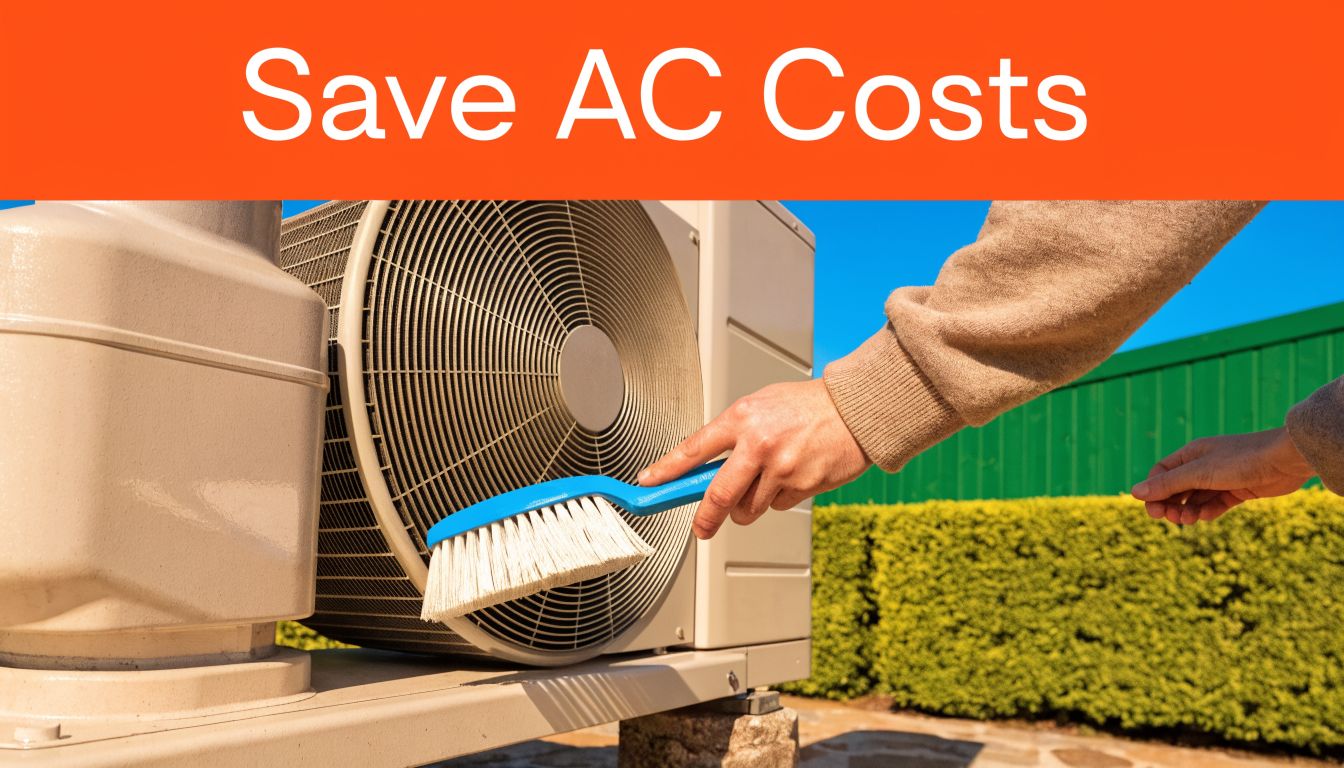
- Keep the outdoor unit clear: Debris, overgrowth, and blocked airflow make the system work harder.
- Change filters on time: Restricted airflow causes performance problems that look like more serious failures.
- Call when symptoms are small: Weak airflow, odd cycling, or poor cooling are cheaper to investigate than a dead system.
- Use maintenance plans strategically: The value isn't just the visit. It's catching expensive failures early.
- Check warranty paperwork: Before approving major parts work, find out whether any manufacturer coverage still applies.
Field note: Homeowners usually lose the most money when they ignore warning signs because the house is still “kind of cool.”
Know what you can check yourself
Not every service call needs to start with panic. Before calling, check the basics:
- Thermostat setting: Make sure it's calling for cooling.
- Filter condition: A clogged filter can create poor airflow and icing issues.
- Breaker status: Power problems can mimic major equipment failure.
- Drain line symptoms: Water around the indoor unit often points to a drainage issue.
Don't open electrical compartments or handle refrigerant components. But do rule out the obvious first. That can save you a trip charge for a problem that isn't really a repair.
Look beyond the AC itself
Some homes have cooling bills that stay high even after the AC is serviced properly. In those cases, the equipment may not be the only issue. Insulation, duct leakage, air leakage, and heat gain can all make a decent AC system look inefficient.
If you're trying to sort out where energy waste is really coming from, this article on understanding the energy audit cost gives useful context before you spend money in the wrong place.
Use maintenance as a budgeting tool
A lot of homeowners think maintenance is just a mechanical issue. It isn't. It's a budgeting tool.
Regular tune-ups smooth out ownership cost. Instead of absorbing a big surprise in July, you spread the risk across scheduled visits and smaller corrections. That matters even more in Florida, where systems don't get much downtime.
For homeowners who want a simple checklist between professional visits, these AC maintenance tips for Florida homes cover the basic habits that help reduce avoidable service calls.
One practical option in the local market is Heatwave Air Conditioning, Plumbing & Electric, which offers HVAC service and financing options for larger work. That's useful when a homeowner needs to spread out the cost of a necessary repair instead of postponing it.
Deciding Between a Major Repair and a Full AC Replacement
This is the toughest call most homeowners face. The system still runs, or could run again with an expensive repair, but the quote is big enough to make replacement feel close.
That decision isn't just math. But the math should come first.
Start with the repair price versus the replacement range
For a typical single-family home in Fort Myers, AC replacement runs about $4,000 to $9,000. It can rise to $20,000 with high-efficiency equipment or when ductwork and electrical upgrades are part of the project. Labor alone can account for 30% to 50% of the total, according to One Way Air.
That gives you a real local frame of reference.
If you're staring at a major repair quote, compare it to the replacement range for a house like yours. If the repair cost is pushing close to a meaningful chunk of replacement cost, the conversation changes. You aren't deciding whether to fix a small problem. You're deciding whether to keep investing in an aging platform.
A practical framework that works in the field
Homeowners often ask for a clean rule. The common shortcut is the “50% rule.” If the repair is around half the cost of replacement, replacement deserves serious consideration.
That rule is helpful, but it isn't enough by itself. Add these questions:
- Has this system been reliable until now, or does it break often?
- Is this the first major component failure, or part of a pattern?
- Will this repair restore confidence, or just buy time?
- Is the system still a good fit for the house and humidity load?
A big repair on a steady, otherwise healthy system can make sense. A big repair on a problem unit usually doesn't.
If a repair only makes the system “probably okay for now,” replacement often becomes the more rational choice.
Where replacement cost climbs
Most homeowners hear the low end of replacement pricing and assume they're in that band. Sometimes they are. Sometimes the house pushes the job upward fast.
Replacement cost tends to increase when the project includes:
- High-efficiency equipment
- Variable-speed features
- Electrical upgrades
- Ductwork changes
- Difficult installation access
Sizing also matters. The system has to match the house, not just the old unit. An oversized or undersized system creates comfort problems and can shorten equipment life.
If you want a local overview of what replacement work usually includes, this page on air conditioning replacement in Port Charlotte is a useful reference.
Here's a quick video explanation that helps frame the repair-versus-replace decision in homeowner terms.
Cases where repair usually still makes sense
Repair is often the smarter move when:
The problem is isolated
One failed part doesn't mean the whole system is done.The system has a solid service history
If it hasn't been eating repair dollars, a single larger fix may be justified.Replacement would force extra project costs you aren't ready for
Duct or electrical issues can make replacement a bigger decision than expected.
Cases where replacement deserves a hard look
Replacement usually moves up the list when the system has a major component failure and the rest of the equipment already shows age, corrosion, poor performance, or repeated breakdowns.
Homeowners in Southwest Florida should also think about humidity control, not just cooling. Newer systems with features that improve dehumidification can solve comfort complaints an older single-stage unit never handled well.
The right choice isn't the cheapest invoice today. It's the path that gives you the most reliable cooling for the money you put in.
Your Trusted Partner for AC Services in Southwest Florida
Home ac service cost makes more sense when you separate the small, planned expenses from the expensive, reactive ones. Maintenance, minor repairs, emergency calls, major failures, and replacement all live in different price brackets. If you treat them like the same thing, every quote feels random.
Florida homeowners do better when they look at three things clearly. What the repair fixes. Whether the timing is driving the price up. And whether the system is still worth investing in.
A good HVAC partner helps you answer those questions without turning the quote into a sales pitch. You want clear diagnosis, clear scope, and clear pricing. That matters whether you're dealing with a drain line problem, a failed motor, or a replacement decision.
For local homeowners who need a repair assessment in Southwest Florida, Fort Myers air conditioning repair service is one place to start comparing service options and understanding what professional repair support includes.
The right contractor won't promise that every repair is cheap. They will help you avoid paying for the wrong one.
If you need straight answers on AC costs, repair options, or replacement pricing for your Florida home, contact Heatwave Air Conditioning, Plumbing, & Electric. They serve homeowners across Tampa Bay and Southwest Florida with HVAC, plumbing, and electrical services, including repair diagnostics, maintenance, financing options, and estimates for new systems.