
A home air conditioning compressor replacement in the Tampa Bay area typically costs between $1,500 and $3,000, and the average often lands around $2,000 based on current residential central AC cost guidance from Today's Homeowner. If you're staring at a dead AC in Florida heat, that range is the honest starting point, but your actual bill can move up or down depending on warranty status, system size, compressor type, and labor.
If you're reading this, there's a good chance your system is doing one of the things homeowners dread most. It's humming but not cooling. It's tripping the breaker. The outdoor unit is making a grinding or clanking sound that wasn't there last week. Or maybe the house never quite cools off, even though the thermostat says it should.
In Tampa Bay, that kind of problem gets stressful fast. A compressor failure isn't a small tune-up issue. It's usually one of the biggest repair decisions you'll make on a home AC system, and in that moment, the same thing is desired. A straight answer on cost, and a clear way to decide whether fixing it still makes sense.
That Awful Noise Your AC is a Sign of a Big Bill
It usually starts after a rough night. The house never cools down, the thermostat gets bumped lower, and by morning the outdoor unit is making a sound that stops people in their tracks. A hard buzz. A metal clank. A loud hum followed by silence.
In Tampa Bay, I see homeowners try to squeeze a few more days out of that noise all the time, especially in the middle of summer. Sometimes they get lucky. Sometimes the compressor goes from struggling to fully locked up, and the repair decision gets more expensive and more urgent.
That is why this sound gets so much attention. The compressor is the part that keeps refrigerant moving through the cooling cycle. If it cannot start, overheats, or is failing internally, the system may still appear to be on while the house keeps getting warmer.
A compressor replacement is usually one of the bigger AC repair bills a homeowner will face. The part itself is only one piece of it. The final invoice often includes diagnosis, labor, refrigerant recovery, electrical checks, startup testing, and making sure the new compressor matches the system it is going into.
Why the bill feels high
Homeowners often expect a compressor swap to work like replacing a fan motor or capacitor. It does not.
This repair involves sealed-system work, and that changes the job completely. Once a technician opens the system, the work has to be done cleanly and correctly. If a failing compressor has sent debris or acid through the refrigerant circuit, that can add filter driers, cleanup steps, and more labor. On older equipment, that is where the true trade-off starts. You are not just paying to install a part. You are deciding how much money to put back into a system that may already have other worn components.
If you want a simple visual of the outdoor equipment homeowners are usually hearing, this local HVAC equipment image reference shows the part of the system where compressor noise usually draws attention first.

Practical rule: If the outdoor unit is making violent noise, tripping the breaker, or blowing warm air during a Tampa summer, shut it off and call for diagnosis. Repeated restart attempts can turn one failed part into a larger repair.
What Tampa Bay homeowners actually need
In this situation, the useful question is not just, "What does a compressor cost?"
The useful questions are whether the compressor has failed, whether any warranty still applies, and whether the rest of the system is in good enough shape to justify the repair. Those answers are what help a homeowner make a calm decision under pressure, especially when the house is already heating up.
Signs Your AC Compressor Is Failing
Before anyone should approve a major repair, the diagnosis has to make sense. Compressor problems usually leave clues you can hear, feel, or see.
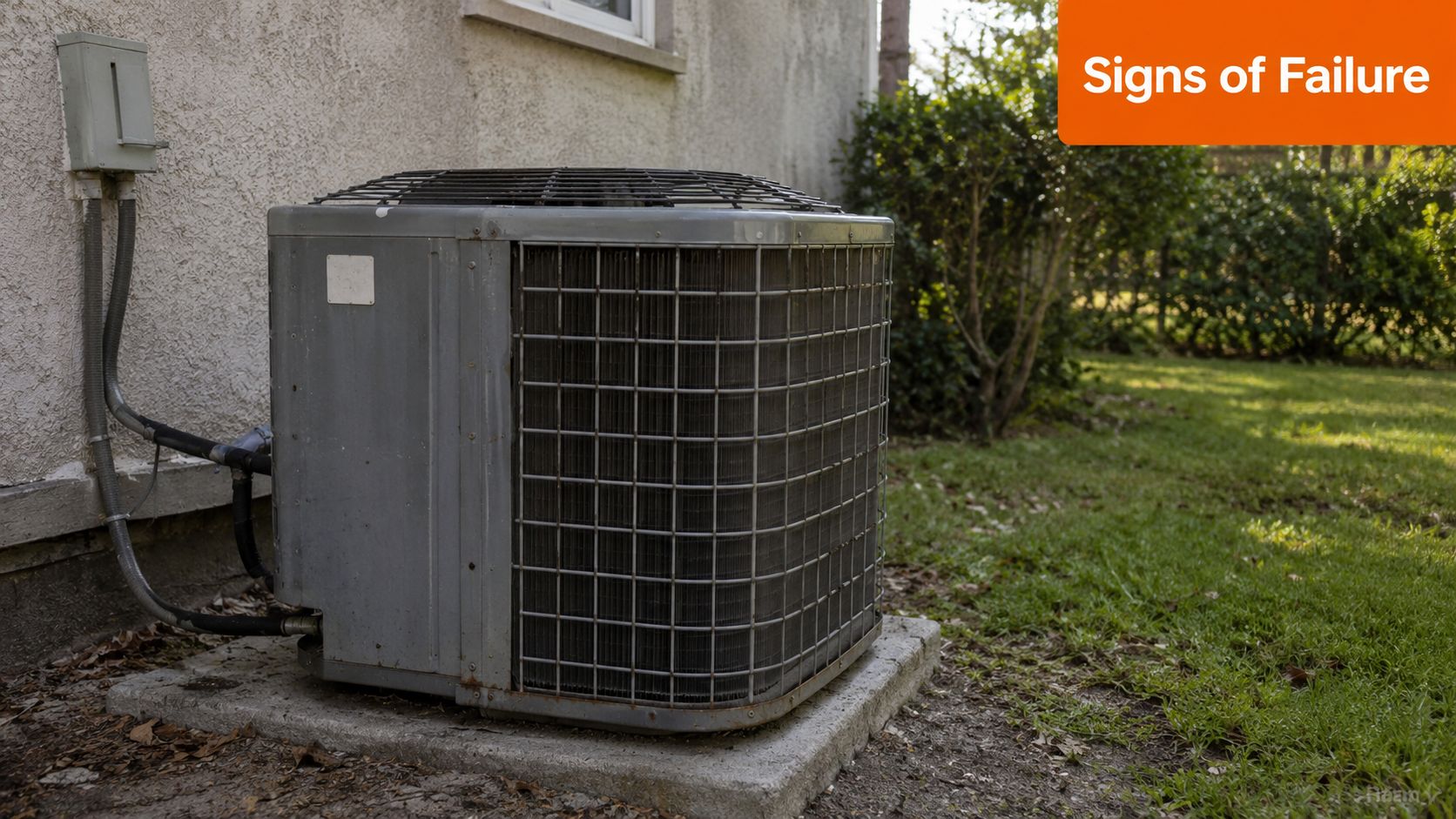
What homeowners usually notice first
The most common warning sign is warm or lukewarm air from the vents when the thermostat is calling for cooling. The indoor blower may still run, so it feels like the AC is on, but the system isn't removing heat the way it should.
Another common sign is loud outdoor-unit noise. Homeowners describe it as banging, hard buzzing, clanking, grinding, or hissing. Those sounds can point to internal compressor wear, pressure problems, or electrical strain during startup.
A third sign is the breaker tripping when the system tries to kick on. Compressors draw serious electrical load at startup. If the compressor is locked up or overheating, the electrical protection may shut it down.
If you want a simple visual on what that outdoor equipment does and what technicians look for, this local HVAC service image reference helps homeowners connect the symptom to the equipment sitting outside their home.
Sensory clues that matter
Use this checklist before the technician arrives:
- It shakes hard at startup: The outdoor unit shouldn't lurch or rattle aggressively.
- It clicks but won't stay on: That can mean the compressor is trying to start and failing.
- It runs, but the house stays muggy and warm: Cooling performance may be falling off before total failure.
- It sounds different than it used to: Homeowners often catch compressor trouble early just by noticing a new sound.
If the system suddenly sounds harsh or strained, don't keep resetting it all day. Repeated startup attempts are hard on already failing components.
A short explainer can help if you want to see how technicians think through compressor symptoms and startup issues:
What doesn't automatically mean compressor failure
Not every no-cool call means the compressor is dead. A bad capacitor, contactor issue, thermostat problem, airflow restriction, or refrigerant issue can create similar symptoms.
That's why a real diagnosis matters. Good compressor calls are based on testing, not guesswork. If someone jumps straight to "you need a whole new compressor" without explaining what failed and why, ask more questions.
Breaking Down the Home AC Compressor Cost in Tampa Bay
In Tampa Bay, the number on a compressor quote usually catches homeowners off guard because the compressor is only one part of the job. The installed price reflects diagnosis, refrigerant recovery, removal of the failed compressor, brazing in the new one, evacuation, recharge, and startup testing. On a summer call in July, that work is the difference between a repair that lasts and one that turns into another no-cool visit.
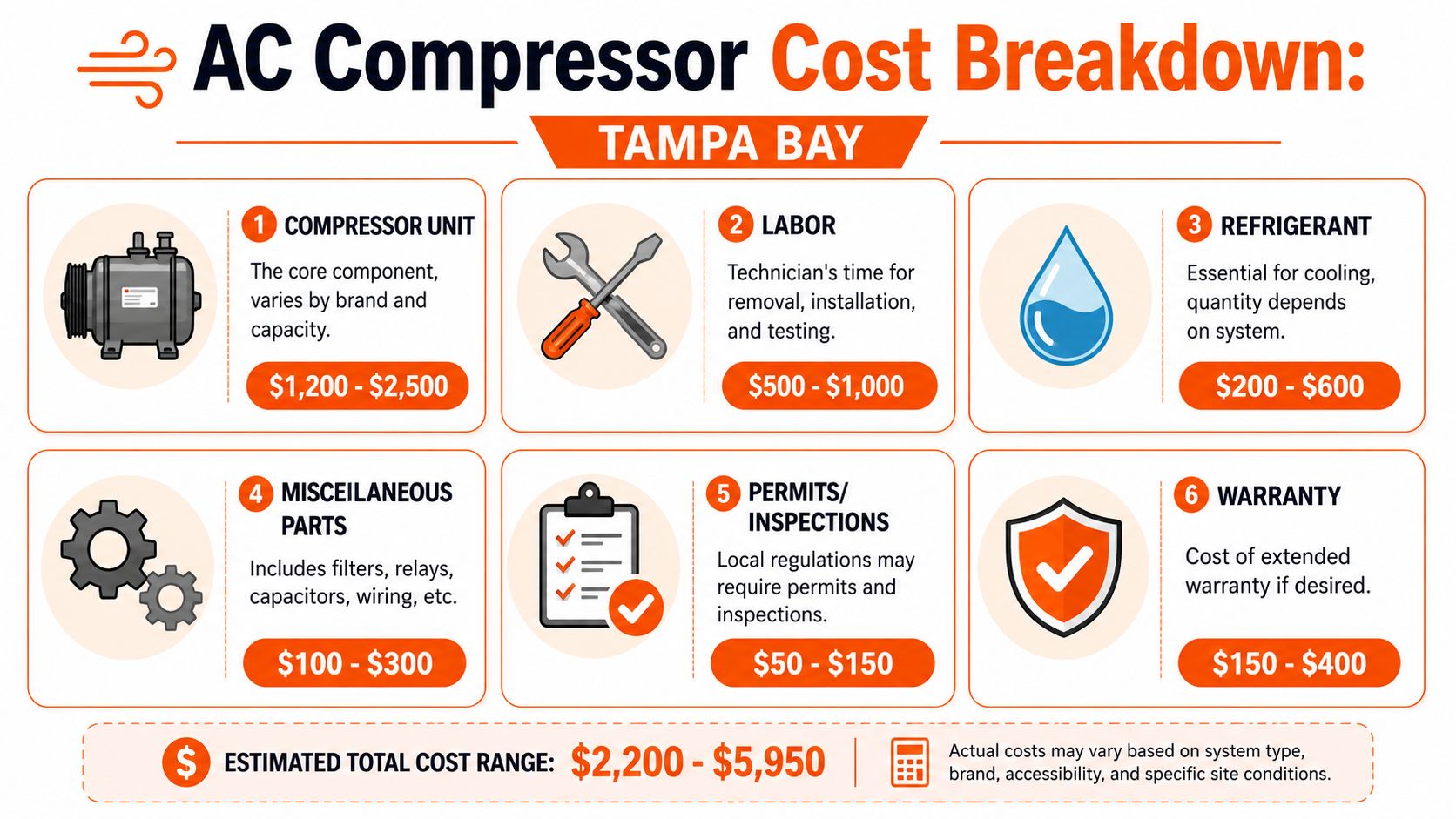
A fair estimate should show where the money is going, not just hand you a lump sum.
| Cost area | What it usually covers |
|---|---|
| Compressor part | The replacement compressor matched to your outdoor unit and refrigerant type |
| Labor | Recovering refrigerant, cutting out the failed compressor, brazing, evacuation, recharge, and testing |
| Electrical items | Start components, wiring repairs, or contact-related parts if the failure damaged them |
| Refrigerant handling | Recovery, weighing charge back in, and checking system pressures |
| System verification | Amp draw, temperature split, leak check, and startup performance |
Labor takes a real share of the bill because this is sealed-system work. A compressor swap is not like changing a fan motor. If the technician skips proper evacuation, misses contamination in the lines, or reuses parts that should have been replaced, the new compressor can fail early and you are right back in the same spot.
That is also why two quotes can look far apart and both still be legitimate. One contractor may be pricing in a filter drier, crankcase heater check, extra cleanup after a burnout, and time to confirm the metering device is still doing its job. Another may be quoting the bare minimum. The cheaper number is not always the better value.
Home size can influence price, but homeowners in Tampa Bay should focus more on system match than square footage alone. I see homes with similar floor plans carrying very different equipment because of insulation levels, window exposure, duct condition, and additions done over the years. The compressor has to match the actual system it is going into.
If you want a local example of how major HVAC issues get discussed around here, this Tampa Bay AC replacement interview image gives some local context.

Homeowners comparing bids should ask for the diagnosis, the scope of work, and what protections are included after the repair. Shops that want to Improve HVAC estimating efficiency often build cleaner proposals, but the important part for you is simple. You should be able to see the part cost, labor, refrigerant-related work, and any supporting components that are being replaced.
If a quote says “compressor replacement” but does not explain what failed, what else was damaged, and how the system will be tested afterward, press for details before you approve it.
Key Factors That Change Your Final Price
Two compressor jobs can start with the same complaint and end with very different invoices. In Tampa Bay, I see that all the time. The part itself matters, but the final number usually changes because of what the system requires before, during, and after the install.
System size and equipment match
Capacity affects cost, but matching matters more than square footage on a listing.
A compressor has to fit the outdoor unit's design, refrigerant, electrical setup, and performance target. A larger system often carries a higher part cost, but I have also seen smaller systems get expensive because the exact match was harder to source or the equipment used a less common configuration. If a contractor gives you a price without confirming the model and rating plate details, that quote is missing part of the story.
Compressor type and refrigerant setup
Compressor design changes the price in a real way. Older single-stage systems are usually simpler and less expensive to repair. Newer scroll and variable-speed equipment can be quieter and more efficient, but the parts cost more and the installation leaves less room for shortcuts.
Refrigerant also affects the bill. If the system has a leak, contamination, or a burnout that spread debris through the lines, the job can expand beyond swapping one failed part. In those cases, the repair may also call for cleanup, filter driers, acid treatment steps, and careful evacuation before the new compressor goes in.
Warranty status
The first thing I do on a compressor call for a system under 10 years old is check the warranty. It is the single biggest factor that changes the math for the homeowner.
If the manufacturer is covering the compressor, you may still owe labor, refrigerant-related work, and any extra materials needed to protect the new part. If the warranty is gone, you are paying for the compressor and everything around it. That is often the point where a homeowner stops looking at the repair as a simple parts swap and starts asking harder questions about long-term value.
For homeowners who want a better sense of why some proposals are more detailed than others, this article on how contractors Improve HVAC estimating efficiency gives useful background on the estimating side.
Access, condition, and what caused the failure
Easy access keeps labor down. Tight clearances, second-story installs, overgrown landscaping, corroded fasteners, and storm-worn equipment can all add time.
The bigger issue is root cause. Compressors do not usually fail for no reason. Low refrigerant charge, airflow problems, electrical damage, contaminated refrigerant, or a weak capacitor may have pushed the compressor to failure in the first place. A careful contractor prices the job around fixing that cause too, because putting a new compressor into a system with the same unresolved problem is how homeowners end up paying twice.
If you want a local home-service example tied to seasonal system prep, this spring home maintenance resource from Heat Wave HVAC reflects the same basic point. Jobs get more expensive when deferred maintenance turns a single failed part into a larger repair.

Repair or Replace The Whole AC Unit
A lot of Tampa Bay homeowners call at this point hoping the answer is simple. The house is hot, the outdoor unit is making a bad noise, and all anyone wants to hear is that a single repair will fix it for a reasonable price. Sometimes that happens. A lot of times, the compressor failure is the moment you have to decide whether this system is still worth saving.
The compressor can often be replaced. The better question is whether putting that money into the current system is the smart move for your house, your budget, and how long you plan to stay there.
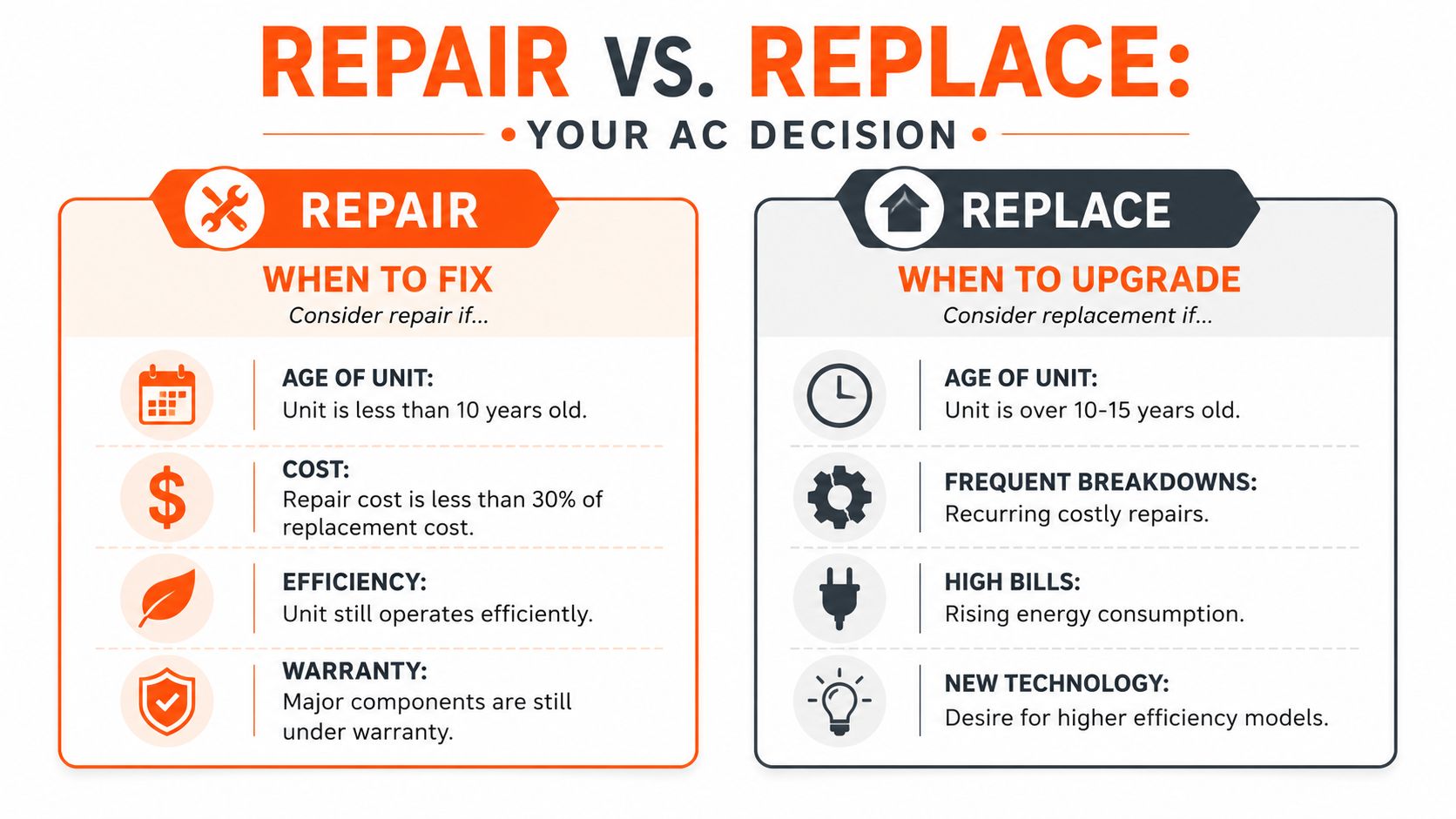
When repair still makes sense
Compressor replacement usually makes sense when the system is relatively new, the warranty still applies, and the rest of the equipment has been dependable. If the indoor coil, outdoor coil, blower, and electrical components are all in decent shape, repairing the unit can buy you useful years without stepping into full replacement cost.
I also look at how the system has been performing before the failure. If it has been cooling the home evenly, keeping humidity under control, and not running up the power bill, that matters. In a Tampa Bay summer, a system that was doing its job well before one major failure may still be worth repairing.
When replacement deserves a serious look
Replacement moves up the list fast when the compressor is only one problem on an aging system. If the unit is older, out of warranty, has had refrigerant leaks, capacitor issues, contactor problems, or poor cooling for a while, a new compressor can turn into one more expensive stop before the next breakdown.
In my experience, if your system is over 8 years old and out of warranty, replacement is almost always the smarter financial move in the long run.
That does not mean every older unit has to go. It means homeowners should stop looking at the compressor in isolation. A new compressor does not reset the age of the coil, fan motor, drain system, wiring, or air handler. You are fixing one major component inside an older machine.
The wrong choice is usually the one that restores cooling this week but leaves you paying for another big repair next season.
A practical decision filter
Here is the simple way I explain it on service calls:
| Situation | Usually points toward |
|---|---|
| System is under warranty and has been reliable | Repair |
| System is out of warranty and has a history of repairs | Replace |
| Compressor failed after another unresolved issue, like leaks or electrical damage | Replace gets stronger |
| Newer matched system with no major repair history | Repair gets stronger |
Homeowners who want a broader benchmark can compare the repair quote against average AC replacement prices. That side by side view usually makes the decision clearer.
It also helps to see how local companies are reviewed when these bigger repair-versus-replace calls come up. A customer review graphic from Heat Wave HVAC gives you the kind of local feedback many homeowners check before approving a major job.

How to Lower Your AC Replacement Costs
You can't make a compressor cheap, but you can avoid some of the cost pressure and make a better decision under stress.
Start with prevention, not panic
The best way to lower compressor-related costs is to reduce the odds of an early failure. Regular professional maintenance matters because technicians can catch airflow issues, electrical wear, dirty coils, and other conditions that put extra strain on the outdoor unit.
Homeowners can help too:
- Change filters on schedule: Restricted airflow makes the whole system work harder.
- Keep the outdoor unit clear: Shrubs, fencing, and debris can make service harder and cooling less efficient.
- Call early when sounds change: Waiting rarely makes compressor problems cheaper.
Use financing and estimate options wisely
If replacement is unavoidable, don't make the decision off one rushed number. Get a clear written estimate. Ask what is covered, what is excluded, and whether warranty applies to the failed part.
Some contractors, including Heatwave Air Conditioning, Plumbing, & Electric, offer financing options and free estimates for new installations, which can help when a compressor failure turns into a whole-system decision.

A small practical reminder for homeowners comparing service providers is this home service brand graphic, which is the kind of simple identifier people often see while researching local help.

Frequently Asked Questions About AC Compressors
How long does a compressor replacement take
It depends on the system, access, and whether other problems are found once testing begins. Compressor work is not a quick swap. The system has to be handled as a sealed refrigerant circuit, and proper testing after installation matters just as much as the physical replacement.
Can I use a cheaper generic compressor
Sometimes a lower-cost option looks attractive on paper, but compressor compatibility is not something to guess at. The replacement has to match the system's design requirements. A mismatched compressor can create performance problems, reliability problems, or both. This is one of those places where "close enough" usually isn't good enough.
Can I just keep running the AC if the compressor is making noise
That is risky. A noisy compressor can be a warning that the unit is struggling to start, overheating, or mechanically failing. Continued operation can turn one major repair into a more complicated one.
Is compressor replacement always better than buying a new AC
No. It depends on age, warranty, overall condition, and whether the rest of the system is worth investing in. Some compressor repairs are completely reasonable. Others are hard to justify once you look at the condition of the full system.
Why do quotes vary so much from one home to another
Because compressor pricing follows real differences in equipment. System size, compressor type, warranty status, and labor complexity all change the estimate. Two houses can both have "bad compressors" and still require very different solutions.
If your AC in Tampa Bay is blowing warm air, tripping the breaker, or making the kind of noise that tells you something expensive is happening, the next step is a real diagnosis and a clear quote. Heatwave Air Conditioning, Plumbing, & Electric handles AC repair and replacement across the region, and they offer free estimates for new installations if your compressor failure turns into a full-system decision.