
You're usually not thinking about your electrical panel until the house starts complaining.
Maybe the air conditioner kicks on, someone starts the microwave, a phone charger gets moved to the garage, and suddenly a breaker trips. Or the lights dip for a second and come back. In a lot of Tampa Bay and Southwest Florida homes, that's the first sign the electrical system is working harder than it was built to handle.
A home electrical box upgrade isn't just about adding capacity. It's about safety, code compliance, and making sure your house can support the way people live now.
Your Home's Electrical Heartbeat
A lot of Florida homeowners call after one specific moment. The breaker trips while dinner is cooking, the AC is running hard, and someone plugs in one more appliance. The house doesn't go dark because of bad luck. It happens because the panel is the control point for every circuit in the home, and it can only distribute power safely if it has the right size, the right condition, and enough room for the loads you're asking it to carry.
That's why I tell homeowners to think of the panel as the home's electrical heartbeat. Every branch circuit starts there. If that panel is outdated, overcrowded, corroded, or undersized, the rest of the system feels it.
In Florida, this comes up often in homes that have had years of piecemeal additions. Maybe the kitchen was updated, then the water heater changed, then the garage got a mini-split, then a new appliance showed up. The panel becomes the bottleneck.
For homes already getting other systems ready for seasonal demand, the same planning mindset matters across the house, whether you're reviewing plumbing prep or looking at spring home system checklists.

A panel upgrade feels expensive until you compare it to the risk of overheated connections, nuisance trips, or a system that can't support the equipment your family depends on.
What homeowners usually want to know first
Many aren't asking for a “panel” in technical terms. They want answers to practical questions:
- Is my house safe right now if breakers keep tripping or lights flicker?
- Do I really need a full replacement or just more circuit space?
- Will permits and inspections become a headache in my county?
- How disruptive is the work on installation day?
Those are the right questions. The good news is that a home electrical box upgrade is usually very straightforward when a licensed electrician evaluates the load, checks the service, and handles the permit path correctly.
Signs Your Electrical Panel Needs an Upgrade
Some warning signs are obvious. Others get ignored for years because the house still “mostly works.” That's how people end up normalizing electrical problems that shouldn't be normal at all.
What to watch for inside the house
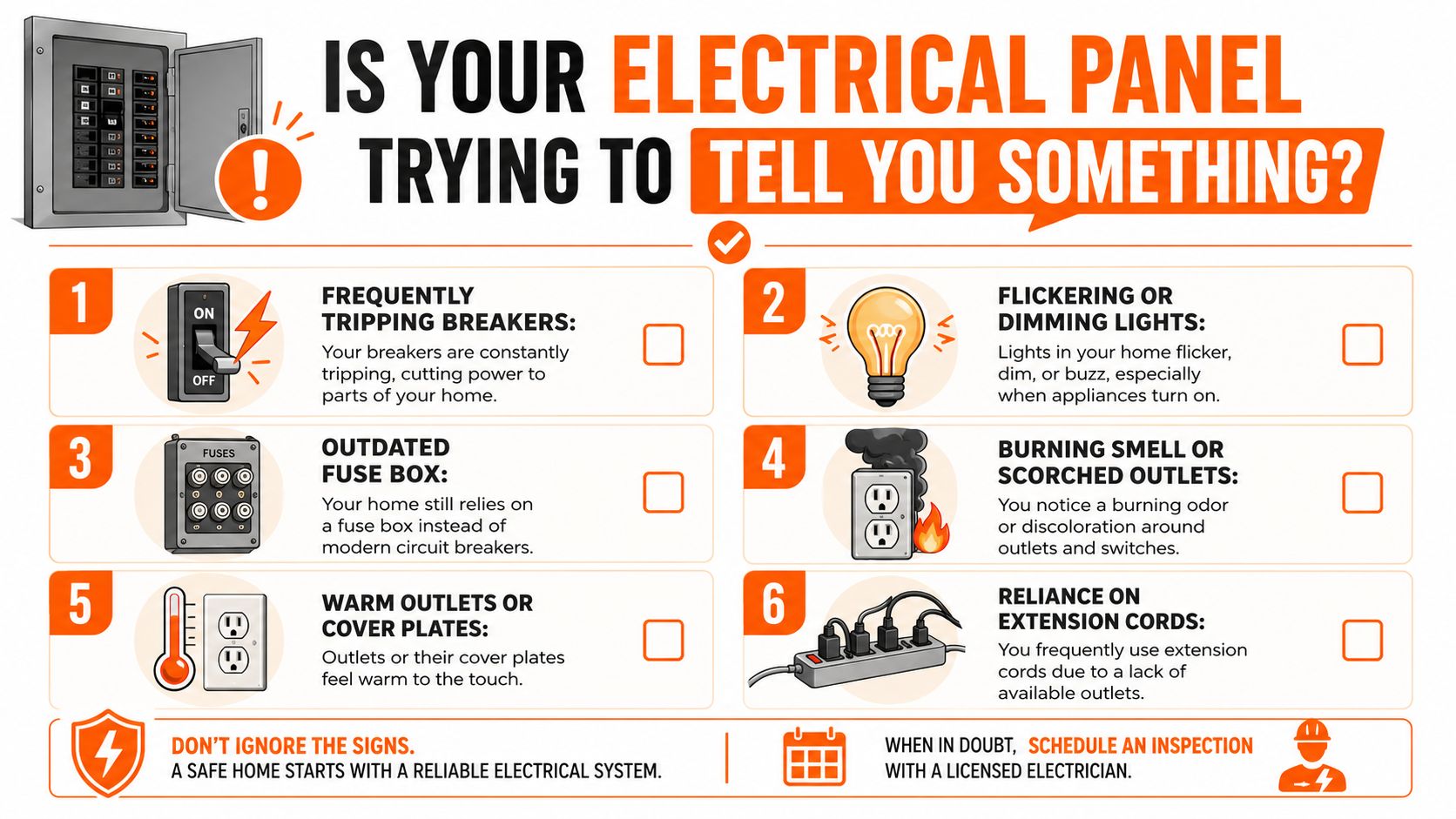
If you're seeing any of the issues below, it's time for a professional panel inspection.
- Breakers trip regularly when normal appliances run together. A breaker that trips once in a while may be doing its job. A breaker that trips often is telling you the circuit or panel needs attention.
- Lights flicker or dim when the refrigerator starts, the AC comes on, or a larger appliance runs.
- The panel makes noise such as buzzing or crackling. Electricity should be controlled, not noisy.
- You smell something hot near the panel, outlets, or switches. Any burning odor needs immediate evaluation.
- Outlets or wall plates feel warm during normal use.
- You rely on power strips and extension cords because there aren't enough dedicated circuits where you need them.
- You still have a fuse box instead of a breaker panel. That doesn't automatically mean failure, but it often means the system is no longer suited for modern household demand.
Another common sign is visible crowding inside the panel. If circuits have been added over the years without a clear plan, the box can turn into a patchwork of mismatched breakers, unclear labeling, and limited room for anything new.
Homeowners also ask about older panel brands with a troubled reputation, including Federal Pacific and Zinsco. If that's what you have, don't wait for symptoms. Have it inspected.
For a quick visual primer, this video covers common panel concerns homeowners often notice before they call an electrician.
Why older Florida homes run into capacity problems
A lot of homes built before modern electrification weren't designed for today's loads. According to NYSERDA's guide to home electrical panels, pre-1980 homes frequently retain 60-amp or 100-amp panels that cannot accommodate added demand from EV chargers or HVAC units, and a standard 200-amp panel is considered sufficient to power an all-electric home, including EV charging and heat pumps.
That matters in Florida because cooling isn't optional. If you're adding a new HVAC system, a pool circuit, garage equipment, or vehicle charging, older service sizes can become the limiting factor fast.
Practical rule: If your home was built decades ago and you're planning any major appliance addition, don't guess. Have a licensed contractor perform a proper load calculation before buying equipment.
The same goes for homes that have already had multiple upgrades over time. A house can look renovated and still have an electrical backbone that belongs to a different era. If you're also comparing seasonal home comfort upgrades, some homeowners review related equipment decisions through cold-weather home system examples, but the electrical load should be checked first.
Understanding Upgrade Options Costs and Financing
A Tampa Bay homeowner calls after getting a quote for a full panel replacement. The panel is crowded, but the main question is whether the house needs more electrical service or just more usable breaker space. Those are two different jobs, with two different price ranges.
Option one versus option two
Start with the actual problem.
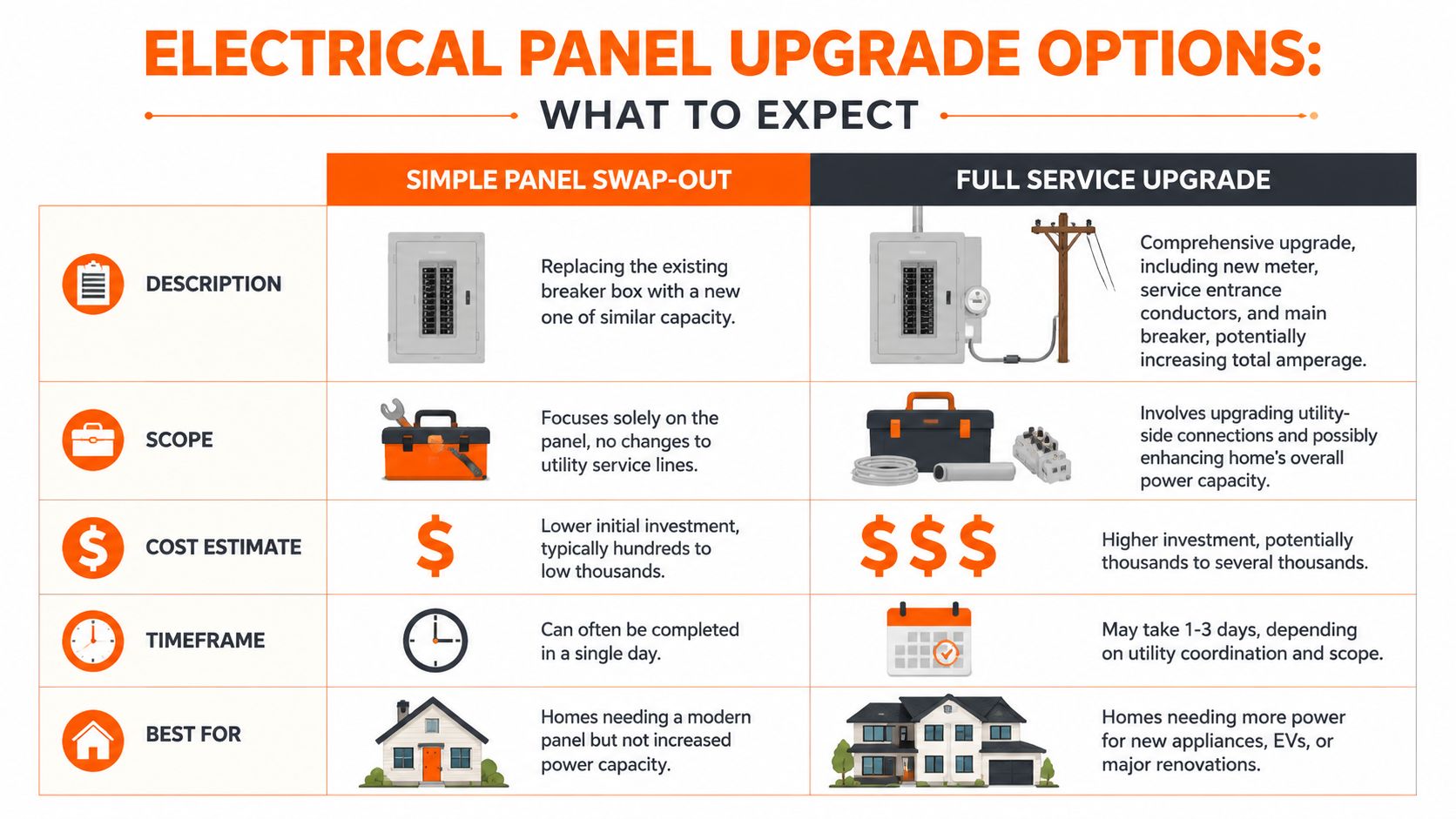
| Upgrade path | What it solves | What it usually involves |
|---|---|---|
| Panel swap-out | Replaces an old or unsafe panel of similar capacity | New panel, breakers, reconnecting existing circuits |
| Full service upgrade | Increases overall electrical service and supports bigger loads | Panel, meter or service equipment changes, utility coordination, inspection |
A panel swap-out fits homes where the service size is still adequate, but the existing panel is outdated, damaged, corroded, or no longer acceptable for safe expansion. A full service upgrade applies when the house needs more power from the utility, not just a newer box on the wall.
According to This Old House's panel upgrade cost guide, standard residential 100-to-200-amp panel upgrades typically cost between $1,300 and $3,000, while full service upgrades that involve utility coordination and underground wiring can range from $5,000 to $30,000. The same source notes that smart panel systems generally fall between $3,000 and $5,000, and slim breakers can avoid thousands in upgrade costs when a homeowner only needs one or two extra circuits.
In Southwest Florida, the spread in cost often comes down to site conditions. Underground service, meter can requirements, surge protection, code corrections, and utility coordination can all change the final number. Older homes in St. Petersburg, Bradenton, Sarasota, and Cape Coral also tend to reveal extra work once the cover comes off.
The overlooked option most guides skip
Many articles jump straight to full replacement. That is not always the right call.
If the panel has enough electrical capacity but no open spaces, a slim breaker may solve the problem at a much lower cost. This only works if the panel is listed and labeled for that breaker type, the load calculation allows the added circuit, and the installation still meets current code. Used correctly, it is a legitimate solution, not a shortcut. Homeowners comparing electrical panel space-saving breaker options often find this is the difference between a small correction and a major project.

Ask two direct questions before approving any quote: Do you need more amps, or do you only need more circuit spaces?
That distinction saves money and prevents undersized work.
How homeowners usually pay for the work
Electrical upgrades often show up in the middle of a larger remodel, after an insurance inspection, or during the purchase of an older Florida home. If the panel work is part of a broader renovation, some homeowners look at financing options such as New American Funding's rehab loans to combine eligible repair and improvement costs.
Some homeowners also prefer a direct contractor financing route. Heatwave Air Conditioning, Plumbing, & Electric offers financing options for home system work, including electrical projects, along with free estimates for new installations.
The smart move is to finance the right scope. Paying for a full service upgrade that the house does not need wastes money. Choosing the cheapest fix when the service is already maxed out usually leads to another project later, plus another permit, another inspection, and more labor.
The Upgrade Process From Start to Finish
The part homeowners remember most is not the new equipment. It is the day the lights go out, the panel cover comes off, and the house is temporarily without power in the Florida heat.
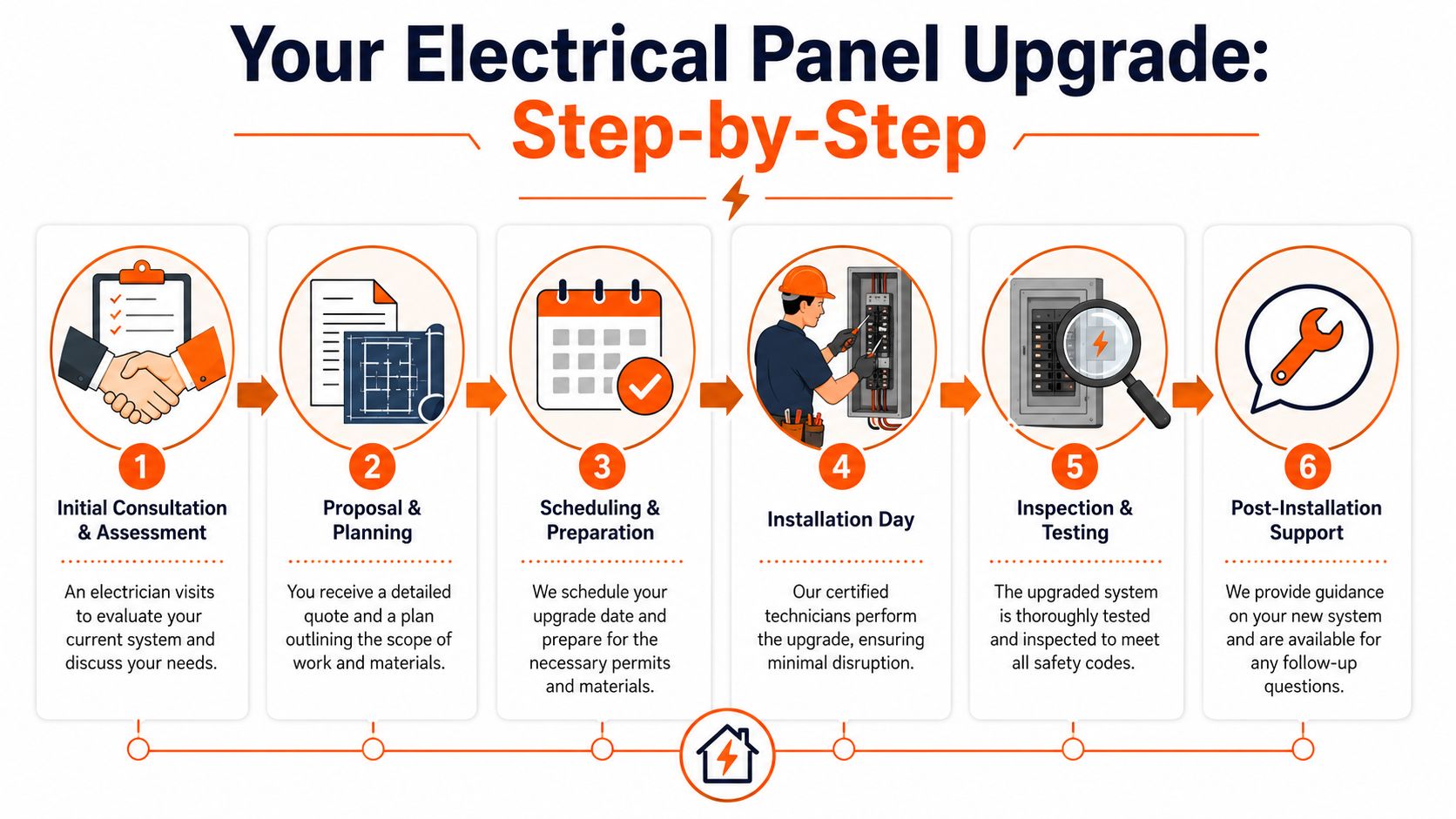
A well-run home electrical box upgrade should feel organized, not rushed. Before any tools come out, the electrician verifies the scope, confirms whether the job is a true service upgrade or a panel replacement, and checks whether a slim-breaker solution was ruled out for the right reasons. In Tampa Bay and Southwest Florida, that distinction matters. Some homes need more amperage. Others only need more circuit capacity and cleaner panel organization.
Before the work starts
The prep work decides whether installation day goes smoothly.
A licensed electrician should inspect the existing panel, review the service size, look for corrosion, overheating, improper bonding, damaged bus bars, double taps, and signs of water intrusion. In coastal Florida, salt air and humidity can shorten the life of older equipment, so the condition of the enclosure and terminations matters as much as the panel label.
Load calculation is part of that review, but it is not the only step. The contractor also needs to determine whether the meter can stay, whether the service mast or riser needs correction, and whether grounding and bonding meet current code. If the panel is indoors, access and wall condition should be checked before the workday so there are no surprises once power is off.
What happens on installation day
Most jobs follow a predictable sequence, even though the exact order can vary by utility and local inspection process.
- Arrival and job confirmation. The crew confirms the approved scope, panel location, and any circuits that need special attention, such as HVAC equipment, well pumps, pool gear, medical devices, or a home office.
- Power disconnect. Depending on the setup, service is shut down through utility coordination or an approved disconnect procedure.
- Removal and circuit identification. Existing circuits are traced, marked, and transferred carefully; otherwise, a rushed crew creates future headaches.
- New panel installation. The new enclosure is mounted, feeders and branch circuits are terminated, grounds and neutrals are separated or bonded correctly for the service type, and breaker sizing is checked against conductor size.
- Circuit labeling and testing. A proper directory is written in plain language. Then the electrician tests the circuits, verifies voltages, and checks that the panel is ready for inspection and utility reconnection if required.
Power is usually off for part of the day. Sometimes longer, if service equipment outside the home also needs work. Plan for refrigerators to stay closed, internet to be down, and garage door openers to be unavailable unless you use manual release. In Florida, I also tell homeowners to think ahead about air conditioning, especially if the job is scheduled during a hot, humid week.
Good preparation helps. Unplug sensitive electronics. Save work files. Let the electrician know ahead of time if someone in the home depends on powered medical equipment or if remote work cannot be interrupted.
The finished panel should look clean, readable, and deliberate. If you want a sense of what organized breaker layout and labeling look like, review these electrical panel space-saving breaker options, especially if your home may qualify for a slim-breaker approach instead of a full replacement.
Ask these questions before the crew starts: How long will the outage last, what work is happening at the meter and grounding system, and what could expand the scope once the panel is opened? Clear answers usually signal a contractor who has done this work properly in Florida homes before.
Navigating Permits and Inspections in Southwest Florida
In Tampa Bay and Southwest Florida, permit rules aren't optional paperwork. They're your proof that the work was reviewed, documented, and installed under the right standard.
That matters in places like Hillsborough, Pinellas, Sarasota, Lee, Charlotte, and surrounding jurisdictions because local processes can vary in timing, filing method, utility coordination, and inspection scheduling. The details change from county to county and city to city, but the principle is the same. A licensed contractor should pull the permit, schedule the inspection, and stand behind the work.
Why the permit protects you
Homeowners sometimes get tempted by an unpermitted panel swap because it sounds faster or cheaper. That shortcut creates problems.
- Safety risk. Electrical service work needs inspection because the hazards aren't always visible after the cover goes back on.
- Legal exposure. If work required a permit and none was pulled, that can create trouble during resale or after a loss.
- Insurance concerns. Carriers may ask whether major electrical work was permitted and finalized.
- No accountability. If someone does a “handyman special” and disappears, you're left with the problem.
What a proper Florida process usually looks like
A sound local process includes:
- Licensed load review that confirms the home's needs
- Permit filing with the authority having jurisdiction
- Utility coordination if the service must be disconnected or modified
- Inspection sign-off before the job is considered complete
In coastal Florida, I also tell homeowners to ask one more practical question. Has the contractor looked at the condition of the meter area, exterior equipment, and surrounding mounting surface? Salt air, humidity, age, and storm exposure can affect far more than the breakers inside the box.
A passed inspection isn't a formality. It's the closest thing you get to independent confirmation that the upgrade was done correctly.
Choosing a Licensed Electrician You Can Trust
A panel upgrade is one of those jobs where the lowest price can become the highest cost. The work touches the core of your home's electrical system, and mistakes don't stay neatly contained inside the panel.
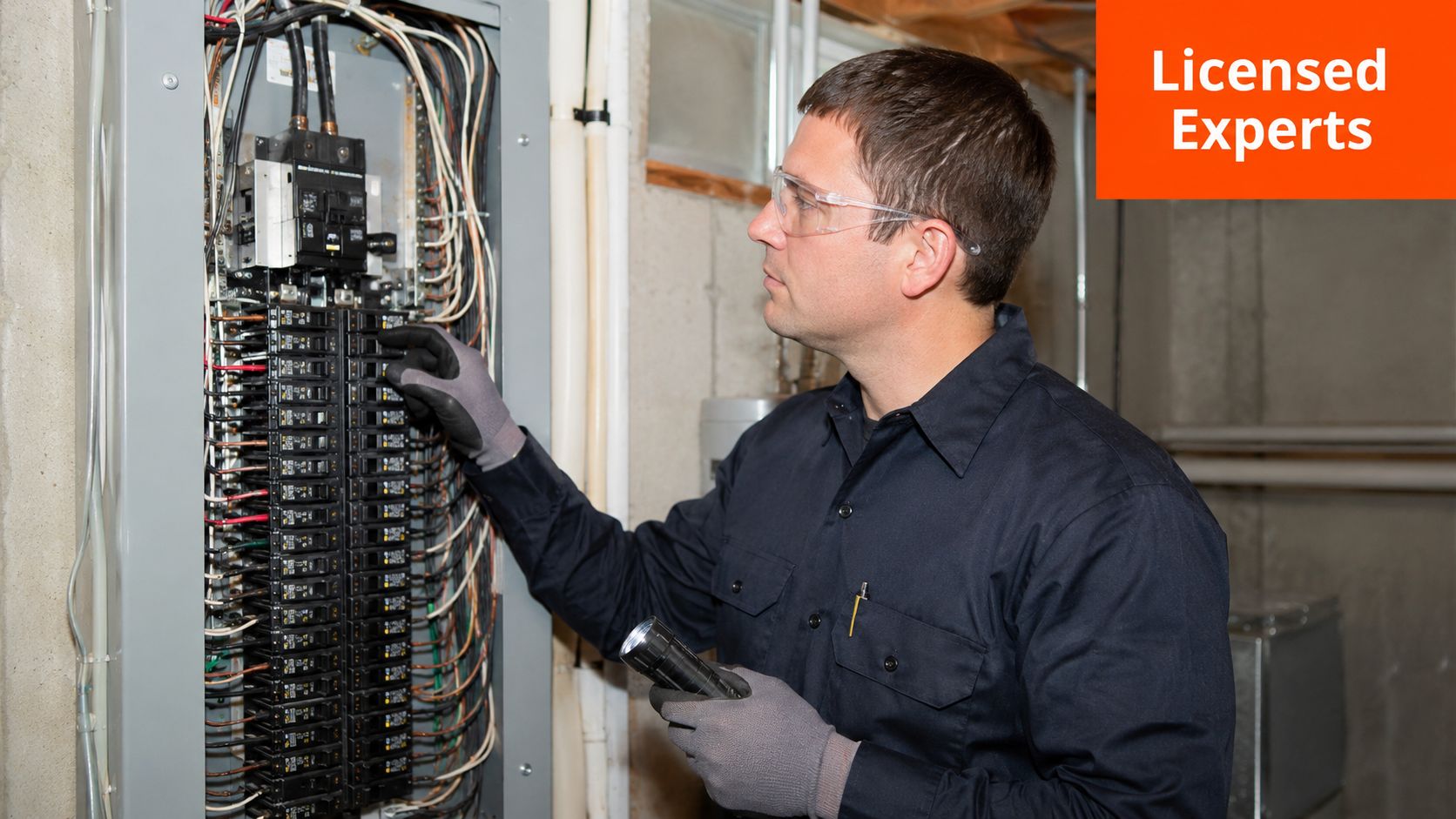
What to verify before you hire
Start with the essentials.
- Florida licensing and insurance. Ask for the contractor's license information and confirm they carry appropriate insurance.
- Specific panel experience. You want someone who does service equipment and panel replacements regularly, not someone who mostly changes fixtures and outlets.
- Permit handling. The contractor should pull the permit in their name, not ask you to sidestep the process.
- Clear scope. The quote should say whether it's a panel replacement, a service upgrade, or a troubleshooting visit to determine eligibility for alternatives like slim breakers.
- Detailed labeling and final testing. Good electricians don't leave mystery circuits behind.
Code knowledge matters more than sales talk
One area homeowners often don't hear enough about is protective device compliance. Modern work can involve requirements around AFCI and GFCI protection, depending on the circuits affected and the local code path being enforced. If the electrician can't explain how those protections apply to your project, keep looking.
The best electrician for this job is the one who can explain what must be done, what might be optional, and what definitely shouldn't be skipped.
That kind of clarity matters more than polished marketing.
Local reputation helps too. Reviews, referrals, and community presence can tell you whether a company finishes jobs well and handles follow-up professionally. For example, some homeowners like to review local media appearances or public-facing company materials such as this Tampa Bay interview image reference, but the definitive test remains the contractor's license, scope accuracy, permit discipline, and field experience.

One final point. If a contractor jumps straight to “you need a whole new service” without discussing load calculation, panel condition, and available space options, be cautious. A trustworthy electrician diagnoses first and sells second.
Frequently Asked Questions About Electrical Upgrades
How long will my power be out on the day of the upgrade
It depends on the scope, whether the utility has to coordinate a disconnect, and whether hidden issues are found once the panel is opened. For a straightforward job, the outage is often limited to the working window for the replacement and testing. Your electrician should give you a realistic plan before the date is set.
Is a home electrical box upgrade a DIY project
No. This is not optional. Panel and service work involve dangerous live equipment, local permitting rules, and inspection requirements. Even if a homeowner is comfortable doing basic electrical tasks, this is work for a licensed electrician.
Will a new electrical panel increase my home's value
It can improve marketability because buyers, insurers, and home inspectors tend to view updated electrical service as a positive. The bigger benefit is usually less visible. You get safer distribution, cleaner expansion options for future equipment, and fewer concerns during a sale inspection.
What's the difference between a fuse box and a breaker panel
A fuse box uses replaceable fuses that melt when a circuit overloads. A breaker panel uses resettable circuit breakers. Breaker panels are more practical for modern living, easier to manage, and better suited to current code expectations.
Can I add one circuit without replacing the whole panel
Sometimes, yes. If the panel is in good condition, listed for the correct breaker type, and the load calculation supports it, a slim breaker approach may create the needed space. That option has to be verified by an electrician. It's not a universal shortcut.
For homeowners who want one last confidence check before booking service, it can also help to scan recent customer review examples and compare how companies handle communication, scheduling, and follow-through.

If your breakers are tripping, your panel is outdated, or you're planning to add major electrical loads in Tampa Bay or Southwest Florida, Heatwave Air Conditioning, Plumbing, & Electric can help you evaluate the right next step, whether that's a full home electrical box upgrade, a service review, or a simpler code-compliant fix.