
Florida's sun and heat are relentless, driving up energy bills for homeowners across Tampa Bay and Southwest Florida. While air conditioning is a necessity, high utility costs don't have to be. Mastering your home's energy consumption is the key to unlocking significant savings and achieving year-round comfort. This guide provides practical, proven home energy efficiency tips specifically tailored for our hot and humid climate, moving beyond generic advice to give you actionable steps that deliver real results.
We'll cover everything from simple HVAC maintenance and thermostat strategies to strategic upgrades in insulation and water heating. Each tip is designed to lower your bills, enhance your comfort, and improve your home's overall value. Understanding the fundamentals is a great first step; to get started on reducing your energy footprint, explore a comprehensive guide on how to improve home energy efficiency.
Whether you're a homeowner in Tampa, Sarasota, Port Charlotte, or Cape Coral, these insights will empower you to take control of your energy usage starting today. By implementing these strategies, you can fight back against rising utility costs and create a more sustainable, comfortable living environment. Let's dive into the specific changes you can make to your home.
1. Install a Programmable or Smart Thermostat
One of the most effective home energy efficiency tips for any Florida homeowner is to gain control over their cooling schedule. A programmable or smart thermostat automates your home's temperature, eliminating wasted energy from cooling an empty house. Instead of a manual thermostat that runs constantly, these devices adjust based on your daily routines.
Smart thermostats from brands like Nest and Ecobee take this a step further. They learn your household's patterns and can even be controlled remotely from your smartphone. This simple upgrade is a powerhouse for savings in the Tampa Bay area, where air conditioning accounts for a huge portion of utility bills.
How to Maximize Your Savings
To get the most out of your new thermostat, thoughtful programming is key. A few adjustments can yield significant results:
- Set a Schedule: Program the temperature to be around 78°F when you are home and 82°F or higher when you are away or sleeping during the summer.
- Use Smart Features: Enable geofencing so your system automatically adjusts when you leave or are about to return home.
- Review Energy Reports: Most smart thermostats provide monthly reports. Use this data to identify when your energy use is highest and find opportunities for further adjustments.
Pro Tip: Proper installation and calibration are crucial for your thermostat to communicate effectively with your HVAC system. Incorrect wiring can lead to inefficiencies or even damage.
For homeowners in Sarasota, Port Charlotte, and beyond, this upgrade offers a tangible return on investment. Many see a 15-20% reduction in their cooling costs. If you're looking to integrate a new device with your existing equipment, you can learn more about smart home HVAC technology and how professional installation ensures peak performance. For expert installation, call Heatwave to get it done right.
2. Upgrade to Energy-Efficient Air Conditioning Units
Given that air conditioning is the single largest energy expense for most Florida homeowners, upgrading an outdated system is one of the most impactful home energy efficiency tips you can follow. Modern, high-efficiency AC units use advanced technology to deliver superior cooling with significantly less electricity consumption compared to systems that are 10-15 years old.
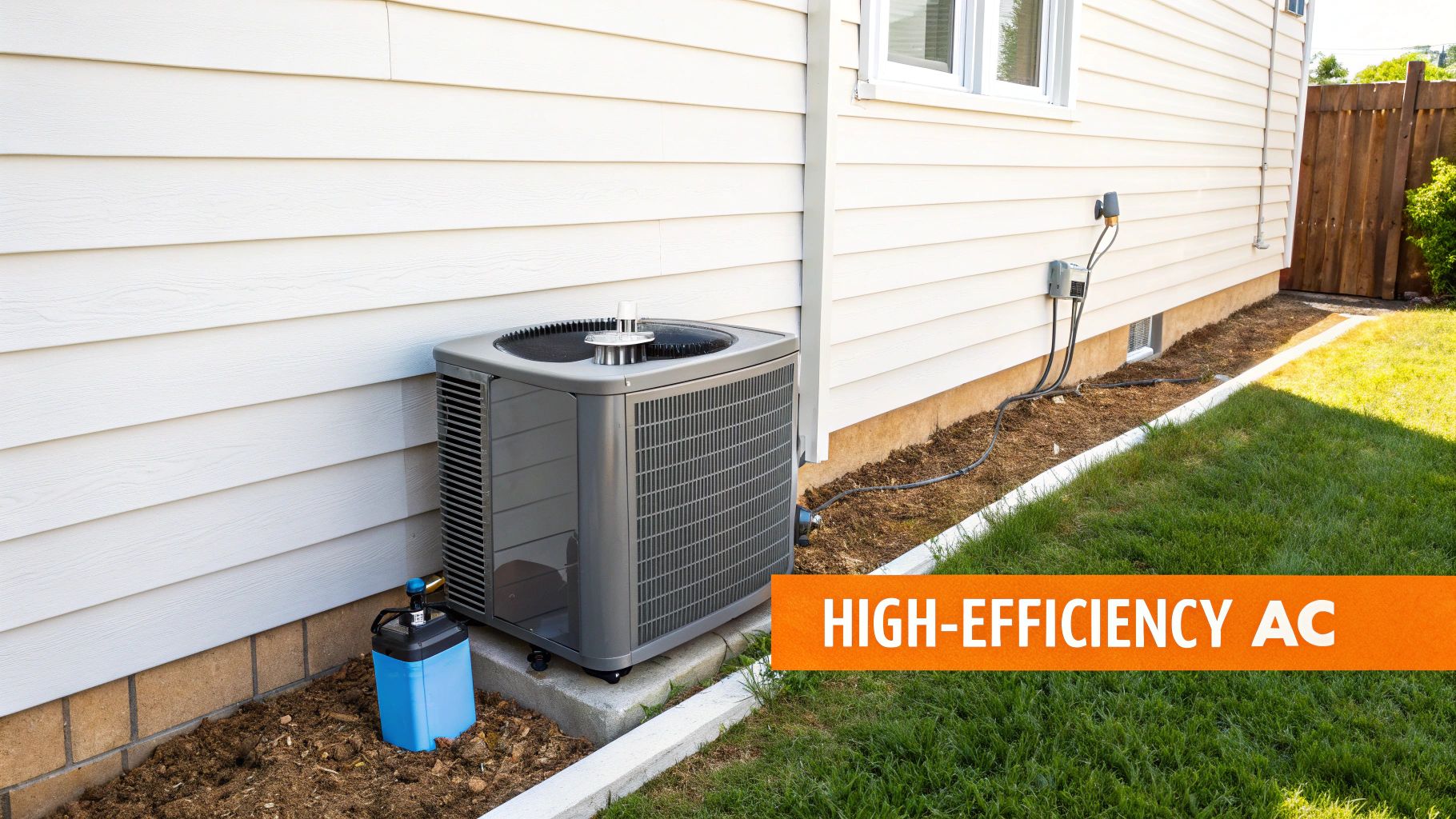
The efficiency of new systems is measured by a SEER2 (Seasonal Energy Efficiency Ratio 2) rating. A higher number indicates greater efficiency. For homeowners in Cape Coral or Fort Myers, replacing a 1990s-era unit with a modern SEER2 15+ system can result in monthly savings of $50 or more during peak cooling season.
How to Maximize Your Savings
Choosing the right unit and ensuring proper installation are critical to unlocking the full potential of a high-efficiency AC system.
- Compare SEER2 Ratings: While the minimum standard is 14.3 SEER2 in our region, opting for a higher rating like 16 or 18 provides greater long-term savings that offset the initial cost.
- Ensure Proper Sizing: An oversized or undersized unit will run inefficiently. A professional load calculation from Heatwave ensures the system is perfectly matched to your home's specific needs.
- Ask About Rebates: Inquire about federal tax credits, local utility rebates, and manufacturer promotions available in the Port Charlotte area that can lower your upfront investment.
Pro Tip: Don't wait for your old unit to fail in the middle of a July heatwave. Proactively scheduling an upgrade in the spring or fall often provides more scheduling flexibility and better pricing.
An energy-efficient AC upgrade provides an immediate and substantial reduction in your monthly utility bills. To see what systems are available and how to select the best one for your budget and home, you can get details from our ultimate guide on how to choose the right HVAC system for your home. For a professional assessment and installation, call Heatwave today.
3. Seal Air Leaks and Improve Insulation
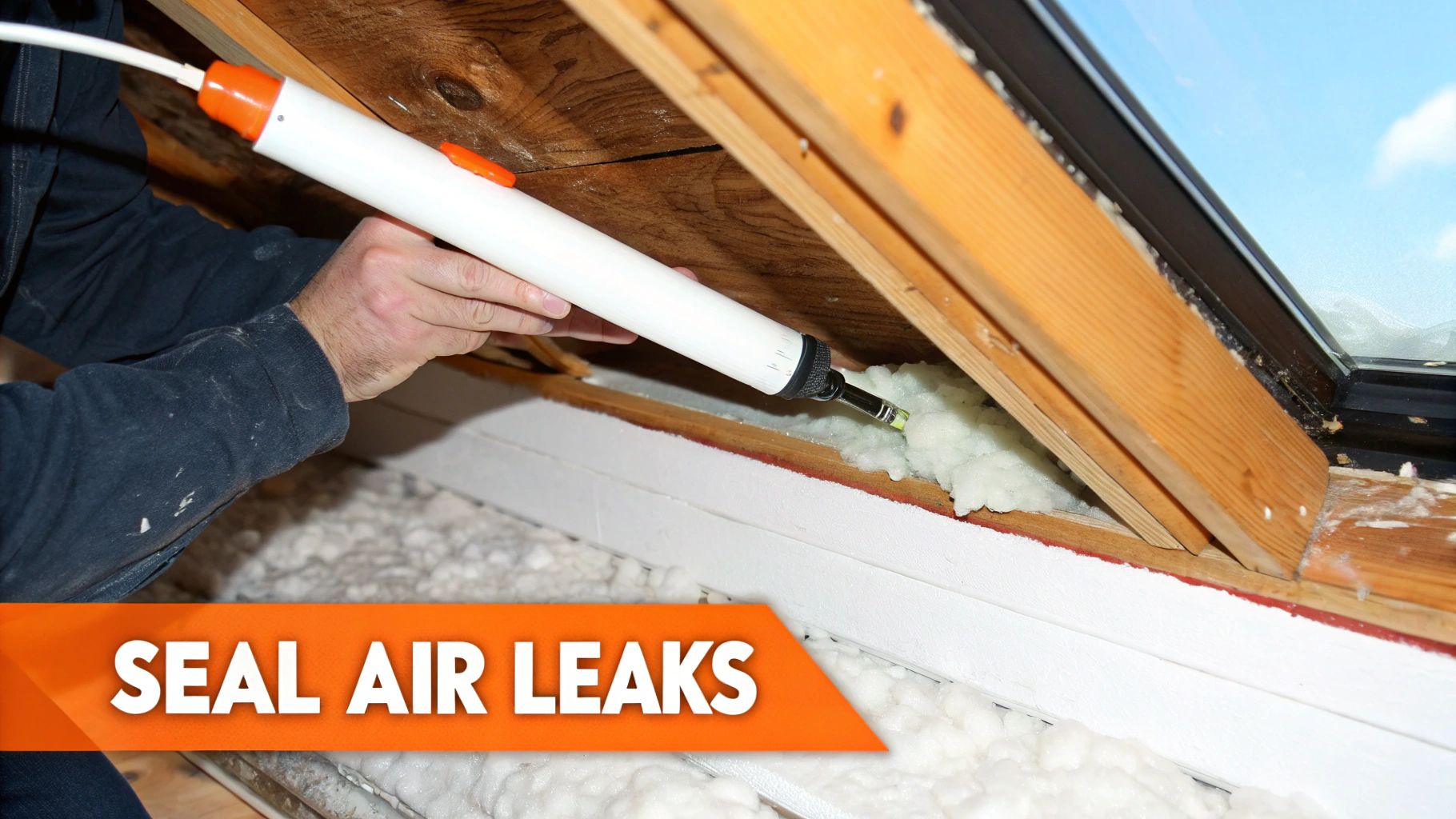
One of the most overlooked home energy efficiency tips is preventing the air you pay to cool from escaping. Air leaks around windows, doors, and electrical outlets allow conditioned air to seep out while hot, humid Florida air infiltrates your home. Proper insulation and air sealing work together to create a tight thermal envelope, drastically reducing how hard your HVAC system must work to maintain a comfortable temperature.
This is especially critical in Florida, where relentless heat gain from the attic and walls can overwhelm an otherwise efficient AC unit. Sealing these gaps and ensuring adequate insulation is like closing a window you didn't know was open, keeping cool air inside where it belongs. Many Fort Myers homeowners see a 15% reduction in AC cycling after a professional duct sealing, directly translating to lower energy bills and improved comfort.
How to Maximize Your Savings
Finding and sealing these energy drains is a straightforward process that delivers immediate benefits:
- Perform a Visual Inspection: Start by checking for obvious gaps around window frames, door thresholds, and where plumbing or electrical wiring enters your home.
- Feel for Drafts: On a hot day, carefully feel around the edges of windows and doors. Any noticeable temperature difference or air movement indicates a leak that needs sealing.
- Prioritize Ductwork: Leaks in ductwork running through unconditioned spaces like attics or crawlspaces are a major source of energy waste. Use mastic sealant or foil tape to seal all connections.
- Replace Weather Stripping: The seals around your doors and windows degrade over time. Plan to replace worn weather stripping every 3-5 years to maintain a tight seal.
Pro Tip: For a comprehensive assessment, a professional energy audit using thermal imaging can pinpoint hidden air leaks and insulation deficiencies that a visual inspection would miss.
For homes in Tampa Bay, Sarasota, and surrounding areas, addressing air leaks and insulation is a foundational step toward lower utility bills and a more comfortable indoor environment. A well-sealed home not only saves money but also improves indoor air quality by reducing the entry of pollen and dust. To have your ductwork professionally sealed and inspected, call Heatwave for expert service.
4. Install Window Treatments and Upgrade Windows
Your windows are a major source of heat gain in Florida, acting like magnifying glasses for the sun's powerful rays. This solar heat gain forces your air conditioner to work overtime, inflating cooling costs. Installing high-performance window treatments like cellular shades or applying reflective window film reduces this heat penetration while still allowing natural light into your home. This is one of the most vital home energy efficiency tips, especially for homes in Cape Coral with western-facing exposures.
For a permanent solution, upgrading to high-performance windows with low-E (low-emissivity) coatings offers a dramatic improvement. These modern windows are designed specifically for hot climates, blocking solar heat while insulating your cooled air. In Sarasota beachfront properties, for instance, impact-resistant, low-E windows serve a dual purpose of storm protection and energy savings.
How to Maximize Your Savings
Targeting the right windows and using treatments effectively will yield the best results:
- Prioritize Problem Areas: Focus first on west and south-facing windows, as they receive the most direct and intense sunlight throughout the day.
- Use Treatments Correctly: Keep cellular shades and blackout curtains closed during the hottest parts of the day. Understanding how effectively blackout curtains help with heat can guide your choices for bedrooms and media rooms.
- Choose the Right Film: Select a UV-protective window film that offers high solar heat rejection without significantly darkening your rooms.
- Consider Exterior Shading: Awnings, shutters, or solar screens installed on the outside of the window offer the maximum level of heat-blocking protection.
Pro Tip: Combining smart window treatments with your smart thermostat can create a coordinated cooling strategy. Program shades to close automatically during peak sun hours, reducing the load on your HVAC system.
Many homeowners who implement these strategies see interior temperatures drop by several degrees, leading to significant savings on their utility bills. For a comprehensive home energy audit that includes window performance, call Heatwave to identify your biggest opportunities for savings.
5. Maintain Your HVAC System with Regular Tune-ups
One of the most essential home energy efficiency tips is often the most overlooked: routine preventative maintenance. Just like a car, your HVAC system requires regular tune-ups to operate at peak performance. This service, which includes cleaning coils, checking refrigerant levels, and inspecting electrical components, ensures your system runs efficiently, using 5-15% less energy than a neglected unit.
In Florida's hot and humid climate, dust, pollen, and debris accumulate quickly, forcing your system to work harder and consume more power. Customers in the Tampa Bay area who consistently maintain their units see annual savings of 10-12%. More importantly, preventative maintenance helps catch small issues before they become catastrophic failures, preventing costly emergency repairs in the middle of a Fort Myers summer.
How to Maximize Your Savings
A proactive approach to maintenance is the best way to keep your system running smoothly and your utility bills low. A few simple habits can make a big difference:
- Schedule Biannual Tune-Ups: Arrange for professional service before the primary cooling season (around March or April) and again before the brief heating season (October or November).
- Check Your Air Filter Monthly: A clogged filter restricts airflow and is a leading cause of system inefficiency and failure. Set a calendar reminder to check it and replace it when dirty.
- Keep the Outdoor Unit Clear: Ensure the area around your outdoor condenser is free of leaves, grass clippings, and vegetation. Maintain at least two feet of clearance for proper airflow.
Pro Tip: Upgrading to a high-MERV filter (MERV 11-13) can improve indoor air quality, but make sure your system is rated to handle the increased resistance to avoid straining the fan motor.
For homeowners from Sarasota to Cape Coral, an annual service plan is the simplest way to guarantee reliability and efficiency. You can discover the full benefits of a professional AC tune-up and see how it protects your investment. To enroll in a maintenance plan, call Heatwave today.
6. Upgrade to Energy-Efficient Water Heating
After air conditioning, water heating is typically the second-largest energy expense in a Florida home. Upgrading your conventional tank-style water heater is one of the most impactful home energy efficiency tips you can implement. Modern systems like tankless, heat pump, or solar water heaters dramatically reduce consumption and operating costs.
Tankless systems heat water on-demand, eliminating the standby energy losses of keeping 40 or 50 gallons hot 24/7. Heat pump water heaters are exceptionally efficient in Florida, using the ambient warmth in your garage or utility space to heat water. Homeowners in Cape Coral and Port Charlotte often see monthly savings of $50 or more after making this switch.
How to Maximize Your Savings
Beyond the upgrade itself, a few strategic habits can amplify your energy and water savings:
- Insulate Your Pipes: Wrap the first six feet of hot and cold water pipes connected to your water heater to reduce heat loss.
- Lower the Temperature: Set your water heater's thermostat to 120°F. This is hot enough for most household needs and reduces both energy use and the risk of scalding.
- Reduce Hot Water Usage: Install low-flow showerheads and faucets. This simple change reduces the total volume of hot water your new system needs to produce.
Pro Tip: Heat pump water heaters are ideal for Florida's climate but require adequate airflow and space for peak performance. Professional assessment ensures you choose the right model and location.
For many homeowners, the upfront investment pays for itself quickly through lower utility bills. If you’re considering an upgrade, you can learn more about water heater replacement costs and signs it's time for a new one. For expert installation of a high-efficiency system, call Heatwave to explore your options.
7. Use Energy-Efficient Lighting Throughout Your Home
One of the simplest yet most impactful home energy efficiency tips is upgrading your home’s lighting. Swapping old incandescent or fluorescent bulbs for modern LED (Light Emitting Diode) technology can reduce your lighting-related energy consumption by an incredible 75-85%. LEDs also produce significantly less heat, a crucial benefit in Florida where any extra heat adds to your air conditioner's workload.
This upgrade offers a rapid return on investment. Beyond the energy savings, LEDs last 15-25 times longer than traditional bulbs, meaning you’ll spend less time and money on replacements. Homeowners across the Fort Myers and Cape Coral areas often see their overall electricity usage drop by 10-15% just from making this one change.
How to Maximize Your Savings
A strategic approach to upgrading your lighting will yield the best results and enhance your home’s comfort:
- Prioritize High-Use Areas: Start by replacing bulbs in the most frequently used fixtures, such as those in your kitchen, living room, and outdoor security lights.
- Choose the Right Color Temperature: Use "warm white" (around 2700K) LEDs for a cozy, inviting atmosphere in living rooms and bedrooms. Opt for "bright white" (4000K-5000K) for task-oriented spaces like kitchens and bathrooms.
- Add Smart Controls: Install motion sensors or timers for lights in hallways, closets, and bathrooms to ensure they are only on when needed.
- Check Dimmer Compatibility: If you have dimmer switches, make sure you purchase LED bulbs that are specifically labeled as "dimmable" to avoid flickering or poor performance.
Pro Tip: Upgrading recessed can lighting or complex fixtures can sometimes involve more than just changing a bulb. Rewiring or fixture replacement may be necessary for optimal performance and safety.
For homeowners looking for a comprehensive lighting retrofit, professional guidance ensures you select the right products and install them correctly. From simple bulb swaps to advanced smart lighting systems, call Heatwave to brighten your home and lower your energy bills.
8. Optimize Ceiling Fans for Better Cooling Efficiency
Ceiling fans don't actually lower the temperature of a room, but they are a powerful tool for improving your home energy efficiency. By creating a wind-chill effect, fans help you feel cooler, allowing you to raise your thermostat setting without sacrificing comfort. A fan uses significantly less electricity than your air conditioner, making this a smart and cost-effective strategy.
In places like Cape Coral and Port Charlotte, where the heat is relentless, combining fans with your AC is a game-changer. This simple partnership allows homeowners to reduce air conditioning run times, directly lowering utility bills. The goal is to make you feel comfortable at a higher thermostat temperature, saving your AC from working overtime.
How to Maximize Your Savings
Using your ceiling fans correctly is essential to unlocking their full energy-saving potential. A few simple practices can make a big difference:
- Set the Right Direction: Ensure your fan blades rotate counter-clockwise during the summer. This pushes cool air downward, creating the desired breeze.
- Adjust Your Thermostat: When fans are running in occupied rooms, set your thermostat 4°F to 6°F higher than you normally would. You’ll feel just as comfortable while your AC runs less often.
- Turn Them Off in Empty Rooms: Fans cool people, not rooms. Remember to turn them off when you leave a room to avoid wasting electricity.
- Pair with Automation: Combine your fans with a smart thermostat to create an automated cooling schedule that maximizes efficiency, especially during evening hours.
Pro Tip: For optimal airflow and safety, ensure your ceiling fan is installed at least 8 feet from the floor. Larger rooms may benefit from multiple fans or a larger blade span to circulate air effectively.
This strategy is one of the easiest and most affordable home energy efficiency tips to implement. If you need professional installation to ensure your fans are properly balanced and wired for peak performance, especially in rooms with high ceilings, the experts at Heatwave can help. For professional electrical services, call Heatwave today.
9. Reduce Hot Water Usage with Efficient Plumbing Fixtures
Your water heater is one of the biggest energy consumers in your home, right after your HVAC system. A simple yet powerful way to slash these costs is to reduce your overall hot water consumption. Installing low-flow plumbing fixtures, such as WaterSense-certified showerheads and faucets, directly cuts down on the amount of water your system needs to heat.
Modern efficient fixtures maintain strong water pressure while using significantly less volume. For example, federal standards limit new showerheads to 2.0 gallons per minute (GPM), a stark contrast to older models that could use 5 GPM or more. In Florida’s humid climate, this also has the added benefit of reducing excess moisture inside your home, which helps your air conditioner run more efficiently.
How to Maximize Your Savings
Small changes to your plumbing fixtures can lead to substantial savings on both your water and energy bills. Start with these targeted upgrades:
- Upgrade Key Fixtures: Begin by replacing your most frequently used showerheads and faucets. Look for fixtures with the WaterSense label to guarantee efficiency.
- Install Faucet Aerators: This is a cheap and simple DIY project. Aerators mix air into the water stream, reducing flow without sacrificing pressure, and can be installed on most existing faucets.
- Fix Leaks Immediately: A single dripping hot water faucet can waste dozens of gallons of heated water per week. Prompt repairs are essential for any home energy efficiency tips.
Pro Tip: Your water heater’s temperature setting is critical. Setting it to 120°F provides sufficiently hot water for most households while preventing scalding and reducing standby energy loss.
Families in Fort Myers and Cape Coral have seen dramatic reductions in their utility bills just by upgrading to efficient fixtures. Whether you need a simple fixture replacement or want to address persistent leaks, the expert plumbers at call Heatwave can help you implement these savings strategies correctly.
10. Control Humidity Levels for Better AC Efficiency
In Florida’s climate, high humidity is just as much a comfort issue as high temperature. When indoor air is heavy with moisture, it feels warmer than the thermostat reading, prompting you to lower the temperature and run your AC longer. One of the most underrated home energy efficiency tips is managing this moisture to improve both comfort and system performance.
Proper humidity control allows you to set your thermostat higher while feeling just as cool, reducing the strain on your air conditioner. For coastal properties in Port Charlotte, a whole-home dehumidifier can prevent mold growth, while Cape Coral homes can maintain comfort at 78°F even on the most humid days. This strategic approach directly lowers energy consumption by letting your AC run less.
How to Maximize Your Savings
Achieving the ideal humidity level involves a few key practices that work together to remove excess moisture from your home:
- Target Ideal Levels: Aim to keep your indoor relative humidity between 35% and 50%. A simple hygrometer can help you monitor these levels.
- Ventilate Moisture Sources: Run kitchen and bathroom exhaust fans while cooking or showering and for 30 minutes afterward to expel humid air directly outside.
- Check AC Performance: An improperly charged AC unit won't dehumidify effectively. Regular professional maintenance ensures it's operating at peak efficiency.
Pro Tip: Your air conditioner is the primary dehumidifier in your home. If it's oversized or short-cycling, it won't run long enough to remove adequate moisture, leaving your home feeling sticky and damp.
For homeowners in the Tampa Bay area, integrating a dedicated dehumidification system can make a significant difference. You can discover more about whole-home dehumidifiers and how they complement your existing HVAC system. For a professional evaluation of your home’s humidity, call Heatwave to find the right solution.
10-Point Home Energy Efficiency Tips Comparison
| Item | Implementation complexity | Resource requirements | Expected outcomes | Ideal use cases | Key advantages |
|---|---|---|---|---|---|
| Install a Programmable or Smart Thermostat | Low–Medium (simple install but needs compatibility) | $200–$400; Wi‑Fi and smartphone; optional pro install | 10–23% HVAC energy savings; better comfort and usage insights | Central HVAC homes, occupants with variable schedules or remote control needs | Automated scheduling, remote control, adaptive learning |
| Upgrade to Energy‑Efficient Air Conditioning Units | High (sizing, selection, professional installation) | $4,000–$8,000+; possible duct upgrades; licensed HVAC labor | 20–40% cooling cost reduction vs older units | Homes with aging AC, high cooling demand, long‑term owners | Major efficiency gains, improved performance, rebates/tax credits |
| Seal Air Leaks and Improve Insulation | Medium (diagnostics and targeted sealing/insulation) | $300–$1,500; materials; professional for attic/duct work | 10–20% HVAC runtime reduction; quick payback (1–3 years) | Homes with drafts, poor attic insulation, leaky ducts | Low cost, fast payback, improves comfort and moisture control |
| Install Window Treatments and Upgrade Windows | Medium–High (films/shades easy; replacements major) | Films/shades low–moderate; full replacements $3,000–$10,000+; pro install often required | 15–25% cooling cost reduction in high‑sun orientations | West/south‑facing windows, sun‑exposed rooms, homes facing glare | Reduces solar heat gain & UV, improves comfort, protects interiors |
| Maintain Your HVAC System with Regular Tune‑ups | Low (routine tasks; some require technician) | $150–$300/yr; filter costs; annual pro service | 5–15% efficiency improvement; fewer breakdowns; longer equipment life | All HVAC homes, especially older systems or heavy‑use climates | Preventative care, improved reliability, modest cost |
| Upgrade to Energy‑Efficient Water Heating | Medium–High (system change may need plumbing/electrical work) | $1,500–$5,000+; roof space for solar; pro installation | 30–50% water heating energy reduction (varies by tech) | Homes with high hot water use, suitable roof/space, long‑term owners | Large water heating savings, tax incentives, longer equipment life |
| Use Energy‑Efficient Lighting Throughout Your Home | Low (simple bulb swaps; some fixtures may need fitting) | $2–$15 per LED bulb; smart/light control systems cost more; DIY possible | 75–85% lighting energy savings; ~10–15% overall electricity reduction | Homes with incandescent/fluorescent bulbs, high lighting hours | Immediate ROI, long lifespan, reduced heat contribution to AC |
| Optimize Ceiling Fans for Better Cooling Efficiency | Low–Medium (installation modest; wiring may be needed) | $150–$400 per fan; minor electrical work if replacing fixture | 10–20% potential cooling cost reduction when paired with thermostat adjustments | Occupied living/bedrooms where occupants can use fans | Very low operating cost, quick payback, improves perceived comfort |
| Reduce Hot Water Usage with Efficient Plumbing Fixtures | Low (fixture replacement straightforward) | $25–$150 per fixture; minor plumbing adjustments possible | 15–30% water heating energy reduction; large water savings | Homes with high hot‑water use, rentals, older inefficient fixtures | Low cost, reduces water bills, easy and fast to implement |
| Control Humidity Levels for Better AC Efficiency | Medium–High (portable options easy; whole‑home systems complex) | Portable dehumidifiers low cost; whole‑home $2,500–$5,000; ongoing maintenance | 10–15% HVAC energy reduction; allows higher thermostat setpoints and mold prevention | Very humid climates, coastal homes, mold‑prone properties | Improves comfort/air quality, reduces mold risk, lowers AC strain |
Partner with Heatwave for a Cooler, More Efficient Home
You've now explored a comprehensive blueprint for transforming your Florida residence into a bastion of efficiency. From simple adjustments like optimizing your ceiling fans to more significant investments such as upgrading your HVAC system, each of these home energy efficiency tips offers a direct path to lower utility bills and superior indoor comfort. The journey toward an energy-efficient home is not about tackling everything at once; it's about making strategic, incremental improvements that build upon each other.
Recapping the most impactful strategies, we see a clear pattern: controlling where your conditioned air goes and reducing the workload on your major appliances. Sealing air leaks, enhancing insulation, and ensuring your ductwork is intact form the foundational defense against our region's intense heat and humidity. Likewise, a well-maintained, high-efficiency AC unit paired with a smart thermostat works smarter, not harder, to keep you cool.
From Knowledge to Action: Your Next Steps
The power of this knowledge lies in its application. Your immediate next step is to conduct a simple walk-through of your home. Can you implement a quick fix today, like reversing your ceiling fans or installing low-flow showerheads? Identifying these low-effort, high-reward tasks can build momentum for larger projects.
For those more complex and impactful upgrades, professional expertise is not just a convenience; it's a necessity for ensuring safety, maximizing efficiency, and securing long-term performance. Tasks like installing a new HVAC system, upgrading your home’s electrical panel for new appliances, or replacing a water heater involve intricate connections and code requirements that demand a certified touch. This is where a trusted partner becomes your most valuable asset.
The Heatwave Advantage: Your Local Energy Experts
Embracing these home energy efficiency tips is a significant step toward taking control of your home's performance and your budget. The benefits extend far beyond your wallet, creating a more comfortable, sustainable, and resilient living environment for you and your family. Rather than passively accepting high energy costs as a consequence of living in paradise, you can actively shape a home that works for you.
At Heatwave, we understand the unique challenges Florida homeowners face, from relentless humidity to scorching summer heat. Our integrated team of HVAC, plumbing, and electrical experts provides holistic solutions tailored to the specific needs of your home. We don’t just fix problems; we create efficient systems that deliver lasting value. By partnering with us, you gain access to nearly two decades of local expertise dedicated to helping you achieve your energy-saving goals.
Ready to turn these tips into tangible savings? Schedule a comprehensive home energy assessment or a system tune-up with our certified technicians. Contact Heatwave Air Conditioning, Plumbing, & Electric today to get a free estimate and discover how our expert services can help you implement the most effective home energy efficiency tips for your Southwest Florida home.