
When you've got an electrical problem on your hands, whether it's flickering lights or a dead outlet, the first impulse is always to get it fixed now. But before you jump on the first name you find, it's critical to remember what's at stake.
Where to Begin: Finding a Pro You Can Trust
Rushing to hire an electrician without doing your homework can lead to more than just a bad repair job. We're talking about serious risks, from fire hazards caused by shoddy wiring to being left on the hook financially if something goes wrong.
Finding the right electrician isn’t about who’s cheapest or can get there the fastest. It’s about finding someone who is safe, reliable, and accountable. Your home's electrical system is its nerve center, and one wrong move can endanger your property and your family.
The Non-Negotiables: What Every Electrician Must Have
Before you even consider calling someone, make sure they meet three absolute must-haves. If an electrician can’t check these boxes, they shouldn't be on your list. Period.
- Proper Licensing: In Florida, any electrician performing work legally must be licensed by the state. This isn’t just a formality—it’s proof of extensive training, hands-on experience, and passing a tough exam. Never, ever hire someone who is unlicensed.
- Comprehensive Insurance: A true professional will carry both general liability and workers' compensation insurance. This is your safety net. It protects you from being held financially responsible if an accident causes damage to your property or if a worker gets injured on the job.
- A Solid Local Reputation: A great reputation is built over years of doing high-quality, dependable work. Look for companies that have been serving the Tampa Bay area for a long time and have positive feedback from your friends and neighbors.
Key Takeaway: The difference between a qualified professional and a "handyman" is safety and accountability. A licensed, insured electrician is accountable for their work, while an unvetted individual leaves you with all the risk.
For many homeowners, especially when facing an emergency or a complex project, the best move is to partner with a full-service provider right from the start. Companies that handle a complete range of home services already have strict vetting processes in place. This ensures every technician they send to your home is qualified, trustworthy, and ready to do the job right.
This approach takes the guesswork out of your search and gives you immediate peace of mind. If you need help with anything from a small repair to a major installation, you can learn more about professional electrical services that put safety and quality first.
How to Verify an Electrician's Credentials
You’ve gathered a few names, which is a great start. Now, it’s time to dig a little deeper than a neighbor’s recommendation. Never just take a contractor's word for it—always do your own due diligence. This is the crucial step where you confirm they have the proper licensing and insurance to work in your home safely and legally.
An electrician’s claims are one thing, but official documents tell the real story. The single most important credential to check is their state license. Here in Florida, for instance, becoming a licensed electrical contractor is no walk in the park. It requires thousands of hours of documented experience and passing a tough state exam, which is a solid benchmark for competence and professionalism.
This flowchart breaks down the vetting process. It's a simple gut-check to see if you're on the right track.
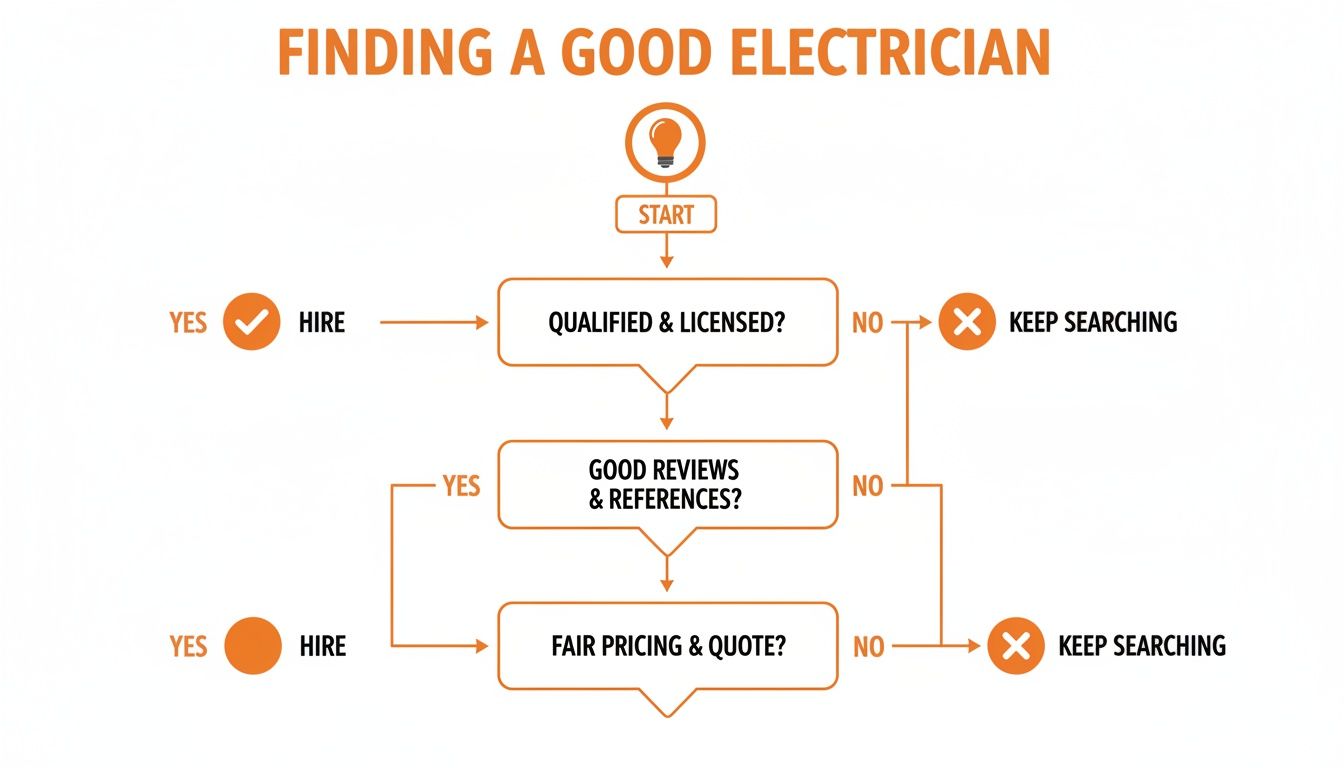
As you can see, if a potential electrician doesn't tick these essential boxes, the smartest move is to simply keep looking.
Confirming Insurance and Bonding
Beyond a license, proper insurance is an absolute deal-breaker. A legitimate electrician needs to carry two specific types of coverage to fully protect you, your home, and their team.
- General Liability Insurance: This is what covers any damage to your property. If a technician makes a mistake and starts a small fire while working on your electrical panel, their liability insurance pays for the repairs, not your homeowner's policy.
- Workers' Compensation: This protects you if an electrician or one of their crew members gets hurt on your property. Without it, you could find yourself on the hook for their medical bills and lost income.
You should also ask if the company is bonded. A surety bond is basically a financial safety net for you. It guarantees the contractor will finish the job according to your agreement and follow all local codes. It’s an extra layer of security that separates the pros from the rest.
Pro Tip: Always ask for a Certificate of Insurance (COI) and make sure it comes directly from their insurance provider, not from the electrician. This is the only way to verify their policies are active and the coverage is adequate. A reputable contractor will have no problem with this request.
Before you hire, it's helpful to have a clear checklist to follow. Use this table to make sure you've covered all the essential verification steps.
Electrician Vetting Checklist
| Verification Item | What to Look For | Why It Matters |
|---|---|---|
| State License | An active, current electrical contractor license number. Verify it on the state licensing board's website. | Confirms they meet the state's minimum requirements for knowledge, experience, and legal operation. |
| General Liability | A valid Certificate of Insurance (COI) showing active coverage. Check the policy limits. | Protects your property from accidental damage caused by the electrician during the job. |
| Workers' Comp | A COI confirming active workers' compensation insurance. | Shields you from financial liability if a worker is injured on your property. |
| Bonding | Confirmation that the company is bonded. | Provides a financial guarantee that the job will be completed correctly and to code. |
Running through this checklist for each candidate gives you a clear, objective way to compare them and ensures you haven’t missed a critical detail.
Why This Vetting Process Is So Important
Skipping these checks can lead to disastrous consequences. Faulty electrical work is a major cause of house fires, and hiring an unlicensed individual puts your home at immense risk.
The demand for skilled, certified electricians is climbing fast. The U.S. electrical services market hit USD 163.9 billion in 2024 and is expected to soar to USD 294.6 billion by 2034. Industry data reveals that unlicensed or improper installations contribute to around 30% of all electrical fires, which really underscores the danger.
Beyond the paperwork, it's also about finding someone trustworthy. Many of the same principles for spotting a pro apply across the trades, whether you’re looking for an electrician or learning how to tell if you've got the right appliance technician. Ultimately, taking these steps to verify a professional protects your home and family, which is why we always stress the importance of regular electrical inspections.
Using Your Local Network for Trusted Referrals
Before you dive into a sea of online ads and search results, your best bet for finding a great electrician is probably right in your own backyard. Word-of-mouth recommendations are pure gold, especially when they come from people you trust to have the same standards you do.

Think about it. A referral from a neighbor in Port Charlotte or a friend over in Cape Coral is worth way more than a paid ad. These folks have firsthand experience and can give you the real scoop on what it’s actually like to have that contractor in their home.
The numbers back this up, too. The U.S. electrical contracting industry is massive, with over 252,000 businesses competing for your attention. A personal recommendation cuts right through that noise. It’s no surprise that 92% of consumers trust word-of-mouth over any other form of advertising. Starting your search close to home just makes sense.
Asking the Right Questions
When someone gives you a name, don't just stop at, “Were they good?” You need to dig a little deeper to understand what their experience was really like.
Get into the details with questions like these:
- Punctuality and Professionalism: Did they show up when they said they would? Was communication clear and easy?
- Budget Accuracy: How did the final bill compare to the initial quote? Were there any surprise charges you weren't expecting?
- Problem-Solving Skills: Did anything unexpected pop up during the job? If so, how did the electrician handle it?
- Cleanliness: This one’s big. Did they treat your home with respect and clean up after themselves when the work was done?
These questions help you build a full picture of the customer experience. A top-notch electrician doesn't just fix the wiring; they make the entire process feel smooth and professional. The same basic principles for vetting contractors apply here, whether you're hiring for siding or circuits.
A friend’s quick recommendation is a starting point, not the finish line. Their positive experience reduces your risk, but it doesn't eliminate the need to do your own verification.
Once you have a solid recommendation, your next move is to call the electrician yourself. Ask them if they can provide references from a couple of recent jobs that were similar to yours. An electrician who is confident in their work will have no problem with this.
This two-pronged approach—a trusted personal referral backed by professional references—is the best way to get real peace of mind before you hire.
Matching an Electrician's Expertise to Your Project
Not all licensed electricians are created equal. You wouldn't ask a heart surgeon to set a broken bone, and the same logic applies here. The pro who wires new construction from the ground up might not have the finesse needed for the quirky, older system in a historic Tampa home.
This is why it’s so critical to match an electrician’s specific skills to your project's needs. While a generalist can handle common outlet repairs, specialized jobs demand a true specialist—someone who has tackled your exact problem dozens of times before. That's how you avoid costly rookie mistakes and future headaches.
Gauging Their Specific Experience
Don't be afraid to get specific and ask direct questions about their hands-on experience. If you’re installing an EV charger, find out how many they’ve put in over the last year. For a smart home setup, ask which systems they know inside and out.
A true professional will answer confidently and give you clear examples of their work. A few key things to ask about are:
- Recent, Similar Projects: Ask for a few details about their last couple of jobs that were just like yours. This shows they have current, relevant experience.
- Ongoing Training: The electrical world changes fast. Ask if they get regular training on evolving Florida electrical codes and new technologies.
- Local History: A company with deep roots in Sarasota or Fort Myers will know the local building styles, common issues, and how to navigate permitting without a hitch.
Experience is a massive factor. With labor shortages pushing electrical rates up 6.5% and a lot of new faces in the field, finding a seasoned pro is more important than ever. Industry analysis shows that veteran contractors finish jobs 25% faster and have rework rates below 5%, compared to nearly 20% for newcomers. You can read the full industry analysis on openpr.com to see more on these trends.
Pro Tip: Look for a company that openly advertises its specializations. If a provider's website details their work with older homes, they're probably a great choice for that tricky knob-and-tube system. This is especially vital for complex projects, and you can learn more about what goes into home wiring and rewiring services to better understand what your job involves.
Look for Signs of a Specialist
Beyond just asking questions, you can usually spot a specialist by how they approach the job. They’ll ask you more detailed questions, bring up potential challenges a generalist might miss, and suggest specific materials or methods that are better suited for your home.
This proactive, detailed approach is the mark of a true expert. They aren't just there to complete a task; they’re focused on doing it right the first time to ensure a safe, efficient, and lasting result.
How to Compare Quotes and Understand Costs
You’ve done the legwork and have a few quotes in hand. That’s a great start, but the real skill is learning to read between the lines. A professional quote is much more than a price tag—it’s the entire game plan for your project. To make a smart choice, try to get at least three written proposals from different, well-vetted electricians.
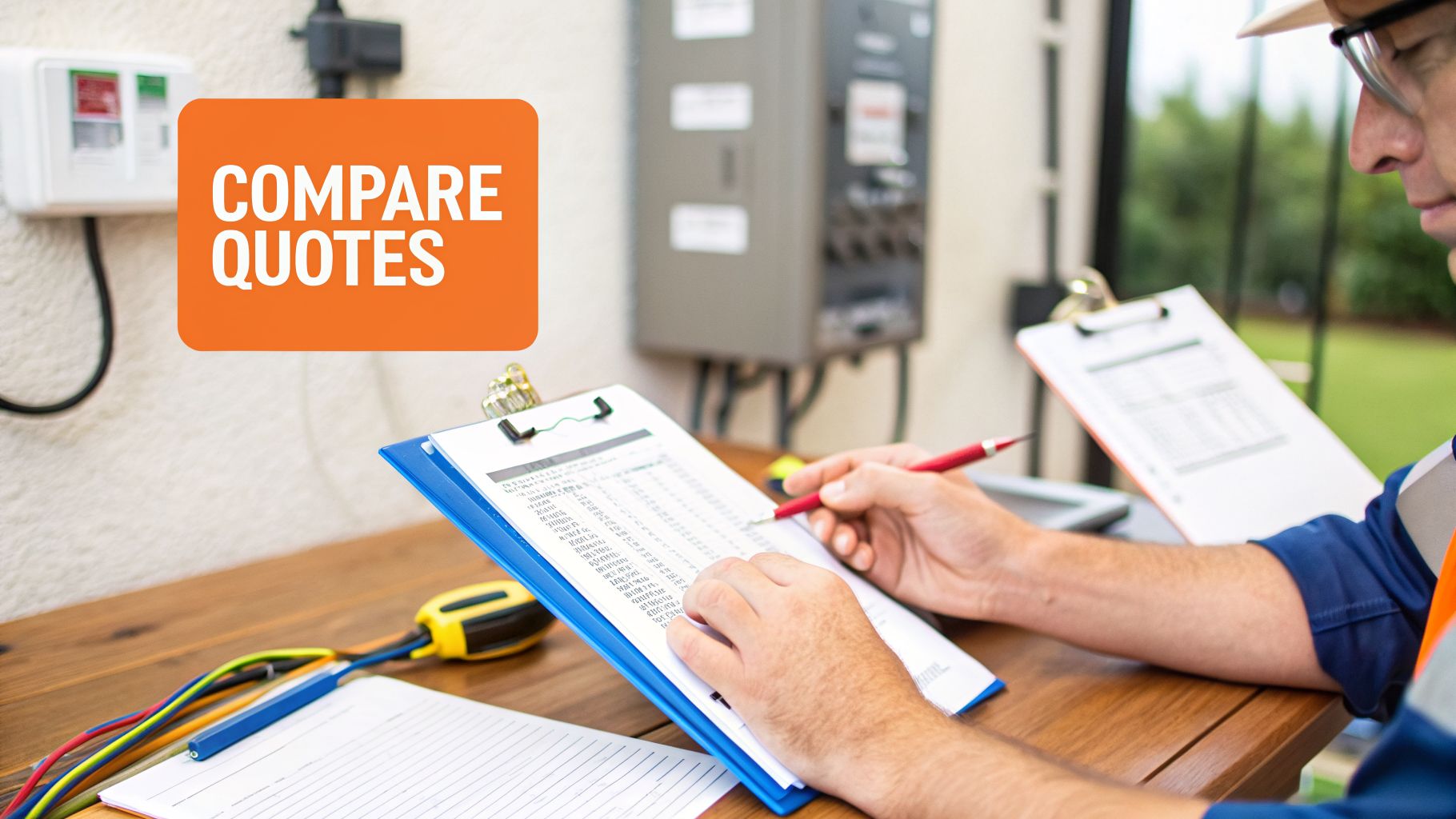
When those estimates arrive, resist the temptation to immediately jump on the lowest bid. Think of it this way: a suspiciously cheap quote is often a major red flag. It could signal that they're planning to use subpar materials, rush the job, or simply don't understand the full scope of the work.
Your goal is to compare these quotes on an apples-to-apples basis. That means looking past the bottom-line number and digging into the nitty-gritty details. A quality proposal will always be a detailed, line-item document, not just a single number scribbled on a piece of paper.
Deconstructing the Electrical Estimate
A thorough quote gives you the clarity you need to compare your options fairly. Every professional proposal should clearly break down several key components, so there are no frustrating surprises later on.
Make sure each estimate you receive includes these essentials:
- Detailed Scope of Work: The proposal must spell out exactly what the electrician will do, from running new wires to installing specific fixtures. Vague phrases like "fix outlet" just won't cut it.
- Itemized Material Costs: It should list the specific parts and materials being used, including brands for key components like circuit breakers or outlets. This keeps a contractor from swapping in cheaper, low-quality parts to cut costs.
- Labor Breakdown: The estimate needs to clearly show the labor costs, whether it’s an hourly rate or a flat fee for the entire job.
- Permit Fees: If your project requires a permit—and many do here in Florida—that cost should be included.
- Project Timeline: A pro will always give you an estimated start and completion date.
- Payment Terms: The quote must specify how and when payments are due. Be very wary of any electrician demanding full payment upfront.
A detailed quote protects both you and the electrician. It ensures everyone is on the same page about the work, the cost, and the materials, which is the foundation of a successful project.
Once you’ve compared the details, you can make a decision based on true value, not just price. For bigger jobs, knowing your budget is key. Many established companies offer flexible payment plans, so it's always worth exploring your financing options to get high-quality work without the financial strain. Choosing a well-documented, fair-priced quote is how you invest in your home's long-term safety and functionality.
Finalizing the Hire and Preparing for the Work
You’ve done the hard work of vetting electricians and comparing quotes. Now it’s time to make it official and get the job done right. This final stage is all about setting clear expectations to ensure the project goes smoothly from start to finish.
No matter how small the job seems, never, ever move forward on just a verbal agreement. The most critical piece of the puzzle at this point is the written contract. It’s the blueprint for your project and your best protection if something goes wrong.
A handshake is nice, but a contract is your guarantee. It should detail everything—the full scope of work, a final cost, the payment schedule, a clear project timeline, and specific warranty information. If it’s not in writing, it doesn’t exist.
A true professional will always provide a detailed contract without you even having to ask. Once that's signed, you can shift your focus to getting your home ready for their arrival. A little prep work on your part makes a huge difference.
Getting Ready for Your Electrician
Think of the service visit as a partnership. Taking a few simple steps beforehand helps the technicians work safely and efficiently the moment they walk through your door.
- Clear the Workspace: Make sure there's a clear path to the electrical panel, outlets, or any other area they need to access. Moving furniture, rugs, and other items out of the way beforehand is a huge help.
- Secure Pets: For everyone's safety—yours, the crew's, and your furry family members'—it's best to keep pets in a separate, secure room during the visit.
- Plan for Power Outages: It’s very likely the electrician will need to shut off power to either specific circuits or the entire house to work safely. Go ahead and charge your phone and laptop, and be prepared for a brief, planned outage.
On the day of the job, you should expect to see uniformed, professional technicians who communicate clearly about the work they’re performing. They should be happy to answer any questions you have.
When the work is done, they should take you on a final walkthrough, showing you what they did and making sure you’re 100% satisfied. This commitment to service, combined with proactive safety, is the hallmark of a great electrician. For more ways to keep your home safe, check out our guide on essential electrical safety tips.
Frequently Asked Questions
Hiring an electrician often brings up a few key questions. Let’s clear up some of the most common ones we hear from homeowners so you can move forward with confidence.
When Is It an Electrical Emergency?
Some issues can’t wait. You need to call for emergency service immediately if you spot any of these tell-tale signs of danger.
Don’t hesitate if you smell burning plastic, see sparks shooting from an outlet, or hear a constant buzzing or humming sound behind a wall or from your electrical panel. These are red flags you can't ignore.
Breakers that trip over and over again, even after you reset them, are another sign of a serious, hidden problem. If your whole house loses power but your neighbors are fine, that's your cue to make an urgent call. A 24/7 provider like Heatwave can get a technician out quickly to find the source and prevent a potential fire or shock.
What Is the Difference Between Licensed and Certified?
This is a great question, and the distinction is critical for your safety.
A license is the most important credential. It's a mandatory legal requirement from the state of Florida, proving an electrician has the experience and has passed the exams needed to work safely and legally. You should never hire an electrician who isn’t licensed.
Certification, on the other hand, is usually a voluntary, extra qualification. Think of it as a specialty. Certifications might come from a professional group or a specific manufacturer, showing an electrician has advanced skills in something like home automation or solar panel installation. A license is the foundation; a certification is a bonus.
What Is the Average Cost for an Electrician in Florida?
Let's talk numbers. The cost of hiring an electrician can vary quite a bit depending on where you are in Florida and how complex the job is.
Here in the region from Sarasota up to Tampa Bay, you can expect hourly rates to fall somewhere between $75 and $150, sometimes more. Most electricians also charge an initial service call fee just to come out and diagnose the problem.
For bigger jobs with a clear scope, like upgrading a panel or rewiring a kitchen, you’ll almost always get a flat-rate quote instead of being charged by the hour. The only way to know for sure is to get a detailed, written estimate from a reputable company before any work starts.
When you need a professional you can trust for any electrical issue, from emergency repairs to planned upgrades, the team at Heatwave Air Conditioning, Plumbing, & Electric is ready to help. Our licensed and insured electricians serve homeowners throughout Tampa Bay and Southwest Florida with a commitment to safety and quality. Get a free estimate or schedule service with us today!