
Nothing ruins a shower faster than standing in a puddle of murky, ankle-deep water. It’s a frustratingly common problem, but before you reach for a bottle of harsh chemicals or dial a plumber, take a deep breath.
The fix for a slow-draining or completely clogged tub is often much simpler than you think. Most of the time, the blockage isn't deep down in your plumbing labyrinth. It's usually right there at the top of the drain.
The usual suspects? A nasty combination of hair, soap scum, and conditioner that forms a sticky net just below the drain stopper. Over time, it catches more and more gunk until water can barely squeeze through.
Your First Move When the Tub Won't Drain
Your first move should always be a direct, manual one. This two-step strategy doesn't require any special skills and can often solve the problem in just a few minutes. The trick is to tackle the most common points of failure before you even think about escalating to more complex methods.
This simple approach is your go-to for fixing a clogged tub.
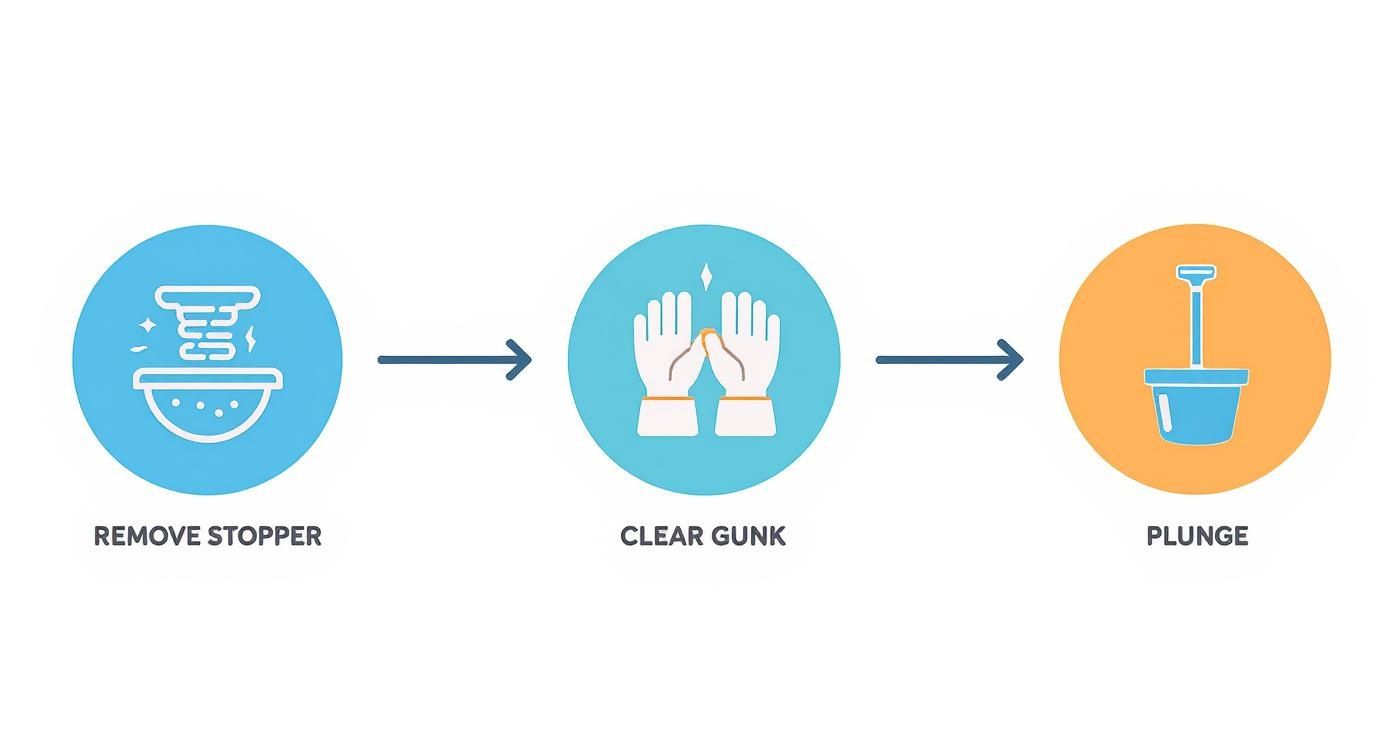
As the visual guide shows, clearing the stopper and then giving it a few good plunges are the foundational first steps for any bathtub clog.
To make it even easier, here’s a quick way to diagnose the issue and decide on your first action.
Quick Clog Diagnosis and First Steps
Use this guide to quickly identify your clog's severity and determine the best first action to take.
| Symptom | Most Likely Cause | Your First Action |
|---|---|---|
| Water drains, but very slowly. | Early-stage buildup of hair and soap scum. | Remove and clean the drain stopper. |
| Water stands for a while, then drains. | A more significant, but likely shallow, clog. | Use a plunger after clearing the stopper. |
| Water doesn't drain at all. | A dense blockage near the top of the drain. | Plunge firmly, ensuring the overflow is sealed. |
| You hear gurgling from other drains. | Could be a deeper clog or venting issue. | Try plunging, but prepare to call a pro if it persists. |
This table should help you quickly assess the situation without overthinking it. Start with the simplest solution and only move on to more involved methods if needed.
Mastering the Plunger Technique for Tubs
Plunging a bathtub is a bit different than clearing a sink or toilet. To get the job done right, you need to create a powerful vacuum, and that means paying attention to one crucial detail.
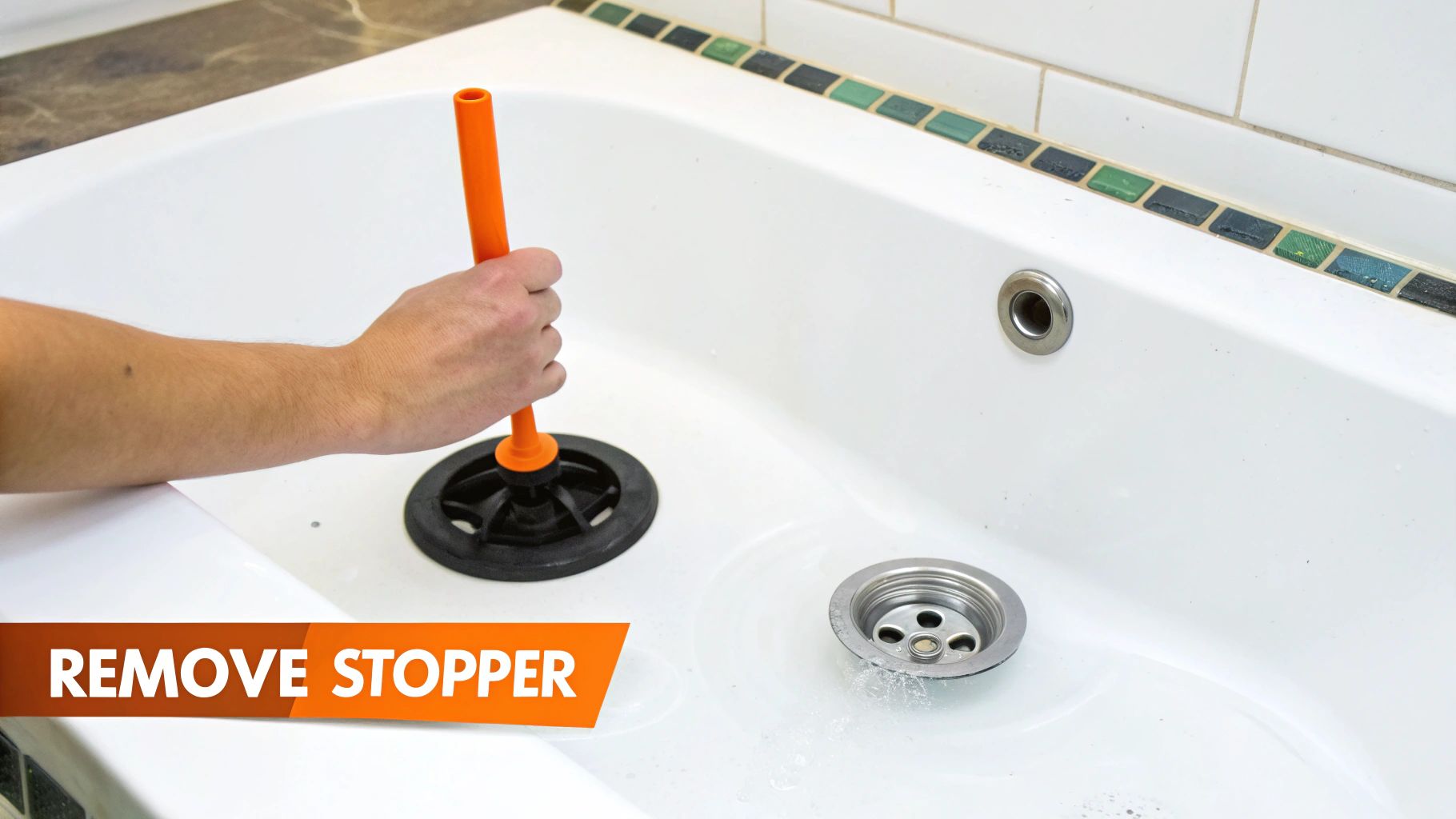
- Seal the Overflow Drain: This is the most important step. Find that chrome plate with slots under the faucet—that’s the overflow opening. You have to cover it completely with a wet rag. If you skip this, all the pressure you build with the plunger will just escape through the overflow instead of pushing down on the clog.
- Create a Good Seal: Make sure there are a few inches of water in the tub so the plunger cup is completely submerged. You want to be pushing water, not air, to generate real force against that blockage.
- Use Firm Plunges: Give it 15 to 20 strong, vertical thrusts. After you’re done, pull the rag away from the overflow and see if the water starts draining.
Bathtub clogs are a universal headache for homeowners. In fact, the global market for bathtub drains was valued at around $500 million in 2025 and is expected to keep growing, which just shows how common this problem really is.
Pro Tip: Don't give up if the first round of plunging doesn't work. Some stubborn clogs need a few attempts to break apart. The basic idea of creating suction is the same as for a kitchen sink, but that overflow drain is what makes a tub unique. For a refresher, you can check out our guide on how to unclog a kitchen sink.
Using Natural Solutions and Simple Tools
So, the plunger didn't quite do the trick. Before you reach for a bottle of harsh chemical drain cleaner, let’s try a few things that won't risk damaging your pipes—or the environment. Some of the best methods for clearing a clogged tub are surprisingly simple, using basic household items and tools you probably already own.
These techniques are plumber-approved because they get right to the heart of most blockages—that lovely combination of greasy soap scum and matted hair—without putting your plumbing system in jeopardy.
Sometimes, the simplest fix is the best one. Try boiling a large pot of water and carefully pouring it straight down the drain. This can often melt away the built-up soap and conditioner residue that acts like glue, holding the entire clog together. It's a low-effort first step that works wonders on minor backups.
The Classic Volcano Method: Baking Soda and Vinegar
If boiling water didn't cut it, it's time to bring out the big (but still safe) guns. This isn't just an old wives' tale; the fizzing reaction you get from mixing baking soda and vinegar is a real chemical process that actively breaks down the acidic, greasy compounds in soap scum. The bubbling action helps physically loosen and dislodge the gunk.
Here’s the best way to get that volcano working for you:
- First, pour about one cup of dry baking soda directly into the drain.
- Immediately chase it with one cup of white vinegar. Things will start fizzing right away.
- Quickly cover the drain with a stopper or a damp rag. This traps the reaction and forces all that clog-busting power down into the pipe instead of up into your tub.
- Now, just let it sit. Give it at least 20 to 30 minutes to do its thing.
- Finally, flush everything out with another pot of boiling water to wash away all the loosened debris.
What's great about this method is that it cleans the pipe walls as it works, which helps stop future gunk from building up so quickly. That buildup often contains oily stuff, and knowing how that behaves is half the battle. We talk more about the problems caused by putting grease or oil down the drain in another one of our articles.
Manually Clearing the Blockage with a Drain Snake
When you're dealing with a clog that’s too dense and stubborn for a fizzy solution, you need a tool that can physically break it apart or pull it out. This is where a drain snake, also called a plumbing auger, becomes your best friend. It’s essentially a long, flexible cable that you feed down the drain to deal with the problem head-on.
A drain snake is the go-to manual tool for plumbers because it provides a definitive solution. Instead of dissolving a clog, it allows you to physically remove the offending mass of hair and gunk, ensuring the pipe is truly clear.
Using a drain snake is pretty straightforward. Slowly feed the cable into the drain opening, turning the hand crank as it goes deeper. You’ll feel resistance when you hit the clog. At that point, gently push and pull the snake to either break up the blockage or hook onto it. Then, slowly retract the cable, pulling the gunk out with it. Don’t be surprised if you have to do this a few times to get everything out.
An Advanced Trick for Stubborn Blockages
So you've tried everything. The plunger didn't work, the snake came up empty, and the natural remedies fizzled out. When you're facing a clog that just won’t quit, it's easy to feel like calling a plumber is your only option.
But before you make that call, there’s one more powerful DIY trick in the arsenal: your wet/dry shop vacuum. Instead of trying to push the blockage further down the pipe, this method uses brute-force suction to pull the clog out of the drain entirely. It’s surprisingly effective against those stubborn clumps of hair and soap scum that other tools can't dislodge.
Getting Your Vacuum and Drain Ready
First things first, you need to switch your shop vac to its "wet" or liquid function. This is critical. For most models, it means taking out the paper filter so it doesn’t get destroyed by water. If you’re not sure, a quick check of your vacuum’s manual will show you how.
Next, you'll need to create a solid seal. Remove the drain stopper and the overflow plate cover. To get the suction you need, you have to block the overflow hole completely with a damp rag—just like you would when plunging. Then, create another seal by wrapping a second damp rag around the vacuum hose nozzle where it meets the drain opening.
Crucial Safety Warning: Never, ever try this if you've recently used chemical drain cleaners. The vacuum's suction can cause those caustic chemicals to splash back into your face and eyes, leading to severe burns. It can also pull toxic fumes into your home. Just don't do it.
Using Suction to Yank Out the Clog
With both the overflow and drain sealed tight, turn the vacuum on. The suction will immediately start pulling at the water and whatever is blocking the pipe. Give it short, powerful bursts of 5 to 10 seconds at a time. Listen closely—you might even hear a satisfying "thump" as the clog gets sucked into the hose.
After a few tries, switch off the vacuum and see if the water starts draining. If it does, congratulations! You just saved yourself a plumbing bill.
If the clog is still there after a few attempts, it might be a sign of a more serious issue deeper in your plumbing. Sometimes, what seems like a simple tub clog is actually a symptom of a sewer line blockage, which is a whole different ballgame.
It's a reminder of how complex home drainage systems are. In fact, the global market for bathroom drainage systems was valued at around $15 billion in 2025, a number driven by the constant need for better solutions to handle heavy use without clogging. Modern homes demand a lot from their plumbing.
Knowing When to Call a Professional Plumber
There’s a certain satisfaction that comes with clearing a stubborn bathtub clog on your own. You save a bit of money, learn something new, and, most importantly, you get your shower back. But there's a fine line between a simple DIY fix and a problem that’s screaming for a professional.
Knowing when to hang up the plunger and pick up the phone is a critical part of smart homeownership. Sometimes, a clog isn't just a clog—it's a warning sign of a much bigger issue brewing deep within your plumbing.
https://www.youtube.com/embed/kl-5C_4IUf_8
Recognizing Red Flags You Cannot Ignore
So, you’ve tried the plunger, wrestled with the drain snake, and even brought out the wet/dry vac, but that water is still standing. At this point, it’s time to stop. Trying to force the issue with more aggressive snaking—or worse, pouring chemical cleaners into the mix—can do more harm than good, potentially causing permanent damage to your pipes.
Keep an eye out for these tell-tale signs that you're out of your league:
- Recurring Clogs: Does your tub seem to clog up every few weeks, no matter what you do? This isn't just bad luck. It often points to a serious obstruction far down the main drain line, well beyond the reach of any DIY tool.
- Multiple Drains Backing Up: This is a big one. If flushing the toilet makes water gurgle up in the tub, or the kitchen sink backs up when the shower is running, the problem is almost certainly in your main sewer line, not the individual drain.
- Foul Sewer Odors: A persistent, nasty smell of raw sewage coming from the drain that just won't go away is a major red flag. This could mean you have a blocked vent stack or a significant sewer line problem.
The real value of a professional plumber isn't just their heavy-duty equipment; it's their ability to diagnose the root cause. They can tell if a clog is a simple hairball or a symptom of a systemic plumbing problem, saving you from a world of headaches later on.
The Risks of Pushing a DIY Fix Too Far
It can be tempting to keep attacking a stubborn clog, but this is where simple problems can turn into expensive disasters. Forcing a drain snake too hard can easily crack a PVC pipe or damage a fitting, leading to a hidden leak inside a wall or under your floor. If you’re actually dealing with a main line blockage, you could even cause a raw sewage backup that floods your home.
Professional plumbers have a deep understanding of home plumbing systems, from routine repairs to complex jobs like plumbing rough-ins and main line camera inspections. When you're facing a clog that just won’t quit, getting a professional assessment is always a smart move.
Here in the Tampa Bay area, if you suspect a deeper issue, calling an expert for drain cleaning near me in St. Petersburg, FL is the fastest way to get a definitive solution and protect your home. Don’t be afraid to call for backup when your DIY toolkit has met its match.
DIY Fix vs Professional Plumber Checklist
Still on the fence? This quick checklist should help you decide whether to keep going or call for backup. It’s designed to help you quickly gauge if your clogged tub is a simple fix or a sign of something more serious.
| Warning Sign | Recommended Action | Potential Risk of DIY |
|---|---|---|
| Water drains slowly but still drains | DIY Friendly: Try a plunger, boiling water, or baking soda and vinegar first. | Low: Worst case is the clog remains, and you haven't wasted much time or money. |
| The clog returns every few weeks | Call a Pro: This indicates a deeper blockage that DIY tools can't reach. | High: Repeatedly clearing a surface clog ignores the real problem, which could worsen. |
| Multiple drains are clogged/slow | Call a Pro Immediately: This is a classic sign of a main sewer line blockage. | Very High: You could cause a sewage backup into your home, creating a health hazard. |
| Foul sewer gas smell from the drain | Call a Pro Immediately: This could be a sewer line issue or a blocked vent stack. | High: Sewer gas can be hazardous, and the underlying problem is complex. |
| Your drain snake gets stuck | Stop and Call a Pro: Forcing it can break the snake or damage your pipes. | High: You could crack a pipe, leading to hidden leaks and costly water damage. |
| Gurgling sounds from other drains | Call a Pro: This points to negative air pressure in the line, often from a main line clog. | Very High: This is another symptom of a potential sewage backup. Don't risk it. |
Ultimately, if you’ve given it your best shot and the problem persists, or if you see any of the more serious warning signs, making that call is the smartest, safest, and often most cost-effective decision in the long run.
How to Prevent Future Bathtub Clogs
You’ve done it. You cleared that stubborn clog, and the water is finally draining freely. The last thing you want is a repeat performance next month.
Honestly, the best way to "fix" a clogged tub is to stop it from happening in the first place. Fortunately, this doesn't require a ton of work—just a few smart habits that will keep your pipes clear all year long. Moving from a reactive mindset to a proactive one will save you hours of future frustration and the cost of repairs.
Install a High-Quality Drain Catcher
The number one enemy of your bathtub drain is hair. It’s public enemy number one. Hair creates a sticky net that catches every bit of soap scum, conditioner, and body oil that goes down the drain.
The single most effective tool in your arsenal is a good drain catcher or strainer.
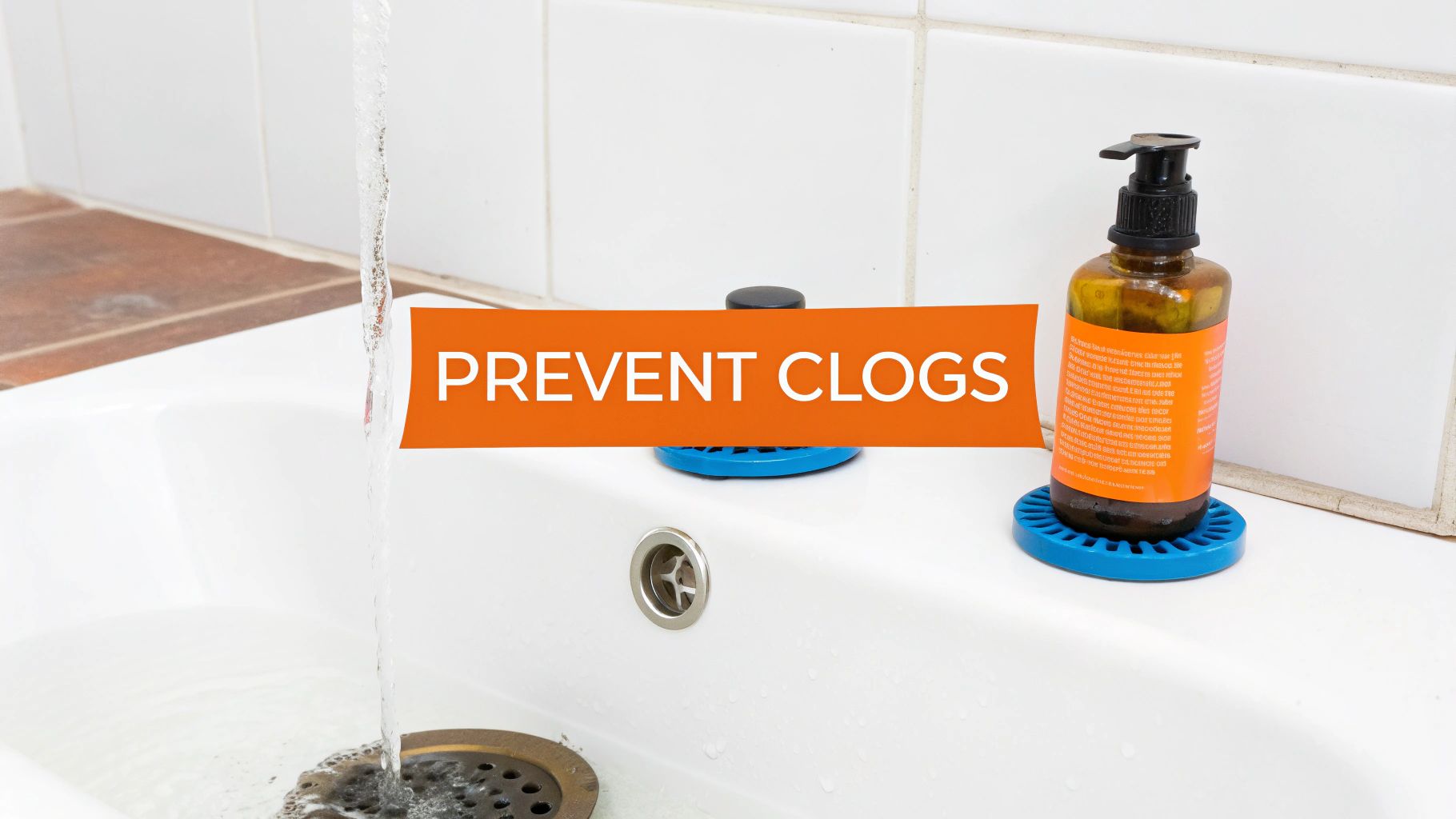
Look for a model made of silicone or stainless steel that fits snugly right over your drain opening. The best ones have a fine mesh or a basket design that does a fantastic job of trapping hair without slowing down the water too much. Just make a habit of cleaning it out after every shower. It takes two seconds and physically removes the main source of future blockages.
A simple, well-designed drain catcher is your first line of defense. It's a small investment that stops the vast majority of clog-forming gunk from ever entering your pipes, making it the most impactful preventive measure you can take.
Adopt a Simple Monthly Maintenance Routine
Just like any other part of your home, your drains benefit from a little regular upkeep. A quick monthly flush can dissolve the slow, steady buildup of soap scum and grime that loves to coat the inside of pipes. This stops small accumulations from snowballing into a full-blown clog.
Here’s a simple and effective routine I recommend doing once a month:
- Hot Water Flush: Boil a large kettle of water and very carefully pour it straight down the drain. The heat helps melt and wash away greasy soap and conditioner residue that’s starting to build up.
- Enzymatic Cleaner: For a deeper, safer clean, use a liquid enzymatic drain cleaner. These products use natural bacteria and enzymes to literally digest organic waste like hair and soap scum without the harsh chemicals that can damage older pipes.
- Baking Soda & Vinegar: As a natural alternative, pour about half a cup of baking soda down the drain, followed immediately by half a cup of white vinegar. Let that satisfying fizzing action work its magic for 15-20 minutes, then flush it all out with another round of hot water.
This focus on maintenance is part of a bigger trend. The bathtub industry, valued at around $12.03 billion in 2025, keeps growing as homeowners invest more in bathroom wellness and modern fixtures. You can learn more about these market trends from this comprehensive industry report.
Adopting these simple habits will help you sidestep many of the issues we cover in our guide to common plumbing problems and solutions. By being proactive, you can ensure your bathtub drain stays clear and functional, saving you from the headache of another unexpected backup.
Common Questions About Clogged Bathtub Drains
Even after you've wrestled a clog into submission, you might be left with a few lingering questions. It's one thing to fix the problem, but understanding the "why" and "what if" behind it is the key to preventing it from happening again. Let’s tackle some of the most common concerns we hear from homeowners.
Why Does My Bathtub Keep Getting Clogged?
If you feel like you’re stuck in a loop, constantly fighting the same slow drain every few weeks, you’re not alone. This is a classic sign that the clog was never fully cleared in the first place.
Think of it this way: when you use a plunger or a basic snake, you might just be punching a small tunnel through the middle of the blockage. Water can flow again, sure, but a thick, stubborn layer of soap scum and matted hair is left clinging to the pipe walls. That residue is sticky, and it acts like a magnet for new debris, allowing the clog to rebuild itself surprisingly fast.
Certain products you use daily can make the problem even worse.
- Bar Soaps: Many traditional bar soaps are made with talc and fats. Inside your cool, dark pipes, these ingredients congeal into a thick, sticky sludge that hair and grime love to cling to.
- Thick Conditioners: Those heavy, oil-based conditioners and luxurious bath oils might feel great, but they don’t rinse away cleanly. They coat the inside of your pipes, contributing to that gunky buildup.
A recurring clog is your plumbing’s way of sending up a flare signal. It’s telling you that the initial blockage wasn't truly eliminated. To solve it for good, the entire pipe needs a thorough cleaning, not just a quick poke.
Are Chemical Drain Cleaners Safe for My Pipes?
Let's be direct: the short answer is a hard no. While the promise of a quick, pour-and-go fix is tempting, chemical drain cleaners should be your absolute last resort—or better yet, not a resort at all.
These products work by using caustic ingredients like lye or sulfuric acid to trigger an intense chemical reaction that’s meant to dissolve the clog. This reaction generates an incredible amount of heat, which can be disastrous for your plumbing. It can soften and warp PVC pipes or speed up corrosion in older metal pipes, leading to cracks, weak spots, and eventually, leaks.
The danger escalates if the cleaner fails to break through the clog. Now you have a highly corrosive, toxic chemical just sitting stagnant in your pipe, continuously eating away at the material.
Beyond the damage to your home, these chemicals are a serious safety hazard. Accidental splashes can cause severe skin and eye burns, and inhaling the fumes is dangerous. And if you end up calling a professional plumber after a failed chemical attempt, you've created a hazardous situation for them, too.
Can a Clogged Tub Cause Problems in Other Drains?
Yes, and this is a critical red flag every homeowner should know how to spot. Most tub clogs are isolated issues, contained within the tub's own drainpipe. But sometimes, that slow-draining tub is the first symptom of a much bigger problem: a main sewer line blockage.
Picture your home's plumbing system like a tree. Each fixture—your tub, toilets, sinks—has its own small "branch" pipe. All these branches feed into one large "trunk," the main sewer line that carries all wastewater out to the municipal system. If that main trunk gets blocked, the wastewater from your entire house has nowhere to go. It’s going to back up.
Because the bathtub is usually the lowest drain fixture in a home, it’s often the first place you’ll see the evidence of a main line backup.
- Telltale Sign: Do you hear a gurgling sound from your toilet whenever the tub is draining?
- Major Red Flag: Does water back up into your shower or tub when you flush a toilet or run the washing machine?
If you notice any of these symptoms, stop using all water immediately. This is no longer a DIY job; it's a plumbing emergency that needs professional equipment to resolve safely.
Dealing with a stubborn clog that won't budge, or suspect you might have a main line issue in your Tampa Bay home? The experts at Heatwave Air Conditioning, Plumbing, & Electric have the tools and experience to diagnose and solve the problem safely and effectively. Contact us today for professional plumbing assistance!