
You notice it when the kitchen light hits the basin just right, an orange-brown ring that wasn't there yesterday. Maybe it came from a metal can left in the sink, a bobby pin, or that one stubborn spot near the drain that keeps showing up after every rinse. In Florida homes, I see this kind of stain blamed on “dirty sinks” all the time, but it's usually rust, iron transfer, or a water issue, and the fix depends on the sink material in front of you.
The good news is that rust stains usually respond to controlled chemistry, not brute force. The wrong scrub pad can do more damage than the stain itself, especially on stainless steel, porcelain, and composite surfaces. If you treat the stain the right way, with the right dwell time and the right tool, you can usually clean it up without scratching, dulling, or permanently marking the finish.
That Unwanted Orange Stain in Your Sink
A homeowner calls it a mystery spot. I call it a clue. A can sat in the basin after dinner, a shaving cream can left a ring in the bathroom sink, or a drip near the faucet kept one area wet long enough for iron to settle and stain.
That's why the stain often appears in the same place over and over. Rust is iron oxide, and once it starts showing up in a sink, the key question is whether you're dealing with a surface stain or a plumbing problem feeding it.
For most Florida homeowners, the temptation is to attack it hard with an abrasive pad. That's the mistake. The better approach is to match the cleaner to the sink, give it time to work, then rinse and dry before the finish gets damaged.
If you've ever compared finishes while shopping for counters or fixtures, the same habit helps here. Even resources like understanding these popular marble types from Jennifer Gilmer Kitchen & Bath show how much surface behavior matters, and sinks deserve the same careful treatment.
The stain itself doesn't care whether it came from a metal object or mineral-rich water. What matters is what the sink can tolerate, what the stain has bonded to, and how gently you loosen it.
Identifying Your Sink Material Is the First Step
Before any cleaner touches the basin, identify the material. That one step decides whether you're using a light acid rinse, a paste, or nothing stronger than soap and a soft sponge. A product that's fine on one sink can scratch or haze another in minutes.
Stainless steel
Stainless steel usually has a brushed or satin look, and a magnet may cling to some parts of it, though not always strongly. The finish is tough, but it still scratches easily if you use steel wool or scrub across the grain. A dull patch on stainless can be harder to live with than a small rust stain.
Porcelain and enamel
Porcelain and enamel are typically glossy and smooth, often on cast-iron sinks or older bathroom fixtures. They look durable, but the glaze can chip, and harsh abrasive cleaners can leave them looking cloudy. If you see a bright reflective surface, treat it as delicate until proven otherwise.
Composite and fiberglass
Composite sinks often have a more muted, matte, or stone-like appearance. Fiberglass tends to feel lighter and can scratch or discolor if you use aggressive acids or rough pads. The safest assumption with both is to start mild and test in a hidden spot.
Practical rule: if you can't identify the finish quickly, don't guess with a strong cleaner. Test a hidden area first, because repair is far more expensive than patience.
A useful local habit is to think like you would when choosing materials elsewhere in the home. Some finishes are forgiving, others aren't. A sink isn't the place to gamble with bleach, metal scrubbers, or “one-size-fits-all” stain removers.
The reason material ID matters is simple. Rust removal depends on contact time, and the wrong surface can react to that same contact time with dulling, etching, or tiny scratches that collect grime later.
If you're comparing sink care to other finishes in the home, the logic is the same as plumber's tips for drain cleaning, where the right chemistry matters more than force. In both cases, controlled treatment beats aggressive scrubbing every time.
Gentle Household Remedies for Rust Removal
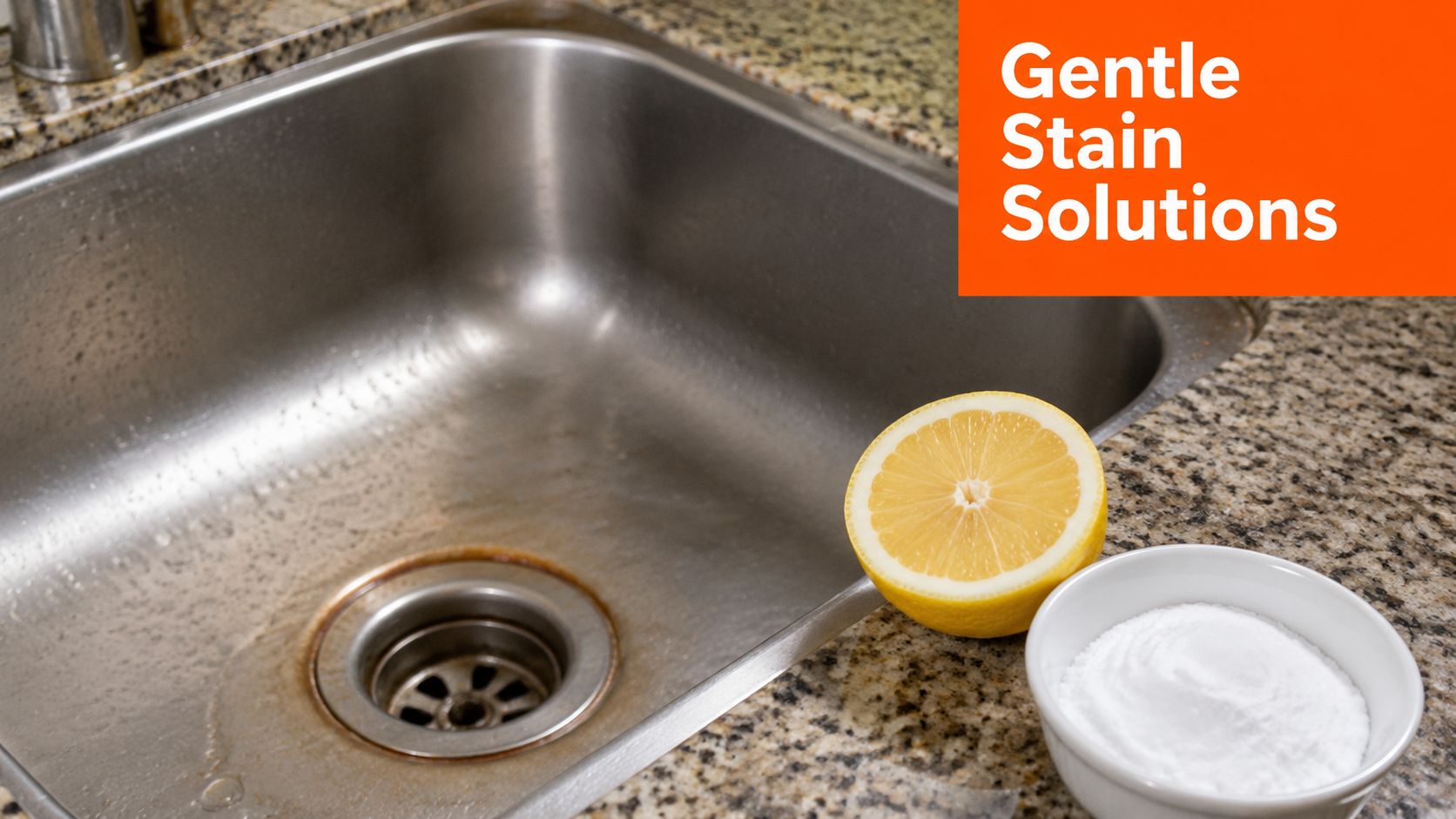
For light rust, I'd reach for pantry ingredients before I'd reach for anything harsher. The trick is to make the cleaner stay put. A thin liquid that runs off the stain won't do much, but a paste gives the acid time to loosen the iron oxide before you wipe it away.
Baking soda paste
Mix baking soda with a little water until it becomes thick enough to cling to the stain. Apply it only where the rust is showing, not across the whole sink.
A practical workflow from sink-cleaning guides is to use a paste and let it sit for a short period before gentle scrubbing, with many common treatments falling in the 10 to 30 minute range and some acid-based pastes sitting longer, up to 60 minutes in total how to get rust stains out of sink. That contact window matters more than muscle.
Vinegar, lemon, and salt
White vinegar and lemon juice work because they're acidic enough to help loosen the rust. Salt gives the paste a little body, so it stays on the stain instead of sliding off. One sink-specific guide recommends a vinegar-and-salt paste for 30 minutes to 1 hour, while another recommends a cream-of-tartar-and-hydrogen-peroxide paste for 10 to 15 minutes before gentle scrubbing how to get rust stains out of sink.
Let the cleaner sit. Don't start with heavy scrubbing, because the chemistry has to do the first part of the work.
Rinse thoroughly after the dwell time, then dry the sink right away. That drying step matters because leftover moisture can bring the stain back.
For a practical example of how that chemistry-first approach translates into everyday household use, it's worth looking at guide to metal rust prevention from South Mountain Window Cleaning, LLC. The point is the same, keep metal from sitting wet long enough to oxidize.
When a sink needs a second pass
If the stain is still visible after the first round, repeat the treatment rather than scrubbing harder. A two-step approach is usually safer than escalating abrasion. That's also where a stubborn stain stops being “dirty” and starts being “specific.”
One useful detail from sink-cleaning guidance is that the stain should usually be treated with a paste, left in contact, then rinsed and dried immediately how to remove rust in sink. That simple cycle handles more spots than one might expect.
If you need a stronger household option, use it only after the mild treatment has had its chance. That's the safest way to keep the finish intact.
A Guide to Cleaning Different Sink Types
Stainless steel can usually take a careful acid treatment, but porcelain, enamel, composite, and fiberglass each have their own weak points. That's why I never give a single rust-removal recipe without asking what the sink is made of. The finish tells you what not to do as much as what to use.
Stainless steel
Start by wetting the surface, then apply a small amount of vinegar-based poultice or an oxalic-acid cleaner only on the stain. Use a non-scratch pad and follow the grain of the steel, not across it. A specialist guide recommends short contact windows, about 30 seconds to 1 minute per pass for a Bar Keepers Friend slurry, or 15 to 30 minutes for vinegar-soaked paper towels, followed by rinsing and drying immediately stubborn rust stains from stainless steel undermount sink.
That grain detail matters. Scrubbing across the grain leaves faint lines that catch light and make the sink look tired even when the rust is gone.
Porcelain and enamel
Porcelain and enamel need a softer hand. Use a baking soda paste, cream of tartar paste, or a mild vinegar treatment, then wipe with a soft sponge rather than a rough pad. These finishes look hard, but the glaze can chip or go cloudy if you grind at the stain.
If rust is sitting on the surface, gentle chemical lifting usually works better than pressure. If the stain has etched into the finish, hard scrubbing won't reverse that damage.
Composite and fiberglass
Composite and fiberglass should be treated as sensitive surfaces. Avoid aggressive acids and don't let any cleaner dry on the sink. A short dwell time and soft cloth are safer than a strong product left too long.
A good rule is to test a small hidden spot, then stop if the finish changes texture or color. When a sink is blended material rather than solid metal or glazed ceramic, less force is usually the right move.
What not to do
- Don't use steel wool: It can leave scratches that hold onto future stains.
- Don't scrub across a brushed finish: On stainless steel, that's how you create visible marks.
- Don't leave acidic paste drying on delicate surfaces: Dried cleaner can leave residue and dullness.
- Don't mix random cleaners together: More chemistry is not more control.
Best practice: rinse the area completely and dry it right away. That habit protects the finish after the stain is gone and helps keep new rust from forming.
A two-step, material-specific method is the safest way to handle rust in a busy home sink. It's also the difference between cleaning a spot and slowly wearing out a fixture.
Using Commercial Cleaners Safely and Effectively
When pantry remedies don't move the stain, commercial rust removers can help, especially those built around oxalic acid. I treat them as a step up, not a first move. That order matters because stronger products can solve the stain faster, but they can also punish the wrong surface faster.

Use the mildest effective option first
A practical escalation path is to start with white vinegar or lemon and salt for 10 to 30 minutes, then move to a baking-soda paste or an oxalic-acid product if the stain stays put remove rust stains sinks bathroom surfaces. That progression keeps abrasion low and gives the surface the best chance of surviving intact.
If the label mentions a test spot, do it. If it mentions gloves or ventilation, follow that too. The stain on the sink is annoying, but the more serious risk is damage to the finish or irritation from the product.
Apply less than you think you need
Commercial cleaners work best when they cling to the stain, not when they're smeared everywhere. Apply only enough to cover the rust patch, then watch the dwell time closely. If the cleaner dries out before the cycle is complete, rinse and reapply rather than letting it bake on.
Stop before you force it
A strong product is not a license to scrub harder. If the stain stays after one careful round, repeat the cycle. Sources on stain removal repeatedly favor testing a hidden spot and repeating the treatment rather than increasing abrasion remove rust stains sinks bathroom surfaces.
That's the professional habit worth copying. Stronger chemistry plus gentler motion usually wins. Stronger chemistry plus rougher scrubbing usually leaves a scar.
Preventing Future Rust Stains in Your Sink
The cleanest sink is the one that doesn't keep getting stained in the first place. Rust prevention is mostly about removing the conditions that let iron sit wet on the surface. In Florida, with humidity hanging around and faucet drips showing up in older homes, that habit pays off quickly.
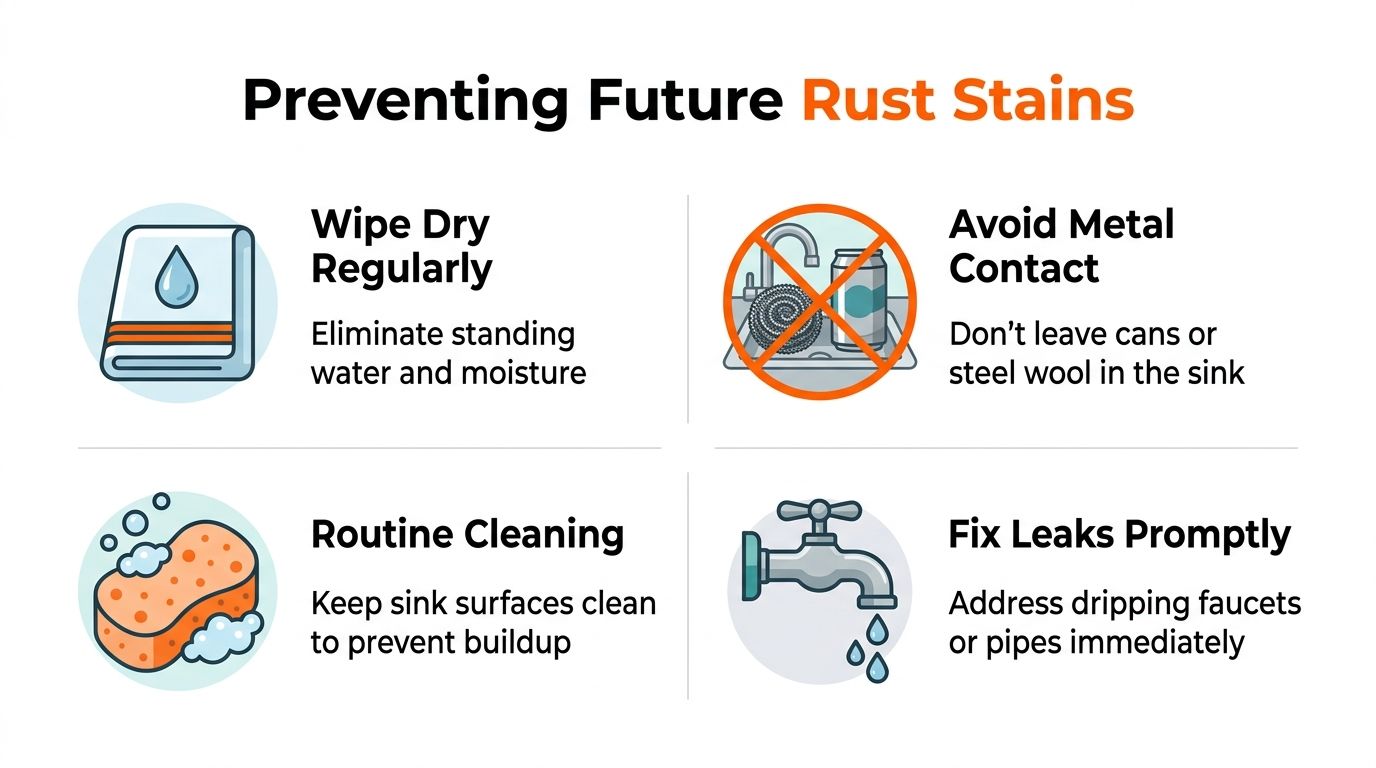
Four habits that keep rust away
- Wipe dry regularly: A towel removes standing water before it can leave a ring.
- Avoid metal contact: Don't leave cans, steel wool, or metal containers sitting in a wet basin.
- Keep up with routine cleaning: A quick sponge wipe stops buildup before it becomes a stain.
- Fix leaks promptly: Drips keep one spot wet long enough for discoloration to return.
Those habits line up with sink-care guidance that emphasizes rinsing, drying, and avoiding metal items left in the basin how to remove rust in sink.
If the rust keeps coming back in the same place, the sink may not be the underlying problem. A slow drip, corroded supply part, or iron-heavy water can keep feeding the stain no matter how well you clean it. If that sounds familiar, it's worth checking a broader rust-prevention resource like Guide to metal rust prevention from South Mountain Window Cleaning, LLC, because the same moisture logic applies.
One more habit matters in Florida homes. Dry the sink after use, especially in bathrooms and around kitchen drains where water tends to sit. That one small step can interrupt the cycle before the stain starts again.
When to Call a Plumbing Professional
If the stain keeps returning in the same spot, or the water itself starts looking tinted, the issue may be bigger than surface rust. Discoloration around the faucet base or drain can point to corroding plumbing parts, not just a dirty sink.
A professional inspection makes sense when the stain is stubborn, recurring, or tied to a leak you can't trace. In that case, cleaning the sink won't solve the source.
If you're in Tampa Bay or Southwest Florida and the rust keeps coming back, schedule a plumbing check with Heatwave Air Conditioning, Plumbing, & Electric. A quick diagnosis can save you from chasing the same stain over and over.