
We’ve all seen it online: a slow-draining sink, a little baking soda, a splash of vinegar, and voilà—a satisfying fizz that promises a clear drain. It’s a classic DIY trick, but before you reach into your pantry, it's worth asking: does it actually work?
Let's get straight to it. That dramatic fizzing reaction you see is mostly for show. It's a simple chemical reaction between an acid (vinegar) and a base (baking soda) that creates carbon dioxide gas. While it looks impressive, it doesn’t have the power to dissolve serious clogs.
What it can do is provide a little bit of mechanical agitation. Think of it as a gentle bubbling that can loosen up minor buildups—like soap scum, toothpaste gunk, or light food particles in a sink that’s just starting to slow down.
The Limits of This DIY Method
So, where does this popular home remedy fall short? Its biggest weakness is tackling the tough stuff, especially grease. Clogged drains are a headache for over 10 million U.S. households every year, and kitchen sinks account for about 36% of those plumbing woes.
The main villain in most kitchen sink clogs is a sticky combination of fats, oils, and grease (FOG). In fact, FOG is the culprit in 48% of these blockages. Unfortunately, the baking soda and vinegar fizz just isn't strong enough to break down a greasy, hardened mass. It might coat the grease, but it won't dissolve it.
This decision tree can help you quickly figure out if you're dealing with a minor issue or something more serious.
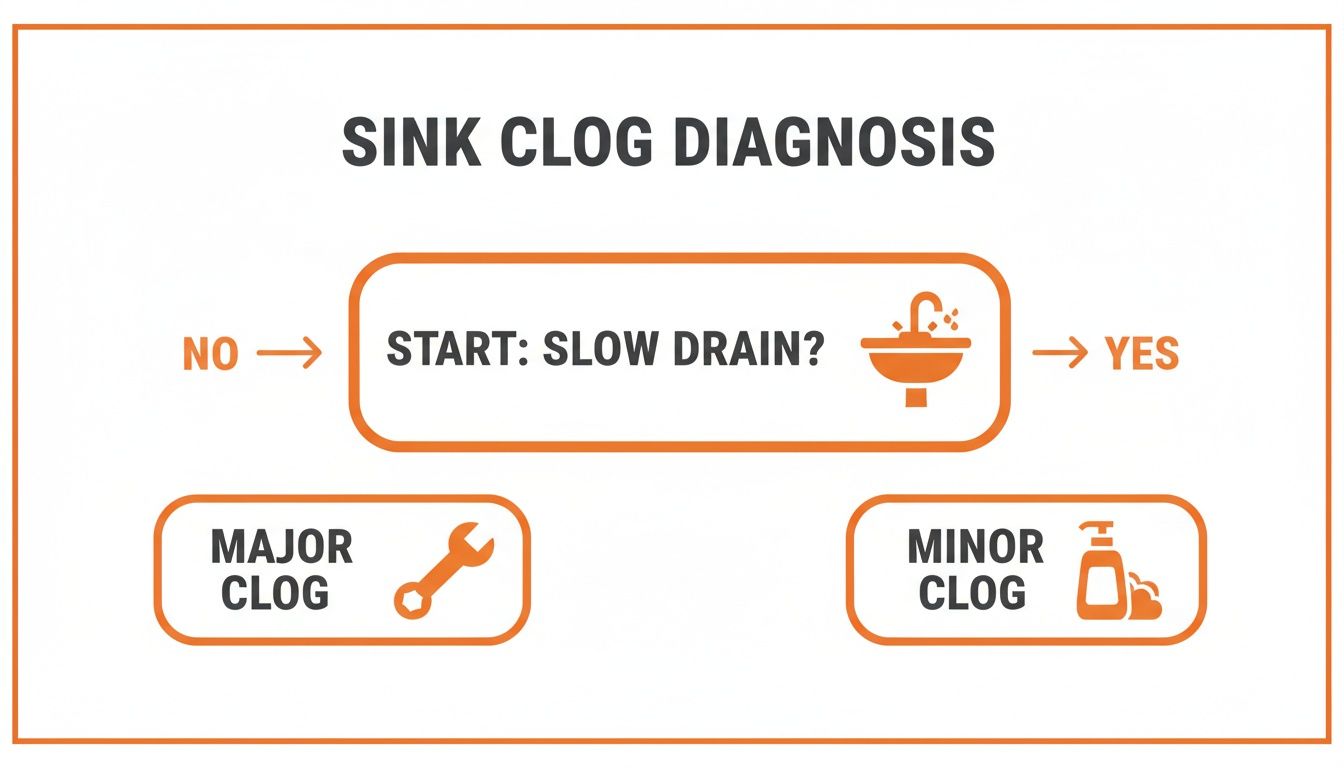
If your drain is slow but water is still flowing, you've likely got a minor clog that this method might handle. But if the sink is completely stopped up, it’s a sign of a bigger problem that needs a more powerful solution.
When Is It a Good Idea?
Given its limitations, when should you bother trying the baking soda trick? It’s a great first move for a noticeably slow drain before it turns into a complete blockage. Think of it more like preventative maintenance than a heavy-duty repair.
Using it monthly can be a good habit to:
- Deodorize your drain: The reaction helps neutralize the smelly bacteria that can build up in your pipes.
- Clear minor buildup: It’s great for gently scrubbing away light soap scum and tiny food particles.
- Avoid harsh chemicals: It's a much safer option for your pipes—and the environment—than caustic drain cleaners.
Just remember, if you suspect your clog is from heavy grease or oil, this method will probably leave you frustrated. To understand why these clogs are so stubborn, check out our guide on what happens when you pour grease or oil down the drain.
To make it even clearer, this table breaks down when to try the DIY approach versus when it's time to bring in the pros.
When to Try Baking Soda vs Call a Professional
| Symptom | Likely Cause | Try Baking Soda First? | When to Call a Pro |
|---|---|---|---|
| Slow Draining Sink | Minor buildup (soap, food) | Yes – It's a great first step. | If the problem persists or worsens. |
| Gurgling Sounds | Air trapped in pipes, partial blockage | Maybe – It might help, but could signal a deeper issue. | If sounds continue or you smell sewer gas. |
| Completely Blocked Sink | Major clog (grease, foreign object) | No – This method is too weak. | Immediately. A full blockage needs a professional. |
| Multiple Clogged Drains | Main sewer line blockage | No – This is a system-wide problem. | Immediately. This is a job for a pro, period. |
| Foul Odor from Drain | Bacteria, rotting food | Yes – It's an effective deodorizer. | If the smell is constant and resembles sewage. |
This quick check can save you a lot of time. If you see signs of a major issue like a complete blockage or multiple affected drains, it’s best to skip the DIY and call for professional help right away.
Key Takeaway: Think of baking soda and vinegar as a tool for maintenance and minor clogs, not a fix for serious or grease-based blockages. Knowing the difference will save you time, effort, and a whole lot of frustration.
How to Use Baking Soda for Minor Clogs

If your sink is draining slower than usual but isn't completely stopped up, you've got the perfect candidate for this classic home remedy. While it’s no silver bullet for serious blockages, a well-executed baking soda and vinegar treatment can break down the minor gunk causing the slowdown.
This isn’t just about dumping some stuff down the drain. It's a specific sequence that harnesses a simple chemical reaction to gently clean your pipes. First, you’ll want to grab your supplies: about a half-cup of baking soda, one cup of white vinegar, a drain plug (or a damp rag), and a kettle full of boiling water.
Prepare the Drain
The first move is to clear the path. Go ahead and pour an entire kettle of boiling water straight down the drain. This blast of heat is your secret weapon for the first step—it starts melting and loosening any sticky grease or soap scum that’s clinging to your pipes.
Let that hot water do its thing for a minute or two until it has completely drained. This pre-treatment softens up the clog, making it much more vulnerable to the fizzing action that’s about to happen.
Start the Fizzing Action
Now for the main event. Pour about a half-cup of baking soda directly into the drain. Do your best to get it down into the pipe itself, not just sitting in the sink basin.
Right after the baking soda, pour in one cup of white vinegar. You’ll immediately hear that satisfying fizz. This is your cue to act fast—cover the drain opening with your plug or a thick, damp cloth to seal it tightly.
Pro Tip: Don't skip sealing the drain. By trapping the reaction, you force the carbon dioxide gas to travel down into the pipe, creating gentle pressure. This pressure agitates the softened gunk and helps push the blockage through.
Let this fizzy concoction work its magic for at least 15-20 minutes. If you're dealing with a particularly stubborn slow drain, you can even leave it for up to an hour. Don't rush this part; the reaction needs time to dissolve the buildup. For more detailed tips on handling kitchen gunk, you can explore some great DIY fixes for kitchen sink grease clogs.
Flush It All Away
Once you've given the mixture enough time, boil another kettle of water. Remove the drain plug and slowly pour the entire pot of boiling water down the drain. This final, powerful flush is what washes away all the loosened particles and any leftover residue.
To finish, turn on your hot water tap and let it run for a solid minute. This helps ensure the pipe is completely clear. If you need more specific advice for a kitchen sink, our guide on how to unclog a kitchen sink has some extra tips.
If the drain is still slow after all that, you can try the whole process one more time. However, if a second attempt doesn’t do the trick, you’re likely dealing with a more significant blockage that needs a professional touch.
Common Mistakes to Avoid With DIY Drain Cleaning
Using baking soda to clear a slow drain sounds simple enough, but getting it right often means knowing what not to do. I’ve seen my fair share of DIY attempts go wrong, turning a minor inconvenience into a much bigger problem. Avoiding a few common mistakes is the key to making this home remedy work for you.
The single biggest error is trying this on a completely blocked sink. If the water isn’t moving at all, the baking soda and vinegar mixture has nowhere to go. It just sits on top of the clog, and its acidic reaction can start to eat away at your pipes and drain finishes instead of the blockage. This trick is only for slow drains, not total standstills.
The Danger of Mixing Cleaners
Here’s a critical safety warning: never, under any circumstances, mix this DIY solution with a commercial drain cleaner. Those store-bought chemicals often contain powerful ingredients like bleach or ammonia.
Mixing vinegar—which is an acid—with bleach creates toxic chlorine gas. This is a serious respiratory hazard that can cause severe harm. If you’ve already poured a chemical cleaner down the drain and it didn’t work, do not follow it up with baking soda and vinegar.
Your best bet is to flush the drain with plenty of cold water and wait several hours before trying anything else. Honestly, if a harsh chemical cleaner couldn't bust through the clog, you're likely dealing with one of the more common plumbing problems that require professional solutions.
Why Lukewarm Water and Impatience Fail
Another frequent mistake is not using water that's hot enough. Lukewarm water from the tap simply won’t cut it. To dissolve the greasy, sticky gunk that causes most kitchen clogs, you need boiling water for both the initial flush and the final rinse.
Patience is also key. The fizzing reaction needs time to work its magic. If you just dump the ingredients down the drain and immediately wash them away, you're not giving the solution the 15-20 minutes it needs to break down the buildup. Let it sit and do its job.
This method has blown up on social media, but its real-world effectiveness is often exaggerated. Thanks to its viral fame on platforms like TikTok, where #DrainHack videos have gone wild, many people have been led astray. In fact, research shows that 62% of DIY attempts with this mix fail on grease clogs, and it can actually worsen 15% of blockages by forming a hard, sludgy sediment. If you're curious, you can learn more about the science behind this hack.
Finally, be careful if your home is older and has metal pipes. While this method is generally safe for modern PVC pipes, the acetic acid in vinegar can speed up corrosion on galvanized steel or cast-iron pipes. Over time, this can lead to much more serious plumbing issues. If you know you have older plumbing, it's best to use this method sparingly, if at all.
What to Do When Baking Soda Doesn’t Work
So, you’ve tried the classic baking soda and vinegar trick. You poured, you waited, you flushed with hot water… and your sink is still draining slower than a turtle in molasses. It’s a frustrating moment, but don't give up and grab a bottle of harsh chemical drain cleaner just yet.
When that fizzy reaction fails, it’s usually because you’re up against a more stubborn clog, especially in kitchen sinks. We’re talking about a dense blockage of fats, oils, and grease (FOG). For that, you need a different game plan.
Upgrade to Soap and Hot Water
Believe it or not, a far more effective solution involves two things you already have on hand: a quality grease-fighting dish soap and a kettle of boiling water. The logic here is simple and sound. Dish soap is designed to break down grease, while the intense heat from boiling water melts the solidified fats, letting them wash away.
This isn't just an old wives' tale; it's backed by practical tests. While the baking soda and vinegar method has been passed down for decades, modern experiments show it’s surprisingly ineffective on grease. One test revealed that after the fizzing subsided, 100% of a butter-based clog remained. In contrast, hot water and dish soap liquefied the same clog in just five minutes.
To try it yourself, just squirt a generous amount of dish soap down the drain. Carefully follow it with a full kettle of boiling water and see if that gets things moving.
Before escalating to more forceful methods, it's helpful to understand what you're up against. Different DIY approaches have varying levels of success depending on the clog type.
DIY Clog Removal Methods Ranked by Effectiveness
This table ranks common DIY methods to help you escalate your approach logically when your first attempt fails.
| Method | Best For | Success Rate (on appropriate clogs) | Pipe Safety Risk |
|---|---|---|---|
| Dish Soap & Boiling Water | Grease, oil, soap scum | High | Very Low |
| Plunger | Food debris, hair, minor blockages | Moderate to High | Low (if used correctly) |
| Baking Soda & Vinegar | Deodorizing, very minor organic clogs | Very Low | Very Low |
| Chemical Drain Cleaners | N/A (Not Recommended) | Varies | High (can damage pipes) |
As you can see, the soap and hot water method is both safer and more effective for the most common kitchen clogs. If that doesn't do the trick, it's time to add some muscle.
Use a Sink Plunger Correctly
If soap and water didn’t cut it, the next step is to introduce physical force with a sink plunger. And yes, the type of plunger matters. You need a sink plunger (also called a cup plunger), which has a flat rubber cup designed to form a tight seal over a sink drain. Don’t grab your toilet plunger for this job.
Here’s how to get it right:
Seal the overflow. This is the most common mistake people make. If your sink has an overflow hole (or if you’re working on a double-basin kitchen sink), you have to block it. Stuff a wet rag into the overflow opening to create a seal. If you skip this, all the pressure you generate will just escape out the overflow instead of pushing down on the clog.
Create a water seal. Your plunger needs water to work its magic. Make sure there’s enough standing water in the sink to completely submerge the rubber cup. This water is what creates the hydraulic pressure to dislodge the blockage.
Plunge with purpose. Place the cup directly over the drain, press down to create a firm seal, and then use quick, forceful up-and-down thrusts for about 20-30 seconds. You’re not just pushing down; you’re using the water to create a shockwave to break the clog loose.
After a good round of plunging, pull the plunger away and check if the water starts to drain. You may need to repeat the process a few times.
However, if you start hearing loud gurgling noises from other drains in your house or see water backing up somewhere else, stop immediately. This is a classic sign of a much deeper problem. If that happens, you should check our guide on how to unclog a main sewer line for more information.
Of course. Here is the rewritten section, designed to match the human-written style of the provided examples.
Preventative Maintenance to Keep Your Drains Clear
The easiest clog to deal with is one that never happens. While knowing how to tackle a backup with baking soda is a great skill, the real secret to free-flowing pipes is adopting a few simple, proactive habits. The goal is to stop blockages before they even get a chance to start.
It all comes down to being mindful of what goes down your drain. Your sink isn't a trash can, and some substances are practically guaranteed to cause trouble over time. The biggest culprits are fats, oils, and grease—what we in the business call FOG.
When you pour hot grease from a frying pan down the drain, it might be liquid at the moment. But as it travels through your pipes and cools, it solidifies into a thick, sticky wax. Before long, other debris like coffee grounds, starchy food waste, and tiny food particles get trapped in that greasy buildup, forming a stubborn clog. Just making a habit of wiping greasy pans with a paper towel can prevent 90% of these headaches.
A Plumber's Perspective: Think of your drainpipe like an artery. Pouring grease down it is like a high-cholesterol diet for your plumbing. It might seem fine at first, but slowly, that buildup narrows the passage until you’re facing a complete blockage.
Establish a Weekly Maintenance Routine
A simple weekly routine can make a world of difference. All it takes is a quick, two-minute task each week to keep things clear and stop buildup before it hardens into a real problem.
Weekly Hot Water Flush: At least once a week, boil a full kettle of water and pour it straight down your kitchen sink drain. This intense blast of heat helps dissolve any fresh grease that’s started to accumulate before it can solidify and cause trouble.
Use a Mesh Strainer: A quality mesh sink strainer is your best friend and first line of defense. This inexpensive little tool physically catches food scraps, hair, and other debris, keeping them out of your plumbing system entirely. Get in the habit of emptying it into the trash after each use.
Use Your Garbage Disposal Correctly
If you have a garbage disposal, knowing how to use it properly is key to preventing clogs. Many people treat it like an invincible grinder, but it definitely has its limits.
Always run cold water—not hot—when using the disposal. Cold water is crucial because it keeps any fats and grease solid, allowing the disposal blades to chop them up and send them through the pipes more easily. Hot water, on the other hand, liquefies them, letting them coat the inside of your pipes further down the line.
And never, ever put fibrous or starchy materials down the disposal. Things like celery stalks, onion skins, or large quantities of potato peels can wrap around the blades or turn into a thick, clog-forming paste. By combining these smart habits, you can dramatically cut down your chances of ever needing to deal with a clogged sink again.
When Your Clog Needs Professional Attention

As plumbers, we can tell you that one of the most important skills is knowing your own limits. While there's a certain satisfaction in fixing things yourself, pushing a DIY repair too far can quickly turn a small problem into an expensive disaster.
If you’ve already tried the gentler methods—like baking soda, hot water, and a bit of dish soap—and that water is still standing, it's time to step back. Stubborn resistance after a few honest attempts is the biggest red flag. The blockage is probably too dense, too far down, or just too big for a home remedy to handle. Continuing to force it could damage your pipes.
Telltale Signs of a Deeper Problem
Sometimes a clog isn't just a clog. Certain symptoms are clear indicators that the problem isn't in your sink's P-trap but much deeper in your plumbing system. Think of it as a major traffic jam on the main highway instead of a fender-bender on a side street.
First, listen for persistent gurgling sounds coming from your drains. A few bubbles are normal, but if the gurgling continues long after you've stopped working on the sink, it means air is being forced back up by a deep blockage. That’s a classic sign of trouble brewing further down the line.
An even more obvious warning sign is water backing up in other drains. If flushing your toilet makes water bubble up in the shower, or running the kitchen sink causes gurgles in the bathroom, you've got a mainline clog on your hands. The blockage is in the main pipe that connects all your drains, and the water has nowhere to go but back up.
Key Takeaway: If a clog keeps coming back every few weeks or months, it's not a new clog—it's the same old one you never fully cleared. This recurring problem signals that DIY methods are only poking a small hole in a larger obstruction, which quickly fills back in.
Why Calling a Professional Is the Smart Move
When you're dealing with these kinds of issues, you're beyond what a little baking soda can fix. You're up against a significant obstruction that requires professional-grade equipment. Plumbers have tools that are far more powerful and precise than anything you can buy at a hardware store.
A few of the tools we use include:
- Mechanical Snakes (Augers): These aren't your small, handheld snakes. Professional augers are long, flexible steel cables that can reach deep into your pipes to physically break apart or pull out a stubborn blockage.
- Hydro-Jetting Equipment: For serious grease, sludge, or root buildup, we use high-pressure water jets to blast the inside of your pipes completely clean. It’s the most effective way to restore your pipes to like-new condition.
Trying to tackle a deep or recurring clog on your own often leads to frustration and can even cause permanent pipe damage. When home remedies don't cut it, the issue might be serious enough to require a professional to clean out a sewer line safely. Making that call is the smartest—and ultimately most cost-effective—decision. For expert drain cleaning services near St. Petersburg, our team is ready to help.
If you're in the Tampa Bay area and a stubborn clog has you stumped, don't risk making the problem worse. The licensed plumbers at Heatwave Air Conditioning, Plumbing, & Electric have the expertise and tools to solve your plumbing issues fast. Contact us today for professional service you can trust!