
The flush handle goes down. The bowl fills. Then the water starts climbing instead of disappearing.
That's the moment when panic sets in, prompting another flush. Don't. If the first flush didn't clear the blockage, the second one usually turns a simple clog into a bathroom cleanup job.
That Sinking Feeling Your Toilet Is Clogged
A clogged toilet feels urgent because it is. Water is rising, you're standing there waiting to see whether it stops, and your brain jumps straight to worst-case scenarios. The good news is that this is one of the most common plumbing problems a homeowner runs into.
Approximately 1 in 5 Americans experience a clogged toilet each year, with blockages happening an average of 1.5 times per person annually according to this clogged toilet guide. In other words, this isn't some rare household disaster. It's a routine plumbing issue that usually has a routine fix.
The first move is simple. Take your hand off the flush handle and wait. If the bowl is near the rim, remove the tank lid and gently push the flapper down if it's still open. That stops more water from entering the bowl. If the water level is stable, leave it alone for a minute and let the pressure in the bowl settle before you do anything else.
First rule: One failed flush is a clog. Two failed flushes can be an overflow.
This is also a good time to think beyond the immediate mess. If your home has had slow drains, recurring toilet issues, or older plumbing, a broader maintenance review can help you catch patterns early. A practical place to start is this 2026 plumbing inspection checklist, which walks through the household trouble spots many owners forget until something backs up.
For a quick visual reminder that seasonal plumbing prep matters, this home plumbing graphic is a useful prompt.
Prepare for a Clean and Safe Unclogging
Before you reach for a plunger or start pouring anything into the bowl, set the area up so you stay clean, safe, and in control. Five minutes of prep beats scrubbing dirty water off the floor later.

Start with shutdown and cleanup control
If the bowl is still high, turn off the toilet's water supply valve near the wall or floor behind the toilet. That valve is often called an angle stop. If you're not sure what that hardware looks like, this Ring Hot Water angle valve example gives you a clear reference for the part you're trying to close.
Then protect the floor around the base of the toilet.
- Lay down old towels or newspaper: They catch drips, splashes, and any dirty water that escapes while you work.
- Clear nearby items: Remove the trash can, scale, toilet brush holder, and anything fabric. You want room to move without knocking things over.
- Open a window or run the exhaust fan: Better airflow helps with odor and makes cleaning products less irritating if you use them later for surface cleanup.
Gear and tools to gather first
Get everything within reach before you start. Mid-clog is the worst time to go searching through a garage or under-sink cabinet.
- Rubber gloves: Toilets carry bacteria. Gloves protect your hands and make cleanup easier.
- Protective eyewear: A splash to the face is rare, but when it happens, it happens fast.
- Flange plunger: This is the right plunger for toilets, not a flat sink plunger.
- Dish soap: Useful for softening and lubricating some clogs.
- Baking soda and vinegar: A handy option when you want a chemical-free approach.
- Bucket: Helpful for moving hot water safely.
- Toilet auger: Worth having if basic methods fail.
Preparation isn't busywork. It's what keeps a clogged toilet from becoming a contaminated bathroom floor.
For another quick visual on home plumbing prep habits, this seasonal plumbing tips image is worth saving.

Master the Plunger the Right Way
Most toilet clogs don't need fancy tools. They need the right plunger and the right technique.
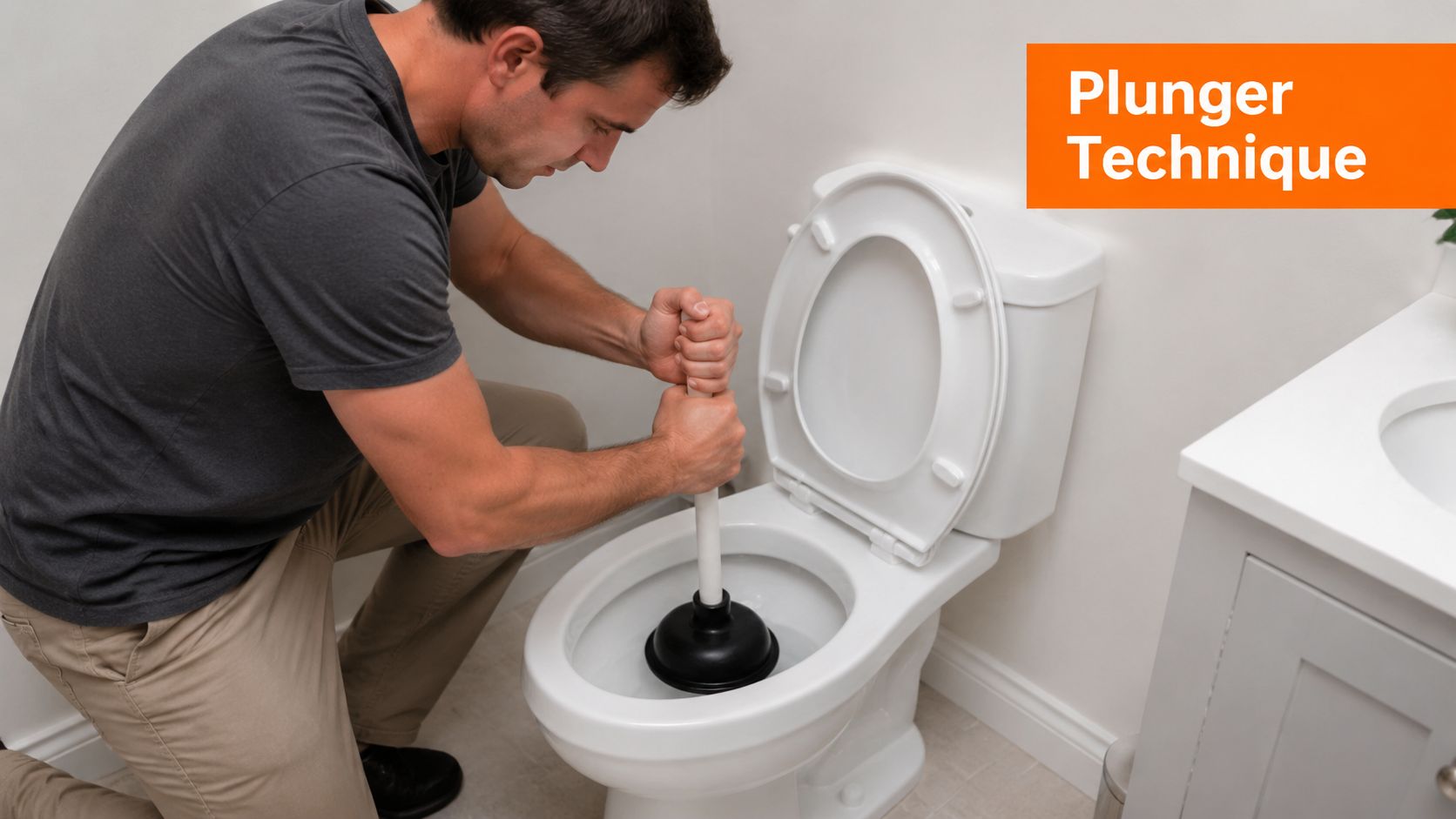
A lot of people own the wrong plunger for the job. A standard cup plunger has a flat rim and works better on sinks or tubs. A flange plunger has an extra rubber sleeve that fits into the toilet drain opening, which lets it seal properly inside the bowl. That seal matters because plunging is about pressure and suction, not random force.
Use the 4-P method
The most reliable process is the Place, Purge, Pump, Pull method. According to this guide to unclogging a toilet with a flange plunger, using the 4-P technique with a flange-style plunger clears minor to moderate clogs with an approximate 85% success rate.
Here's how to do it correctly:
- Place the flange into the toilet outlet so the rubber fully covers the drain opening.
- Purge the air with one gentle push. Trapped air can splash dirty water back at you instead of transferring force to the clog.
- Pump with steady, firm strokes for 20 to 30 seconds while keeping the seal intact.
- Pull sharply at the end to create suction and loosen the blockage.
If the water drains down after that, wait a moment and do a cautious test flush. If the bowl starts acting normal again, you're in good shape.
What good plunging feels like
A proper plunge feels controlled, not violent. You should feel resistance through the handle, then a slight release as the clog starts to move. If the plunger slips, gurgles, or splashes without resistance, the seal is bad and you're mostly moving water around.
Common mistakes are easy to fix:
| Problem | What's happening | What to do |
|---|---|---|
| Plunger keeps slipping | Wrong plunger or weak seal | Use a flange plunger and center it carefully |
| Water splashes upward | Too much air in the cup | Start with a slow first push to purge air |
| Nothing changes after repeated effort | Clog may be deeper or denser | Move to the next DIY method |
| Bowl is too empty for a seal | Not enough water around the cup | Add enough water to cover the plunger head |
This short demonstration can help if you want to see the motion before trying it yourself.
What not to do with a plunger
Don't jab fast with short, angry strokes. That usually breaks the seal and sprays water. Don't lean all your body weight onto the handle either. Toilets are porcelain, and porcelain doesn't forgive rough treatment.
A plunger works when it moves the clog. It fails when it only churns the bowl.
If you're trying to learn how to unclog your toilet quickly, this is the step to master. It solves a lot of problems when it's done correctly.
No Plunger or a Stubborn Clog Try These Solutions
If you don't have a plunger, or if plunging improved things but didn't finish the job, there are two solid next steps that use common household items. Both are gentler than harsh drain chemicals, and that's a good thing.
Harsh chemical cleaners can sit in the bowl, damage components, and create a hazard for anyone who later has to plunge or snake the toilet. Toilets aren't kitchen sinks. A product that's marketed as “powerful” can make the next step more dangerous, not more effective.
Dish soap and hot water
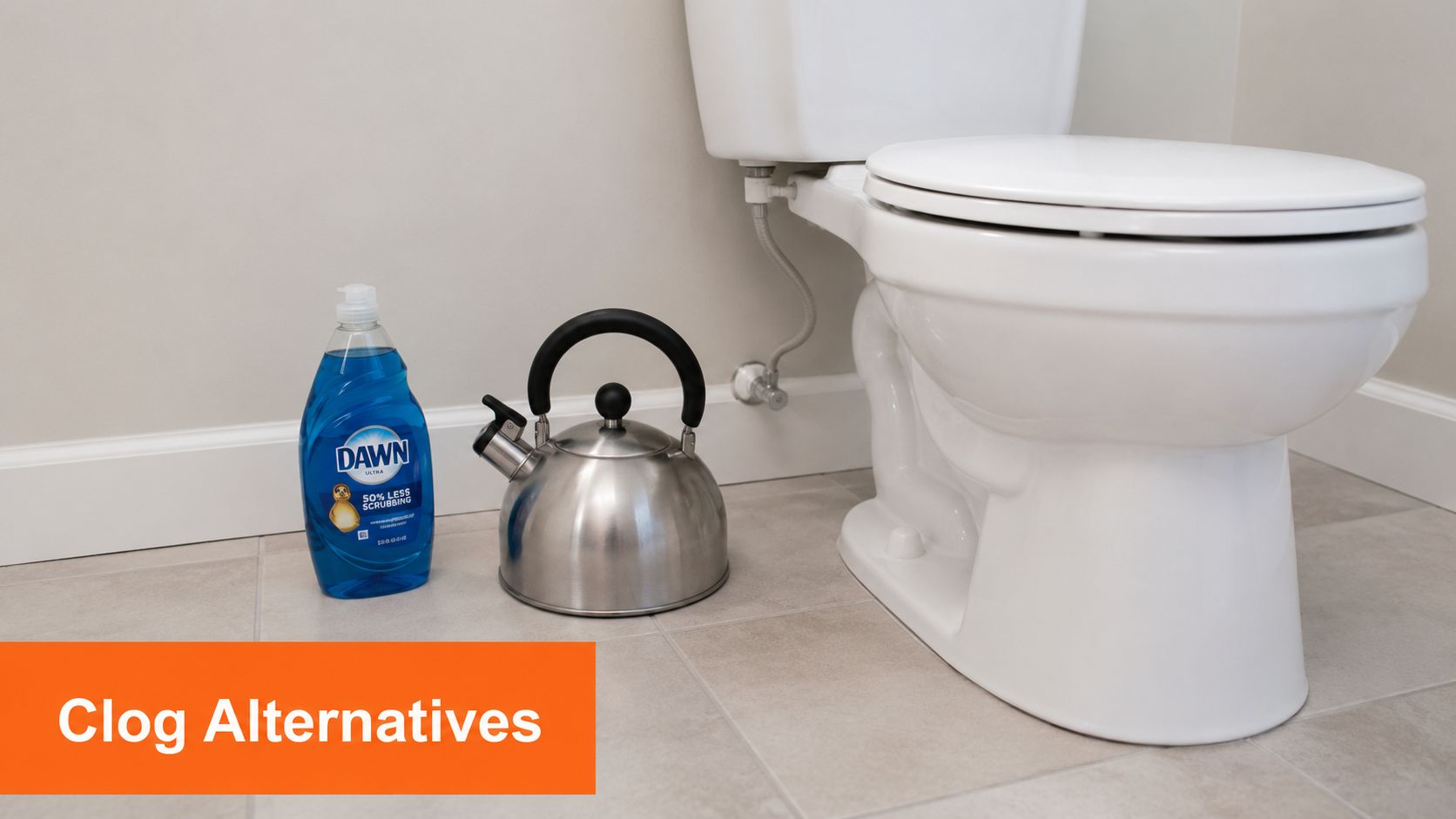
According to Scott's unclogging guide, half a cup of dish soap, followed by a gallon of hot, not boiling, water and a 20-minute wait, can soften and lubricate a stubborn blockage.
Use it this way:
- Pour in the dish soap first: It needs direct contact with the clog and the trapway walls.
- Add hot water carefully: Pour from about waist height if you can do so without splashing. The added force helps move the soap deeper into the blockage.
- Wait before testing: Give it time to work. Rushing this step usually means repeating it.
Why it works is simple. Soap reduces friction, and hot water helps soften organic material and toilet paper.
Never use boiling water. It can crack porcelain and damage seals.
That warning matters more than people think. A toilet bowl isn't built for thermal shock.
Baking soda and vinegar
The second option is slower but useful when you want a chemical-free approach. The same Scott source notes that 1 cup of baking soda and 1 cup of vinegar can help break up a clog within 30 minutes.
A clean way to do it:
- Add the baking soda to the bowl.
- Pour in the vinegar slowly.
- Let the fizzing reaction settle and work.
- Wait before trying a gentle flush.
This method won't bulldoze through a hard object. It's better for soft buildup and paper-heavy clogs.
Which one should you try first
If you want a simple decision rule, use this:
- Use dish soap and hot water when the clog seems fresh and likely soft.
- Use baking soda and vinegar when you have time to let it sit and want to avoid stronger products.
- Skip both if you suspect a toy, wipes, hygiene products, or another solid object is lodged in the trap.
If neither method changes the water level or bowl behavior, stop pouring things into the toilet. More liquid won't fix a solid obstruction.
Using a Toilet Auger for Deeper Clogs
When a plunger won't clear the blockage, the next true DIY tool is a toilet auger, also called a closet auger. This is not the same as a general drain snake.
A toilet auger is built for toilets. It has a protective bend or sleeve designed to follow the shape of the trap without scraping the porcelain. That matters, because a regular metal snake can leave scratches that are ugly and hard to clean.

How to use it without damaging the bowl
The process is straightforward if you go slowly.
- Retract the cable fully into the auger.
- Set the rubber or plastic guide into the toilet outlet.
- Aim the auger down the trap and begin turning the handle as you feed the cable forward.
- When you feel resistance, keep steady pressure while turning. Don't force it.
- If the resistance gives way, you've either broken through the clog or hooked it.
- Retract the cable carefully and inspect what comes back.
You're feeling for a change in resistance. A packed paper clog often feels soft and draggy. A foreign object can feel abrupt and solid. Either way, patience beats force.
When the auger still doesn't solve it
If the cable won't advance, or if the toilet drains a little but not fully, the obstruction may be deeper than the trap. Some experienced DIYers use a wet/dry shop vacuum as a final attempt to suction out a stubborn blockage after an auger fails. That approach is described in this Family Handyman video reference as a last trick before pulling the toilet.
That said, it's not a first recommendation for most homeowners. It can get messy fast, and used incorrectly, it creates a sanitation problem without solving the clog.
If an auger doesn't change the toilet's behavior, the issue may no longer be a simple bowl clog.
At that point, brute force usually stops helping.
When to Stop and Call a Professional Plumber
A clogged toilet isn't a test of stubbornness. There's a point where stopping is the smart move.
If basic methods fail after a few careful attempts, or the toilet keeps clogging again soon after you clear it, there may be a deeper issue in the drain line. If other fixtures start acting up too, such as a shower or sink backing up when the toilet is used, that points away from a simple toilet clog and toward a larger drainage problem.
Clear signs you're past DIY territory
Call a plumber when you notice any of these:
- Repeated clogs: The toilet clears, then backs up again with normal use.
- Multiple fixtures affected: Water shows up in a tub, shower, or sink when the toilet is flushed.
- Sewer odor: A strong drain or sewer smell can signal a deeper line issue.
- No response to an auger: If the auger doesn't restore proper flow, the blockage may be beyond reach.
- Suspected foreign object: Toys, wipes, and hygiene products often need more than a plunger.
A remodel can also create hidden drain problems if rough-in dimensions or fixture choices weren't matched properly. If you're comparing layouts or trying to understand toilet line sizing, this guide to bathroom remodel drain dimensions gives helpful context.
Why calling isn't giving up
Professionals have tools that reach farther, diagnose faster, and reduce the risk of damaging the toilet or line. That matters when the alternative is repeated overflow risk, contaminated water, or pulling the toilet without knowing what's wrong.
For homeowners who want one more visual reminder that experienced help matters on home systems, this local service feature image is a good reminder that some jobs are worth handing off.
If you're in Tampa Bay, Sarasota, Fort Myers, Port Charlotte, Cape Coral, or nearby areas, getting a licensed plumber involved early can prevent a lot of cleanup and guesswork.
If your toilet still won't clear, or you're dealing with repeat backups, Heatwave Air Conditioning, Plumbing, & Electric can help. Their plumbing team serves homeowners across Tampa Bay and Southwest Florida with professional drain and toilet clog service, so you can stop troubleshooting and get the problem fixed safely. Call or book online for fast help and peace of mind.