
Think of an HVAC maintenance plan as a wellness program for your home's heating and cooling system. It’s a simple service agreement you set up with a professional company to perform regular, scheduled check-ups and tune-ups. The whole point is to keep everything running smoothly and catch small issues before they snowball into major, expensive breakdowns.
Understanding Your HVAC Maintenance Plan

Here's a good way to look at it: you wouldn't drive your car for 50,000 miles without changing the oil, right? That same logic applies directly to your home's comfort system. An HVAC maintenance plan is just that—routine, preventative care.
Instead of waiting for your AC to die in the middle of a brutal Florida summer, this agreement creates a partnership with a team you trust. They’ll handle the routine inspections, cleanings, and critical tweaks needed to keep your system in peak condition all year long.
An Investment, Not an Expense
It’s easy to see a maintenance plan as just another monthly bill, but it's much more of an investment in your home. A well-cared-for system runs more efficiently, and that translates directly into lower energy bills every single month.
Neglecting your system is a guaranteed way to pay more in the long run. Proper care protects your equipment, extends its lifespan, and ensures it performs optimally when you need it most.
This isn't just our opinion; it's backed by the experts. The U.S. Department of Energy has found that routine HVAC maintenance can lead to annual energy savings of 5-20%. On the flip side, a poorly maintained system can inflate your home's energy use by 30% or more. Industry data from sources like getjobber.com consistently supports these findings.
The Foundation of Reliability
At the end of the day, an HVAC maintenance plan is your best defense against predictable problems. It's designed to catch small issues—like a clogged drain line or a loose wire—before they can turn into a system-wide failure that leaves you sweating.
By investing in consistent care, you're not just buying a service. You're buying reliability and peace of mind. Knowing your system is professionally looked after is one of the biggest benefits of HVAC maintenance. It builds a foundation of reliability for a longer-lasting, more efficient system that won’t let you down.
What a Comprehensive Maintenance Plan Includes
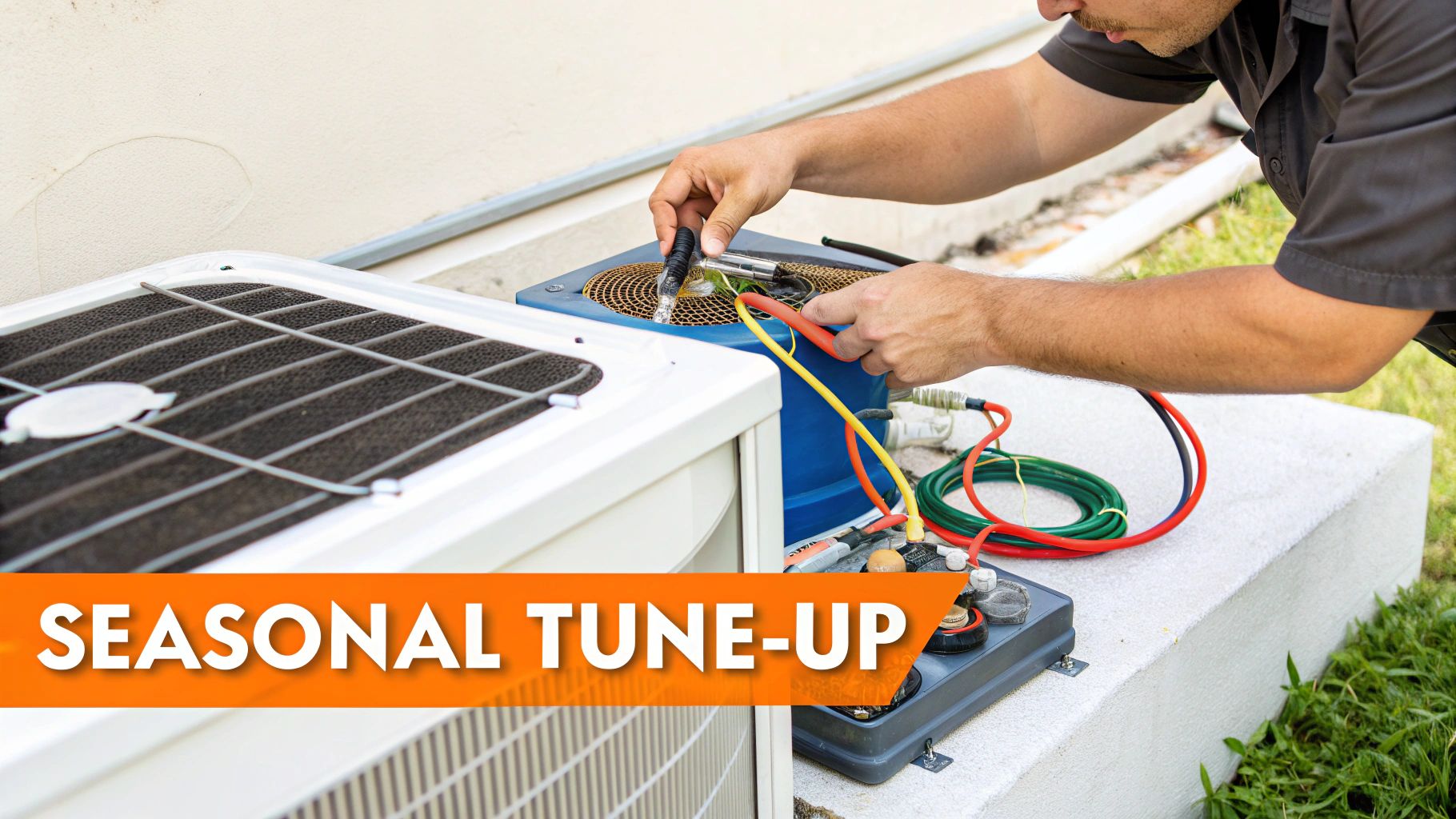
So, what are you actually paying for when you sign up for an HVAC maintenance plan? It’s a whole lot more than just a quick look at your system. A great plan is built on a foundation of detailed technical tasks and exclusive member perks, all designed to keep your system humming along and your home comfortable.
Think of it as a deep-dive wellness check for your air conditioner and heater. A certified technician performs a series of precise checks and adjustments that go far beyond what a homeowner can safely or effectively do. This isn't just about swapping out a filter; it's a systematic process to boost performance, ensure safety, and stop future breakdowns in their tracks.
The Technical Tune-Up Checklist
During each visit, a technician follows a meticulous checklist. While the specifics can vary a little from company to company, any quality service agreement will cover the core components that directly impact your system's efficiency and lifespan. The whole point is to clean, calibrate, and inspect every critical part of your AC and heater.
A good maintenance visit should cover a lot of ground. Below is a table breaking down some of the most critical tasks a technician performs and, more importantly, why they matter to you and your system.
Key Services in a Typical HVAC Maintenance Plan
| Service Component | What It Involves | Why It's Important |
|---|---|---|
| Clean Coils | The technician thoroughly cleans both the indoor evaporator and outdoor condenser coils. | Dirty coils can't transfer heat effectively, forcing your system to work harder and longer. This drives up energy bills and causes unnecessary wear and tear. |
| Check Refrigerant Levels | The technician measures the refrigerant charge to ensure it matches the manufacturer's exact specifications. | Too little or too much refrigerant can severely damage the compressor—the heart of your AC. Correct levels are key for efficient cooling and preventing a costly failure. |
| Test Electrical Connections | All electrical connections are inspected and tightened. Voltage and amperage are tested. | Loose or corroded wires are a major fire hazard and a top cause of system breakdowns. This proactive check ensures safe, reliable operation. |
| Calibrate Thermostat | The technician ensures the thermostat is reading the room temperature correctly and communicating properly with the HVAC unit. | An inaccurate thermostat can make your system run too often or not enough, leading to discomfort and wasted energy. Proper calibration ensures it works as it should. |
These are just a few of the crucial steps. Each one plays a role in keeping your system running at its best, especially here in Florida where our ACs work overtime. You can dive deeper into the process and learn why you should get an AC tune-up in our detailed guide.
More Than Just a Tune-Up
Beyond the hands-on service, a great maintenance plan delivers serious value through exclusive member benefits. These perks are designed to save you money and give you peace of mind, especially when something goes wrong unexpectedly.
A maintenance plan is your VIP pass to better service. It ensures that when you need help the most—like during a mid-August heatwave—you are at the front of the line.
The most valuable perks usually include:
- Priority Service: When your AC dies on the hottest day of the year, you won't get stuck at the bottom of a long waiting list. Members get pushed to the top of the schedule, meaning a technician gets to your home much faster.
- Discounts on Repairs and Parts: If a problem is found during a tune-up or your system breaks down later, plan members typically get a discount of 10-20% on both parts and labor. This can add up to significant savings.
- Warranty Compliance: Most HVAC manufacturers require proof of regular, professional maintenance to keep your warranty valid. Your service plan provides the documentation you need to protect your investment.
The Financial Case for Proactive HVAC Care

When you see the price tag on an HVAC maintenance plan, it's easy to think of it as just another expense. But the smart way to look at it is as a financial shield—an investment that stops much bigger, uglier costs from ever showing up. The real cost isn't in the plan; it's in the price you pay for neglect.
A finely tuned AC system is an efficient one. When the coils are clean and all the parts are calibrated just right, your air conditioner simply doesn't have to work as hard to keep your home cool. That translates directly into lower electricity use and noticeable savings on your monthly utility bills.
As a side note, pairing your well-maintained AC with energy-efficient ceiling fans is another great strategy to lower your overall cooling costs even further.
Avoiding Catastrophic Failures
The most compelling financial argument for proactive care is simple: avoiding a complete, catastrophic breakdown. Regular inspections are designed to catch the small stuff, like a frayed wire or a tiny refrigerant leak, before it snowballs into a full-blown disaster. A quick, cheap fix today can prevent a system-killing failure tomorrow.
Think about it this way: a technician might spot a struggling capacitor during a routine tune-up—a relatively minor repair. If you let that go, the same failing part could cause the entire compressor to burn out, which is one of the single most expensive repairs your HVAC system can have.
An HVAC maintenance plan shifts your spending from reactive, high-cost emergency repairs to proactive, low-cost preventative care. It’s the difference between paying for a check-up versus paying for major surgery.
The numbers don't lie. The national average for an HVAC repair is around $350, but a major part failure like a compressor replacement can easily soar past $3,000. By investing in a maintenance plan, you dramatically slash the odds of ever facing those wallet-draining emergencies.
A Predictable Expense vs. an Unpredictable Crisis
At the end of the day, a maintenance plan replaces a massive, unpredictable repair bill with a small, manageable annual fee. This makes budgeting for your home's upkeep so much simpler and less stressful. For most homeowners, the cost of an unexpected AC replacement is a huge financial shock.
When you weigh the modest annual cost of a plan against the staggering price of an emergency system replacement, the choice becomes crystal clear. And for those big-ticket items that eventually become unavoidable, understanding your HVAC financing options can provide extra peace of mind and flexibility. Proactive care isn't just about maintenance; it's about smart financial management for your home.
Why Florida Puts Unique Stress on Your HVAC System
An HVAC system up in Minnesota and one down here in Tampa Bay live completely different lives. Think about it: in Florida, your air conditioner isn't a seasonal luxury—it's a high-performance machine running almost nonstop for most of the year. This constant operation puts an incredible amount of strain on every single component, far beyond what systems in milder climates ever have to deal with.
This relentless demand is exactly why a generic, one-size-fits-all HVAC maintenance plan just doesn't cut it here. Your system is fighting a unique battle against local environmental bullies that require a specialized game plan. Trying to ignore these regional challenges is just asking for a premature breakdown and a wallet-draining repair bill.
The Double Threat of Humidity and Salt Air
Florida's environment wages a two-pronged attack on your HVAC system. First, you have the thick, suffocating humidity. This moisture doesn’t just make you uncomfortable; it creates the perfect breeding ground for mold and mildew inside your system’s dark, cool components, like the evaporator coil and drain pan.
This gunk can clog your system, choke off airflow, and absolutely destroy your indoor air quality. On top of that, our coastal location means your outdoor unit is constantly being bathed in salty air. This salt is unbelievably corrosive, aggressively eating away at metal parts—especially the delicate fins on your condenser coil—leading to rust and rapid decay.
A standard maintenance checklist from a national chain might completely miss the early signs of corrosion or mold that are specific to our humid, salty climate. A local expert knows exactly where to look for these Florida-specific problems before they turn into major headaches.
For families in hot spots like Tampa Bay, Sarasota, Port Charlotte, Cape Coral, and Fort Myers, where summer feels like it’s in the triple digits, an AC breakdown isn’t just an inconvenience. It’s a genuine crisis, and it's one that proactive maintenance is designed to prevent.
Why Local Expertise Matters
This is where a maintenance approach designed for Southwest Florida becomes so critical. A technician who lives and works here knows to perform targeted services that directly combat these threats. They'll use specialized cleaners on the coils to stop mold in its tracks and can apply protective coatings to shield vulnerable metal parts from salt corrosion.
At the end of the day, keeping your system alive and well in this environment demands more than a simple tune-up. It requires a defensive strategy against humidity and salt. To learn more, check out our guide on 8 essential tips to avoid AC breakdowns this summer in Florida, which dives deeper into these preventative measures. An HVAC maintenance plan tailored for our region isn’t just a good idea—it’s the best defense you can have.
How to Choose the Right HVAC Maintenance Plan
Picking the right HVAC maintenance plan can feel like a big deal, but it really boils down to a few key things. You just need to match the plan’s features with your specific needs, the age of your system, and what you're comfortable spending. Not all plans are created equal, so let's walk through how to find the one that makes the most sense for you.
Think of it like choosing a phone plan. A basic option might cover the essentials just fine, while a premium one is loaded with extras that give you total peace of mind. The goal is to land in that sweet spot where you get the protection you need without paying for bells and whistles you'll never use.
Assess Your System and Your Needs
First things first, take a look at your HVAC unit. Is it brand new, or is it getting up there in years, closer to the end of its typical 15-20 year lifespan? A newer system is often fine with a basic plan that just covers the essential tune-ups to keep that manufacturer's warranty active.
On the flip side, an older unit is a perfect candidate for a more comprehensive plan. As systems age, they’re just more likely to have issues. A premium plan that includes discounts on repairs, priority service, and maybe even covers certain parts can be a real financial lifesaver when an older AC decides to act up.
Here in Florida, our unique environment puts a ton of extra stress on HVAC systems, making a solid maintenance plan even more critical.
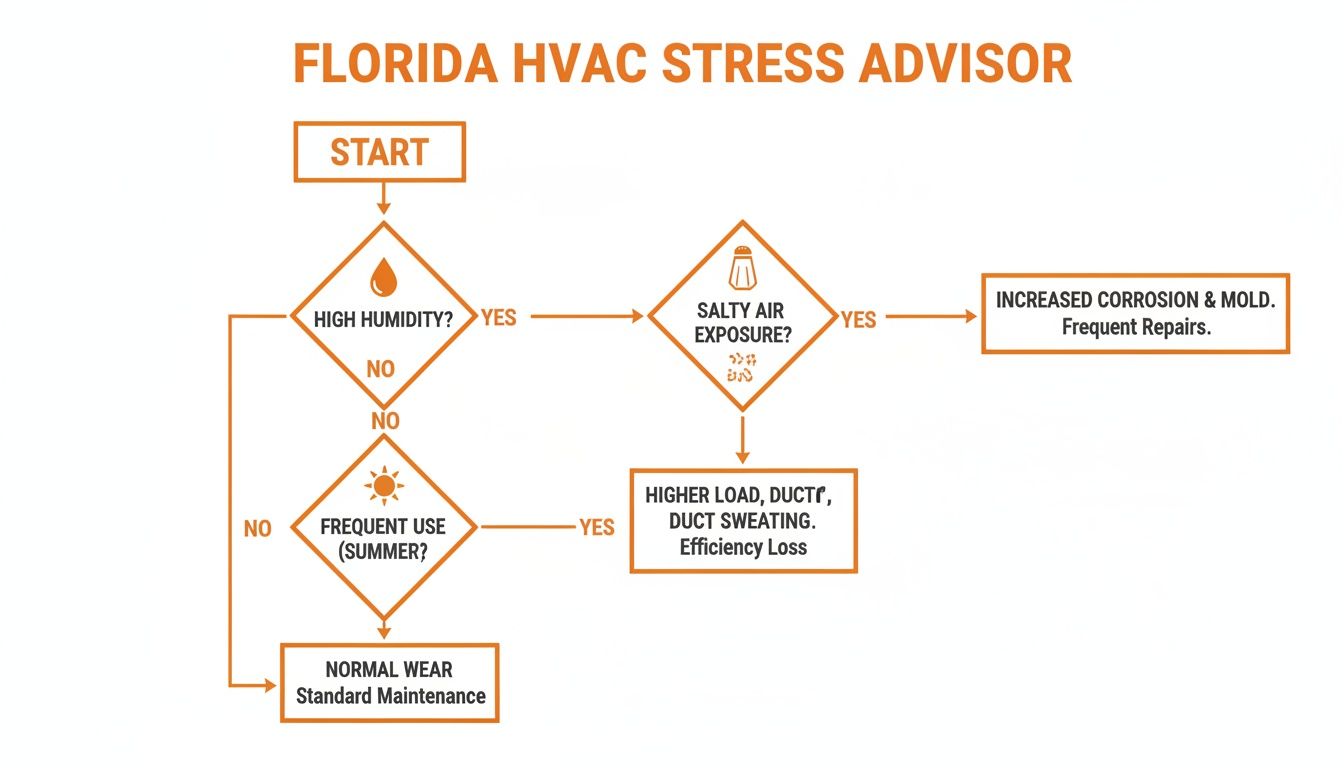
As the chart shows, the constant humidity, salty air, and near-daily use really accelerate wear and tear. This is why consistent, specialized maintenance is the best way to keep your system running longer.
Comparing HVAC Maintenance Plan Tiers
Most HVAC companies offer a few different plans to fit various budgets and needs. While the names might change from one company to the next, they usually fall into a couple of common categories. Here’s a quick comparison of what you can generally expect.
Most HVAC companies offer different tiers to fit various budgets. While the names change, they generally fall into a couple of common categories. Here’s a quick comparison to help you see the difference.
| Feature | Basic Plan | Premium Plan |
|---|---|---|
| Scheduled Tune-Ups | Includes two essential visits per year (spring and fall). | Includes the same two visits, often with more in-depth checks and cleaning. |
| Repair Discounts | Usually offers a modest discount (~10%) on parts and labor. | Provides a larger discount (15-20% or more) and sometimes covers certain parts. |
| Service Fees | A standard diagnostic fee usually applies for any repair visit. | Often includes waived or significantly reduced diagnostic fees. |
| Priority Service | May offer faster scheduling than non-members during busy seasons. | Guarantees top-of-the-list, emergency service for breakdowns. |
A basic plan is a great fit for homeowners with newer systems who mainly want to keep their warranty intact and cover the fundamentals. A premium plan, however, acts as a much stronger financial safety net for anyone with older equipment or those who simply want the highest level of assurance against surprise repair bills.
Questions to Ask Before You Sign
Before you commit to any plan, it’s smart to ask a few questions. This helps ensure you're partnering with a reputable company and getting a plan that truly delivers on its promises.
Here are a few things you should definitely ask:
- Are your technicians certified? You want to hear that they are NATE-certified (North American Technician Excellence), which is the gold standard in our industry.
- Can I see a full checklist of what’s included in a tune-up? A transparent company will have no problem showing you exactly what they do during a service visit.
- What are your emergency service hours and response times for members? You need to know they’ll be there for you when it really counts, like on a sweltering August weekend.
- How does your priority scheduling work? Ask them to explain exactly how much faster you’ll get service compared to a non-member during the peak summer rush.
Asking these simple questions upfront will give you the confidence to pick a plan and a partner you can rely on to keep your home comfortable for years to come.
Answers to Common HVAC Maintenance Questions
Even after seeing all the benefits laid out, it’s completely normal to have a few lingering questions before investing in an HVAC maintenance plan. We get it. That's why we've put together some of the most common questions we hear from homeowners right here, with direct, helpful answers to clear up any doubts.
Making an informed decision is key, and our goal is to give you that final piece of confidence.
How Often Should My HVAC System Be Serviced in Florida?
Here in Florida, with our intense climate, servicing your HVAC system twice a year is the gold standard. You really can't get away with less. A spring visit gets your AC ready for the brutal summer ahead, while an autumn check-up makes sure your heating is good to go for those surprisingly chilly nights.
This biannual schedule isn't just a recommendation—it's essential for efficiency and often required by manufacturers to keep your warranty valid.
Is a Maintenance Plan Worth It for a New System?
Absolutely. In fact, getting a plan right after installing a new system is one of the smartest moves you can make. Think about it: with retrofit projects making up a massive 62.5% of the HVAC market, it's clear that proper maintenance is critical for getting both old and new units to that 15-20 year lifespan everyone hopes for. You can see more on these HVAC industry trends over at getjobber.com.
Besides that, most manufacturers make their warranties conditional on having proof of regular, professional maintenance. A plan not only gives you that crucial documentation but also ensures your brand-new investment runs at peak performance from day one.
What Happens If a Problem Is Found During Maintenance?
If our technician finds an issue during a tune-up, the first thing they'll do is explain the situation clearly, walk you through your options, and provide an upfront, easy-to-understand quote for any needed repairs. No surprises.
One of the biggest perks of most maintenance plans is that members usually get a discount on these repairs and are bumped to the front of the line for scheduling. This proactive approach helps you learn about common AC problems and solutions before they turn into a full-blown emergency.
Can I Just Do HVAC Maintenance Myself?
While homeowners should definitely handle simple tasks like changing air filters regularly, the deep, comprehensive maintenance really requires a professional touch. To stay on top of your schedule and make sure nothing gets missed, you could even use recurring task apps to set reminders for filter changes.
But when it comes to the technical stuff, professional service is safer, more effective, and essential for the long-term health of your system. Certified technicians have the specialized tools and training to safely manage electrical components, handle refrigerant, and diagnose complex issues an untrained eye would definitely miss.
Ready to protect your home's most important system with a reliable HVAC maintenance plan? The experts at Heatwave Air Conditioning, Plumbing, & Electric are here to help. Contact us today for a free estimate and discover the peace of mind that comes with proactive care: https://www.heatwavehvac.com.