
Your house has that sticky, stale feel that every Florida homeowner recognizes immediately. The thermostat says one number, your skin says another, and the vents are pushing air that feels more like a fan than air conditioning. In Tampa Bay and Southwest Florida, that's not a minor comfort issue. When the HVAC is not cooling in July, August, or after a stormy afternoon, the whole house changes fast.
A lot of people make the same move first. They lower the thermostat another degree, wait ten minutes, then stand under a vent hoping for a miracle. Sometimes the fix is simple. Sometimes the system is warning you that something bigger is going on. The key is knowing which is which, and knowing where the safe stopping point is.
Florida homes add a few twists that generic advice misses. High humidity stresses drain lines and coils. Salt air near the coast speeds up corrosion. Afternoon power flickers and hurricane season debris can leave an outdoor unit running under the wrong conditions. Those details matter when you're trying to sort out why your AC is running but not doing its job.
If you like hearing how local homeowners describe the experience, even a quick look at customer feedback from Tampa Bay area service calls tells the same story. The problem often starts with, “It was cooling fine yesterday.”

That Unmistakable Feeling When the AC Gives Up
On a hot Tampa Bay afternoon, an AC failure usually doesn't arrive dramatically. It sneaks in. The house starts feeling muggy. Bedrooms stop recovering in the afternoon sun. The air coming from the vents feels weak or lukewarm, and the system seems to run forever without catching up.
That's the moment homeowners start wondering if this is a quick fix or the start of a long day.
What Florida homeowners notice first
In this climate, cooling problems often show up as humidity before they show up as heat. The temperature may only creep up a little at first, but the house feels clammy and heavy. That's because your air conditioner isn't just cooling the air. It's also helping remove moisture from it.
A few common first signs tend to show up together:
- The thermostat is set correctly, but the indoor temperature won't drop.
- The fan is moving air, but it doesn't feel cold.
- The system runs longer than usual, especially in late afternoon.
- Certain rooms feel worse than others, often upstairs or on the sunny side.
When homeowners say, “It's blowing, but it's not cooling,” that narrows the field fast. Air movement and actual cooling are not the same thing.
Don't assume the worst first
The good news is that some of the most common causes are also the safest to check yourself. A thermostat setting issue, a packed air filter, storm debris around the condenser, or a tripped breaker can all create an HVAC not cooling situation without meaning the entire system has failed.
The bad news is that Florida conditions can also hide more serious trouble. A clogged filter can lead to a frozen coil. A refrigerant problem can look like weak cooling at first. A backed-up condensate drain can shut a system down to prevent water damage.
Start simple. Stay safe. If the signs point beyond that line, stop and call for service.
Your First Line of Defense Quick DIY Checks
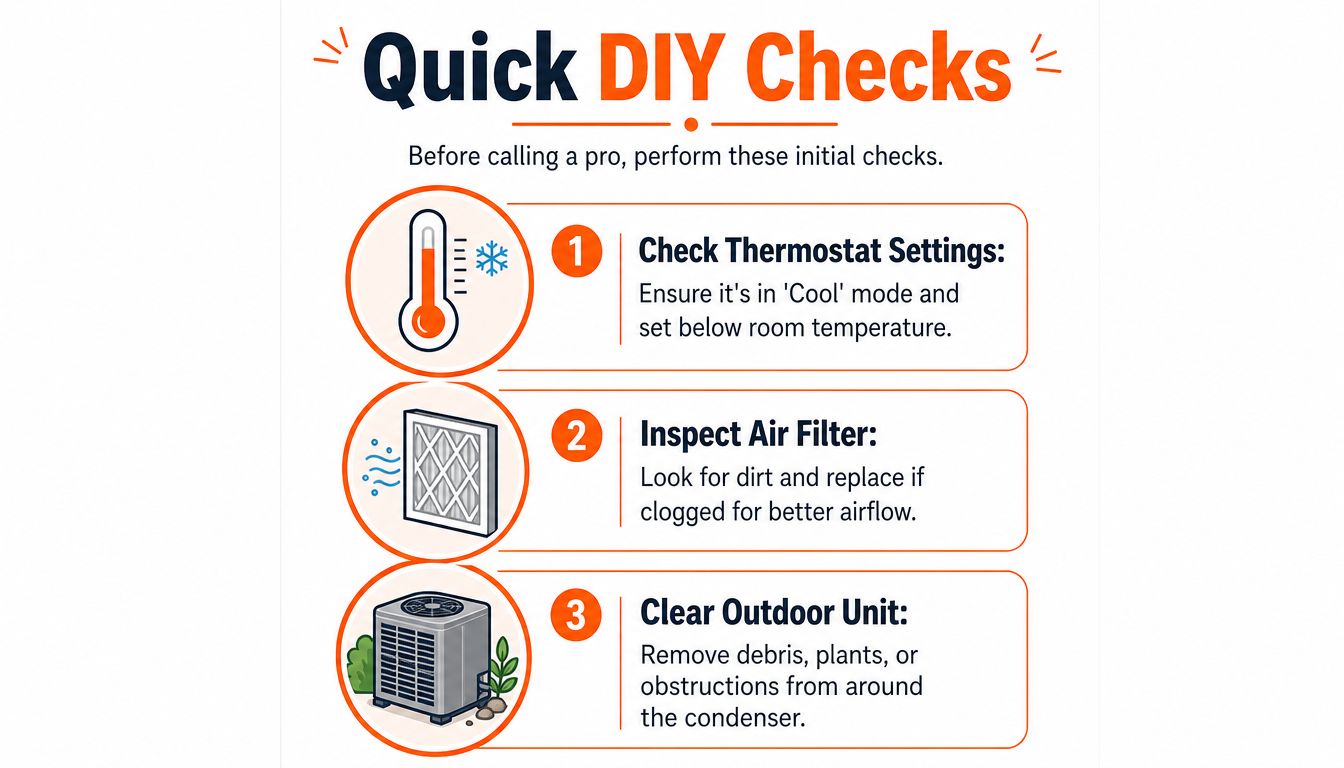
Before you assume a major failure, run the few checks that solve a lot of no-cooling calls in Florida homes. These are safe homeowner steps. They do not require tools, opening equipment panels, or touching wiring.
Check the thermostat before anything else
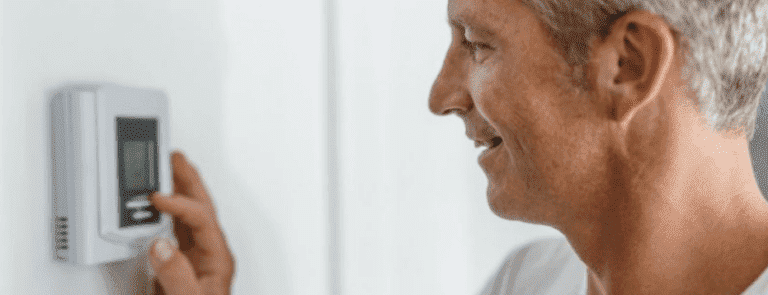
Start at the thermostat. Confirm it is set to Cool and that the set temperature is below the room temperature. If the screen is dim, blank, or acting erratically, replace the batteries if your model uses them.
Thermostat location can also create confusion in Florida houses. A thermostat near a sunny window, lamp, kitchen, or drafty hallway can misread the space and keep the system running in ways that do not match how the rest of the home feels. That problem shows up often in Tampa Bay and Southwest Florida homes with uneven sun exposure, high attic heat, or additions that changed airflow.
Here is the simple test. If the thermostat is clearly calling for cooling and the system responds, but the air in the house still feels warm or damp, move on to airflow and power.
Look at the air filter
This is the first physical item I would ask a homeowner to check.
Pull the filter out and hold it in good light. If you can barely see light through it, it is time to replace it. In our climate, filters load up faster because the system runs hard for long stretches, especially during humid months when the AC is removing moisture as well as heat.
Check for these common issues:
- Gray, matted dust across the surface
- Pet hair packed into the filter media
- Drywall or renovation dust
- Heavy pollen or fine debris after stormy weather
A restricted filter cuts airflow across the indoor coil. That can lead to weak cooling, longer run times, and in some cases ice on the coil. If you already see frost on refrigerant lines, water around the indoor unit, or very weak airflow from multiple vents, stop here and call us. Running a Florida system in that condition can turn a small airflow problem into a bigger repair.
For a quick seasonal reminder, this Heatwave service graphic for home HVAC upkeep is a useful visual.
Here's a quick video walkthrough for basic homeowner checks before scheduling repair:
Check the breaker safely
If the thermostat looks right and the filter is clean or replaced, check the breakers next.
Go to the main electrical panel and look for the breakers serving the air handler and outdoor condenser. If one is tripped, reset it once. One reset is a reasonable homeowner check after a power flicker, which is common during summer storms and hurricane season.
If the breaker trips again, stop. Do not keep resetting it. Repeated trips usually mean the system is drawing too much power or has an electrical fault, and that is the line where a technician needs to take over.
| What you find | What it usually means | What to do |
|---|---|---|
| Thermostat on wrong mode | System is not being told to cool | Correct the setting |
| Dirty filter | Airflow is restricted | Replace the filter |
| Breaker tripped once | Possible power interruption | Reset it once |
| Breaker trips again | Electrical or mechanical fault | Stop and call |
Step outside for one more fast check
Walk out to the condenser and look around it. In Southwest Florida, this quick check matters more than generic guides admit. Palm fronds, grass clippings, storm debris, and windblown mulch can block airflow. Near the coast, salt air can also leave grime on the cabinet and coil surfaces over time.
Do not open the unit or spray it with a pressure washer. Just clear loose debris around it, give it breathing room, and make sure it has not been boxed in by plants, fencing, or yard waste. If you find bent metal, damaged wiring, a burned smell, or signs the unit shifted after a storm, stop there and schedule service.
A Visual Inspection of Your Indoor and Outdoor Units
Once the easy fixes are ruled out, the next step is observation. You're not trying to diagnose like a technician with gauges and meters. You're trying to spot visible signs that explain why the system can't reject heat, move air, or drain moisture correctly.
What to look for outside
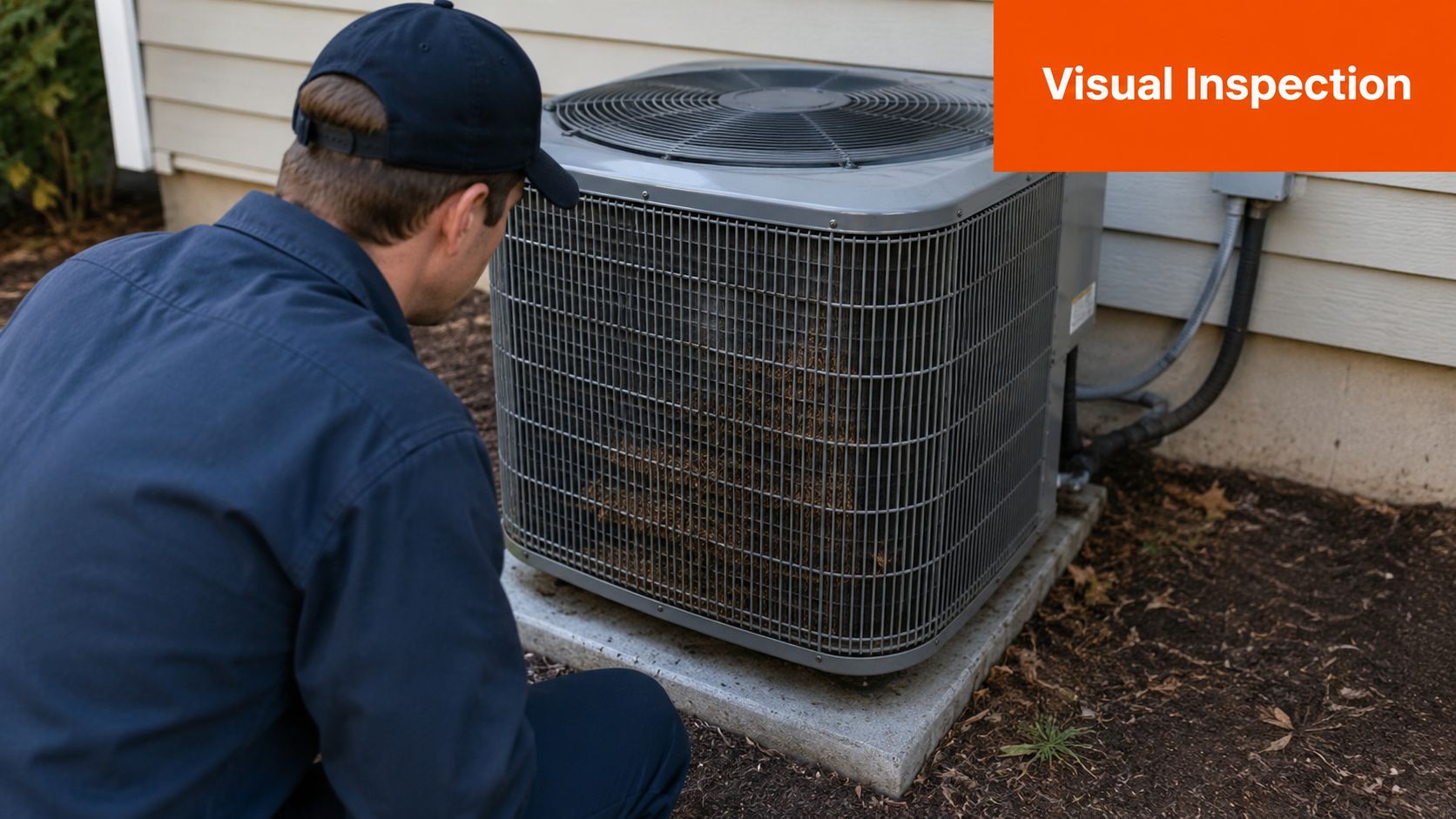
Your outdoor unit needs room to breathe. In Southwest Florida, I'd pay close attention after wind, mowing, or a storm line passes through. Leaves, mulch, seed pods, and salt-coated grime can all interfere with heat release.
Bryant notes that when an HVAC system runs but doesn't cool, evaporator coil freezing due to airflow restriction is a primary mechanical failure, and the recommended first step is turning the system to OFF and allowing it to thaw for 2 to 4 hours. Bryant also notes that dirty filters can reduce airflow by up to 40%, which contributes to ice buildup that blocks heat transfer, according to Bryant's AC troubleshooting guidance.
That's indoor icing, but the outdoor check still matters because poor condenser airflow also hurts performance.
Walk around the condenser and look for:
- Storm debris caught in or around the cabinet
- Vegetation crowding the unit
- Visible coil dirt on the outside fins
- A fan that isn't spinning normally
- Salt buildup or corrosion, especially in coastal neighborhoods
The minimum condenser clearance cited in the Bryant guidance is 1 inch around the outdoor unit to help prevent debris blockage, but in the field, more open space is always easier to keep clean and serviceable.
What to inspect inside
Now head to the indoor unit or air handler. In Florida, one of the biggest trouble spots is the condensate drain system. Your AC pulls moisture from the air constantly. If the drain line clogs, water can back up and trigger a safety switch that stops cooling to prevent overflow.
Watch for these signs:
- Water near the indoor unit
- A full secondary drain pan
- A musty smell near the air handler
- Intermittent shutdowns during heavy humidity
That issue is common here because humidity loads are high for long stretches of the year.
A local TV interview screenshot like this Heatwave community feature image reflects the kind of local conditions homeowners deal with every season.
If you see ice, shut it off
Ice changes the troubleshooting path. If you see frost or ice on the indoor coil area or refrigerant tubing, turn the thermostat to Off. Don't leave it trying to cool.
If the coil is frozen, running the system longer usually makes the problem harder to diagnose and harder on the equipment.
Let it thaw fully. Water during thawing is normal. Replace the filter if it's dirty. If cooling returns briefly and then the system ices up again, that usually means the problem wasn't just the filter. At that point, it's time for professional diagnosis.
Signs of Deeper Trouble Refrigerant and Electrical Issues
This is the line where observation is useful and DIY repair is not. If you've reached this point, the safest thing you can do is gather symptoms clearly, then stop before you create a more expensive problem.

Refrigerant warning signs
Refrigerant leaks require immediate professional intervention. This isn't a maintenance item like changing a filter. Refrigerant is the heat-transfer medium your system depends on, and if it's low, there's usually a leak that has to be found and repaired before the charge is corrected.
Watch and listen for these signs:
- Hissing or bubbling sounds near the indoor or outdoor unit
- Ice on copper refrigerant lines
- Lukewarm air from supply vents
- A system that runs continuously but never reaches the set temperature
Refrigerant cannot be topped off as a real fix. The leak must be located and repaired by a certified technician. Improper handling can damage the system and worsen the leak.
Electrical symptoms that mean stop
Florida weather is rough on electrical components. Power flickers, lightning activity, and heat stress can all show up as cooling issues.
Here are the symptoms that should end homeowner troubleshooting:
| Symptom | Why it matters | Safe response |
|---|---|---|
| Breaker trips again after reset | Electrical load or component fault | Leave it off |
| Burning smell near equipment | Possible wiring or motor problem | Shut system down |
| Outdoor unit hums but doesn't cool | Start/run component or compressor issue | Call for service |
| System short cycles repeatedly | Control or electrical fault possible | Stop guessing and schedule diagnosis |
One local brand identifier you may recognize is the Heatwave logo, but regardless of which licensed contractor you call, these are the symptoms to report clearly.

Complex component failures don't announce themselves neatly
A system can run and still fail to cool because a metering device is stuck or restricted. One example is a thermostatic expansion valve, or TXV. A stuck TXV can cause complete loss of cooling and accounts for 12% to 18% of “AC not cooling” repairs, according to this TXV diagnostic reference. Diagnosing it requires specialized pressure and temperature measurements.
That matters for homeowners because the symptoms can overlap with other problems. Warm air, icing, long runtimes, and poor temperature control don't automatically tell you which internal part failed.
The useful homeowner job here is not repair. It's noticing the pattern. What do you hear, what do you see, and what happened right before the problem started?
If the issue appeared after a storm, a power surge, line icing, or repeated breaker trips, tell your technician that first. It shortens the path to the right diagnosis.
When to Call Heatwave and What to Expect
There's a point where more homeowner troubleshooting stops being helpful. In Florida, that point comes sooner than people think because heat, humidity, and system runtime can turn a small cooling problem into water damage, compressor stress, or a dangerous electrical issue.
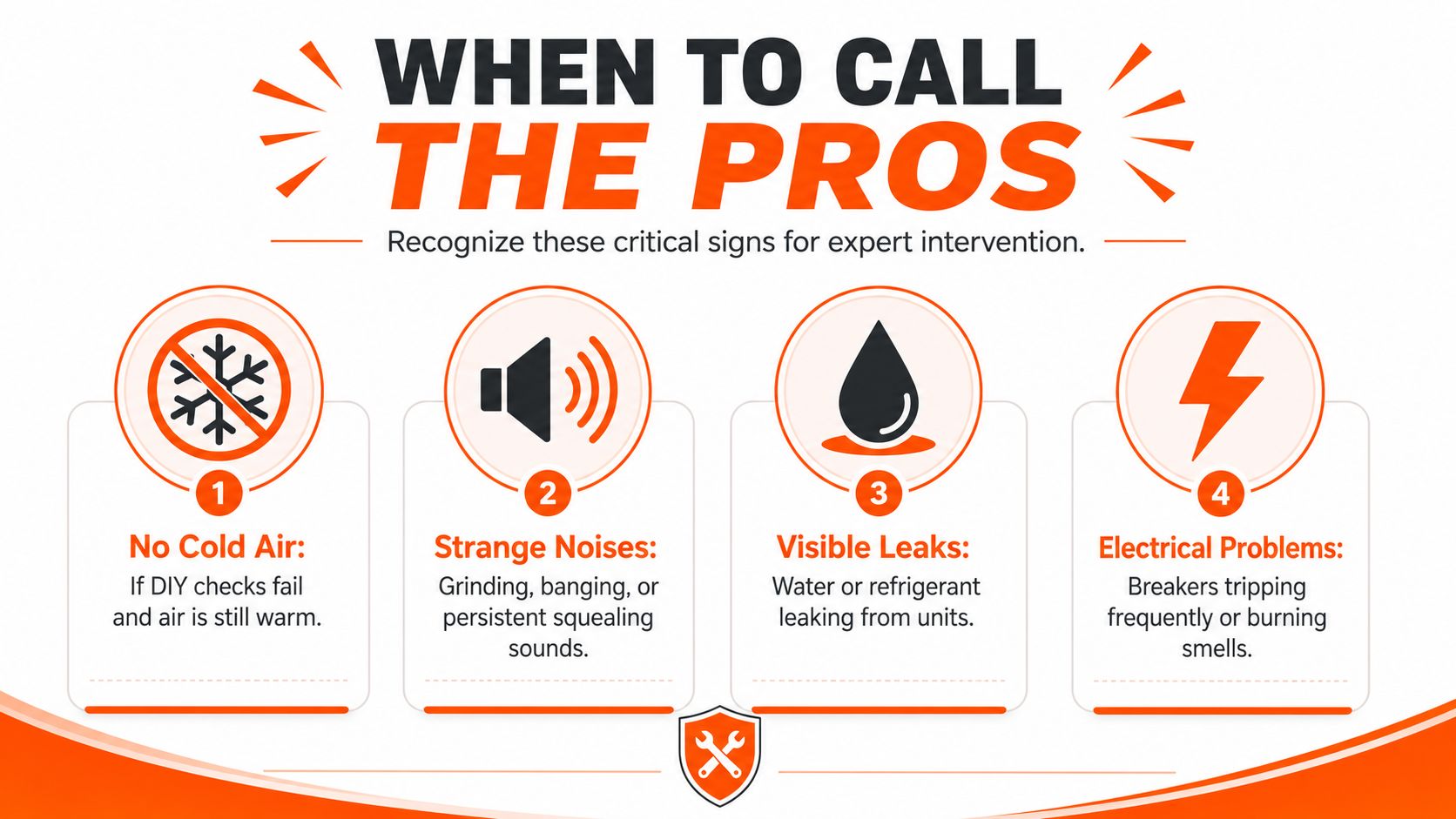
The clear stop-here list
If any of these are happening, stop troubleshooting and make the call:
- You changed the filter and checked the thermostat, but the air is still warm.
- You see ice on tubing or around the indoor equipment.
- The breaker trips again after a single reset.
- You hear hissing, bubbling, grinding, or buzzing that wasn't there before.
- There's water around the air handler, especially in an attic or closet installation.
- The outdoor unit ran through a recent storm event and now performance has dropped.
- The house is getting hotter and more humid fast, especially if anyone in the home is heat-sensitive.
These aren't “wait and see” symptoms in Tampa, Sarasota, Port Charlotte, Cape Coral, or Fort Myers during a long hot stretch.
What to have ready when you call
The most helpful service calls start with a clean symptom summary. You don't need to know the part name. You do need to describe what the system did.
Have these details ready:
- What the thermostat is set to and what the room temperature is showing.
- Whether the filter was replaced and when.
- What you observed outside, including storm debris, fan behavior, or line icing.
- What happened at the breaker, including whether it tripped again.
- Whether there's standing water near the indoor unit.
- Any unusual sounds or smells.
If you've done the safe checks already, say so. That helps the dispatcher and technician avoid repeating steps and focus on the likely fault path.
Why professional diagnosis matters
Some cooling failures look simple until gauges, temperature readings, and electrical testing prove otherwise. A stuck TXV is a good example. It can shut cooling down completely, and as noted earlier, it represents 12% to 18% of “AC not cooling” repairs in the cited diagnostic reference. You won't confirm that problem by looking at the thermostat or swapping a filter.
The same goes for refrigerant leaks. If a system is low, the leak has to be found and repaired. Adding refrigerant without repairing the leak does not solve the underlying problem.
A licensed technician also helps sort out trade-offs:
- Repair makes sense when the failure is isolated and the system condition supports it.
- Replacement becomes part of the conversation when multiple issues stack up, corrosion is advanced, or the equipment no longer supports reliable cooling in Florida's long season.
- Deferred action usually costs more when the system is short cycling, freezing, or tripping electrical protection.
For homeowners in this area, Heatwave Air Conditioning, Plumbing, & Electric is one option for diagnosing AC systems that are running but not cooling, along with related drain, electrical, and equipment issues in the same home service visit when needed.
A good HVAC visit should leave you with two things. The cause of the problem, and the reason that cause happened.
What the visit usually looks like
A proper service visit typically starts with confirmation of the complaint, thermostat call, indoor airflow, and outdoor operation. After that, the technician narrows the problem by symptom path. Airflow issues follow one path. Refrigerant and metering issues follow another. Electrical faults follow another.
That matters because the same homeowner complaint, “my HVAC is not cooling,” can come from very different failures.
Here's the mindset I'd recommend. Don't worry about naming the failed part. Focus on describing the sequence:
- It was cooling yesterday.
- The air turned warm this afternoon.
- I replaced the filter.
- I found ice on the line.
- The breaker held, or it didn't.
- There's water near the closet unit, or there isn't.
That sequence often tells more than a vague “it stopped working.”
Proactive Care Preventing the Next Breakdown
Once your system is cooling again, the next job is keeping a small problem from turning into another no-cool call in the middle of a Florida heat wave. In Tampa Bay and Southwest Florida, AC systems do not get much downtime. Long cooling seasons, heavy humidity, salt air near the coast, and storm debris all shorten the margin for error.
A unit that survives in a dry, mild climate can struggle here if basic upkeep slips.
What works in Southwest Florida homes
The best prevention habits are simple, but they need to match local conditions.
- Replace filters on a schedule that fits the house. Pets, construction dust, high occupancy, and frequent fan use can load a filter faster than homeowners expect. Restricted airflow raises strain on the system and can lead to icing, weak cooling, and drain trouble.
- Keep an eye on thermostat location. Direct sun, lamps, and warm drafts can throw off the reading and make the system run longer or shut off at the wrong time.
- Check the outdoor unit after storms. Palm fronds, mulch, standing water, and shifted fencing can block airflow or damage the condenser cabinet.
- Watch the condensate drain during humid months. In Florida, a partial drain clog can show up quickly as water near the air handler, musty odor, or a system that shuts off on safety.
- Rinse away buildup around the condenser area. Homes closer to the Gulf or Bay often deal with salt residue and corrosion faster than inland homes. The goal is early detection, not aggressive cleaning that bends fins or forces water into electrical components.
Some homeowners also find HVAC-integrated solutions helpful when they are looking at filtration, air treatment, and overall comfort as part of a larger plan for the home.
A realistic maintenance rhythm
A generic twice-a-year reminder is better than nothing, but Florida homes usually need a little more awareness than that. Before the long cooling stretch, check the filter, clear the condenser area, and confirm the thermostat is reading and responding normally. During peak humidity, pay attention to airflow changes and any sign of drain backup. After a tropical storm or hurricane, inspect the outdoor unit before you assume everything is fine. Even if the system still runs, debris impact, flooding, or a shifted pad can create problems that show up later.
That same seasonal mindset applies across the house. This Heatwave seasonal home readiness image reflects the same practical idea.

Habits that usually make the next breakdown more likely
A few homeowner responses create extra damage or hide the actual problem:
- Ignoring a drop in cooling because some air is still coming out
- Resetting breakers more than once
- Running the AC while the line or coil is frozen
- Assuming every warm-air issue means low refrigerant
- Waiting to address water around the indoor unit
- Skipping post-storm checks because the equipment looks normal from a distance
Those choices tend to turn a straightforward repair into a longer visit with more parts, more cleanup, or both.
If symptoms point back to icing, electrical issues, refrigerant concerns, or repeated drain problems, stop there and call a licensed technician. That is the right stopping point for safety. In this climate, fast action protects the equipment, helps control indoor humidity, and lowers the chance of a second failure right after the first repair.
If your home in Tampa Bay or Southwest Florida is getting warmer, more humid, or showing signs your AC needs professional help, contact Heatwave Air Conditioning, Plumbing, & Electric. A licensed technician can inspect the system safely, identify whether the problem is airflow, refrigerant, drainage, or electrical, and help you decide on the next practical step.