
You walk into the house after a long Florida afternoon, and the first thing you notice is that the air feels off. The thermostat says the system is cooling, but the rooms still feel sticky. The vents are blowing, yet the house never quite gets comfortable. By evening, you're wondering whether the AC is just losing the battle against the heat or whether something inside the system is wrong.
That's often when homeowners start searching for low refrigerant symptoms. It's a reasonable question. Refrigerant is what lets your AC move heat out of the house, and when the charge is low, the whole system starts acting tired. Cooling drops off, run times get longer, and utility bills can creep upward before the problem becomes obvious.
In Florida, that can feel urgent fast. A struggling AC isn't just inconvenient here. It affects comfort, humidity, sleep, and peace of mind. The good news is that not every weak-cooling problem means the system is low on refrigerant. Dirty filters, blocked airflow, and thermostat issues can create very similar symptoms.
Is Your Air Conditioner Struggling in the Florida Heat
A lot of homeowners in Tampa Bay, Sarasota, Fort Myers, Cape Coral, and Port Charlotte run into the same pattern. The AC worked fine not long ago. Then it started running longer. A bedroom stayed warmer than the rest of the house. The supply air didn't feel as cold. Nothing dramatic at first, just a slow drop in performance that gets harder to ignore once the outside heat settles in for the day.
That's what makes refrigerant problems tricky. They often don't announce themselves with one loud failure. They show up as a system that can't quite keep up anymore.
Refrigerant is the working fluid in the cooling cycle. It is the system's heat-carrying lifeblood. It absorbs heat indoors and releases it outside. When the charge is off, the AC can still run, but it won't do that job efficiently. Homeowners usually notice the comfort problem first, not the cause.
A lot of Florida households also start looking at ways to reduce indoor heat gain when the AC is under stress. If sun exposure is part of the problem, it helps to Compare home window tinting options so the system isn't fighting as much solar load during the hottest part of the day. And if the local heat feels relentless, this Tampa Bay heat wave snapshot captures exactly the kind of conditions that expose AC weaknesses fast.

Practical rule: If your AC suddenly seems weaker in the same weather you handled before, don't assume it's “just Florida.” Systems usually give warning signs before they fail.
The reassuring part is that these warning signs are useful. If you know what to look for, you can separate a likely refrigerant issue from a simpler airflow problem and make a calmer, smarter service decision.
6 Common Low Refrigerant Symptoms to Watch For
A Florida homeowner usually notices this on a hot afternoon. The AC is running, the thermostat is set where it always is, and the house still feels sticky and slow to cool. That can point to low refrigerant, but it can also look a lot like a dirty filter, a blocked return, or poor airflow across the coil.
That is why the pattern matters more than any one symptom by itself. Low refrigerant symptoms tend to show up together.
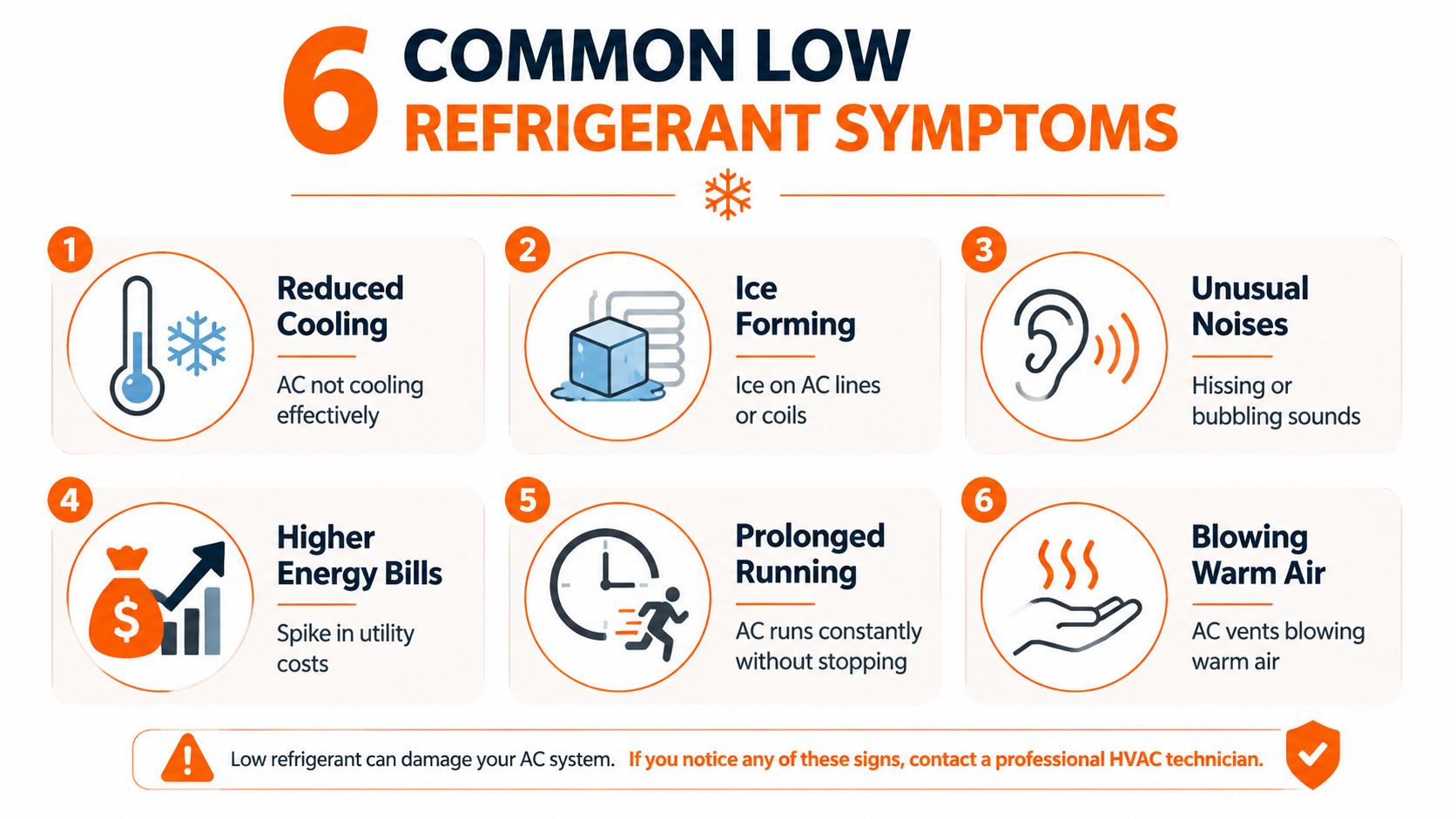
Reduced cooling
The first sign is usually weak overall cooling. The system runs, but the home takes much longer to reach the thermostat setting, or never quite gets there during the hottest part of the day.
That symptom alone does not confirm a refrigerant problem. In Florida, a clogged air filter, matted evaporator coil, undersized return, or closed supply vents can create the same complaint. The difference is that low refrigerant usually comes with other clues, especially icing, odd noises, or longer run times than normal.
Ice on the lines or coil
Ice on the refrigerant line or indoor coil gets attention fast, and it should. It means the coil temperature has dropped low enough for moisture to freeze, which restricts airflow and makes cooling worse, as explained in Corestar's explanation of low refrigerant symptoms.
Homeowners should know one important trade-off here. Ice does not automatically mean low refrigerant. I also see frozen coils caused by dirty filters, blower problems, and blocked airflow. If you see ice, turn the system off at the thermostat and switch the fan to ON if your system allows it. That helps thaw the coil before a technician checks it.
Hissing or bubbling noises
A hissing or bubbling sound near the indoor unit or outdoor condenser can point to refrigerant escaping from the sealed system. It can also mean air is getting where it should not be.
This is one of the more useful symptoms because airflow problems usually do not make that sound. If weak cooling and hissing show up together, refrigerant loss moves higher on the list.
Higher electric bills
A struggling AC often shows up on the power bill before anything looks obviously wrong. If the system runs longer to hold temperature, energy use usually climbs too. The U.S. Department of Energy notes that air conditioning is already one of the largest energy uses in homes, especially in hot climates, so longer runtimes can raise monthly costs quickly (DOE guide to home cooling energy use).
Bills alone are not enough to diagnose low refrigerant. Hotter weather, lower thermostat settings, dirty coils, duct leaks, and weak attic insulation can all push costs up. The pattern matters.
Prolonged running
One common low-charge complaint is an AC that seems to run and run without catching up. You may notice that it starts in the afternoon and barely cycles off until evening.
In the field, homeowners often assume the unit just cannot handle Florida heat anymore. Sometimes that is true for an older system. Sometimes the underlying issue is simpler, like restricted airflow. But if long run times are new, and they appear with weak cooling, ice, or unusual sounds, refrigerant loss becomes a stronger possibility.
Warm or barely cool air from vents
Supply air should feel clearly cooler than the room once the system has been running for a bit. If the air coming from the vents feels only slightly cool, or almost neutral, the coil may not be absorbing heat the way it should.
This symptom can also fool people. Weak airflow from the vent can make cool air feel warmer than it really is. Before assuming refrigerant is low, check whether airflow itself seems weaker than usual in multiple rooms.
Quick homeowner checklist
- Notice the pattern: One symptom can mislead you. Several at once are more useful.
- Check airflow first: A dirty filter or blocked return can mimic low refrigerant symptoms.
- Look for ice: Frost on the copper line or indoor coil area is a warning sign, but poor airflow can cause it too.
- Listen for hissing or bubbling: That points more strongly toward a sealed-system issue.
- Watch runtime and comfort: If the AC runs much longer than usual and still leaves the house humid or warm, schedule a professional diagnosis.
Why Your AC System Is Low on Refrigerant
Refrigerant doesn't get used up like gasoline in a car. Your air conditioner is a closed-loop system. Under normal operation, the refrigerant keeps circulating. If the level is low, the system has lost refrigerant somewhere.
That matters because it changes what a real repair looks like. A proper fix isn't just adding more refrigerant and hoping for the best. The leak has to be found and addressed, or the same problem comes right back.
What usually causes the leak
In the field, leaks often show up at places where vibration, age, or wear take a toll. Fittings can loosen. Coil surfaces can corrode. Joints can develop small openings over time. Older systems deserve extra attention, especially units installed before 2010, because many of them use R-22, which has different pressure characteristics and is now phased out.
That doesn't automatically mean an older system is failing. It does mean diagnosis and repair choices carry more weight.
What physical clues can tell you
Some clues are visible and audible. Hissing or bubbling noises near the indoor or outdoor unit can indicate refrigerant gas escaping or air mixing with refrigerant. Oily-looking residue around fittings is another classic sign of a leak in the closed loop, as described in this HVAC leak symptom reference.
Those clues don't replace gauge readings, but they do help explain why a technician looks closely at joints, service ports, and coil connections instead of assuming the refrigerant just “ran low.”
A top-off without leak repair is usually temporary. If the refrigerant left once, there's a path for it to leave again.
Why topping off isn't the whole answer
Homeowners often ask whether adding refrigerant will solve the problem. It may restore cooling for a while, but if the leak remains, the relief is temporary. The primary benefit comes from finding the leak, repairing it, and then charging the system correctly for that equipment.
That's the difference between a short-term patch and a dependable repair.
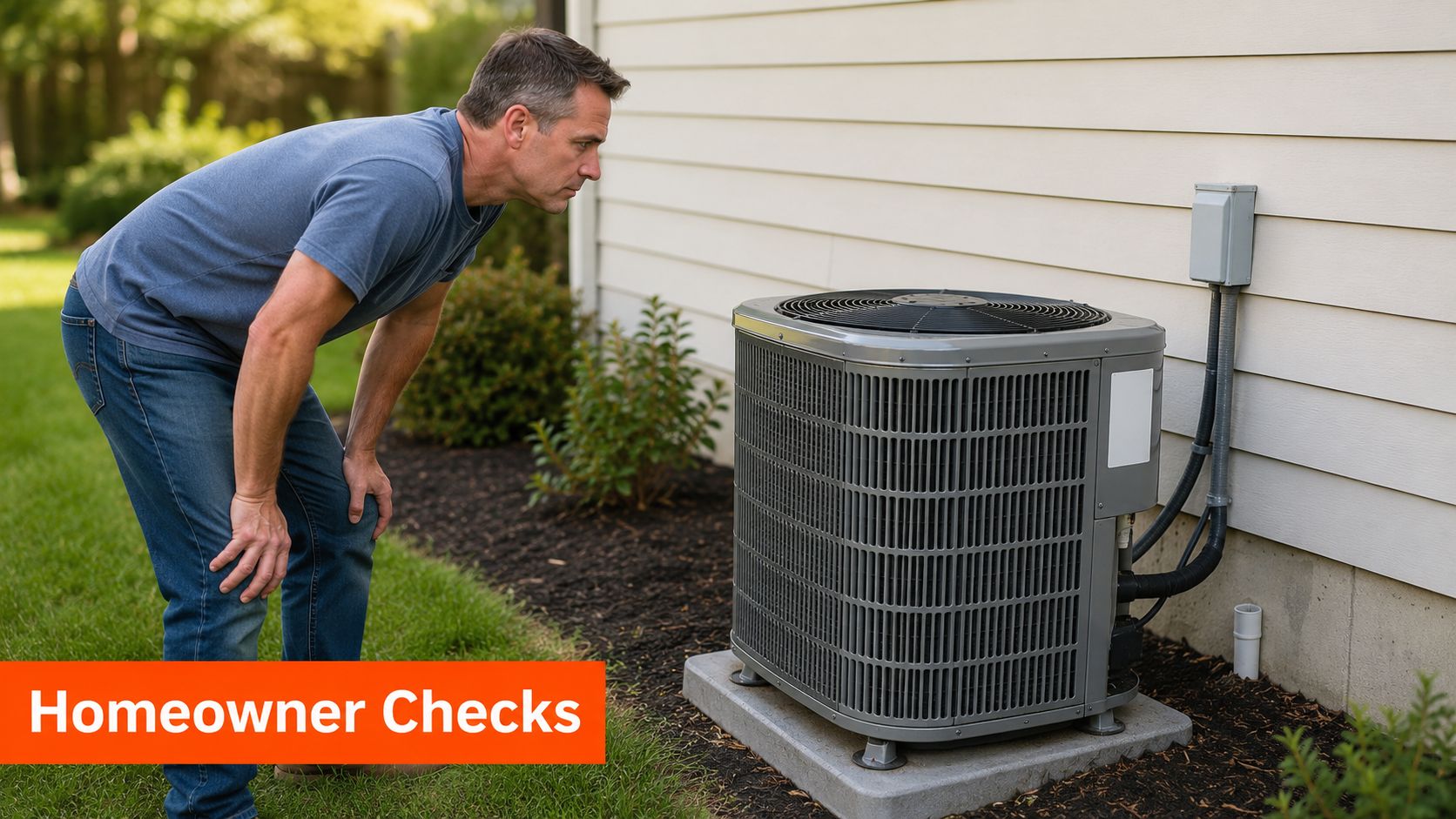
What Homeowners Can Safely Check First
Not every symptom that looks like low refrigerant is low refrigerant. That's where a lot of people get tripped up. A dirty filter, blocked return, clogged coil, or thermostat issue can make an AC act almost the same way.
One of the most common mistakes is assuming weak cooling automatically means the system needs refrigerant. Diagnostic data shows that low delta T, high superheat, and low subcooling can mimic low-charge symptoms even when the system is fully charged if airflow is blocked by a dirty filter or coil. Misdiagnosing that can lead to unnecessary recharges, as explained in this HVAC diagnostic discussion on false low-charge symptoms.
Start with airflow
Before you call for a refrigerant diagnosis, check the parts of the system you can inspect safely.
- Filter condition: Pull the air filter and look at it in good light. If it's packed with dust, airflow may be the whole problem.
- Supply vents: Make sure vents are open and not covered by rugs, furniture, or drapes.
- Return grilles: Check that returns aren't blocked. A system can't cool properly if it can't move enough air.
- Outdoor unit space: Clear obvious debris, leaves, or overgrowth around the condenser so it can reject heat properly.
A badly restricted system can get cold enough in the wrong places to freeze, even without a refrigerant shortage.
Check the thermostat and operating mode
This sounds basic, but it solves more service calls than people expect. Confirm the thermostat is set to cool, the setpoint is below room temperature, and the fan setting is where you want it. Also pay attention to whether the system is responding normally or whether it's acting erratic.
If you're sorting through other possible home maintenance items at the same time, this seasonal home-system visual is a useful reminder that HVAC problems are often tied to basic upkeep.

Don't open panels, disconnect lines, or press anything on the refrigerant side of the system. Homeowner checks should stay on the safe side of the equipment.
A quick visual walkthrough can help you sort harmless issues from serious ones. This video gives a helpful overview:
When to stop troubleshooting
Call for service if you find ice, hear refrigerant-like hissing, or replace the filter and still get poor cooling. Also stop if the unit keeps running without improving comfort or if the vents blow warm air after the basic checks are done.
At that point, more guessing doesn't help. It just delays a proper diagnosis.
Professional Diagnosis and The Dangers of DIY Recharging
A technician doesn't confirm low refrigerant by symptom alone. Warm air, ice, and long run times are clues. They are not proof.
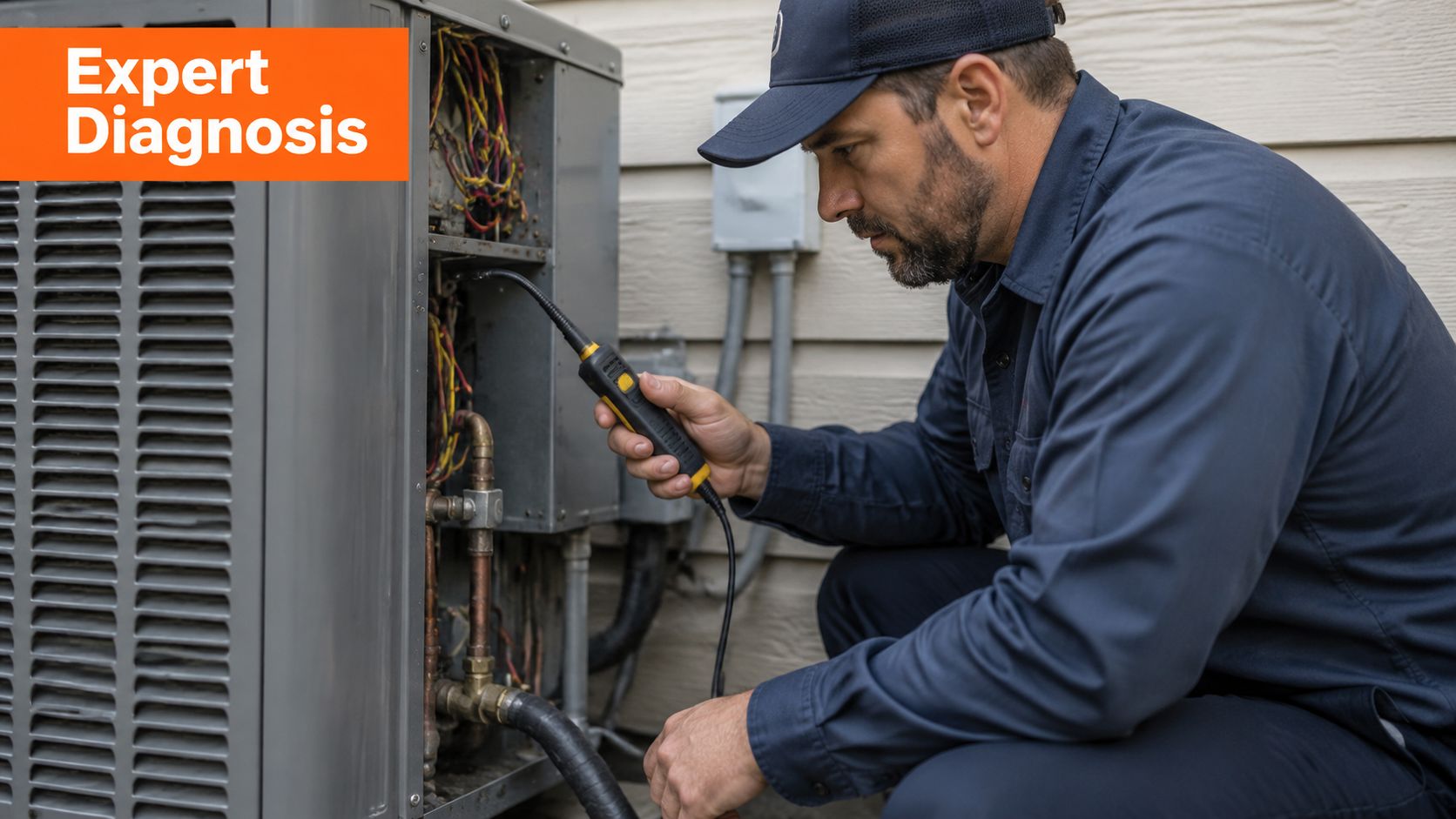
What a professional checks
A proper diagnosis uses gauges, temperature readings, and leak detection methods that homeowners don't have on hand. A definitive low-refrigerant signature is high superheat, typically exceeding 15–20°F, combined with low subcooling, often below 5°F. At the same time, both high-side and low-side pressures fall below the manufacturer's chart values, and confirming that requires professional gauges, as outlined in this refrigerant diagnostic reference.
That matters because charging a system by feel is how compressors get damaged.
Technicians may also use electronic leak detectors or UV dye, depending on what the system is doing and how obvious the leak is. The point is precision. The charge has to match the equipment, and the leak has to be addressed instead of guessed at.
Why DIY recharge kits cause trouble
Store-bought recharge kits look simple. They aren't. They encourage homeowners to add refrigerant based on a rough pressure reading or a color zone instead of a full diagnosis.
That creates several risks:
- Overcharging the system: Too much refrigerant can raise stress on major components.
- Obscuring root issues: If airflow or sensor issues are the actual cause, adding refrigerant won't fix them.
- Missing the leak: Even if cooling improves briefly, the refrigerant can escape again.
- Handling regulated material: Refrigerant work has legal and environmental requirements.
For homeowners who are already reviewing bigger property maintenance costs, a 2026 homeowner inspection cost guide can help put HVAC service decisions into the broader context of responsible home ownership.
Why professional service is the safer choice
A refrigerant issue sits in the category of repairs where accuracy matters more than speed. A careful diagnosis protects the compressor, avoids repeat visits, and keeps the system from being charged blindly.
If you're comparing providers, even a simple company service identity check can be part of verifying who you're letting work on your system.

“Add refrigerant” isn't the repair. Correct diagnosis is the repair process.
Understanding Refrigerant Repair Costs in Florida
In Florida, I tell homeowners to look at refrigerant repairs in two buckets. First, the cost to find the actual problem. Second, the cost to fix it correctly.
That distinction matters because low cooling performance does not always mean low refrigerant. A clogged filter, dirty coil, weak blower, or restricted return can create symptoms that look similar. If the diagnosis is wrong, you can end up paying for refrigerant work that never addressed the actual issue.
Waiting usually gets more expensive, even without putting an exact number on it. A system that runs longer to hold temperature uses more electricity, puts more strain on the compressor, and tends to show up as higher monthly operating costs in Florida heat.
What makes up the bill
A refrigerant-related invoice often includes several separate charges:
- Service call and diagnosis: Time spent checking pressures, temperatures, airflow, and system operation
- Leak detection: Extra labor and tools if the leak is small or hidden
- Repair work: Labor and parts based on where the leak is located
- Refrigerant charge: The type and amount needed after the leak is repaired
- Verification after charging: Final testing to confirm the system is cooling correctly and not just temporarily improved
The final price can vary quite a bit. An accessible leak at a service valve is very different from a coil leak buried in the air handler or condenser. Older systems also raise a harder question. At some point, a repair can stop making financial sense if the equipment is already near the end of its service life or uses refrigerant that is expensive and harder to source.
A simple cost breakdown format
| Service Component | Estimated Cost Range |
|---|---|
| Service call | Varies by company and market |
| Leak detection | Varies by system complexity |
| Leak repair | Varies by location and severity |
| Refrigerant recharge | Varies by refrigerant type and amount |
If you are comparing quotes, ask each company to separate diagnosis, leak repair, and refrigerant into line items. That makes it easier to spot the difference between a real repair plan and a quick recharge.
This customer review snapshot for HVAC service communication is a good reminder that clear explanations matter just as much as the total price.

The practical goal is simple. Pay for an accurate diagnosis first, especially if the symptoms could still point to an airflow problem instead of a refrigerant problem.
Your Next Steps for a Cool and Comfortable Home
If you're seeing low refrigerant symptoms, start with the safe checks first. Look at the filter. Make sure vents and returns are open. Confirm the thermostat settings. If those basics are fine and the system is still freezing up, blowing warm air, hissing, or running far too long, it's time for a professional diagnosis.
That approach saves homeowners money because it avoids the two most common mistakes. Calling every cooling problem a refrigerant leak, or trying to solve a real leak with a quick DIY recharge.
For homeowners across Tampa Bay, Sarasota, Port Charlotte, Cape Coral, and Fort Myers, the best next move is a prompt inspection by a licensed HVAC technician who can verify the charge, check airflow, and find the actual cause. If you're already planning seasonal home upkeep, this spring home-system reminder fits right into that routine.

A cooler, drier, more comfortable home usually starts with getting the diagnosis right.
If your AC in Tampa Bay or Southwest Florida is showing low refrigerant symptoms, Heatwave Air Conditioning, Plumbing, & Electric can help you get a fast, professional diagnosis and the right repair. Schedule service to have the system checked safely, the leak identified if one is present, and your home comfort restored without guesswork.