
You wake up to a cold shower, step into the garage, and see the water heater sweating, rusting, or leaving a small puddle on the slab. In Tampa Bay, that's usually the moment homeowners stop treating the unit like background equipment and start asking the key question: do we patch it again or replace it now?
A new water heater installation is rarely just about the tank. The final job depends on what's already in the house, how the old unit failed, and what the code inspector is going to ask for before the permit closes. In practice, the biggest surprises aren't the label on the box, they're the drain pan, expansion tank, electrical upgrades, gas sizing, and placement issues that decide what can go back in the same spot.
When a Tampa Bay Home Needs a New Water Heater
The first warning is usually small. Showers turn lukewarm sooner than they used to, the tank starts rumbling after dark, or the hot water comes out rusty after the unit has sat idle. Then a puddle shows up under the heater, and in a humid Florida garage or utility closet, that is the point where a homeowner needs to pay attention.
What the unit is telling you
A water heater usually gives a few clear signs before it fails outright. A slow leak at the fittings can turn into a tank problem. Sediment buildup can make the unit noisy and less efficient. If the water takes longer to recover, the heater may still run, but it is no longer keeping pace with the house the way it should.
Age matters too. A replacement is easier to plan when you can read the manufacturer label and pull the install date, or at least the serial number, from the tank jacket. That date shows whether you are looking at a routine swap or a unit that has already been running past the point where problems start stacking up.
Practical rule: If a tank leaks from the body itself, treat it as replacement territory, not a maintenance call.
The money side matters as well, but the first clue is not the price tag. A unit that is still working but showing rust, noise, slow recovery, or a small leak can sometimes be scheduled before it becomes an emergency. A failure that happens on its own schedule usually forces the homeowner to buy whatever fits fastest, and that is where the hidden costs show up.
Why Southwest Florida wears tanks out differently
Tampa Bay homes deal with humidity, garage heat, and layout quirks that national guides often gloss over. A closet install in a condo, a garage unit in a flood-prone area, or a tight side yard setup can all change the replacement plan. Even if the heater itself is the same size, the surrounding conditions can turn a straightforward swap into a code-driven rebuild.
That is the part many homeowners do not see until the old unit comes out. Expansion tanks, drain pans, flood-zone placement, venting, gas sizing, and electrical clearance can decide what equipment can go back in the same spot. A water heater that looks simple on paper may need extra work before the new one is legal to set and connect.
The practical move is to decide before the emergency. If the tank is old, loud, rusty, or leaking, line up quotes while the water still works. That gives you time to choose the right equipment for the house, not just the fastest available one.
Tank, Tankless, and Heat Pump Options Explained
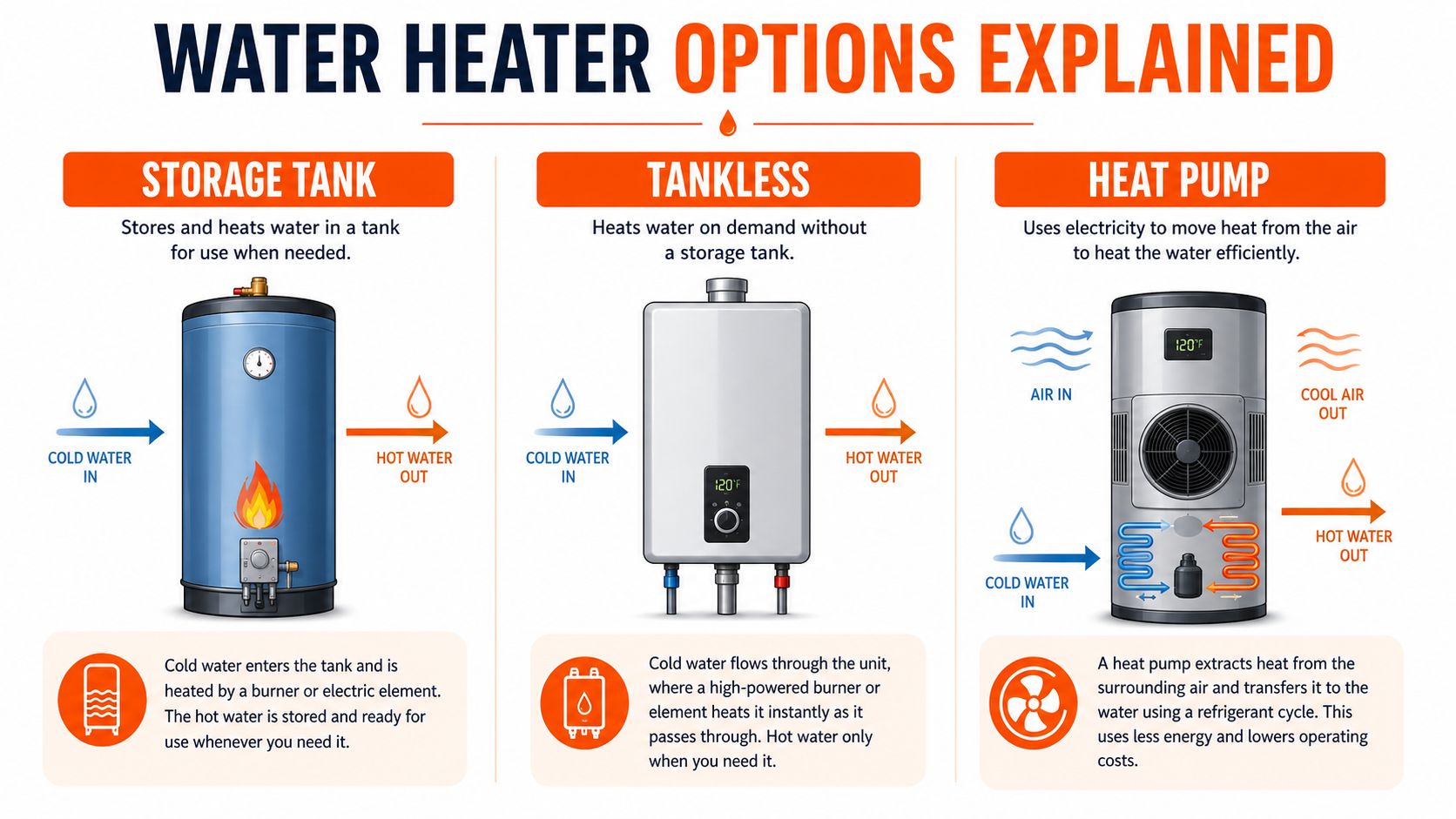
A storage tank is the familiar choice. It heats and holds hot water so it's ready when you open a tap. A tankless unit heats water on demand, which changes the whole shape of the install because the venting, gas load, or electrical demand can be different from the old tank. A heat pump water heater does the work by moving heat from surrounding air into the water, which makes it a different kind of replacement decision altogether.
How the three systems behave in a Florida home
In a warm Tampa Bay garage, a heat pump unit can make good sense because it works with ambient air rather than against it. But it also needs room, airflow, and the right electrical setup. A tankless unit saves space on the wall, yet it can bring more installation complexity if the house wasn't already set up for it.
The tank style is the least dramatic swap when the home already has the right plumbing and venting. That's why basic replacements are still common in garages and mechanical closets. The minute you move into conversion work, the job changes. Venting requirements, gas branch capacity, and electrical upgrades stop being background details and start deciding the entire project.
What works best: the right system for the house, not the trendiest one on the shelf.
The efficiency side is where heat pump units stand out. ENERGY STAR estimates that an ENERGY STAR heat pump water heater can save a household of four about $550 per year and more than $5,610 over its lifetime. ENERGY STAR heat pump water heater savings Those savings matter because the replacement conversation is no longer only about the sticker price. It's about what the house will spend over time.
The install questions that should come first
Before a homeowner chooses a tank, tankless, or heat pump unit, three questions need answers. First, what space is available. Second, what fuel or power the house already has. Third, whether the home's layout can handle the extras, like clearance, drainage, and code-required accessories.
A Florida garage often favors simpler access and less finish work. A closet can be more limiting. If the new unit needs different venting, a dedicated electrical circuit, or more room for service, the “same size” replacement may not be the same job at all.
Sizing the New Unit for Your Household

Sizing trips people up because the number on the tank doesn't tell the whole story. A bigger tank isn't automatically a better choice, and a smaller unit isn't automatically a bad one if the home's peak demand is modest. What matters is whether the heater can cover the busiest stretch of the day without going cold halfway through.
First-hour rating is the number that matters
A family of four doesn't all use hot water the same way. One home may run the dishwasher at night and shower in the morning. Another may have two showers going, laundry running, and the kitchen sink in play at the same time. That's why the right size comes down to first-hour rating, not just the gallon label on the cabinet.
The practical method is basic. Count the fixtures that might run together. Think about who showers when. Include laundry and dishwasher use if they often overlap with shower time. Then match the heater to that peak pattern instead of guessing based on the old unit.
Fuel type changes the sizing logic
Electric, gas, tankless, and heat pump units don't recover at the same pace, so the household's peak demand matters differently for each one. A gas unit can handle a different recovery pattern than a standard electric tank. A heat pump unit needs room and time to do its work, which is why it should be chosen with the home's real usage in mind, not just the desire to save money up front.
That's especially true in smaller condos and condos with limited mechanical space, where the available footprint can shape the whole decision. In a mid-sized Tampa house, the issue may be more about back-to-back showers and laundry overlap. In a larger Cape Coral or Port Charlotte home, the question is often whether the family wants convenience, efficiency, or maximum hot-water recovery from the same system.
A short checklist for the contractor visit
- Fixture count: How many showers, sinks, tubs, and appliances need hot water at the same time.
- Space check: Whether the new unit fits with service clearance and access.
- Utility match: Whether the home can support the fuel type you want.
- Recovery needs: Whether the system can keep up during the busiest hour.
- Future changes: Whether a remodel, addition, or new appliance will raise demand later.
The best sizing conversation is specific, not generic. Bring the contractor a real usage pattern, not just the brand and size of the old tank.
What a New Water Heater Installation Costs
The price on the box tells only part of the story. In the field, the final number shifts with labor, code-required extras, venting, electrical work, and whether the job is a straight replacement or a conversion. A like-for-like swap in a garage is one job. A tankless retrofit in a tight utility closet is another.
The main cost buckets
Equipment is the obvious line item, but labor is where homeowners often get surprised. NerdWallet water heater cost guide says labor can make up about 50% of the total project cost. That fits the way these jobs go. The installer has to drain the old tank, move heavy equipment, deal with fittings, test the system, and make sure the new unit passes inspection.
The fuel type also shifts the cost. A source based on manufacturer-style pricing reports average U.S. installation costs of about $920 to $1,177 for electric water heaters and around $2,607 for gas water heaters. Pro House Maintenance water heater statistics The same source reports that 40-gallon units average roughly $1,000 to $2,500 and 80-gallon units about $2,650 to $3,910. Those ranges show how the house, the fuel, and the capacity shape the final bill.
Budget reality: the cheapest heater on paper can become the expensive one once the install turns into a conversion.
A lot of the hidden cost shows up in code-driven extras, not the tank itself. Expansion tanks, drain pans, venting changes, electrical upgrades, and flood-safe placement can change the unit you can buy and the labor needed to install it.
Typical installed cost ranges by water heater type
| System Type | Typical Equipment and Labor Range | Best Fit |
|---|---|---|
| Storage tank | $600 to $2,500 installed | Straightforward replacements with compatible plumbing and clear access |
| Tankless | $1,400 to $3,900 or $1,400 to $5,600 with conversion work | Homes that can support the venting, gas, or electrical changes |
| Broader market replacement span | $1,600 to $5,400 | Jobs with moderate labor, code, or conversion complexity |
Those ranges point to a broader market estimate that puts average installation near $1,950. The useful part is not memorizing each number. It is knowing that the install price is driven by the job, not just the appliance.
The most expensive surprises usually come from the parts nobody asked about during the sales call. A garage install may need a pan and drain. A closed plumbing system may need an expansion tank. A move from gas to electric can trigger electrical work that changes the whole budget. For Tampa Bay homes, flood-prone placement and access for service can matter as much as the heater brand.
When upgrading makes sense
A high-efficiency unit can be the right call when the old system is expensive to run, the family plans to stay in the house, or the install already needs electrical or venting work. That is where homeowners should compare the installed price against the lifetime effect, not just the first invoice. In Florida, the payback conversation often comes down to the house itself, the utility setup, and how much hot water the family uses.
Permits, Codes, and Tampa Bay Specific Requirements

A permit can turn a “straight swap” into a job with a few extra parts. Inspectors are checking the code edition in force, the appliance listing, gas branch capacity for the BTU load, seismic strapping where required, expansion-tank needs in closed systems, and proper T&P relief discharge routing. Those checks are not paperwork for show. They decide whether the install is safe and whether the work closes without delays.
The parts that usually change the plan
The unit choice rarely stands alone. Code requirements can rule out a heater before it is ordered, because the space around it and the utility hookups matter just as much as the model number. A tight closet may need a pan and drain. A garage install may need placement that keeps the heater out of trouble if water enters the space. A closed plumbing system can require an expansion tank.
The electrical side can change the plan just as fast. For a compliant electric install in California guidance, the code calls for a dedicated 125-volt receptacle within 3 feet of the heater, supplied by a three-conductor 10 AWG branch circuit with the unused conductor isolated and labeled. California Energy Commission water heating code guidance The same guidance makes clear that the tank must be filled completely and purged of air before the elements are energized.
That first-fill sequence matters because a dry or air-locked electric tank can burn up elements fast. A mistake at startup can turn a new install into a warranty call, and the repair usually costs more than the extra care would have.
In Tampa Bay, the local details deserve their own look. A recent WFTS News interview screenshot about Tampa Bay water heater installs helps show how local crews talk about the code side of the job in practice. WFTS News interview screenshot on Tampa Bay water heater installation requirements

What inspectors usually care about most
- Location: Whether the heater is placed where it can be serviced and protected.
- Drainage: Whether a pan and drain are needed and correctly installed.
- Pressure safety: Whether the T&P discharge is routed properly.
- Electrical or gas supply: Whether the feed matches the appliance's needs.
- Permitting: Whether the work was pulled and closed out correctly.
For homeowners comparing installers, the value is in someone who sees these issues before the truck rolls. Heatwave Air Conditioning, Plumbing, & Electric offers water heater installation help, including free estimates for new installations, which is useful when you want the code questions answered before the unit is chosen.
Inside the Installation Day and How to Prepare
On install day, the crew should work in order, not by guesswork. Shut off the water, protect the floor, drain the old unit, disconnect the utility lines, and carry the tank out without tracking water through the house. If the replacement needs a pan, expansion tank, electrical upgrade, or gas adjustment, that work has to be handled before the new heater is closed up and tested.
What homeowners should do before the truck arrives
Clear a path to the heater and make sure the main water shutoff is easy to reach. Put pets somewhere safe. If the unit sits in a garage or closet, move stored items away from the work area so the tech can reach the fittings, drain, and service clearances. A tight space slows the job down and makes a clean install harder to pull off.
A little prep on the plumbing side helps too. This plumbing readiness checklist screenshot is a good reminder that a clear work area and easy access save time once the truck is on site.

Plan for the house to be without hot water for part of the day. Even a straightforward replacement can leave the system offline for several hours while the old unit comes out, the new one fills, and the connections are checked for leaks. In a Tampa Bay home, that matters more in a garage or closet install where the crew may also be working around drainage, venting, or electrical clearance issues.
The first fill matters more than most homeowners realize. A rushed startup can damage a new electric tank before it ever serves the house.
What the technician should check before leaving
The new heater should be full, bled of air, and tested for leaks. The T&P relief line should be routed correctly. Any required labels should be in place. If the job needed a permit, the paperwork should show what was done and what still needs inspection.
That is the point to ask direct questions. What was changed. Was the expansion tank sized correctly. Was the pan required in this location. Was the electrical or gas work tested. Those answers tell you whether the install is ready for the inspector or still needs follow-up.
A quick note on fit and layout
Planning does not stop at the tank or tankless unit itself. A garage install, a tight utility closet, or a flood-prone low spot can change the equipment choice before work starts. One builder-focused guide for new construction calls out the need to match heater dimensions and clearance, which is why the location should be checked before the purchase, not after. Builder placement guidance for water heaters
Maintenance, Pitfalls, and Common Questions

A new water heater can still fail early if the homeowner treats it like a one-time purchase. Sediment, pressure issues, and startup mistakes don't care whether the unit is new or old. The habits that protect it are simple, but they only help if they happen on schedule.
Preventive Maintenance That Protects Your Investment
Flush sediment often enough for your water quality and usage. Test the T&P valve so you know it opens and closes properly. Inspect the anode rod when service is due, because that part takes the abuse so the tank does not have to. Those jobs are routine, but they slow down wear and help the heater age the way it should.
A few maintenance checks are easy to ignore at install time and expensive later. Skipping the expansion tank on a closed system can push pressure higher than the plumbing should see. Leaving out a pan and drain in a closet install can let a small leak turn into flooring damage. Missing the first-fill procedure on an electric tank can burn out elements before the home ever gets hot water. A holiday-season reminder like this Don't Get Stuck In The Cold This Holiday Season is a good prompt to check the heater before cold weather exposes a weak install.
Questions homeowners ask most
How long does a new install take?
Usually it is a same-day job when the replacement is straightforward. If the work needs a permit, electrical changes, gas conversion, or a new drain path, it can take longer.
How long until hot water is available?
It depends on the system and the size of the tank, but the heater has to fill, purge air, and come up to temperature before normal use. That is why crews should tell you to plan for a gap.
Is a permit required?
For permitted work, yes, the local authority needs to verify the code items before final approval. That matters when the install affects gas, electricity, drainage, or placement.
What warranty should I expect?
Warranty terms vary by product and installer, so homeowners should keep the paperwork, serial number, and permit records together. If the install was done wrong, even a good warranty will not save the headache.
One more thing to watch
Some homeowners ask whether the old gas tank should just be replaced with the same thing. That is sometimes fine, but not always the smartest move. In a warm climate, a heat pump water heater can make more sense when the space, electrical service, and budget line up, while a simple tank replacement can still be the cleanest path when the layout is tight and the house already supports it. A free estimate helps sort that out before anyone buys the wrong unit.
For homeowners who want a code-aware install, Heatwave Air Conditioning, Plumbing, & Electric handles water heater replacements, plumbing work, and related electrical needs in Tampa Bay and Southwest Florida. If your unit is leaking, noisy, or due for an upgrade, visit Heatwave Air Conditioning, Plumbing, & Electric to request a free estimate and get the replacement plan sorted before the next cold shower does it for you.