
Imagine a doctor trying to diagnose an issue without surgery. Instead of making an incision, they use a stethoscope, an X-ray, or an MRI to see what's happening inside. That's exactly the principle behind non-invasive leak detection for your home's professional plumbing services.
Instead of grabbing a sledgehammer and breaking through your beautiful floors or newly painted walls, we use sophisticated technology to pinpoint leaks with surgical precision. It's the modern, intelligent way to solve a potentially disastrous problem.
Why Modern Leak Detection Matters
A hidden water leak is more than just an annoying drip; it's a silent threat to your home. Especially here in Florida, with our humidity, a small leak can quickly compromise your home's structure and even affect your family's health.
The old way of finding leaks was often a messy, destructive guessing game. Plumbers would have to smash through drywall or concrete, hoping they were close to the source. This approach didn't just create a huge mess—it also tacked on significant costs for demolition and reconstruction.
Non-invasive leak detection completely changes the game. It’s a precise, scientific process that protects your property. Think of it as a strategic investigation instead of a brute-force search. Using specialized equipment, our technicians can "see" behind walls and "hear" underground, locating the exact point of failure without causing any unnecessary damage.
The Old Way vs The New Way
The difference between these approaches is like night and day. One is based on guesswork and destruction, while the other is built on technology and accuracy. For homeowners in Tampa Bay, where our sandy soil can cause foundations to shift and high humidity accelerates mold growth, choosing the right method is absolutely critical.
This flowchart lays out the clear distinction between outdated, destructive methods and the modern, non-invasive solutions we use today.
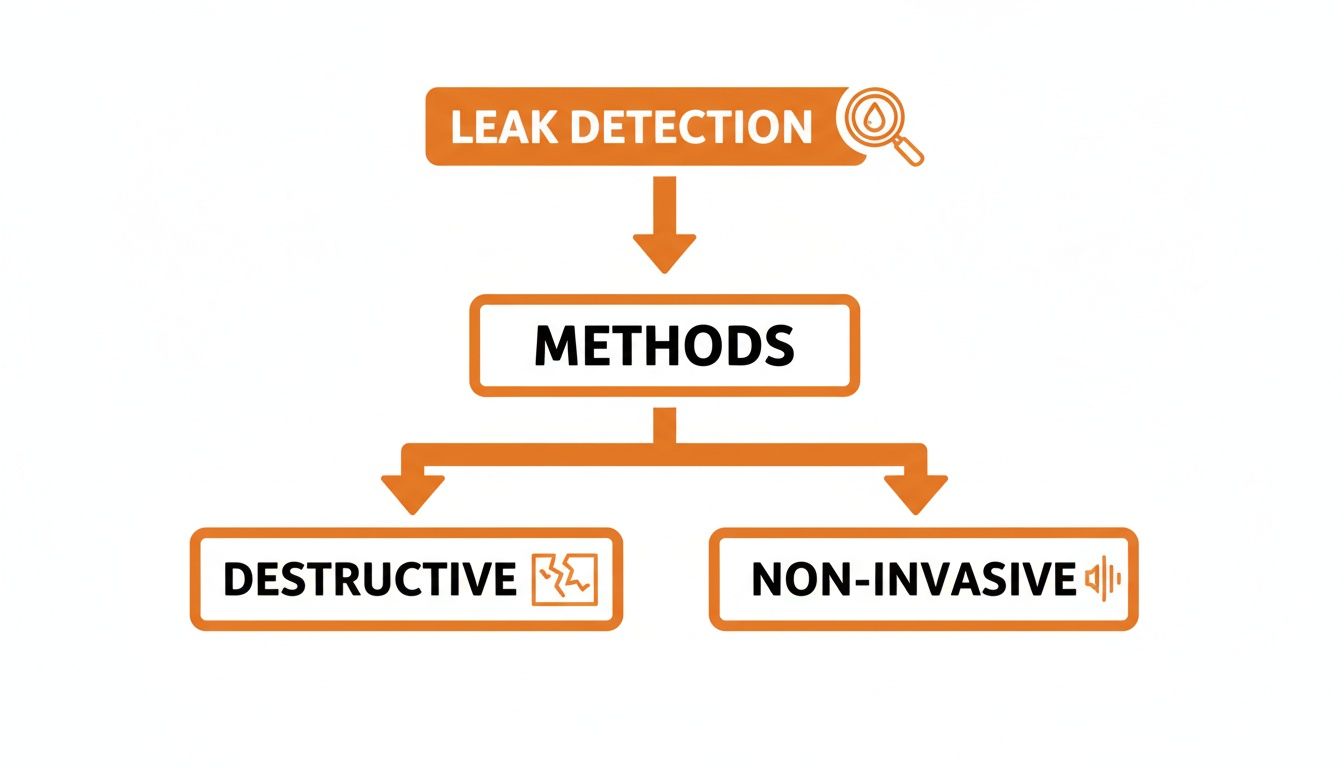
As you can see, you have a choice: a process that creates more problems or one that delivers clean, accurate answers.
By opting for a non-invasive approach, you're not just finding a leak; you're investing in a solution that saves time, money, and the stress of a major construction project inside your home. It’s the smarter, more effective way to protect your biggest investment.
To give you a better idea of how these methods stack up, here’s a quick comparison.
Leak Detection Methods At a Glance
| Feature | Destructive Methods (Old Way) | Non-Invasive Methods (Modern Way) |
|---|---|---|
| Accuracy | Relies on guesswork; often requires multiple holes | Pinpoints the exact leak location with precision |
| Property Damage | High; involves breaking walls, floors, or slabs | Minimal to none; preserves your home's integrity |
| Time to Locate | Can take days, depending on the number of attempts | Often found within hours |
| Repair Costs | High; includes demolition, plumbing repair, and reconstruction | Lower; focused solely on the actual pipe repair |
| Stress Level | Very high; turns your home into a construction zone | Low; clean, quiet, and efficient process |
This side-by-side view makes the choice pretty clear. Modern methods offer a far superior experience for homeowners.
The growing preference for these advanced techniques is obvious. The global leak detection market, which is dominated by non-invasive technologies, was valued at USD 4.58 billion in 2023 and is expected to jump to USD 7.26 billion by 2032. This trend, which you can read more about on GlobeNewswire, shows a clear shift as more people recognize the incredible value of damage-free diagnostics.
This guide will walk you through exactly how these modern methods work and why they are the new standard for plumbing diagnostics in Tampa Bay.
Recognizing the Hidden Signs of a Water Leak
Water leaks are the silent home invaders of the plumbing world. They rarely announce themselves with a dramatic flood; instead, they start as a whisper, a subtle clue that something isn't right. Learning to recognize these quiet signals is the first and most critical step in protecting your Tampa Bay home from expensive water damage.
For many homeowners, the first sign isn't a puddle but a number. An unexpected, sharp increase in your water bill is often the loudest alarm bell for a hidden leak. If your daily habits haven't changed but your bill has jumped 10%, 20%, or even more, your home is likely losing water somewhere you can't see. This isn't just about a few wasted dollars—it's a clear indicator that water is escaping your plumbing system, possibly behind walls or under your foundation.
Listening to Your Home
Beyond the monthly bill, your home often provides clues you can hear. One of the most common is the faint, persistent sound of running water, even when every faucet, shower, and appliance is turned off. You might hear it as a soft hissing from a wall or a gentle humming from the floor.
Another telltale sign is a musty or earthy odor that you can't seem to track down. This smell is often the byproduct of hidden moisture creating the perfect breeding ground for mold and mildew. Even if you can't see the dampness, your nose can often detect the problem long before it becomes visible.
A persistent musty smell is more than just unpleasant—it's your home's way of telling you there's a moisture problem that needs immediate attention. Ignoring it can lead not only to structural damage but also to potential air quality issues for your family.
Seeing the Physical Evidence
While some signs are audible or smelly, others are purely visual and require a keen eye. These indicators can be subtle at first but often point to significant underlying issues. Besides the obvious puddles, less noticeable signs can point to a leak. For instance, recognizing the common 8 Signs of Water Damage Ceiling can help you catch problems early.
Keep an eye out for these visual warnings around your property:
- Warm Spots on the Floor: In Florida homes built on concrete slabs, a hot water line leak can create noticeable warm spots on your tile or vinyl flooring. This is a classic sign of a slab leak.
- Cracks in Walls or Foundation: Constant saturation from a slab or underground leak can cause the soil around your foundation to shift, leading to hairline cracks appearing in your drywall or concrete foundation.
- Peeling Paint or Wallpaper: Moisture seeping into drywall will cause paint or wallpaper to bubble, peel, or blister. You may also notice discoloration or soft, spongy spots on the wall.
- Lush Patches in the Yard: If one area of your lawn is suddenly much greener and healthier than the rest, it could be getting extra "fertilizer" from a leaking underground irrigation or sewer line.
Catching these signs early is crucial. Many of these issues are directly related to the unique challenges homeowners face, and you can explore some of the most frequent plumbing problems and their solutions to understand what might be happening. By staying vigilant, you can call for non-invasive leak detection before a minor issue spirals into a major, destructive repair.
Exploring the Technology Behind Leak Detection
How can a professional find a water leak they can't even see? It’s not magic or some wild guess—it's a combination of sharp science and some seriously cool tools. Modern non-invasive leak detection technology gives our technicians the power to diagnose problems behind walls, under concrete slabs, and deep underground without ever having to swing a hammer.
Think of it like giving them superpowers. It’s similar to how a doctor uses an ultrasound to see inside the body without making an incision. Each piece of equipment we use is designed to pick up on the specific clues a hidden leak leaves behind. By combining these methods, we build a complete picture of what's happening in your plumbing, turning a messy search-and-destroy mission into a clean, precise investigation.
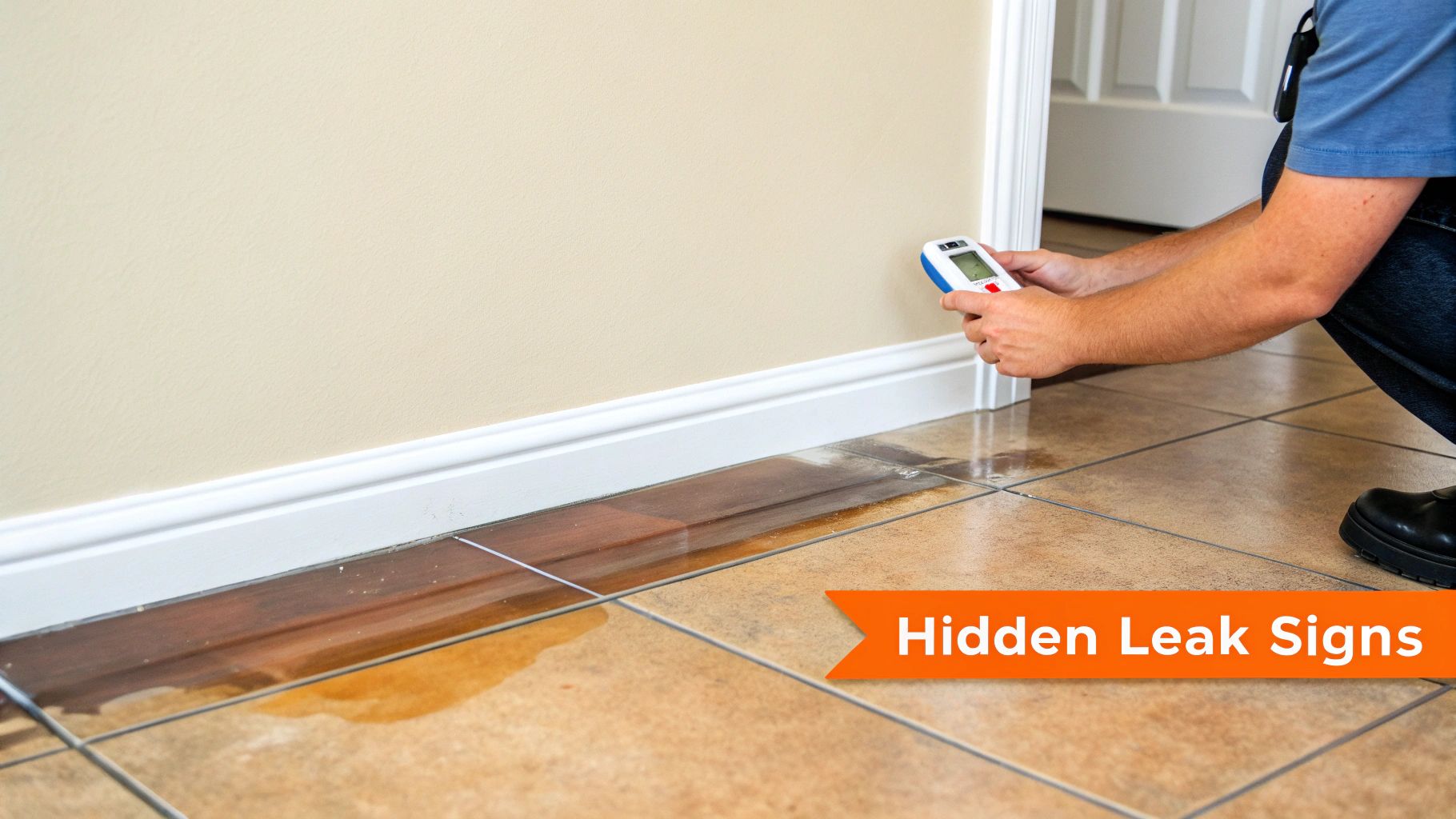
Acoustic Listening Devices: A Stethoscope for Pipes
One of the most powerful tools in our arsenal is the acoustic listening device. Imagine a high-tech, super-sensitive stethoscope being pressed against a floor or wall. When water escapes a pressurized pipe, it creates a distinct sound—often a faint hiss, whoosh, or gurgle—that’s completely impossible to hear with the naked ear.
These devices amplify those subtle sounds, allowing a technician to literally "listen" to your plumbing system. By moving the sensor along the path of the pipes, they can follow the sound to its loudest point, zeroing in on the exact location of the leak with incredible accuracy. This is a go-to method for finding leaks in main water lines buried in your yard or under a concrete slab foundation.
This kind of technology is a big reason why the home maintenance industry is growing. In fact, the global smart water leak detector market was valued at USD 1,452.6 million in 2024 and is expected to hit USD 2,315.2 million by 2032. As you can find out more about these market trends, North America's 40% market share shows just how much homeowners here value the peace of mind that comes with this technology.
Thermal Imaging Cameras: Seeing Leaks with Heat
Another game-changer is the thermal imaging camera. This device doesn’t see moisture directly; it sees temperature. When water leaks from a pipe, it changes the temperature of whatever it touches, whether that's drywall, wood, or concrete. A thermal camera translates these tiny temperature differences into a visual, color-coded map.
It works like this:
- A cold water leak will show up as a cool, dark blue or purple spot on the camera's screen. This tells us exactly where the wall or floor is being chilled by the escaping water.
- A hot water leak does the opposite, creating a bright red, orange, or yellow area that highlights a hidden warm spot.
This 'heat vision' is incredibly valuable for finding leaks inside walls and ceilings. It gives us instant visual proof of a moisture problem, showing its location and how far it has spread—all without drilling a single hole.
The camera lets a technician scan large areas in minutes, mapping out the moisture's path to trace it straight back to the source. It’s fast, accurate, and completely non-destructive.
Tracer Gas Detection: Sniffing Out the Problem
For the sneakiest, most stubborn leaks, we turn to a clever method called tracer gas detection. This technique is perfect for those tiny drips that other methods might miss, especially in complex pipe networks or systems that aren't currently under pressure.
The process is simple but incredibly effective:
- First, we drain the water from the section of pipe we're testing.
- Next, we inject a safe, non-toxic gas (usually a mix of hydrogen and nitrogen) into the empty pipe.
- This gas is made of molecules far smaller than water molecules, so it can escape through even the tiniest pinhole crack.
As the gas rises to the surface, we use a highly sensitive detector, often called a "sniffer," to scan the area above the pipe. The device sounds an alarm the moment it detects the tracer gas, leading us directly to the hidden escape point. It’s like a bloodhound for your plumbing, sniffing out the problem with undeniable precision.
Common Leak Hotspots in Florida Homes
Every house has plumbing weak spots, but Florida's unique climate and geology create specific areas that are far more likely to spring a leak. Knowing where these hotspots are is the first step toward catching a problem early and avoiding a disaster. From the foundation under your feet to the sprinkler lines in your yard, knowing where to look is half the battle.
This is where non-invasive leak detection comes in. It allows us to investigate these vulnerable areas without tearing your home apart. Instead of jackhammering your foundation or digging up your prized landscaping on a hunch, we use advanced technology to get clear, accurate answers. It’s the perfect, targeted approach for tackling Florida's most common—and destructive—types of leaks.
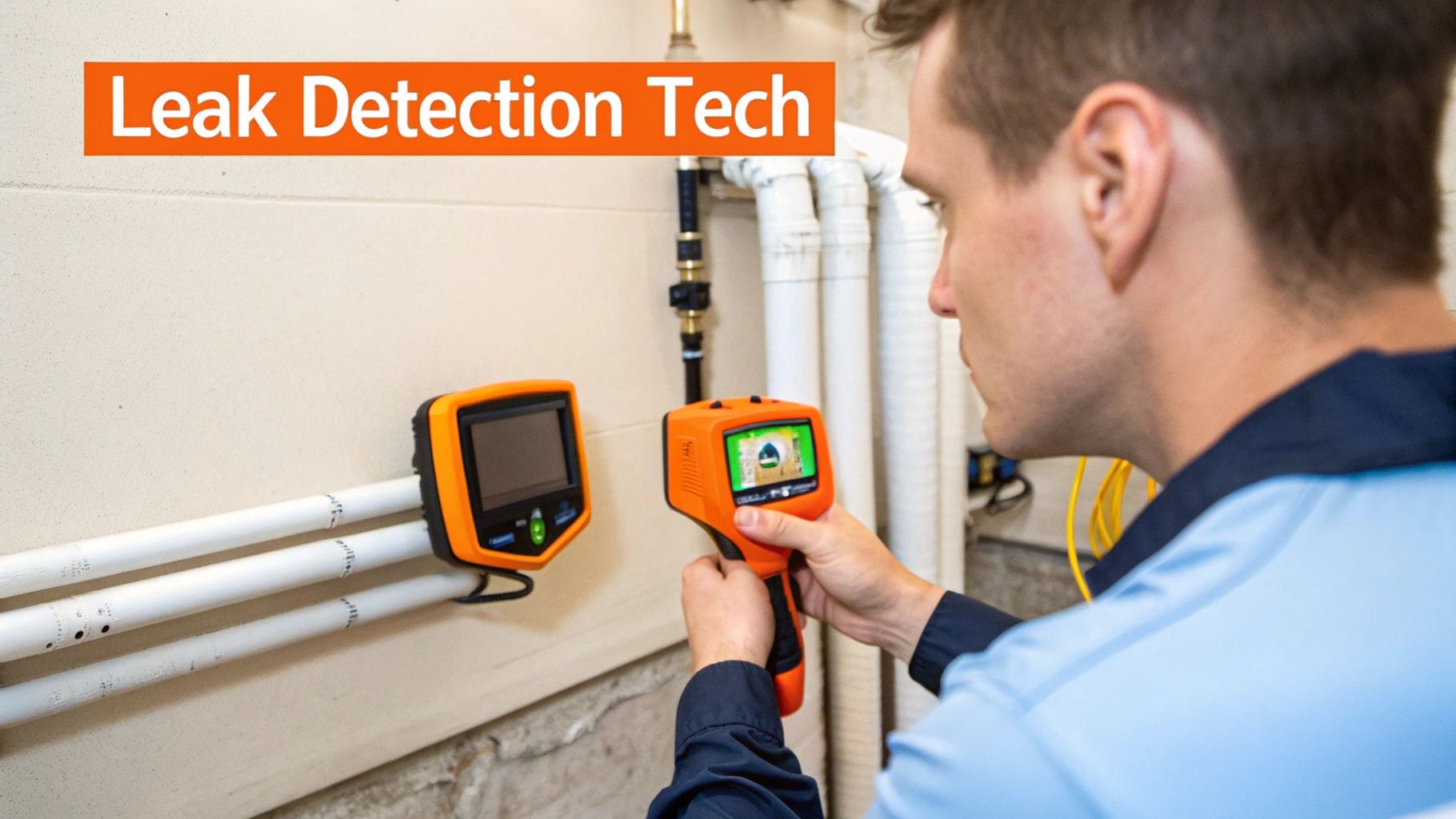
Irrigation and Sprinkler Lines
An underground irrigation system is great for keeping your lawn green, but a hidden leak can waste thousands of gallons of water before you even notice it's there. These lines are usually made of thin PVC or flexible tubing that's easily damaged by shifting soil, invasive tree roots, or even just a misplaced shovel.
Soggy patches in the yard, a patch of grass that's way too green, or weak pressure from your sprinkler heads are all tell-tale signs of an irrigation leak. We can trace these buried lines and pinpoint the break without having to dig up your entire lawn in the process.
Water Heaters and HVAC Systems
Finally, don't forget the utility closets and garage. Water heaters, whether they're traditional tank models or tankless, can develop slow leaks from corroded tanks or failing pressure relief valves. Because they're often tucked out of sight, a small drip can cause a ton of water damage before it's discovered.
Your HVAC system's condensate drain line can cause similar trouble. If it gets clogged, water will back up and overflow, potentially leading to water damage in your attic, ceiling, or walls. Keeping an eye on these areas and acting fast at the first sign of moisture is key to stopping a small issue from becoming a huge headache.
What to Expect During a Leak Detection Service
Knowing what’s going to happen when a technician shows up can take a lot of the stress out of the situation. A professional non-invasive leak detection appointment isn’t guesswork; it's a methodical process designed to get you answers quickly and cleanly. Let's walk through the steps so you can feel confident from the moment you call to when we hand you the final report.
The process kicks off the second you get in touch with us. When you call, we’ll ask a few straightforward questions to get a handle on what’s going on. Be ready to share any signs you’ve noticed, whether it's a surprisingly high water bill, a strange musty smell, or actual water damage. This first chat helps us show up with the right gear for your specific problem.
Our main goal is to make the whole experience as smooth and painless for you as possible. We'll schedule a time that works for you, give you a clear arrival window, and send a certified, uniformed technician to your door. You can rest easy knowing the expert arriving at your home is equipped with the right technology and know-how to solve your leak mystery efficiently.
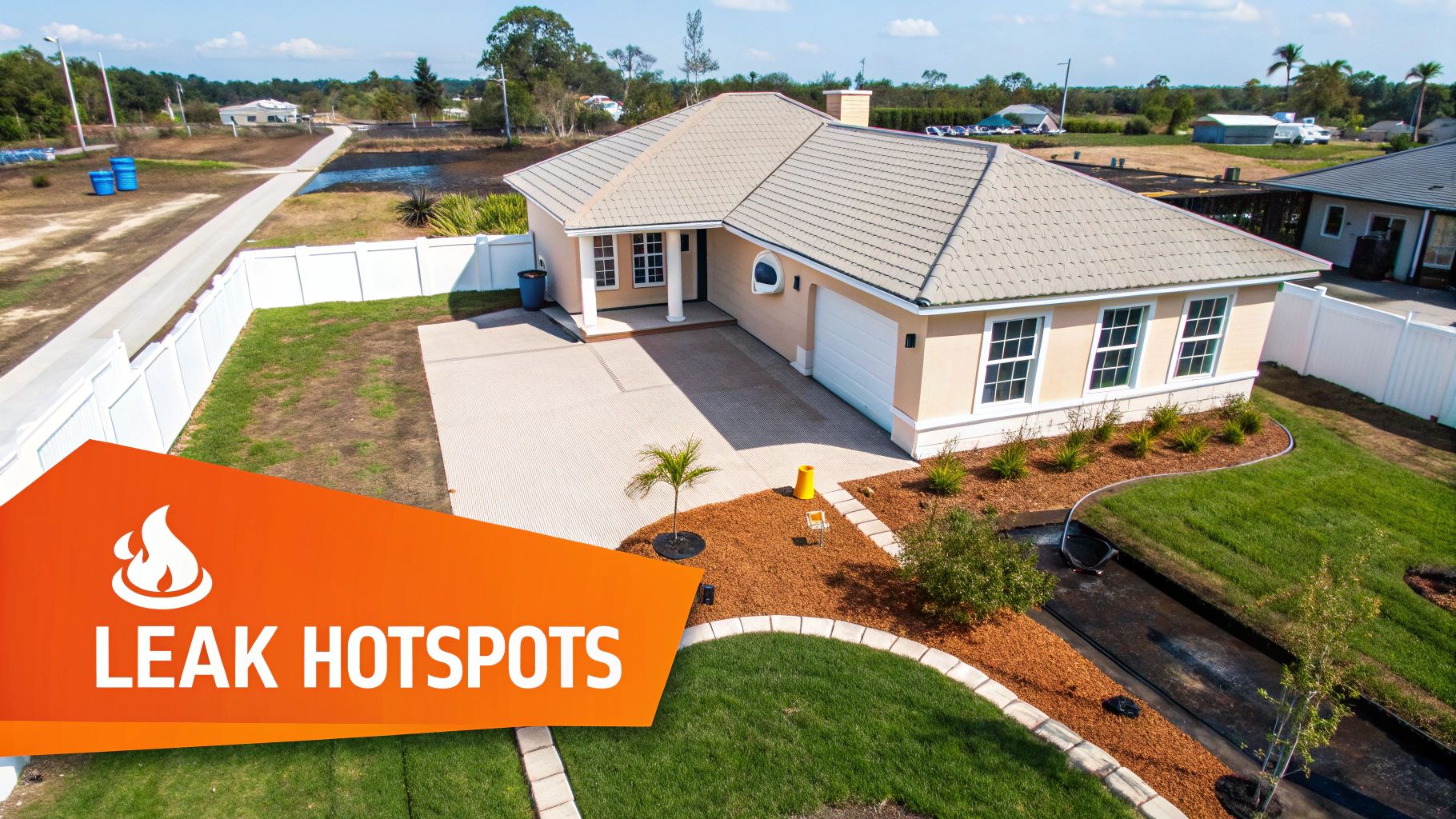
The Diagnostic Process Step by Step
Once our technician arrives, the real investigation begins. This isn't about randomly knocking holes in your walls. It’s a systematic diagnostic procedure to pinpoint the source of the leak without making a mess of your property. We keep the entire process transparent and thorough.
Here’s what a typical visit looks like:
- Initial Chat and Walk-Through: First things first, the technician will talk with you to go over the issues you’ve seen. Then, they'll do a visual inspection of your property, keeping an eye out for those subtle clues we talked about earlier.
- Confirming the Leak: The next step is usually to verify that there is, in fact, an active leak. This often involves checking your water meter. If it’s still spinning when every faucet and appliance is off, that's a clear sign of water loss somewhere in the system.
- Bringing in the Tech: This is where our advanced equipment makes all the difference. Depending on where the leak is suspected, the technician might use sensitive acoustic listeners to "hear" water running underground or thermal cameras to "see" hidden moisture behind your walls.
- Pinpointing the Exact Spot: By combining the data from different tools, the technician can zero in on the leak's precise origin. This methodical approach ensures we're accurate, saving you from the headache of exploratory demolition.
The entire diagnostic phase is clean, quiet, and respectful. Our technicians treat your home like their own, ensuring minimal disruption to your day while they get to the bottom of the problem.
Reviewing the Findings and Next Steps
Finding the leak is only half the battle. A true professional makes sure you understand exactly what’s wrong and how to fix it. Our technician will walk you through their findings, maybe even showing you the "hot spot" on a thermal camera screen or letting you hear the leak through their acoustic gear.
You'll get a clear, detailed explanation of the problem, followed by a transparent, upfront quote for the necessary repair. You’ll know precisely what needs to be done and what it will cost before any repair work ever starts. This commitment to clear communication is central to how we operate. To see this approach in action, learn more about our residential leak detection in St. Petersburg, FL.
Understanding Leak Detection Costs and Timelines
When you suspect a hidden water leak, two questions usually pop into your head right away: "How much is this going to cost?" and "How long is this going to take?"
Getting a handle on the investment for non-invasive leak detection can bring a lot of peace of mind, especially when you think about the alternative. The cost isn't a simple, one-size-fits-all number; a few key things can influence the final price for a professional service here in Florida.
Factors That Influence the Cost
Think of it like calling in a detective—the more complex the mystery, the more time and tools are needed to solve it. The same logic applies to finding a leak.
- Property Size: A sprawling home with extensive plumbing is naturally going to take more time to inspect thoroughly than a smaller condo.
- Leak Complexity: A straightforward drip under a kitchen sink is far easier to diagnose than a slab leak buried deep under your concrete foundation.
- Accessibility: Pinpointing a leak in an exposed wall is one thing. Finding one hidden behind custom tile or inside a tightly packed utility closet is another challenge entirely.
While there’s an upfront cost, this investment is just a fraction of what you'd spend on old-school, destructive methods. Tearing up floors and knocking down walls on a hunch can lead to eye-watering bills for demolition, reconstruction, and cosmetic repairs that easily run into the thousands.
The real value of non-invasive leak detection isn’t just in finding the leak. It's in everything you don't have to pay for—like unnecessary drywall replacement, flooring repairs, and mold remediation.
Timelines for a Typical Service Visit
Here's the good news: this advanced diagnostic process is surprisingly fast. Unlike the old days where a leak hunt could drag on for days, a professional non-invasive leak detection service is usually wrapped up in just a few hours.
In most cases, a technician can arrive, perform a complete assessment with specialized equipment, pinpoint the exact source of the leak, and give you a detailed report and repair quote—all in a single visit. This speed is critical for minimizing water damage and getting your home (and life) back to normal as quickly as possible.
This efficiency is a big reason the leak detection market is growing so fast, from USD 3.05 billion in 2025 to a projected USD 5.19 billion by 2032. As you can learn more about these leak detection market findings, innovations in highly accurate handheld detectors for residential use are a key driver of this expansion.
At the end of the day, investing a few hundred dollars and a couple of hours for a precise diagnosis is a smart financial move. It stops a small nuisance from turning into a full-blown disaster, like a failing water heater that could flood a huge portion of your home. To learn more, take a look at our guide on water heater replacement costs, signs, and process.
Your Top Leak Detection Questions, Answered
Even after learning about the tech, most Tampa Bay homeowners have a few practical questions about how non-invasive leak detection works in the real world. Getting straight answers is the best way to feel confident about the process, so here are a few of the most common questions we get.
Just How Accurate Is This Stuff?
It’s incredibly precise. Modern tools like acoustic listeners and thermal cameras let our trained technicians zero in on a leak’s source, often pinpointing it to within a few inches. This kind of accuracy takes all the destructive guesswork out of the equation, meaning we can target the repair without tearing up your home.
Of course, no single tool is 100% perfect all the time. That’s why we use a combination of methods. A technician can cross-reference what they’re hearing with an acoustic device against what they’re seeing on a thermal camera. This layering of evidence confirms the exact location and size of the leak before we even think about starting a repair.
The goal of non-invasive detection is to move from "I think the leak is here" to "I know the leak is here." This shift from guessing to knowing is what saves homeowners from unnecessary demolition and sky-high repair bills.
Will My Homeowners Insurance Cover Leak Detection?
This is a big one, and it’s a great question to ask. Coverage really depends on your specific policy and what’s causing the leak. Generally speaking, most standard homeowner's insurance policies will cover the cost to access the leak—that’s the leak detection service itself—and any resulting water damage.
What they might not cover is the cost to repair the actual broken pipe. It's a bit confusing, so it’s always best to take these steps:
- Review Your Policy: Pull out your documents and look for language about "tear out and access" or "hidden water damage."
- Document Everything: Snap a few photos of any visible damage before you call for service.
- Talk to Your Agent: A quick call to your insurance agent can clear up exactly what your policy covers and how to start the claims process.
Can These Methods Find Really Small Leaks?
Absolutely, and that’s one of their biggest strengths. We can find tiny, pinhole leaks that might only be dripping a few drops every hour.
Tracer gas detection, for example, is perfect for this. The gas molecules we use are much smaller than water molecules, so they can sneak through the tiniest cracks in a pipe. Our sensitive "sniffer" equipment then picks up on these trace amounts, leading us straight to a minuscule leak that could otherwise go unnoticed for years while causing slow, silent damage behind your walls.
How Often Should I Get a Preventative Inspection?
For most homeowners, you don’t need to schedule preventative inspections on a regular basis unless you have a reason to be concerned. Think of it more like a wellness check-up for your home's plumbing.
It’s a smart move to consider an inspection if you're buying an older home, you’ve noticed your water bill slowly creeping up, or your property has a history of plumbing problems. A proactive inspection can give you some peace of mind and help you catch a small issue before it turns into a full-blown emergency.
If you're seeing the signs of a hidden leak, don't wait for the problem to get worse. The experts at Heatwave Air Conditioning, Plumbing, & Electric use state-of-the-art non-invasive technology to find and fix leaks fast, protecting your home and your peace of mind. Schedule your professional leak detection service today!