
You hear a faint hiss near the water heater. Or you notice a small puddle under a pipe that was dry yesterday. Maybe your AC seems fine most of the day, then acts strange right after it cycles on and off.
Most homeowners look at that and think “small leak” or “probably condensation.” Sometimes that's true. Sometimes it's your home's pressure relief valve doing the job it was built to do, or warning you that it may not be able to do that job much longer.
A pressure relief valve is one of those parts nobody thinks about until it matters. It sits on a water heater, boiler, or HVAC-related system, waiting for pressure to rise beyond a safe point. Then it opens and gives that pressure somewhere safe to go. Without it, pressure can keep building inside equipment that was never meant to hold unlimited force.
That's why good homeowner education matters. Practical guides like Harrlie Plumbing advice help make the topic less mysterious. Even a simple visual, like this customer service image, reminds you that behind every “little valve” question is really a safety question.

Your Home's Unsung Safety Guardian
A pressure relief valve is the part standing between normal system pressure and dangerous overpressure. In plain language, it's the escape hatch.
Think about a water heater in a garage on a hot Florida day. The tank is heating water, pressure rises, and everything seems normal until something interrupts that balance. If pressure gets too high, the valve opens and releases enough water or steam to keep the tank from becoming dangerous. In HVAC equipment, the same basic idea applies, but the way pressure changes can be faster and trickier because the system cycles.
What homeowners usually notice first
Discovery of the pressure relief valve doesn't usually begin with a manual. It often starts with a symptom:
- A drip at the discharge pipe: It may be occasional, or it may keep coming back.
- A quick hiss: That sound can mean pressure is being released.
- A stain or mineral crust near the valve: That often tells you discharge has happened before.
- An issue right after equipment turns on or shuts off: Rapid changes matter, especially in HVAC systems.
A pressure relief valve doesn't exist to improve comfort. It exists to prevent damage and reduce danger when pressure stops behaving normally.
Why this small part matters so much
Home systems work because pressure stays inside a safe range. Water heaters, pumps, condensers, and related components all depend on that. Once pressure rises beyond what the equipment can safely handle, the relief valve becomes the last automatic safety device before parts start failing.
That's the actual pressure relief valve function. Not “open and close” in a textbook sense, but protect your home when pressure gets unstable, sudden, or excessive.
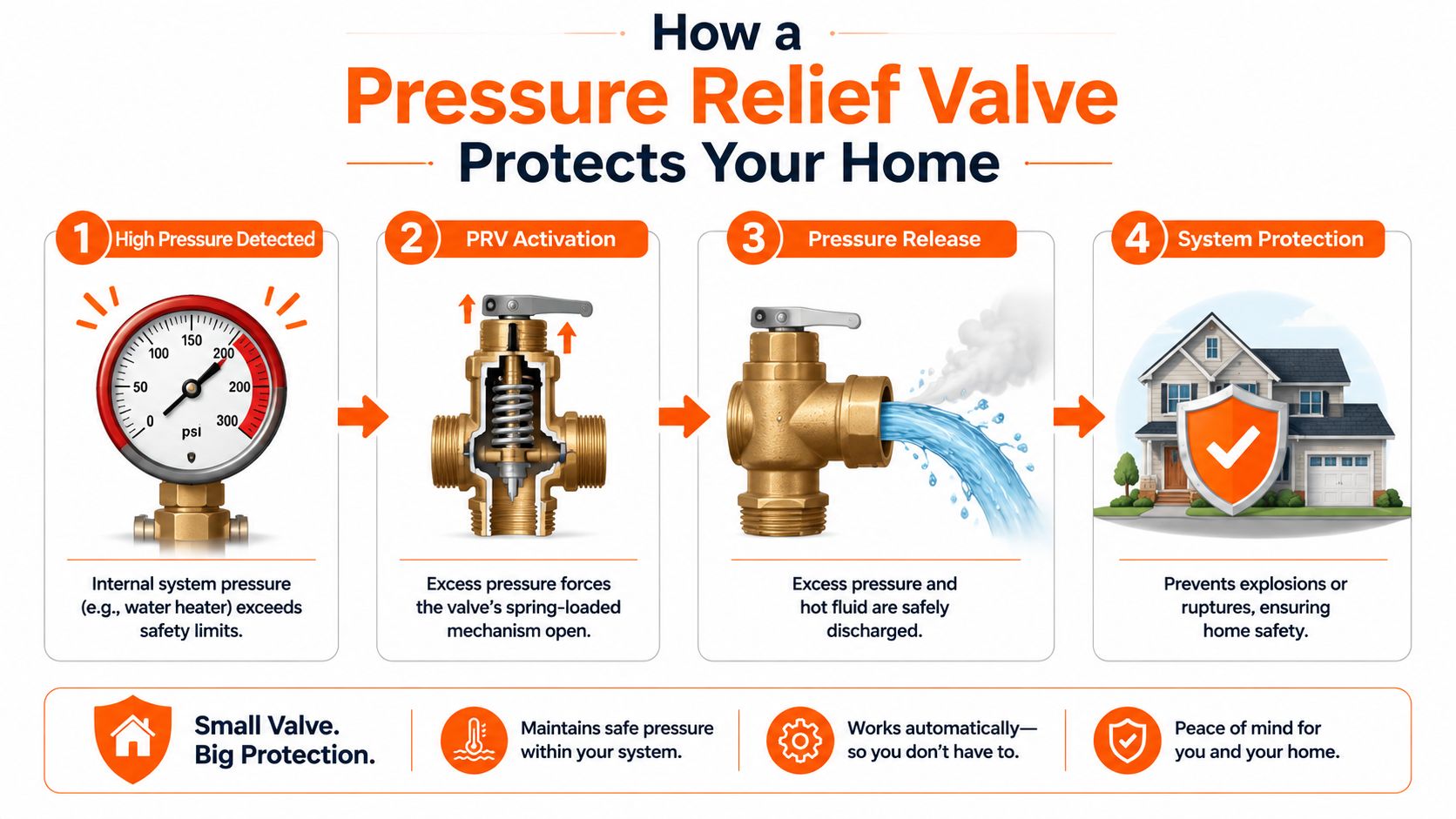
How a Pressure Relief Valve Protects Your Home
The easiest way to understand pressure relief valve function is to think about the lid on a pot of boiling water. When heat and steam build up, the lid starts to rattle and vent. It doesn't fly off all at once under normal conditions. It lifts just enough to let pressure escape.
A pressure relief valve works in a similar way. Inside the valve, a spring pushes the valve closed. System pressure pushes the other way. As long as the spring's force is stronger, the valve stays shut. Once pressure rises high enough, the valve starts to open.
The basic cycle
Here's the simple version of what happens:
- Pressure rises inside the system.
- The valve reaches its set point and starts to crack open.
- Excess fluid or gas escapes through the outlet.
- Pressure drops back down.
- The valve reseats and closes.
That opening isn't always all-or-nothing. A pressure relief valve operates on a proportional force-balance mechanism. It “cracks” open minimally when pressure is slightly below the full rating and opens further as pressure increases, which lets it regulate pressure in a stable way rather than popping wide open, as described in this pressure relief valve function reference.
Two terms that confuse people
Homeowners often hear technical words and assume they need to memorize them. You don't. But two terms are worth knowing.
Cracking pressure
This is the point where the valve first starts to open a little. It's the first release, not full flow.
If you picture a door pushed by wind, cracking pressure is the moment the latch gives and the door opens a few inches.
Reseating or blowdown
After pressure falls, the valve should close again. That closing point is below the pressure that opened it. In normal conversation, that means the valve needs pressure to drop before it can seal again.
If it doesn't reseat cleanly, you may get a steady drip, a hiss, or repeated discharge.
A lot of homeowners grasp this faster with a visual. This system protection graphic is a good reminder that pressure control is really about protecting equipment and the people around it.
Why this matters in real houses
In a perfectly steady system, valve behavior would be easy to explain. Real homes aren't steady. A water heater reheats in bursts. An AC system cycles on and off. Pumps stop and start. Fixtures close quickly. Pressure moves around.
That's why pressure relief valve function is about behavior during changing conditions, not just one fixed number on a spec sheet. A valve has to react correctly when pressure rises fast, not just eventually.
Practical rule: If a relief valve opens when it should, then seals again, it's doing its job. If it leaks, sticks, chatters, or fails to react, it needs attention.
Key Pressure Relief Valves in Your Plumbing and HVAC
Homeowners usually run into two broad categories of pressure relief valves. One is tied to plumbing, especially the water heater. The other shows up in HVAC equipment, where pressure behavior is different because gases and refrigerants don't act like water.
That difference is where many guides get too vague. The valve type matters because the fluid inside the system matters.

Plumbing valves for water systems
On a water heater, you'll usually find a temperature and pressure relief valve, often called a T&P valve. Water is an incompressible fluid, which means it doesn't squeeze down much under pressure. When pressure rises in a water system, the valve has to control that pressure in a predictable, measured way.
That's why a plumbing relief valve is designed to behave differently from valves used in gas-heavy or refrigerant systems. In a water heater, the valve protects the tank by discharging water when pressure or temperature gets too high.
What to look for
A homeowner can often identify the T&P valve by these clues:
- Mounted on or near the top portion of the water heater
- Connected to a discharge pipe
- Fitted with a small test lever
- Located where released hot water can be routed away safely
HVAC valves for gas and refrigerant behavior
HVAC systems involve compressible fluids, so pressure can change faster and more sharply. That means the valve behavior needed for safety can be different. The system may need faster venting or tighter response during cycling.
A useful comparison point comes from the home comfort side of the trade. If you're trying to understand how equipment types and service categories differ, this overview of cooling services helps show why AC systems need application-specific components, not generic substitutions. The same idea applies to relief devices.
A brand reference image also makes a simple point. Different systems call for different hardware and service judgment.

Why they are not interchangeable
Mistakes become risky, as demonstrated by a 2024 report that found 57% of plumbing surge incidents were caused by using HVAC-rated valves in water systems. Those water systems needed valves designed for incompressible liquids, not compressible gas behavior, according to the cited report on fluid-specific valve selection.
Here's the plain-English version:
| System type | What it handles | What the valve must do |
|---|---|---|
| Plumbing | Water | Release pressure in a controlled way suited to liquid behavior |
| HVAC | Refrigerant or gas behavior | React properly to rapid pressure changes and cycling |
If the wrong valve goes on the wrong system, the valve may technically “fit” but behave badly when pressure changes quickly. That's how homeowners end up with nuisance discharge, poor reseating, or a false sense of safety.
The right valve isn't the one that threads in. It's the one designed for the pressure behavior of that specific system.
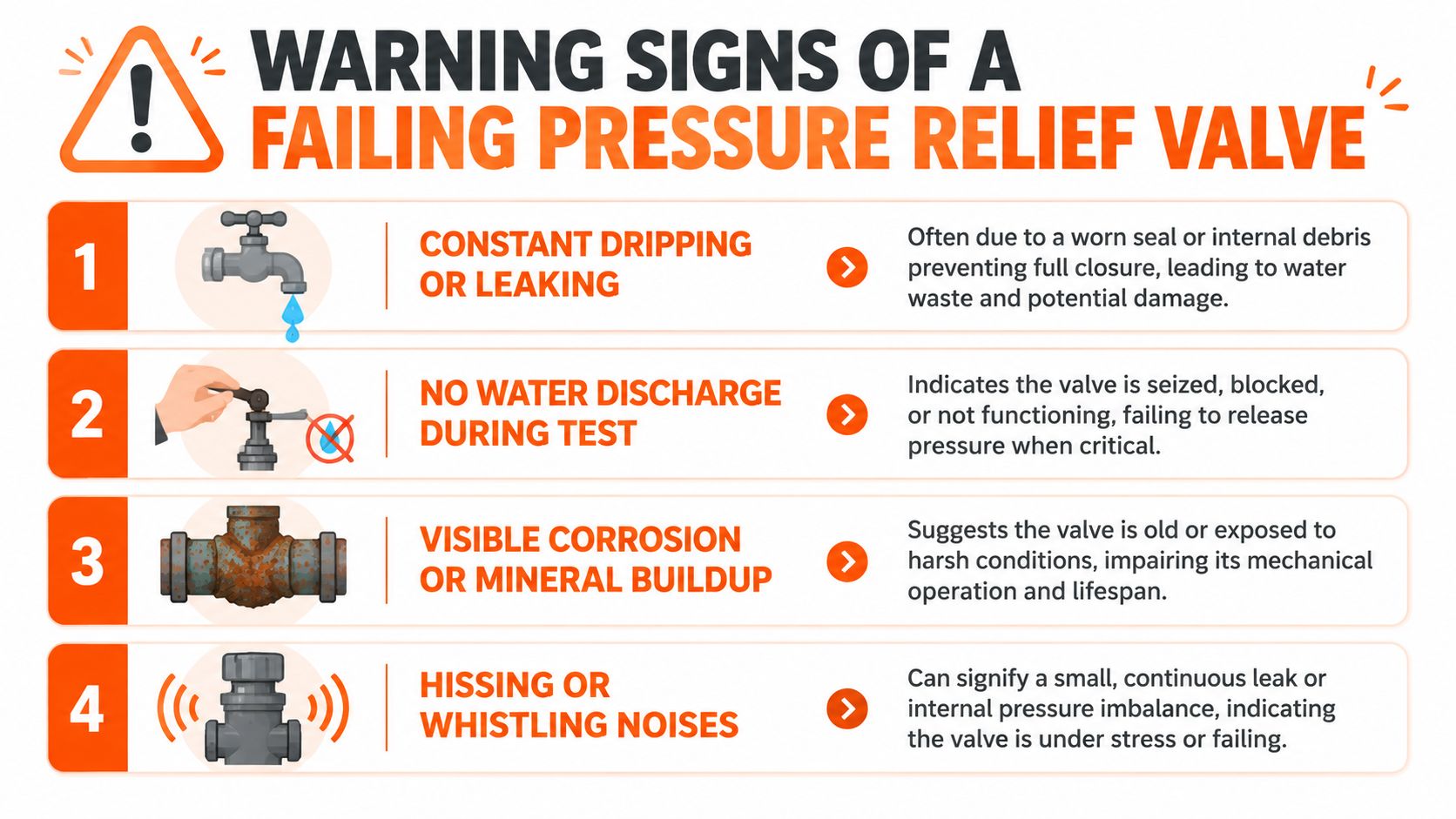
Warning Signs of a Failing Pressure Relief Valve
A bad pressure relief valve rarely announces itself with one dramatic event. Most of the time, it gives smaller warnings first. The trick is knowing which signs matter and why they happen.
One of the biggest misunderstandings is assuming failure means rust. Corrosion matters, but it's not the whole story, especially in HVAC systems that start and stop often.
What repeated dripping can mean
A valve that weeps now and then may be responding to a real overpressure event. A valve that keeps dripping after pressure normalizes is a different story.
Common reasons include:
- Debris on the seat: Tiny mineral particles can keep the valve from sealing fully.
- Wear inside the valve: The spring or seat can lose precision over time.
- A system problem upstream: The valve may be doing its job because pressure really is climbing too high.
- Damage after a manual test: Sometimes an older valve won't reseat cleanly once disturbed.
No discharge can also be bad
Homeowners tend to worry when water comes out. But if a valve never discharges during a proper manual test, that can also point to trouble.
A stuck valve can seize in place from scale, age, or internal damage. In that condition, it may look fine from the outside but fail when pressure rises.
If a relief valve can't open, it's not “dry and healthy.” It may be silently unavailable when you need it most.
Why cycling is hard on HVAC valves
Residential HVAC equipment doesn't run in one smooth, constant state. It cycles. Pressure rises, falls, and changes direction quickly enough to challenge the valve's response.
Industry data shows that 68% of premature PRV failures in residential HVAC systems happen not because of simple corrosion, but because the valve can't respond correctly to rapid pressure spikes during on/off cycling, an issue tied to cracking pressure override, as noted in this industry data reference.
That matters because a homeowner may see symptoms that look minor:
- Hissing during startup or shutdown
- Intermittent discharge
- Strange noises during short cycling
- A problem that appears only during hot afternoons or heavy system use
A quick symptom guide
| Symptom | Possible meaning |
|---|---|
| Constant drip | Poor reseating, debris, wear, or high system pressure |
| Mineral buildup | Past discharge or ongoing seepage |
| Corrosion | Age, moisture exposure, or long-term leakage |
| Hissing or whistling | Small leak or unstable pressure behavior |
| No flow during test | Valve may be seized or blocked |
When you call a technician, describing when the symptom happens often helps more than describing how loud it is. “It hisses right after the AC shuts off” is more useful than “it makes a weird sound sometimes.”
A Homeowner's Guide to PRV Safety and Testing
Homeowners can do a basic visual check and, on some water heaters, a careful manual test of the T&P valve. That's useful. It's also where caution matters most, because the valve may release hot water.
The safest mindset is simple. You're checking operation, not repairing anything.

What you can safely check yourself
Before touching the lever, look at the setup.
- Check the discharge path: The pipe should direct water to a safe location.
- Look for corrosion or crusting: Buildup around the valve body or outlet can signal age or leakage.
- Make sure the area is clear: Keep kids, pets, and bare skin away from hot discharge.
- Know the valve's age if possible: The functional useful life of a pressure relief valve is typically 4 to 5 years, and industry standards often recommend checking valve seating monthly and testing pressure settings quarterly because of an inherent initial failure probability of about 1% to 1.6%, according to this proof-test data summary.
If you want another plain-language breakdown of water-heater-specific precautions, this guide can help you understand hot water valve safety rules.
A careful manual test for a water heater T&P valve
A plumbing maintenance visual can be a good reminder that routine checks prevent bigger surprises.

Follow this process slowly:
- Locate the valve on the water heater and find the discharge pipe.
- Confirm the pipe has a safe outlet and nobody is in the splash zone.
- Lift the test lever briefly and let it snap back.
- Watch for discharge through the pipe.
- Check whether the valve reseats fully after the test.
Stop and call a professional if this happens
- The valve keeps dripping after the test
- Nothing comes out during the test
- The lever feels stuck
- You see heavy corrosion or obvious damage
- You're dealing with an HVAC relief valve rather than a water-heater T&P valve
Homeowner testing should answer one question only. Does the valve appear to open and then close properly under a controlled check?
When to Call Heatwave for PRV Repair or Replacement
There's a clear line between homeowner awareness and technician work. Looking, listening, and doing a basic water-heater valve check is reasonable. Replacing or diagnosing the exact cause of pressure behavior is not a casual DIY job.
Call a licensed professional when the valve leaks continuously after a test, shows visible corrosion, appears older than its normal service life, or is connected to HVAC equipment. HVAC-side pressure relief devices deal with system-specific pressures, refrigerant behavior, and cycling conditions that need proper diagnosis and matching parts.
Replacement isn't just unscrewing one valve and threading in another. The technician has to match the valve to the system's pressure and temperature requirements, install it correctly, confirm discharge routing, and verify that the system itself isn't causing the valve to open. A new valve installed on a system with the wrong pressure conditions won't solve the underlying problem.
A local service team should also be able to separate a valve problem from a bigger issue such as thermal expansion, control failure, or abnormal cycling. That's especially important when symptoms come and go.
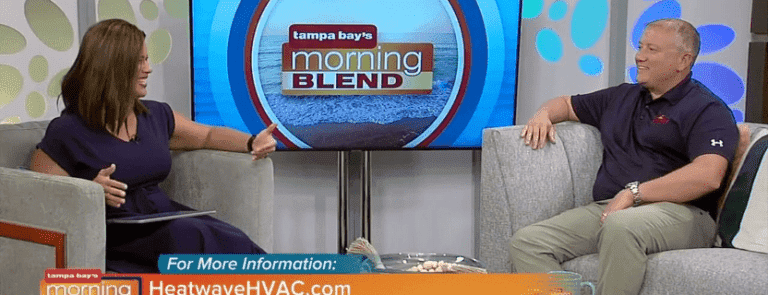
If you want to see the kind of local professionalism homeowners often look for in a service company, this community interview feature gives that kind of hometown context.
A pressure relief valve is small, but the risk of getting it wrong isn't. If you see warning signs, don't wait for a louder one.
If your water heater relief valve is dripping, your HVAC system is showing pressure-related symptoms, or you're not sure whether a valve is the right type for your system, contact Heatwave Air Conditioning, Plumbing, & Electric. Their team serves homeowners across Tampa Bay and Southwest Florida with professional plumbing, HVAC, and electrical help that puts safety first.