
If you live in Tampa, you probably know this routine. The AC runs most of the day, the thermostat sits at a reasonable setting, and the house still feels a little sticky by late afternoon. Then the power bill shows up, and you start wondering whether your system is just old, too small, or wasting electricity.
That's where SEER comes in.
Most homeowners first see it on the yellow EnergyGuide label or in an estimate for a new system. It looks technical, and a lot of articles make it sound more complicated than it is. In plain English, SEER is the efficiency score for your air conditioner or heat pump. It helps you compare how much cooling you get for the electricity you use.
For Florida homes, that matters a lot. We don't use AC for a few hot weekends. We lean on it for long stretches of heat, humidity, and warm nights. A better efficiency rating can help lower operating costs, but only if the rest of the system supports it. In many older Florida homes, ductwork can deprive a high-efficiency unit of the performance you paid for.
Your Guide to Florida AC Efficiency
A lot of homeowners start looking up SEER for the same reason. Their current unit still runs, but it seems tired. It cools the house eventually, yet it stays on longer, struggles in the hottest part of the day, and leaves some rooms warmer than others.
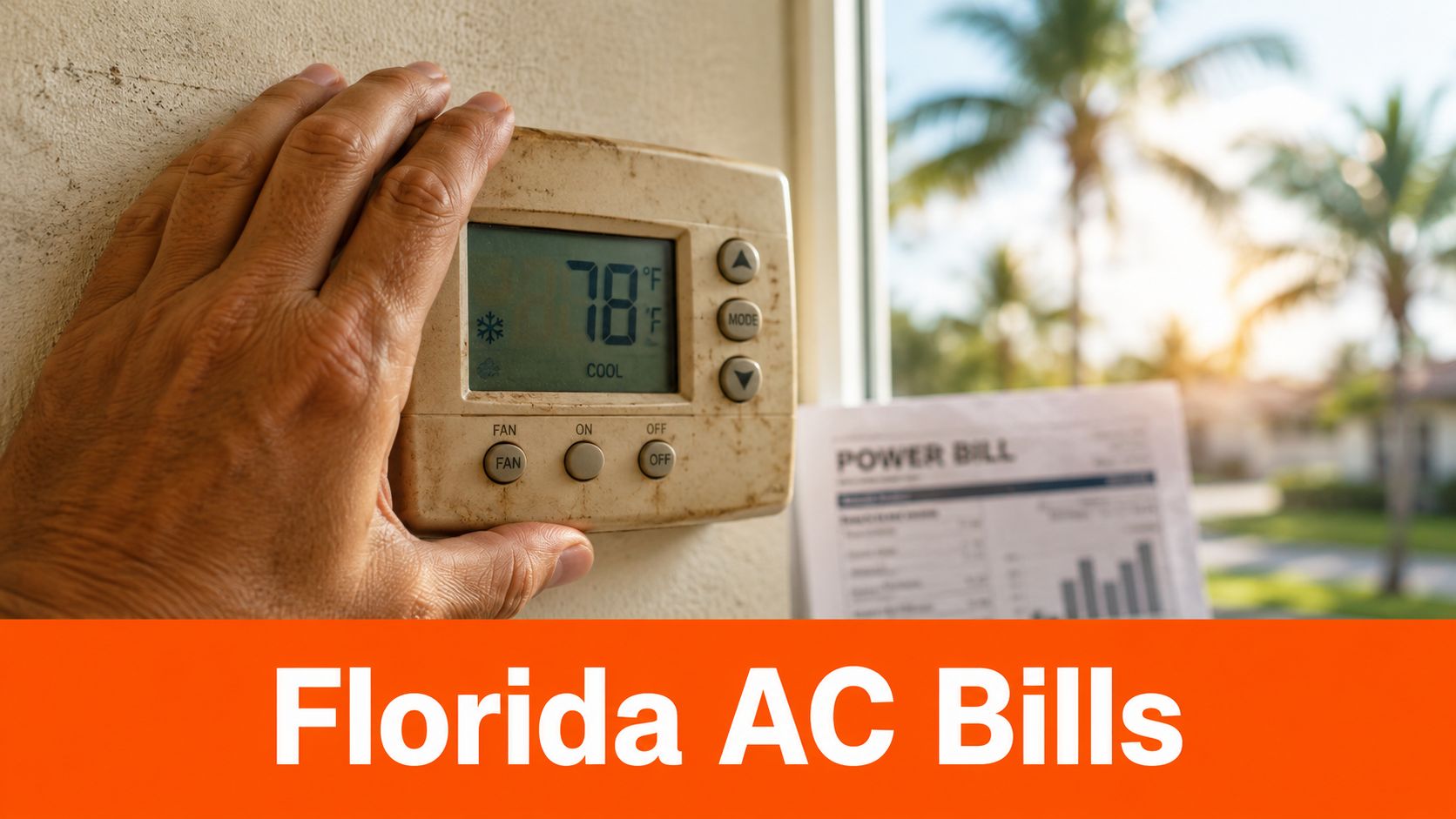
In Florida, that's more than annoying. It affects comfort, humidity, and your monthly budget. If your AC is running hard and your house still doesn't feel right, the efficiency rating on the equipment starts to matter. That little number helps explain why one system costs more to run than another, even if both can technically cool the same home.
Why this sticker matters
Think of SEER as a shortcut for one simple question. How much cooling am I getting for the electricity I'm paying for?
That's why shoppers compare SEER ratings when they replace a system. A higher rating usually means the unit uses less electricity to produce the same amount of cooling. If you're also trying to lower total home energy use, broader household habits matter too, and these homeowner energy-saving tips can help you think beyond just the AC.

The Florida part people miss
Here's the part many quick guides skip. In Florida, efficiency isn't only about the outdoor unit. Your home's ductwork, insulation, airflow, and humidity load all affect what you feel indoors.
A high-efficiency AC can still disappoint if the house can't deliver that cooling where it needs to go.
That's why a good “SEER rating explained” guide has to talk about real houses, not just lab ratings. If your home was built years ago and still has older ducts, the best answer might not be the highest rating on the showroom floor. It might be the system that fits your house best.
What Exactly Is a SEER Rating
SEER stands for Seasonal Energy Efficiency Ratio. In plain English, it is the AC industry's way of showing how much cooling a system can deliver for the electricity it uses over a cooling season.
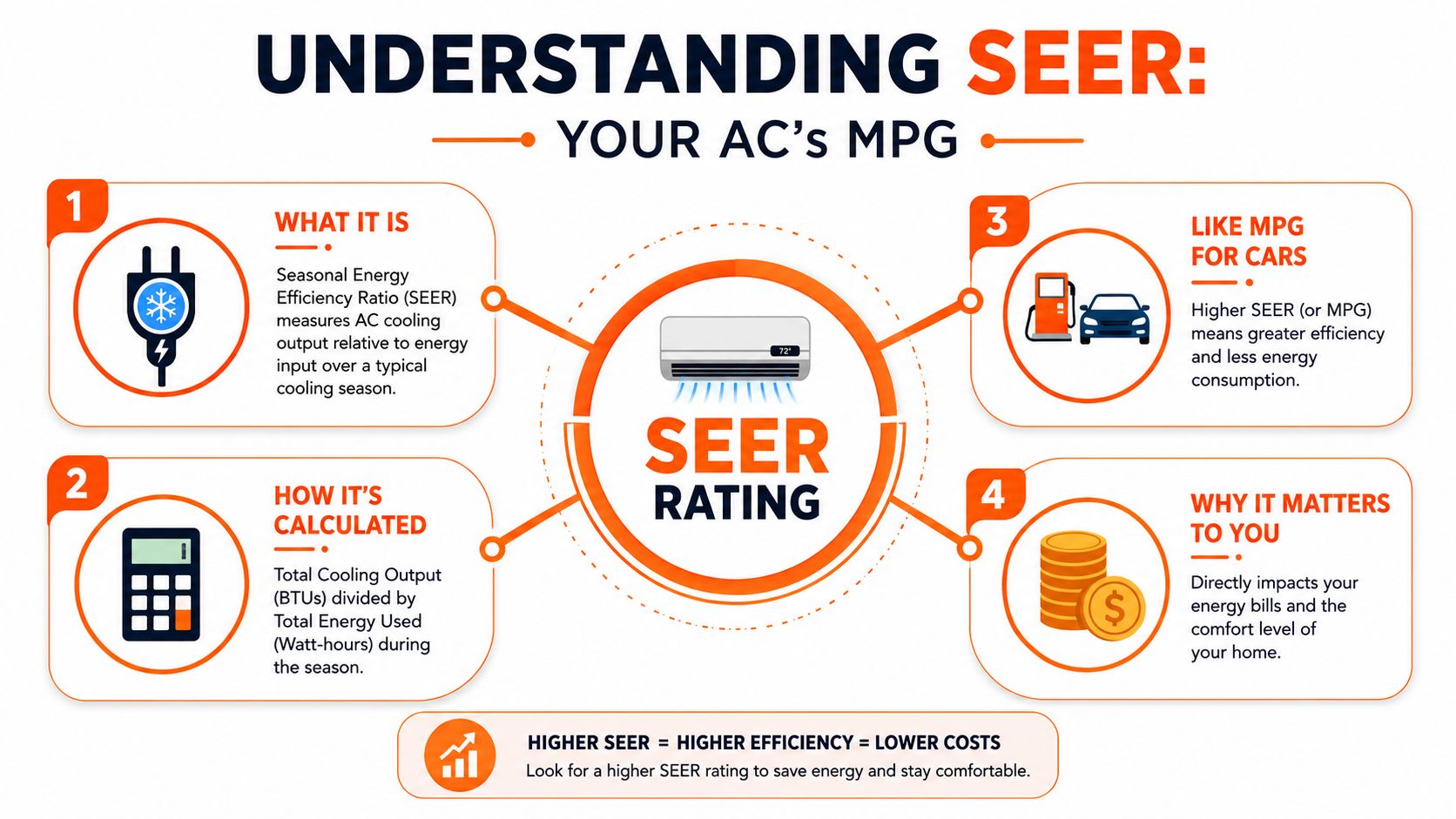
A simple comparison helps here. SEER works a lot like your car's MPG. Better MPG means you travel farther on the same gas. Higher SEER means the AC can produce more cooling from the same amount of electricity.
That makes SEER useful, but not complete. MPG does not tell you how comfortable the seats are or how the car handles in traffic. In the same way, SEER does not tell you everything about humidity control, airflow, noise, or installation quality.
How the rating is calculated
The formula itself is straightforward. SEER compares total seasonal cooling output to total electrical energy used.
Put even more clearly, it answers three questions:
- How much cooling did the system produce?
- How much electricity did it take to do it?
- How efficient was that tradeoff?
A higher number means the system is more efficient on paper.
What the number means in real life
If one unit has a higher SEER rating than another, it should use less electricity to deliver a similar amount of cooling under standardized test conditions. That is why higher-SEER equipment often carries a higher price tag up front. You are paying for better efficiency potential.
The word potential matters in Florida.
In Tampa and across the state, long cooling seasons, heavy humidity, hot attics, and older duct systems can chip away at the savings people expect. A high-SEER condenser connected to leaky ducts is a bit like buying an efficient pickup truck and then driving with the tailgate down and a mattress sticking out the back. The equipment may be efficient, but the delivery system is wasting part of what you paid for.
So if you see 16 SEER and 14 SEER on two proposals, read that as a comparison between the equipment itself. It does not promise that your electric bill will fall by that exact same percentage in your house.
A plain-English way to read estimates
When you compare AC quotes, SEER is best used as a ranking tool, not a guarantee.
| Option | What it suggests |
|---|---|
| Lower SEER | Lower efficiency, usually lower upfront cost |
| Higher SEER | Better efficiency potential, usually higher upfront cost |
| Very high SEER | Best lab-rated efficiency, but only if airflow, ductwork, and installation support it |
That last row is where Florida homeowners get tripped up. In many older homes, the duct penalty is serious enough that a premium high-SEER unit may never perform the way the brochure suggests. If the ducts leak, are undersized, or run through a brutal attic, part of your cooling escapes before it ever reaches the bedroom or living room.
SEER still matters. It just works best when you read it alongside the condition of the house that has to carry that cooled air.
Understanding SEER SEER2 EER and HSPF
A lot of Florida homeowners hit a wall here. One quote says SEER2, another mentions EER, and a heat pump brochure throws in HSPF. It can feel like reading four different gas mileage stickers for the same car.
The easiest way to sort them out is to separate seasonal performance from snapshot performance.
Why SEER became SEER2
SEER was the older cooling efficiency test. SEER2 is the newer version with tougher testing conditions that better reflect how equipment moves air through a real system, especially with more resistance in the ductwork, as described in Wikipedia's SEER history summary.
That change matters in Florida because many homes are not working with ideal airflow. Older duct runs, long attic ductwork, and return problems add resistance. SEER2 does a better job of acknowledging that real-life penalty than the older SEER label did.
So if a newer unit shows a lower number than an older brochure, that does not automatically mean the equipment is worse. It often means the test got stricter.
A simple way to separate the ratings
Here is the plain-English version homeowners usually need:
| Rating | What it measures | Why a Florida homeowner should care |
|---|---|---|
| SEER2 | Seasonal cooling efficiency over a range of conditions | Best quick comparison for long Tampa cooling seasons |
| EER | Cooling efficiency at a fixed, hotter operating point | Useful for understanding performance during hard summer heat |
| HSPF2 or HSPF | Heating efficiency for heat pumps | Matters less in Florida, but still counts if you use a heat pump in winter |
SEER2 is the broad report card for the whole cooling season. EER is more like checking how the system behaves during a tough afternoon in August. HSPF looks at the heating side, which matters more in cooler states than it does in Tampa.
Where EER helps more than people expect
EER gets less attention in consumer guides, but Florida homeowners should not ignore it. A system can have a strong seasonal rating and still feel different on a very hot, humid day if its steady-condition performance is weaker.
That is one reason comfort complaints can show up even after an equipment upgrade. The label may look great, but your house lives in its environment. Sun load, attic heat, duct leakage, and airflow restrictions all affect what you feel at the vent.
For homeowners comparing upgrades, Pinnacle Property Media's energy guide is also a useful reminder that equipment efficiency is only one part of lowering total home energy costs.
Why HSPF is usually a smaller priority in Tampa
If your system is a heat pump, HSPF measures how efficiently it heats. That still matters. Florida does have cool mornings and short cold snaps.
But for most Tampa-area households, cooling efficiency and humidity control drive the buying decision far more than heating efficiency. You will usually get more practical value from understanding SEER2 and EER clearly than from obsessing over HSPF.
What to focus on when reading a Florida quote
A good quote should help you answer four questions:
- Is the cooling rating shown in SEER2?
- Does the proposal list the matched indoor and outdoor equipment, not just the condenser?
- Is there any mention of duct condition, static pressure, or airflow testing?
- If the home has older attic ducts, did the contractor explain how that may reduce the benefit of a high-SEER system?
That last question gets skipped all the time.
In older Florida homes, the actual duct penalty can erase part of the upgrade you thought you were buying. Cool air leaking into a hot attic is like paying for bottled water and pouring some of it into the sand before it reaches your glass. The equipment may be efficient on paper, but the house still has to deliver that cooling where you live.
So yes, learn the labels. But read them with your ductwork in mind. That is how these ratings become useful instead of confusing.
Calculating Your Potential Energy Savings in Florida
Your July electric bill shows up after a stretch of ninety-degree days in Tampa. The house stayed cool enough, but the number at the bottom still makes you wince. That is usually the moment SEER2 stops feeling like a technical label and starts feeling personal.
Savings are easier to understand when you turn the rating into a simple comparison. A higher SEER2 system uses less electricity to deliver the same amount of cooling under set test conditions. In a long Florida cooling season, that can reduce operating cost over time. The catch is that the label gives you a laboratory-style starting point, not a promise for your specific house.
Start with a practical baseline
Florida homeowners do not need to chase the highest number on the brochure to make a smart upgrade. In many homes, the main decision is whether to buy the lowest qualifying efficiency, move up to a balanced middle option, or pay more for premium equipment.
That middle option is often where the math starts to make sense.
A contractor can estimate operating cost by comparing your current system, your expected runtime, and the efficiency of the replacement. If you want a simple visual on how home systems affect comfort and energy use, this home heating and cooling system overview helps show the bigger picture.

What changes your real savings
Two Tampa homes can install the same outdoor unit and get different results. One family keeps the thermostat low all day. Another raises it while they are at work. One home has decent attic insulation. Another pulls hot attic air through leaks and old recessed lights. Those details change the payoff.
Duct condition matters too, but not in an abstract way. If cooled air leaks into a hot attic before it reaches the bedrooms, part of the efficiency you paid for never reaches the living space. That is why a high-SEER2 quote can look better on paper than it feels on the utility bill.
A simple way to estimate value
Use three questions.
- How old and inefficient is your current system?
- How many months of the year does your AC run hard?
- How long do you expect to stay in the home?
If your current unit is much older, the jump in efficiency is usually easier to justify. If you expect to move soon, a premium efficiency upgrade may not pay you back as clearly. If you plan to stay for years, lower monthly operating costs matter more.
Estimated savings. Use ranges, not promises
The safest way to talk about savings is in tiers instead of exact dollar claims.
| Upgrade Level | What It Usually Means for Bills | Best Fit |
|---|---|---|
| Basic replacement | Lower bills than an older worn-out system, but limited efficiency gains | Tight upfront budget |
| Mid-efficiency upgrade | Noticeable long-term savings for many Florida households | Owners who want a balance of price and performance |
| Premium high-SEER2 upgrade | Highest savings potential on paper, but only if the home can deliver the airflow and duct performance the equipment needs | Homes with good ducts, good airflow, and long ownership plans |
That last column is where many online SEER guides stop too early. Florida homes, especially older ones, often have attic duct systems that act like a cracked cooler. You can buy colder ice, but if the cooler lid does not seal, you still lose the benefit.
Look beyond the condenser
A fair savings estimate should include more than the outdoor unit. Ask whether the quote considers indoor equipment match, blower setup, airflow, insulation levels, and duct leakage. If it does not, the number is only a rough sketch.
For homeowners who want to lower total house costs, not just AC costs, Pinnacle Property Media's energy guide is a useful companion read.
Practical rule: Compare purchase price, expected monthly savings, and the condition of your ductwork together. In Florida, those three numbers tell a more honest story than SEER2 alone.
The Hidden Factor That Voids High SEER Savings
A high SEER2 rating looks great on paper. But in older Florida homes, the house itself can block you from getting that full benefit.
The real-world duct penalty
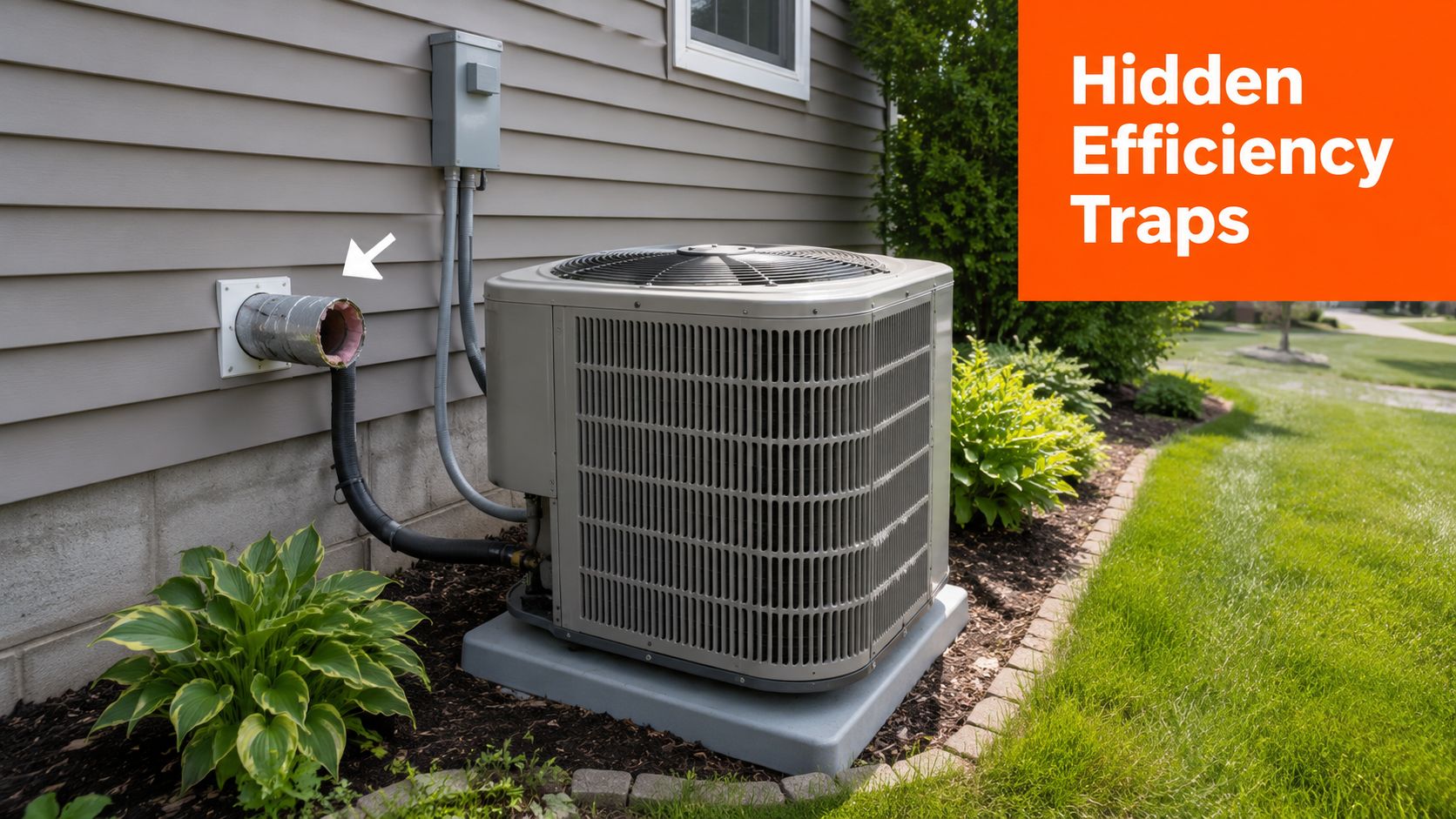
Many Tampa-area homes were built with duct systems that are now aging, leaking, poorly insulated, or restrictive. That matters because an AC system is only as good as the air path attached to it. If conditioned air leaks into the attic, or if returns are undersized, the equipment has to work harder to do the same job.
Verified guidance from Carrier notes that high SEER2 units rated 20+ can lose 15% to 25% of their rated efficiency in homes with poor ductwork, and that a 16 SEER2 unit with modified ductwork can outperform a 24 SEER2 unit in a leaky system, as explained in Carrier's discussion of SEER and duct conditions.
That's one of the most important truths in any honest seer rating explained article.
Why this hits Florida homes hard
Florida homes ask a lot from ductwork. Attics get hot. Humidity is relentless. Many houses have older return layouts or flex duct runs that were never ideal to begin with.
If you put a premium high-efficiency unit on a weak duct system, a few things can happen:
- Airflow drops: The system can't move enough air across the coil.
- Comfort stays uneven: Some rooms cool fine while others lag behind.
- Humidity lingers: The house may hit temperature but still feel clammy.
- Savings shrink: You paid for top-tier efficiency, but the house never lets the unit reach it.
A better way to think about upgrades
Don't think of the outdoor unit as the whole system. Think of it as one part of a chain.
A strong replacement plan often includes checking:
- Duct leakage
- Return air sizing
- Supply restrictions
- Air handler compatibility
- Filter setup and airflow resistance
That broader whole-home view is what separates a solid upgrade from an expensive disappointment. If you've ever seen a home where one bedroom is always warm and the main area feels fine, that's often a duct or airflow clue, not just an equipment-age problem. For homeowners comparing comfort issues across seasons, this related home comfort resource adds helpful context.
Paying for the highest rating only makes sense if your duct system can deliver that performance into the living space.
The neighbor-to-neighbor advice
If your home is older and you're considering a high-SEER system, ask for a duct evaluation before you commit. That one step can keep you from overspending on equipment that your house can't fully support.
In some homes, the smartest move is a balanced-efficiency system plus duct improvements. That often produces better comfort and more believable savings than chasing the biggest number on the label.
How to Choose the Right AC for Your Florida Home
Choosing an AC isn't just about finding the highest efficiency rating you can afford. It's about matching the equipment to the house, the climate, and how long you expect to live there.
Start with the right floor, not the highest ceiling
In Florida, the minimum standard already starts higher than in cooler regions. That means your first question shouldn't be, “What's the most efficient unit available?” It should be, “What efficiency level makes sense for my house and usage?”
A practical decision usually balances three things:
| Priority | What it means |
|---|---|
| Upfront budget | Lower-rated systems usually cost less to buy |
| Long-term operation | Higher-rated systems can lower electricity use |
| Real-world delivery | Ducts, airflow, and sizing determine what you actually get |
Ask better questions during estimates
A good estimate should do more than list a tonnage and a SEER2 number. It should help you understand whether the system will perform well in your specific house.
Ask questions like these:
- How was the system size chosen? Bigger isn't automatically better for comfort.
- Will the installer inspect the ductwork? This matters in older homes.
- Is the quoted efficiency based on a matched system? Outdoor and indoor components have to work together.
- What maintenance will keep the system efficient? Filters, coils, drains, and airflow all affect performance.
A sensible Florida decision path
For many homeowners, the strongest path looks like this:
- Confirm the existing system's condition. If it still runs well, replacement may not be urgent.
- Get a whole-home evaluation. That should include airflow and duct observations, not just equipment age.
- Compare efficiency tiers objectively. Don't assume premium always means better value.
- Review budget options. Installation cost matters, but so does operating cost over time.
- Plan for upkeep. Even efficient equipment loses performance when maintenance gets ignored.
The best AC choice is the one that delivers comfort, humidity control, and believable efficiency in your actual home.
Keep the decision practical
If you're staying in the home long term, it makes sense to weigh efficiency more heavily. If your ductwork needs attention, solve that before expecting premium performance from premium equipment. If comfort has been uneven for years, don't assume a new condenser alone will fix it.
Homeowners also tend to do better when they ask about maintenance plans and financing at the same time they review replacement options. That keeps the system affordable to install and easier to protect after it's in place. If you'd like another homeowner-focused local resource while you think through your options, this Tampa Bay feature is worth a look.

A good HVAC decision should leave you with fewer surprises, steadier comfort, and a system that performs the way the estimate promised.
If you're ready to compare AC options with a team that understands Florida heat, humidity, and the ductwork issues that often get missed, Heatwave Air Conditioning, Plumbing, & Electric can help. They offer free estimates for new installations, financing options, and experienced guidance on HVAC, plumbing, and electrical work across Tampa Bay and Southwest Florida.