
You usually notice a sewer cleanout cap by accident. Maybe you hit a plastic lid with the mower, spot a round pipe near the foundation, or catch a sewer smell in the yard after a hard summer storm. Most homeowners in Tampa Bay don't think much about it until a drain slows down or the cap goes missing.
That's a mistake in Florida.
With heavy rain, tropical weather, soggy soil, and yard work happening year-round, a small opening in the sewer line can turn into a real problem fast. A missing or damaged sewer cleanout cap isn't just an ugly little plumbing issue. It can let stormwater, debris, pests, and sewer odors into a system that's supposed to stay sealed.
What Is a Sewer Cleanout Cap and Why It Matters
A sewer cleanout cap covers the access point to your home's main sewer line. Plumbers remove it to clear a blockage, run a camera, or test the line. It is a small fitting, but it protects a direct opening into the pipe that carries wastewater away from the house.

In Tampa Bay, that cap does more than keep the access point tidy. During summer downpours and hurricane season, a missing or loose cap can let stormwater pour straight into the sewer lateral. I have seen that turn a minor maintenance issue into a backed-up line after one hard rain, especially in low yards that already hold water.
Why plumbers take it seriously
The cap has two jobs. It needs to seal the opening against rain, debris, insects, and sewer gas. It also needs to come off cleanly when the line needs service, because a stuck or broken cap can slow down a call that should have been simple.
Florida weather raises the stakes. Once stormwater gets into a private sewer line through an uncapped cleanout, it adds volume where the system was only meant to carry wastewater. That extra inflow can strain the line on your property and add pressure to the broader sewer system during heavy rain. If the pipe is already partially blocked, the risk of a backup goes up fast.
Practical rule: If the cap is missing, cracked, or cross-threaded, treat it like an open sewer pipe.
What homeowners usually get wrong
Homeowners often treat the cleanout cap like a cover that only matters during a clog. In the field, the opposite is usually true. A sound cap helps prevent the conditions that make service calls worse in the first place, especially after storms, lawn work, or flooding around the foundation.
Even small maintenance items get ignored until they smell bad or fail at the wrong time. You can see that same habit in basic customer review graphics. The work looks minor right up until the weather turns and the line needs to stay sealed.

How to Find Your Sewer Cleanout Access
A lot of Tampa Bay backup calls start the same way. Heavy rain hits, the yard floods, and the homeowner realizes the cleanout has been buried for years or the cap is gone and nobody noticed. If you cannot find that access point before storm season, you are already behind.
Start outside at the house and work outward. In many homes, the cleanout sits near the point where the main drain leaves the structure. A bathroom wall, laundry area, or kitchen often gives you the best clue about the line's path toward the yard and then toward the street or alley.

Where to look first
Work the property in a simple pattern instead of wandering the yard.
- Near the foundation: Start close to the exterior wall, especially near a bathroom grouping, laundry room, or the side of the house facing the street sewer connection.
- Along the side yard: This is a common spot because it stays reachable without putting the cleanout in the middle of a walkway or patio.
- Near the route to the street: Follow the most direct path the sewer lateral would likely take.
- In beds and mulch lines: Planting beds hide cleanouts all the time, especially after fresh mulch or rock is added.
- Slightly above grade on older homes: You may find a short riser with a threaded cap sticking up a bit from the soil.
Do not overlook areas that were reworked after the house was built. New sod, edging, pavers, and fence lines often cover access points that used to be easy to spot.
What it looks like
Most residential cleanouts are a capped plumbing fitting tied into the building drain. In the yard, that usually means a round cap on a pipe that looks more like plumbing than irrigation. Common materials include PVC, and the opening is often sized for a main residential drain.
If you are unsure what you are looking for, a simple visual reference for hidden exterior access points can help train your eye. The cleanout usually blends into the yard until you know the shape and placement to watch for.

Here's a quick video view if you prefer to see examples in motion:
Common Florida obstacles
Florida yards make this harder than many national guides admit. St. Augustine grass creeps over the cap. Sand shifts after hard rain. Mulch floats and settles around the fitting. I see cleanouts buried after landscaping jobs all the time, especially after summer storms and hurricane prep.
That matters for more than convenience. A hidden cleanout is easy to ignore, and a missing cap in a low, flood-prone yard can let stormwater pour straight into the line when the ground is saturated. During hurricane season, that extra inflow can add stress to a private sewer line right when the system has the least room for error.
Use a hand trowel or gloved hands if you find a likely spot under loose soil or mulch. Digging straight down with a shovel is a good way to crack the fitting or damage the cap threads.
Types Sizes and Materials for Sewer Cleanout Caps
A lot of Tampa Bay sewer backups start with a small mistake at the cleanout. The cap is missing, the wrong size, or replaced with whatever fit loosely enough to get by. Then a summer downpour hits, the yard saturates, and stormwater has one more path into a line that was never meant to carry it.
A sewer cleanout cap has one job. It closes the access point securely so the line stays serviceable and protected from soil, debris, and rain-driven inflow. Around here, that matters more than many homeowners realize. In a low yard or near a driveway where water ponds, a bad cap can let in runoff during heavy rain and add strain to the sewer line right when hurricane season already pushes every drainage system hard.
The sizes that matter most
Size comes first. On many homes, the main sewer line is 4 inches, while some cleanout openings or replacement plugs are 3 inches. What matters is the actual sealing point inside the fitting, not the part you can see from the surface.
That is where homeowners get tripped up.
A cap that looks close enough can still seal poorly, sit crooked, or block proper access for drain equipment later. If you are not sure what you have, this cleanout cap size and fitting example helps show why matching the fitting matters more than guessing by eye.

Common cap types
Threaded caps are the standard choice when the fitting was built for threads and those threads are still in good shape. They are usually the best long-term option because they seal properly and can be removed for service without improvising.
Mechanical expansion plugs solve a different problem. They seal by tightening a rubber gasket against the inside of the pipe, which makes them useful when threads are damaged or missing. They need careful sizing and proper seating. In flood-prone Florida yards, a poorly seated expansion plug can leak or shift when the soil gets soft and the ground stays wet for days.
Test caps and temporary plugs also show up, especially after repairs or inspections. Those are not always meant to stay in place as a permanent exterior cleanout closure. If there is any doubt about what was installed, understanding drain camera inspections can help you see whether the cleanout and the line behind it are set up correctly.
Material choices and Florida trade-offs
Material matters, but fit matters more. PVC caps are common on residential sewer lines because they resist corrosion and are easy to replace. ABS is also used on compatible systems and holds up well, but it needs to match the existing fitting style. Rubber expansion plugs with metal hardware are practical in some repairs, though they are less forgiving if the size is off or the hardware starts corroding. Metal caps can feel durable, but in our climate they can seize up over time and become a headache when the line needs to be opened fast.
Sun, standing water, mower hits, and shifting sand all shorten the life of a weak cap.
Sewer Cleanout Cap Material Comparison
| Material | Pros | Cons |
|---|---|---|
| PVC | Common in residential work, resists corrosion, easy to source | Can get brittle with age or UV exposure if left exposed |
| ABS | Tough and widely used on compatible systems | Must match the existing system and fitting style |
| Rubber expansion plug with metal hardware | Useful when threads are damaged or a mechanical seal is needed | Wrong sizing or poor seating can leak, especially in wet ground |
| Metal cap or plug | Strong and durable in the right application | Can corrode, seize, or become hard to remove over time |
The practical rule is simple. Match the cap to the fitting, the pipe size, and the conditions around your home. In Tampa Bay, that means choosing a cap that can stay sealed through hard rain, saturated soil, and the kind of storm season that exposes every weak point in a sewer line.
Inspecting and Maintaining Your Sewer Cleanout Cap
After one of our hard summer storms, this is a smart thing to check. A cleanout cap that looked fine in dry weather can loosen, crack, or start letting water in once the yard is saturated. In Tampa Bay, that matters because an open or poorly seated cleanout is not just a cap problem. It can become a stormwater entry point right when the sewer system is under the most strain.
A good inspection is simple. Keep it to what you can see from outside, and do it on a dry day if possible so you are not guessing at what rainwater is doing around the fitting.
A practical inspection routine
Start with the cap itself. Look at the top and the threads or plug surface. A cap should sit square, stay tight, and match the fitting it is installed in. If it looks crooked, partly backed out, or patched with the wrong part, treat that as a problem. As noted earlier, the cap needs to match the fitting and stay sealed well enough to keep out debris, yard runoff, and surface water.
Then check the area around it. Pull back mulch, clear grass, and remove any dirt packed against the fitting so you can see its condition. In Florida yards, I also look for signs that rain regularly ponds around the cleanout. If water sits there after a storm, a weak cap has a much better chance of letting inflow into the sewer line.
A few things deserve a closer look:
- Visible damage: Cracks, chips, sun damage, or missing sections.
- Poor fit: A cap that wobbles, will not thread correctly, or looks mismatched to the opening.
- Buried access: Soil, sod, or landscaping covering the cleanout and trapping moisture around it.
- Impact wear: Damage from mowers, string trimmers, edging tools, or foot traffic.
- Rust on metal hardware: Common on older plugs and expansion-style caps near wet soil.
What not to do
Do not open a sewer cleanout cap while sinks, toilets, or tubs are backing up. If the line is holding waste, the cleanout can release sewage fast and without warning. Keep your face and hands clear of the opening area, and do not force a stuck cap if the pipe or fitting starts twisting in the ground.
That last part matters more than people think.
A damaged cap sometimes points to a damaged cleanout fitting, shallow pipe, or movement in the line below. If the cap looks wrong and the house also has slow drains, gurgling, or repeated backups after heavy rain, the issue may go beyond the cap itself. This guide on understanding drain camera inspections gives a useful overview of how plumbers confirm root intrusion, offset joints, and buried obstructions.
For routine upkeep, simple seasonal habits help. This spring plumbing maintenance checklist visual is a good reminder to check exterior plumbing before storm season ramps up.

A sensible homeowner standard
Use gloves and a flashlight. That is usually enough.
If the cap is visibly cracked, missing, or clearly the wrong type, replacing it promptly is reasonable. If the fitting is broken, the cap will not tighten properly, or the area floods during rain, stop there and get a plumber involved. Around Tampa Bay, small cleanout problems have a way of turning into wet-weather sewer problems at the worst time of year.
Signs of Trouble a Damaged Sewer Cap Is a Warning
A damaged sewer cleanout cap usually gives off clues before it turns into a full-blown backup. The problem is that people dismiss those clues because the cap is outside, small, and out of sight.
In Florida, that delay is risky. During periods of intense rain, the issue stops being about one cap and starts affecting the whole sewer path serving the house.
What you might notice first
Some warning signs are obvious. Others are subtle until you know what to look for.
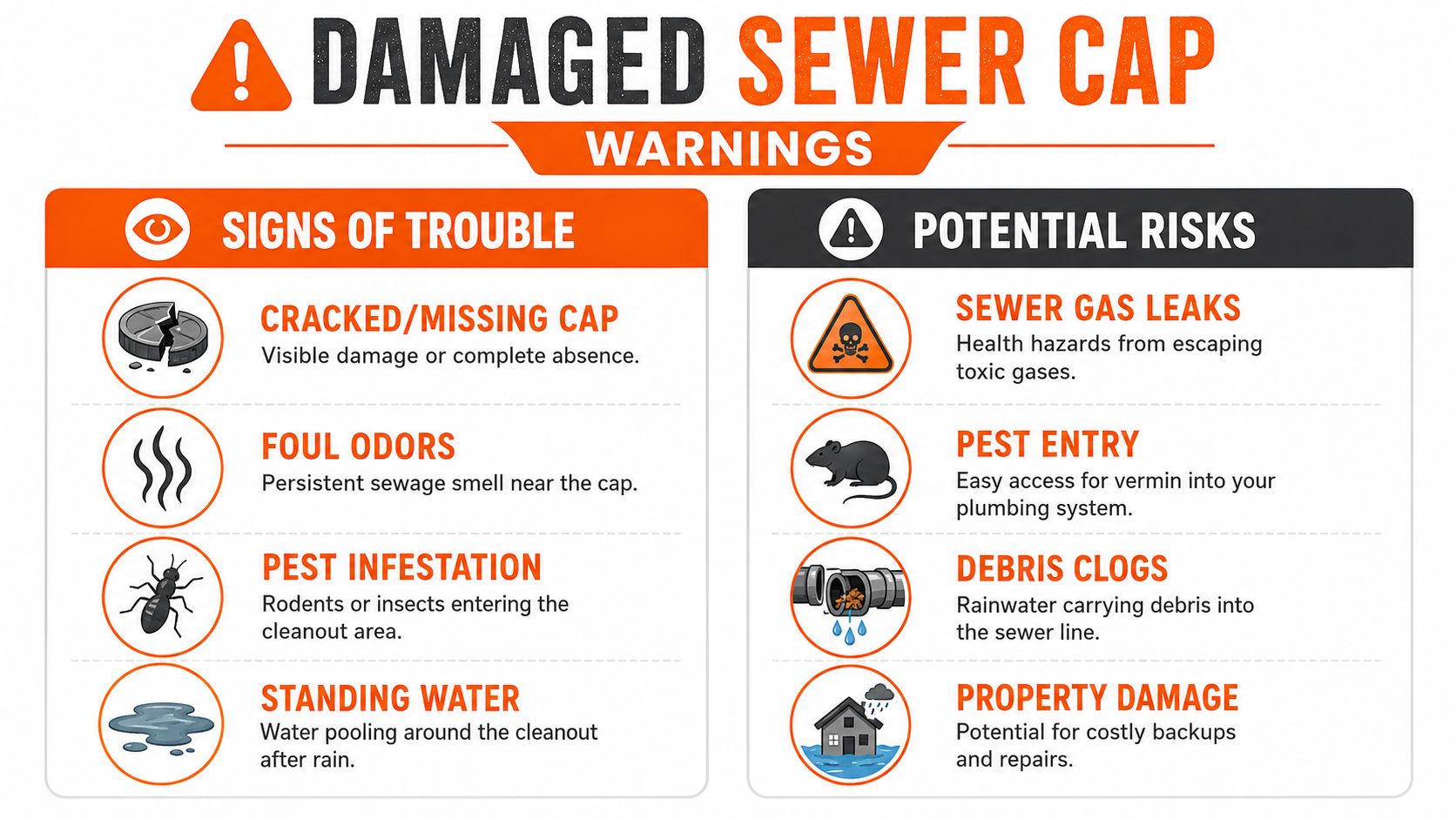
- A missing or cracked cap: The opening is exposed or the cap no longer seals.
- Sewer odor in the yard: A smell near the cleanout area often means the closure has failed.
- Standing water after rain: Water lingering around the cleanout can point to poor sealing, drainage issues, or line trouble.
- Pest activity: Insects and rodents use openings you didn't know you had.
- Debris in or around the cleanout: Leaves, soil, and grass clippings don't belong in a sewer access point.
Why this matters more in Florida
In high-rainfall areas like coastal Florida, an open cleanout can let stormwater into the sanitary sewer. EPA guidance warns that this kind of inflow can overwhelm system capacity and trigger overflows. A missing cap is not just cosmetic. It creates a direct pathway for debris, rodents, and floodwater into the sewer lateral, which increases the risk of backups (Florida stormwater inflow warning).
That's the part generic plumbing articles usually miss. In Tampa Bay, Sarasota, Port Charlotte, Cape Coral, and Fort Myers, the weather adds urgency. Hard rain doesn't need a big opening. It only needs a path.
A cleanout without a proper cap acts like a funnel during a storm. If the line is already stressed, that extra water can push a manageable problem into a backup.
When the cap is warning you about something deeper
Sometimes the cap is the weak link. Sometimes it's the messenger. If you replace a missing cap and still notice slow fixtures, repeated drainage issues, or soggy ground near the line, there may be a blockage, root problem, broken fitting, or damaged lateral.
If you want another practical checklist of outside signs that shouldn't be ignored, this article on warning signs your drain needs attention is worth reading because it helps connect small symptoms to larger drain-line failures.
When to Call a Professional Plumber in Tampa Bay
A homeowner can spot a missing sewer cleanout cap. In some cases, a homeowner can replace one. But there's a clear line between simple upkeep and sewer diagnosis.
Once the problem moves past the cap itself, the right move is professional inspection. Homeowners are responsible for maintaining their sewer cleanout, and code-based guidance in multiple jurisdictions makes clear that a missing or damaged cap can violate plumbing requirements. Code guidance also notes that properties may require at least two cleanouts, including one near the vent stack and one near the connection between the building drain and the building sewer, and those access points must be properly maintained (cleanout maintenance and code responsibility).
Call for help if any of these are happening
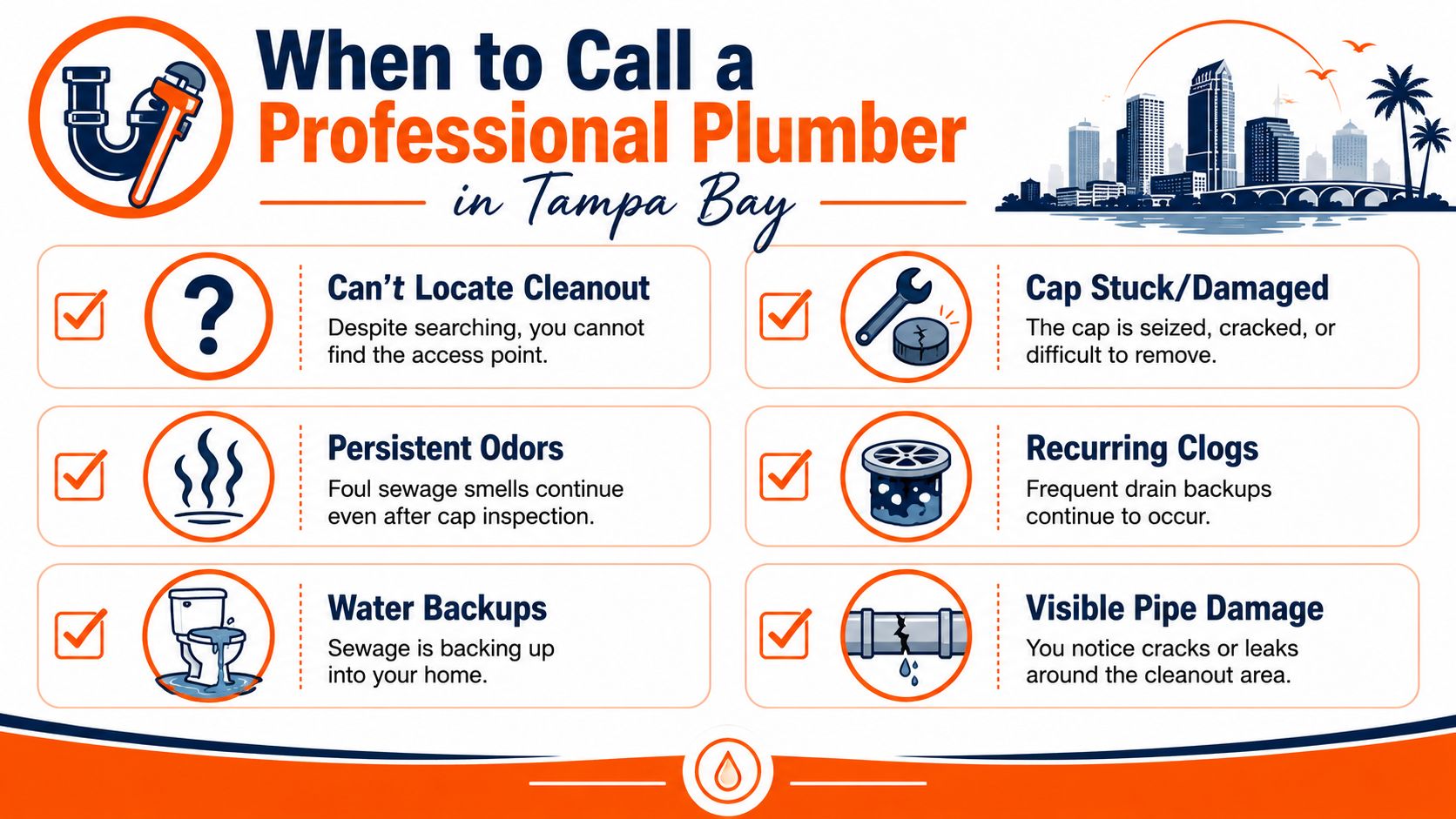
- You can't find the cleanout: That sounds minor until you need sewer access during an active backup.
- The cap is stuck, cross-threaded, or the fitting is damaged: Forcing it can crack the cleanout body.
- There's sewage, standing wastewater, or strong odor at the cleanout: At that point, the issue is no longer a simple cap swap.
- Drains stay slow after cap replacement: The line likely needs proper testing or a camera inspection.
- The pipe itself is broken or shifted: That often means the repair involves more than the removable cap.
What a plumber should check
A good service call should answer more than “do you need a new cap?” It should also address whether the cleanout is the correct size, whether the fitting is intact, and whether the line beyond it is obstructed or compromised.
That may involve line clearing, camera inspection, and verification that the access point is still usable for future maintenance. In this region, it also makes sense to consider the bigger water picture around the property. If your home deals with recurring water quality or water management issues beyond drainage, these water treatment solutions offer useful background on how homeowners think about protecting plumbing systems from multiple angles.
A practical local threshold
If I were giving a neighbor simple advice, it would be this: if the cap is missing after a storm, replace it quickly. If the cap is damaged and you also have drainage symptoms, don't guess.
Heatwave Air Conditioning, Plumbing, & Electric handles plumbing service in the Tampa Bay and Southwest Florida region, including sewer-related access and inspection work when a cap issue points to something deeper. That matters because the cap is small, but the system it protects isn't.
For homeowners who want a better feel for how local service pros communicate about home system issues, this Tampa Bay interview screenshot is a reminder that clear communication matters as much as technical skill when you're dealing with a home service problem.

If your sewer cleanout cap is missing, cracked, loose, or tied to slow drains after a Florida storm, it's worth getting the line checked before the next heavy rain. Heatwave Air Conditioning, Plumbing, & Electric provides plumbing service for homeowners in Tampa Bay and Southwest Florida and can help inspect the cleanout, evaluate the sewer line, and determine whether the problem is just the cap or something deeper in the system.