
Beneath the sturdy concrete foundation of your Tampa Bay home lies a network of plumbing lines, the unseen circulatory system of your household. While out of sight and mind, a failure in this system, a slab leak, can silently wreak havoc, undermining your home’s structural integrity and financial stability. Unlike a dripping faucet, these leaks are clandestine. Their damage compounds daily through soil erosion, foundation shifts, and the insidious growth of mold.
For Florida homeowners, where high water tables and sandy soil can worsen the problem, recognizing the subtle clues is not just good practice; it's an essential defense. The challenge is that many initial signs of a slab leak are easy to dismiss as normal household quirks or attribute to other, less serious issues. A slightly higher water bill or a faint musty smell might not immediately trigger alarm bells, but they could be the first whispers of a significant underlying problem. Ignoring these warnings allows the hidden damage to spread undetected, leading to far more extensive and costly repairs down the road.
This guide moves beyond the obvious, detailing the 7 critical signs of a slab leak, from the data on your water bill to the feel of your floor underfoot. We'll equip you with the knowledge to identify these specific warnings, understand their severity, and take decisive action to protect your most valuable asset. The first step in preventing a catastrophe is learning to see the unseen. By understanding what to look for, you can catch a potential disaster early and secure the help you need before minor issues become major structural threats.
1. Unexpected Increases in Water Bills
Your monthly water bill is more than just a recurring expense; it’s a detailed report on your home's water consumption. A sudden, unexplained spike in this bill is often the very first and most concrete evidence of a hidden problem. Among the various potential issues, it stands out as one of the most reliable signs of a slab leak, turning a simple piece of mail into a critical diagnostic tool.
A slab leak, even a small pinhole-sized one, runs 24 hours a day, seven days a week. This continuous, low-level water loss can easily add up to thousands of gallons over a single billing cycle, a volume that will absolutely be reflected in your charges. While a minor leak might cause a 5-10% increase that you might initially dismiss, a more significant break in the line can cause your bill to jump by 25%, 50%, or even more. This makes your utility statement an objective, measurable indicator that something is wrong.
Putting It Into Practice: Real-World Scenarios
Consider these common situations for homeowners in our service areas:
- Tampa Bay: A homeowner notices their summer water bill jumps by over $200. Despite assuming it was due to lawn watering, their habits hadn't actually changed. The real culprit was a slab leak in a hot water line running under their living room.
- Southwest Florida: A Port Charlotte resident sees a consistent 30% increase in their water charges for three consecutive months. After ruling out running toilets or leaky faucets, they suspected a more serious hidden leak.
- Cape Coral: A family was baffled by consistently high water bills that never seemed to go down, even during drier months with less irrigation. Tracking their bills over a six-month period revealed a pattern that pointed directly to an underground leak.
How to Use Your Water Bill for Leak Detection
To effectively monitor for these signs, you need to be proactive rather than reactive. Don't just pay the bill; analyze it.
- Establish a Baseline: Get to know your household's average water consumption. Review the last 6-12 months of your bills to understand your typical usage patterns, accounting for seasonal variations like filling a pool or increased lawn watering.
- Compare Year-Over-Year: A powerful method is to compare your current bill with the bill from the same month last year. This helps normalize seasonal factors and makes true anomalies stand out.
- Set Up Alerts: Most water utility providers, including those in the Tampa Bay area, offer online portals where you can set up high-usage or high-bill alerts. This automates the monitoring process for you.
- Rule Out the Obvious: Before assuming a slab leak, check for other common water-wasters like running toilets, dripping faucets, or a leaking irrigation system.
If you've done your homework and your water bill is still inexplicably high, it's time to stop guessing. The financial cost of a continuously running leak and the potential for severe water damage to your home's foundation are too significant to ignore. For a definitive diagnosis, it’s best to bring in experts who specialize in advanced residential leak detection services. A professional inspection can pinpoint the exact location of the leak without destructive guesswork.
2. Warm Spots or Wet Areas on Floors and Carpets
While your water bill gives you a high-level warning, your floors can provide direct physical evidence of a problem brewing underneath. Unexplained warm spots or persistent damp patches on flooring are among the most definitive signs of a slab leak, turning your home's surfaces into a tactile map that can point directly to the source of trouble. This is especially true when the leak originates from a hot water line.
A break in a hot water pipe buried in your concrete slab will constantly release heated water, which then conducts its warmth upward through the concrete and into your flooring. This creates a distinct warm area that can be felt through tile, wood, or most noticeably, carpet. Similarly, any pipe leak, hot or cold, can eventually saturate the concrete and push moisture to the surface, resulting in damp spots, discoloration, or even the growth of mold and mildew. These physical clues are invaluable because they help narrow down the leak's general location.

Putting It Into Practice: Real-World Scenarios
Consider these common situations for homeowners in our service areas:
- Sarasota: A homeowner discovered a consistently warm patch of tile in their kitchen. At first, they thought it was sunlight, but the warmth persisted at night. This led to the discovery of a significant hot water line leak directly beneath.
- Fort Myers: A resident noticed their hallway carpet was always slightly damp near the wall, despite having no spills or roof leaks. The musty smell that followed was the final clue pointing to a slow leak from a pipe in the slab.
- Port Charlotte: A family observed that the baseboards along an exterior wall were beginning to warp and show water stains. This indicated that water from a slab leak was wicking up into the drywall and trim.
How to Use Your Floors for Leak Detection
Finding these signs requires you to be observant of your home's environment. Instead of waiting for major damage, you can actively look for these early warnings.
- Feel for Temperature Changes: Periodically walk around your home barefoot, especially on hard surfaces like tile or vinyl. Pay close attention to any areas that feel unusually warm to the touch.
- Look for Discoloration: Scan your carpets, rugs, and even grout lines for patches that appear darker or discolored. This can be a subtle sign of moisture seeping up from below.
- Check for Dampness: Press your hand firmly against carpets and along baseboards in suspected areas. Any feeling of dampness or coolness (if it's a cold water leak) is a major red flag.
- Document and Monitor: If you find a suspicious spot, mark its outline with chalk or tape. Take photos and check it daily to see if it grows, shrinks, or changes, providing valuable information for a technician.
If you discover a warm or wet spot on your floor, the problem is no longer theoretical. It's an active leak causing immediate, ongoing damage. Since these leaks are often tied to hot water lines, it's also a good time to consider the health of your entire system; you can get more information on the signs and costs associated with water heater replacement. Ignoring these signs risks severe damage to your flooring, subfloor, and foundation. Professional leak detection is necessary to confirm the source and plan a precise repair without needless destruction.
3. Cracks in Concrete Flooring and Foundation
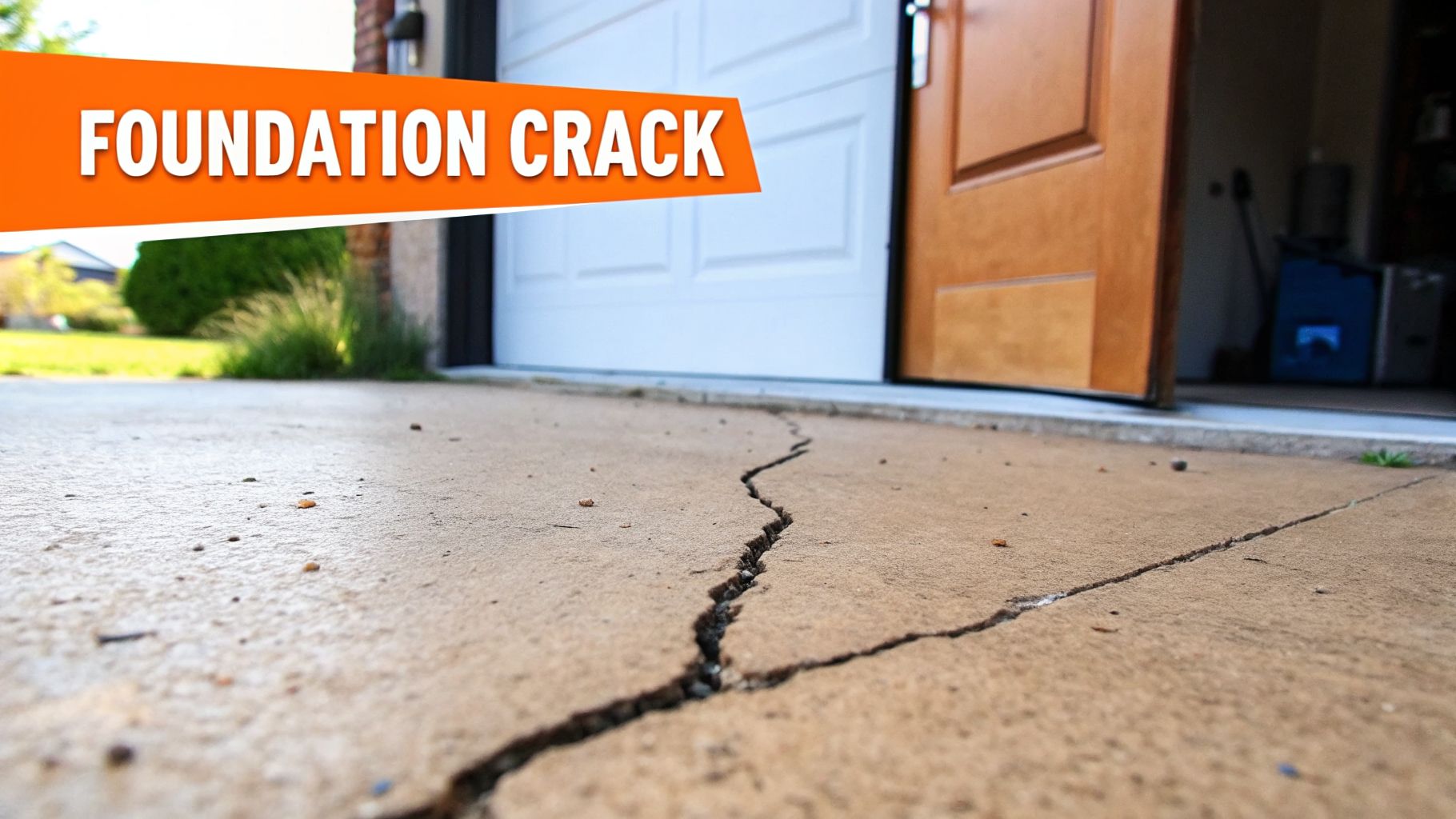
Your home’s concrete slab foundation is designed to be a solid, unmoving base. When unexplained cracks begin to appear in your concrete floors, foundation walls, or even your garage, it's a structural cry for help. The sudden development of these fissures is one of the more alarming signs of a slab leak, indicating that water is actively compromising the stability of your home from below.
A slab leak saturates and erodes the soil and sand that support the concrete. As this supportive base washes away, the immense weight of the slab becomes unevenly distributed, causing it to shift, sink, or heave upwards. This structural movement places immense stress on the rigid concrete, which inevitably relieves the pressure by cracking. While tiny hairline cracks can be a normal part of a home settling, new, growing, or patterned cracks signal a much more serious underlying problem.
Putting It Into Practice: Real-World Scenarios
Consider these common situations for homeowners in our Florida service areas:
- Tampa Bay: A homeowner discovers a new diagonal crack running from the corner of their garage floor. It appears to be getting longer each week, a classic sign of soil destabilization from a hidden water line leak.
- Sarasota: During a home inspection, multiple small cracks are found radiating from a central point in a tiled hallway. The pattern correlates perfectly with the location of a slow, active slab leak that had gone undetected for months.
- Cape Coral: A resident notices that interior doors are beginning to stick in their frames. Upon closer inspection, they see new, fine cracks developing in the drywall and concrete floor around the doorways, indicating foundation movement caused by a leak.
How to Use Crack Analysis for Leak Detection
Monitoring your home's foundation is a key part of responsible homeownership. Being methodical can help you separate normal settling from a genuine emergency.
- Document and Track: When you find a crack, don't just worry about it; document it. Take clear photos and measure its length and width. Place a piece of masking tape over the end and mark the date to easily see if it grows.
- Know What's "Normal": Small, non-expanding hairline cracks are often just from the concrete curing or minor seasonal shifting. However, any crack wider than 1/8 inch, cracks that run across a room, or multiple cracks forming a pattern should be taken seriously.
- Focus on High-Risk Areas: Pay closer attention to cracks appearing near known utility line paths, around door frames and windows, or on exterior foundation walls. When examining cracks in concrete flooring or your foundation, it can be helpful to understand how different components, like a concrete expansion joint, contribute to the overall structure.
- Look for Correlating Signs: A new crack is a major red flag. If it appears along with other signs like a high water bill, hot spots on the floor, or the sound of running water, the likelihood of a slab leak is extremely high.
If you’ve discovered suspicious cracks, especially if they are actively growing or paired with other symptoms, the time for observation is over. The structural integrity of your home is at risk. For a complete diagnosis and effective solutions, you should consult with professionals who are experts in both leak detection and comprehensive slab leak repair services. They can confirm the cause and prevent further damage to your foundation.
4. Reduced Water Pressure Throughout the Home
A sudden or gradual drop in your home's water pressure can be frustrating, turning a refreshing shower into a disappointing trickle. While many issues can cause low pressure, a widespread decrease affecting multiple fixtures is a significant warning. This system-wide loss is one of the most functional signs of a slab leak, indicating that a substantial amount of water is escaping the system before it ever reaches your faucets.
When a pipe under your foundation breaks, it creates an exit point for pressurized water. The larger the leak, the more water is diverted away from your home's plumbing network, resulting in a noticeable drop in performance at every endpoint. Unlike a clogged aerator that affects a single sink, a slab leak impacts the entire system or, at minimum, all fixtures fed by the leaking line. This makes a widespread pressure drop a critical symptom that should never be dismissed as a minor annoyance.
Putting It Into Practice: Real-World Scenarios
Consider these common situations for homeowners in our service areas:
- Fort Myers: A family noticed that all their showers had become weak and their washing machine took much longer to fill. The simultaneous drop in pressure across the home pointed to a system-wide problem, which was later identified as a significant leak in a cold water line under their slab.
- Port Charlotte: A resident became frustrated with the slow water flow from all kitchen and bathroom faucets. The problem wasn't isolated; it affected every tap in the house, a classic indicator that pressure was being lost from a central point underground.
- Southwest Florida: A homeowner observed that their water pressure was especially low during the morning when the family was getting ready for work and school. This peak usage exacerbated the pressure loss from an existing slab leak, making the symptom much more obvious.
How to Use Water Pressure for Leak Detection
To determine if low pressure is a sign of a slab leak, you need to investigate the symptom methodically.
- Establish a Baseline: Get a feel for your home's normal water pressure. Knowing how a strong shower or fast-filling tub should feel makes it easier to notice when something is off.
- Test Multiple Fixtures: Turn on faucets in different rooms (kitchen, bathrooms) at the same time. If they are all weaker than usual, the problem is likely systemic. Note if the issue affects only hot water, only cold water, or both, as this can help isolate the leaking line.
- Measure with a Gauge: For a more objective test, purchase a simple water pressure gauge from a hardware store. Attach it to an outdoor spigot to get a baseline reading (normal is typically 40-60 PSI). A reading significantly below this range could confirm a problem.
- Check with Neighbors: Ask your immediate neighbors if they are also experiencing low water pressure. If they are, the issue might be with the municipal water supply. If your home is the only one affected, the problem is on your property.
If your investigation points to a widespread pressure drop isolated to your home, a hidden leak is a strong possibility. Ignoring this can lead to escalating water bills and foundational damage. Before the problem worsens, it’s wise to explore common plumbing problems and solutions or bring in a professional for an accurate diagnosis. An expert can confirm the presence of a leak and pinpoint its location without needless destruction.
5. Mold Growth, Mildew Odors, and Musty Smells
Your sense of smell can be a powerful, and often overlooked, ally in home maintenance. A persistent musty odor that seems to have no source is more than just an annoyance; it’s a critical alert system. When a slab leak introduces constant, hidden moisture under your foundation, it creates the perfect breeding ground for mold and mildew, making these unwelcome biological growths one of the most concerning signs of a slab leak.
A slab leak feeds moisture directly into porous materials like concrete, drywall, and wood subflooring. This slow, steady supply of water allows mold colonies to flourish out of sight. You may not see water damage, but you will often smell the musty, earthy byproducts of mold growth long before you see any visible evidence. This makes olfactory clues a primary indicator of a problem, especially since mold poses significant health risks to your family.
Putting It Into Practice: Real-World Scenarios
Consider these common situations for homeowners in our service areas:
- Tampa Bay: A homeowner discovered patches of mold growing beneath the carpet in a bedroom that had no windows or attached bathrooms. The unexplained moisture source was eventually traced to a cold water line leaking under the slab.
- Sarasota: A resident grew increasingly frustrated by a persistent musty smell in their guest bedroom that never went away, even with fans and open windows. The real problem was a hidden slab leak creating high humidity within the walls.
- Cape Coral: A family kept cleaning black mildew spots off the baseboards in their hallway, only to have them reappear weeks later. This recurring growth, despite their best cleaning efforts, pointed directly to an ongoing moisture supply from a leak beneath the floor.
How to Use Your Senses to Detect Moisture
Being vigilant about changes in your home's air quality and appearance can help you catch a slab leak early. Don't dismiss musty smells as a simple "old house" problem.
- Trust Your Nose: Regularly walk through your home and pay attention to any musty or damp smells. Get down low and sniff along baseboards and the edges of carpeted areas, as this is where odors from under the slab will first escape.
- Inspect Dark Corners: Mold thrives in dark, undisturbed places. Periodically move furniture, check inside closets, and look under area rugs for any signs of dark spotting or discoloration.
- Monitor Humidity: A slab leak will raise the ambient humidity in your home. If you notice your home feels consistently damp or humid (often above 50% relative humidity) despite the A/C running, it’s a red flag.
- Don't Assume It’s a Ventilation Issue: If you've tried improving airflow and the musty smell or dampness persists, the problem is likely an active water source, not poor ventilation.
The presence of mold or mildew is a clear sign that you have an unresolved moisture problem. Beyond the structural damage a slab leak can cause, the impact on your home's air quality is a serious concern. To protect your property and your family's health, it’s essential to address the source. For a professional diagnosis and a complete solution that addresses both the leak and its consequences, you can learn more about our indoor air quality services and how we can help.
6. Soft Spots, Buckled Flooring, or Sunken Areas
While some signs of a slab leak are subtle, changes to your actual flooring are among the most alarming and direct indications of a severe, long-term problem. When a leak beneath your home’s concrete slab persists, it saturates the soil, turning stable ground into a soft, unstable mess. This soil erosion and shifting can cause the concrete slab itself to settle, crack, or move, which translates directly to visible and tangible damage to the floor above. These physical deformities are unmistakable signs of a slab leak that has progressed to a critical stage.
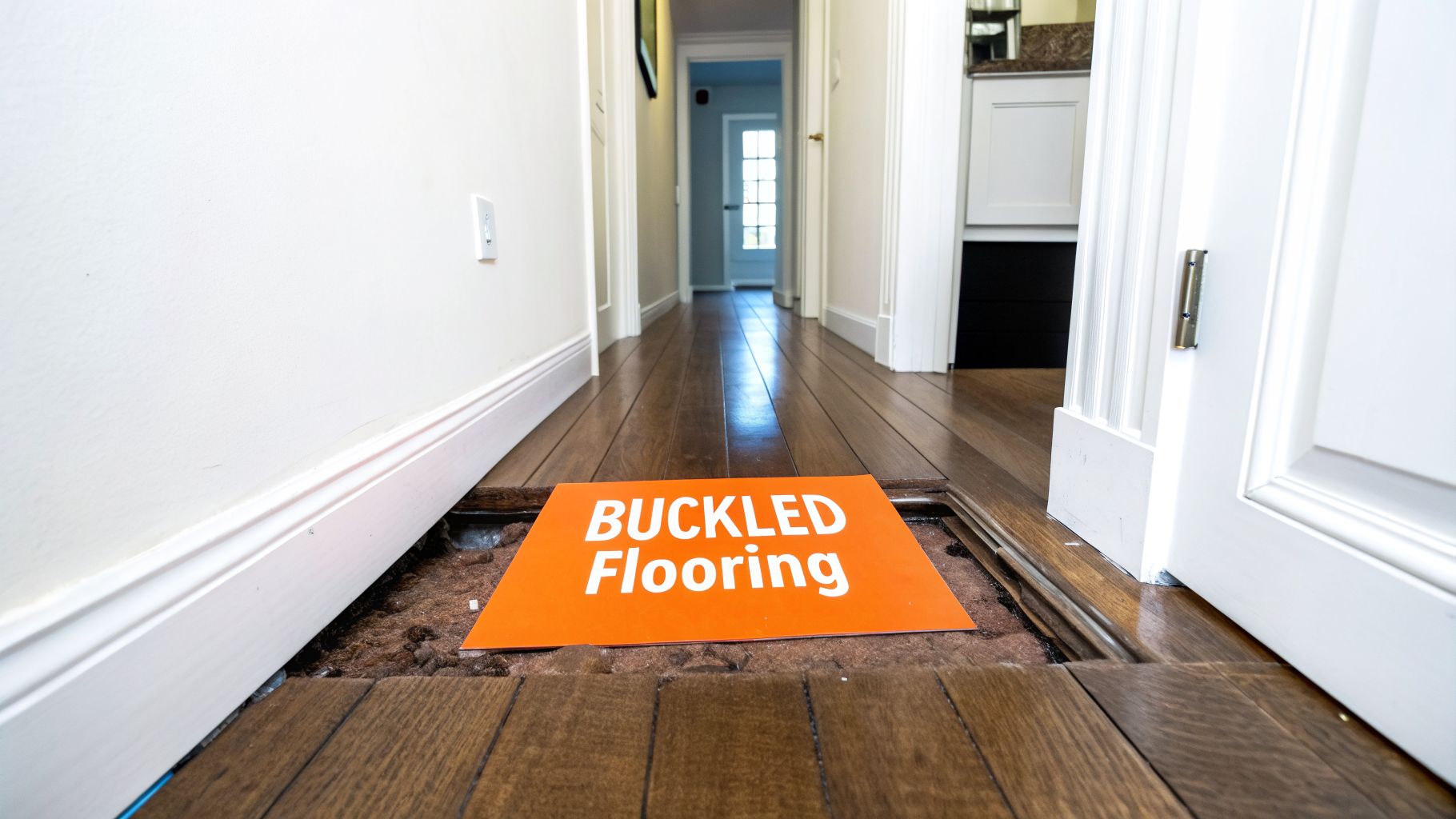
This type of damage manifests differently depending on your flooring material. You might notice carpeting feels bouncy or develops ripples, hardwood floors begin to cup or warp, or ceramic tiles crack and become uneven. A sinking or "dipping" sensation when you walk across a certain area is a serious red flag. Unlike a hot spot that points to a hot water line leak, buckled or sunken flooring indicates that the foundation's support has been compromised, posing a structural risk to your home.
Putting It Into Practice: Real-World Scenarios
Consider these common situations for homeowners in our service areas:
- Fort Myers: A homeowner noticed their beautiful hardwood flooring was visibly buckling in the main hallway. The planks were separating and rising, creating a trip hazard. An investigation revealed an active slab leak had saturated the subfloor for months.
- Port Charlotte: A resident was organizing their walk-in closet when they realized the floor felt unusually soft and springy underfoot, almost like walking on a trampoline. This sponginess was caused by waterlogged soil directly beneath the slab.
- Tampa Bay: A family observed an obvious dip forming in their living room floor over several weeks. The area had sunk nearly an inch, a clear indication that the concrete slab had settled due to an extended, high-volume leak.
How to Check Your Floors for Damage
Identifying these signs requires paying close attention to both the look and feel of your floors. Be vigilant and conduct regular walk-throughs of your home.
- Feel for Soft Spots: As you walk through your home, be mindful of any areas that feel spongy, soft, or bouncy. Pay extra attention to areas with carpet, which can hide the initial moisture but will reveal underlying soil issues.
- Look for Visible Warping: Visually inspect your floors for any signs of buckling, cupping (where the edges of boards are higher than the center), or warping. Look at the seams between planks or tiles for unevenness.
- Use a Level: If you suspect an area is sinking, place a long level on the floor. A significant gap under the level confirms that the surface is no longer flat, indicating settling.
- Document and Photograph: If you find any of these issues, take photos and even measure the deviation. This documentation will be valuable when you call a professional.
Important: Soft, buckled, or sunken floors are not a "wait and see" problem. This is one of the most serious signs of a slab leak, indicating potential foundation damage. Avoid placing heavy furniture on these spots and call for professional help immediately. The integrity of your home's structure is at risk.
7. Foundation Movement, Door/Window Frame Issues, and Separation from Walls
While subtle signs like high water bills or warm spots on the floor are early warnings, significant structural changes to your home are among the most serious and advanced signs of a slab leak. When water saturates the soil beneath your foundation for an extended period, it can cause the slab to heave, sink, or shift. This movement directly translates into visible, and often alarming, structural problems inside and outside your house.
The integrity of your home's frame, including walls, doors, and windows, depends on a stable foundation. Any movement below will create stress throughout the entire structure. This results in doors that suddenly stick or refuse to latch, windows that become difficult to open or close, and visible gaps appearing where walls meet ceilings or floors. These are not just minor cosmetic issues; they are direct physical evidence that your home's foundation is compromised.
Putting It Into Practice: Real-World Scenarios
Consider these common situations for homeowners in our service areas:
- Sarasota: A homeowner notices their bedroom door, which always closed perfectly, now binds at the top and will not latch. At the same time, they see the door frame has visibly pulled away from the drywall on one side. The cause was a long-term leak causing the slab to settle unevenly.
- Cape Coral: A resident finds their kitchen windows are suddenly stuck shut. Upon closer inspection, they discover new, hairline cracks in the drywall around the window frames and visible separation where the exterior caulking used to be sealed.
- Southwest Florida: A family is concerned when they discover their baseboards are pulling away from the walls in several rooms, leaving a noticeable gap. This pointed to widespread foundation settlement caused by an undiscovered, slow-leaking water line under their home.
How to Look for Structural Warning Signs
Identifying these advanced signs requires a keen eye and regular observation of your home's condition. Being proactive can help you catch severe damage before it worsens.
- Check Door and Window Operation: On a monthly basis, open and close all interior and exterior doors and windows. Note any new sticking, binding, or difficulty in latching that wasn't there before.
- Inspect Frames and Trim: Look for visible gaps between door or window frames and the surrounding walls. Check if interior trim, like baseboards or crown molding, is separating or no longer aligned.
- Examine Wall and Ceiling Junctions: Scan the lines where your walls meet the ceiling. New or expanding cracks in these corners can indicate significant structural shifting.
- Review Exterior Caulking: Walk the perimeter of your home and inspect the caulk seals around windows and doors. Cracking or separating caulk can be a sign that the frames are moving.
If you observe multiple of these issues, especially if they have appeared suddenly or are worsening over time, the situation is critical. The structural integrity of your home is at risk. It’s essential to stop guessing and immediately contact a professional who can assess both the plumbing and the potential foundation damage. A specialist in advanced residential leak detection services can confirm if a slab leak is the root cause and guide you on the necessary steps to protect your home.
7-Point Slab Leak Signs Comparison
| Warning Sign | Detection Complexity | Resource Requirements | Expected Outcomes | Ideal Use Cases | Key Advantages |
|---|---|---|---|---|---|
| Unexpected Increases in Water Bills | Low | Utility bills, billing history, possible utility analysis | Quantifiable early indicator of hidden leak; prompts inspection | Routine monitoring; unexplained consumption spikes | Objective, measurable, easy to spot early |
| Warm Spots or Wet Areas on Floors and Carpets | Low–Medium | Visual/tactile checks, moisture meter or thermal imaging, technician visit | Localizes approximate leak location; confirms active hot-water leaks | Suspected hot-water line leaks; pinpointing repair area | Visual/tactile confirmation; narrows detection area |
| Cracks in Concrete Flooring and Foundation | Medium | Visual inspection, measurements, crack monitors, professional assessment | Evidence of structural movement and leak severity | New or expanding cracks; during home inspections | Visible structural evidence that guides repairs |
| Reduced Water Pressure Throughout the Home | Low–Medium | Water pressure gauge, multi-fixture testing, neighbor/utility checks | Suggests system-wide leak and correlates with leak size | Sudden multi-fixture pressure loss; peak-use symptoms | Noticeable to occupants; occurs relatively early |
| Mold Growth, Mildew Odors, and Musty Smells | Medium | Air-quality monitors, mold testing, professional mold inspection | Confirms chronic moisture and health risk; helps locate affected areas | Persistent musty smells or visible mold, sensitive occupants | Strong health-motivated signal that forces investigation |
| Soft Spots, Buckled Flooring, or Sunken Areas | Medium–High | Tactile/visual inspection, levels, structural evaluation, possible restoration | Clear sign of extensive damage; requires urgent structural repair | Noticeable floor deformation or long-term leaks | Unmistakable evidence of significant structural compromise |
| Foundation Movement, Door/Window Frame Issues, Separation from Walls | High | Structural engineer, comprehensive inspections, major repair resources | Indicates severe foundation damage; may need major remediation | Doors/windows sticking, visible frame separation — advanced cases | Definitive indicator of major structural impact; demands emergency response |
From Detection to Resolution: Your Next Steps with Heatwave
Recognizing the subtle and overt signs of a slab leak is the first, most critical defense for your home's foundation and financial stability. As we've explored, the evidence can range from a suddenly inflated water bill that defies explanation to the alarming appearance of a warm spot on your tile floor. You might notice the persistent, musty odor of mildew, discover cracks spiderwebbing across your foundation, or struggle with inexplicably low water pressure at every faucet. These are not minor inconveniences; they are urgent signals that the plumbing system beneath your home is compromised.
Ignoring these warnings allows a hidden problem to escalate dramatically. A small, slow drip can saturate the soil, destabilize your foundation, and lead to significant structural damage that is exponentially more expensive and disruptive to repair. The key takeaway is this: early detection is your greatest asset. By learning to identify these signs, you transform from a passive homeowner into a proactive protector of your property.
Turning Knowledge into Action
Your journey doesn't end with suspicion. Once you've noticed one or more of these symptoms, the immediate next step is verification, followed by professional diagnosis. A simple check of your water meter can often confirm an active leak, but pinpointing its exact location under several inches of concrete is a job for experts. Attempting to find it yourself can lead to misguided and costly damage to your flooring and foundation.
Key Insight: The true cost of a slab leak isn't just the repair itself; it's the escalating damage that occurs every day it goes unaddressed. Water damage, mold remediation, and foundation repairs can dwarf the initial plumbing expense.
This is the point where you must transition from DIY investigator to calling in a specialist. Because the source of the water is hidden from view, specialized equipment is necessary for an accurate diagnosis. For homeowners in Tampa Bay, Sarasota, Port Charlotte, and the surrounding communities, this means engaging a team that can provide definitive answers without destructive guesswork. Once you suspect a slab leak, securing professional leak detection services is the essential next step to confirm the problem and prevent further damage. These experts use non-invasive tools to locate the source of the problem with precision.
Your Local Solution for Peace of Mind
At Heatwave, we understand the anxiety that comes with discovering potential signs of a slab leak. Our certified plumbers are equipped with advanced diagnostic technology, including thermal imaging cameras that see temperature anomalies and acoustic listening devices that hear the faint sound of water escaping underground. This allows us to find the leak's origin with surgical accuracy, minimizing the impact on your home.
We believe in transparency and providing clear solutions. After our assessment, we will walk you through your repair options, which may include:
- Direct Access Repair: The most straightforward option, involving a targeted opening of the slab to fix the damaged pipe section.
- Pipe Rerouting: An effective long-term solution where a new, more accessible pipe is run overhead or around the slab, bypassing the old, failing line entirely.
- Epoxy Pipe Lining: A trenchless method where a durable epoxy coating is applied to the inside of the existing pipe, sealing leaks from within.
Each option comes with a clear, upfront estimate, empowering you to make the best decision for your home and budget. Don't let a hidden leak undermine your home's integrity. Taking decisive action now protects your investment and restores your peace of mind.
Have you noticed warm floors, rising water bills, or other signs of a slab leak? The expert plumbers at Heatwave Air Conditioning, Plumbing, & Electric are ready to provide fast, accurate diagnostics and effective repairs across Tampa Bay and Southwest Florida. Contact us today to schedule an inspection and protect your home from hidden water damage.