
A lot of Florida homeowners start paying attention to their water heater after the power bill lands higher than expected, or when the garage starts feeling hotter and damper around the unit, or when hot water seems to run out faster than it used to. The water heater usually isn't the first thing people blame. They look at the AC, the pool equipment, or the thermostat setting.
But in plenty of homes across Tampa Bay, Sarasota, Fort Myers, Cape Coral, and Port Charlotte, the water heater is a steady contributor to monthly utility costs. It works every day, it loses heat when it sits, and in many homes it's installed in a place that changes how efficiently it operates. That's why water heater energy efficiency matters in practice, not just on a product label.
In Florida, the details matter more than most homeowners realize. A unit in a hot garage behaves differently than one in an interior closet. Long pipe runs to a far bathroom waste energy that never shows up on the sticker. A replacement choice that looks efficient on paper can be a poor fit if the installation conditions are wrong. The goal isn't to buy the fanciest model. The goal is to get the right system for your house, your layout, and how your family uses hot water.
Your Water Heater Is Costing You More Than You Think
One of the most common service conversations goes like this. The homeowner says the electric bill has been creeping up, nothing obvious has changed, and the house still feels comfortable. Then we look at the age of the water heater, where it's installed, and how the plumbing is laid out. That's often where the wasted energy shows up.
An older standard tank can keep reheating water all day even when nobody is using it. If the tank sits in a hot Florida garage, that changes operating conditions. If the hot water lines run a long distance to the primary bath, the system also loses heat before the water ever reaches the fixture. Homeowners feel that as delayed hot water, short showers, and higher bills.
Practical rule: If your utility bill is up and your hot water system is over a decade old, don't assume the problem is only the thermostat or the electric rate. The equipment itself may be the issue.
There's also a second problem. Many homeowners shop by sticker price when the old unit fails. That's understandable in an emergency, but it usually leads to replacing an inefficient setup with another one that behaves the same way. A cheaper unit can cost more to run for years.
What works better is a house-specific approach:
- Look at usage first. A family with back-to-back showers has different needs than a couple with moderate demand.
- Look at location next. Garage, utility room, attic-adjacent closet, and conditioned interior space all create different efficiency results.
- Look at the whole path. The heater matters, but so do the first few feet of piping, recirculation choices, and maintenance history.
That's where practical water heater energy efficiency starts. Not with marketing claims. With how the system performs in a Florida home.
Decoding Water Heater Efficiency Ratings
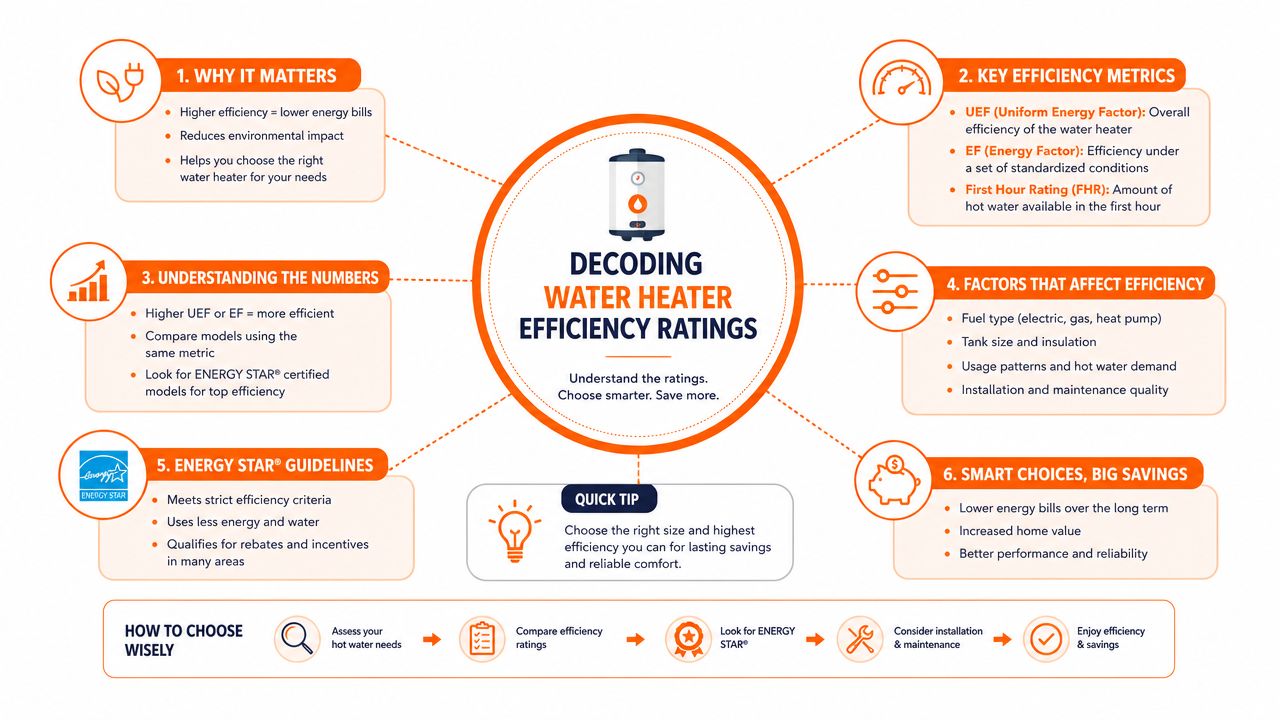
Efficiency ratings confuse a lot of homeowners because they sound technical, but the idea is simple. Think of a water heater like a bucket with small leaks. You put energy in to heat water. Some of that energy goes where you want it. Some of it leaks away through standby loss, cycling, and system waste. A better efficiency rating means fewer leaks.
The rating to pay attention to today is Uniform Energy Factor, or UEF. Higher is better. If two units do the same job, the one with the higher UEF is using energy more effectively.
Why UEF matters more than the old label
A major shift happened on June 12, 2017, when the industry replaced the older Energy Factor metric with UEF. Rheem explains that the move happened because EF ratings were being interpreted inconsistently across brands, and the updated DOE test was meant to give homeowners more consistent, real-world comparisons across water heaters in the market, as outlined in Rheem's explanation of the EF to UEF change.
That change matters because older labels didn't always help homeowners compare products fairly. A unit could look efficient under one test setup and less impressive in actual use. UEF gives you a better apples-to-apples starting point.
How to read the label without overthinking it
When you look at a model tag or product sheet, use this short checklist:
- Check the UEF first. Higher means better efficiency.
- Compare within the same technology. Don't judge a gas tank and a heat pump model the same way just from one number.
- Match the rating to the home. A strong rating doesn't fix a bad installation location or poor piping layout.
Here's the practical mistake I see most often. A homeowner hears “high efficiency” and stops there. But “high efficiency” only means something if the unit type fits the house.
A good rating helps. A good fit saves money.
What the rating doesn't tell you
UEF is useful, but it doesn't answer every question. It won't tell you whether a tankless unit needs venting upgrades. It won't tell you whether a heat pump water heater has enough space around it to work well. It won't tell you how much heat your long pipe run loses before the shower gets hot.
So use the label as a filter, not the final answer. In practice, water heater energy efficiency comes from two things working together. The unit has to be efficient, and the installation has to make sense.
Comparing Today's Most Efficient Water Heaters
Once you understand the label, the next step is choosing the right equipment. Most Florida homeowners end up looking at three categories: high-efficiency storage tanks, tankless units, and heat pump water heaters.
A higher UEF indicates better efficiency, and current benchmarks considered good are 0.92+ for electric tanks, 0.68+ for gas tanks, and 0.90+ for tankless models, according to A. O. Smith's UEF guide. That same page notes that ENERGY STAR heat pump water heaters can save a household of four about $600 per year compared with a standard electric water heater.
Before the comparison table, this short video gives a useful overview of how homeowners think through replacement options.
What each type does well
A high-efficiency storage tank is the closest match to what many homes already have. It stores hot water and reheats it as needed. These are usually the least disruptive to replace because the plumbing layout often stays similar. They make sense when you want a familiar setup, moderate upfront cost, and simpler installation.
A tankless water heater heats water on demand instead of storing it. That avoids standby loss from keeping a full tank hot all day. Tankless can be a strong option for homes with the right fuel setup and a hot water usage pattern that matches the unit's capacity. If you want a broad homeowner-oriented overview of how these systems work, Ring Hot Water's tankless heater guide is a helpful companion read.
A heat pump water heater moves heat from the surrounding air into the water. In Florida, that operating style often lines up well with garage and utility-room installs because the unit can take advantage of warm air around it. These systems usually deserve a hard look in electric homes where long-term operating cost matters.
Water Heater Technology Comparison
| Heater Type | Upfront Cost | Annual Energy Cost | Typical UEF Range | Best For |
|---|---|---|---|---|
| High-efficiency electric tank | Lower to moderate | Moderate | Good models are 0.92+ | Homeowners wanting simpler replacement and predictable performance |
| High-efficiency gas tank | Moderate | Moderate | Good models are 0.68+ | Homes already set up for gas and looking for a traditional tank |
| Tankless | Moderate to higher | Lower in the right application | Good models are 0.90+ | Homes wanting on-demand hot water and willing to address install requirements |
| Heat pump water heater | Higher | Lower | Higher-efficiency electric option, compare model by model | Electric homes focused on long-term savings, especially with suitable space |
The trade-offs that matter in Florida
Here's the part homeowners usually don't hear enough about.
- Storage tanks work well when replacement speed matters. If the old unit failed and you need hot water back fast, a like-for-like tank replacement is often the cleanest path.
- Tankless isn't automatically the best financial choice. It can save energy, but installation conditions matter. Gas line sizing, venting, fixture demand, and usage pattern can all change the value.
- Heat pump models need the right location. They're not a plug-and-forget answer for every tight closet.
The best water heater on paper can be the wrong water heater in a real garage, a cramped utility room, or a home with long waits for hot water.
For homeowners comparing bids, ask contractors to explain three things in plain language: what the unit costs to install, what changes are needed around it, and why that specific model fits your home's layout. That's a better filter than brand claims alone.
Easy Steps to Boost Your Current System's Efficiency
If your current water heater still works and replacement isn't urgent, there's still plenty you can do. The EPA notes that a high-efficiency residential water heater typically uses 10% to 50% less energy than a standard model, but actual savings depend heavily on heater location and hot-water piping because standby and distribution losses matter, as described in the EPA's residential water heating guidance.
That's why the easiest efficiency improvements often have less to do with the burner or elements and more to do with reducing heat loss around the system.
Start with the low-cost fixes
- Insulate exposed hot-water pipes. Focus on the first several feet leaving the heater. This is one of the simplest ways to reduce heat loss before water reaches the tap.
- Check the tank insulation situation. Some older units lose heat faster than homeowners realize. In the right setup, added insulation can help.
- Lower the water temperature sensibly. Many homes are set hotter than needed. A moderate setting can cut waste while still keeping showers comfortable.
- Flush sediment on schedule. Sediment makes the heater work harder, especially in areas with mineral-heavy water.
- Use hot water more intentionally. Small habit changes can help if the household has predictable usage patterns.
Fix the system, not just the appliance
A lot of energy waste happens between the heater and the fixture. Long runs to a far bathroom, poorly insulated lines, and outdated recirculation setups all chip away at water heater energy efficiency.
That's also why homeowners who are improving the whole property often think beyond one piece of equipment. If you're already reviewing utility-saving upgrades outdoors, Vistancia's energy efficient pool pump service shows the same basic principle. Match the equipment to actual use, then cut waste in the system around it.
For homeowners who want a broader seasonal maintenance mindset, Heat Wave also shares practical home-readiness advice in this spring plumbing tips visual.


A practical weekend checklist
If you want a realistic starting point, do these first:
- Feel the hot-water line. If the pipe loses heat fast, insulation is worth adding.
- Listen to recovery cycles. Frequent reheating can point to standby loss or sediment buildup.
- Time your hot water arrival. Long delays often reveal distribution loss more than heater failure.
- Inspect the install location. Garages, utility rooms, and tucked-away closets each create different performance issues.
- Schedule maintenance before failure. Preventive service is cheaper than emergency replacement decisions.
If your current unit is still serviceable, improving the surrounding system can buy you time and lower waste while you plan the right replacement.
Calculating Your Potential Savings and Payback
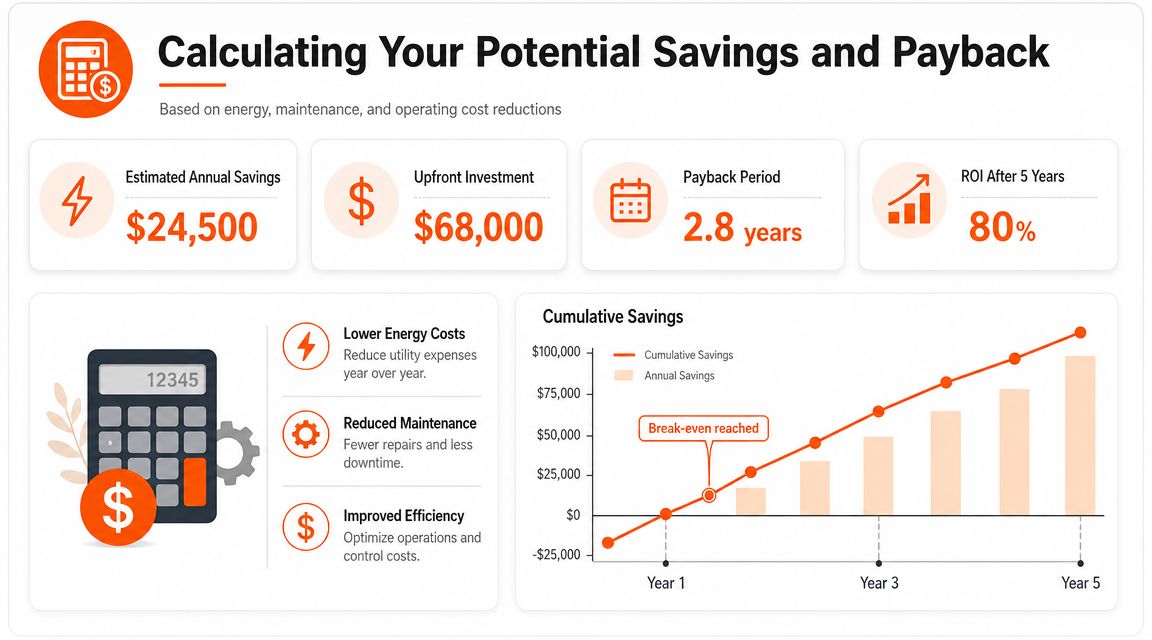
The simplest way to evaluate a water heater upgrade is to treat it like any other home investment. Ask one question first: how long will it take for lower operating costs to make up for the extra upfront cost?
The basic formula is straightforward.
Payback period = extra upfront cost ÷ annual savings
If one option costs more to install but lowers yearly operating cost enough, the higher purchase price may make sense. If the savings are small or the installation is complicated, the cheaper option can be the smarter call.
Use measured savings, not wishful thinking
Real-world data offers insights. A U.S. study of tankless retrofits found a 33% decrease in average gas use based on pre- and post-retrofit utility data. The same research also notes that typical natural-gas storage water heaters are around 60% efficient, while condensing tankless models exceed 90%, according to the OSTI water-heater retrofit study.
That doesn't mean every tankless install will produce the same bill reduction. It does mean there's a measurable basis for expecting real savings when the home and installation are a good fit.
What to include in your own math
When homeowners run payback numbers, I recommend keeping it practical:
- Equipment price difference between the basic option and the higher-efficiency option
- Installation differences, such as venting, electrical work, drainage, or line upgrades
- Expected operating savings based on the technology and your household's hot water use
- How long you expect to stay in the home
A family that uses a lot of hot water will usually see more value from an efficient upgrade than a household with lighter demand. The same goes for homeowners replacing an aging electric resistance tank in a hot Florida garage. In many cases, that setup creates room for meaningful savings if the replacement is chosen carefully.
Good payback math is specific to the house. Generic estimates are a starting point, not a decision.
If you're comparing proposals, ask the contractor to separate operating savings from installation cost. That makes it much easier to see whether you're buying lower monthly costs or just paying more upfront for a feature set you may not need.
Special Considerations for Florida Homes
Florida changes the water heater conversation. The national advice you read online often assumes a basement, a cool utility room, or a generic climate that doesn't look much like homes in Tampa Bay or Southwest Florida.
Here, many water heaters sit in garages, side utility spaces, or compact mechanical rooms. Humidity is high for much of the year. Ambient air temperatures stay warm. Those conditions can make some technologies perform better than homeowners expect.

Why heat pump water heaters fit Florida so well
Home Innovation notes that heat pump water heaters can be two to three times as efficient as conventional electric resistance models, and in hot climates like Florida their performance is strong. The same source also points out that the cooling and dehumidifying effect in spaces like garages can be an added benefit, as discussed in Home Innovation's water heating report.
That's a real-world advantage that gets missed in generic articles. In a Florida garage, pulling heat from warm, humid air can work in your favor. The unit isn't fighting the climate the way it might in a colder region.
Placement still matters
That doesn't mean every heat pump water heater belongs anywhere you can fit one.
- Garage installs are often strong candidates. Warm air and extra space usually help.
- Tight interior closets need a closer look. Airflow, noise, and service access matter.
- Conditioned interior space changes the equation. Cooling the surrounding area may or may not be desirable depending on the layout.
For homeowners interested in local home-service education and community visibility, Heat Wave has also appeared in media outreach such as this Tampa Bay Morning Blend segment image.

Other Florida factors homeowners should account for
Florida homes also deal with mineral scale, seasonal occupancy in some markets, and utility-cost sensitivity during heavy cooling months. That means your water heater choice shouldn't be isolated from the rest of the house.
If your home is electric, your current tank is aging, and the unit sits in a garage or utility area with decent airflow, a heat pump water heater often deserves serious consideration. If your layout is cramped or your demand is unusual, another efficient option may fit better.
When to Repair or Replace Your Water Heater
The repair-versus-replace decision gets easier when you stop treating it like a guess. Look at three things together: age, condition, and operating cost.
If the unit is relatively young and the problem is limited to a repairable component, fixing it can make sense. That's especially true if the tank itself is sound, the efficiency is still acceptable for the home, and the repair cost is reasonable compared with replacement.
Replace when the problem is bigger than the part
Replacement usually makes more sense when you see one or more of these signs:
- The tank itself is leaking or rusting. A tank failure is usually the end of the road.
- Repairs keep stacking up. Replacing parts on an aging unit can turn into expensive patchwork.
- Hot water performance is fading. Slow recovery, inconsistent temperature, and rising operating cost often point to a system that's losing efficiency.
- The current setup is wrong for the house. Sometimes the issue isn't breakdown. It's that the old heater was never a good match for the home's layout and usage.
Repair when the unit still has life left
A repair is often the better move if the heater is still in a reasonable service window, the issue is isolated, and the unit isn't causing broader efficiency problems. In that case, maintenance can buy time while you plan a smarter replacement instead of rushing into one during an emergency.
For homeowners who want to see more of Heat Wave's seasonal homeowner content, this holiday plumbing and comfort graphic is another example of the company's educational material.
When replacement is coming anyway, don't just replace failure with failure. Use the moment to improve efficiency, fit, and long-term cost.
If you want a house-specific recommendation instead of a generic answer, Heatwave Air Conditioning, Plumbing, & Electric provides plumbing, electrical, and water-heater installation support for homeowners in Tampa Bay and Southwest Florida. A good estimate should show you which type fits your home, what installation changes are needed, and whether repair or replacement gives you the better long-term result.