
You hear it at night first. A pop from the garage. Then a low rumble when someone starts the shower. By the next morning, you're standing in front of the water heater wondering if it's about to fail, leak, or worse.
That reaction is normal. A water heater making noise gets attention fast because it's one of those appliances typically ignored until it starts talking back. The good news is that not every sound means trouble. Some noises are routine. Some are weather-related. Some point to a simple maintenance job. Others are your signal to stop guessing and get help.
If you're in Tampa Bay or Southwest Florida, that distinction matters. Heat, humidity, hard water, and garages that amplify sound can make a normal unit seem louder than it is. What matters is the kind of noise, when it happens, and whether anything else has changed, like water temperature, pressure, or visible moisture around the tank.
Why Is My Water Heater Making That Noise
A water heater is not a silent appliance. Metal heats up and cools down. Water pressure shifts. Burners, elements, and valves cycle on and off. In Florida, humidity can also add harmless hissing or sizzling on some units when condensation meets a hot surface, especially in garages or utility rooms.
The first job is to figure out whether you are hearing normal operation, delayed maintenance, or a condition that needs a professional.
Start with what changed. A heater that has always made a soft hum, light ticking, or brief clicks during a heating cycle usually is not in trouble. New sounds deserve more attention, especially if they show up with lower hot water output, inconsistent temperature, dampness around the tank, or a jump in energy use.
A quick visual helps too. This photo of a typical installed water heater setup makes it easier to tell whether the sound is likely coming from the tank, the venting, or the nearby piping.

Pay attention to three details:
- When the noise happens. Sounds during an active heating cycle point to one set of causes. Noises that continue when no one is using hot water point somewhere else.
- What the noise sounds like. Distinguish between a pop and a hiss, or a bang in the pipes versus a rumble from the tank.
- Where it comes from. Noise at the tank often means sediment, heating, or expansion. Noise in the pipes can point to pressure changes, loose strapping, or water hammer.
Listen before you touch anything. One quiet minute of observation is safer and more useful than guessing.
Some sounds are annoying but harmless. A little ticking from expansion, a brief hum, or light condensation noise can be normal. That matters because homeowners often assume any noise means the heater is failing, and that is not always true.
Other noises are the heater asking for attention. The sound itself is the clue. Catching it early can mean a simple flush, a small valve repair, or tightening pipe supports instead of dealing with a leak or a full replacement later.
Decoding Your Water Heater's Language
Different sounds point to different causes. The useful part is knowing which ones signal wear, pressure, or sediment, and which ones can be normal for a working heater.
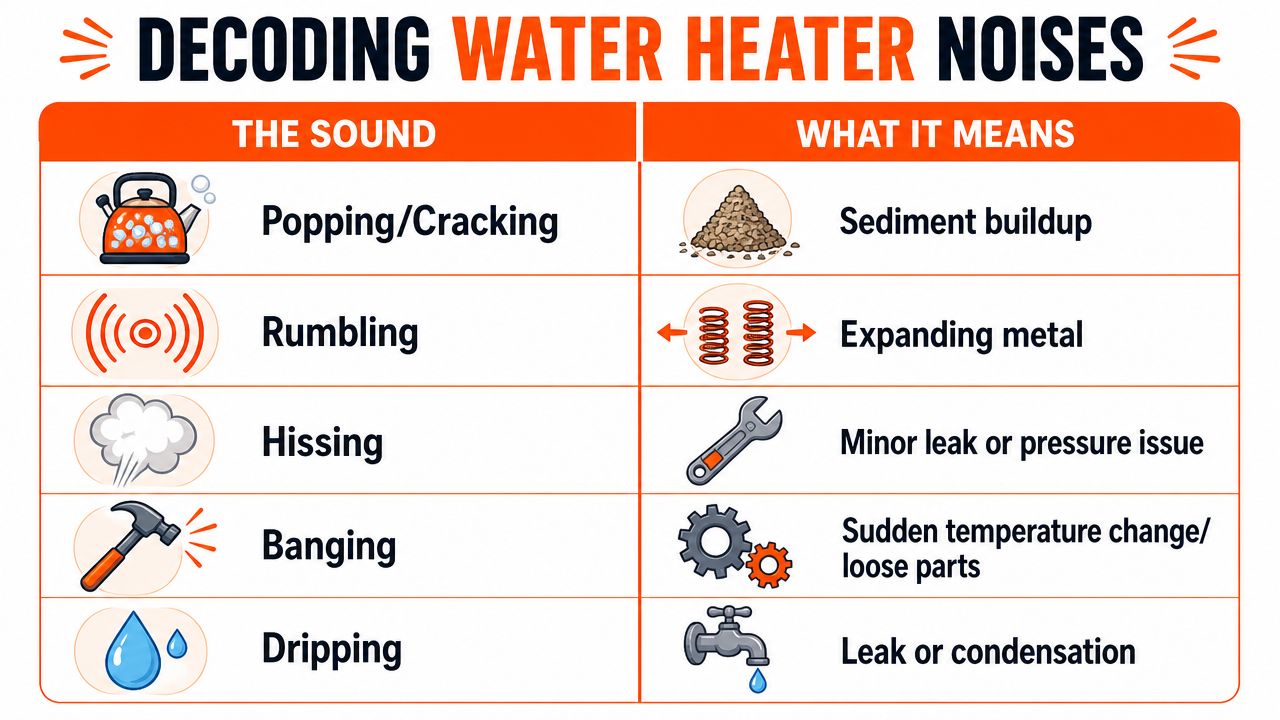
If you want a quick reference for where tank, vent, and supply connections usually sit, this installed water heater image from a typical Florida setup helps you match the sound to the part of the system.
Popping and rumbling
Popping and rumbling usually come from sediment at the bottom of a tank water heater. Minerals settle out of the water, harden into a layer, and trap pockets of water underneath. As the burner or elements heat that trapped water, it flashes into steam and breaks through the buildup. That creates the pop. If the sediment layer shifts while the tank is heating, the sound turns into a low rumble.
This is one of the most common service calls because the noise often starts small. Homeowners hear a few pops, ignore them, and then the heater has to work harder every cycle. More heat gets stuck at the bottom of the tank, efficiency drops, and the tank takes more stress than it should.
Banging and knocking
A sharp bang usually points to the piping, not the tank itself. Fast-closing valves in a dishwasher, washing machine, or faucet can stop water flow suddenly and send a pressure shock through the pipes. That impact is what you hear as water hammer.
Loose pipe strapping can make it louder. High water pressure can make it worse. If the sound happens right when an appliance or fixture shuts off, start by suspecting the supply lines and shutoff behavior rather than the heater body.
Hissing that can be normal, and hissing that needs attention
Hissing causes more panic than it should. In Florida, humidity and temperature swings can create condensation around venting or hot surfaces on a gas unit. When moisture hits hot metal, you may hear a brief hiss even though the heater is working normally. That's one reason a hissing sound by itself is not enough to diagnose a leak.
This expert video on water heater hissing and flue condensation shows the kind of harmless condensation sound some gas heaters make.
A constant hiss is different. If it comes with visible moisture, pooling water, or a sound concentrated at a valve or fitting, treat it as a real warning. In that case, the problem may be a small leak, pressure escaping, or a valve not sealing correctly.
A short hiss during damp weather can be normal. A steady hiss with water around the heater needs attention.
Ticking, clicking, and soft humming
Light ticking or clicking often comes from normal expansion and contraction as metal heats and cools. Heat traps can tick. Burners can click during ignition. Electric units can produce a soft hum during operation. Newer heaters sometimes make more noticeable routine sounds because the components are tighter and the installation space reflects noise differently.
What matters is the pattern. Brief, repeatable sounds during startup or shutdown are often harmless. Harsh, growing, or irregular sounds deserve a closer look.
If the heater is operating normally but the house seems to amplify every little sound, nearby wall cavities may be carrying more noise than the heater makes. In some homes, especially with utility closets or garage-adjacent walls, solving interior wall noise problems can cut down the echo so you can tell the difference between normal equipment noise and a plumbing issue.
Safe DIY Solutions for Common Water Heater Noises
If your tank is making popping or rumbling sounds and there's no leak, no gas smell, and no electrical burning smell, the most useful DIY move is usually a tank flush.
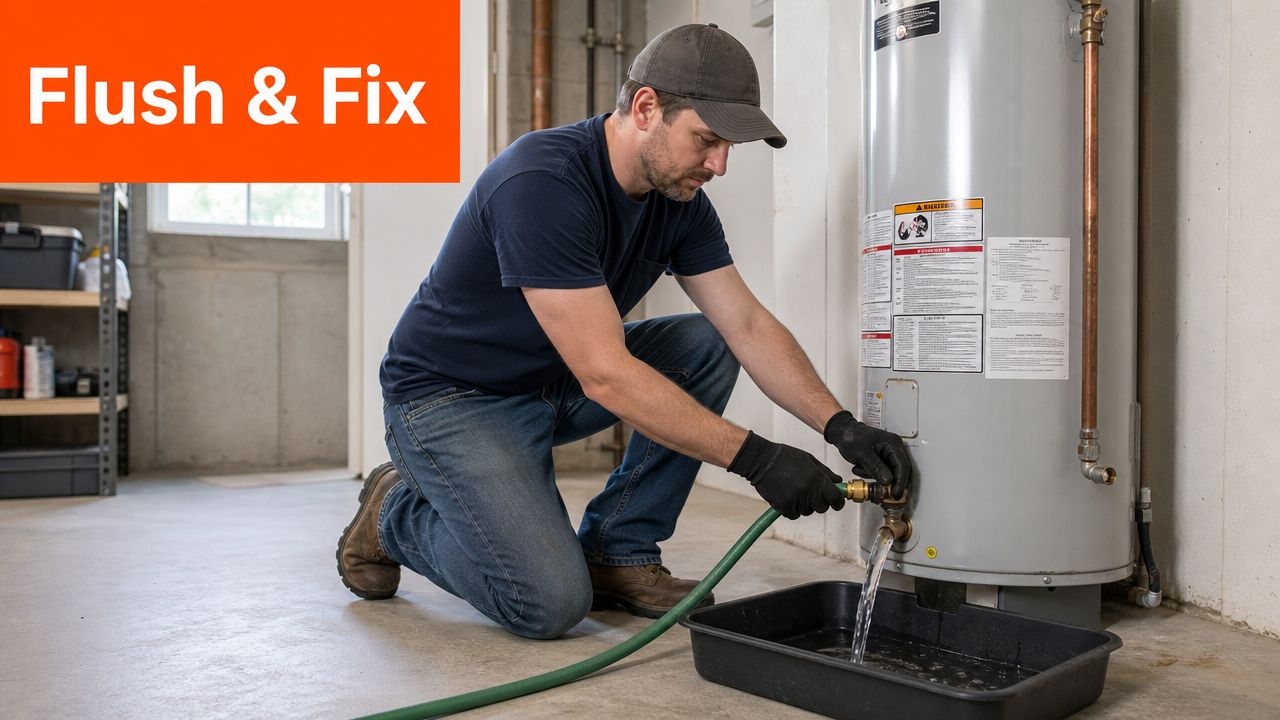
According to industry diagnostics, flushing the tank annually resolves approximately 85% of sediment-related noise issues, and the core process is to turn off power, shut off the cold water inlet, let the unit cool, connect a hose, open a hot water faucet, and then open the drain valve, as outlined by T.N. Standard Plumbing's step-by-step flushing guidance.
What you'll need
Keep it simple:
- A garden hose that can reach a safe drain point
- A bucket or basin if you need to manage splash or short drainage
- Work gloves because fittings and drained water can still be hot
- A flathead screwdriver if your drain valve style requires it
If the noise is echoing through the house even after the plumbing issue is addressed, it can also help to look at solving interior wall noise problems so you're not chasing a sound-amplification issue that's partly structural.
The safe way to flush a tank
This isn't complicated, but it does need to be done in the right order.
Shut off the power source.
For gas, set the control to Pilot. For electric, switch the water heater circuit off at the breaker.Close the cold water inlet valve.
This stops fresh water from feeding the tank while you drain it.Wait for the water to cool.
Don't rush this. Industry guidance includes a cooling period before draining because hot tank water can cause serious burns.
Safety first: Hot water under pressure is where DIY jobs go wrong. If you're not fully sure which valve or breaker controls the unit, stop there.
Connect a garden hose to the drain valve.
Run the other end to a safe drain area. Make sure it won't whip around or dump where it can cause damage.Open a hot water faucet inside the home.
This breaks the vacuum and helps the tank drain properly. Skip this step and the tank may not drain the way you expect.Open the drain valve and let the water run.
You're looking for the flow to clear out. Heavy sediment may slow the process.
A good visual can help if you've never done this before:
What works and what doesn't
Some homeowners want a shortcut. Usually there isn't one.
| Approach | Usually works | Usually doesn't |
|---|---|---|
| Full tank flush | For sediment-related popping and rumbling | If the tank is badly corroded or packed with hardened scale |
| Lowering the temperature | Helps reduce stress and noise in some systems | Won't remove sediment already sitting in the tank |
| Ignoring the noise | Never a fix | Gives sediment and wear more time to build |
| Random valve turning | Nothing useful | Creates avoidable risk |
If you want another visual reference for common home service setups, this Heatwave home service image gives a useful sense of the kind of residential equipment layout technicians work around.

When DIY stops making sense
If the drain valve is stuck, the tank won't clear, or the noise stays the same after a proper flush, that usually means the problem has moved beyond simple loose sediment. At that point, pushing harder doesn't save money. It just increases the chance of a leak or a broken valve.
Proactive Maintenance to Keep Your Heater Quiet
A quiet water heater usually comes down to routine care. Tanks rarely start rumbling for no reason. In Florida, mineral buildup, humidity, and long run times all add wear, so small issues turn noisy faster if nobody stays ahead of them.
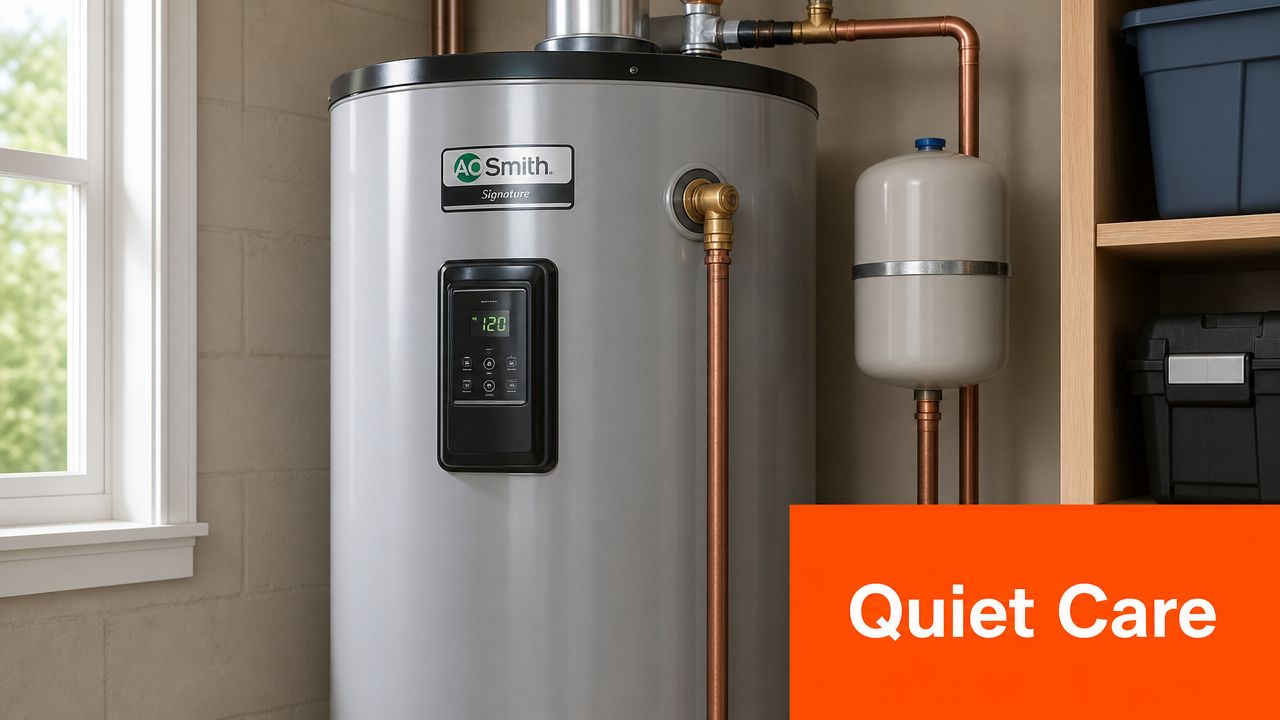
Keep the temperature reasonable
Start with the thermostat. A water heater set too high works harder, builds scale faster, and can make popping or crackling more noticeable. For many homes, a setting around 120 to 125°F is a practical target for comfort, safety, and less stress on the tank.
That will not remove sediment already sitting at the bottom. It does help slow down the conditions that make noise worse.
Some sounds are still harmless. A brief hiss from condensation, a little ticking as metal heats and cools, or light operating noise from a newer unit does not always point to a repair. The goal is to keep normal sounds normal, and stop preventable ones from turning into rumbling and banging.
Replace sacrificial parts on schedule
The anode rod protects the tank by corroding first. Once it is used up, the tank itself starts taking the hit. That is when rust, shortened tank life, and more serious internal wear start showing up.
Many heaters need an anode rod inspection every few years, with replacement often falling in the 3-to-5 year range depending on water quality and usage. This is one of those jobs that saves money in the background. Homeowners rarely notice the rod doing its job, but plumbers notice when it has been ignored too long.
Build a simple maintenance routine
Keep it basic and consistent.
- Flush the tank on a schedule. Once a year is a good baseline for many homes. Some Florida homes need it sooner because mineral sediment can build faster.
- Check the thermostat setting. If someone turned it up chasing hotter showers, bring it back to a reasonable range.
- Listen for changes. Soft ticking or a short hiss can be normal. A growing rumble usually is not.
- Look around the base and fittings. A little surface moisture can be condensation. Active dripping needs attention.
For homeowners who like a broader home-care checklist, this spring plumbing prep visual is a useful reminder that water heater problems often show up alongside other neglected plumbing maintenance. Rental owners can also borrow from VerticalRent's rental maintenance tips to keep service intervals from slipping.

What maintenance can and cannot do
Routine care prevents a lot. It does not reverse a bad tank.
If the heater is already heavily scaled, leaking, or corroded, maintenance may reduce some noise but it will not restore damaged parts. That is the trade-off. A flush and a thermostat check help most when they happen early, before noise becomes a symptom of wear instead of simple buildup.
Red Flags That Mean It's Time to Call Heatwave
Some water heater noises are harmless. A brief tick as metal expands, a soft hum, or a little hissing from condensation can be normal, especially in Florida's humidity. The call-for-help noises are the ones tied to leaks, gas, pressure, or parts that are already failing.
If the sound comes with any safety concern, stop troubleshooting and get a pro involved.

Sounds and symptoms that change the situation
Call Heatwave if you notice any of these:
- Water pooling at the base of the tank. Surface moisture can be harmless condensation. Standing water usually means a leak, and leaks tend to get worse, not better.
- A gas smell near a gas water heater. Leave that alone. Shut off what you safely can, leave the area if needed, and call for service.
- Hissing with visible leaking. That points to escaping water or pressure, not the benign condensation noise homeowners sometimes hear.
- Loud rumbling or banging after a proper flush. At that point, the sediment may be baked hard onto the bottom, or the tank has already taken damage.
- Screeching, whining, or harsh mechanical noise. Those sounds often come from a failing valve or another component that needs testing.
- Heavy corrosion on fittings, valves, or the tank jacket. Corrosion is a warning sign. Once it is active, replacement may be closer than repair.
The trade-off is simple. A homeowner can handle basic maintenance on a stable unit. A noisy heater with leaking, gas odor, or pressure symptoms needs diagnosis, not guesswork.
Renters and landlords need a quicker threshold
Rental properties need faster decisions because delay can turn one noisy heater into a ceiling stain, damaged flooring, or an emergency no-hot-water call. For a landlord-side view of replacement planning and upkeep, VerticalRent's rental maintenance tips are worth reviewing.
When replacement makes more sense than repair
Sometimes the smartest service call is the one that confirms the tank is done. If the unit is older, badly corroded, or leaking from the tank itself, repair money can disappear fast without solving the underlying issue. In those cases, replacement is often the cleaner long-term answer.
If you want a quick look at the kind of local home-service presence many Tampa homeowners prefer, this Heatwave Tampa Bay Morning Blend interview image gives a quick snapshot.

If noise shows up with leaking, gas odor, or visible corrosion, stop testing the heater and get it evaluated.
Frequently Asked Questions About Noisy Water Heaters
Is my water heater going to explode
That's the fear behind a lot of late-night searches. In most cases, no. A noisy heater usually points to sediment, pressure issues, normal expansion sounds, or condensation-related noise. But “usually” isn't the same as “always.”
What matters is whether the heater also shows danger signs. If you have leaking water, gas odor, or a sound that is violently abnormal, don't keep using the unit while you figure it out. Shut down what you safely can and get a professional involved.
How much does it cost to fix a noisy water heater in Tampa
The honest answer is that it depends on the cause. A simple maintenance visit is very different from replacing a failed valve, a heating component, or the entire tank. Since no verified local price data is provided here, the best way to think about cost is by category:
- Minor maintenance is usually the lowest-cost path.
- Component repairs cost more when access is difficult or parts are failing together.
- Replacement makes more sense when the tank is leaking, badly corroded, or too far gone from sediment damage.
If you're comparing whether a repair is worth it, reviews can help you judge service quality as much as price. This Google review snapshot is a useful reminder to look at consistency and trust, not just the lowest number.

How long should a water heater last in Florida
Verified guidance in the source material notes that severe sediment damage often pushes replacement into the conversation when a tank-style unit is already over 10–12 years old, especially if inspection shows heavy corrosion or large leaks. Florida conditions can be hard on tanks because mineral content, usage patterns, and installation environments all matter.
A heater that's maintained well can stay quieter and healthier longer. A heater that's been rumbling for years, running too hot, and never flushed will usually age faster.
The practical takeaway is simple. Don't judge by age alone. Judge by age plus condition.
If your water heater is making noise and you want a clear answer instead of guesswork, contact Heatwave Air Conditioning, Plumbing, & Electric. Their team serves Tampa Bay and Southwest Florida with plumbing expertise that helps homeowners separate normal sounds from real problems, fix what's repairable, and replace what isn't worth saving.