
You notice it in the most ordinary moment. The water bill looks wrong, way higher than it should be, or your bare foot catches a warm patch on the tile that wasn't there before. In Tampa Bay and across Southwest Florida, that combination usually gets a homeowner's attention fast, and it should.
A water leak under house problems often stay hidden because so many Florida homes sit on slab-on-grade foundations. The leak isn't in a crawlspace you can inspect. It's under concrete, under flooring, and often under your daily routine until the damage finally shows itself. Nationally, household leaks waste more than 1 trillion gallons of water each year, equal to the annual water use of over 11 million homes, and in Florida a slab leak can push a family of four past 12,000 gallons in monthly water use during winter, which is a strong warning sign of a hidden issue (Facts on Water Leaks).
Florida adds its own complications. Sandy soil can shift. Humidity can help mold spread fast once moisture gets trapped under flooring or inside walls. And when homeowners wait too long, the repair itself often becomes a smaller problem than the flooring, drywall, cabinetry, or insurance paperwork that follows.
If you're already worried about what your carrier might say, it's smart to review My Policy Quote's insights on claim rejections early, before you start tossing receipts or forgetting when the problem first appeared. For local homeowners who want a quick sense of the kind of community presence that matters in a stressful home issue, you can also see this Tampa Bay feature image.

That Sinking Feeling A High Water Bill in Florida
In Florida, homeowners often dismiss the first clue. They think the higher bill came from lawn watering, guests in town, or kids taking longer showers. Sometimes that's true. But when the bill jumps and nothing in your routine changed, the plumbing system deserves attention.
Why slab homes make this harder
A slab-on-grade home hides the evidence. Water can move below the surface for quite a while before you ever see staining, loose flooring, or cracked tile. By the time many people call, they aren't really dealing with a leak anymore. They're dealing with a leak plus secondary damage.
Practical rule: If your water use suddenly doesn't match your habits, treat that as a plumbing problem until proven otherwise.
Florida homes also tend to have long pipe runs through concrete. That matters because the leak can be nowhere near the room where symptoms show up. A warm tile floor in one hallway might connect to a hot water line issue that started much farther away.
The stress is real, but panic doesn't help
Most homeowners jump straight to the worst-case scenario. They picture jackhammers across the kitchen, dust everywhere, and weeks of disruption. That does happen in some cases, but it's not the only path and often not the best one.
The useful move right now is simple. Confirm whether water is escaping, reduce damage, and get the leak located correctly before anyone starts opening floors. That sequence saves money and keeps a bad situation from turning into a chaotic one.
Telltale Signs of a Water Leak Under Your House
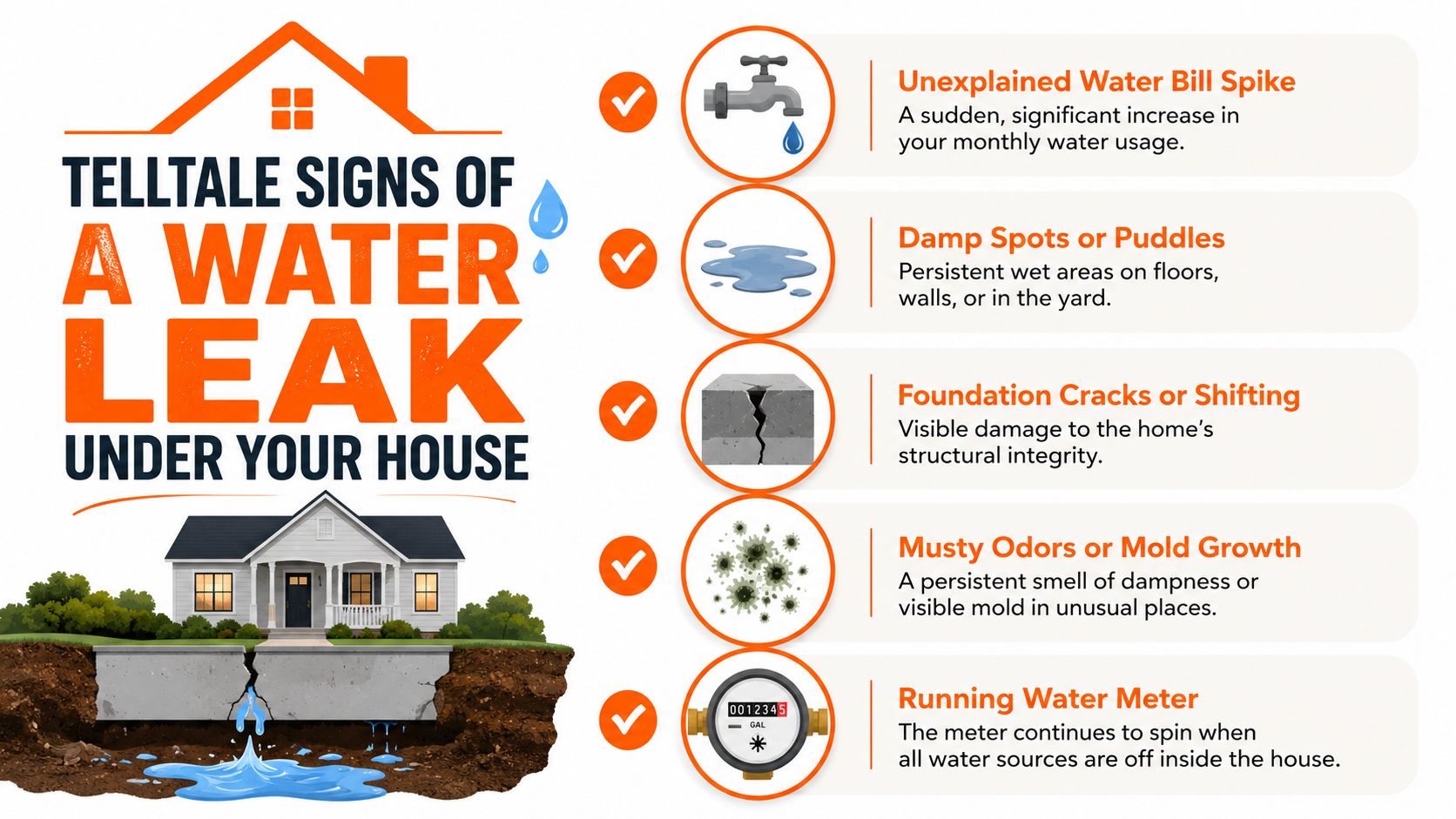
Some signs are obvious. Others are easy to miss, especially in a humid Florida house where damp air and seasonal rain can muddy the picture. Across the United States, 1 in 12 households experience a plumbing leak each year, and those leaks contribute to over $13 billion in insured claims annually. In slab-on-grade homes common in Florida, a hidden leak can stay out of sight until structural damage or mold becomes visible (water leak facts).
What homeowners usually notice first
Start with the clues that show up in everyday life:
- An unexplained bill increase. If your usage changes but your habits don't, that's a warning.
- A warm patch on tile or vinyl. This often points to a hot water line under the slab.
- Low water pressure. A supply leak can reduce pressure at fixtures, especially if the leak is active and steady.
- The sound of running water when everything is off. This can sound like a faint hiss or steady movement in the wall or floor.
- A musty odor that won't leave. Air fresheners don't fix moisture. If the smell keeps returning, water may be feeding mold growth somewhere hidden.
For homeowners comparing options, this overview of slab leak repair is useful because it lays out the kind of repair paths that often follow once these signs point to a real under-slab issue.
Florida-specific signs people overlook
The local climate changes how leaks show up. In Tampa, Sarasota, Fort Myers, Cape Coral, and Port Charlotte, humidity can blur the line between “the house feels muggy” and “there's active moisture under the floor.”
Watch for these subtler symptoms:
- Cracked tile or grout lines. Water can affect the soil and the slab movement underneath.
- Buckling or lifting flooring. Even a slow leak can create pressure and moisture that telegraphs upward.
- Darkened baseboards or swollen trim. The leak may not be near the visible damage.
- Mildew in odd locations. If mold appears away from showers, tubs, or exterior doors, hidden plumbing moves higher on the suspect list.
- Soft spots in drywall near the floor. Water can wick upward.
Hidden slab leaks don't always make a puddle. Concrete often masks the surface signs until the damage has already spread.
Yard and exterior clues
Not every under-house leak stays neatly under the house. Sometimes the signs show up outside first.
A patch of grass that stays greener than the rest, soggy soil near the foundation, or constant moisture near the service line path can all point to a buried water issue. On Florida properties with irrigation, this gets tricky because irrigation leaks can mimic supply problems. That's why the meter test matters. It helps separate “the yard is wet” from “the house plumbing is leaking.”
Confirming a Hidden Leak The DIY Water Meter Test
The fastest homeowner check is the water meter test. It won't tell you exactly where the leak is, but it can tell you whether water is moving when it shouldn't be.
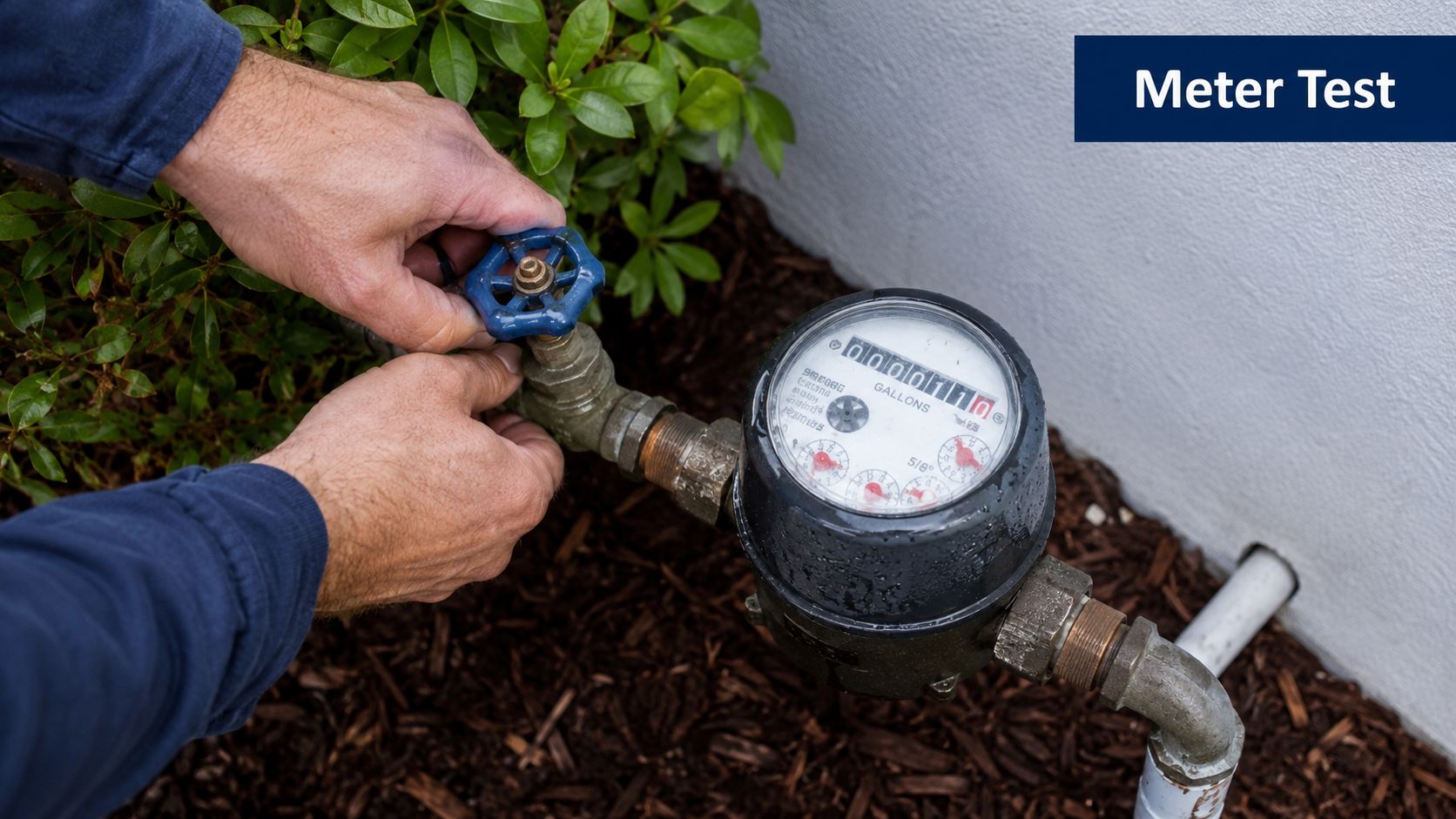
A lot of people put this off because they assume the meter is too technical to understand. It isn't. If you can verify that all water use is off, you can do the basic check.
How to run the test correctly
Follow the sequence carefully:
- Turn off all fixtures and appliances. That includes faucets, showers, dishwashers, washing machines, refrigerator ice makers, water softeners, and irrigation timers.
- Locate the water meter. In many Florida homes, it's in a ground box near the curb or property line.
- Check the leak indicator or note the reading. Some meters have a small dial or indicator that moves with even slight water flow.
- Wait without using any water. Keep everyone in the home off sinks, toilets, and appliances during the test period.
- Recheck the meter. If it moved, water is flowing somewhere in the system.
This simple check matters because 40% of homeowners delay calling a professional for a suspected slab leak because they misread a high bill as something else, and that delay often lasts until structural damage appears. The same source notes that common DIY methods like moisture meters aren't enough for leaks buried deep in concrete (do you have a slab leak).
What can throw off the result
The test is only as good as the isolation. I've seen homeowners swear the meter proved a slab leak, then it turned out an irrigation zone was still active or a toilet was refilling slowly in the background.
Here's what commonly skews the result:
- Toilets still refilling
- Ice makers cycling
- Pool auto-fill systems
- Irrigation left on a timer
- Someone washing hands mid-test
If you want a more formal pressure-based check, this video gives a useful visual reference for what a leak test setup looks like in practice.
What this test can't do
The meter test confirms a leak exists somewhere on the system side being tested. It does not tell you whether the problem is under the slab, in a wall, at a fixture, or on a line outside.
That limitation matters. A homeowner can confirm water loss and still be completely wrong about the source. That's why this is a decision tool, not a repair plan. Once the meter shows unexplained movement, the next step is professional location work with proper equipment.
What to Do Immediately to Minimize Water Damage
Once you strongly suspect a leak under the house, speed matters. Not frantic speed. Controlled speed.
Shut off the water if the signs are strong
If the meter is moving, the floor is warming, or you hear active water with no fixtures running, shut off the home's main water supply. Every minute the line stays live, more water can move into the slab area, flooring system, or surrounding soil.
If you're unsure where your shutoff is, this guide to external stop taps helps explain the kind of exterior shutoff arrangement many homeowners need to identify before an emergency.
After the water is off, open a faucet briefly to confirm pressure drops. That tells you the house side has been isolated.
Protect the house and your claim
Document what you're seeing while it's fresh:
- Take photos of flooring, walls, and visible moisture
- Save recent water bills
- Write down when you first noticed the issue
- Keep receipts for any immediate mitigation work
This local home-service media image is a reminder of something homeowners often forget under stress: organized maintenance and fast response make everything easier afterward.

If you think you might need insurance involvement later, start the paper trail before cleanup erases the evidence.
What not to do
Don't start breaking tile because you found one warm area. Don't assume a wet spot marks the exact leak location. And don't let a handyman “take a guess” with exploratory demolition.
A hidden line under a Florida slab can travel moisture sideways. The visible symptom and the actual breach may be in different places. Careless opening work often creates extra repair costs without getting you closer to the leak.
Modern Leak Repair Options That Protect Your Home
The biggest fear I hear from Florida homeowners is simple: “Are you going to have to tear up my whole house?” Usually, the answer is no.
That fear is common. 65% of homeowners fear total demolition for a slab leak, but modern methods such as tunneling and overhead rerouting allow for non-invasive repairs in 70% of cases, with reported repair cost reductions of 30 to 40% compared with traditional excavation (repair options for slab leaks).

Option comparison for Florida slab homes
Not every repair fits every home. The right choice depends on pipe material, leak location, floor finishes, access, and whether the line has failed once or is likely to fail again.
| Repair option | Best fit | Main advantage | Main trade-off |
|---|---|---|---|
| Targeted spot repair | One isolated leak in an otherwise healthy line | Small repair footprint | Interior floor opening is still required |
| Overhead rerouting | Repeated under-slab failures or poor original routing | Avoids opening large slab areas | Requires attic or wall access and repiping |
| Tunneling under the slab | Good exterior access and a need to preserve interior finishes | Keeps indoor flooring largely untouched | Requires exterior excavation planning |
Targeted spot repair
This is the method commonly pictured. A team identifies the leak location, opens a controlled section of the slab or flooring, repairs the damaged section, then restores the area.
This can be the right choice when the leak is isolated and the rest of the pipe is in good shape. It's often the least disruptive approach when conditions line up well. The downside is obvious. If the line is aging in multiple places, fixing one spot may not solve the larger reliability problem.
Overhead rerouting
In many Florida homes, rerouting a water line through the attic or accessible wall cavities makes more sense than chasing old pipe under concrete. This is especially practical when the original under-slab line has a history of corrosion or repeated leaks.
Homeowners usually like this option once they understand it. You bypass the failed buried path instead of reopening the same problem zone later. The trade-off is that rerouting changes the plumbing path, so the installer has to think carefully about insulation, support, and clean finish work at penetrations.
A smart repair doesn't just stop today's leak. It reduces the chance of opening the same floor again next year.
Tunneling under the slab
Tunneling is the repair method that relieves a lot of homeowners. Instead of opening finished flooring inside the house, crews access the line from outside and tunnel beneath the slab to reach the affected area.
This can be excellent for homes with expensive tile, continuous flooring, custom cabinetry, or owners who don't want indoor demolition. It isn't automatic. Soil conditions, access, and structural planning all matter. But in the right house, tunneling protects the interior far better than homeowners expect.
What doesn't work well
Two mistakes show up over and over:
- Guess-based demolition. Opening where the floor feels warm without proper location work often misses the leak.
- Patch-and-hope decisions. If the line material or layout makes future failures likely, the cheapest immediate repair can become the most expensive long-term choice.
The best plumbers don't start with a hammer. They start with a location strategy and a repair plan that matches the home.
Navigating Insurance and Hiring a Tampa Bay Plumbing Pro
Once the immediate panic settles, homeowners usually have two questions. Will insurance help, and who should I trust to find the leak without turning the house into a construction zone?

Insurance usually cares about damage more than the failed pipe
Policies often treat the resulting water damage differently from the plumbing component that failed. That's why your documentation matters so much. You want a clean timeline, clear photos, and a written diagnosis from a licensed plumbing professional.
When you call your carrier, keep your language precise. Report the symptoms, the date noticed, the steps taken to stop damage, and what the plumber found. Don't speculate. Don't guess about cause if nobody has confirmed it yet.
Why professional detection pays for itself
Professional leak detection firms using thermal imaging and acoustic listening tools report a 92% success rate in pinpointing leak location within 1 foot, and relying only on visual signs fails in 60% of slab leak cases because concrete often hides the surface evidence (advanced leak location tools).
That gap in accuracy is why a serious slab leak job shouldn't start with a blind search. The right technician may use:
- Acoustic listening equipment to hear pressurized water movement
- Thermal imaging to identify heat patterns from hot water leaks
- Pressure isolation testing to narrow down which line is losing water
Those tools don't just help find the leak. They also help limit needless tile removal, drywall cuts, and yard disruption.
Hire the company that can explain why they know the leak is there, not just the company willing to start cutting first.
Questions to ask before hiring
Use a short screening list. It tells you quickly whether the contractor handles slab leaks or just says they do.
- Are you licensed and insured for plumbing work in Florida?
- How do you locate under-slab leaks before opening the floor?
- Do you offer repair options besides breaking the slab from inside?
- Can you provide written findings for insurance documentation?
- What does restoration include, and what will require a separate trade?
A company with real slab-leak experience should answer those calmly and specifically. You're listening for process, not buzzwords.
For homeowners who want a quick read on customer confidence signals, this Google review snapshot reflects the kind of social proof many people check before letting anyone touch a Florida slab home.

The best outcome is straightforward. Confirm the leak early, stop the water, document the damage, and bring in a plumber who knows Tampa Bay and Southwest Florida slab construction. That approach protects your house, your floors, and your budget far better than waiting for the signs to get louder.
If you need help with a suspected water leak under your house, Heatwave Air Conditioning, Plumbing, & Electric serves homeowners across Tampa Bay and Southwest Florida with experienced plumbing support. Reach out for professional diagnosis and practical repair options that protect your home without unnecessary disruption.