
Water softener installation cost usually lands around $1,500, but real-world projects can run from $200 to over $6,000 depending on the system, the house, and how much plumbing work is involved. If you're in Tampa Bay, Sarasota, Cape Coral, Port Charlotte, or Fort Myers, that broad national range is only a starting point, and the key question is what your Florida home is likely to need.
A lot of homeowners start looking into a softener after the same signs show up. White scale on faucets. Spots on shower glass. Soap that won't lather right. Water heaters and fixtures that seem to age faster than they should. In Florida, those complaints are common, but the install price still varies house to house because local construction, garage layouts, drain access, and existing plumbing matter just as much as the softener itself.
What to Expect for Water Softener Installation Costs
You see scale building up on the shower door, the dishwasher leaves spots on every glass, and the water heater never seems to last as long as it should. Then the next question hits. What is this going to cost in a Florida home like mine?
In our service areas, that answer depends less on a national average and more on how your house is set up. A straightforward replacement in a Tampa garage with an existing loop and nearby drain is one kind of job. A first-time install in an older Sarasota or Cape Coral home, where the plumber has to create the connections and find a workable drain route, is a different price from the start.
The biggest cost swings usually come from the house, not just the box being installed. Homes with easy access to the main water line, enough room around the equipment, and a clear drain option are usually simpler and less expensive to handle. Homes with tight garage layouts, finished spaces, older piping, or no softener loop take more labor and more material.
A quote usually changes for practical reasons like these:
- Existing plumbing connections: Replacing an old unit costs less than building the setup from scratch.
- Drain access: A softener needs a proper place to discharge during regeneration, and that can add work in some Florida homes.
- Capacity needs: Larger households and heavier water use often call for a bigger system.
- Install conditions: Tight access, garage storage, wall placement, and pipe routing all affect labor time.
- Local home construction: Concrete block walls, utility layout, and older plumbing configurations in parts of Tampa Bay and Southwest Florida can change the scope fast.
That is why two neighbors can both have hard water and still get very different numbers.
For homeowners in Tampa Bay, Sarasota, Fort Myers, Port Charlotte, and Cape Coral, the useful question is whether the job is a clean replacement, a first-time install, or a more involved plumbing project. Those are the details that control the job.
If you want to check the company before booking an estimate, review local customer feedback from Heatwave homeowners along with the scope listed on the quote.

Decoding the Price Tag of a Water Softener System
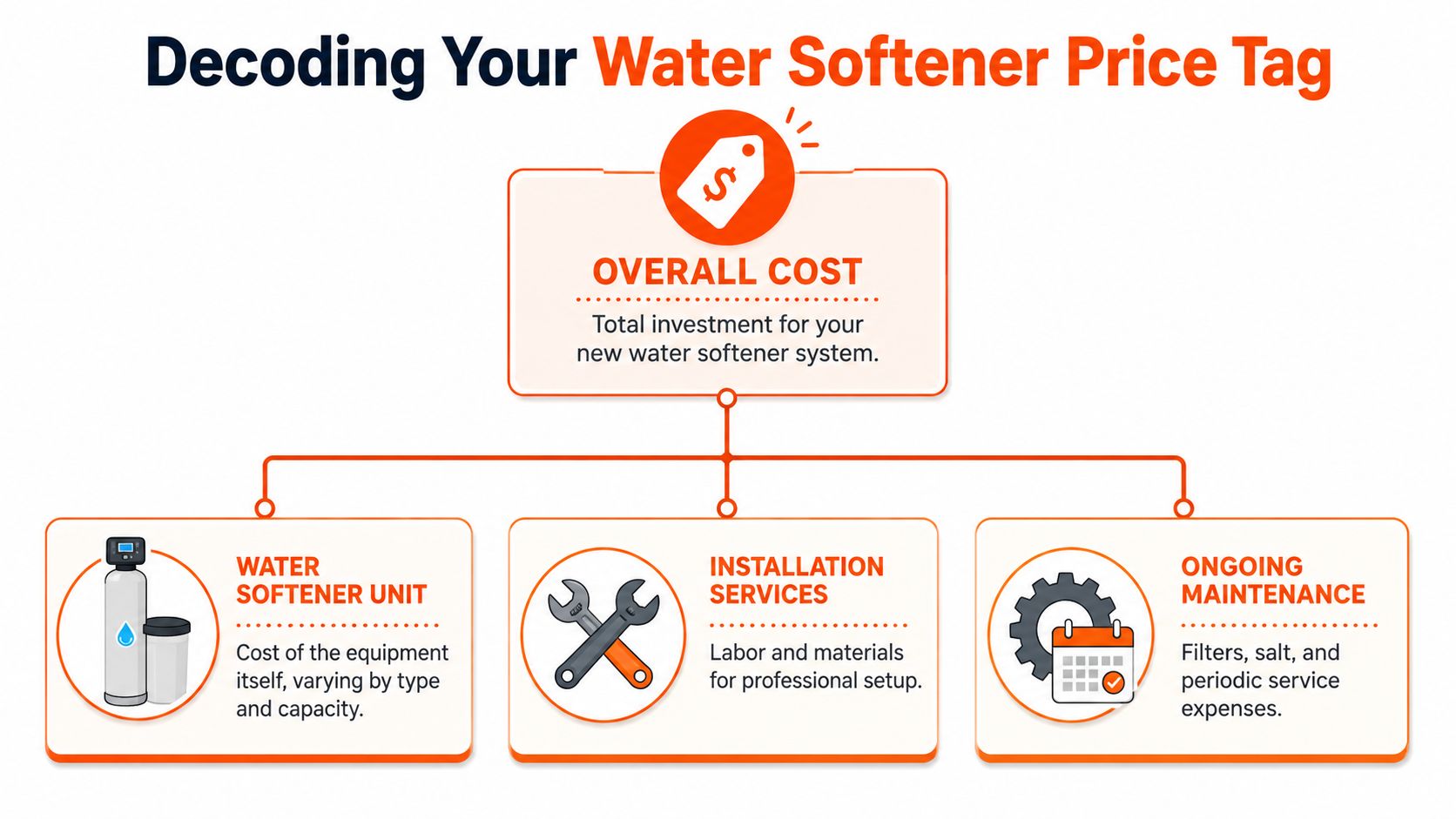
A Florida homeowner in Tampa or Cape Coral can look at two softeners that seem similar on paper and still get very different installed prices. The reason is simple. The price tag is made up of three parts: the equipment, the labor, and the small job materials needed to make the system work properly in that specific house.
The unit itself
The equipment is usually the biggest line item homeowners notice first. Capacity, control style, resin quality, and whether the system is a standard single-tank setup or a dual-tank model all affect that number.
In our part of Florida, sizing matters because water conditions and household demand are not the same from one city to the next. A smaller home in Sarasota with moderate use may only need a basic system sized correctly. A larger home in Tampa Bay with more bathrooms, more laundry, and harder water may need a bigger unit that costs more up front but avoids constant regeneration and premature wear.
Installation labor
Labor is the part that often changes the quote the fastest. A clean replacement in a garage with accessible plumbing is usually straightforward. A first-time install in a tight utility area, or in a home where the drain and electrical connections are not close by, takes more time and more parts.
As outlined by Cascadian Water's whole-house softener cost article, labor can stay modest on a basic swap and climb quickly on jobs that need added plumbing, electrical work, or drain-line changes.
That lines up with what plumbers see every day. The machine itself may be only part of the bill. The work to fit it into the house correctly is often what separates a lower quote from a higher one.
Materials, code work, and other add-ons
The last part of the price is the support material around the install. This includes shutoffs, bypass components, fittings, drain connections, and any updates needed to make the setup serviceable and up to local requirements.
Florida homes add their own trade-offs. Some garages have plenty of wall space and a nearby drain. Some do not. Some older homes in Southwest Florida need extra plumbing cleanup before a new softener should be tied in. Those are real cost drivers, and they should be spelled out on the estimate instead of buried in vague wording.
| Quote item | What you're paying for | Why it changes |
|---|---|---|
| Equipment | The softener unit | Type, size, and features |
| Labor | Installation time and plumbing work | Access, layout, and whether the home is pre-plumbed |
| Job materials | Valves, fittings, drain work, and related parts | House conditions and local code requirements |
When comparing estimates, look past the unit price. Check whether the quote includes the plumbing work needed to finish the job properly in your home in Tampa Bay, Sarasota, Fort Myers, Port Charlotte, or Cape Coral. That is usually where the main difference shows up.
What Key Factors Change Your Installation Cost
A water softener quote can swing quite a bit, even between two similar homes in the same Florida neighborhood. In Tampa Bay, Sarasota, Cape Coral, and nearby areas, the difference usually comes down to house layout, water use, and how much plumbing work it takes to install the system correctly.
System type and capacity
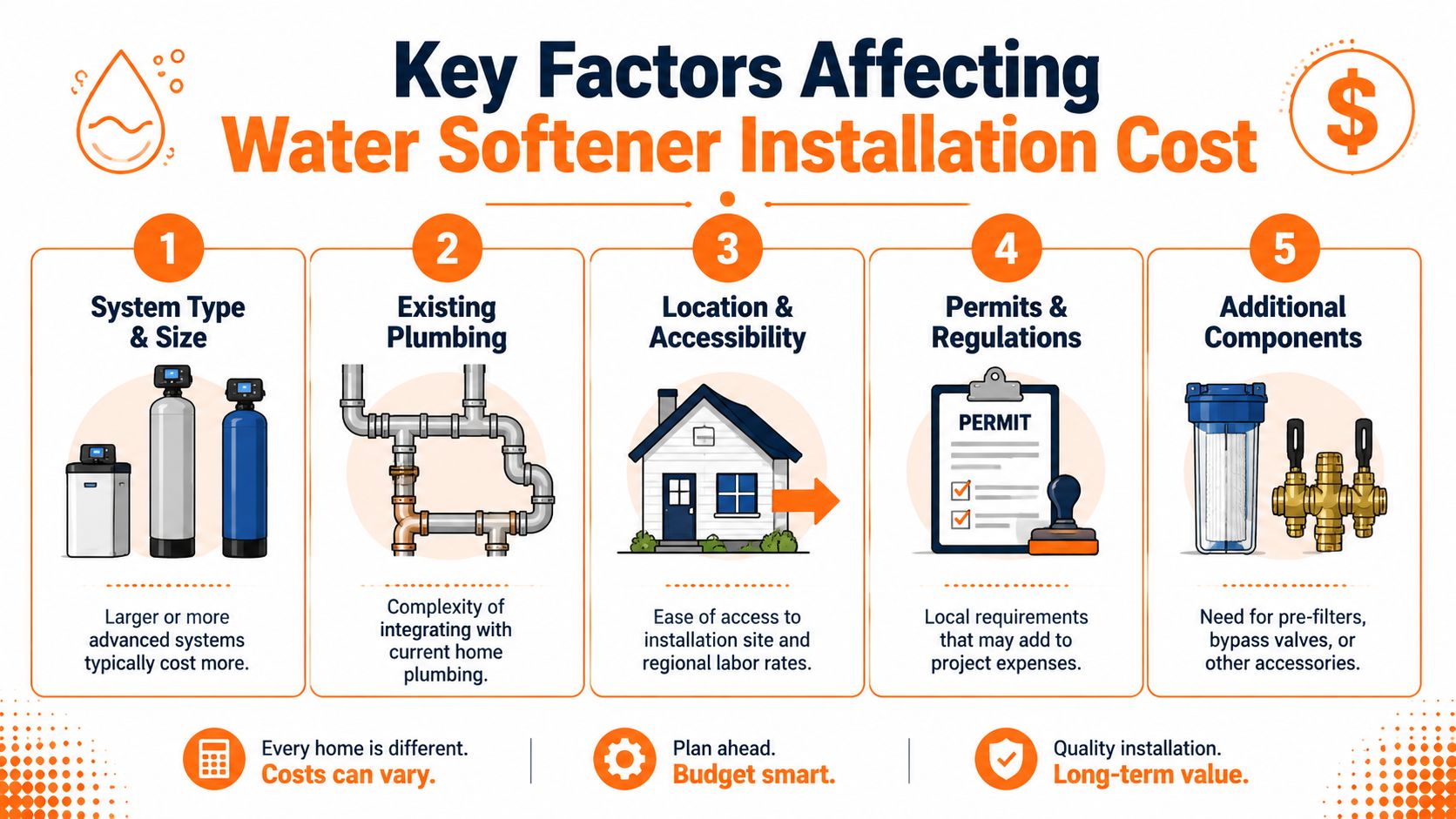
The unit itself changes the price fast. A basic single-tank softener costs less than a dual-tank setup, and a true softener is priced differently from a salt-free conditioner. The right choice depends on how hard your water is, how many people live in the home, and whether you want lower upfront cost or better performance during heavy daily use.
Capacity matters too. A smaller condo in St. Pete or Bradenton usually does not need the same system as a larger home in Sarasota or Cape Coral with multiple bathrooms and constant laundry. If the system is undersized, it regenerates too often and wears harder. If it is oversized, you pay more than you need to.
Existing plumbing layout
This factor changes labor more than anything else.
A home with a softener loop, working shutoffs, open garage space, and a nearby drain is usually a simpler job. A home without those basics takes more time, more fittings, and more planning. In older Florida houses, I often see installers dealing with awkward pipe runs, limited wall space, or drain access that looks close until you trace the actual route.
The common cost drivers are pretty consistent:
- No pre-plumbed loop: A new connection point has to be built into the main water line.
- Drain is not close to the install location: Running the discharge line adds labor and materials.
- Tight access in the garage or utility closet: The job slows down, especially if service clearance is limited.
- Older pipe layout: More rework may be needed to make the install clean and serviceable later.
Heatwave has shared a Tampa Bay homeowner interview and local service overview that gives a feel for how local home setups can affect plumbing work.

Home age, construction style, and add-on work
Florida home age matters. Many newer homes were built with cleaner utility planning, while older homes often need extra prep before a softener goes in. That can include replacing old shutoffs, cleaning up previous plumbing changes, or rerouting lines so the system can be serviced without tearing into the setup later.
Construction style matters too. Some newer upscale homes look easier at first glance, but tighter mechanical areas and finish-sensitive spaces can make installation slower. If you live in a higher-end property in Southwest Florida, these luxury custom home insights help explain why access and utility planning can still affect upgrade costs.
Here's a useful visual if you want a basic overview before talking to an installer:
If an installer asks about pipe path, drain location, and power before giving a firm number, that is usually a good sign. Those details decide whether your job stays simple or turns into a half-day plumbing project.
Water Softener Costs in Tampa Bay and SW Florida
A homeowner in Cape Coral may get a very different quote than a homeowner in Clearwater, even if both want the same size softener. Around Tampa Bay and Southwest Florida, the final price usually comes down to how the house was built, where the plumbing sits, and how hard the local water is.
What homeowners in these areas usually run into
In a lot of Tampa Bay homes, the garage is the natural place for a softener. That can keep labor reasonable if the main line, drain option, and power are already nearby. In older parts of St. Pete, Tampa, or Bradenton, I often see the opposite. There is space for the unit, but getting the plumbing to that spot is what adds cost.
Sarasota, Fort Myers, Cape Coral, and Port Charlotte bring a different mix. Many newer homes look installer-friendly, but tight utility closets, finished garage walls, and builder-specific layouts can slow the job down. In higher-end properties, appearance matters too. Homeowners usually want the work done cleanly, without cutting visible walls or leaving exposed piping where it will stand out. If you live in a newer upscale property, these luxury custom home insights help explain why mechanical layouts that look neat from the outside can still be harder to upgrade.
A Florida price range is only useful if it matches the house
The broad ranges discussed earlier still apply. A straightforward replacement in a home that already has the right hookups will usually stay on the lower end. A first-time install, or a job that needs a new loop, drain work, or cleanup from old plumbing changes, can climb fast.
The biggest local cost drivers are usually these:
- Water hardness in your area: Parts of Southwest Florida deal with stubborn mineral content, so some homes need a larger or better-matched system.
- Existing plumbing layout: A house with a ready softener loop is much cheaper to work on than one that needs new tie-ins.
- Drain location: If the drain path is awkward, labor goes up.
- Access in slab homes: Florida slab construction limits easy rerouting and can turn a simple plan into custom plumbing work.
- Home size and water use: Bigger families and larger homes may need more softening capacity, which raises equipment cost.
That is why local estimates in Tampa Bay, Sarasota, and Cape Coral can vary more than homeowners expect.
A solid quote should spell out where the unit will go, how it will drain, whether a bypass and shutoffs are included, and what extra plumbing is needed to make the system serviceable later. If those details are vague, the price probably is too.
For homeowners who want a better feel for local service background before booking a visit, this Tampa Bay community feature from Heatwave gives useful local context.
DIY vs Professional Water Softener Installation
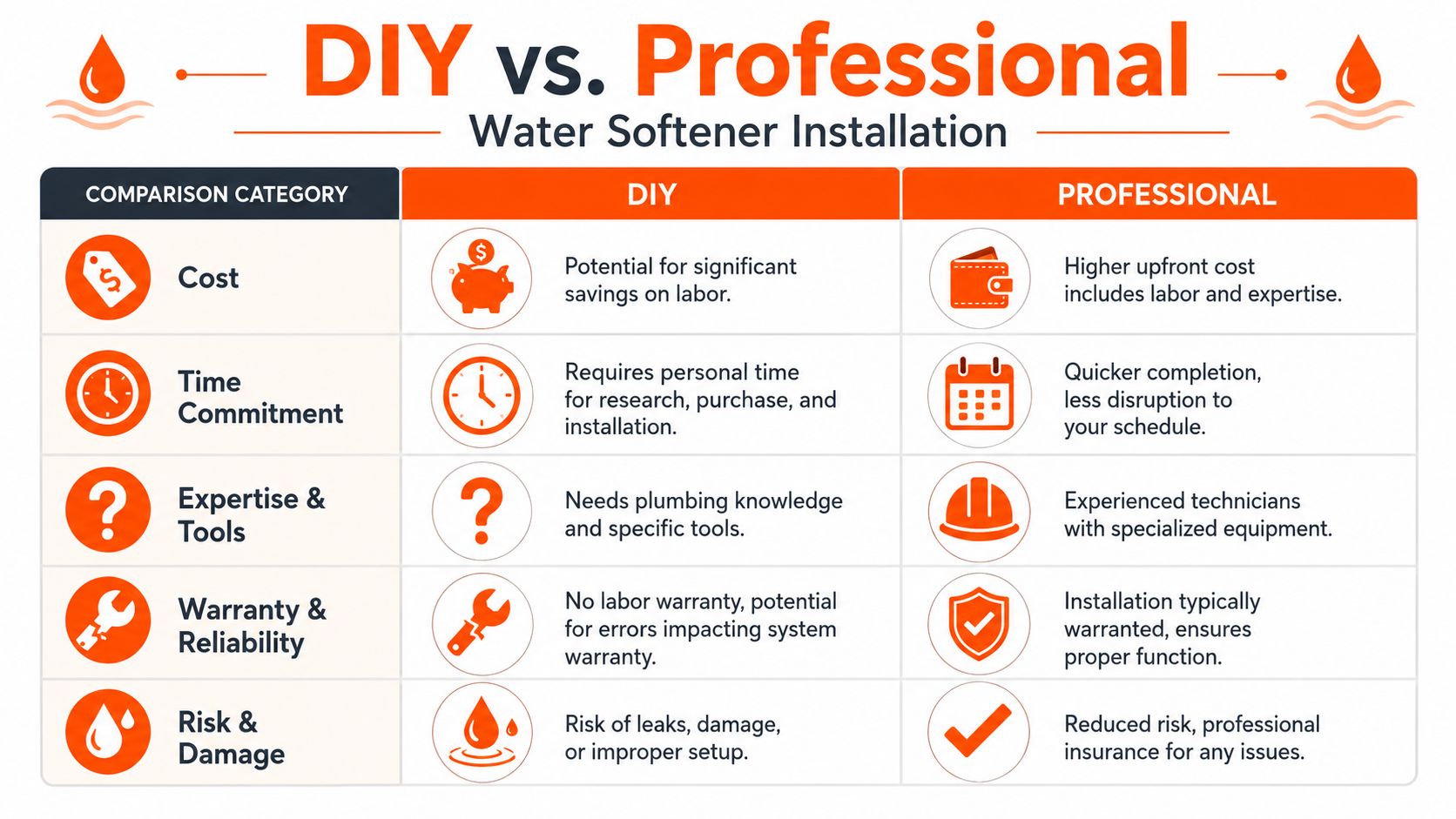
Some homeowners can handle basic plumbing work and wonder if they should install a water softener themselves. That's a fair question. On paper, DIY can save labor cost. In practice, the risk depends on whether this is a true replacement or a first-time install with new plumbing needs.
When DIY makes sense
If a home already has the softener loop, shutoffs, drain, and space laid out correctly, a handy homeowner may be looking at a manageable swap. That's the most forgiving version of the job.
DIY tends to be more realistic when:
- You're replacing an existing unit: The hookups are already there.
- The install area is open and accessible: You can work without fighting the space.
- No extra drain or electrical work is needed: Complexity stays low.
Where DIY goes wrong
The trouble starts when the job isn't just a swap. Cutting in new plumbing, setting the bypass correctly, managing drainage, and avoiding leaks in a finished garage or utility room can turn a weekend project into a repair call.
A few common failure points:
| DIY issue | What can happen |
|---|---|
| Bad pipe connections | Leaks, water damage, callbacks to fix the work |
| Poor drain setup | Performance problems or code concerns |
| Wrong placement | Harder future service and maintenance |
| Skipped startup checks | System doesn't run as expected |
A softener install isn't difficult because of the box itself. It's difficult because houses rarely give you a perfect place to put it.
Why many homeowners hire it out
Professional installation costs more up front, but it usually buys cleaner plumbing, faster completion, and less risk to the home. For a first-time install or a home with plumbing quirks, that trade-off often makes sense.
If you're comparing options locally, Heatwave Air Conditioning, Plumbing, & Electric is one service provider that offers water softener installation as part of its plumbing work in Tampa Bay and Southwest Florida.
Thinking Long-Term Lifecycle and Maintenance Costs
The purchase and install price gets most of the attention, but ownership costs matter too. A cheaper system up front isn't always the lower-cost choice over time.
According to SoftPro's installation pricing overview, annual maintenance and salt purchases can add $150 to $900 per year. That's a big enough range that homeowners should ask about maintenance before buying, not after.
What you'll keep paying for
Salt-based systems usually bring recurring salt purchases and periodic maintenance. Some homes also need occasional service if the unit isn't staying clean or is working harder because of local water conditions.
Salt-free systems can change that ownership experience. They may reduce some of the recurring upkeep, but they come with different performance expectations and may not be the right fit for every house. The right comparison isn't just "which one costs less today." It's which one fits the water, the household, and how much upkeep you're willing to handle.
A better way to compare systems
Ask these questions before you choose:
- What maintenance does this system need: Salt, cleaning, service visits, or all three?
- How easy is it to access: A cramped install often makes future service more annoying.
- What other treatment might be needed: Some homes may need more than softening alone.
If you want another homeowner-friendly overview of service and upkeep, this MG Drain Services water softener help is a useful companion read.
It's also smart to think about the rest of your plumbing while you're at it. This spring plumbing readiness guide can help you spot related issues before they turn into separate service calls.

Your Water Softener Questions Answered
How do I know what size softener I need
The right size depends on your household water use, how many people live in the home, and how hard your water is. Bigger isn't always better. An oversized system can be wasteful, and an undersized one won't keep up.
Is a replacement cheaper than a first-time install
Usually, yes. If the old softener is coming out and the plumbing, drain, and placement already work, the job is simpler. First-time installs tend to cost more because the installer may need to build the layout the system needs.
Will a water softener change my drinking water
A whole-house softener changes the water your plumbing system delivers, but many homeowners still pair it with a separate drinking water filter at the kitchen sink if taste is a priority. That's a comfort choice and depends on the water quality goals for the home.
What's the smartest way to compare quotes
Look past the total number. Ask what equipment is included, whether the quote includes plumbing modifications, and whether there are any likely add-ons based on your house. A lower quote that leaves out drain work or piping changes may not stay lower once the job starts.
The cleanest way to price a water softener installation cost for your home is to have someone look at the actual install location, plumbing access, and drain path before giving you a firm number.
If you're in Tampa Bay or Southwest Florida and want a clear, house-specific answer instead of a generic range, Heatwave Air Conditioning, Plumbing, & Electric offers free estimates for new installations and financing options. A site visit can tell you quickly whether your project is a simple replacement or a more involved plumbing job, which is the part that really determines the final cost.