
Ever heard a loud, startling bang from your walls right after you turn off a faucet or an appliance shuts off? That's not a ghost in the machine—it's water hammer.
This powerful hydraulic shockwave happens when the flow of water in your pipes stops dead in its tracks, causing a massive pressure surge. It's a surprisingly common issue that, if left unchecked, can lead to some serious plumbing headaches down the road.
The Freight Train in Your Pipes
The best way to picture what's happening is to imagine the water moving through your pipes as a fully loaded freight train barreling down the tracks.
When you suddenly close a valve—like the fast-acting ones in modern washing machines or dishwashers—it's like slamming a steel wall directly in the train's path. All that forward momentum has nowhere to go. Instantly, a high-pressure shockwave is created, crashing against the pipe walls and fittings.
That violent collision is what produces the distinct banging or hammering sound. It’s more than just an annoying noise; it’s the sound of your entire plumbing system being put under serious stress.
Why This Noise Matters
It's tempting to just ignore the occasional bang, but that would be a mistake. The repeated pressure spikes from water hammer can cause some real damage over time:
- Leaking Joints: The intense vibrations can work fittings and connections loose.
- Damaged Appliances: The shockwave can destroy the delicate internal valves in your dishwasher and washing machine.
- Pipe Failure: Over time, the constant stress can cause pipes to weaken, crack, or even burst completely.
In fact, water hammer is a major player in large-scale pipe failures. Research has shown it contributes to about 98% of water main failures in the United States, which really puts into perspective just how destructive these pressure waves can be.
While the issue is serious, understanding what's causing it is the first step toward fixing it and many other common plumbing problems and solutions.
The Three Main Triggers of Water Hammer
While the physics behind a hydraulic shockwave might sound complicated, what causes water hammer usually boils down to a few common culprits in your home. Pinpointing these triggers is the first step toward finding the right fix. Most of the time, that disruptive banging sound can be traced back to one of three issues.
These factors can create the perfect storm for a pressure surge, turning your quiet plumbing into a noisy, and potentially damaging, network.
1. Fast-Closing Valves
Modern appliances are built for efficiency, but this can have an unintended side effect on your plumbing. Washing machines, dishwashers, and even some newer faucets use solenoid valves, which are designed to snap shut in a fraction of a second.
When these valves close instantly, the water rushing toward them has nowhere to go and no time to slow down. It’s like a car hitting a brick wall. The sudden stop sends a powerful shockwave ricocheting back through the pipes, creating that classic hammering sound. This rapid valve closure is a primary cause of water hammer and can lead to significant wear and tear over time.
What About Older Faucets?
Manually operated fixtures, like an older sink or shower faucet, rarely cause water hammer. Because you turn them off gradually by hand, the water flow slows down gently. This prevents the sudden pressure spike that triggers the shockwave.
2. High Water Pressure
Excessive water pressure acts like an amplifier for water hammer. If we go back to the freight train analogy, high pressure is like making that train go much, much faster—when it stops, the impact is way more forceful.
Most residential plumbing systems are designed to operate safely with pressure between 40 and 80 PSI. Anything above 80 PSI dramatically increases the momentum of the water flowing through your pipes. When a valve slams shut under that kind of pressure, the resulting shockwave is far more violent and destructive. This puts a serious strain on everything from pipe joints to the internal parts of your fixtures and can even affect your water heater's performance.
3. Improperly Secured Pipes
The final piece of the puzzle is often the pipes themselves. In a properly built home, water pipes should be securely fastened to the framing with clamps or straps. If they’re loose, they have room to move.
When a pressure wave from a fast-closing valve hits, it can cause these unsecured pipes to physically shake and slam against wooden joists, studs, or other parts of your home's structure. This not only makes the banging noise significantly louder but also puts immense physical stress on the pipes and their fittings, risking cracks and leaks down the road.
To help you identify potential culprits in your own home, here’s a quick rundown of the most common triggers.
Common Water Hammer Triggers in Your Home
| Appliance or Fixture | Valve Type | How It Causes Water Hammer |
|---|---|---|
| Washing Machine | Solenoid | The valve snaps shut instantly to stop water flow during fill cycles. |
| Dishwasher | Solenoid | Similar to a washing machine, it uses quick-closing valves to control water intake. |
| Ice Maker | Solenoid | The small valve that fills the ice tray closes abruptly, often causing a short, sharp bang. |
| Sprinkler System | Diaphragm/Solenoid | Zone valves open and close quickly, sending shockwaves through the supply lines. |
| Single-Handle Faucets | Ball/Cartridge | While less common, quickly shutting off a single-handle faucet can trigger a milder hammer. |
Keep an eye (and an ear) on these appliances. They're often the first place to check when you start hearing that telltale banging in your walls.
The Science Behind a Plumbing Shockwave
To really get what causes water hammer, you need to think about the water moving through your pipes as having momentum. Imagine it like a freight train rolling down the tracks—it has a ton of energy, all moving in one direction. As long as the path is clear, it’s a powerful and steady force.
But what happens when you slam a valve shut? That’s like dropping a steel wall right in front of the train. The water’s kinetic energy (the energy of motion) has nowhere to go. It has to convert into something else, and in this case, it becomes potential energy—a massive spike in pressure. This is the exact moment that shockwave is born.
This pressure wave doesn't just stop. It violently reverses course, blasting back through the pipe at incredible speeds—sometimes over 3,000 miles per hour. That's literally the speed of sound through water. The loud BANG you hear is the sound of this hydraulic shockwave crashing into every elbow, tee, and fitting in its path.
Speed and Velocity Matter Most
The intensity of a water hammer event isn't random. It all boils down to two things: how fast the water was moving and how quickly the valve closed. The higher the water's velocity and the more abrupt the stop, the more destructive the resulting pressure spike will be. This relationship is the key to understanding what makes water hammer so damaging.
The Joukowsky equation, a core formula in fluid dynamics, shows us that a pressure surge can be 50 to 60 times the water's initial speed. That means even a relatively slow flow can create an immense, pipe-bursting spike if it’s stopped instantly.
This infographic breaks down the most common triggers that set the stage for water hammer in your home.
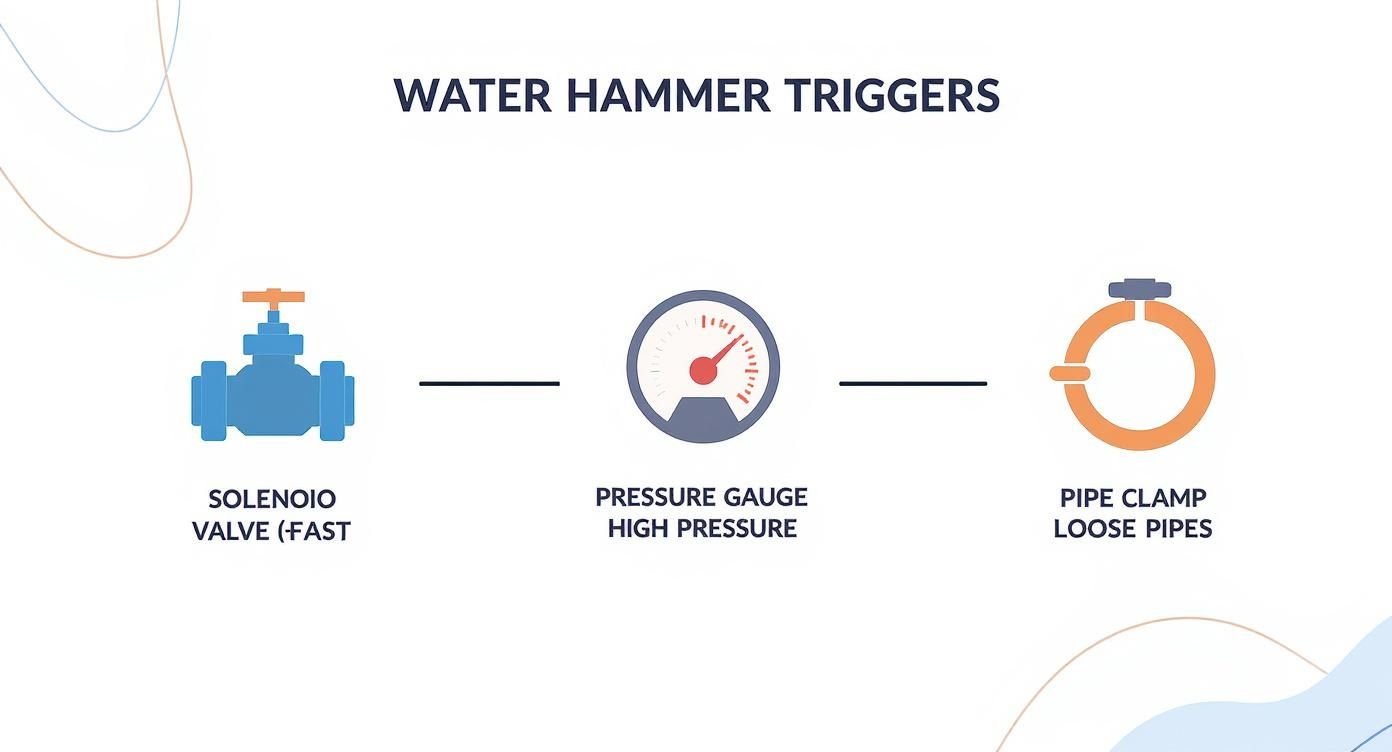
As you can see, things like fast-closing valves, high overall system pressure, and even loose pipe supports all work together to amplify the shockwave's effect. Understanding this science helps explain why certain appliances are frequent culprits and why you need to look at your home's entire plumbing system to find a real, lasting solution.
How to Diagnose Water Hammer in Your Home
So you hear a loud noise in your walls—but is it actually water hammer? Before you can tackle the fix, you have to be sure you’ve got the right problem. The most obvious clue is the sound itself. It’s not just any old noise, but a very distinct, sharp bang that happens immediately after a valve slams shut.
You'll most likely hear it when an appliance with an automatic valve, like your washing machine or dishwasher, abruptly stops its fill cycle. It can also happen when you quickly turn off a single-handle faucet. This specific timing is what really separates water hammer from other common plumbing noises.
Listening for the Telltale Signs
Not all pipe noises are created equal. It's easy to mistake a hydraulic shockwave for something else, but each sound points to a different issue with its own solution.
Here’s what you should be listening for to confirm it’s water hammer:
- A Single, Sharp Bang: This is the classic sign. It happens a split-second after an appliance cuts off the water.
- Multiple Rapid Knocks: Sometimes the shockwave bounces back and forth, causing a quick series of thuds that fade out.
- Vibrating or Shuddering Pipes: You might hear a deep vibration that you can almost feel traveling through the wall.
This is a world away from the gurgling sound of air trapped in your pipes or the slow creaking noise that comes from pipes expanding with hot water. The key is the immediate connection to a valve closing.
Beyond the Noise: What to Look For
Your ears are your best diagnostic tool here, but your eyes can help confirm the diagnosis. Visibly shaking pipes are a dead giveaway. You might also notice that the pipe fittings look strained, or you could even spot small drips around the joints—an early sign of damage from all those repeated pressure spikes.
If you suspect slow leaks are happening behind your drywall, it's a good idea to get a professional inspection to see what's going on. You can learn more about how specialists handle this in our guide to residential leak detection in St. Petersburg.
The sheer force of water hammer is something engineers have to account for even in massive systems. In hydroelectric power plants, for instance, they use specialized materials designed to absorb these intense pressure waves and prevent catastrophic failures. You can learn more about how engineers mitigate water hammer on measuremonitorcontrol.com.
Effective Solutions to Stop Pipe Banging for Good
Figuring out what’s causing that disruptive bang is the first step, but silencing it for good is the real goal. Luckily, there are a few highly effective ways to absorb that shockwave and bring some peace and quiet back to your home. The fixes range from simple installations you can do yourself to adjustments that are better left to a professional.
The most direct approach is installing a water hammer arrester. Think of this little device as a shock absorber for your plumbing. It's basically a sealed chamber filled with pressurized air that gives the water's momentum a safe place to go, cushioning the surge instead of letting it crash against your pipes.
Arresters work best when they're installed right near the appliance causing the trouble, like on the hot and cold water lines for your washing machine. If you're planning a bigger project, installing new plumbing correctly from the start can help you avoid water hammer issues down the road.
Check and Adjust Your Water Pressure
Another critical factor is your home's water pressure. As we covered earlier, anything over 80 PSI drastically magnifies the force of a hydraulic shockwave. You can easily check this yourself with an inexpensive pressure gauge that just screws onto an outdoor hose spigot.
If the reading is too high, your pressure-reducing valve (PRV) might need an adjustment or even a replacement. This is a bell-shaped device, usually located where the main water line enters your house. While some handy homeowners can adjust it themselves, it's often a good idea to call a plumber to make sure it's set correctly without creating other problems.
A properly functioning PRV doesn’t just stop water hammer. It also helps your appliances and fixtures last longer by reducing the overall stress on your entire plumbing system.
Secure Loose and Rattling Pipes
Finally, don't forget to check the pipes themselves. If you can get into your basement or crawlspace, take a look for any pipes that are visibly loose. When that pressure wave hits, an unsecured pipe will vibrate and slam against the wooden framing, which makes the noise a whole lot worse.
Use pipe clamps or straps to anchor them firmly to the joists or studs. It’s a simple mechanical fix, but it can make a huge difference by stopping that secondary impact. Consistent plumbing maintenance is always a smart move, especially in places that see a lot of environmental stress. For more on that, take a look at our guide on plumbing maintenance in hurricane-affected areas.
Answering Your Questions About Water Hammer
Even after trying a few fixes, you might still have some lingering questions about that banging in your pipes. Let's clear up a few of the most common ones we hear from homeowners.
Can Water Hammer Go Away on Its Own?
Unfortunately, water hammer is a mechanical issue, and it almost never fixes itself. In fact, ignoring it is the worst thing you can do. The repeated stress from those shockwaves will gradually weaken pipe joints, valves, and connections, making the problem much worse over time. The only real solution is to take action.
Is Water Hammer Dangerous?
While the noise itself isn't a direct threat to you, it's a serious risk for your home. Those intense pressure spikes can eventually cause pipes to burst, leading to major water damage, mold, and some seriously expensive repairs. Think of that banging sound as an early warning signal for a much bigger headache down the road.
Why Do I Only Hear Banging in Winter?
This is a really common observation, and there's a simple reason for it. Colder water is denser, which means it has more mass and momentum as it rushes through the pipes. When that heavier flow is stopped suddenly, it creates a far more powerful and noticeable shockwave. On top of that, cold weather can cause pipes to contract slightly, sometimes making them a bit looser in their clamps, which only amplifies the banging noise.
A single water hammer event can create a pressure spike of over 1,000 PSI in a residential plumbing system. That's more than ten times the normal operating pressure your pipes were ever designed to handle.
This incredible force is exactly why finding and fixing the root cause is so critical to protecting your home’s entire plumbing system.
If you're tired of hearing that banging in your walls and want a professional solution, the expert team at Heatwave Air Conditioning, Plumbing, & Electric is here to help. Contact us today for a professional plumbing inspection!