
Ever wonder what happens behind the walls before the drywall goes up on a new home or a major remodel? That’s where the plumbing rough-in comes in. It’s the critical first step in building your home's entire plumbing network from scratch.
Think of it as the circulatory system for your house. We're essentially installing all the arteries and veins—the water supply lines, drain pipes, and vent stacks—that will eventually serve every sink, shower, and toilet. This all happens while the wall studs and floor joists are still exposed.
The Invisible Network Behind Your Walls
Before any insulation or drywall can be installed, a licensed plumber has to lay out this complex "invisible network." It’s far more than just connecting a few pipes; it's a process that demands meticulous planning and precision.
This phase takes place right after the home's frame is built. Keeping everything open is non-negotiable, as the entire system has to be thoroughly tested for leaks and pass a strict inspection before anything gets covered up.
Core Purpose of the Rough In
The main goal here is to get the entire plumbing infrastructure installed perfectly from the very beginning. This covers three essential systems:
- Water Supply Lines: We run the hot and cold water lines from your home's main water source to the precise location of every future fixture, from the kitchen sink to the master shower.
- Drainage System: This involves installing all the drain pipes that rely on gravity to carry wastewater away from your fixtures and safely into the city sewer or your septic system.
- Vent Stacks: We also set up vent pipes that run from the drain system all the way through the roof. These are crucial for allowing air to enter the pipes, which prevents those annoying gurgling sounds, slow drains, and—most importantly—stops dangerous sewer gases from creeping into your home.
The success of your entire plumbing system for decades to come rests on getting this single stage right. A flawless rough in is the bedrock of a reliable, leak-free, and clog-resistant home, preventing major headaches down the line.
The process of a plumbing rough-in lays out the water supply, drainage, waste, and vent pipes before the walls are ever finished. For homeowners here in sunny Florida—especially in Tampa Bay, Sarasota, and Fort Myers—getting this right is absolutely essential. We've been managing these projects for nearly 20 years, so we know how to navigate the local codes and unique climate considerations like the back of our hand. If you're curious, you can discover more insights about the cost and process of a plumbing rough-in to get a better handle on what to expect for your project.
Plumbing Rough In At a Glance
To make it even clearer, this table breaks down the core concepts of a rough-in.
| Concept | Description | Why It Matters |
|---|---|---|
| Water Supply | Pipes that deliver clean hot and cold water to fixtures. | Ensures strong, consistent water pressure for showers, sinks, and appliances. |
| Drains & Waste | Pipes that use gravity to carry wastewater away from the home. | Proper installation prevents clogs, backups, and water damage. |
| Venting System | Pipes that allow air into the drainage system, equalizing pressure. | Stops sewer gas from entering your home and helps drains flow smoothly. |
| Fixture Placement | Stub-out pipes are placed precisely where sinks, toilets, and showers will go. | Guarantees your final fixtures will fit and connect without major modifications. |
Ultimately, the rough-in stage is all about foresight and precision. A professional plumber makes sure every pipe is sloped correctly, every connection is rock-solid, and the entire layout perfectly supports the final design of your kitchen or bathroom.
To learn more about how our expert team handles these critical installations, check out our professional plumbing services.
Understanding the Key Components of a Rough-In
To really get what a plumbing rough-in is, it helps to break it down into its core parts. Think of it as a three-part system where everything has to work in perfect harmony: the water supply, the drains, and the vents. If one of these is out of tune, the whole system will struggle.
This concept map shows how these three systems come together during the rough-in stage.
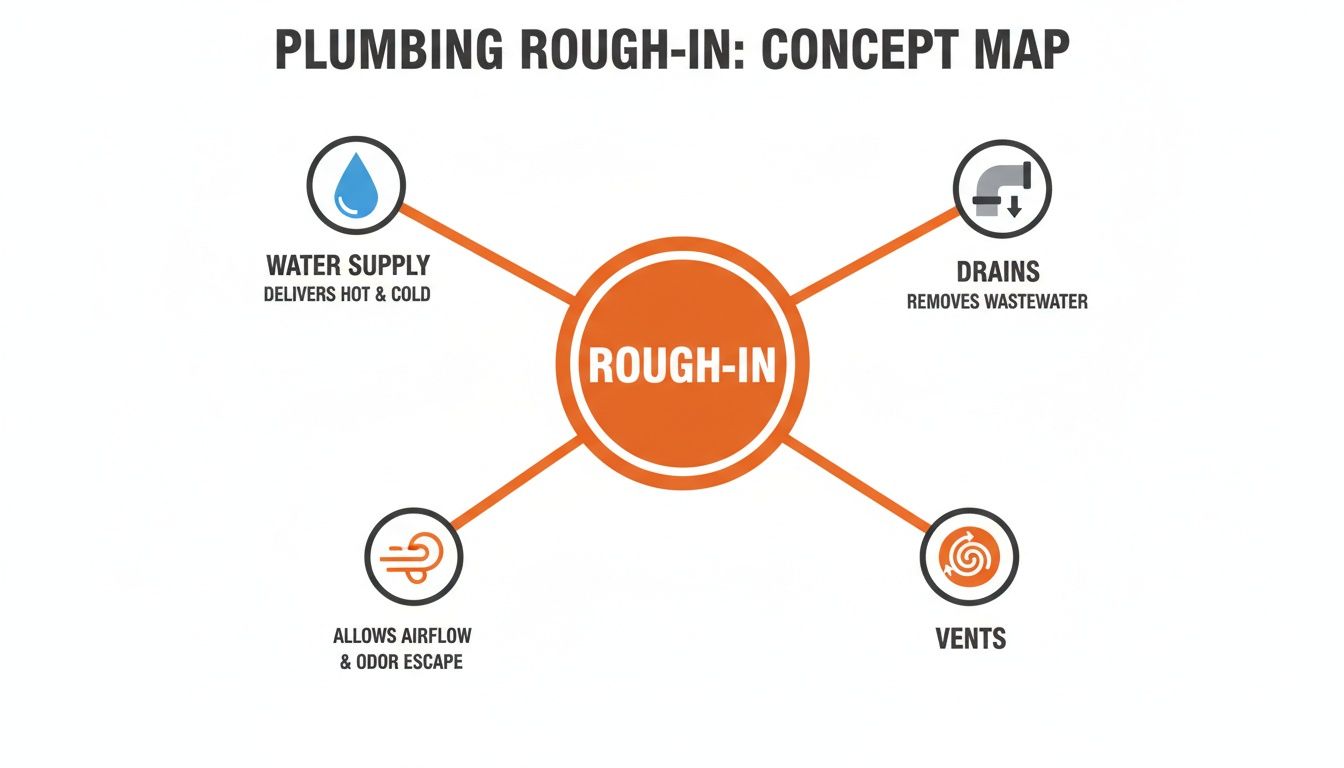
As you can see, a successful rough-in isn't just about pipes; it’s about the careful planning and integration of these three interconnected elements long before any walls go up.
Water Supply Lines: The Lifeline
First up are the water supply lines. These are the pressurized pipes that bring clean hot and cold water to every sink, shower, and toilet in your home. During the rough-in, we run separate lines—usually PEX or copper—from your main water source to the precise location where each fixture will eventually be installed.
These lines end with what we call "stub-outs," which are just capped pipes sticking out of the wall frame. Later on, during the finish plumbing stage, these are where your faucets and shutoff valves get connected. Getting the placement right is absolutely critical. Even being off by an inch can mean that beautiful new vanity you bought won't fit.
Drain Lines: The Unsung Hero
Next, you have the drain-waste-vent (DWV) pipes. Unlike the pressurized supply lines, the entire drainage system runs on good old-fashioned gravity. This is why getting the slope just right is one of the most important parts of a plumbing rough-in.
The code requires a very specific angle: a ¼-inch drop for every horizontal foot of pipe. This is the magic number. It's steep enough to keep water and waste flowing smoothly but not so steep that water rushes ahead and leaves solids behind, which is a recipe for clogs.
An incorrect drain slope is one of the biggest reasons people have chronic plumbing issues. A tiny mistake here can lead to constant backups, slow drains, and a whole lot of frustration and expensive repairs down the road.
When a professional gets this gravity-fed system right, you'll never even think about it. It just works, silently carrying wastewater away from your home. This is why a proper pressure test after the rough-in is so important—it can catch over 90% of potential leaks before the drywall is even installed.
Vent Stacks: The Snorkel for Your Plumbing
Finally, we have the vent stacks, which are probably the most misunderstood part of the system. Every drain in your house is connected to a vent pipe that runs up through the walls and out your roof. The easiest way to think of it is as a snorkel for your plumbing.
When a large amount of water goes down a drain, air needs to come in behind it to fill the space. Without a vent, the system creates a vacuum, which leads to all sorts of problems:
- Gurgling sounds as your drains gasp for air.
- Slow drainage because negative pressure is holding the water back.
- Sewer gases getting sucked out of the P-trap, letting nasty and hazardous odors into your home.
The venting system keeps the air pressure neutral, allowing water to flow freely and keeping your home safe and smelling fresh. If your project also involves natural gas, it's just as important that those lines are installed and inspected by certified professionals. If you have any concerns about your existing gas lines, you can learn more about our St. Petersburg gas line repair services.
Estimating Your Florida Plumbing Rough In Cost
So, you're planning a project and need to figure out the plumbing rough-in cost. It’s one of those essential steps that sets the foundation for your entire renovation or new build, and getting a handle on the budget is key. Costs can really swing depending on your project, whether you're updating a single bathroom in Sarasota or mapping out the plumbing for a brand-new home in Port Charlotte.
The biggest thing that will move the needle on your final bill is the sheer scope of the job. A simple half-bath rough-in is a world away from a sprawling master suite with a freestanding tub, a walk-in shower, and a double vanity. Every fixture you add needs its own water supply lines, a dedicated drain, and proper venting, all of which adds up in materials and labor.
Key Factors That Drive the Final Price
A few key elements really shape the total cost of a plumbing rough in. Labor is a huge piece of the puzzle, often making up 40-60% of your final invoice. Here in Florida, many homes are built on a concrete slab, which can add a layer of complexity. If your plumber has to cut into that slab to run new drain lines, the price will go up—it’s a tough job that requires special equipment and a lot of skill.
Other factors that will influence your estimate include:
- Number of Fixtures: Every toilet, sink, and shower adds to the material and labor costs.
- Project Complexity: Tapping into existing plumbing is one thing; moving all the fixtures to a new wall is a much more involved process.
- Pipe Material: Your choice between modern PEX and traditional copper will definitely impact the budget.
- Permit and Inspection Fees: These are non-negotiable costs set by your local city or county.
To get a better sense of where these costs fit into the overall project, it helps to look at a realistic bathroom renovation cost breakdown and see the bigger picture.
Comparing Common Pipe Materials for Your Rough In
The pipes you choose to install behind your drywall have a major impact on both the upfront cost and how well your system holds up over time. Right now, PEX and copper are the two most popular choices, and each one comes with its own set of pros and cons.
| Material | Cost Per Linear Foot | Pros | Cons |
|---|---|---|---|
| PEX | $1.50 – $4.00 | Flexible, easier and faster to install, resists corrosion. | Can be damaged by UV light before it’s installed; not suitable for outdoor use. |
| Copper | $4.00 – $12.00 | Extremely durable, very long lifespan, naturally antimicrobial. | More expensive, and requires skilled labor for soldering, which increases installation time and cost. |
PEX has quickly become a go-to for many plumbers because its flexibility can shave off a good chunk of installation time, saving you money on labor. On the other hand, copper is the time-tested premium option, known for its incredible longevity—something that can be a real selling point down the road. We can walk you through the options and help you figure out what makes the most sense for your home and budget.
For a typical bathroom remodel here in the Tampa Bay area, you can generally expect a plumbing rough-in to fall somewhere between $1,500 and $4,000. That number can definitely climb with more complex layouts or if you're installing high-end, custom fixtures.
Looking at the bigger picture, national costs for a full bathroom rough-in can land anywhere from $3,000 to $20,000, with fixture selection and pipe materials being the main variables. It's smart to invest in getting the rough-in done right from the start. In Florida’s hot housing market, skimping now can lead to future repairs that often cost 40% more than doing it correctly the first time.
At the end of the day, the only way to know for sure what your project will cost is to get a detailed, itemized estimate from a licensed professional. A qualified plumber can come out, take a look at your home’s layout, talk through your plans, and give you a firm quote. If you’re ready to start budgeting, check out our expert plumbing services in Port Charlotte—we’re always happy to provide a free estimate.
Navigating the Rough In Timeline and Inspection
A home build or major renovation is a tightly scheduled operation. Think of it like an orchestra where every instrument has to come in at just the right moment. Your plumbers get their big solo right after the framing is up, but before any insulation or drywall goes in.
This "open wall" phase is absolutely critical. It’s the one and only time plumbers have the clear access they need to run every single water line, drain pipe, and vent through the studs and joists. Trying to make changes after the walls are closed is a recipe for a much bigger, more expensive headache.

The Typical Rough In Timeline
So, how long does this all take? For a standard-sized home or a gut-renovated bathroom, a professional crew will typically spend 3 to 5 days on the plumbing rough-in.
This isn’t a rush job. It’s about precision. For example, just moving a shower to another wall and running the new PEX lines can take a team several hours. The goal is to install every pipe and secure every connection perfectly, knowing that the city inspector is coming next.
The All-Important Inspection Phase
Once the last pipe is in place, all work on the project comes to a halt. Before anyone can even think about hanging drywall, a municipal inspector has to come to the site, review the work, and give it their stamp of approval. This is the most critical checkpoint of the whole build.
The rough-in inspection is your home's first line of defense against future plumbing catastrophes. It’s a non-negotiable step that ensures your home is not only safe and functional but also fully compliant with local Florida building codes, protecting you from legal issues and catastrophic failures.
Inspectors are trained to spot tiny mistakes that could turn into massive problems down the road. That’s why all the pipework must be left completely exposed and pressurized for them to see. An experienced plumber knows exactly what the inspectors are looking for and preps the site to pass the first time, preventing delays that can derail your entire project schedule.
Here’s a look at what an inspector checks for:
- Correct Pipe Slopes: They'll get out their level to make sure all drain lines have the required ¼-inch per foot slope so that wastewater actually flows away from your house.
- Proper Venting: They confirm every fixture has a proper vent. This is what stops sewer gases from getting into your home and helps your drains flow smoothly.
- Secure Connections: Every joint is checked for integrity to ensure it's watertight. This usually involves a pressure test where the water lines are filled with air or water to prove they don’t leak.
- Code Compliance: The inspector verifies that all the materials and the way they were installed meet the current building codes for your specific area in Tampa Bay.
Failing an inspection means all work stops. The issues have to be fixed and a re-inspection has to be scheduled and passed, which can add frustrating and costly delays to your project. A professional team like Heatwave manages this whole process for you, making sure the job is done right so it passes the first time. Getting ahead of problems is always the best approach, which is why services like residential leak detection in St. Petersburg, FL are so important for a system's long-term health.
Common Rough In Mistakes and How to Avoid Them
The plumbing rough-in stage is all about precision. What’s hidden behind your brand-new drywall matters immensely, and even tiny mistakes here can mushroom into catastrophic failures down the road. It's a domino effect—one little miscalculation during the rough-in can easily topple your entire project timeline and budget.
Most of these problems come from a simple lack of experience or a misunderstanding of plumbing physics. We’ve seen plenty of well-intentioned DIY attempts that turn into "project rescues," costing the homeowner way more to fix than if they'd hired a pro from the get-go.
Incorrect Drain Slopes
One of the most common—and damaging—mistakes we see is getting the slope on drain lines wrong. Your entire drain-waste-vent system is gravity-fed. It relies on a very specific gradient to work, and without it, you're just asking for constant clogs.
The universal code requirement is a ¼-inch drop for every horizontal foot of pipe. There’s a good reason this measurement is so critical:
- Too Steep a Slope: If the pipe is angled too sharply, liquid will zip right past the solid waste. The solids get left behind, and voilà, you’ve got a blockage in the making.
- Too Shallow a Slope: If the pipe is too flat, the flow won’t have enough oomph to carry waste away. This leads to frustrating backups and slow drains.
A professional plumber never guesses. We use levels and precise measurements to make sure every single drain line uses gravity as an ally, not an enemy. You can find more details on how to diagnose these issues in our guide to common plumbing problems and their solutions.
Improper Venting
Another huge error is improper or completely missing vent lines. As we mentioned, vents are the snorkels for your plumbing system, letting air in to keep the pressure equalized. When venting isn’t done right, the results are immediately and unpleasantly obvious.
Without proper venting, a vacuum forms every time you drain a sink or flush a toilet. This suction can pull the water right out of the P-traps under your sinks—the very things designed to block sewer gas from entering your home. The result? A house filled with foul, and potentially hazardous, smells.
A "silent" plumbing mistake like improper venting doesn't just create bad smells; it can allow harmful gases like methane and hydrogen sulfide to seep into your living spaces. This isn't just a nuisance—it's a genuine health and safety risk that certified plumbers are trained to prevent.
Misaligned Pipe Placement
Finally, a surprisingly frequent mistake is simply putting pipes in the wrong spot. The rough-in phase is about planning for the future. You have to know the exact dimensions and placement of the vanity, toilet, or shower you’ll be installing months from now.
If the drain stub-out for your vanity is off by just a couple of inches, you might discover the sink won't fit, or worse, you have to cut into your beautiful new cabinet to make it work. An experienced plumber works directly from fixture specification sheets, ensuring every pipe is placed with millimeter-perfect accuracy for a seamless finish plumbing stage later on.
Why Trust a Professional for Your Plumbing Rough In
After seeing the complexity involved—from precise drain slopes to critical venting systems—it’s easy to see why a plumbing rough-in isn’t a weekend DIY project. This isn’t like painting a room or swapping out a light fixture. This is foundational work, and if it’s done incorrectly, the results can be catastrophic.Think of it this way: would you try to pour your home’s concrete foundation yourself after watching a few online videos? Probably not. A plumbing rough-in is the foundation for your home’s entire water system. Getting it wrong can jeopardize your house's integrity, leading to mold, hidden water damage, and even structural issues down the road.
The Value of Certified Expertise
Choosing a professional plumbing partner is about more than just hiring someone with a wrench and a truck. It’s an investment in your peace of mind and the long-term reliability of your home. A seasoned, certified technician brings a deep understanding of local building codes right here in Tampa Bay, ensuring every pipe and connection passes inspection the first time.
This expertise is your best defense against the common mistakes we've talked about. A pro knows that using PEX piping is often faster and more durable for supply lines and understands exactly how to slope drains to prevent clogs. They work from fixture spec sheets to guarantee every stub-out is placed with millimeter accuracy, avoiding the frustration of a vanity that won’t fit.
When our technicians tackle a project, for example, they aren't just installing pipes. They are meticulously mapping out a system designed for longevity and efficiency, protecting your home and family for decades to come.
Entrusting your plumbing rough-in to a professional is the single most important decision you can make to guarantee the safety, compliance, and functionality of your home's plumbing. It turns a potential source of immense stress into a secure, reliable asset.
Making Professional Work Accessible
We get it—budget is always a key consideration for any home project. That's why a hallmark of a reliable plumbing partner is transparency and a commitment to making high-quality work accessible. You should never have to guess what your project will cost.
At Heatwave, we provide several key benefits to empower homeowners:
- Free, Accurate Estimates: We believe you should have a clear and detailed understanding of the costs before any work begins, with no hidden fees or surprises.
- Certified and Insured Technicians: Our team is fully licensed and insured, which protects you from any liability and guarantees the work meets the highest professional standards.
- Financing Options: We offer flexible financing plans to help you manage the cost of your project, ensuring you don’t have to compromise on quality for this essential work.
Ultimately, hiring an expert is the smartest financial decision. The cost to "rescue" a failed DIY rough-in is almost always significantly higher than the cost of doing it right from the start. Trusting a professional ensures your home's invisible plumbing network is built for a lifetime of flawless performance.
Frequently Asked Questions About Plumbing Rough Ins
Even after you’ve got the basics down, it’s completely normal to have more questions about the plumbing rough-in. This is a massive part of any remodel, and since it sets the stage for everything that comes after, you want to get it right.
We get a lot of the same questions from homeowners planning a project, so we’ve gathered the most common ones here. Getting clear, direct answers will help you move forward with confidence and avoid any costly surprises down the road.
What Is the Difference Between a Rough In and Finish Plumbing?
This is easily one of the most common points of confusion we clear up for homeowners. The best way to think about it is like a two-act play.
The plumbing rough in is Act One. This is all the critical work that happens behind the scenes while the walls are still open. Our plumbers install the entire network of pipes for water supply, drains, and vents that will service your new bathroom or kitchen. At the end of this stage, all the pipes are capped off and tested, waiting for the next step.
Finish plumbing is Act Two. This happens much later, after the drywall is installed, the floors are in, and the walls are painted. A plumber returns to install all the fixtures you’ll see and use every day:
- Connecting the toilet
- Installing sinks and faucets
- Putting in the showerheads and tub spouts
- Hooking up appliances like dishwashers
The rough-in builds the hidden skeleton, and the finish stage connects the beautiful, functional fixtures that bring your new space to life.
Can I Change My Layout After the Rough In Is Done?
While it's technically possible, changing your mind after the rough-in is complete is one of the most disruptive and expensive decisions you can make during a renovation. Once the rough-in pipes are installed and pass inspection, the next step is usually closing up the walls with insulation and drywall.
Deciding to move a fixture at that point isn't a simple tweak. If you wanted to shift a toilet just a few feet over, a plumber would have to:
- Cut open the brand-new drywall and possibly tear up the flooring.
- Reroute the existing water and drain lines.
- Make sure the new drain path maintains the crucial ¼-inch per foot slope required by code.
- Patch the subfloor, walls, and maybe even the ceiling.
- Get a new plumbing inspection for the modified work.
This is exactly why careful planning before we start is so important. One post-rough-in change can add thousands of dollars and weeks of delays to your project. Locking in your layout from the very beginning is the best way to protect both your budget and your timeline.
How Do I Know if My Old Plumbing Needs a New Rough In?
For homeowners in older Florida houses, this is a critical question. If you’re already planning a major remodel, it’s the perfect time to evaluate the health of your home’s existing plumbing. Tying brand-new fixtures into an old, corroded system is just asking for problems.
Keep an eye out for these tell-tale signs that a full replacement and new rough-in is probably the smartest move:
- Frequent Leaks or Low Water Pressure: These are classic symptoms of pipes that are old, clogged, or failing.
- Visible Corrosion: If you see rust spots or greenish discoloration on any exposed pipes (like under a sink), you can bet the pipes hidden in your walls are in the same shape—or worse.
- Outdated Materials: Many homes built before the 1970s used galvanized steel or cast-iron pipes. These materials are long past their life expectancy and are notorious for causing rust-colored water and major blockages.
A proper plumbing rough-in often demands the skill of licensed experts who understand how to manage complex installations and meet all local codes. That's why it’s always wise to consult with professional plumbing services. An expert can perform a thorough assessment and tell you whether your old system is safe to build on or if a complete upgrade is the better long-term investment.
Ready to start your project with confidence? The expert technicians at Heatwave Air Conditioning, Plumbing, & Electric are here to ensure your plumbing rough-in is done right the first time. Contact us today for a free, no-obligation estimate!