
An air conditioner tune-up is a lot like an annual physical for your cooling system. It's a proactive maintenance service designed to inspect, clean, and optimize everything for peak performance—before a problem pops up. The whole point is to catch small issues early, ensuring your AC runs efficiently and reliably, rather than just waiting to fix something after it breaks.
What an AC Tune-Up Really Means for Your Home
Don’t mistake a tune-up for a quick filter change. This is a comprehensive checkup where a qualified technician dives deep to make sure every part of your air conditioning system is working just right. Honestly, it's the smartest way to protect your home's comfort system and avoid that sinking feeling when your AC gives out during a sweltering summer heatwave.
Think of the service in three core steps: inspecting, cleaning, and fine-tuning.
AC Tune Up at a Glance
Here’s a quick breakdown of what a technician focuses on during a tune-up. Each step plays a critical role in keeping your system healthy.
| Component | Primary Goal |
|---|---|
| Inspection | Methodically check all electrical connections, test safety controls, and examine mechanical parts for signs of wear and tear. |
| Cleaning | Remove dirt and grime from key components like the evaporator and condenser coils, which is a major cause of inefficiency. |
| Fine-Tuning | Calibrate the system for optimal performance by lubricating moving parts, checking refrigerant levels, and ensuring proper airflow. |
A properly maintained air conditioner doesn't just last longer and run more reliably—it's also safer for your family. The goal is to catch minor issues before they have a chance to snowball into expensive, emergency repairs.
Ultimately, this service ensures your entire HVAC system works together as a cohesive unit. If you're new to home maintenance, getting a handle on what HVAC stands for can give you some valuable context. For a wider view of general AC upkeep, this homeowner's guide to AC services and maintenance in the UAE offers some great additional insights.
Scheduling a tune-up is simply an investment in reliability and efficiency for the cooling season ahead.
Your Comprehensive AC Tune Up Checklist
So, what really happens when a technician shows up for an air conditioner tune-up? It’s a lot more involved than just a quick look-see. A professional service is a deep dive into the electrical, mechanical, and performance guts of your system to make sure everything is working together just right.
Think of it as a multi-point inspection for your AC, designed to catch small issues before they blow up into big, expensive problems. This visual gives you a great breakdown of what any quality tune-up should cover.
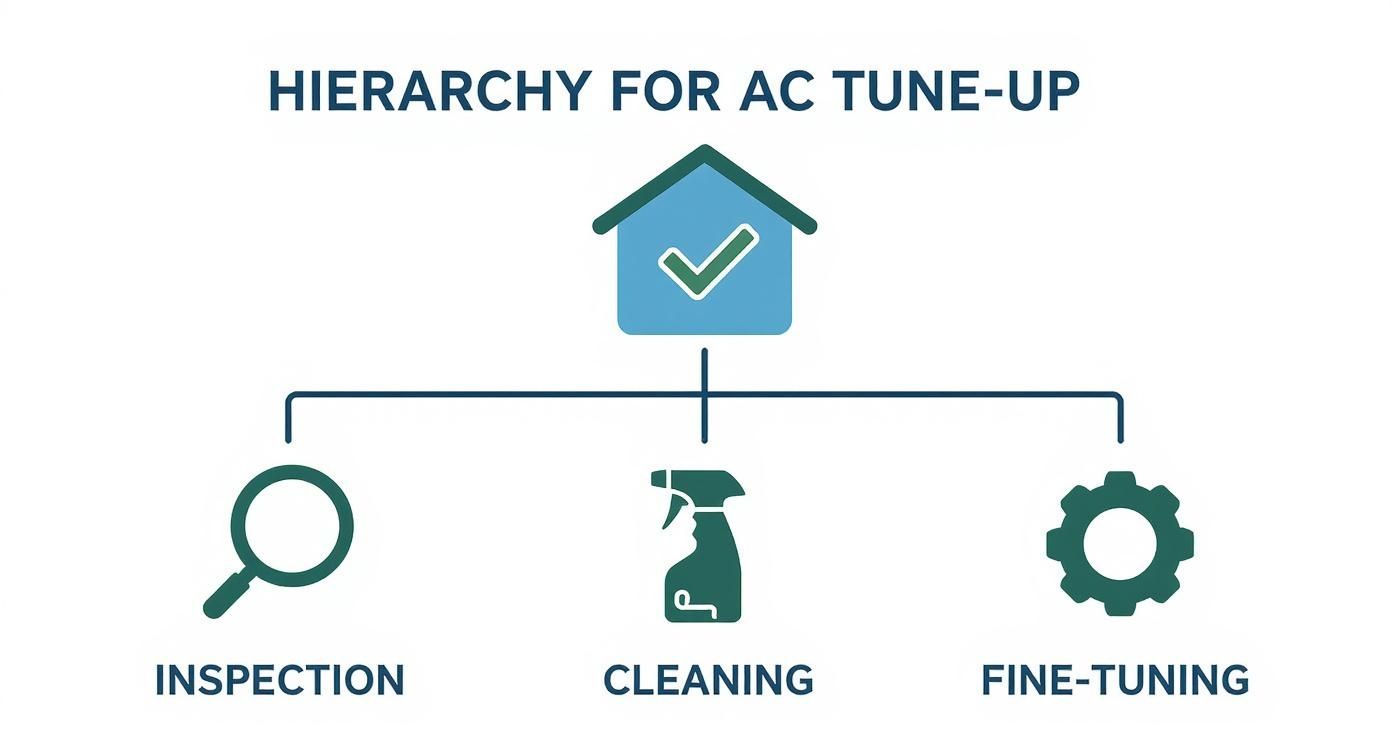
As you can see, a solid tune-up is a mix of inspecting, cleaning, and fine-tuning. The end goal? A healthy, efficient system that keeps you cool without breaking the bank. Let’s pull back the curtain and see what that actually looks like.
Electrical Safety and Component Checks
First up, your technician will zero in on the electrical system—the brain and nervous system of your entire AC unit. Faulty connections or dying parts aren't just inefficient; they can be genuine safety hazards.
- Inspect and Tighten Wiring: Loose wires can cause electrical shorts, fry expensive components, or even pose a fire risk.
- Test Capacitors: These little cylinders give the motors the kick they need to start and keep running. A weak capacitor can lead to total motor failure, so we test them to make sure they’re holding a proper charge.
- Check Contactors: This is basically a heavy-duty switch that lets electricity flow to your outdoor unit. If it’s pitted or worn out, your AC might not turn on at all.
Mechanical Health and Cleaning
Next, we shift gears to the physical parts that do all the hard work. When it comes to your AC's mechanical components, dirt and wear are public enemy number one, directly crippling its ability to cool your home.
A clean air conditioning system can be up to 15% more efficient than a dirty one. That buildup of dust, leaves, and grime forces your unit to work much harder for the same cooling effect, which you’ll definitely notice on your energy bill.
Here are the key cleaning and mechanical tasks on the list:
- Cleaning the Condenser Coils: The coils in your outdoor unit are responsible for releasing heat outside. When they're caked in dirt, they can't do their job, causing the system to overheat and lose efficiency fast.
- Cleaning the Evaporator Coils: These are the coils inside your home that absorb heat. A layer of dust here chokes airflow and can even become a breeding ground for mold.
- Lubricating Moving Parts: Just like any engine, motors and bearings need proper lubrication to cut down on friction and prevent them from wearing out too soon.
- Clearing the Condensate Drain: Algae and sludge love to clog up the drain line. When that happens, water backs up and can cause some serious water damage inside your home.
Cooling Performance and Fine-Tuning
Finally, the technician will put it all together and fine-tune the system's performance. This is the step that makes sure every component is working in perfect harmony to deliver maximum cooling power as efficiently as possible. It's where a tune-up really pays for itself.
Technicians will check refrigerant levels to ensure they meet the manufacturer's specs—low levels mean there's a leak somewhere and your cooling power will suffer. They'll also measure airflow and test the thermostat’s calibration to confirm it’s reading the room temperature correctly and telling the system what to do.
While these professional checks are crucial, there’s plenty homeowners can do, too. Getting familiar with the top 5 AC maintenance tips can help you keep your system running like a champ between professional visits.
The Real-World Benefits of Regular AC Maintenance
Understanding what a technician does during an AC tune-up is one thing. But connecting those tasks to your wallet and your peace of mind? That’s what really matters. Think of regular maintenance not as just another expense, but as a smart investment that pays you back in three huge ways: lower energy bills, a longer-lasting system, and comfort you can count on.

The first thing you’ll likely notice is a drop in your monthly cooling costs. When a technician scrubs the grime off your condenser and evaporator coils, they’re removing a thick blanket of gunk that forces your unit to work overtime just to keep up. That simple cleaning, plus ensuring refrigerant levels are just right, gives your system’s efficiency a direct boost.
Lower Bills and Longer Lifespan
Picture a dirty AC unit as trying to run a marathon with a heavy backpack on—it takes way more energy to do the same job. By taking that weight off, the system simply uses less electricity to cool your home. It’s that straightforward.
Regular AC tune-ups can seriously improve energy efficiency, often leading to savings of 15% to 25% on your cooling costs. Industry studies show that skipping maintenance can slash an AC unit’s efficiency by up to 5% per year, sometimes even causing the whole system to fail early.
Beyond saving money each month, annual maintenance also stretches the lifespan of your unit. An air conditioner is a major home investment, and a tune-up is the single best way to protect it. By catching and fixing small issues like a worn-out capacitor or frayed wire, you stop them from snowballing into a catastrophic failure that ends in a premature—and very expensive—replacement. You can dive deeper into the long-term benefits of HVAC maintenance in our detailed guide.
Uninterrupted Comfort and Peace of Mind
Finally, one of the most underrated benefits is sheer reliability. Nothing ruins a summer day faster than your AC dying during a sweltering Florida heatwave. That’s more than an inconvenience; it can be a real emergency.
An annual tune-up gives you the peace of mind that comes from knowing your system has been professionally inspected and is ready to handle the summer workload without any nasty surprises. This proactive care ensures your home stays the cool, comfortable sanctuary you need it to be, right when you need it most.
How Technology Is Making AC Tune Ups Smarter

The old-school air conditioner tune-up is getting a serious upgrade. What used to be a simple checklist of inspections and cleanings is now becoming a proactive, data-driven process. The game has changed, all thanks to smarter technology.
Think of it like this: a traditional tune-up is like a doctor checking your pulse and blood pressure. A modern, tech-enabled tune-up is like getting an MRI. Technicians can now plug diagnostic tools directly into your system, giving them a real-time health report that goes way beyond what the naked eye can see. This means they can spot tiny inefficiencies or worn-out parts long before they turn into a full-blown breakdown on a hot summer day.
The Rise of Predictive Maintenance
This shift in technology is paving the way for predictive maintenance, a game-changer for homeowners. Instead of just fixing problems after your AC breaks down, technicians can now anticipate issues before they even happen. This forward-thinking approach is powered by some really cool innovations:
- IoT Sensors: Tiny sensors placed on your unit can constantly monitor things like vibrations, temperature, and how much energy it's using. If something looks off, they send an alert.
- Smart Thermostats: These devices do more than just set the temperature. They track how often your system runs and how well it performs, giving your technician a detailed history to analyze for patterns.
This isn't just a routine check anymore; it's a precise optimization. This proactive approach allows for tiny adjustments that add up to big gains in long-term efficiency and reliability.
The proof is in the numbers. The global market for these kinds of HVAC controls was valued at USD 23.96 billion in 2024 and is expected to climb to USD 39.07 billion by 2030. Homeowners are clearly seeing the value. Our guide on smart home technology and your HVAC dives deeper into how all these systems work together to keep you comfortable.
Understanding the Cost of an AC Tune Up
When you’re mapping out your home maintenance budget, it's smart to ask about the numbers. An air conditioner tune-up isn't just another bill to pay—think of it as a strategic investment in your home’s comfort and the long-term health of your system.
On average, you can expect a standard tune-up to cost somewhere between $75 and $200. Of course, that price isn't set in stone. A few key things can cause that number to shift, like how complex your AC unit is, its age and condition, and even where you live. Servicing a newer, easily accessible unit will almost always cost less than wrangling with an older system tucked away in a hard-to-reach spot.
What Your Tune Up Fee Typically Covers
So, what are you actually paying for? That standard fee covers the technician's time, their expertise, and the use of specialized diagnostic tools to give your system a complete check-up, cleaning, and calibration.
An AC tune-up is preventative medicine for your cooling system. This upfront cost is designed to help you dodge much larger, more stressful repair bills down the road by catching small issues before they become catastrophic failures.
Now, if that inspection turns up a problem, any parts or repairs needed will be an extra charge. It's important to remember that the tune-up is about prevention, not fixing existing breakdowns.
Common add-ons might include:
- Refrigerant Refills: If your system is low on refrigerant, topping it off will cost more. This is often a sign of a leak, which would be a separate repair.
- Part Replacements: Swapping out worn-out components like capacitors, contactors, or fan motors falls outside a standard maintenance visit.
This proactive approach is catching on. The global HVAC maintenance market was valued at around $78.4 billion in 2023 and is only expected to grow as more homeowners see the wisdom in preventative care. It's a massive industry built on a simple idea: it's better to maintain than to repair. You can learn more about the HVAC service market trends and see just how fast it's growing.
Your Top Questions About AC Tune-Ups Answered
Even after getting the rundown on what a tune-up includes, it's totally normal to have a few more practical questions. We get these all the time from homeowners, so we've put together some straightforward answers to help you feel confident about scheduling your next service.
Think of this as the quick-start guide to planning your AC maintenance.
When Is the Best Time of Year for a Tune-Up?
The absolute best time to schedule your AC tune-up is in the spring. Think March, April, or early May. Booking then is a smart move for a couple of big reasons.
First, you beat the summer rush. Once the heat really hits, HVAC techs get slammed with emergency calls for broken-down systems. Getting in early means you get on the schedule without a long wait.
Second, a spring service gets your air conditioner cleaned up and calibrated right before it has to go to work for the season. It’s the best way to make sure it’s ready for that first brutal heatwave, so you aren't left sweating when you need it most.
How Often Should I Get My AC Serviced?
For most homes, getting an annual tune-up is the gold standard. One professional service a year is plenty to undo the wear and tear from the previous cooling season, clear out all the gunk that’s built up, and spot small problems before they turn into expensive headaches.
An annual tune-up isn't just a friendly suggestion; it's often a requirement to keep your manufacturer's warranty valid. If you skip a year, you could be on the hook for the full cost of a major repair that your warranty would have otherwise covered.
This yearly check-up is the perfect rhythm to keep your AC running efficiently, help it last longer, and ensure it's reliable without overdoing it.
Can I Do an AC Tune-Up Myself?
While we love the DIY spirit, a full AC tune-up is a job best left to the pros. There are definitely things homeowners can and should do, like changing the air filter every 1-3 months and keeping the outdoor unit clear of leaves and yard debris.
But a real tune-up involves tasks that need specialized tools, safety training, and certification. Technicians are dealing with high-voltage electrical parts, handling refrigerant (which is a federally regulated substance), and diagnosing complex mechanical systems. Trying to tackle this yourself isn't just dangerous—it can cause serious damage to your unit and even void your warranty.
If you're seeing signs of trouble that go beyond basic cleaning, our guide on common AC problems and their solutions can help you figure out if it's time to call in a professional.
For a professional, reliable AC tune-up in Tampa Bay and Southwest Florida, trust the experts at Heatwave Air Conditioning, Plumbing, & Electric. Our certified technicians will make sure your system is ready to run at peak performance all summer long. https://www.heatwavehvac.com