
Walking outside on a sweltering Florida afternoon only to find your air conditioner encased in a block of ice is a sight that can stop any homeowner in their tracks. It’s not just alarming; it’s a clear signal that something is wrong.
Your next move is critical—not just for getting the cool air flowing again, but for protecting your entire HVAC system from catastrophic damage. Acting quickly and correctly can mean the difference between a simple fix and a wallet-busting repair.
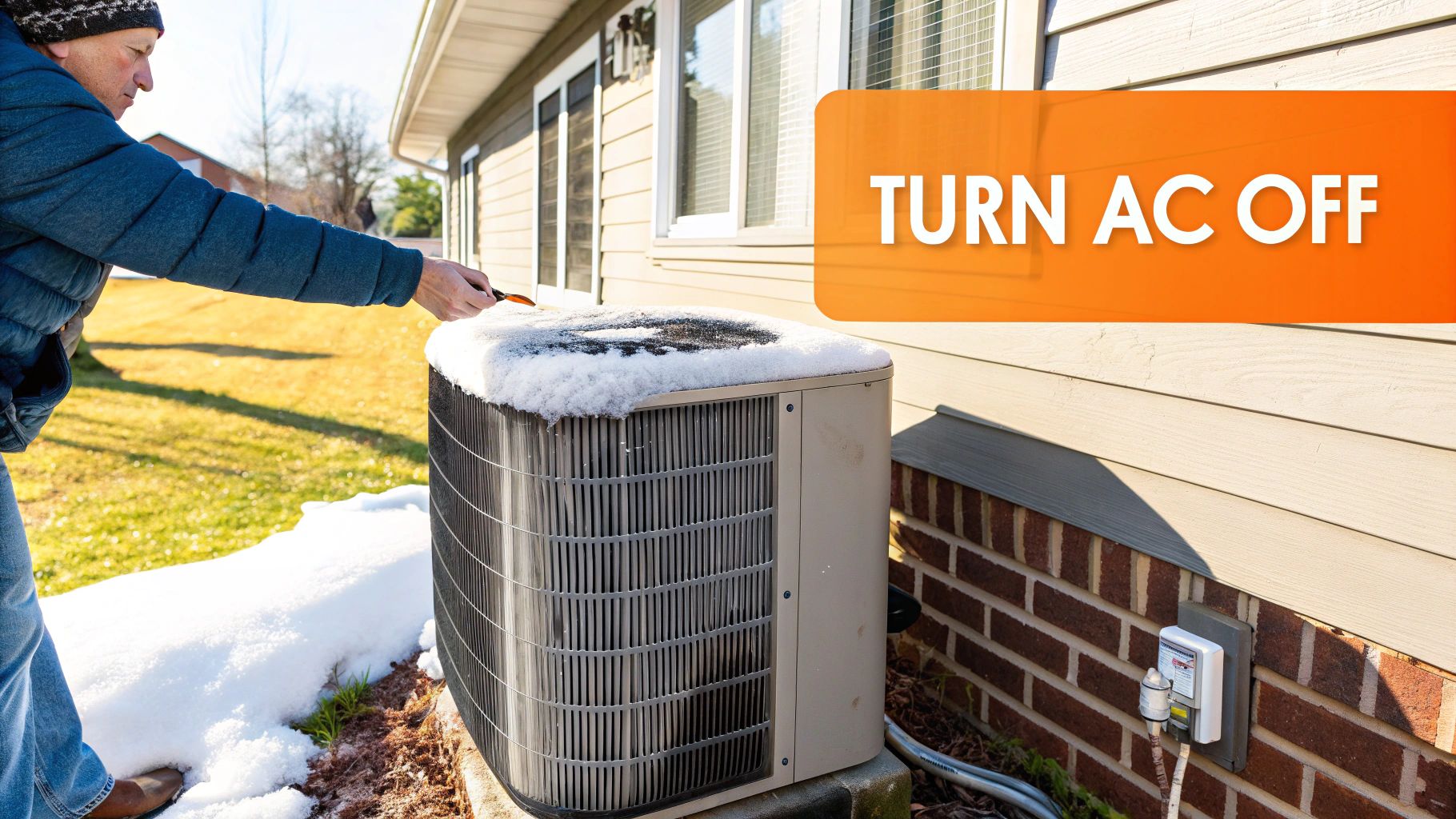
Here's a quick reference guide on the immediate, non-negotiable steps to take the moment you spot ice on your AC.
Immediate Action Plan for a Frozen AC Unit
| Action Step | Why It's Important | Risk of Inaction |
|---|---|---|
| Set Thermostat to OFF | Prevents catastrophic damage to the compressor by stopping the cooling cycle. | A burned-out compressor, which is one of the most expensive AC repairs. |
| Switch Fan to ON | Circulates warmer indoor air over the frozen coils to accelerate thawing safely. | A slow, uncontrolled melt that can lead to water overflow and property damage. |
| Shut Off Power at Breaker | Eliminates the risk of electrical shock while water is present and prevents an accidental restart. | Severe electrical hazards and potential for further system damage if it cycles on. |
These initial actions are your first line of defense. Let's break down exactly why each one is so crucial.
Turn Off the Cooling Cycle Immediately
Your very first move should be a direct line to your thermostat. Switch the system from "Cool" to "Off".
Leaving the AC running while it's frozen puts an incredible amount of strain on the compressor—the heart of your entire system. A compressor isn’t designed to pump refrigerant through a solid block of ice, and forcing it to try can cause it to burn out completely. Trust us, that’s a repair bill you want to avoid at all costs.
Pro Tip: Think of it like a frozen pipe. You wouldn't keep trying to force water through it; you'd stop the flow and let it thaw. The same principle applies here. Turning the system off removes the demand and protects its most vital component.
Switch the Fan to the ON Position
Right after you turn the cooling off, make one more adjustment at the thermostat: switch the fan setting from "Auto" to "On". This is the key to speeding up the thawing process safely and effectively.
Running the fan pulls warmer, room-temperature air from inside your house and blows it across the frozen evaporator coils. This constant airflow melts the ice much faster and more evenly than just letting it sit. It also helps manage the meltwater, reducing the risk of the drain pan overflowing and causing water damage to your ceiling or floors.
This simple one-two punch at the thermostat—Cool to Off, Fan to On—is the professional-approved first response. It costs nothing and actively works to solve the immediate problem while preventing further harm.
Shut Off Power at the Breaker for Safety
With the system off and the fan helping it thaw, there's one more safety precaution to take. Head to your home's electrical panel and flip the circuit breaker that powers your air conditioner to the "Off" position.
This completely cuts power to the unit, ensuring there’s zero risk of electrical shock while all that ice is melting into water. It also guarantees the system won’t accidentally kick back on before you’re ready.
If you’ve taken these steps and the AC freezes up again after it thaws, it's a sure sign of a deeper issue that needs a professional eye. In that case, the safest and most effective next step is to call for reliable AC repair services.
Uncovering Why Your Air Conditioner Froze Up
After you've shut the system down and the ice is melting, the big question is, "Why did this happen in the first place?" An air conditioner freezing up, especially in the thick of a Florida summer, isn't just a freak accident. It’s your AC’s way of screaming for help.
Figuring out the root cause is the only way to keep it from happening again. Fortunately, it’s usually not a deep mystery. The problem often boils down to a few common culprits that throw off the delicate balance your system needs to cool your home.
The Primary Offender: Airflow Restriction
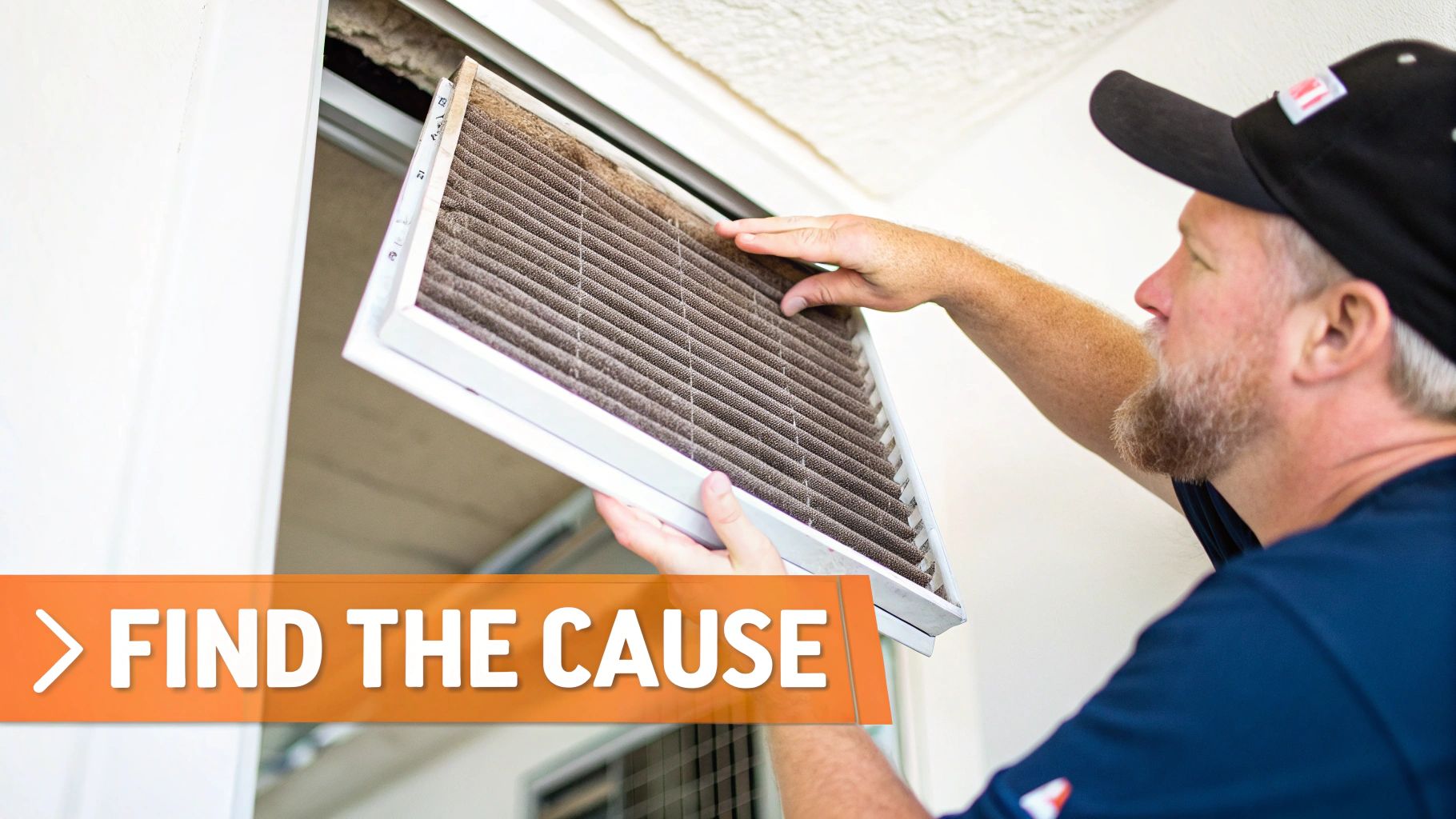
More often than not, the reason your AC turned into a block of ice is surprisingly simple: restricted airflow.
Think of your air conditioner as needing to breathe. To work its magic, it has to pull a steady stream of warm, humid air from your home across its indoor evaporator coils. When something gets in the way of that airflow, the system can't absorb enough heat.
This forces the refrigerant inside the coils to get incredibly cold, dropping below 32°F. Condensation that would normally just drip away instead freezes solid, layer by layer, until the whole coil is encased in ice.
Common things that block airflow include:
- A Dirty, Clogged Air Filter: This is offender number one, hands down. A filter packed with dust, pet hair, and dander is like trying to breathe through a pillow.
- Blocked or Closed Vents: Never underestimate the impact of a rug, a piece of furniture, or even closed louvers blocking your supply or return vents.
- A Failing Blower Motor: The fan that actually moves the air might be on its last legs, resulting in a weak, inconsistent breeze.
The Misunderstood Issue: Low Refrigerant
Another major cause of a frozen AC is a low refrigerant level. A lot of homeowners hear this and think the system just needs a "top-off," but that's almost never the real story. Your air conditioner is a sealed system, so the refrigerant shouldn't just disappear.
If your system is low, it’s a near certainty you have a leak somewhere. A refrigerant leak causes the pressure inside the system to drop. This pressure drop, in turn, makes the evaporator coils get colder than they should, leading right back to that freezing-point problem and ice buildup.
Keep an ear out for hissing sounds or look for an oily residue near your AC components. These are classic signs of a refrigerant leak. This is absolutely a job for a licensed pro—handling refrigerant requires special tools and certification.
A system with a slow leak will also struggle to cool your home, often running for much longer than usual without ever hitting the temperature you set. This is a common warning sign before a total freeze-up and is different from short cycling. You can learn more about that in our guide on what causes an air conditioner to short cycle.
Environmental and Mechanical Factors
Sometimes, the cause isn't as straightforward as a clogged filter or a refrigerant leak. Other issues, especially ones we see here in Florida, can play a part.
Believe it or not, an unseasonably cool night can trigger a freeze. If you have the thermostat set very low and the outside air temperature drops, your system might not be able to pull enough heat from the air to keep the coils above freezing.
Other mechanical gremlins like a malfunctioning thermostat or an evaporator coil caked in dirt and grime can also be the culprit. As the air conditioning market grows—projected to hit USD 342.3 billion by 2035—more systems are in use, making these maintenance issues more common for homeowners everywhere.
Safe DIY Checks You Can Perform While It Thaws
While your AC system takes a much-needed break to defrost, you don't have to just sit around and wait. This downtime is the perfect opportunity to play detective and look for some of the obvious culprits behind the freeze-up.
You'd be surprised how many common issues are simple to spot and fix yourself, no special tools required.
Start with the Air Filter
Your first stop should always be the single most common cause of restricted airflow: the air filter. When that filter gets clogged with dust and grime, it essentially suffocates your system, preventing it from pulling in enough warm air to keep the coils from icing over.
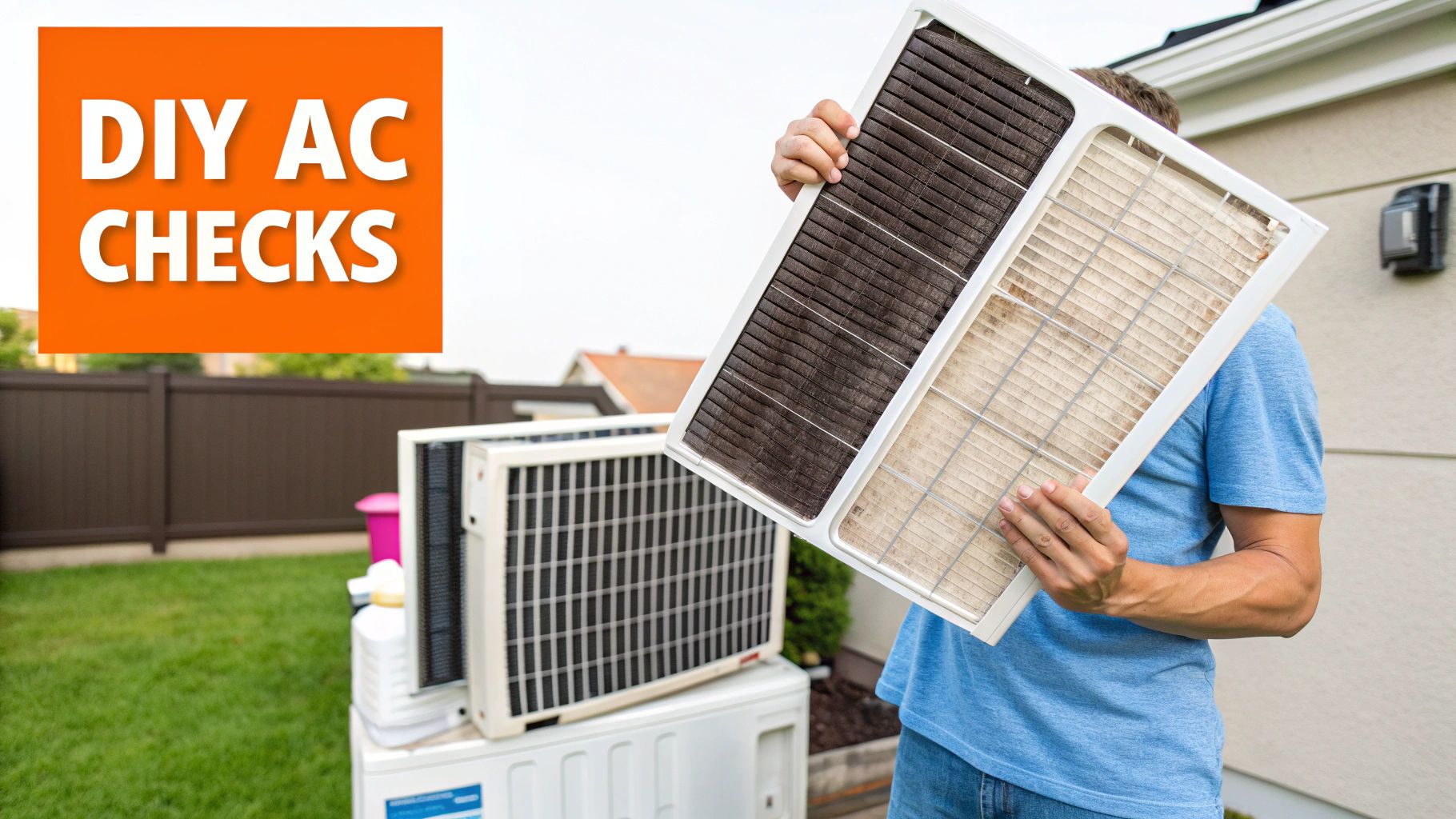
Find your air filter—it's usually in the indoor air handler or behind a large return grille in a wall or ceiling. Slide it out and hold it up to a light. Can you see light through it? If not, it's way past its prime.
A severely clogged filter is often the smoking gun. Thankfully, it's also the easiest and cheapest fix in the playbook. Just swap it out with a fresh one of the exact same size. Here in our humid Florida climate, checking your filter every 30 days is non-negotiable.
Check for Blocked Vents and Registers
Next up, take a quick walk through your house. Your mission is to make sure air can move freely everywhere. It’s a common mistake for homeowners to accidentally block vents with a new couch, heavy drapes, or even a pile of laundry.
- Supply Vents: These are the registers blowing cool air out. Make sure none are closed or blocked by furniture.
- Return Vents: This is the big grille that sucks air back into the system. It needs plenty of breathing room.
Even a single blocked return vent can starve the entire system of air, leading directly to a freeze-up. This simple walkthrough can solve a surprisingly frustrating problem. For more on this, check out our guide on common AC problems and their solutions.
Inspect the Outdoor Condenser Unit
Your HVAC system is a team, with an indoor unit and an outdoor unit that have to work together. That outdoor condenser also needs to breathe. Head outside and take a look at the big metal box with the fan on top.
It's amazing how quickly things like grass clippings, leaves, and overgrown landscaping can crowd the unit. All that debris clogs up the fins, preventing the condenser from releasing heat. This throws the whole system out of whack and can definitely contribute to freezing.
Safety First: Before you touch anything, kill the power to the outdoor unit at the circuit breaker. Use a regular garden hose on a gentle setting to rinse away dirt and grass. Never, ever use a pressure washer—it will bend those delicate aluminum fins in a heartbeat.
Look for a Clogged Condensate Drain Line
Finally, take a peek at the condensate drain line. This is the little PVC pipe that carries condensation away from your indoor unit. In Florida’s high humidity, these lines are notorious for getting gunked up with algae and sludge, causing water to back up into the drain pan.
Most modern systems have a safety float switch that shuts the whole AC off if the pan fills with water to prevent a flood. While this is a great feature, the underlying clog can still mess with proper operation and contribute to a freeze. If you can safely access it, check the drain pan for any standing water.
Knowing When to Call an HVAC Professional
While you can often solve the puzzle of a frozen AC unit with a few checks, it’s just as important to recognize when the problem is out of your hands. Knowing your limits is crucial. Pushing them can turn a manageable repair into a complete system replacement.
Certain symptoms are immediate red flags that signal a deeper, more serious issue. Attempting to fix these yourself isn't just risky for your AC unit—it can be downright dangerous for you.
Recurring Freezing After a Thaw
One of the clearest signs it's time to call for help is when the unit ices over again shortly after you've thawed it out and slapped in a new filter. If you've done everything right on your end and the ice comes back, it's a huge clue that you’re dealing with a more complex mechanical or chemical issue.
This kind of recurring problem often points directly to a refrigerant leak or a failing part, like a blower motor that just isn't moving enough air. These aren't DIY fixes. They require a licensed technician to properly diagnose and repair the system. You can learn about the many benefits of professional AC repair and see why it’s the smart choice when problems keep coming back.
Obvious Signs of a Refrigerant Leak
Refrigerant is the lifeblood of your air conditioner, but it’s also a hazardous material that should only ever be handled by a certified professional. If you notice any of these signs, it's time to pick up the phone immediately:
- Hissing or Bubbling Noises: Any strange sounds coming from the refrigerant lines or the AC unit itself could be the sound of escaping gas.
- Oily Residue: Refrigerant often circulates with a special lubricant. A leak can leave a greasy substance on or around the coils and copper lines.
- Weak Cooling Performance: If your AC runs constantly but still struggles to cool your home before it freezes, that’s a classic symptom of low refrigerant.
A refrigerant leak doesn’t just cause your AC to freeze; it harms the environment and can lead to a total compressor failure if ignored. A professional won't just "top off" the system—they will find and repair the leak, which is the only correct and legal solution.
Electrical Issues and Persistent Breaker Tripping
Finally, any problem involving your home's electrical system is a firm "no-go" for DIY repairs.
If the circuit breaker for your air conditioner keeps tripping after you reset it, there's likely a serious electrical fault inside the unit. This could be anything from a short circuit to a failing capacitor or a compressor that's drawing way too much power. These are significant fire hazards that demand immediate attention from a qualified HVAC technician or electrician.
How to Prevent Your Air Conditioner from Freezing Again
Dealing with a frozen AC is a headache no Florida homeowner wants to repeat. The good news is, the best fix is a proactive one. It all comes down to simple, consistent maintenance that keeps your system humming along, even when the Tampa Bay heat is relentless. A little prevention now saves a ton of stress and cash later.
The key is making a few straightforward habits part of your routine. You don't need to become an HVAC expert overnight—just a savvy homeowner who knows how to stop problems before they start.
Establish a Simple Maintenance Routine
Your first line of defense is also the easiest one. In our humid, dusty climate, monthly air filter changes are non-negotiable. A clean filter is the ticket to strong, steady airflow, which is the single most important factor in preventing ice from forming on your evaporator coils.
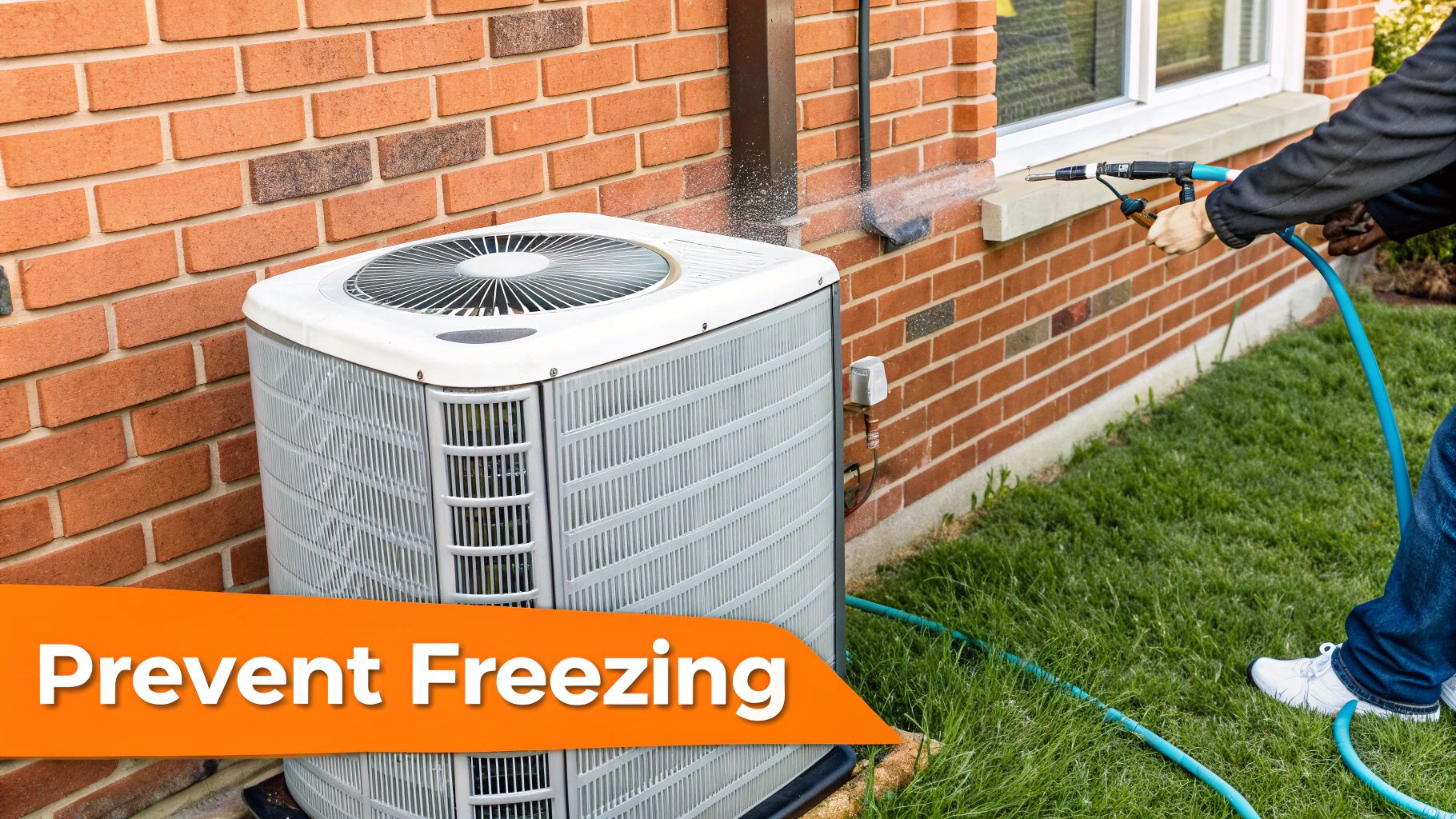
Next, get in the habit of keeping an eye on your outdoor condenser unit. It doesn't need weekly attention, but a quick rinse with a garden hose every month or so clears away the grass clippings, leaves, and dirt that can trap heat and throw your whole system out of whack.
Finally, don't forget the condensate drain line. Pouring a cup of distilled vinegar down the line every few months is a simple trick to break up any algae or sludge before it creates a clog. A backed-up drain line can lead to all sorts of operational headaches, including freeze-ups.
The Value of Annual Professional Tune-Ups
While these DIY tasks make a huge difference, they can't replace the trained eye of a professional. Think of an annual tune-up as an investment in your peace of mind and your system’s longevity. A skilled technician does so much more than just a basic cleaning.
During a professional tune-up, a technician can spot subtle issues that lead to major failures. This includes detecting small refrigerant leaks, checking electrical connections for safety, and identifying parts that are showing signs of wear and tear.
This kind of preventative service catches problems long before they have a chance to cause another freeze-up. To get a better sense of what goes into comprehensive upkeep, consulting an ultimate HVAC maintenance checklist can be a great guide for your own routine.
These proactive steps create a powerful shield against future AC freezes. You can explore more easy-to-follow strategies in our guide covering the top 5 AC maintenance tips specifically for Florida homeowners. By combining your own efforts with professional oversight, you ensure your system remains a reliable source of cool comfort all year long.
Your Top Questions About a Frozen AC Unit
Seeing your AC unit encased in ice is bound to bring up a few questions. Don't panic. Getting some clear, straightforward answers will help you handle the situation calmly and make the right call for your home and your system.
How Long Will It Take for My AC to Thaw Out?
This is usually the first thing people ask, and the honest answer is: it depends. The thawing time for a frozen air conditioner can be anywhere from a few hours to a full 24 hours.
A few things will affect how quickly that ice melts:
- Ice Thickness: A light coating of frost might be gone in an hour or two. A solid block of ice trapping the coils? That could easily take all day.
- Ambient Temperature: A hot Tampa afternoon will naturally speed things along much faster than a cool, overcast day.
- Airflow: This is the big one. Keeping the fan running to circulate room-temperature air over the coils is the best way to accelerate the process.
A Word of Caution: Please, resist the temptation to grab a sharp object to chip away at the ice or use a hairdryer to speed it up. You can easily bend or puncture the delicate aluminum fins on the coils, turning a simple fix into a much more expensive repair. Patience is your best friend here.
Can I Still Run My AC If It’s Only a Little Frozen?
That’s going to be a hard no. Even a small amount of ice is a big red flag that something is wrong with either your system's airflow or its refrigerant levels.
If you keep the cooling cycle on, you're forcing the compressor to work against a blockage. This puts an immense strain on the most expensive part of your AC, risking severe and costly damage. The moment you see ice, no matter how minor it seems, turn the cooling function off.
Is a Frozen AC an Emergency?
While a frozen AC is definitely an urgent problem—especially here in Florida—it doesn't always qualify as a middle-of-the-night emergency. As long as you've shut the system down and the ice is starting to melt, you have a bit of time to figure out the next steps.
However, you should make an emergency call if you notice clear signs of a major refrigerant leak (like hissing sounds) or if the issue is paired with electrical problems, like a breaker that won't stop tripping. Those situations can pose immediate safety risks. Sometimes, the issue is as simple as a malfunctioning thermostat. If you're thinking about an upgrade, a good smart thermostat installation guide can help you ensure your AC is getting the right signals.
If your AC freezes up again right after it thaws, or if you suspect a more serious issue is at play, don't wait for it to get worse. The expert technicians at Heatwave Air Conditioning, Plumbing, & Electric are ready to find and fix the root cause, getting your comfort and peace of mind back on track. Contact us today for reliable service you can trust. Learn more at https://www.heatwavehvac.com.