
That sudden click from the breaker box, followed by darkness in one part of your home, is an all-too-common experience. It’s frustrating, sure, but a tripped breaker is actually your electrical system’s first line of defense doing its job perfectly.
Think of your breaker panel as the vigilant traffic controller for all the electricity flowing through your house. When it senses danger from too much current, it instantly halts the flow to prevent fried appliances, damaged wiring, or even a fire. It’s not just a nuisance; it’s a critical safety feature that has just stopped a problem dead in its tracks.
Understanding Why Your Circuit Breaker Keeps Tripping
So, what causes this protective shutdown? At its core, a breaker trips when it detects an electrical current anomaly. Essentially, your circuit breaker trips for one of three main reasons: an overloaded circuit, a short circuit, or a ground fault.
Each of these faults creates a unique type of electrical surge that your breaker is specifically designed to detect and stop.
- Circuit Overloads: This is the most common reason and, thankfully, the least severe. It happens when you simply ask for more power from a circuit than it's built to deliver—like running a high-draw appliance like a space heater, vacuum, and hair dryer all at the same time on the same circuit.
- Short Circuits: This one is more serious. A short happens when a hot (live) wire makes direct contact with a neutral wire, creating a path of very low resistance. This detour causes a massive, instantaneous surge of current that the breaker shuts down immediately.
- Ground Faults: This is a particularly dangerous situation. It occurs when a hot wire touches a grounded part of your electrical system, like a metal outlet box or the frame of an appliance. This creates a path for electricity to "leak" out, posing a significant shock hazard to anyone who touches it.
Getting a handle on these differences is the first step in figuring out what’s going on in your home. You can learn more about why your circuit breaker keeps tripping and how to fix it to get a deeper understanding of these faults.
To put it in perspective, think of an overload as a slow-burn traffic jam. A 20-amp breaker might handle 25 amps for a little while before it heats up enough to trip. A short circuit, on the other hand, is a sudden, catastrophic pile-up on the freeway. The current can spike to 5 to 14 times the breaker's rating, forcing it to shut down in a fraction of a second.
To make it even clearer, let's break down these common culprits in a simple table.
Common Causes of a Tripped Breaker at a Glance
This table summarizes the three primary reasons your circuit breaker trips, helping you quickly identify the potential issue.
| Cause | What It Means | Common Signs | Action to Take |
|---|---|---|---|
| Circuit Overload | Too many appliances are drawing power from a single circuit, exceeding its safe capacity. | Breaker trips occasionally, lights dim when a large appliance turns on, outlets feel warm. | Unplug some devices from the circuit. Try to spread high-power appliances across different circuits. |
| Short Circuit | A hot wire touches a neutral wire, creating a dangerous, high-current surge. | A loud pop or snap, a spark or flash from an outlet, a burning smell, the breaker trips instantly. | Leave the breaker off. Unplug all devices on the circuit and call a licensed electrician immediately. |
| Ground Fault | A hot wire touches a grounded object (like a metal box), creating a shock hazard. | The breaker trips instantly, often when an appliance is plugged in or turned on. Can be silent. | Leave the breaker off. This is a serious safety hazard. Call a licensed electrician right away. |
Recognizing these signs can help you decide whether it's a simple fix you can handle or a dangerous situation that requires a professional.
Understanding Your Home's Electrical Guardian
That unassuming metal box in your garage or utility closet is the unsung hero of your home's electrical system. It’s not just a collection of switches; it’s the central command center for all the power running through your walls. Its one and only job is to protect you, your family, and your home from dangerous electrical faults.
So, when you're asking, "why is my circuit breaker tripping?" the simple answer is that this guardian has detected a threat. Each switch, or breaker, is assigned to a specific circuit—a dedicated path for electricity to reach a group of outlets or lights. When a breaker trips, it isn't failing. It's doing its job perfectly.
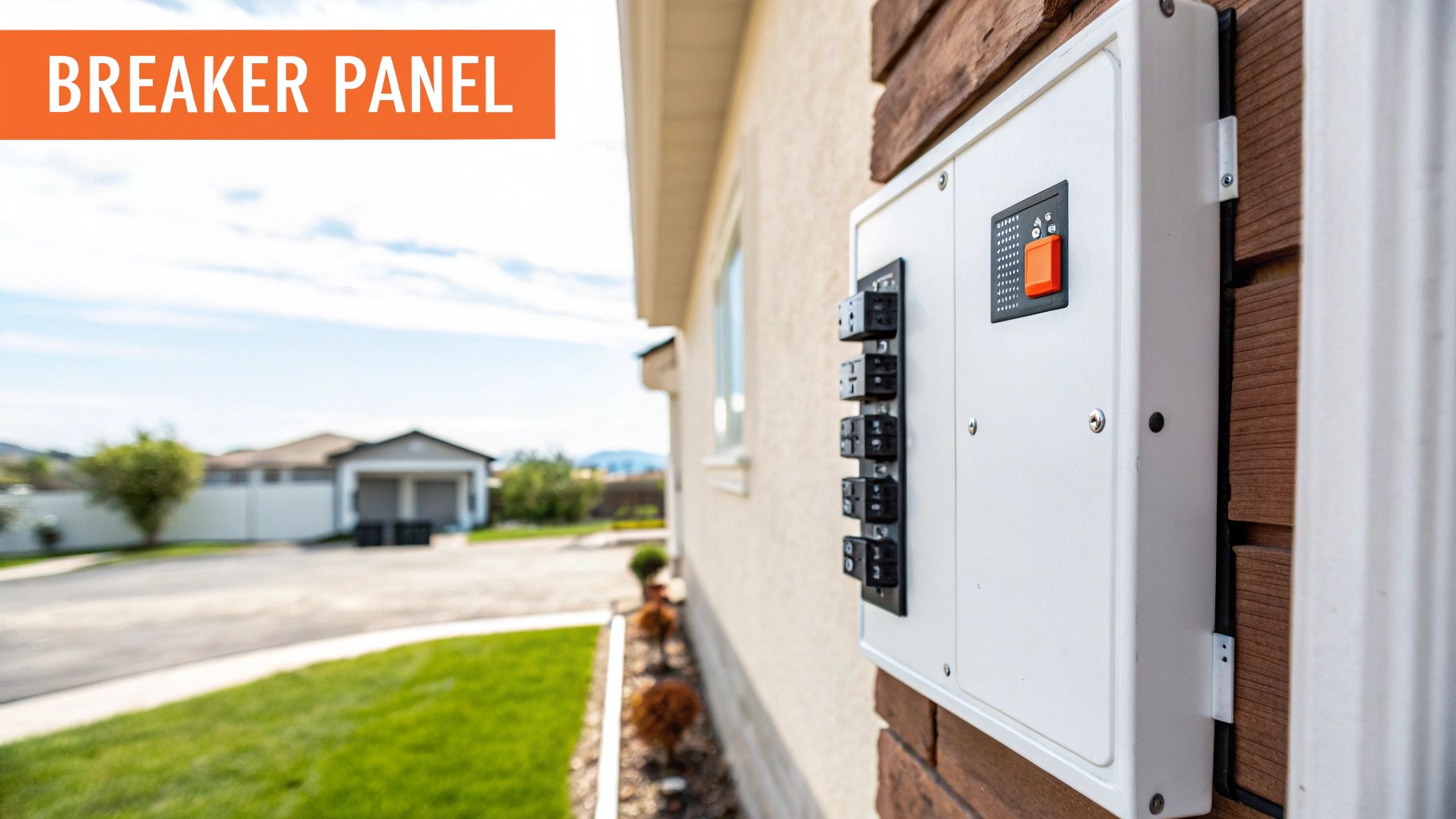
It instantly shuts down power to that circuit, stopping problems like overloads and short circuits before they can overheat wires, ruin expensive electronics, or even start a fire.
From Simple Fuses to Smart Switches
The idea of stopping excessive current isn't new. It goes all the way back over a century to Thomas Edison's early efforts to protect wiring from damage. Today's breakers are much more sophisticated, of course, with precise trip settings based on their specific purpose. For a deeper dive into the mechanics, you can read more about the what, why, and how of circuit breakers.
A tripped breaker isn’t an annoyance; it's a critical safety device functioning exactly as designed. Think of it as the electrical equivalent of an emergency brake, stopping a potential disaster in its tracks.
Once you understand this protective role, it changes your entire perspective. A tripped breaker isn't the problem—it's a clear signal that something downstream, like an appliance or a piece of wiring, needs your attention. This guardian is simply alerting you to a hazard.
Protecting Against More Than Just Overloads
While your breaker panel is great at handling overloads, it's only one part of the safety puzzle. Breakers react to issues happening inside your home's circuits, but they offer little defense against massive power surges coming from outside—like the lightning strikes or utility grid fluctuations we see so often here in Southwest Florida.
These external events can blast a huge voltage spike through your panel, overwhelming every circuit at once and causing catastrophic damage to your most valuable electronics.
- Computers and Televisions: The sensitive microprocessors inside modern smart TVs and home office gear are easily fried by a power surge.
- HVAC Systems: Your air conditioner is one of the most expensive appliances you own, and its delicate control boards are extremely vulnerable.
- Kitchen Appliances: Refrigerators, ovens, and microwaves with digital displays and smart features can be knocked out permanently.
This is why so many homeowners add another layer of defense. You can learn more about how whole-house surge protection services can shield your entire home from these powerful external threats, working hand-in-hand with your breaker panel to provide complete electrical safety.
Diagnosing the Three Main Electrical Faults
A tripped breaker is more than just an inconvenience; it’s a clue. Your home's electrical system is telling you something went wrong, and learning to read these signals is the key to a quick and safe fix. The three most common culprits behind a tripped breaker are overloads, short circuits, and ground faults. While they all end with a flipped switch in your panel, they are fundamentally different problems.
The Gentle Warning of a Circuit Overload
Think of an overloaded circuit like a small delivery truck trying to carry too much weight. It might handle a little extra for a short while, but eventually, the strain becomes too much, and it breaks down. This is, by far, the most common reason you find yourself in the dark, wondering why the breaker tripped.
A circuit overload happens gradually. Let's say your kitchen circuit is rated for 20 amps. You start the coffee maker (10 amps) and then pop a bagel in the toaster (8 amps). So far, so good. But the moment you turn on the microwave (10 amps) to heat up breakfast, the total demand jumps to 28 amps—way more than the circuit can safely handle.
The breaker doesn't trip instantly. It senses the excess heat building up in the wiring and, after a short delay, shuts down the power to prevent the wires from overheating and creating a fire hazard.
Key Takeaway: An overloaded circuit is a capacity issue. It’s a sign that you’re asking a single circuit to do too much work at once. Telltale signs include lights dimming when a large appliance kicks on or outlets feeling warm to the touch.
The Sudden Danger of a Short Circuit
A short circuit, on the other hand, isn't a gradual problem—it’s an immediate, violent event. Imagine a catastrophic multi-car pile-up on an electrical highway. Instead of electricity flowing safely along its intended wire, a "hot" wire makes direct contact with a "neutral" wire, creating an unauthorized and dangerous shortcut.
This creates an almost instantaneous, massive surge of current that is far more dangerous than a simple overload. The breaker detects this violent spike and snaps off in a fraction of a second to stop the immense heat from melting wires and starting a fire.
Common signs of a short circuit include:
- A loud pop or snapping sound coming from an outlet or switch.
- A distinct burning smell or visible scorch marks around an outlet.
- The breaker trips the very instant you plug in or turn on a specific device.
If you suspect a short circuit, do not reset the breaker. This is a serious fault that needs a professional electrician to investigate.
The Silent Threat of a Ground Fault
Finally, a ground fault is the most sinister of the three. This happens when a hot wire touches a grounded part of your electrical system, like a metal outlet box or the metal casing of an appliance. This creates a new, unintended path for electricity to "leak" out of the circuit.
This leak is incredibly dangerous because it can energize surfaces you might touch, creating a severe shock hazard. Ground faults are particularly common in areas with moisture—kitchens, bathrooms, garages, and outdoor circuits. This is exactly why modern electrical codes require special Ground Fault Circuit Interrupter (GFCI) outlets in these spots.
A GFCI outlet is essentially a mini, hyper-sensitive circuit breaker built right into the receptacle. It constantly monitors for tiny imbalances in the current. If it detects even a minuscule amount of electricity leaking to the ground, it shuts off power in milliseconds—long before it can cause a dangerous shock. These faults are often silent, with the only sign being a tripped GFCI outlet or breaker.
These are just a few of the common electrical problems and solutions a homeowner might run into, but understanding the difference is crucial for your safety.
A Safe Step-by-Step Troubleshooting Guide
When a circuit breaker trips, it's tempting to just march over to the panel and flip it back on. But hold on a second. Taking a few minutes to follow a safe, methodical process can help you figure out why it tripped and stop a bigger problem in its tracks.
Think of this as your safety-first action plan for confidently figuring out what’s going on.
First things first: safety. Never, ever touch your breaker panel with wet hands or while standing in water. If you see any sparks, signs of scorching, or smell anything burning, stop what you're doing. That’s a clear sign to call a professional. For a good refresher, take a look at these important electrical safety tips to keep your home and family secure.
Step 1: Locate Your Breaker Panel
Before you can solve the mystery, you need to find your home's main electrical service panel. These are usually tucked away in less-trafficked areas of the house.
- Common spots include: The garage, a utility closet, the basement, or sometimes even on an exterior wall.
Once you find the panel, open the metal door. You'll see rows of switches inside—each one is the gatekeeper for a different circuit in your home.
Step 2: Identify the Tripped Breaker
A tripped breaker will look out of place. Most of the switches will be pushed firmly to the "ON" side, but the one that tripped will be stuck in the middle or flipped all the way to "OFF." Some breakers even have a little red or orange window that appears to let you know it’s tripped.
Look for a diagram on the inside of the panel door. If you're lucky, the previous owner or electrician labeled it, mapping out which breaker controls what (e.g., "Kitchen Outlets," "Master Bedroom"). This map is your best friend right now.
Safety Warning: If a breaker trips again the instant you try to reset it, do not keep flipping it. This is a dead giveaway that you have a serious fault, like a short circuit. It's time to stop and call a licensed electrician immediately.
Step 3: Unplug Everything on the Affected Circuit
Okay, you’ve found the circuit that’s causing the issue. Now, head to that area of your home and start unplugging everything. We're talking lamps, TVs, chargers, coffee makers—the works. An overloaded circuit is the number one reason breakers trip, so removing everything connected to it is the most important diagnostic step you can take.
This simple process helps you figure out what you’re dealing with.
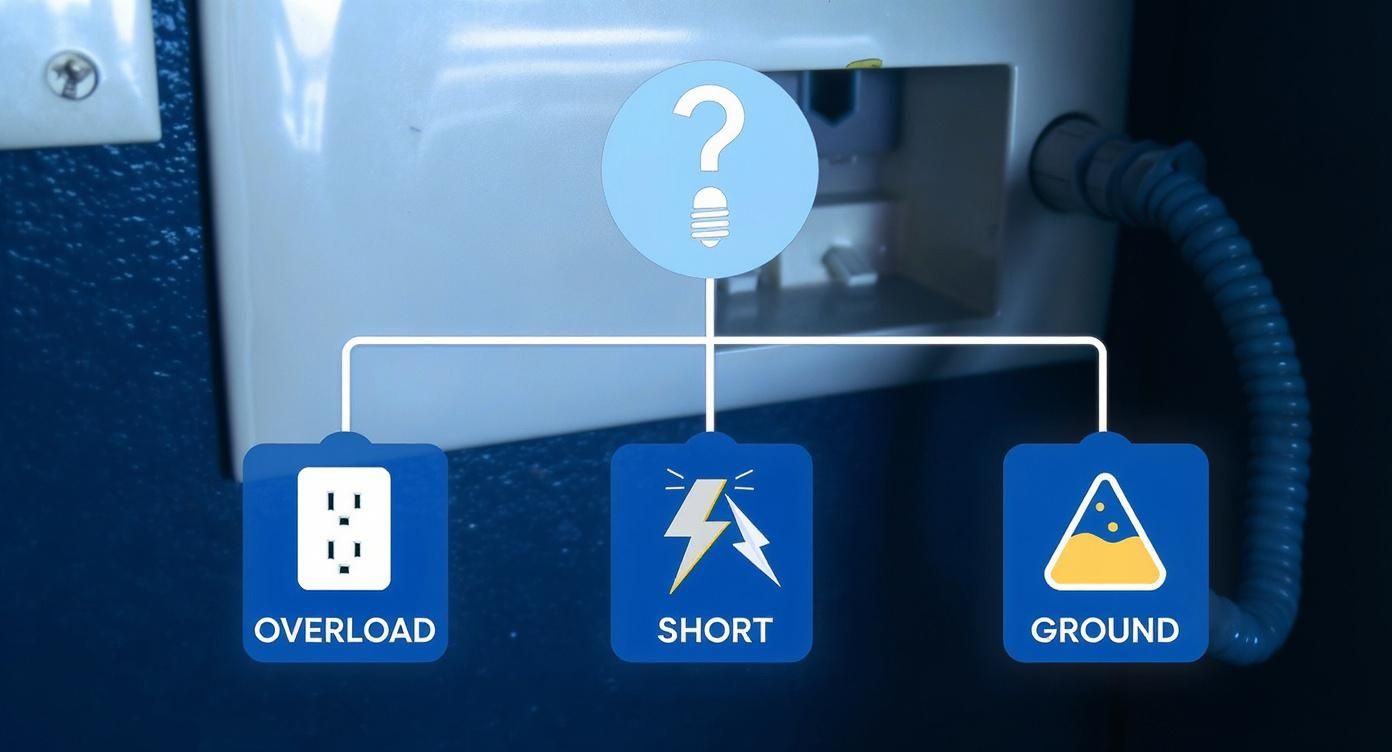
As the diagram shows, unplugging your devices is the first and easiest way to rule out a simple overload before you start worrying about more serious faults.
Step 4: Reset the Circuit Breaker
Time to head back to the breaker panel. To reset the switch correctly, you have to push it firmly all the way to the "OFF" position first. You should feel a solid click.
Once it's fully off, you can flip it back to the "ON" position. If it stays on, congratulations! You likely solved a simple overload. Now you can go back and plug your devices in one by one. If a specific appliance trips the breaker again, you’ve found the culprit. That device is either faulty or is drawing too much power for the circuit.
When You Should Call a Licensed Electrician
While figuring out a simple circuit overload is a DIY task most homeowners can handle, there are definite moments when you need to put down the tools and pick up the phone. A breaker trip is your home’s warning system. Think of it like a check engine light. Certain signs tell you the problem isn't a simple fix but a serious danger that demands professional expertise.
The line between an easy reset and a hazardous situation is thinner than you might think. Knowing the red flags that scream "call an expert" is absolutely critical for your safety. These aren't just suggestions; they are non-negotiable signs that it’s time to call in a licensed electrician.
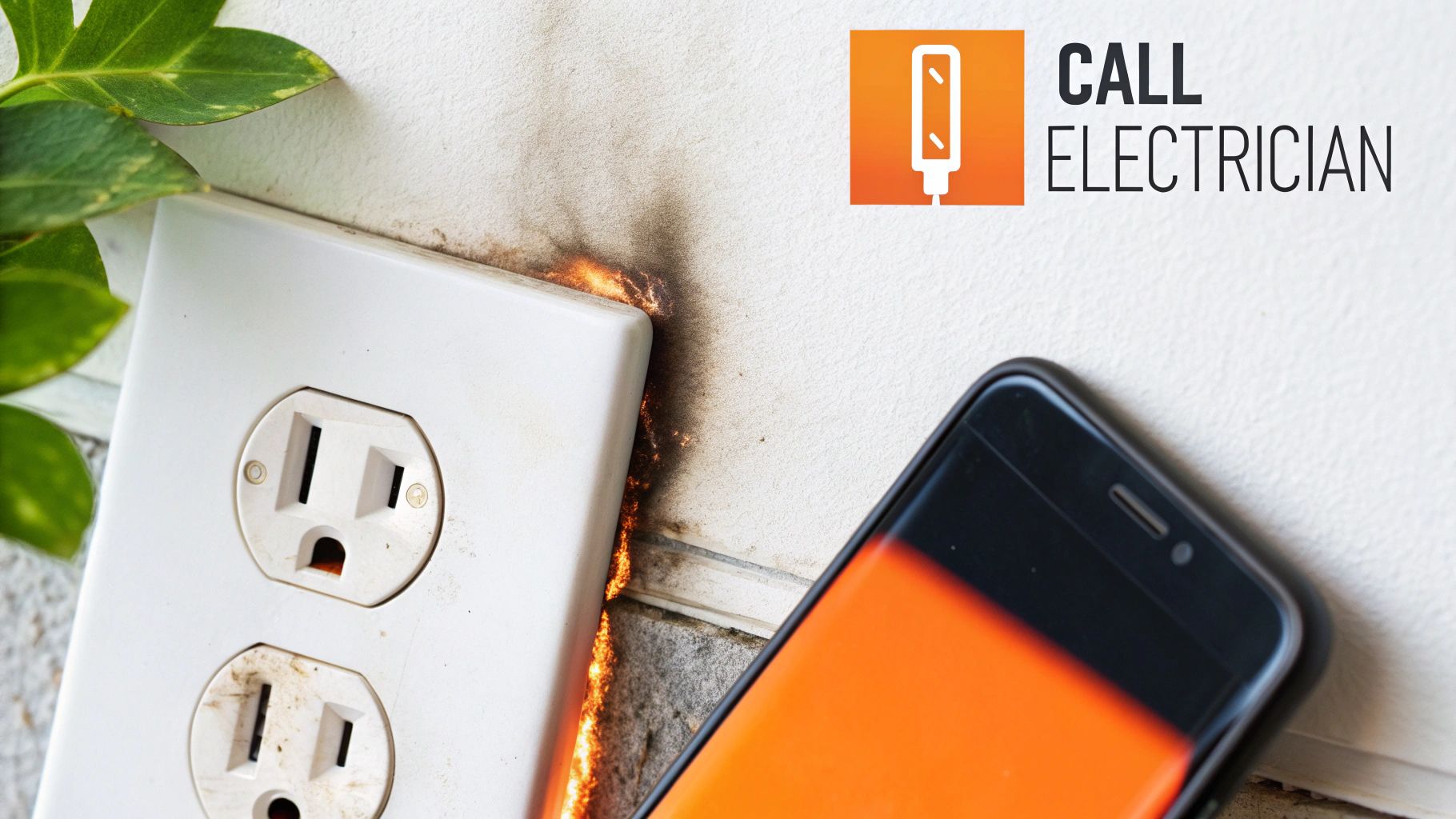
Unmistakable Signs of a Serious Electrical Fault
If you run into any of the following symptoms, your very next step should be to call a professional. Immediately. Don't try to reset the breaker again or investigate on your own.
-
The Breaker Won't Stay Reset: You flip the breaker back on, and it snaps off instantly. This isn't a fluke. It’s signaling a persistent fault like a dead short or a ground fault. Trying to force it back on is like holding a match to gasoline—you can cause serious damage or even start a fire.
-
A Burning Smell: Any unusual odor, especially a distinct, acrid plastic or fishy smell coming from the panel, an outlet, or a switch, is a five-alarm fire drill. That smell is often the scent of wire insulation overheating and melting, which is the last step before a fire ignites.
-
Visible Scorch Marks or Discoloration: Take a close look at your outlets, light switches, and the breaker panel itself. Any black or brown marks are the fingerprints of extreme heat from arcing electricity or a short circuit.
-
Buzzing or Hissing Sounds: Your electrical panel should be seen, not heard. If you hear any buzzing, sizzling, or crackling, it points to a loose connection or a failing breaker. Both are serious fire hazards waiting to happen.
Crucial Safety Insight: These warning signs are your electrical system’s smoke alarm. Ignoring them is like pulling the batteries out while a fire is smoldering in the walls. The system is screaming that a dangerous condition exists that a simple reset will not fix.
When Frequent Trips Are More Than an Annoyance
Even if you don’t see smoke or sparks, a breaker that trips constantly—say, every day or even every week—is a clear sign of trouble. While it might not be an immediate, five-alarm emergency, it points to a chronic issue that needs a real diagnosis.
This could be anything from a failing appliance creating small power surges to old, deteriorating wiring hidden inside your walls.
For homeowners in older Florida properties, especially around Tampa Bay, frequent trips can be a symptom of an outdated system that's completely overwhelmed by modern electrical demands. The best way to uncover these hidden dangers is with a thorough, professional inspection. You can learn more about the importance of professional electrical wiring inspections to ensure your home’s system is safe and up to code. It’s a proactive step that delivers priceless peace of mind.
Proactive Steps to Prevent Future Breaker Problems
The absolute best way to deal with a tripped breaker is to stop it from happening in the first place. When you shift from a reactive mindset to proactive maintenance, you’re not just saving yourself a headache—you’re dramatically improving your home’s electrical safety and reliability. The goal is to get ahead of the conditions that lead to overloads and faults.
A great first step, and one you can do yourself, is to map out your circuits. Take an hour or two to figure out exactly which outlets, lights, and fixtures are connected to each individual breaker. Once you have that knowledge, you can intentionally balance your electrical load. No more running the space heater and the vacuum on the same circuit and wondering why the power suddenly dies.
Upgrading for Modern Electrical Demands
Another powerful way to prevent trips is by upgrading the key components of your system. It's a simple fact: the old outlets and wiring in many homes were never designed for the constant demands of today’s electronics and high-powered appliances.
Here are a couple of the most important upgrades to consider:
- GFCI Outlets: Installing Ground Fault Circuit Interrupter outlets is a must for kitchens, bathrooms, garages, and any outdoor areas. They provide critical, life-saving protection against shock hazards caused by ground faults.
- AFCI Breakers: Arc Fault Circuit Interrupter breakers are designed to detect the kind of dangerous electrical arcs that are a common cause of house fires. Adding these to your panel is a smart move for any homeowner.
A well-maintained electrical system is a safe electrical system. Proactive upgrades and regular inspections are not expenses; they are investments in your family’s safety and your home’s long-term health.
The push for safer, more robust electrical systems isn’t just local; it’s a global trend. The worldwide circuit breaker market was valued at USD 25.2 billion in 2025 and is projected to hit USD 57.5 billion by 2035, according to one analysis of the circuit breaker market on futuremarketinsights.com. This reflects a massive effort to modernize electrical grids and boost safety standards.
For older homes, especially right here in the Tampa Bay area, keeping your system current is essential. If you’re constantly wondering why your circuit breaker is tripping, it might be a clear signal that your panel just can't keep up anymore. You can explore our guide on home electrical panel upgrades to see if that’s the right solution for you.
Quick Answers to Common Breaker Questions
Let's tackle some of the most frequent questions we hear from homeowners around Tampa Bay when they're dealing with a tripped circuit breaker. Here are some quick, direct answers to get you started.
Why Does My Breaker Trip Every Time I Use the Microwave?
This is a textbook case of a circuit overload. Microwaves are power-hungry appliances, often pulling more than 12 amps all by themselves. If your microwave is sharing a circuit with another heavy hitter like a refrigerator or even a toaster, running them at the same time can easily push the total power draw past the breaker's limit. Pop!
The easiest fix is to try running the microwave on a circuit that isn't already working hard. If that doesn't solve it and the breaker keeps tripping, the microwave itself might have an internal fault that needs checking.
Should I Be Worried If a Breaker Trips All the Time?
Absolutely. This is a major red flag. A breaker tripping once in a while because you plugged in one too many things is one thing. But if it's happening frequently, your electrical system is trying to tell you something is seriously wrong.
This isn't something to ignore. A constantly tripping breaker could point to a faulty appliance, damaged wiring hidden in your walls, or a breaker that's worn out and failing.
An ignored, frequently tripping breaker is more than an annoyance—it's a genuine fire hazard. It's crucial to have a licensed electrician diagnose the root cause and make sure your home is safe.
What's the Difference Between an Old Fuse and a Modern Circuit Breaker?
Think of it like this: a fuse is a one-and-done protector, while a circuit breaker is reusable. Both are designed to stop dangerous levels of electrical current, but they go about it in very different ways.
A fuse has a tiny piece of wire inside that is designed to melt and break the connection permanently when it gets overloaded. Once it blows, you have to throw it away and screw in a new one.
A circuit breaker, on the other hand, is an automatic switch. When it detects a fault, it trips and cuts the power. Once you've fixed the issue that caused it to trip, you can simply flip the switch back on to restore power.
If you've tried the basics and are still asking "why is my circuit breaker tripping," it's time to call in the pros. The expert electricians at Heatwave Air Conditioning, Plumbing, & Electric are ready to find the problem and get it fixed right. Contact us today to schedule a service call and get peace of mind knowing your home's electrical system is safe and reliable.