
That sinking feeling when your AC hums away but the air stays stubbornly warm is a common frustration I hear about all the time. Before you start imagining worst-case scenarios and expensive repair bills, let's walk through a few simple checks.
More often than not, the solution is something you can find and fix yourself in less than five minutes. From my experience, running through these basics first can save homeowners a lot of time, money, and stress.
Your First Checks When the AC Wont Blow Cold
The very first place I tell people to look is the thermostat. It’s the brain of your entire HVAC system, so a simple mix-up here is a frequent culprit.
- Is it set to "Cool"? It sounds obvious, but you'd be surprised how often someone in the house accidentally switches it to "Heat" or just the "Fan" setting.
- Is the temperature low enough? For the cooling cycle to actually kick on, the set temperature needs to be at least 3-5 degrees below the current room temperature.
- Is the fan on "Auto"? If the fan is set to "On," it's going to blow air constantly, even when the compressor isn't actively cooling it. Setting it to "Auto" ensures the fan only runs when it's supposed to—during a cooling cycle.
If the thermostat settings look good, your next stop is the electrical panel. An air conditioner pulls a lot of power and can trip its circuit breaker, especially during a brutal summer heatwave.
Find the breaker labeled "AC," "Air Handler," or something similar. If it's tripped (usually in the middle position) or switched off, flip it firmly back to the "On" position. Sometimes this simple reset is all it takes to get the cold air flowing again. While some complex air conditioner electrical issues need a professional, a quick flip of the breaker often does the trick.
This infographic breaks down these first two diagnostic steps perfectly.
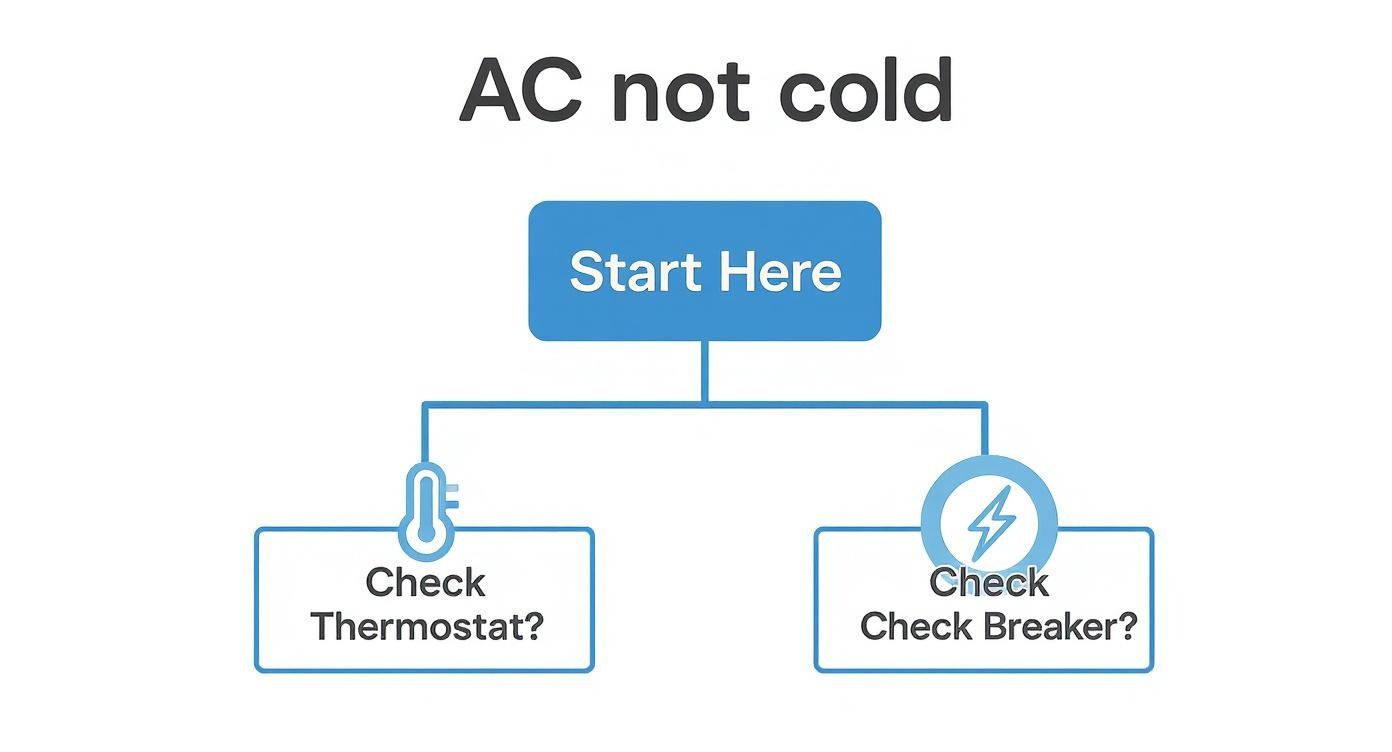
As you can see, a systematic check of the thermostat and then the breaker can quickly solve the most common reasons your ac wont blow cold air.
Quick Diagnostic Checklist
To make it even easier, here’s a quick table to help you match your AC's symptoms with the most likely problem and what you should do first.
| Symptom | Most Likely Cause | Your First Action |
|---|---|---|
| Air is blowing, but it's not cold. | Incorrect thermostat setting. | Check that the thermostat is on "Cool" and set below room temperature. |
| The AC system is completely silent. | No power to the unit. | Check the AC's circuit breaker in your electrical panel. |
| The fan runs nonstop, blowing warm air. | Fan setting is "On" instead of "Auto." | Switch the thermostat's fan setting back to "Auto." |
This checklist covers the most common and easily fixable issues. If you’ve run through these steps and are still stuck with a warm house, it might be time to look into other potential AC unit running but no cold air fixes or call in a pro for a deeper look.
How a Clogged Air Filter Stops a Cold AC
It sounds almost too simple to be true, but a dirty air filter is the #1 reason I see for an AC that just won't blow cold air. It's an issue I run into constantly in the field.
Think of it this way: trying to run a marathon while breathing through a coffee straw. That’s pretty much what you’re asking your HVAC system to do when its filter is caked with a thick blanket of dust, pet hair, and other gunk.
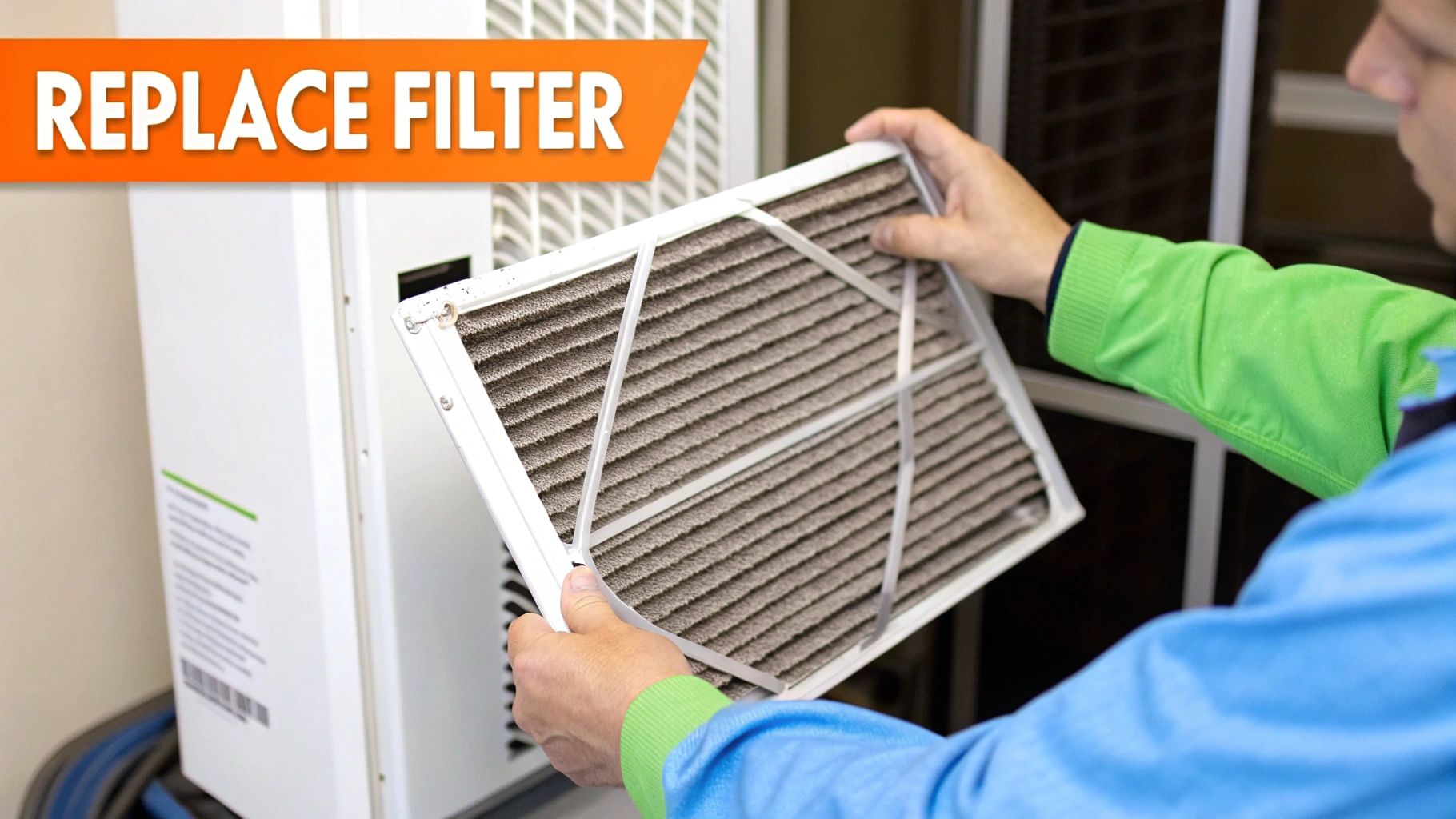
This layer of grime chokes off the airflow. Without enough air moving over the evaporator coils (the part that actually gets ice-cold), the moisture on them quickly freezes solid. Before you know it, you’ve got a solid block of ice inside your unit instead of the cool, refreshing air you're expecting.
Locating and Replacing Your Air Filter
First things first, you have to find the filter. They're usually tucked away in one of a few common spots:
- In a return air vent: Look for a large grille on a central wall or ceiling.
- Inside the air handler: Check for a slot right where the return duct enters the main indoor unit. This could be in a utility closet, the attic, or out in the garage.
Once you’ve found it, just slide the old filter out. You don't need any special tools to see if it's bad—if it’s gray, covered in a fuzzy layer of dust, or you can’t see light through it, it's definitely time for a new one. Jot down the size printed on the filter's cardboard frame (it'll look something like 16x25x1).
Pro Tip: When you slide the new filter in, look for an arrow printed on the frame. Make sure that arrow points toward the furnace or air handler, not away from it. This arrow shows the correct direction of airflow, and putting it in backward can reduce its effectiveness.
The type of filter you choose also makes a difference, especially if you have pets or deal with seasonal allergies. Filters with a higher MERV (Minimum Efficiency Reporting Value) rating, like a MERV 8 or 11, are great at capturing smaller particles like pet dander and pollen. The cheap, basic fiberglass filters really only stop the biggest chunks of dust.
Simply changing your filter on a regular schedule is one of the easiest and most effective ways to prevent cooling problems down the road. For more expert advice on this and other simple preventative steps, check out these top 5 AC maintenance tips to keep your system running like a top all year long. A clean filter lets your AC breathe, and a happy AC keeps you cool.
Clearing Your Outdoor Condenser Unit
Your air conditioner is a team, with an indoor unit and an outdoor unit working together. That big, boxy fan outside your house—the condenser—has one crucial job: to dump all the heat it pulled from your home back into the outside air.
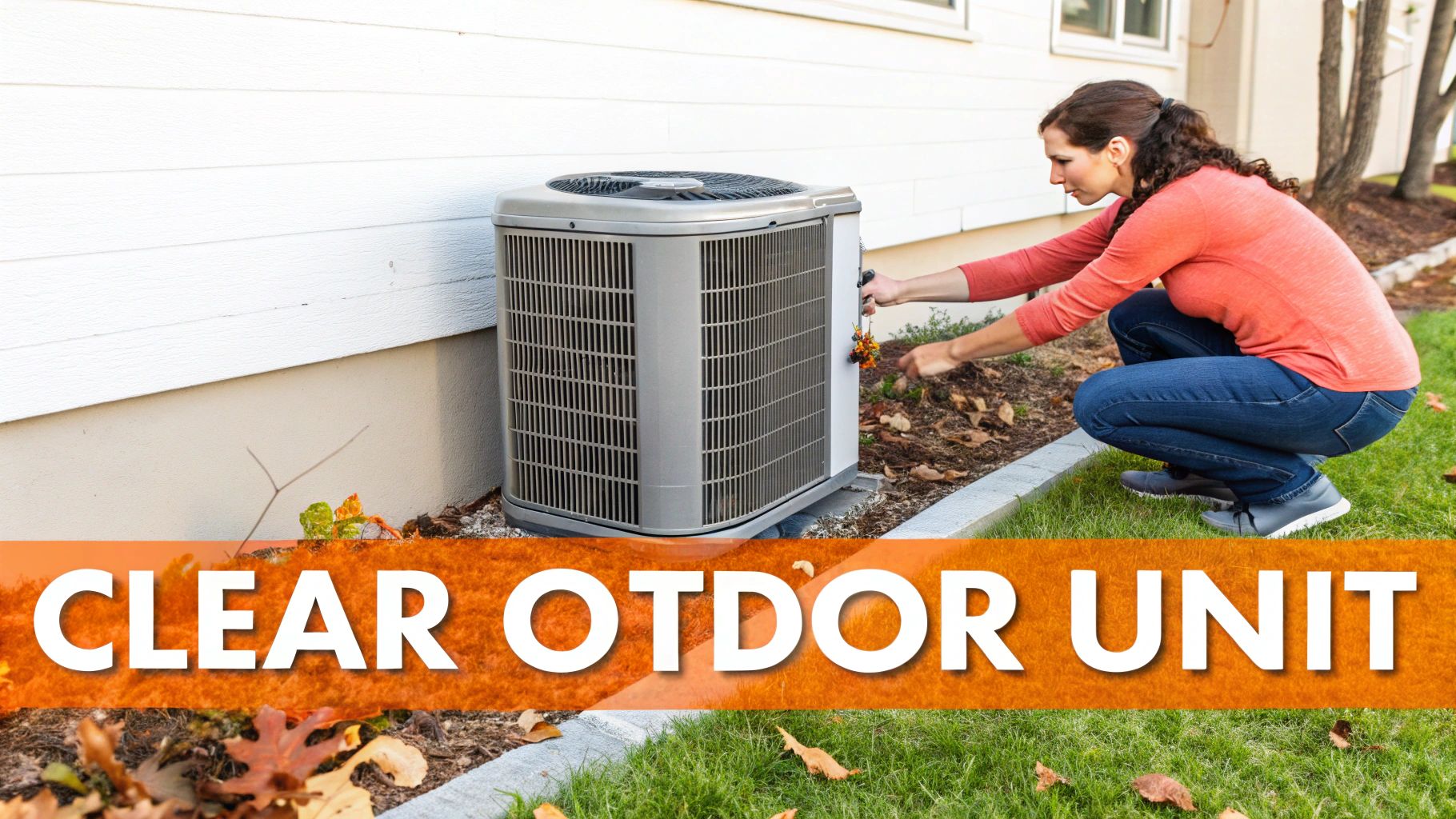
When this unit gets clogged up with grass clippings, leaves, dirt, or that fluffy cottonwood stuff, it’s like asking a marathon runner to wear a heavy winter coat. It just can't breathe or get rid of heat efficiently. This puts a massive strain on the whole system, and is a very common reason your AC won't blow cold air.
A Safe Cleaning Process
Before you so much as touch the unit, remember this: safety is paramount. You have to cut all power to the outdoor unit.
- Look for the outdoor electrical disconnect, which is usually a small grey box mounted on the wall near the condenser.
- Open it up and either pull out the handle or flip the switch to "Off."
- For good measure, head to your main breaker panel inside and flip the breaker labeled for your AC to the off position, too.
Once the power is off, you can get to cleaning. Those metal fins on the condenser are incredibly delicate and bend easily, so a gentle touch is non-negotiable.
Important Takeaway: Whatever you do, never use a high-pressure washer on your condenser coils. The force will bend and smash those fragile aluminum fins, turning a simple cleaning job into an expensive mistake. A gentle spray from a standard garden hose is all you need.
Start by clearing away any overgrown plants, weeds, or debris. You want at least two feet of clear space all the way around the unit. Then, grab a garden hose with a spray nozzle and gently rinse the fins from the top down to wash away all that grime. This little bit of yard work can make a huge difference in your AC's performance.
For more pro advice on keeping your system running smoothly, check out our guide on 8 essential tips to avoid AC breakdowns this summer in Florida.
Keeping AC units efficient is a bigger deal than most people realize. Cooling accounts for roughly 10% of global electricity use, and that number skyrockets during heatwaves. You can learn more about the climate impact of air conditioning on news.climate.columbia.edu.
Recognizing Frozen Coils and Refrigerant Leaks
When the simple fixes don’t bring back the cold air, it’s time to dig a little deeper. Two of the most common culprits I see that stop an AC in its tracks are frozen indoor coils and refrigerant leaks. Both are clear signs that your system is struggling to do its job.
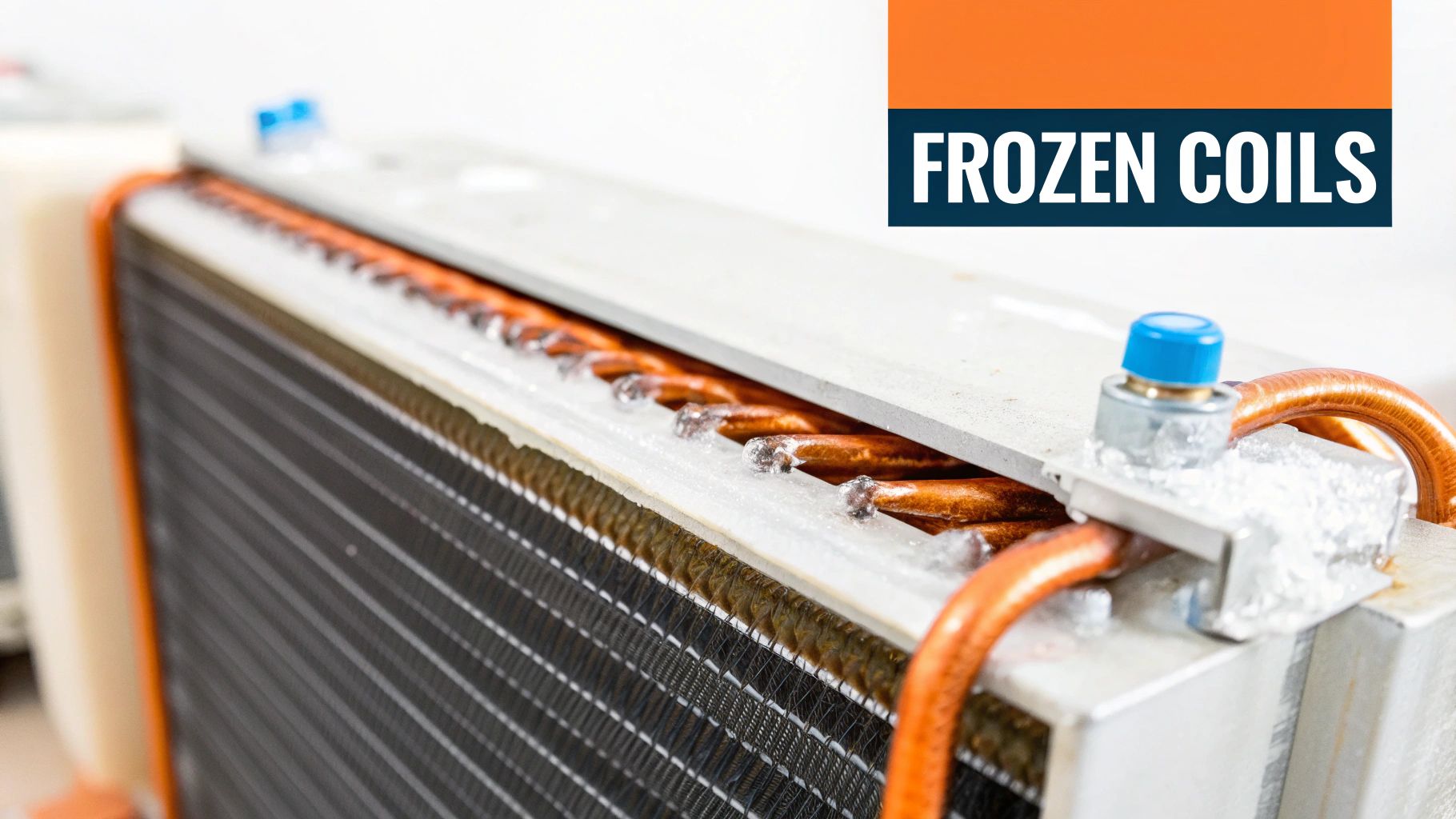
It might sound counterintuitive, but a block of ice on your indoor evaporator coil is a major red flag. Ice is actually a symptom of a serious problem—it means your system can't transfer heat the way it's supposed to. This usually points back to restricted airflow (hello, dirty filter!) or low refrigerant levels.
What to Do About a Frozen AC Unit
If you pop open the panel on your indoor air handler and find it iced over, what you do next is critical. Acting fast can prevent serious damage to the compressor, which is the heart and soul of your air conditioner.
Here’s the immediate game plan:
- Turn the AC Off: Head to your thermostat and switch the system from "Cool" to "Off." This stops the cooling cycle and prevents more ice from forming.
- Run the Fan: Next, switch the fan setting from "Auto" to "On." This forces room-temperature air across the frozen coils, helping them thaw out much faster.
This whole thawing process can take several hours, so you’ll need some patience. Once every last bit of ice is gone, you can slide in a fresh, clean air filter and try turning the AC back on. If it just freezes up again, that’s a strong signal you’re likely dealing with a bigger issue, like a refrigerant leak.
Critical Note: Whatever you do, never try to chip or scrape the ice off the coils. They're made of soft aluminum and are incredibly easy to puncture. One wrong move could turn a fixable problem into a very expensive replacement.
Identifying a Refrigerant Leak
A refrigerant leak is definitely not a DIY job—handling refrigerant requires a special license and tools. But knowing the signs helps you know when to call a pro and what to tell them.
Keep an eye (and ear) out for these clues:
- Hissing or Bubbling Sounds: Any strange noises coming from your AC unit could be the sound of refrigerant gas escaping.
- Oily Residue: Refrigerant is mixed with oil to lubricate the compressor. A leak often leaves a greasy, oily substance on the copper lines or fittings near the unit.
- Weak Cooling: This is the most obvious sign. If the air coming from your vents just isn't getting cold no matter what you do, a refrigerant leak is a prime suspect.
Getting familiar with these symptoms can help you troubleshoot many of the common AC problems and solutions before you even have to pick up the phone.
Knowing When to Call an HVAC Professional
While tackling thermostat settings and dirty filters can be empowering, some problems are strictly for the pros. Knowing where to draw the line between a simple DIY fix and a hazardous repair is crucial when your **AC won’t blow cold air**.
Certain symptoms are immediate red flags that signal a deeper, more dangerous issue that requires an expert with the right tools and training.
Signs You Need an HVAC Technician
If you’ve walked through all the basic troubleshooting steps and your home is still uncomfortably warm, it's time to listen and look for these warning signs. They often point to a problem with complex electrical components or the sealed refrigerant system—things you definitely don't want to mess with.
- Loud, Unusual Noises: Grinding, squealing, or banging sounds are your system's cry for help. These often point to a failing motor, a worn-out belt, or a bad compressor.
- Electrical Smells: A burning odor is a serious warning sign. It could mean an electrical fault is overheating, which poses a significant fire hazard. Turn the system off immediately.
- Frequent Breaker Trips: If your AC breaker keeps tripping right after you reset it, there’s an underlying electrical issue that needs a professional diagnosis. It's not the breaker; it's what's causing the breaker to trip.
- Failed Capacitor or Compressor: These are high-voltage components that are dangerous to handle without proper training and tools. They hold a powerful electrical charge even when the power is off.
Safety First: Working with high-voltage electricity and pressurized refrigerant is extremely dangerous. One wrong move can lead to severe injury or expensive, irreversible damage to your system. Don't risk it.
Making the right call protects both your safety and your wallet. Just as it's vital to know when your AC needs a pro, recognizing when to hire experts for other tasks is key, like knowing when to call a professional for other essential home maintenance.
When you suspect a serious issue, our team is ready to provide expert AC repair services to get your system running safely and efficiently again. Access to reliable cooling is more than just comfort; it has a life-saving impact during intense heat waves. In fact, access to air conditioning saved over 190,000 lives in 2019 alone.
We Hear These Questions All The Time
When your AC gives up on a hot day, it’s natural to have questions. Knowing the usual suspects behind an AC that won't blow cold air helps you figure out if it's a quick fix you can tackle yourself or a job that needs a pro's touch.
"My AC Is Running, but the Air Isn't Getting Any Colder. What's Going On?"
This is hands-down the most common call we get. When an AC runs but doesn't cool, it almost always points to one of three culprits: a clogged air filter that's choking off airflow, a filthy outdoor condenser unit that can't get rid of heat, or a refrigerant leak.
Your first move should always be to check the filter and give the outside unit a good cleaning. If you've done both and the problem persists, it's likely an internal issue that needs an expert diagnosis to nail down the exact cause.
"How Do I Know If My AC Is Low on Freon?"
There are a few dead giveaways that your system is low on refrigerant (often called Freon). The most obvious is that the air coming from your vents just isn't that cold. You might also spot ice building up on the copper refrigerant lines or the indoor coil itself.
A hissing or bubbling noise is another classic sign of a leak. Since low Freon is always the result of a leak somewhere in the system, a technician will need to find and fix it before they can recharge the unit.
"Could It Just Be My Thermostat Settings?"
Absolutely. It’s the easiest fix in the book and something people often overlook when they're sweating and stressed. First, make sure the thermostat is actually set to "Cool" and that the target temperature is at least 5 degrees lower than the current room temperature.
Also, take a look at the fan setting. It should be on "Auto," not "On." When the fan is set to "On," it runs 24/7—even when the cooling cycle is off. This just circulates room-temperature air, making it feel like your AC isn't doing its job.
If you've run through these checks and your home is still heating up, Heatwave Air Conditioning, Plumbing, & Electric is ready to step in. Our certified technicians can diagnose any issue and get your home comfortable again. Schedule your service call today.