
Most homeowners pay about $350 for an HVAC repair, but the full range can run from roughly $100 to $3,000, and the service call alone is usually $100 to $250 before any repair work starts. If your AC just quit in Tampa Bay or Southwest Florida, that's the honest first answer: some fixes are small, some get expensive fast, and the difference usually comes down to what failed and how involved the repair is.
That uncertainty is what makes an AC breakdown feel worse than it should. You're standing in a hot house, the thermostat says one thing, the air coming out of the vents says another, and you're trying to guess whether this is a minor electrical issue or the start of a much bigger bill.
In Florida, that stress hits harder because air conditioning isn't a luxury. In places like Sarasota, Fort Myers, Cape Coral, Port Charlotte, and the Tampa Bay area, your system works long hours for much of the year. When it stops, you need clear answers, not vague ranges and sales talk.
Why AC Repair Costs Can Feel So Unpredictable
When an AC system dies on a hot Florida afternoon, most homeowners ask the same question first. How much is this going to cost me?
The reason that question is hard to answer over the phone is simple. The national pricing spread is wide. Average HVAC repair cost is about $350, but the full range runs from roughly $100 to as high as $3,000, and an initial service call usually costs $100 to $250 before repair work begins, according to Angi's HVAC repair cost guide.
That range feels unpredictable because it covers two very different situations. One is a straightforward diagnosis and a small part change. The other is a major failure that takes more labor, more materials, and sometimes a hard conversation about whether the system is worth fixing.
What makes one repair cheap and another expensive
A service call pays for diagnosis. That means a technician checks the system, verifies the complaint, tests electrical components, inspects airflow, and finds the actual cause. Homeowners sometimes assume the problem is obvious because the unit won't cool, but “not cooling” can point to several different faults.
A clogged drain issue, a bad capacitor, a thermostat problem, low airflow, or refrigerant trouble can all produce similar symptoms. The outside result is the same. The repair path is not.
Practical rule: The symptom you notice rarely tells you the final price. The failed component and the labor involved do.
Why this hits Florida homeowners differently
In Tampa Bay and Southwest Florida, AC systems run under heavy demand, and breakdowns often happen during the hottest stretch of the day when the equipment is already under strain. That doesn't automatically mean your repair will be major, but it does mean you want a diagnosis-first approach instead of guessing from symptoms.
Before you schedule service, it helps to work through a few homeowner-safe checks in this air conditioning troubleshooting guide. If the issue is a tripped breaker, dirty filter, or thermostat setting, you may save yourself an unnecessary visit. If not, you'll at least describe the problem more clearly when you call.
Breaking Down Common AC Repair Costs in Florida
Most central air repairs land in a middle zone, not at the extreme ends. Central air conditioner repairs typically fall between $221 and $1,052, with an average cost of about $483. A simple fix like clearing a clogged condenser line may be around $150, while a refrigerant leak repair can cost $225 to $1,000 or more, based on Thumbtack's AC repair pricing data.
For Florida homeowners, that's a useful benchmark because it reflects what technicians see every day. Plenty of calls turn out to be manageable repairs. Others involve sealed-system work or component replacement that pushes the price up quickly.
Estimated AC Repair Costs for Common Issues 2026
| Common AC Repair | Typical Cost Range |
|---|---|
| Clearing a clogged condenser line | Around $150 |
| Routine system check and tune-up | $125 to $200 |
| Refrigerant leak repair | $225 to $1,000 or more |
That table is short on purpose. A lot of online pricing charts list every possible part, but broad national tables can create false confidence. In the field, what matters is whether the technician is quoting a simple cleaning, a tune-up, or work involving refrigerant, leak detection, and system restoration.
What these repairs actually mean
A clogged line is one of those problems homeowners often underestimate. It sounds minor because it is minor compared to a compressor or coil issue, but it still has to be corrected properly. Similar to a blocked sink drain, water has nowhere to go, so the system starts tripping safeties or showing water where it shouldn't.
A routine tune-up or system check is less about fixing one broken part and more about finding wear before it turns into a no-cool call. In Florida, that matters because a unit that's barely hanging on in mild weather often fails when outdoor temperatures and run times climb.
A refrigerant leak repair is where many estimates start to spread out. This isn't just “adding Freon,” as homeowners still sometimes call it. The technician has to locate the leak, repair the source when possible, and restore the refrigerant side of the system correctly.
If a quote sounds high, ask what work is included. Leak search, repair, evacuation, recharge, and verification are different tasks, not one line item with different wording.
Why Florida quotes can differ from a national average
The Florida market has a few realities homeowners should keep in mind:
- Long runtimes matter: Systems in this region rack up more operating hours, so wear shows up sooner in capacitors, motors, drains, and refrigerant-side problems.
- Salt air and humidity matter: Near the coast, corrosion and moisture create extra stress on outdoor equipment and electrical connections.
- Fast diagnosis matters more than guessing: Replacing the wrong part because the symptom looked familiar wastes money.
If you want a second benchmark to compare against a proposal, this page on the average cost of HVAC repair gives a helpful homeowner overview. The key is to use any chart as a starting point, not a final answer.
What Factors Influence Your Final AC Repair Bill
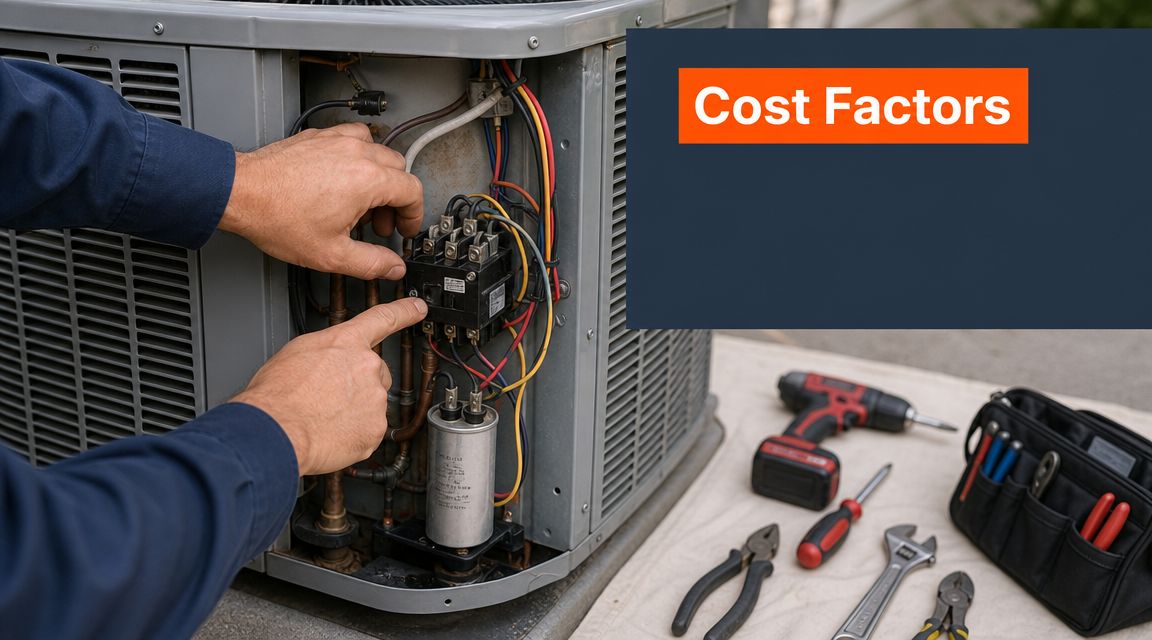
Two homeowners can have AC systems that both “aren't cooling,” then receive very different repair quotes. That's normal. The final bill depends less on the complaint and more on what a technician finds after testing.
One of the biggest cost drivers is refrigerant-related work. Refrigerant leak repairs can range from $200 to $1,500, and costs can spike if a system uses older, phased-out refrigerants, according to Call Arthur Air's AC repair cost guide. That matters a lot in Florida because plenty of homes still have older equipment in service.
Refrigerant type changes the economics
When a unit uses an older refrigerant, the repair can become more expensive for reasons homeowners don't always see. The bill isn't just labor and a part. It can also reflect refrigerant availability, handling requirements, and the amount of work needed to open and restore the sealed system correctly.
That's why two leak repairs can look similar from the outside but price very differently. One may involve a smaller issue on a newer system. Another may involve difficult leak location, older refrigerant, and a system that needs more extensive work to get back to proper operation.
For homeowners trying to understand what refrigerant they have and why it matters, this overview of AC refrigerant types is a useful place to start.
Labor complexity is often the hidden cost
Some repairs are quick because the failed component is easy to access and easy to confirm. Others require more time just to reach the problem safely. Florida homes vary. One condenser may be open and simple to work on, while another system may have tight access, corroded fasteners, or multiple issues showing up at once.
Airflow diagnosis also matters more than many homeowners realize. Weak cooling isn't always a refrigerant problem. Duct restrictions, blower issues, and poor return airflow can mimic bigger failures. If you want a better sense of how pros evaluate that side of the system, these practical airflow measurement techniques give good context.
A careful technician doesn't price from symptoms alone. They test voltage, pressure, temperature split, drain performance, and airflow before they tell you what the repair should be.
Timing and condition also matter
Your final invoice usually moves up or down based on a few real-world details:
- Age of the equipment: Older systems often bring more than one problem to the surface at the same visit.
- Condition of the cabinet and components: Rust, corrosion, and prior repair work can add labor.
- Seasonal demand: Peak heat periods can tighten scheduling and parts availability.
- Whether the issue is isolated: One failed part is easier to solve than a chain of related problems.
In Tampa Bay and Southwest Florida, I'd tell homeowners to focus less on the lowest advertised price and more on whether the quote explains the failure clearly. A cheap guess can cost more than a solid diagnosis.
Should You Repair or Replace Your Air Conditioner

A repair estimate gets harder to swallow when the problem isn't small. That's the point where homeowners start asking the more important question. Should I put money into this system, or is it time to replace it?
There isn't one perfect rule, but there is a useful shortcut many technicians and homeowners use. It's often called the 5000 Rule. Multiply the age of the system by the repair cost. If the result is high enough, replacement starts making more sense than repair.
How the 5000 Rule helps
The 5000 Rule isn't a law. It's a decision tool. It helps you step back from the heat of the moment and look at the repair in context.
For example, a moderate repair on a fairly new system can still be a smart move. The same repair on an older unit with declining efficiency and repeated breakdowns usually looks very different.
Here's the bigger point. A repair quote never exists by itself. It sits next to the system's age, reliability, efficiency, refrigerant type, and overall condition.
If the unit has been dependable and the issue is isolated, repairing it is often reasonable. If the system has turned into a repeat caller, every new repair deserves more scrutiny.
When repair usually makes sense
Repair is often the better choice when the problem is limited and the system still has useful life left.
- The issue is isolated: One clear failure is easier to justify than a unit with multiple developing problems.
- The equipment is relatively newer: If the rest of the system is in good shape, a focused repair can restore dependable cooling.
- The quote is proportionate: A manageable repair bill on a system that still cools well and uses current refrigerant is often money well spent.
A lot of homeowners get nervous the moment they hear any repair number. That's understandable, but not every repair is a warning sign that the whole system is done.
When replacement becomes the smarter move
The strongest example is compressor failure. Minor fixes like capacitor replacement are often in the $100 to $400 range, but a major compressor replacement can cost $1,000 to $3,000. Because this repair is so extensive, a high compressor quote on an older unit is often the signal to compare repair cost against the price of a new system, based on this AC repair cost breakdown from Comfort 1.
That matches what many Florida homeowners run into. The compressor is the heart of the cooling cycle. Replacing it isn't like swapping a simple electrical part. It's invasive work on the sealed system, and on an older unit it can trigger the exact conversation you've been hoping to avoid.
A few signs replacement may be the better path:
- Frequent breakdowns: One repair after another usually means the system is aging out.
- Major sealed-system work: Compressor or extensive refrigerant-side repairs deserve a hard look.
- Poor efficiency and comfort: If the house still feels uneven or humid after repeated service, replacement may solve more than one issue.
- Older refrigerant concerns: If refrigerant economics are working against you, future repairs may not get easier.
A broader homeowner's guide to AC costs can help you compare repair decisions against replacement planning without relying on guesswork.
Later in the decision process, many homeowners also want a clear installation benchmark. This page on the cost of new AC installation can help you weigh the bigger picture.
Here's a visual summary of the decision points most homeowners care about.
The trade-off most people miss
Repair is cheaper today. Replacement is often cheaper over time when the old system keeps demanding money. That's the trade-off.
In Tampa Bay and Southwest Florida, I'd rather see a homeowner make that call from a written diagnosis than from frustration after the third breakdown. If the system is still a good machine with one bad part, repair it. If the repair is large and the unit is already old, don't let sunk cost make the decision for you.
Smart Ways to Save Money on AC Repairs
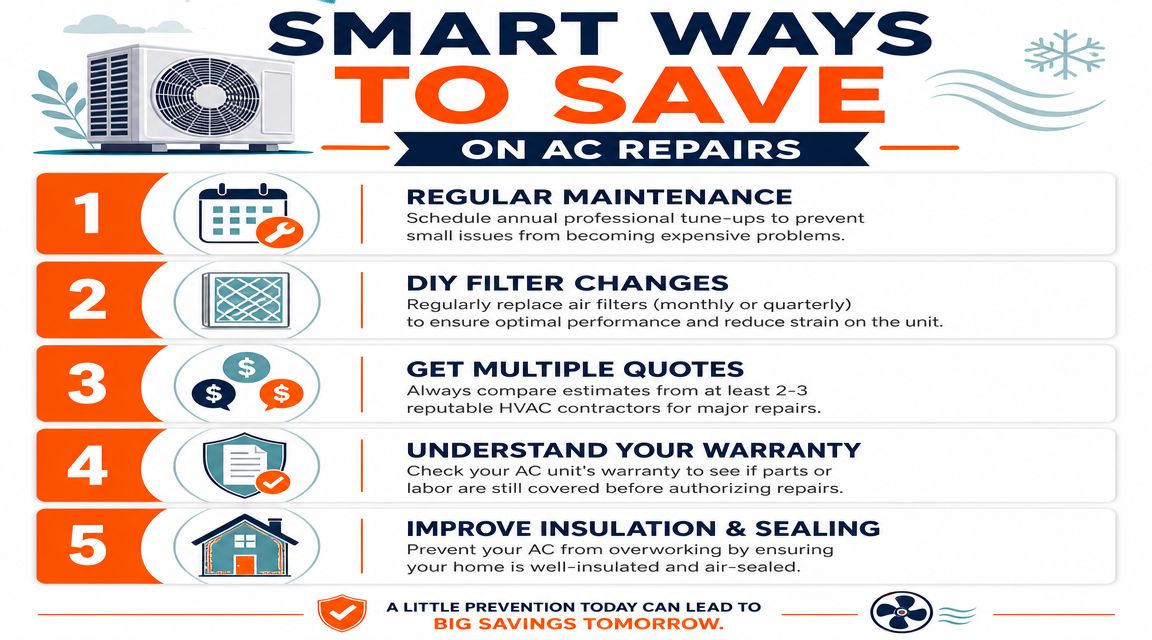
You can't control when every part fails, but you can reduce the odds of a bad surprise. Most repair savings come from catching stress early, keeping airflow healthy, and avoiding rushed decisions.
Focus on the basics that actually help
- Change the filter on schedule: A dirty filter restricts airflow and makes the system work harder than it should. If you want a simple refresher on options, this guide to understand furnace filter types is useful even for homeowners who mainly think in terms of AC.
- Pay attention to new symptoms: Short cycling, weak airflow, warm supply air, water around the unit, and buzzing from the outdoor section all deserve attention before they turn into larger repairs.
- Keep the outdoor unit clear: Leaves, grass clippings, and overgrowth reduce heat rejection and make the system strain in hot weather.
Spend money in the cheaper place
Preventive service usually costs less than emergency repair because the technician has time to inspect, clean, test, and catch wear before it creates a no-cool call. That's especially true in Florida, where a stressed system rarely gets much off-season rest.
Homeowners should also check warranty status before approving a repair. Parts coverage can change the economics even when labor still applies. The same goes for maintenance records. A clear service history helps everyone understand whether this is a one-time issue or a pattern.
Don't approve a major repair until you know three things: what failed, whether warranty applies, and whether the quote solves the whole problem or only today's symptom.
Use financing and second opinions wisely
For bigger repairs or replacement decisions, it's smart to slow down just enough to compare options. Get another diagnosis if the quote is substantial and the explanation feels thin.
Some companies, including Heatwave Air Conditioning, Plumbing, & Electric, offer financing for larger HVAC work and free estimates on new installations. That doesn't make a repair right or wrong by itself, but it can give homeowners breathing room when the best fix isn't easy on the budget.
Get an Honest AC Repair Estimate in Southwest Florida
Air conditioning repair cost makes more sense when you break it into three parts. What failed, how involved the repair is, and whether the system is still worth investing in.
That matters in Southwest Florida and Tampa Bay because local conditions are tough on equipment. Heat, humidity, salt exposure in coastal areas, and long cooling seasons all put pressure on parts that might last longer in milder climates. A fair estimate should account for the actual condition of your system, not just the symptom you reported on the phone.
What an honest estimate should include
A solid repair estimate should tell you:
- The confirmed fault: Not a guess based on “not cooling.”
- The scope of work: What the technician plans to repair, replace, clean, or test.
- Any larger concern: If the system has age, refrigerant, or reliability issues that affect the decision.
If you need service in this region, this page for AC repair services in Tampa Bay and Southwest Florida is a practical next step for scheduling diagnosis and reviewing options.
Homeowners usually feel better once they have a written estimate in front of them. The stress drops because the problem stops being abstract. At that point, you can make a calm decision. Repair the unit, plan replacement, or get a second opinion if the numbers don't line up with the condition of the system.
If your AC is down and you want clear pricing without guesswork, contact Heatwave Air Conditioning, Plumbing, & Electric. Their team serves Tampa Bay and Southwest Florida with upfront diagnostics, repair recommendations based on the actual condition of the equipment, financing options for larger jobs, and free estimates for new AC installations.