
Losing power in a key part of your home, like the kitchen or bathroom, is almost always a pain. Nine times out of ten, the culprit is a tripped Ground Fault Circuit Interrupter (GFCI) outlet. For us here in Florida, where humidity and storms are a fact of life, knowing how to reset one is a basic homeowner skill.
It’s usually a quick fix that stands between you and your morning coffee or getting ready for the day.
Your Quick Guide to Resetting a Tripped GFCI Outlet
GFCI outlets are designed for your safety, cutting power the instant they detect an imbalance in the electrical current. This prevents dangerous shocks, especially in areas with water.
The fix is designed to be simple. You’ll see two buttons on the face of the outlet: 'TEST' and 'RESET'. The 'TEST' button lets you manually trip the circuit to make sure it's working, while the 'RESET' button gets the power flowing again after it's been tripped.
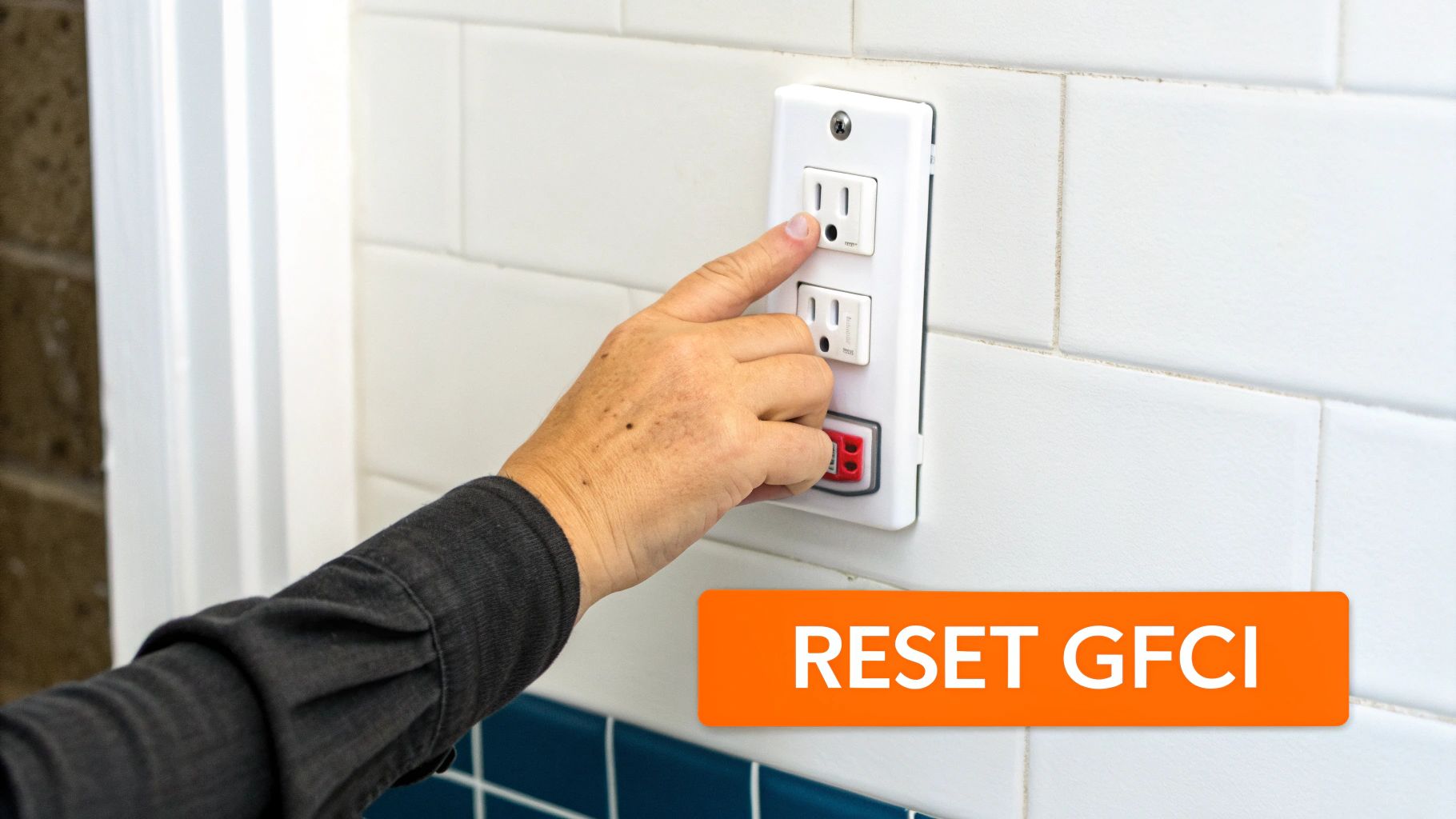
All you need to do is press the 'RESET' button firmly. You should hear and feel a little click, and the button will stay depressed. If it does, you're back in business.
How to Tell if Your GFCI Outlet Is Tripped
So, how do you know for sure that the GFCI is the problem? The first clue is usually the 'RESET' button itself. When the outlet trips, this button will pop out. A normally functioning GFCI will have a flush 'RESET' button.
Some models also have a small indicator light that will turn off, or switch from green to red, signaling a trip.
If you push the reset button and it won't stay in, that's a sign that there's still a ground fault somewhere on the circuit or the outlet itself might be bad. If you're running into a dead end, you can learn more from our guide on what to do when your electrical outlet not working after a reset attempt.
Remember, a tripped GFCI isn't just an annoyance—it's a safety feature doing its job. It detected a potential hazard and shut things down to protect you from a nasty shock.
Knowing the visual cues can save you a lot of time and frustration. The table below gives you a quick rundown of what to look for.
Is Your GFCI Outlet Tripped? A Quick Visual Guide
Use this handy table to quickly figure out what's going on with your outlet just by looking at it.
| Visual Cue | Status: Working Normally | Status: Tripped (Needs Reset) |
|---|---|---|
| Reset Button | The button is flush with the outlet's surface. | The button is popped out and slightly raised. |
| Power | Appliances plugged in will turn on and function. | No power is delivered to the outlet. |
| Indicator Light | Some models have a steady green or off light. | Some models have a red, orange, or off light. |
Once you know it’s tripped, a simple push of the button is usually all it takes to get things back to normal.
What Makes a GFCI Outlet Trip Anyway?
That GFCI outlet that just went dead isn't just being difficult; it's a critical safety device doing exactly what it's designed to do. Think of it as a tiny, hyper-vigilant bodyguard for your electrical circuits, especially in places where water and electricity could meet—like your kitchen, bathroom, or out on the lanai. When it cuts the power, it's because it sensed a potentially dangerous situation.
The most critical danger it prevents is a ground fault. This is when electricity strays from its intended path and tries to find a shortcut to the ground. If that shortcut happens to be through a person, the results can be catastrophic. The GFCI is built to detect even a minuscule change in the electrical current and will shut everything down in as little as 1/40th of a second to prevent a serious shock.
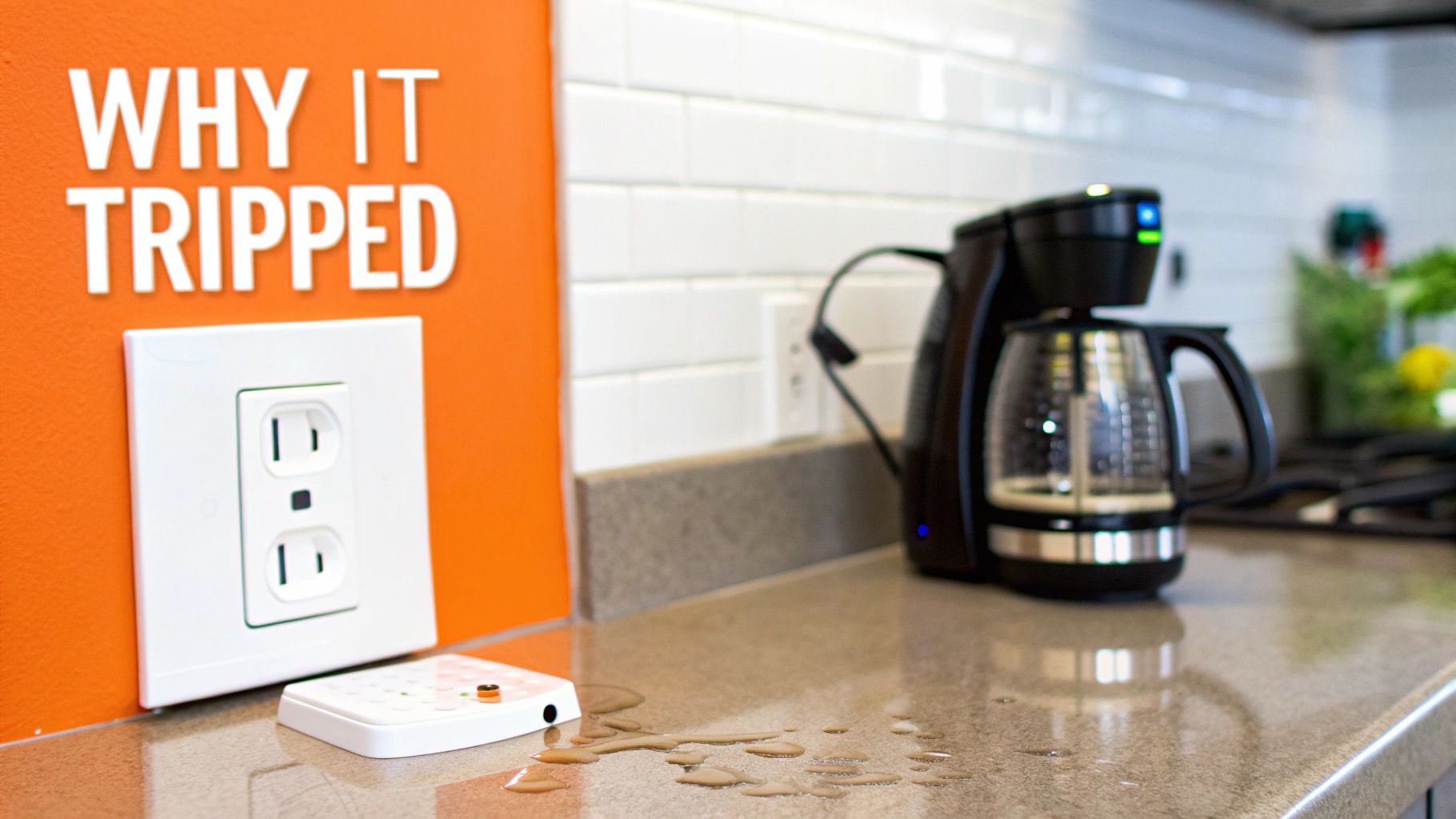
Common Reasons Your GFCI Keeps Tripping
While a ground fault is the number one hazard GFCIs are designed to stop, several other everyday issues can cause them to trip. For homeowners here in Sarasota and Cape Coral, Florida's climate often plays a big role.
- Circuit Overload: This is probably the most common culprit we see. You're making breakfast and have the coffee maker and a high-powered toaster plugged into the same kitchen circuit. That's often too much demand, causing the GFCI to trip to prevent overheating.
- Moisture Intrusion: With our high humidity and sudden downpours, it's easy for a little moisture to creep into an outdoor outlet or one in the garage. Even the steam from a hot shower can sometimes be enough to trip a sensitive GFCI in the bathroom.
- A Faulty Appliance: That old hairdryer with the slightly frayed cord or a well-loved blender can develop tiny electrical leaks over time. You might not notice it, but your GFCI will, and it will shut down the power to that outlet.
- The Outlet is Just Old: GFCI outlets aren't meant to last forever. After about 10-15 years, their internal safety mechanisms can wear out. This can lead to what we call "nuisance tripping," where the outlet trips for no obvious reason at all.
A tripped GFCI isn't a sign that your electrical system is failing. It's proof that your safety measures are working exactly as intended to keep your family safe.
Knowing how to reset a GFCI is a simple skill, but understanding why it's so important is key. Ground faults are responsible for a shocking number of home electrocutions every year. Safety experts agree that a huge portion of these tragedies could have been avoided if a properly functioning GFCI was in place.
If you're constantly resetting outlets or dealing with other quirky electrical issues, it might be a good idea to familiarize yourself with some of the common electrical problems and solutions we frequently encounter in Southwest Florida homes. Finding the root cause is always the first step to a reliable, long-term fix.
A Practical Walkthrough for a Safe GFCI Reset
Alright, let's go beyond just jamming the "RESET" button and walk through the proper way to handle a tripped GFCI. This isn't just about getting the power back on; it's about making sure the outlet is still doing its life-saving job. For any of us here in Southwest Florida, this is a critical check, since our electrical systems are constantly battling humidity and storm-related stress.
Before you even think about touching the outlet, do this one crucial thing first: unplug everything. And I mean everything. Unplug all the appliances from the outlet that tripped. It's also a smart move to unplug devices from any other outlets in that room that went dark, as they're likely on the same circuit. This simple step prevents an immediate re-trip from a faulty hairdryer or toaster.
How to Perform the Reset Safely
Once everything is unplugged, you can move on to the outlet itself. The process is a quick two-step dance that both tests and restores the outlet's function.
- First, press the 'TEST' button. You should hear a sharp little "click." That sound is your confirmation that the internal safety switch did its job and cut the power.
- Next, firmly press the 'RESET' button. You should feel and hear it click back into place. A properly reset button will sit flush with the outlet's faceplate, not sticking out.
Now, grab something simple like a phone charger or a nightlight and plug it in. If it powers up, you’re back in business. Your GFCI is working perfectly. You can start plugging your other appliances back in, one by one.
A successful reset isn't just about the lights coming back on—it’s a live confirmation that the GFCI's safety mechanism is ready to protect you. This quick test is one of the most important things you can do for your home's electrical safety. For more deep dives, our guide on essential electrical safety tips is a must-read for Florida homeowners.
A Key Safety Precaution
If you have any doubts at all, grab a non-contact voltage detector before you start troubleshooting. This inexpensive tool gives you instant verification that an outlet is truly "dead," adding an essential layer of safety.
What if the 'RESET' button pops right back out? Stop. Don't try to force it. This is the outlet telling you that the ground fault is still present, or that the outlet itself has failed. Forcing it to reset is dangerous. In the next section, we’ll get into exactly what to do when this happens.
What to Do When the GFCI Outlet Won't Reset
It's one of the most common frustrations for a homeowner: you push the reset button, but nothing happens. The outlet stays dead, and the button just won't click back into place. When a GFCI outlet refuses to reset, it’s not just being stubborn—it's sending you a clear signal that there's a problem that needs to be fixed before the power can safely turn back on.
The very first thing to check is the appliance you're using. A faulty hairdryer or a worn-out toaster is a frequent culprit. Before you do anything else, unplug everything from the GFCI outlet and any other outlets on that same circuit, then try hitting the reset button again. If it clicks in, you've found your issue: one of your devices is the problem.
Check Your Main Electrical Panel
If the outlet still won't cooperate with nothing plugged in, your next stop should be the main electrical panel, often called the breaker box. A GFCI can't reset if it isn't getting any power, and a tripped circuit breaker is often the real reason it seems faulty.
Look for a breaker switch that's either flipped to the "off" position or is stuck halfway in the middle. To reset it the right way:
- Push the breaker switch firmly all the way to the "off" position first.
- Then, flip it back to the "on" position.
Now, go back to the GFCI and try the reset button one last time. You'd be surprised how often this simple trip to the breaker box solves the whole problem.
Hunt for the "Upstream" GFCI
Here’s a tricky situation that stumps a lot of people: one single GFCI outlet is often wired to protect several other standard outlets "downstream" on the same circuit. Sometimes, it's a different GFCI outlet on that circuit that has tripped, cutting power to the one you're trying to fix.
Before you assume the outlet is bad, take a walk around and look for other GFCI receptacles. Check nearby bathrooms, the garage, hallways, or even on the other side of the wall in an adjacent room. Push the reset button on any other GFCIs you find. The real source of the trip might just be hiding in plain sight.
This visual guide can help you walk through the troubleshooting steps systematically.
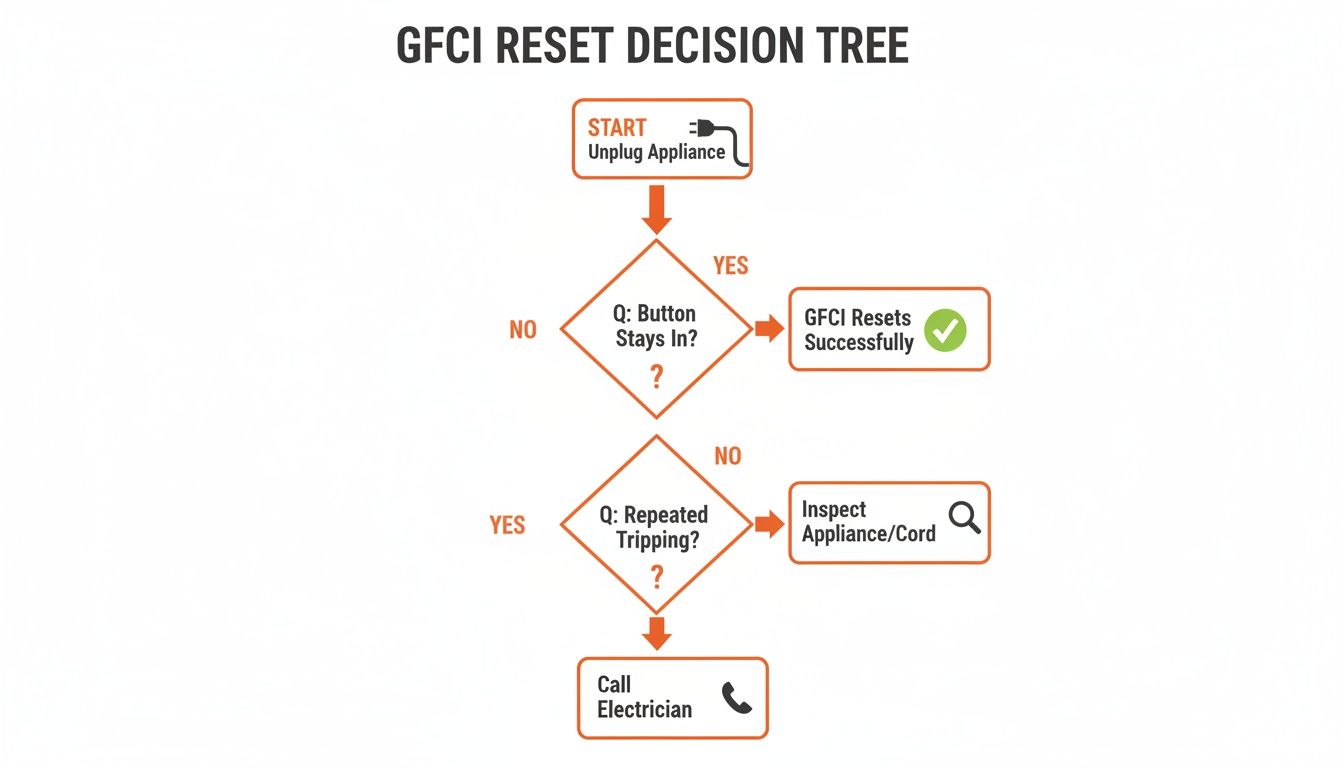
As the chart shows, if the button won’t stay in, the next logical step is to check for wider circuit issues. While it's a different context, a guide on troubleshooting RV electrical problems can offer some surprisingly relatable insights into tracking down these kinds of circuit-level faults.
When the Outlet Itself Is the Problem
So you've tried everything, and that reset button still refuses to engage. At this point, it's very likely the GFCI outlet itself has simply failed. GFCIs are complex electronic devices, and they do wear out over time—most have a lifespan of about 10-15 years. Here in Florida, our humid climate can sometimes shorten that lifespan even further.
Look out for these signs of a worn-out GFCI:
- The reset button feels mushy or won't make a distinct "click."
- You see any discoloration or signs of heat damage around the outlet.
- It starts tripping constantly for no obvious reason (we call this "nuisance tripping").
A worn-out GFCI outlet is more than just an annoyance; it’s a serious safety liability. If you suspect the outlet has failed, it's crucial to get it replaced to keep your home protected.
The importance of this little device can't be overstated. Since the National Electrical Code first required GFCI protection in bathrooms back in 1975, electrocutions in U.S. homes have dropped by an incredible 80%. If you think you have a bad outlet or are concerned about faulty wiring, it's a good time to consider professional electrical wiring inspections to make sure everything is safe and up to code.
Knowing When to Call a Licensed Electrician
Knowing how to reset a GFCI outlet is a fantastic skill for any homeowner, but there are definite moments when you need to put the tools down and pick up the phone. Your safety is always the top priority. Some electrical issues are more than just an inconvenience—they’re clear warnings of a dangerous problem lurking behind the wall.
Recognizing these red flags is just as important as knowing which button to press. For instance, if your GFCI outlet trips over and over again even when absolutely nothing is plugged into it, this isn't a simple nuisance trip. It’s a strong signal that there’s a deeper issue, like a ground fault somewhere in the wiring or a total failure of the outlet's internal safety mechanism.
Serious Warning Signs to Watch For
Some symptoms go way beyond a simple malfunction and point to immediate hazards. If you run into any of the following, don't touch the outlet or try another reset. Just step away and call a professional.
- A Burning Smell: Any odor that smells like burning plastic or hot wires is a huge red flag. This usually means electrical connections are overheating and could easily start a fire.
- Buzzing or Humming Sounds: Your outlets should be completely silent. If you hear buzzing, humming, or crackling, it’s a sign of loose wiring or arcing—an electrical discharge that creates intense, dangerous heat.
- Scorch Marks or Discoloration: See any browning, black marks, or melting plastic around the outlet? That’s physical evidence of dangerous overheating.
Key Takeaway: These symptoms are not DIY situations. They signal an active electrical hazard that requires the diagnostic tools and expertise of a licensed electrician to resolve safely.
Trying to replace a GFCI yourself can be incredibly risky if you're not a trained professional. A single incorrect wire connection can create a fire hazard or, worse, disable the very safety features you’re counting on to protect your family.
Why a Local Pro Matters in Southwest Florida
For homeowners here in the Tampa Bay area, hiring a certified, local pro isn't just a good idea—it's essential. Our unique climate, with its high humidity and salty air, can speed up the corrosion of electrical components. A local electrician who works in this environment every day understands Florida’s specific building codes and knows how to make sure your installation can stand up to our demanding conditions.
These professionals provide more than just a repair; they offer peace of mind. And you can't put a price on knowing your home's electrical system is safe. That small reset button on your GFCI is a lifesaver, and its widespread adoption has played a massive role in home safety. In fact, GFCIs have helped slash household electrocution rates by half, which is a powerful testament to their importance.
If you're facing any of these serious warning signs, it’s time to seek expert electrical repair services to protect your home and family.
Common Questions We Hear About GFCI Outlets
Even after you get the hang of resetting a GFCI, a few questions always seem to come up. It's totally normal. Homeowners all over Southwest Florida have the same curiosities about these little life-saving devices, from how often to check them to weird wiring quirks. Getting straight answers helps you feel a lot more confident about your home's electrical safety.
How Often Should I Really Test My GFCI Outlets?
The official recommendation is to test your GFCIs monthly. I know, it sounds like a lot, but it's a super quick check that takes just a few seconds. All you do is press the 'TEST' button to kill the power, then hit 'RESET' to bring it back. This simple action confirms that the internal safety trip is still working and ready to do its job.
Living in Florida, a great habit to get into is adding this task to your pre-storm-season checklist. Before the summer storms start rolling in, take a walk around and test the outlets in your garage, on the lanai, in the kitchen, and in your bathrooms. It ensures they're ready for our humid, unpredictable weather.
Think of consistent testing as proactive maintenance. You're making sure the outlet can protect you from a nasty electrical shock long before an actual ground fault ever happens.
Can One GFCI Outlet Protect Other Outlets, Too?
You bet. It’s not only possible, it's a common and smart way to wire a circuit. An electrician can install a single GFCI receptacle at the beginning of a circuit run, and it will provide ground fault protection for all the regular-looking outlets that are "downstream" from it.
So, if a standard outlet in your guest bathroom suddenly dies, don't just stare at that one outlet in confusion. Look around for a GFCI receptacle nearby—it could be in the same room or even in an adjacent one, like a master bathroom. Resetting that one GFCI often brings the whole string of outlets back to life.
What Does a Buzzing or Humming Noise from My GFCI Mean?
A buzzing or humming sound coming from any electrical outlet is a huge red flag. That noise is almost always a sign of a serious, and potentially dangerous, problem that needs immediate attention.
- Loose Wiring: The most frequent cause is a wire that has wiggled loose from its connection, creating a hazardous situation called arcing.
- Internal Failure: The guts of the GFCI itself could be failing, which creates an unstable and unsafe electrical connection.
- Overheating: That constant buzz can be a symptom of the outlet overheating, which is a major fire hazard.
If you hear anything unusual, stop using the outlet right away. Don't try to mess with it yourself. This is a clear signal to call in a licensed electrician to safely inspect and replace the faulty device.
Are GFCI Outlets Required in Every Room of My House?
Nope, GFCIs aren't required in every single room. The National Electrical Code (NEC) is very specific, mandating them in any area where electricity and water are likely to cross paths. This strategic placement is all about preventing electrocution in the highest-risk zones of your home.
In a modern Florida home, you are required to have them in these spots:
- Bathrooms
- Kitchens (specifically for all countertop receptacles)
- Garages and any accessory buildings (like a shed with power)
- Unfinished basements and crawl spaces
- Laundry areas
- All outdoor receptacles
If your older home is missing GFCIs in these critical areas, upgrading is one of the most important safety improvements you can make. It brings your home up to modern safety codes and gives your family vital protection.
If you're wrestling with a GFCI that just won't cooperate or you know it's time to upgrade your home's outlets, don't leave your family's safety to chance. The certified professionals at Heatwave Air Conditioning, Plumbing, & Electric have the expertise to diagnose and solve any electrical problem safely and correctly. Contact us today for reliable service you can trust.