
You turn on the shower and it hits like a spray nozzle. The kitchen faucet splashes off the sink bowl. A toilet keeps refilling for no clear reason. In a lot of Florida homes, that doesn’t mean “great pressure.” It means water pressure high enough to start wearing out plumbing every day.
That matters more in Tampa, Fort Myers, Sarasota, Port Charlotte, and Cape Coral than many homeowners realize. City water is often delivered at pressures meant to serve hydrants and taller buildings, not just a single-family house. Add Florida hard water to the mix, and the damage shows up faster in water heaters, washing machines, dishwashers, shutoff valves, and faucet cartridges.
Is Your Home's Water Pressure Too High
A strong shower can feel nice for about ten seconds. After that, the clues start showing up. Water jumps out of the sink, hoses on appliances age too fast, and fixtures never seem to stay quiet for long.
For most homes, ideal residential water pressure is 40 to 60 PSI, and 80 PSI is the maximum safe threshold under the International Residential Code adopted by most U.S. jurisdictions, according to CGC Home Services. That same source notes municipal mains can reach up to 200 PSI, which is one reason high pressure is such a common issue in low-lying coastal areas.
Why Florida homes see this so often
In coastal Florida, the city may send out water at pressure levels that make sense for the wider system. Your house still has to live with that force.
Homes in places like Sarasota and Cape Coral often sit in low-lying areas, so incoming pressure can be harder on residential plumbing than homeowners expect. The result isn’t always a dramatic burst pipe on day one. More often, it’s steady wear that shortens the life of faucets, toilets, supply lines, and water-using appliances.
What counts as a problem
If your home tests above the code limit, that’s not a comfort upgrade. It’s a plumbing problem.
Pressure that stays too high puts constant strain on:
- Fixture seals that start dripping or fail early
- Appliance hoses that weaken under repeated stress
- Water heater components that already deal with heat and mineral buildup
- Toilet fill valves that can’t regulate cleanly under excess force
If you’ve dealt with repeated leaks or noisy pipes, this overview of common plumbing problems and solutions gives useful context. High pressure is often the root cause hiding behind several “small” plumbing annoyances.
Practical rule: If water feels aggressive instead of steady, don’t assume that’s normal for Florida. Test it before it tests your plumbing.
The Telltale Signs of High Water Pressure
Most homeowners notice the symptoms before they know the cause. Water pressure high enough to cause trouble usually announces itself in sound, spray pattern, fixture behavior, and appliance wear.
The house sounds different
Start by listening.
When pressure is too high, pipes often bang when a valve closes fast. That noise is commonly called water hammer. You may hear it when the washing machine shuts off, when an ice maker cycles, or when someone turns off a shower quickly.
That banging isn’t just annoying. It means water is stopping under force, and that force has to go somewhere.
You might also hear:
- Sharp thuds in the wall after using a faucet
- Hissing at fixtures even when flow looks normal
- A toilet that refills loudly and too quickly
- Brief rattling in supply lines behind appliances
Faucets and toilets start acting wrong
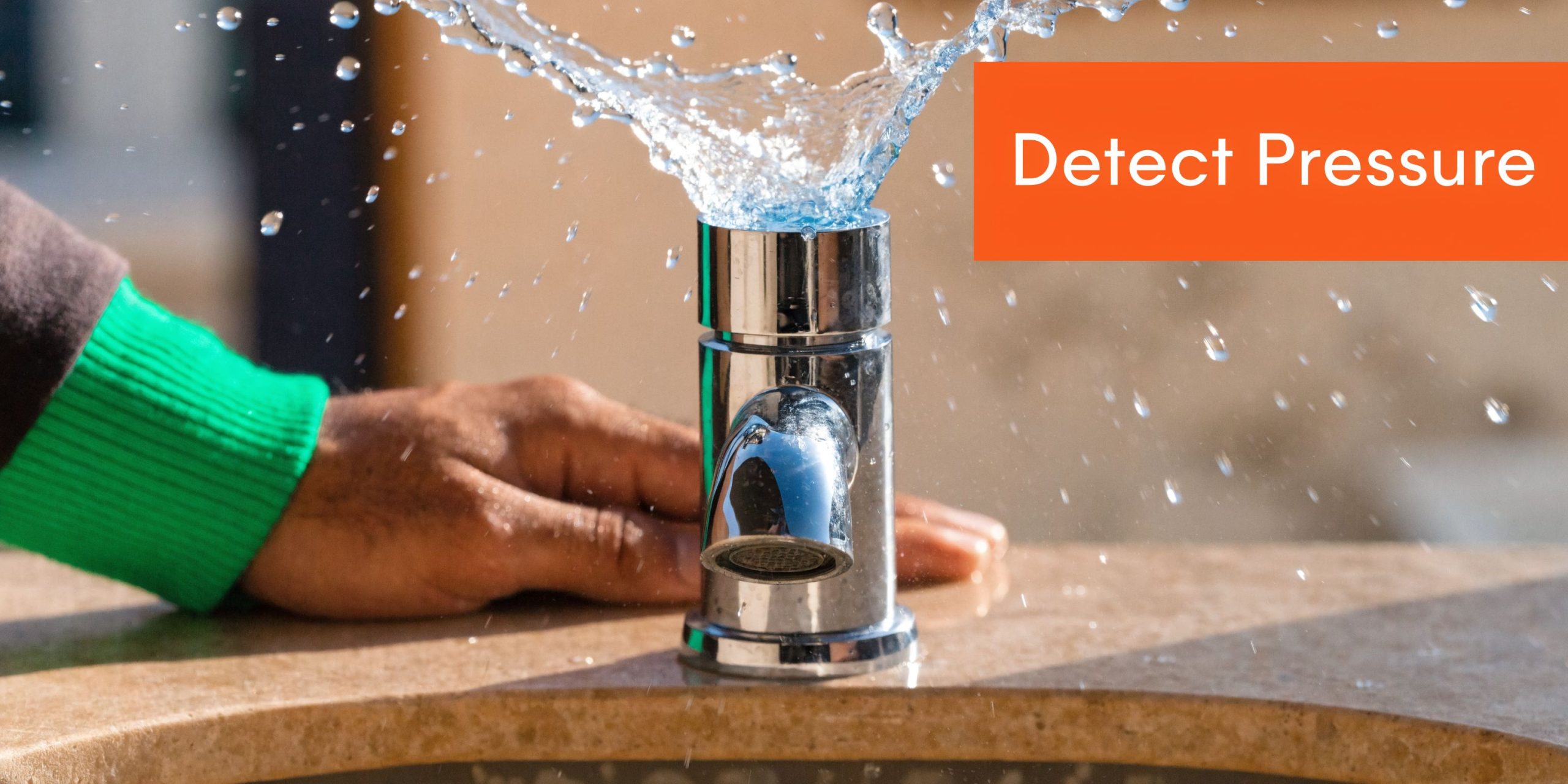
A sink faucet with high pressure often doesn’t pour cleanly. It spits, splashes, or hits the basin hard enough to spray the counter.
Toilets can behave strangely too. A constantly running toilet may not be a flapper-only problem. High pressure can push water past internal seals and make the fill valve work harder than it should.
Watch for these common signs:
- Forceful faucet output that splashes instead of flowing smoothly
- Dripping fixtures that return soon after repair
- Running toilets that seem fixed, then act up again
- Shutoff valves that feel stressed or start seeping
Appliances wear out in a pattern
Appliances wear out in a pattern. Florida homeowners often miss the bigger picture. A washing machine hose leak, a dishwasher acting up, and a water heater problem can seem unrelated. In the field, they often tie back to the same pressure issue.
High pressure keeps internal valves, seals, and connection points under constant strain. In hard water areas, minerals make that strain worse by building scale inside the same components already fighting excess force. If you’re trying to protect your tank, this guide on how to extend life of water heater in Pinellas Park is worth a look.
A faucet can survive high pressure for a while. The cartridge, washer, and aerator usually tell the full story first.
Don’t ignore the water heater side
Homeowners sometimes focus only on faucets and toilets. The hot water side deserves just as much attention.
If your relief valve has discharged, your water heater makes unusual noises, or hot-side fixtures seem more erratic than cold-side fixtures, pressure may be affecting the system beyond the main line. For extra background on how a hot water system pressure valve fits into pressure protection on the hot water side, that resource gives a useful overview.
A house with high pressure often leaves a trail. It’s just not always obvious until you know where to look.
How to Measure Your Home's Water Pressure Yourself
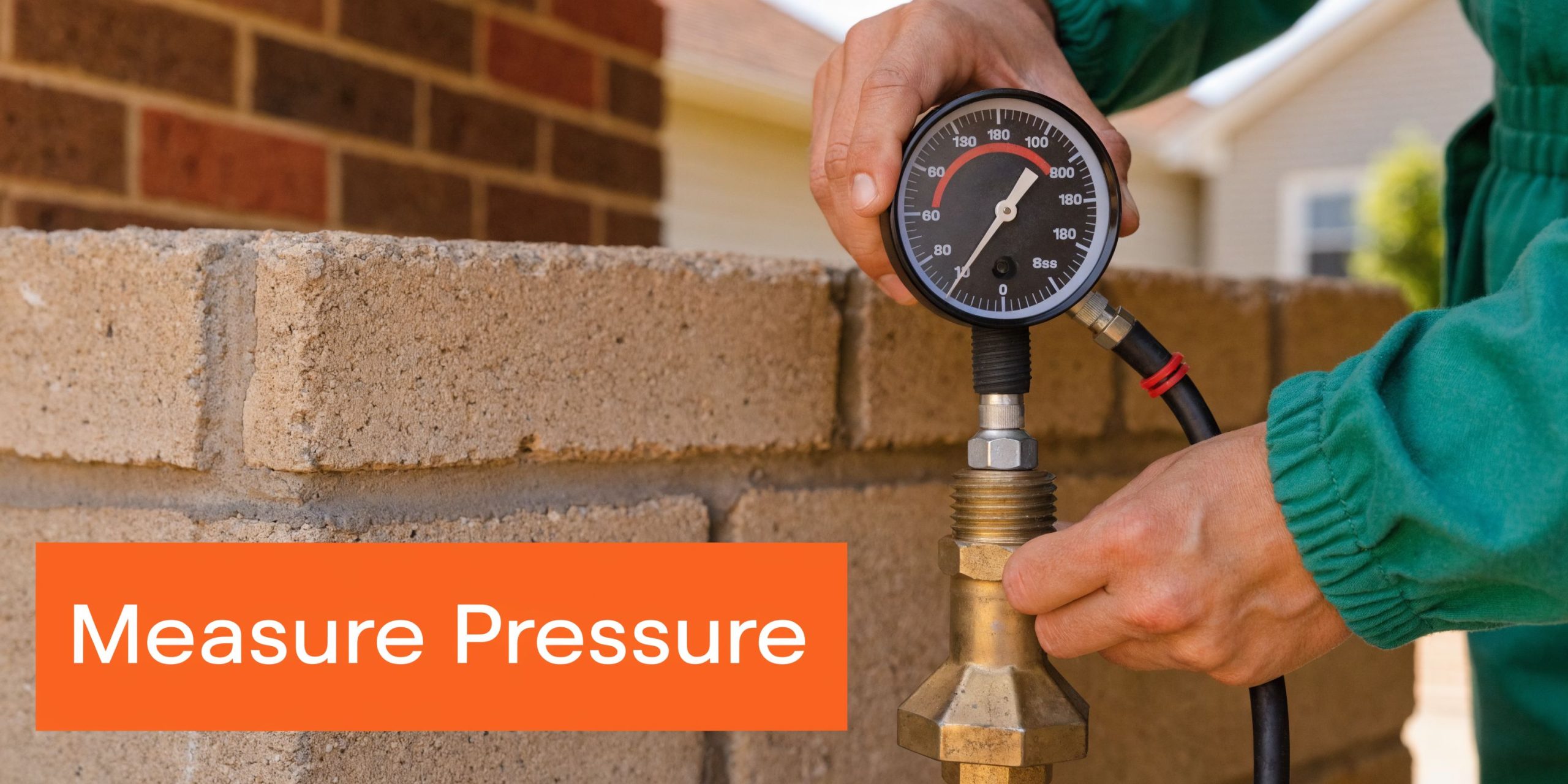
You don’t need a truck full of tools to check this. A simple water pressure gauge that threads onto a hose bib is enough to tell you whether the house is in a safe range or whether your water pressure high problem needs attention.
What you need before testing
The best setup is simple:
- A hose-thread pressure gauge from a hardware store
- An outdoor hose bib or laundry sink connection with hose threads
- A quiet house with no showers, dishwashers, washing machines, or irrigation running
Use a faucet that’s as close to the main supply as practical. An exterior hose bib usually works well.
How to get an accurate reading
Thread the gauge onto the hose bib hand-tight. Open the faucet fully and let the gauge settle.
That reading is your static pressure, which is the pressure in the system when water isn’t moving elsewhere in the house. If someone flushes a toilet during the test, the number won’t tell you what you need to know.
For a cleaner result:
- Test when the house is quiet. No one should be using water inside.
- Open the bib fully. Half-open can skew what you’re seeing.
- Check more than once. Morning, afternoon, and evening can give different readings.
- Write the numbers down. A single high reading matters. A repeated pattern matters more.
How to read the result
Once you have the number, compare it to the target residential range discussed earlier.
If it lands comfortably in the middle range, pressure probably isn’t your main problem. If it creeps near the upper edge or goes beyond the safe limit, that points to the regulator, the supply conditions, or both.
Here’s a simple interpretation guide:
| Gauge reading | What it usually means |
|---|---|
| Within the normal residential range | Pressure is likely acceptable for the home |
| Near the top of the acceptable range | Worth monitoring, especially if symptoms are already present |
| Above the safe residential limit | The home likely needs regulator adjustment, repair, or further diagnosis |
Test at more than one time of day
A lot of homeowners test once and call it done. I wouldn’t.
Pressure can fluctuate based on broader system demand. If you only test during one window, you may miss the period when the house sees its highest pressure. In Florida neighborhoods with municipal supply swings, that matters.
This walkthrough helps if you want to see the process before trying it yourself:
What not to do during a DIY test
A few mistakes show up all the time:
- Don’t test while irrigation is running. That changes system conditions.
- Don’t assume one “strong shower” proves anything. You need a gauge, not a guess.
- Don’t adjust anything yet if you haven’t found the regulator. Testing comes first.
- Don’t ignore a bouncing reading. That can point to a valve issue or unstable pressure conditions.
If the gauge shows pressure above the safe limit more than once, treat that as a real plumbing issue, not a one-off odd reading.
The Hidden Costs and Risks of High Pressure in Florida
High pressure doesn’t only show up as noise or splash. It costs money, shortens equipment life, and creates a much bigger failure risk in Florida homes that already deal with hard water.
According to Parker & Sons, high water pressure above 80 PSI can cause a documented 30% increase in water bills through leaks and excessive flow. The same source states that it also shortens the lifespans of water heaters, dishwashers, and washing machines, which can fail prematurely under constant high-force stress.

The bill gets hit before the pipe bursts
A lot of people wait for a dramatic leak. The quieter losses usually start first.
High pressure pushes more water through fixtures than you need. It also turns minor seepage into a bigger ongoing loss. A toilet fill valve that’s barely misbehaving under normal conditions can waste a lot more water when supply pressure stays too high.
That means you can pay for the problem long before you see damage on the floor.
Florida hard water makes this worse
This is the part many generic plumbing articles skip.
In Florida, especially around Sarasota and Fort Myers, mineral-heavy water already leaves scale inside water heaters and appliances. When pressure stays high, that buildup doesn’t just sit there harmlessly. It forms faster in the parts of the system taking the most abuse.
The result is a rough combination:
- Water heaters deal with heat, sediment, and pressure at the same time
- Dishwashers and washing machines cycle under higher force than they should
- Valve seats and seals wear while minerals collect on them
- Fixture internals don’t shut as cleanly once scaling starts
Water heaters take a beating
In the field, this is one of the most expensive places high pressure shows up.
A water heater in hard water conditions already fights sediment and scale. Add excessive pressure and the tank, relief components, and hot-side fittings age faster. Homeowners often notice reduced hot water performance, odd sounds from the heater, or nuisance dripping before they realize pressure is involved.
If you already suspect a hidden leak tied to these issues, residential leak detection in St. Petersburg can help uncover losses that don’t show up right away.
High pressure rarely damages only one thing. It usually stresses the whole system, then the weakest component fails first.
A significant risk involves timing
A faucet drip is inconvenient. A failed washing machine hose or heater-related leak is a different event entirely.
What makes this urgent is that homes don’t get to choose when a stressed part lets go. It may happen during the day, or while you’re away, or after another small symptom has been ignored for months. Florida homes with hard water and high incoming pressure have less margin for error because the plumbing system is fighting two problems at once.
If your water pressure high issue has already shown itself in multiple fixtures, the cheapest repair is usually the one that happens before a larger failure.
Your Guide to Taming High Water Pressure
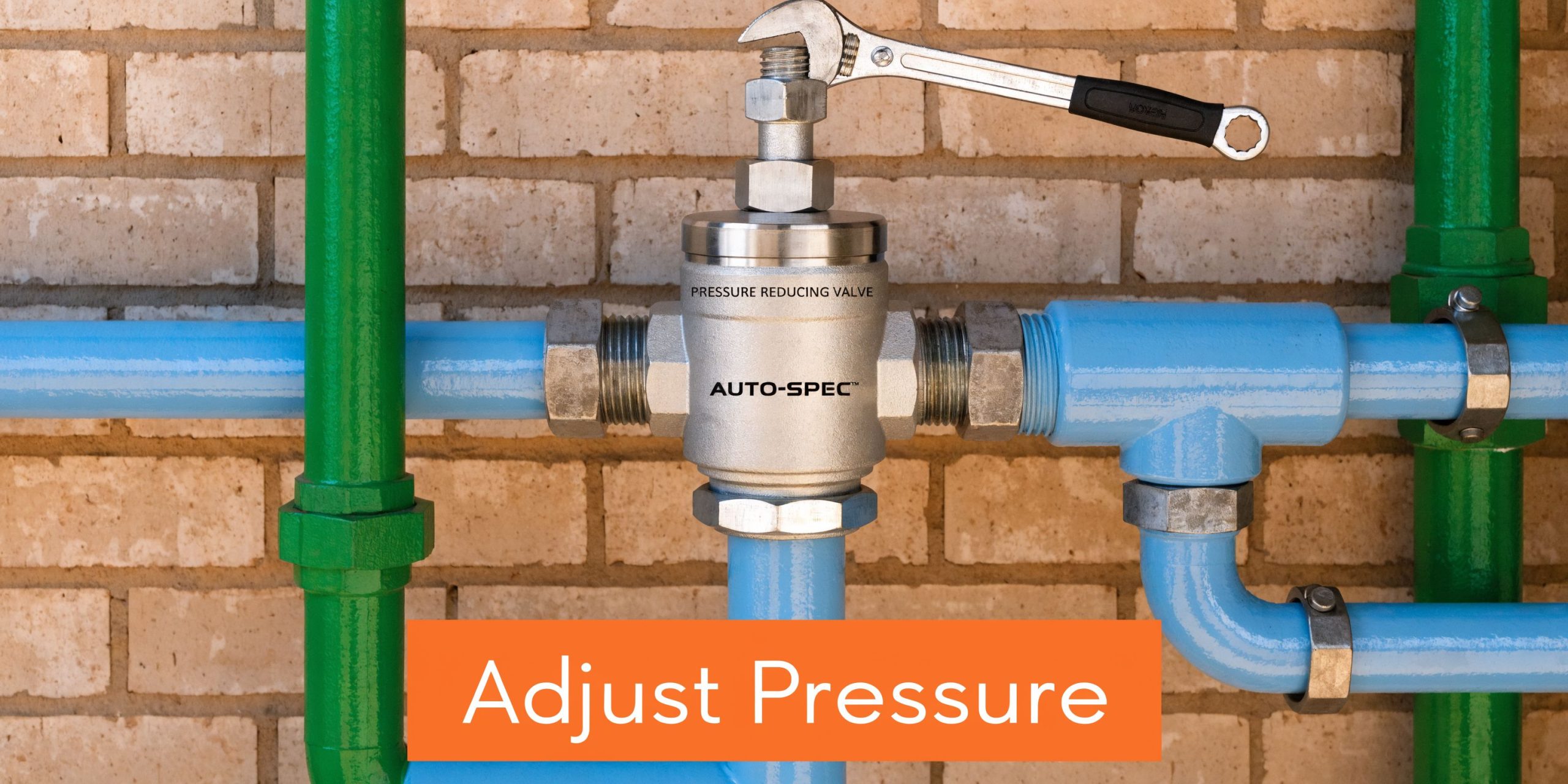
If your test confirmed the problem, the fix usually centers on one part: the pressure reducing valve, often called a PRV or pressure regulator. This valve is installed on the main water line and lowers incoming pressure to a safer level for the house.
According to the EPA service water pressure tech sheet, when installing or adjusting a PRV, it should be set between 45 and 60 PSI. The same source warns that once a PRV creates a closed system, thermal expansion has to be managed because heated water can cause pressure spikes over 200 PSI if there’s no proper expansion control.
Find the regulator first
In most homes with city water, the PRV sits near the main shutoff where the water line enters the house. It often has a bell-shaped body with an adjustment screw on top.
Look in places like:
- Near the front hose bib or garage wall where the main line enters
- By the main shutoff valve
- Inside a utility area near other incoming plumbing components
If you can’t identify it confidently, stop there. Guessing at the wrong valve can create a bigger problem than the one you started with.
A careful adjustment can solve a lot
If the regulator is present and in decent condition, a small adjustment may bring the pressure back under control.
Use this method:
- Take a fresh gauge reading before touching the PRV.
- Loosen the locknut if your regulator has one.
- Turn the top adjustment screw slightly. Small changes matter.
- Retest at the hose bib after each small adjustment.
- Aim for the EPA-recommended 45 to 60 PSI range.
Don’t crank the screw aggressively. A little movement can change the reading more than homeowners expect.
Signs the PRV itself may be failing
Not every high-pressure issue is an adjustment issue. Regulators wear out.
A failing PRV often shows itself through inconsistent performance rather than one obvious symptom.
Watch for patterns like these:
- Pressure won’t change when you adjust the screw
- Pressure drops too low, then rises again later
- The valve body is corroded or leaking
- Fixtures still act erratic after multiple test-and-adjust cycles
When a regulator stops responding, replacement is usually the right move.
Thermal expansion is the part people miss
This is the most overlooked part of the whole job.
Once a PRV limits incoming water, the home becomes a more closed system. When the water heater warms water, that heated water expands. If there’s nowhere for the extra volume to go, pressure can spike inside the plumbing and stress the heater, fittings, and valves.
That’s why an expansion tank or another approved method of thermal expansion control matters. Skipping that step can leave you with pressure problems even after the regulator is set correctly.
Field note: If someone adjusts the PRV but ignores thermal expansion, the house may still show pressure-related symptoms on the hot side.
What works and what doesn’t
Some fixes solve the cause. Others only mask the symptoms.
| Approach | What it does | Does it solve the main problem? |
|---|---|---|
| Adjusting a working PRV | Lowers incoming house pressure | Yes, if the valve still responds properly |
| Replacing a failed PRV | Restores control of incoming pressure | Yes |
| Adding expansion control | Prevents hot water pressure spikes in a closed system | Yes, for the heater side |
| Replacing random faucets first | Temporarily fixes worn fixtures | No, not if pressure stays high |
| Ignoring the issue because flow feels strong | Lets wear continue | No |
Cost planning for the repair
Exact pricing varies by home layout, valve accessibility, and the condition of surrounding plumbing. The best way to think about cost is by service category, not by a one-size-fits-all quote.
Estimated Costs for Managing High Water Pressure (2026)
| Service | Estimated Cost Range |
|---|---|
| Pressure testing and diagnosis | Varies by provider |
| PRV adjustment | Varies by provider |
| PRV replacement | Varies by provider |
| Expansion tank installation | Varies by provider |
| Combined regulator and thermal expansion correction | Varies by provider |
If you need a licensed team for diagnosis, regulator work, or hot-side pressure protection, this plumbing service page is the right place to start.
When replacement makes more sense than adjustment
A homeowner can sometimes make a basic adjustment. Replacement is different.
A new PRV may be the smarter choice when:
- The current valve is old and unresponsive
- The body is leaking or badly corroded
- The house has no regulator at all
- Thermal expansion control needs to be added at the same time
For Florida homes with hard water, I’d rather fix this once and set the system up correctly than chase fixture failures one by one. The regulator and the expansion setup do the heavy lifting. Everything else in the house benefits from that.
When to Skip DIY and Call a Heatwave Plumber
Some water pressure high problems are reasonable for a careful homeowner to diagnose. Fewer are worth repairing without professional help.
If you tested the system, found the regulator, made a small adjustment, and the pressure settled where it should, that’s one thing. If the reading keeps jumping around, the regulator leaks, or you can’t even confirm where the main shutoff is, it’s time to stop.
Red flags that move this out of DIY territory
Call a licensed plumber when you notice any of these:
- The PRV doesn’t respond to adjustment
- The valve is leaking, corroded, or making noise
- Pressure seems normal at one moment and extreme the next
- The water heater shows pressure-related symptoms
- You suspect thermal expansion but don’t have a proper control device
- You’re not fully confident shutting off water to the home
Those aren’t nuisance issues. They point to system-level pressure control problems.
Florida homes add another layer
In Tampa Bay, Sarasota, Port Charlotte, Cape Coral, and Fort Myers, hard water often means the plumbing has more going on than pressure alone. Scale can affect valves, heater components, and fixture internals at the same time.
That’s why a regulator job sometimes turns into a broader correction. A plumber may need to verify incoming conditions, confirm the regulator is working properly, check the water heater side, and make sure pressure isn’t climbing again after the heater cycles.
The goal is controlled pressure, not guesswork
A good service visit should answer a few basic questions clearly:
- Is the incoming pressure too high?
- Is there a working PRV on the home?
- Is that PRV adjustable, failed, or missing?
- Is thermal expansion being controlled properly?
- Has hard water already damaged related components?
If you want that checked by a local team, use the contact page to schedule a free estimate. That’s the smart move when the issue goes beyond a simple gauge reading and into valve replacement, heater protection, or leak prevention.
Frequently Asked Questions About Water Pressure
How does Florida hard water really affect my pipes under high pressure
It’s not just two separate problems happening at once. They feed each other.
In hard water regions like Sarasota and Fort Myers, hard water over 180 mg/L calcium carbonate combined with pressure above 80 PSI can reduce a water heater’s lifespan by 30 to 50% due to rapid scaling and corrosion, according to CLT Water Blog. In practice, minerals collect on the same parts already stressed by excessive pressure, especially inside water heaters and appliance valves.
My pressure is too low after adjusting the PRV. What did I do wrong
Most likely, you adjusted too far or you retested under flowing conditions that didn’t match your original reading.
Go back to a quiet-house test with the pressure gauge attached to the hose bib. Make small corrections only. If the pressure won’t stabilize or swings up and down, the regulator may be failing rather than merely misadjusted.
Do I need a PRV if my home uses well water instead of city water
Maybe, but the setup is different.
Well systems use pressure tanks and controls instead of relying on municipal supply conditions. The key point is still the same. The house needs stable pressure that stays in a safe operating range. If you have a well and the pressure feels erratic, the issue may involve the pressure tank, switch settings, or another control component rather than a city-water PRV.
Why do my water heater and dishwasher seem to fail before my faucets
Because those appliances work under repeated cycles, heat, and internal valve action. They often show the stress first.
In Florida homes, hard water adds scale to the exact components that already struggle under pressure. A faucet may drip and limp along for a while. A water heater or dishwasher usually gives you a more expensive reminder.
If I don’t see a leak, can I wait
Waiting is risky.
High pressure often wastes water through fixture behavior you don’t immediately notice, and it can weaken components long before a visible leak appears. If you’ve confirmed high pressure with a gauge, fixing the cause is safer than hoping the weakest part of the system holds.
If your home in Tampa Bay or Southwest Florida is dealing with water pressure high symptoms, Heatwave Air Conditioning, Plumbing, & Electric can help diagnose the cause, check your regulator, and make sure your plumbing and water heater are protected. Schedule a free estimate and get a clear fix before high pressure turns into leaks, appliance damage, or a failed water heater.