
An electrical service call usually starts at $100 to $200 for the first hour, and the total initial cost for many jobs lands between $163 and $538. If you're in Florida and calling for help with flickering lights, a dead outlet, or a breaker that won't stop tripping, the number that matters most isn't just the call-out fee. It's whether that fee gets applied to the repair or disappears as a separate diagnostic charge.
That distinction catches homeowners off guard all the time. The lights blink, the microwave resets, or half the room goes dead, and the first thought is simple: what's this going to cost me today? The hard part is that two electricians can quote what sounds like the same visit and bill it in completely different ways.
One company may charge to come out, diagnose the issue, and then credit that amount toward the repair. Another may charge a diagnostic fee that stays on the invoice even if the fix takes only a few minutes. On a small repair, that difference can change the whole value of the service call.
If the issue started with lights dimming or flickering, it's worth understanding the common causes before the appointment. Heatwave has a useful guide on what causes flickering lights that helps homeowners describe the problem more clearly when they call.
That Flicker in the Lights What an Electrical Service Call Costs
A common service call starts with something small. A hallway light flickers every time the air conditioner kicks on. One bathroom outlet quits. A kitchen breaker trips twice in one week. None of that tells you yet whether the fix is quick or whether the electrician is walking into a deeper wiring problem.
What most homeowners want is a straight answer. National pricing gives a workable benchmark. HomeAdvisor says the average cost to hire an electrician is about $350, with most homeowners spending between $163 and $538, and licensed electricians commonly charge $50 to $130 per hour plus a service-call fee of $100 to $200 for the first hour in a typical visit (HomeAdvisor electrician cost guide).
That tells you the first important thing. The trip to your house isn't usually a low-cost errand. It's the start of a paid diagnostic and repair process.
Why Florida calls can feel different
In Tampa Bay, Sarasota, Port Charlotte, Cape Coral, and Fort Myers, service calls often happen during weather swings, heavy AC use, and storm season. That doesn't automatically make every call more expensive, but it does mean homeowners are more likely to need help fast.
Fast service changes the economics. If the issue affects safety, cooling equipment, refrigeration, or a room that's suddenly without power, customers don't shop the job the same way they would for a planned fixture replacement. They want the problem isolated and made safe.
When power problems interrupt normal life, you're not only paying for labor. You're paying for someone to show up prepared, diagnose under pressure, and decide whether the problem is minor or dangerous.
The number on the phone isn't the whole invoice
A dispatcher might give you a service-call amount, but that still leaves several questions open:
- Does that fee include diagnosis only or the first block of labor too?
- Is there a minimum billable time even if the fix is quick?
- Will parts be extra if the electrician finds a failed device, loose connection, or bad breaker?
- Is this regular-hours pricing or an urgent appointment?
Those details matter more than the headline number. That's why comparing electrical service call rates takes more than asking, "What's your trip charge?"
Deconstructing the Service Call What You Are Paying For
A homeowner hears "service call" and expects a simple trip charge. The confusion starts when one company treats that fee as the cost to show up and diagnose, while another applies part or all of it to the repair if you approve the work on the spot. That difference changes the actual price of the visit more than the advertised number does.
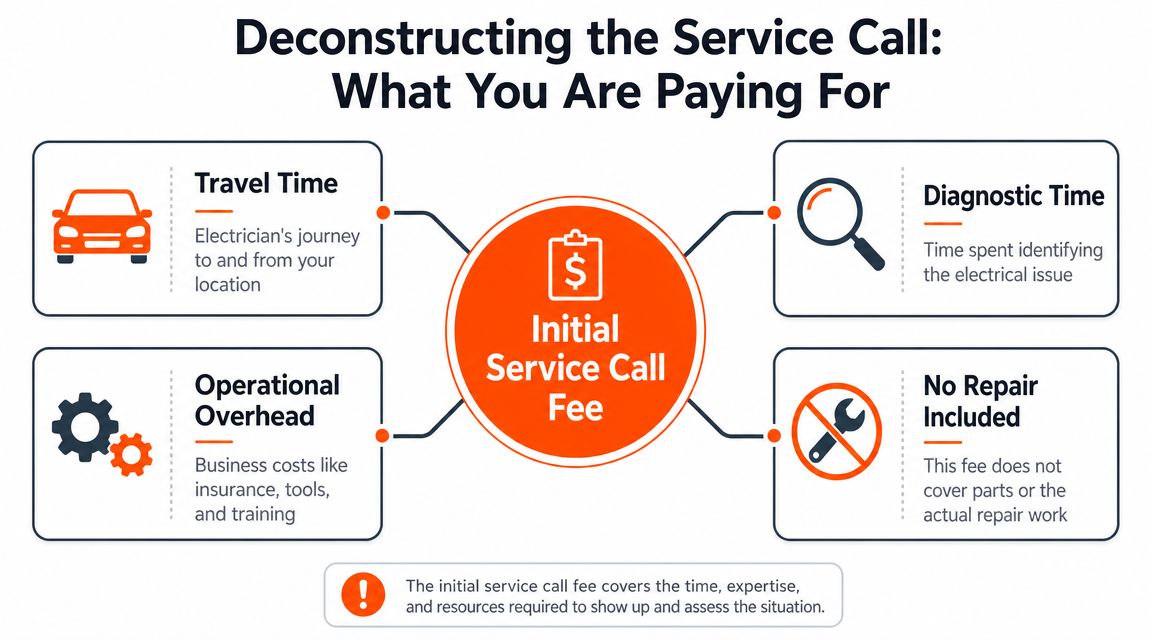
That first charge usually pays for one of two service models.
The first is a true diagnostic fee. The electrician comes out, troubleshoots the issue, identifies the likely fault, and gives you repair options. If you stop there, the fee is spent. It did its job. You paid for time, testing, experience, and a safe diagnosis.
The second is a service call fee that gets credited toward the repair. In that setup, the company still charges to come out, but if the problem is something you approve right away, that initial amount may reduce the final bill. Homeowners often miss this point and compare two companies as if both fees work the same way. They do not.
Here is what that opening charge may include, depending on the contractor's policy:
- travel time and dispatch costs
- diagnostic testing at the panel, devices, or affected circuit
- stocked truck tools and common repair materials
- licensed labor for the first visit
- written repair pricing or authorization time
The practical question is simple. If I approve the repair today, does the service call disappear into the final invoice, or is it a separate line item no matter what?
That answer matters because both approaches can be fair. A sunk diagnostic fee makes sense on problems that take real troubleshooting, such as intermittent power loss, nuisance breaker trips, or a partial outage with no obvious failed device. A credited service fee often works better for straightforward repairs where the electrician can identify the issue quickly and move right into the fix.
Why the fee exists even before the repair starts
Electrical troubleshooting is skilled work. The electrician may need to open energized equipment, trace a fault through multiple boxes, verify what is safe to touch, and decide whether the issue is a bad device, a loose connection, a breaker problem, or something farther upstream. That judgment is part of the product.
There is also overhead behind every truck that rolls out. Licensing, training, test equipment, stocked inventory, and insurance all show up in the rate structure. For a look at one piece of that business cost, protecting your Florida electrical business explains why liability coverage is part of the price homeowners indirectly pay for competent service.
Questions to ask before you book
A two-minute phone call can prevent a bad surprise later. Ask:
- Is the fee for diagnosis only, or is any of it credited to the repair?
- How much troubleshooting time is included before additional labor starts?
- If the repair is simple, can it be completed during the same visit?
- Are parts billed separately?
- Does the fee change after hours, on weekends, or for urgent dispatch?
Homeowners calling for residential electrical troubleshooting and repair services should pay attention to that credit policy. It is one of the clearest ways to compare estimates without getting distracted by the lowest headline number.
Hourly Versus Flat-Rate Which Pricing Model Is Better
There are two common ways electricians bill after they diagnose the issue. They either charge hourly labor or they offer a flat-rate repair price for the task. Neither model is automatically better. The better one is the one you understand before work starts.
Hourly pricing
Hourly pricing is straightforward on paper. The electrician diagnoses the problem, performs the repair, and bills for time plus parts. This can work well when the issue is unusual and it's not possible to promise an exact repair path upfront.
The risk for homeowners is uncertainty. If the problem turns out to involve a hidden loose connection, crowded panel, damaged device, or access issue, the time can climb. That's not always overcharging. Sometimes troubleshooting takes time.
Hourly billing tends to feel fair on larger or messier diagnostics because you're paying for actual labor used.
Flat-rate pricing
Flat-rate pricing gives you a known repair amount before the work begins. For common tasks, that can be easier to live with. If a company has done the same repair many times, it may price that task as a fixed job rather than watch the clock.
For homeowners, the advantage is predictability. You know the number before authorizing the repair. The downside is that the built-in risk the contractor carries may already be priced into the quote.
The question that matters more than either model
The overlooked issue is the one most pricing guides barely explain. The primary question is whether the service-call fee is credited toward the repair or treated as a sunk diagnostic charge.
One source puts it plainly: the core issue isn't the service-call fee itself, but whether it is credited toward labor or becomes a separate charge. It also notes that some electricians charge $75 to $150 for the call and may cover the first hour, while others keep it separate, which changes the cost of small repairs in a big way (service call fee explained by J.A. Bertsch).
That means two invoices can look like this:
| Pricing approach | What it means for you |
|---|---|
| Credited service fee | The diagnostic visit applies toward the repair total |
| Separate diagnostic fee | You pay for diagnosis, then pay again for labor and parts |
| Hourly after diagnosis | Best when the problem is open-ended or hidden |
| Flat-rate after diagnosis | Best when you want a fixed number before work begins |
Ask this exact question before you book: "If I approve the repair, does today's service-call fee get applied to the work?"
That's the sentence that saves more confusion than almost anything else.
If you want a sharper checklist before hiring anyone, this guide on questions to ask an electrician helps homeowners get the pricing terms clear upfront.
The Top 5 Factors That Increase Electrical Repair Costs
Some service calls stay simple. Others expand once the electrician starts tracing the fault. The biggest jumps in cost usually come from five specific factors.

1. Emergency timing
If you call at night, on a weekend, or during an urgent outage, expect the price structure to change. Angi notes that electricians frequently add an emergency fee of $100 to $200 for nights and weekends, on top of standard labor (Angi electrician cost guide).
That premium isn't just about inconvenience. The contractor is reserving trained labor for immediate response.
2. Diagnostic complexity
A dead outlet can be a dead outlet. Or it can be the visible symptom of a failed upstream connection, a tripped GFCI you didn't know existed, a damaged breaker, or a wiring fault in another room.
Simple symptoms don't always mean simple diagnostics. Time goes up when the electrician has to isolate a problem across multiple devices or circuits.
A fast diagnosis is skilled work, not luck. You're paying for someone who knows where to test first and what not to assume.
To see a basic troubleshooting mindset in action, this video gives homeowners a practical look at how electrical problems can be tracked down before repair decisions are made:
3. Parts and materials
Once the cause is identified, the bill may add switches, outlets, breakers, connectors, or specialty devices. Homeowners often focus on labor, but parts can change the final number quickly, especially if the electrician needs a specific component to restore safe operation.
This is one reason written estimates matter. They separate diagnosis from labor and labor from materials.
4. Access challenges
A repair behind a clear, reachable outlet is one thing. A repair in a packed panel, a high ceiling, an outdoor location, or a crowded attic takes more setup and more care.
Accessibility doesn't always sound dramatic on the invoice, but it affects how long the job takes and how the technician can work safely.
5. Permits and inspections
Not every service call needs a permit. But once the work moves beyond a minor repair and into larger modifications or replacements, permit and inspection requirements can enter the picture.
That adds cost, but it also adds accountability. If the work changes core electrical infrastructure, you want it done to code and documented correctly.
Sample Estimates for Common Electrical Jobs in Florida
Florida homeowners often hear an hourly rate and assume they can calculate the final invoice from that alone. That's not how small service work usually behaves. Regional data for Fort Myers shows that skilled electrician rates can range from $35 to $100 per hour, but that doesn't include minimum service-call fees or travel surcharges. The useful takeaway is to compare the total estimated cost, not just the hourly number (Fort Myers electrician cost guide).
That matters because many residential jobs are short in labor time but still require dispatch, diagnosis, and paperwork.
What these sample estimates really represent
The table below isn't a promise of a specific price. It shows how homeowners in Tampa Bay and Southwest Florida should think about the job size.
Use it as a quote-reading tool. If a very small repair looks expensive, the service call and minimum labor are often the reason. If a larger repair looks reasonable, that same fee may be a much smaller share of the total.
| Common Electrical Job | Estimated Cost Range |
|---|---|
| Diagnose flickering lights | Often falls within a typical initial service visit, depending on whether repair is completed same day |
| Replace a standard outlet | Can stay near the low end of a typical service visit if no hidden issue is found |
| Replace a GFCI outlet | Commonly higher than a basic outlet because the device costs more and testing matters |
| Install a ceiling fan | Usually above a basic repair because setup, mounting, and wiring take longer |
| Troubleshoot a tripping breaker | Can range widely depending on whether the breaker is the problem or a symptom |
| Replace a light switch | Often a small job, but minimum charges can dominate the invoice |
| Minor breaker replacement | Usually depends on panel condition, access, and confirmation of the root cause |
How to use a quote the smart way
When you compare estimates, ask the company to separate these line items:
- Trip or service-call fee
- Diagnostic charge
- Labor after diagnosis
- Parts
- Any permit-related cost if applicable
That format tells you far more than a single lump-sum number. It also helps with small tasks like outlet repairs. If you want a homeowner-level view of one common job before you call, this guide on how to replace an electrical outlet can help you understand what the electrician may be evaluating when the device stops working.
Smart Tips for Saving Money on Your Next Service Call
The easiest money to save on electrical service calls is avoidable money. That means avoiding emergency timing when you can, avoiding repeat trips, and avoiding vague phone descriptions that force the technician to arrive without the right parts or context.
One of the biggest pricing traps is the very small repair. For simple jobs like outlet repair, the service fee plus minimum labor can dominate the final cost, which is why bundling work or waiting for a standard appointment is often the better move (Sartell Electrical troubleshooting cost guide).
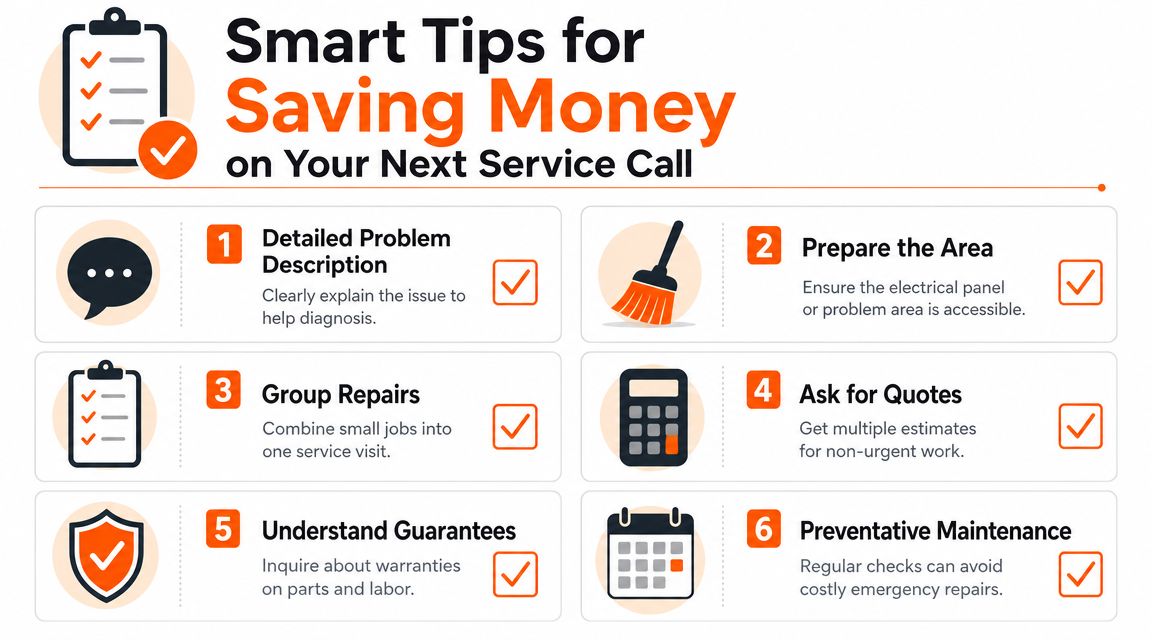
Six ways homeowners cut the bill without cutting corners
Describe the symptom clearly: Tell the dispatcher what stopped working, when it started, whether breakers are tripping, and whether the issue affects one device or several rooms. Better information can lead to a better-prepared visit.
Bundle small jobs into one appointment: If you already need an electrician, add the loose switch, the dead patio outlet, and the humming dimmer to the list. One service call often costs less than several separate visits.
Use regular business hours when it's safe to wait: If the problem isn't creating a safety issue, you may avoid premium scheduling by booking a normal appointment.
Clear access before the truck arrives: Move boxes away from the panel. Clear furniture from outlets or switches that need inspection. Time spent making the work area reachable is still billable time.
Ask whether the service fee is credited: This is still the best screening question for small repairs. It tells you whether the visit becomes a step toward the fix or a standalone charge.
Think beyond repair costs if your bill is high every month: Sometimes the issue isn't a broken device. It's an inefficient house. If your concern started with rising utility bills, this article on how to slash electric costs with airtight spray foam offers a useful building-performance angle that can reduce strain on electrical loads over time.
Questions worth asking when you book
A short phone call can save a lot of invoice shock. Ask these before you confirm the appointment:
- What does your service-call fee include?
- Does that fee apply toward the repair if I approve it?
- Do you charge hourly or flat-rate after diagnosis?
- Is there a minimum labor charge?
- Will I get a written estimate before additional work starts?
If the company can't explain its billing in plain language, keep calling. Clear pricing and safe electrical work usually go together.
For homeowners comparing local options, Heatwave Air Conditioning, Plumbing, & Electric is one company in the region that states it offers transparent pricing for electrical service, which is the right standard to look for before anyone starts troubleshooting.
Finding a Trusted Electrician in Tampa Bay and SW Florida
The safest way to evaluate electrical service call rates is to stop looking at the call fee in isolation. Look at the whole billing structure. You want to know what the first charge covers, whether it gets credited, how labor is billed after diagnosis, and what can push the repair cost higher once the electrician starts working.
A trustworthy contractor explains those terms without hedging. They also arrive licensed, insured, and prepared to say when a quick fix is appropriate and when a larger repair needs to be handled properly.
What to look for before you schedule
Use a short screening checklist:
- Licensed and insured: Basic, but essential.
- Clear service-call policy: You should know whether the fee is diagnostic-only or credited.
- Written estimate process: Especially important once the problem moves beyond a simple repair.
- Local reputation: Home service companies that depend on repeat business tend to communicate better.
If you're a contractor reading this from the other side of the job, strong visibility also shapes homeowner trust. These local SEO tips for home service contractors from Transactional LLC explain how companies make that information easier for customers to find.
Homeowners doing their own vetting can also use this guide on how to find a good electrician to compare credentials, communication, and professionalism before booking a call.
The bottom line is simple. A fair electrical service call rate isn't just a number. It's a pricing structure you can understand before the work begins.
If you need electrical troubleshooting, repair, or a clear explanation of what a service visit will include, Heatwave Air Conditioning, Plumbing, & Electric serves homeowners across Tampa Bay and Southwest Florida with upfront communication so you can make a smart decision before work starts.